WASHINGTON (AP) — President Donald Trump said Sunday he will move to close Washington’s Kennedy Center performing arts center for two years starting in July for construction, his latest proposal to upturn the storied venue since returning to the White House.
Trump’s announcement on social media follows a wave of cancellations by leading performers, musicians and groups since the president ousted the previous leadership and added his name to the building. Trump made no mention in his post of the recent cancellations.
His proposal, announced days after the premiere of “Melania, " a documentary of the first lady was shown at the center, he said was subject to approval by the board of the Kennedy Center, which has been stocked with his hand-picked allies. Trump himself chairs the center’s board of trustees.
“This important decision, based on input from many Highly Respected Experts, will take a tired, broken, and dilapidated Center, one that has been in bad condition, both financially and structurally for many years, and turn it into a World Class Bastion of Arts, Music, and Entertainment,” Trump wrote in his post.
Neither Trump nor Kennedy Center President Ric Grenell, a Trump ally, have provided evidence to back up their claims about the building being in disrepair, and last October, Trump had pledged the center would remain open during renovations. In Sunday's announcement, Trump said the center will close on July 4th, when he said the construction would begin.
“Our goal has always been to not only save and permanently preserve the Center, but to make it the finest Arts Institution in the world,” Grenell said in a post, citing funds Congress approved for repairs.
“This will be a brief closure,” Grenell said. “It desperately needs this renovation and temporarily closing the Center just makes sense - it will enable us to better invest our resources, think bigger and make the historic renovations more comprehensive. It also means we will be finished faster."
The sudden decision to shutter and reconstruct the Kennedy Center is sparking blowback as Trump disrupts the popular venue, which began as a national cultural center but Congress renamed as a “living memorial” to President John F. Kennedy in 1964, in the aftermath of the slain president's death. Opened in 1971, it is open year-round as a public showcase for the arts, including the National Symphony Orchestra.
Since Trump returned to the White House, the Kennedy Center is one of many Washington landmarks that he has sought to overhaul in his second term. He demolished the East Wing of the White House and launched a massive $400 million ballroom project, is actively pursuing building a triumphal arch on the other side the Arlington Bridge from the the Lincoln Memorial, and has plans for Washington Dulles International Airport.
Leading performing arts groups have pulled out of appearances at the Kennedy Center, most recently, composer Philip Glass, who announced his decision to withdraw his Symphony No. 15 “Lincoln” because he said the values of the center today are in “direct conflict” with the message of the piece.
Last month, the Washington National Opera announced that it will move performances away from the Kennedy Center in another high-profile departure following Trump’s takeover of the U.S. capital’s leading performing arts venue.
The head of artistic programming for the center abruptly left his post last week, less than two weeks after being named to the job.
A spokesperson for the Kennedy Center could not immediately be reached and did not respond to an emailed request for comment.
Late last year, as Trump announced his plan to rename the building — erecting his name on the building's main front ahead of that of Kennedy — he drew sharp opposition from members of Congress, and some Kennedy family members.
Kerry Kennedy, a niece of John F. Kennedy, said in a social post on X at the time that she will remove Trump’s name herself with a pickax when his term ends.
Another family member, Maria Shriver, said at the time that it is “beyond comprehension that this sitting president has sought to rename this great memorial dedicated to President Kennedy,” her uncle. “It is beyond wild that he would think adding his name in front of President Kennedy’s name is acceptable. It is not.”
Late Sunday evening, Shriver posted a new comment mimicking Trump's own voice and style, and suggesting the closure of the venue was meant to deflect from the cancellations.
She said that “entertainers are canceling left and right” and the president has determined that "since the name change no one wants to perform there any longer."
Trump has decided, she said, it's best “to close this center down and rebuild a new center” that will bear his name. She asked, “right?”
One lawmaker, Rep. Joyce Beatty, the Ohio Democrat and ex-officio trustee of the center's board, sued in December, arguing that “only Congress has the authority to rename the Kennedy Center.”
On Sunday, Beatty said that once again Trump “has acted with total disregard for Congress,” which allocates funds to the center.
She questioned what comes next for the artists — and the building itself. “Let’s be clear: remodeling the premises will not restore the Kennedy Center to what it was. A return to artistic independence will," she said. "America’s artists are rejecting this attempted takeover, and the administration knows it.”
Associated Press writer Darlene Superville contributed to this report.

First lady Melania Trump walks from the stage after speaking before the premiere of her movie "Melania" at The John F. Kennedy Memorial Center For The Performing Arts, Thursday, Jan. 29, 2026, in Washington. (AP Photo/Allison Robbert)
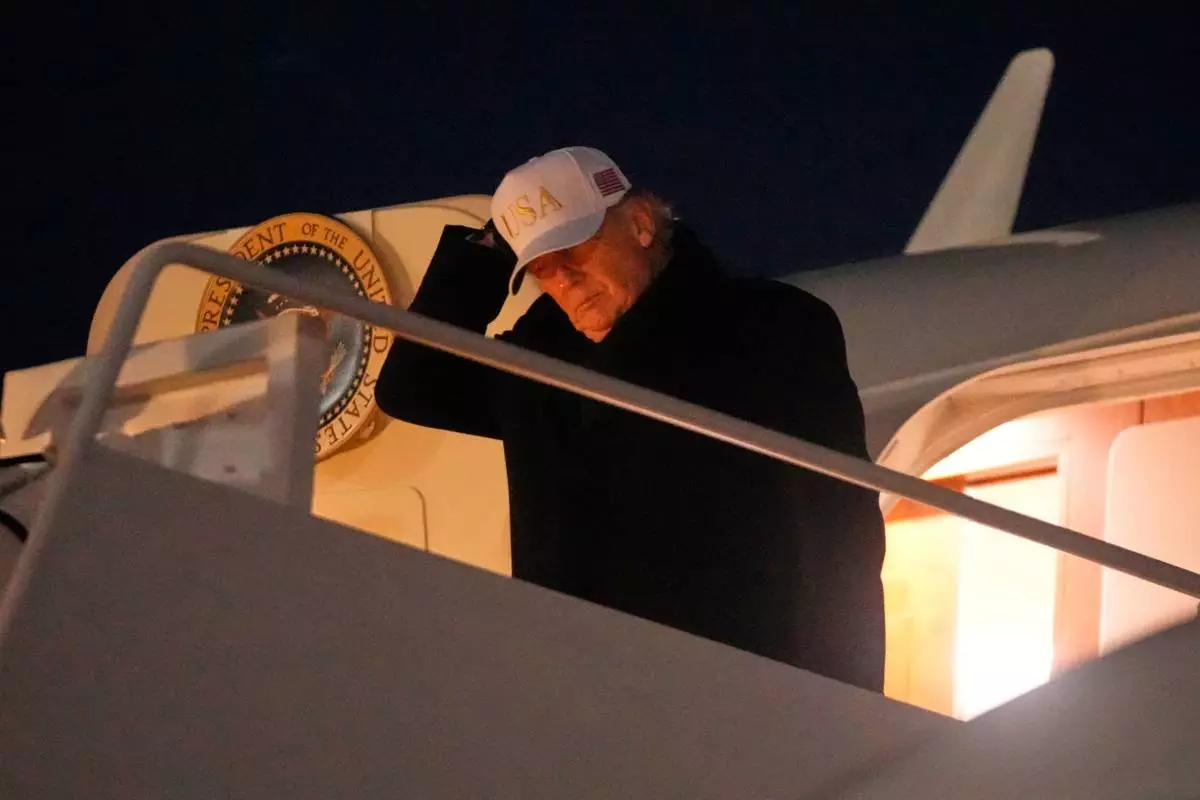
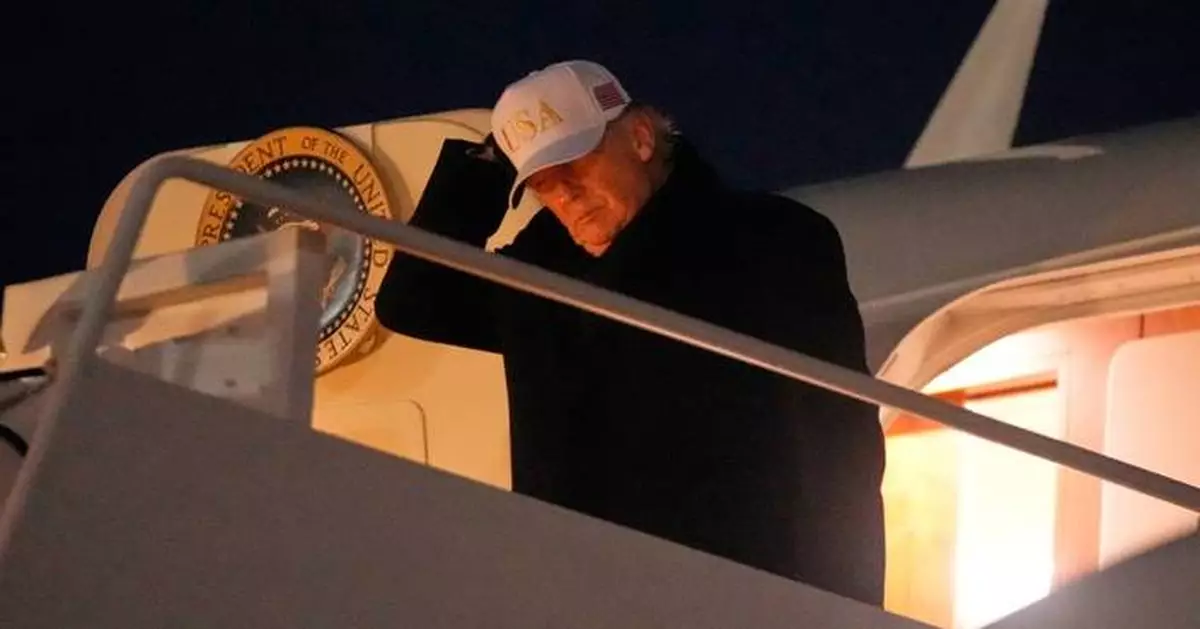
President Donald Trump arrives on Air Force One, Sunday, Feb. 1, 2026, at Joint Base Andrews, Md., after returning from a trip to Florida. (AP Photo/Mark Schiefelbein)
BEIRUT (AP) — When the Israel- Hezbollah war broke out in early March, Hussein Shuman fled the heavy bombardment of the southern suburbs of Beirut, but he didn’t bother trying to rent an apartment elsewhere.
In areas deemed “safe” because the Lebanese militant group has no presence, he feels that Shiite Muslims like him are not welcome. Residents regard them with suspicion as potential Hezbollah members, and landlords charge exorbitant prices to rent to displaced families.
Instead, the 35-year-old, who works at a perfume company, headed to central Beirut where he set up a small tent where he has been staying, along with his wife, 7-year-old son and 5-year-old daughter.
Shuman even rejected an offer from a friend who invited him to bring his family to the Christian mountain town of Zgharta. He preferred to remain in his tent, even though it has flooded twice in the past two weeks.
“By staying here I have my dignity and respect,” Shuman said, sitting on a chair near his tent as a barber gave him an open-air hair cut. “We will not stay in a place where we are going to be humiliated.”
In a country full of suspicion, the more than 1 million people — most of them Shiite — displaced as a result of Israel’s evacuation orders and airstrikes have limited options.
Some landlords in Christian areas refuse to rent to Shiites. Others demand inflated rents and deposits that few can afford. Fatima Zahra, 42, from Beirut’s southern suburbs, said she and her sister sold their finest jewelry to pay the $5,000 the landlord charged up front for two months’ rent.
In some Beirut neighborhoods, displaced people who can afford to pay high rents are only allowed to take the apartment after landlords inform the security agencies to check on whether the family has any links to Hezbollah.
Sectarian tensions are a sensitive issue in Lebanon because the country fought a 15-year civil war ending in 1990 that largely broke down along sectarian lines.
Social frictions have worsened since Israel’s targeted airstrikes killed Hezbollah officials or members of Iran’s paramilitary Revolutionary Guard in predominantly Christian, Sunni and Druze areas, raising fears among the hosts that Hezbollah members are mingling within the civilian population.
The Lebanese are deeply divided over Hezbollah’s wars with Israel, with many in the small nation blaming the Iran-backed group for dragging the country into a deadly conflict that has so far left more than 1,300 people dead and over 4,000 wounded. Hezbollah fired missiles into Israel two days after the U.S. and Israel attacked Iran on Feb. 28, triggering the ongoing Middle East war.
The renewed war has caused widespread destruction and paralyzed the economy at a time when Lebanon is still in the throes of a historic economic crisis that broke out in late 2019. The country has not yet recovered from the last Israel-Hezbollah war in 2024.
In mid-March, an Israeli airstrike on an apartment in the town of Aramoun killed three people, prompting some local residents to call for the displaced to leave the area.
Days later, an airstrike on the nearby town of Bchamoun also killed three people, including a four-year-old girl, who were displaced from Beirut’s southern suburbs, where Hezbollah has a strong presence.
In neither case did Israel announce the intended target of the strikes, but neighbors assumed that someone in the targeted apartments was a Hezbollah member.
“Had we known that they were linked to Hezbollah, we would have kicked them out,” an angry man who owns an apartment in the building in Bchamoun said at the scene.
In late March, a missile exploded over the predominantly Christian Keserwan region north of Beirut, with debris falling on different areas. Although the Lebanese army later said that it was an Iranian missile passing over Lebanon that fell, many initially assumed that it was an Israeli airstrike targeting displaced people.
No one was was hurt by the missile debris, but a group of young men attacked displaced Shiites in the district of Haret Sakher near the coastal city of Jounieh, calling for their eviction, before local officials intervened.
“We don’t want them here,” shouted a Haret Sakher resident shortly after the strike. He said that some of the displaced refer to their hosts as “Zionists,” accusing them of being aligned with Israel because they criticize Hezbollah for dragging the country into the conflict. He added: “We don’t want national coexistence.”
George Saadeh, a member of Jounieh’s municipal council, told The Associated Press that he had called on Haret Sakher residents to avoid any reaction “so that we can preserve civil peace.”
In a predominantly Christian area just north of Beirut, plans to house displaced people in an abandoned warehouse near the port were suspended last week after drawing backlash from lawmakers and residents.
“The Israeli targeting campaign has created a lot of paranoia,” said Maha Yahya, director of the Beirut-based Carnegie Middle East Center. “If you see a displaced person, maybe you wonder, ‘What if this person is a target?’”
Fearing the tension could slip out of control, the army has beefed up its presence on the streets.
Last week, army commander Gen. Rudolphe Haikal toured Beirut and the southern city of Sidon and told troops that they should be “firm in the face of any attempt to undermine internal stability,” the army said in a statement.
Police forces, including a SWAT unit, were deployed at major intersections in the capital to preserve peace and prevent any friction between the displaced and locals. Police patrols pass through the tent city by Beirut’s coast where Shuman and his family are staying.
An official at the municipality of the predominantly Sunni town of Naameh, just south of Beirut, said that they have received thousands of people displaced from southern Lebanon.
The official said that in order to avoid tensions, they opened a school in one district for displaced Shiites and another in a different neighborhood for people displaced from Sunni border villages.
“There are concerns among people,” that conflict could break out said the official who spoke on condition of anonymity because he was not authorized to speak to the media.
With the Israeli airstrikes and ground invasion mainly targeting Shiite areas, U.S. ambassador to Lebanon Michel Issa, a Lebanese-American, was criticized for stoking sectarianism. He told reporters in late March that the U.S. had asked Israel for a commitment that Christian villages in southern Lebanon will not be attacked.
“We have asked the Israelis to leave Christian villages in the south alone and they told us that they will not touch Christian villages,” Issa said. However, he added, “They (Israelis) said that they cannot guarantee” that the villages would be left alone “if there is infiltration into these villages” by Hezbollah members.
Several Christian villages in southern Lebanon have asked displaced Shiites who were sheltering there to leave, fearing that their presence might trigger Israeli attacks.
Legislator Taymour Joumblatt who is the leader of the Progressive Socialist Party, the largest Druze-led political group in the country, said that the biggest concern in the country now is “strife.”
“The most important thing is to reduce sectarian pressures on the ground,” Joumblatt said. “Our Shiites brothers are part of this country and our humanitarian duty is to help them.”
———
Associated Press writer Isabel DeBre contributed to this report from Beirut.
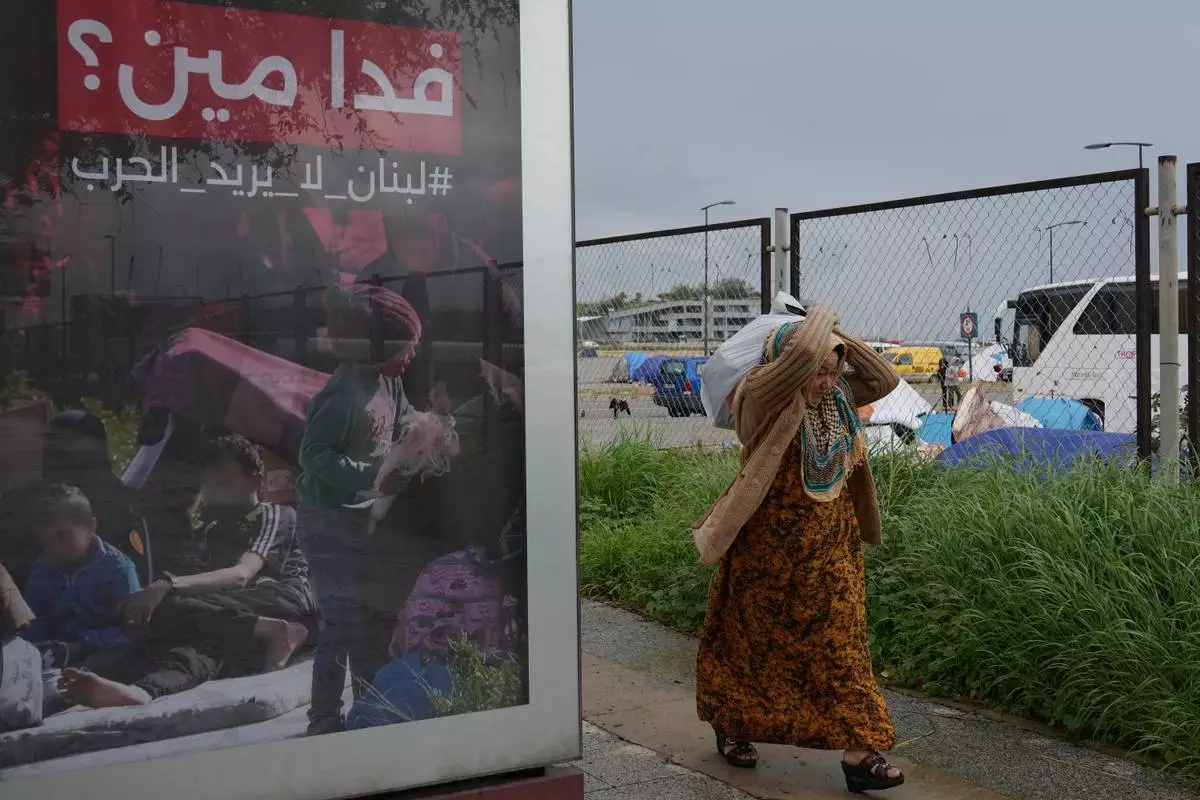
FILE — A displaced woman who fled Israeli airstrikes in southern Lebanon, carries her belonging as she moves to a better spot to shelter from the rain, past an Arabic anti-war poster that reads, "Sacrificing for whom? Lebanon does not need war," in Beirut, Saturday, March 21, 2026. (AP Photo/Hussein Malla, File)
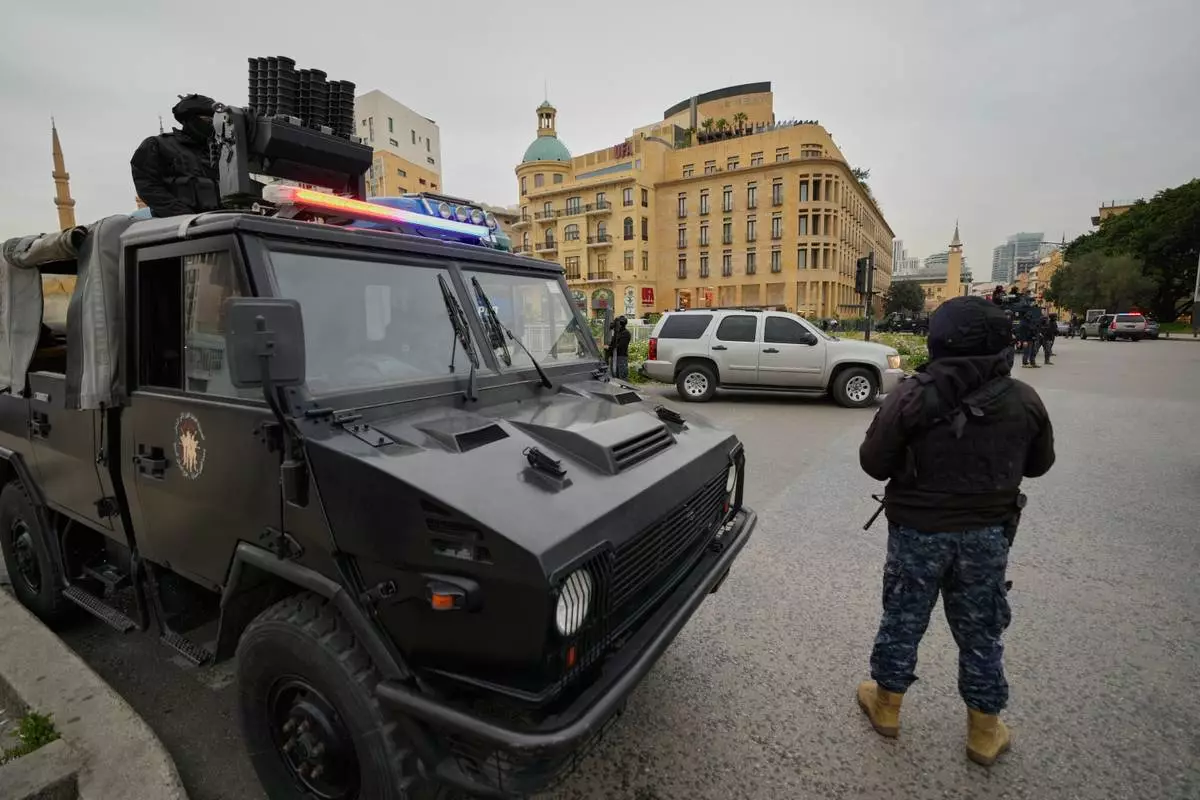
Special forces police officers deployed amid tensions between people displaced by Israeli strikes and local residents in Beirut neighborhoods, Lebanon, Wednesday, April 1, 2026. (AP Photo/Hussein Malla)
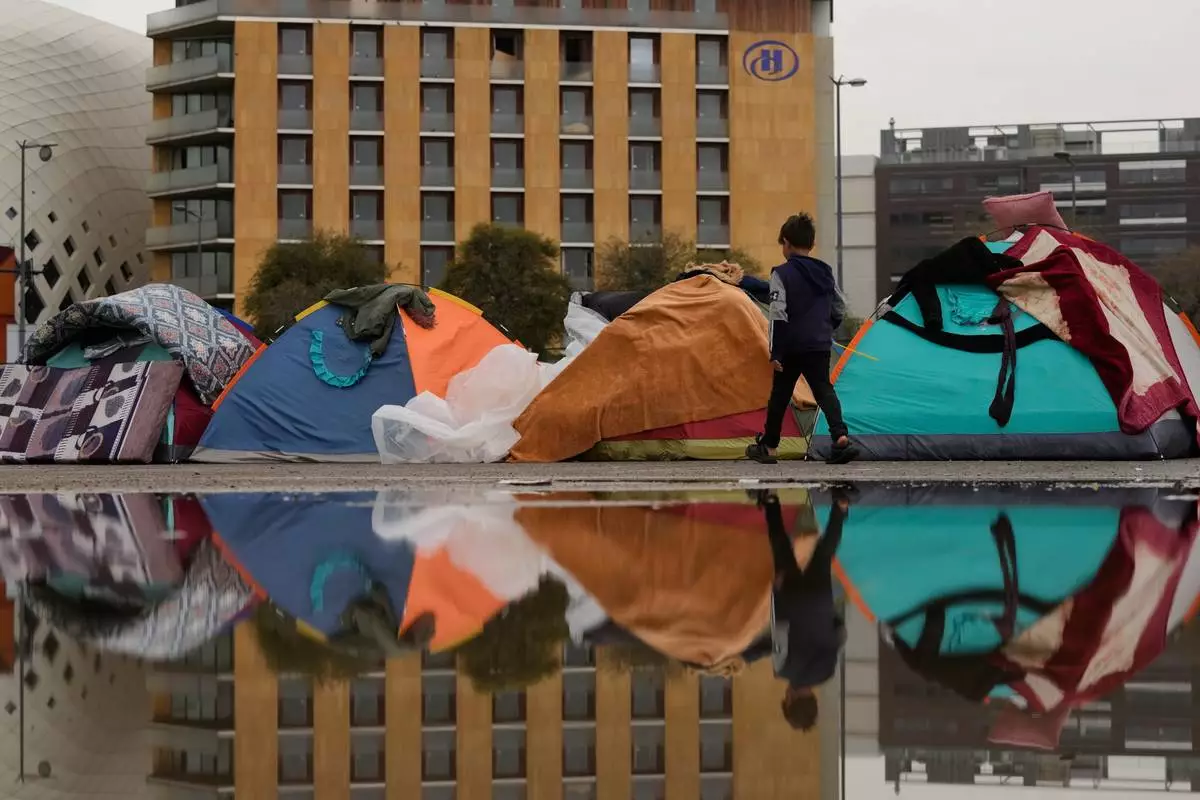
FILE — A child walks past tents sheltering people displaced by Israeli airstrikes in southern Lebanon and Dahiyeh, Beirut's southern suburbs, along the Beirut waterfront in Beirut, Lebanon, Saturday, March 14, 2026. (AP Photo/Hassan Ammar, File)
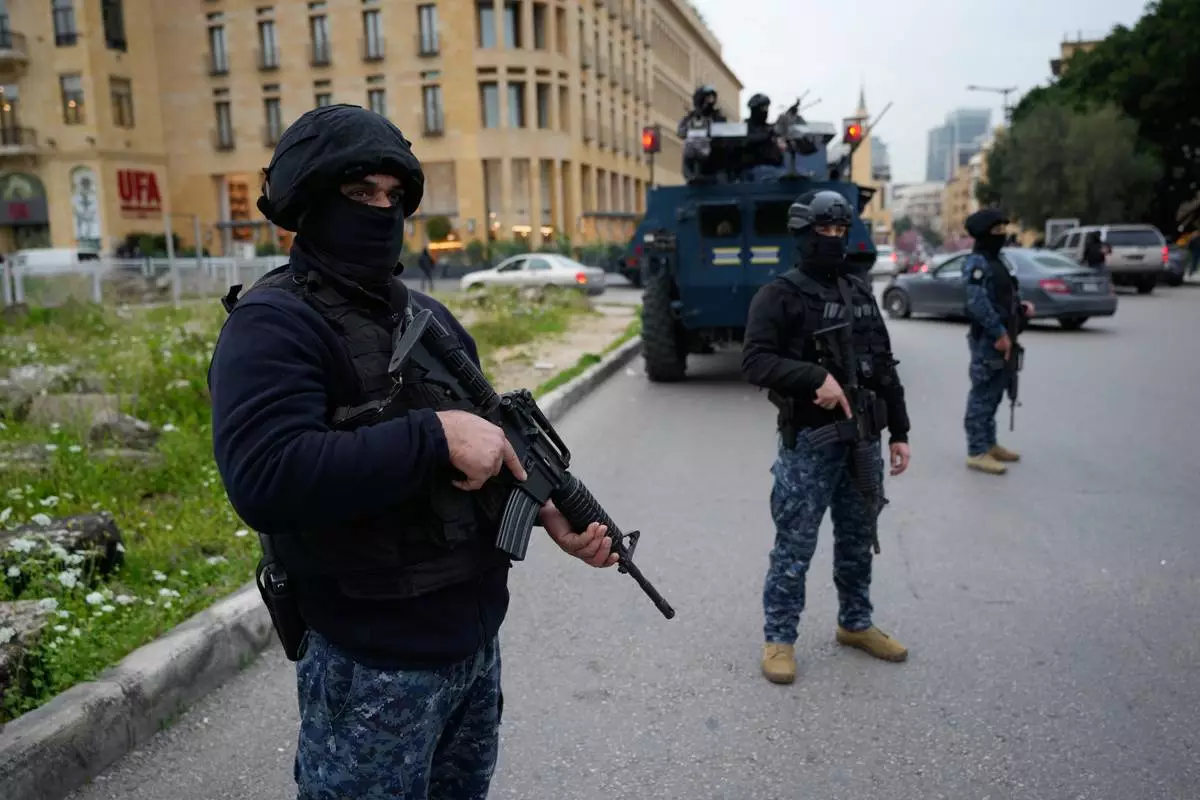
Special forces police officers deployed amid tensions between people displaced by Israeli strikes and local residents in Beirut neighborhoods, Lebanon, Wednesday, April 1, 2026. (AP Photo/Hussein Malla)
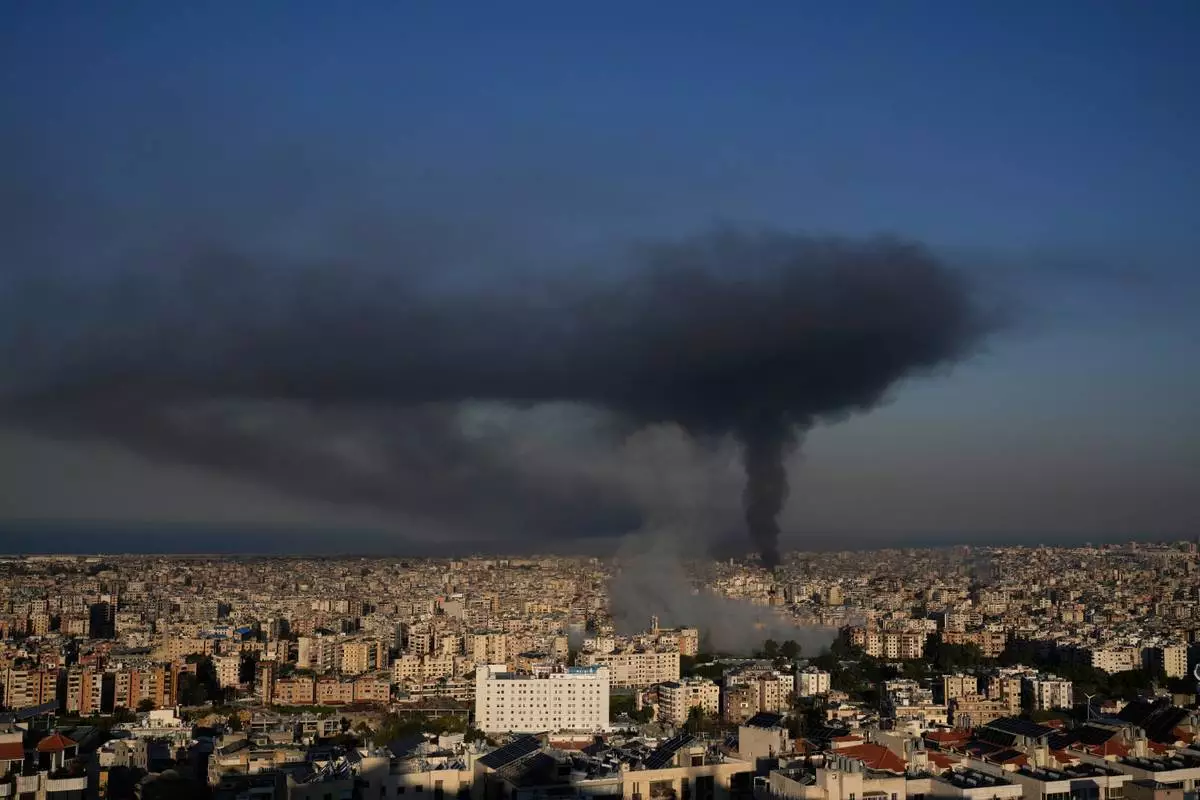
File — Smoke rises from Israeli airstrikes in Dahiyeh, a southern suburb of Beirut, Lebanon, Tuesday, March 3, 2026. (AP Photo/Hussein Malla, File)