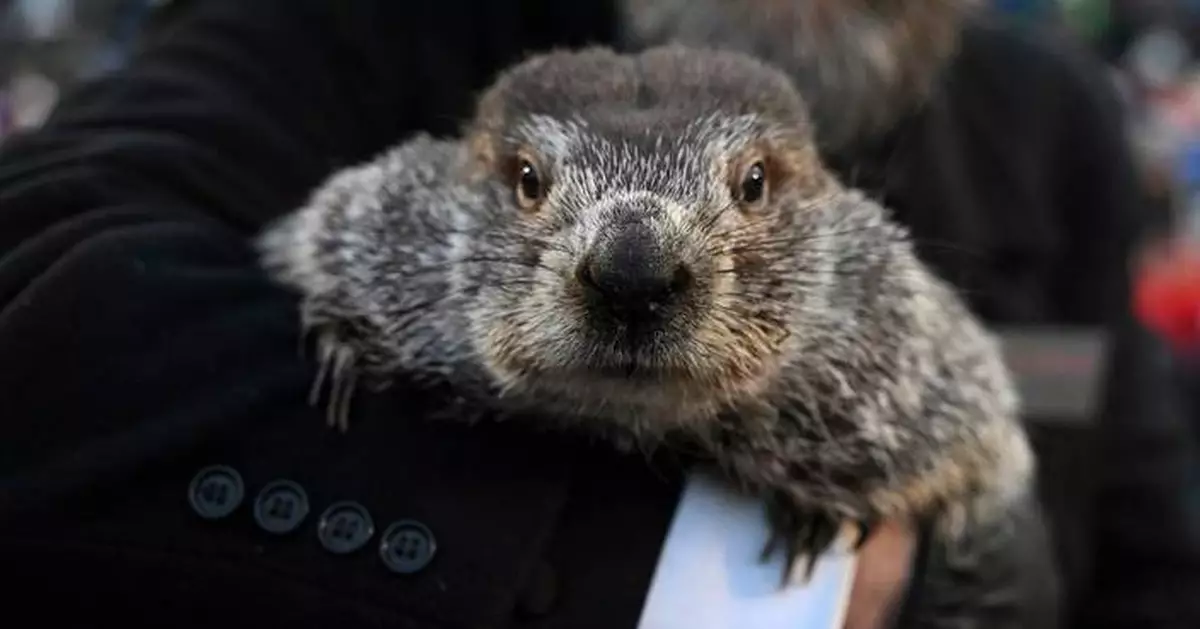
PUNXSUTAWNEY, Pa. (AP) — Punxsutawney Phil predicted six more weeks of wintry weather Monday, a forecast sure to disappoint many after what's already been a long, cold season across large parts of the United States.
His annual prediction and announcement that he had seen his shadow was translated by his top hat-wearing handlers in the Punxsutawney Groundhog Club at Gobbler’s Knob in western Pennsylvania.
Click to Gallery
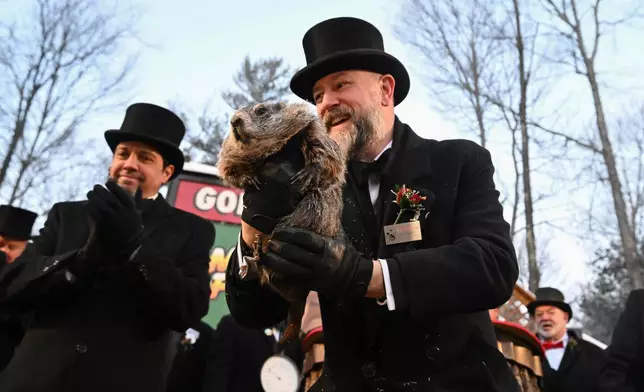
Groundhog Club handler A.J. Dereume holds Punxsutawney Phil, the weather prognosticating groundhog, during the 140th celebration of Groundhog Day on Gobbler's Knob in Punxsutawney, Pa., Monday, Feb. 2, 2026. Phil's handlers said that the groundhog has forecast six more weeks of winter. (AP Photo/Barry Reeger)
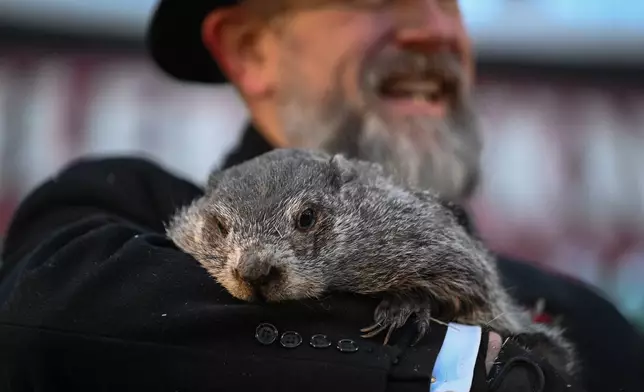
Groundhog Club handler A.J. Dereume holds Punxsutawney Phil, the weather prognosticating groundhog, during the 140th celebration of Groundhog Day on Gobbler's Knob in Punxsutawney, Pa., Monday, Feb. 2, 2026. Phil's handlers said that the groundhog has forecast six more weeks of winter. (AP Photo/Barry Reeger)
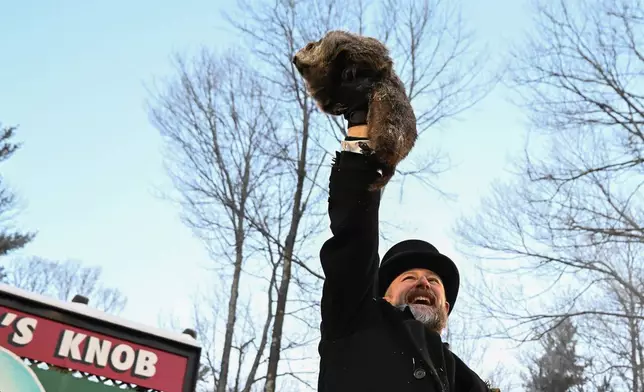
Groundhog Club handler A.J. Dereume holds Punxsutawney Phil, the weather prognosticating groundhog, during the 140th celebration of Groundhog Day on Gobbler's Knob in Punxsutawney, Pa., Monday, Feb. 2, 2026. Phil's handlers said that the groundhog has forecast six more weeks of winter. (AP Photo/Barry Reeger)
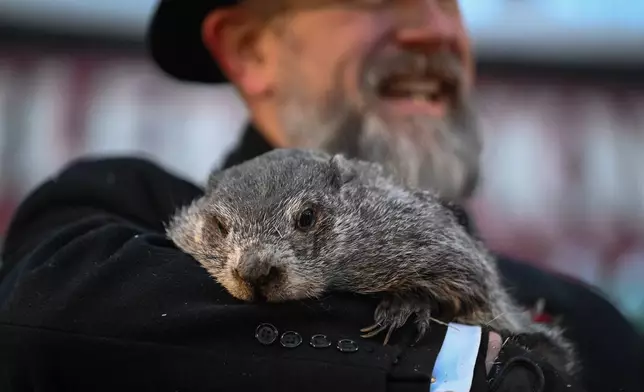
Groundhog Club handler A.J. Dereume holds Punxsutawney Phil, the weather prognosticating groundhog, during the 140th celebration of Groundhog Day on Gobbler's Knob in Punxsutawney, Pa., Monday, Feb. 2, 2026. Phil's handlers said that the groundhog has forecast six more weeks of winter. (AP Photo/Barry Reeger)
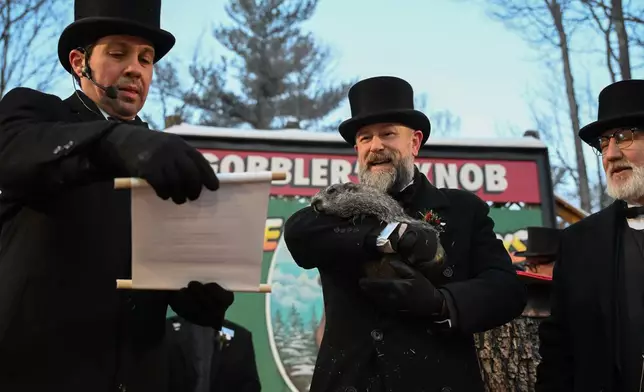
Groundhog Club Vice President Dan McGinley reads the scroll as handler A.J. Dereume holds Punxsutawney Phil, the weather prognosticating groundhog, during the 140th celebration of Groundhog Day on Gobbler's Knob in Punxsutawney, Pa., Monday, Feb. 2, 2026, Phil's handlers said that the groundhog has forecast six more weeks of winter. (AP Photo/Barry Reeger)
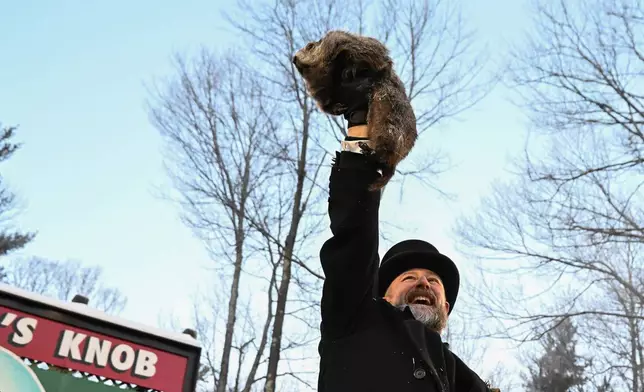
Groundhog Club handler A.J. Dereume holds Punxsutawney Phil, the weather prognosticating groundhog, during the 140th celebration of Groundhog Day on Gobbler's Knob in Punxsutawney, Pa., Monday, Feb. 2, 2026. Phil's handlers said that the groundhog has forecast six more weeks of winter. (AP Photo/Barry Reeger)
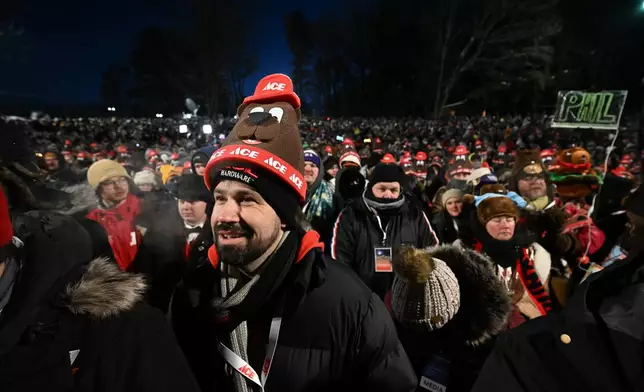
A crowd waits for Punxsutawney Phil, the weather prognosticating groundhog, to come out and make his prediction during the 140th celebration of Groundhog Day on Gobbler's Knob in Punxsutawney, Pa., Monday, Feb. 2, 2026. (AP Photo/Barry Reeger)
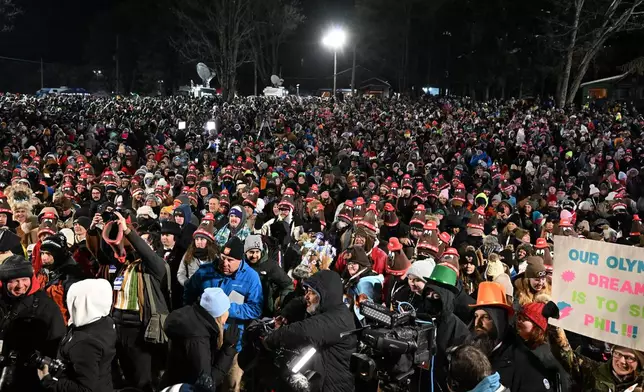
A crowd gathers while waiting for Punxsutawney Phil, the weather prognosticating groundhog, to come out and make his prediction during the 140th celebration of Groundhog Day on Gobbler's Knob in Punxsutawney, Pa., Monday, Feb. 2, 2026. (AP Photo/Barry Reeger)
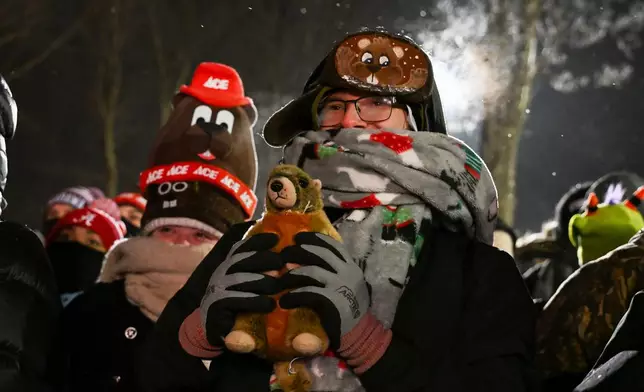
George Morar, of Youngstown, Ohio., celebrates while waiting for Punxsutawney Phil, the weather prognosticating groundhog, to come out and make his prediction during the 140th celebration of Groundhog Day on Gobbler's Knob in Punxsutawney, Pa., Monday, Feb. 2, 2026. (AP Photo/Barry Reeger)
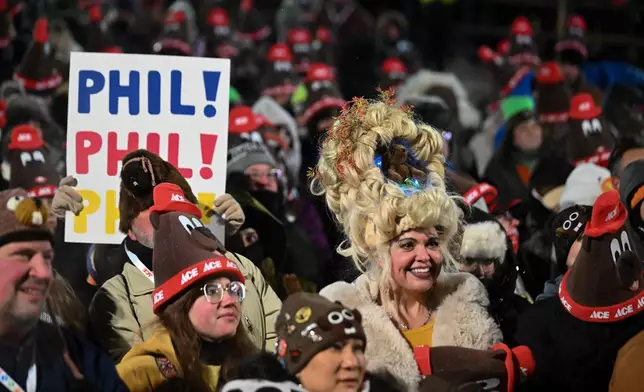
Toni Massey, of Bismack, N.D., right, celebrates while waiting for Punxsutawney Phil, the weather prognosticating groundhog, to come out and make his prediction during the 140th celebration of Groundhog Day on Gobbler's Knob in Punxsutawney, Pa., Monday, Feb. 2, 2026. (AP Photo/Barry Reeger)
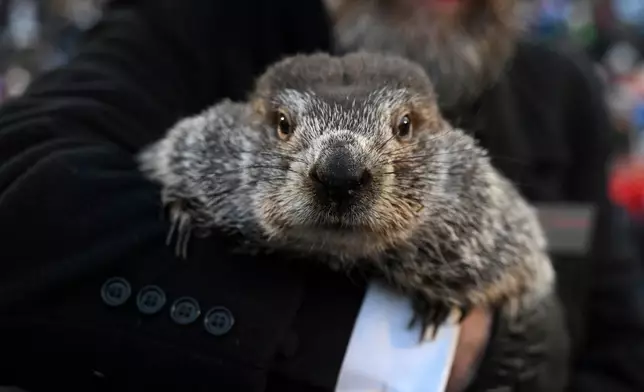
FILE - Groundhog Club handler A.J. Dereume holds Punxsutawney Phil, the weather prognosticating groundhog, during the 137th celebration of Groundhog Day on Gobbler's Knob in Punxsutawney, Pa., Feb. 2, 2023. (AP Photo/Barry Reeger, File)
The news was greeted with a mix of cheers and boos from the tens of thousands who braved temperatures in the single-digits Fahrenheit to await the annual prognostication. The extreme cold kept the crowd bundled up and helped keep people on the main stage dancing.
Usually guests can come up on stage and take pictures of Phil after his prediction, but this year the announcer said it was too cold for that and his handlers were afraid to keep him out too long. Instead, the audience was asked to come to the stage, turn around and “do a selfie.”
In New York, the ceremony for Staten Island Chuck was streamed live but closed to the public because of the cold. Chuck was said to have also predicted six more weeks of winter.
The Punxsutawney club says that when Phil is deemed to have not seen his shadow, that means there will be an early spring. When he does see it, it’s six more weeks of winter. Phil tends to predict a longer winter far more often than an early spring.
The annual ritual goes back more than a century, with ties to ancient farming traditions in Europe. Punxsutawney's festivities have grown considerably since the 1993 movie “Groundhog Day,” starring Bill Murray.
Phil isn’t the only animal being consulted for long-term weather forecasts Monday. There are formal and informal Groundhog Day events in many places in the U.S., Canada and beyond.
Michael Venos, who tracks Groundhog Day predictions at countdowntogroundhogday.com, said the early results Monday indicated a split verdict — 25 for winter and 22 for spring.
That’s just the start — Venos expects to tally about 100 events.
Agreeing with Punxsutawney Phil that more winter weather is on the way this year have been Buffalo Bert, a New York groundhog, and groundhog mascot Dover Doug in Pennsylvania. Also in the “more winter” camp were That Dog Named Gidget, a Havanese in New York, and possum Birmingham Jill in Alabama.
In Georgia, General Beauregard Lee waddled outside and tried to get into the hollow part of a log before an announcer proclaimed that he had seen his shadow, prompting groans from the crowd at the Dauset Trails Nature Center southeast of Atlanta.
Those predicting an early spring include groundhogs Buckeye Chuck in Ohio, Fig Newton in North Carolina and Shubenacadie Sam in Nova Scotia, along with Benny the Bass, a fish in Ohio, and Pennsylvania ferret Jessup Giuseppe.
A crowd cheered in Albertville, Alabama, when Sam Mountain Sam, a possum, was said to have predicted an early spring. Sam arrived for his annual forecast carried in a whiskey barrel pulled by a convoy of wagons and horses.
Lisa Gibson of Pittsburgh was at her 10th Groundhog Day in Punxsutawney, wearing a lighted hat that resembled the tree stump from which Phil emerged shortly after daybreak.
“Oh man, it just breaks up the doldrums of winter,” said Gibson, accompanied by her husband — dressed up as Elvis Presley — and teenage daughter. “It’s like Halloween and New Year’s Eve all wrapped up into one holiday.”
Groundhog Day falls on Feb. 2, the midpoint between the shortest, darkest day of the year on the winter solstice and the spring equinox. This time of year also figures in the Celtic calendar and the Christian holiday of Candlemas.
Rick Siger, Pennsylvania’s secretary of community and economic development, said the outdoor thermometer in his vehicle read 4 degrees Fahrenheit (minus 15 degrees Celsius) on his way to Gobbler’s Knob.
“I think it’s just fun — folks having a good time,” said Siger, attending his fourth straight Groundhog Day in Punxsutawney. “It brings people together at a challenging time. It is a unifying force that showcases the best of Pennsylvania, the best of Punxsutawney, this area.”
Last year’s announcement was six more weeks of winter, not much of a surprise during the first week of February. His handlers insist Phil’s “groundhogese” of winks, purrs, chatters and nods are being interpreted when they relate the meteorological marmot’s muses about the days ahead.
AccuWeather’s chief long-range weather expert, meteorologist Paul Pastelok, said early Monday some clouds moved into Punxsutawney overnight, bringing flurries he called “microflakes.”
Pastelok said the coming week will remain cold, with below-average temperatures in the eastern United States.
Scolforo reported from Harrisburg, Pennsylvania, and McCormack from Concord, New Hampshire. AP reporters Kimberly Chandler in Montgomery, Alabama, and Jeff Martin in Georgia contributed.
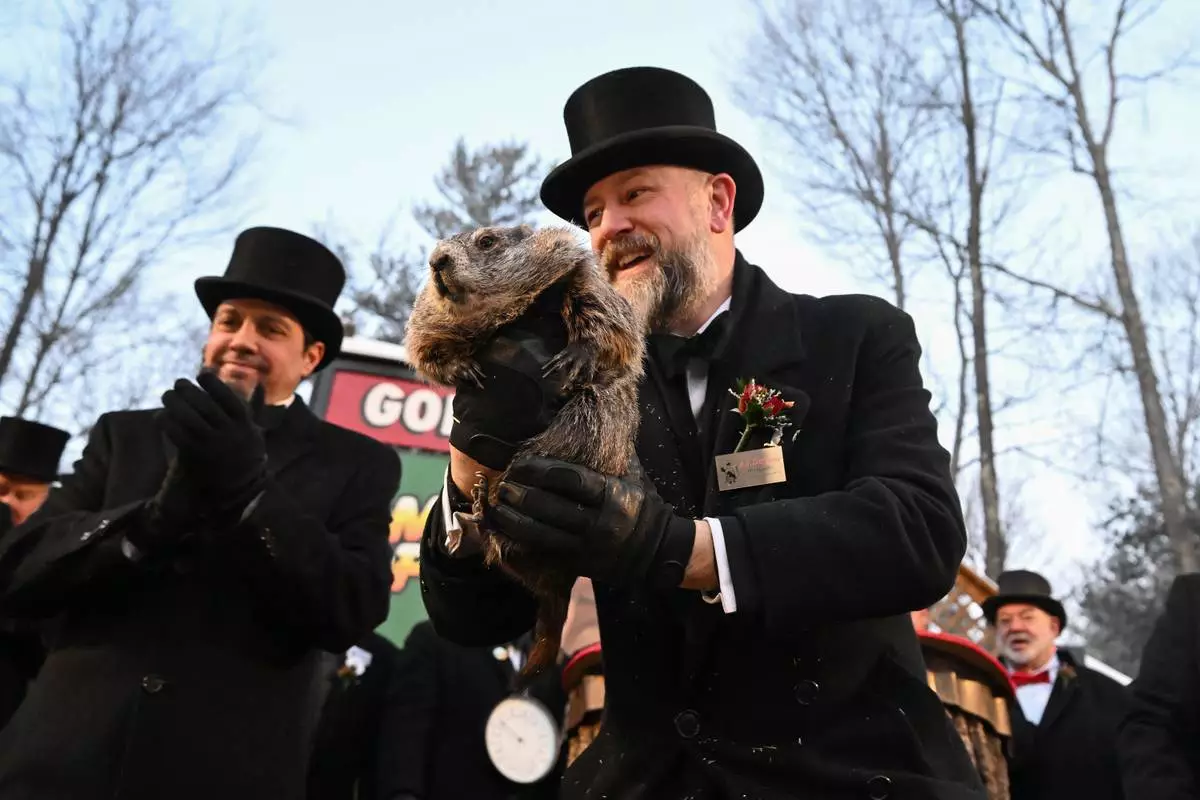
Groundhog Club handler A.J. Dereume holds Punxsutawney Phil, the weather prognosticating groundhog, during the 140th celebration of Groundhog Day on Gobbler's Knob in Punxsutawney, Pa., Monday, Feb. 2, 2026. Phil's handlers said that the groundhog has forecast six more weeks of winter. (AP Photo/Barry Reeger)
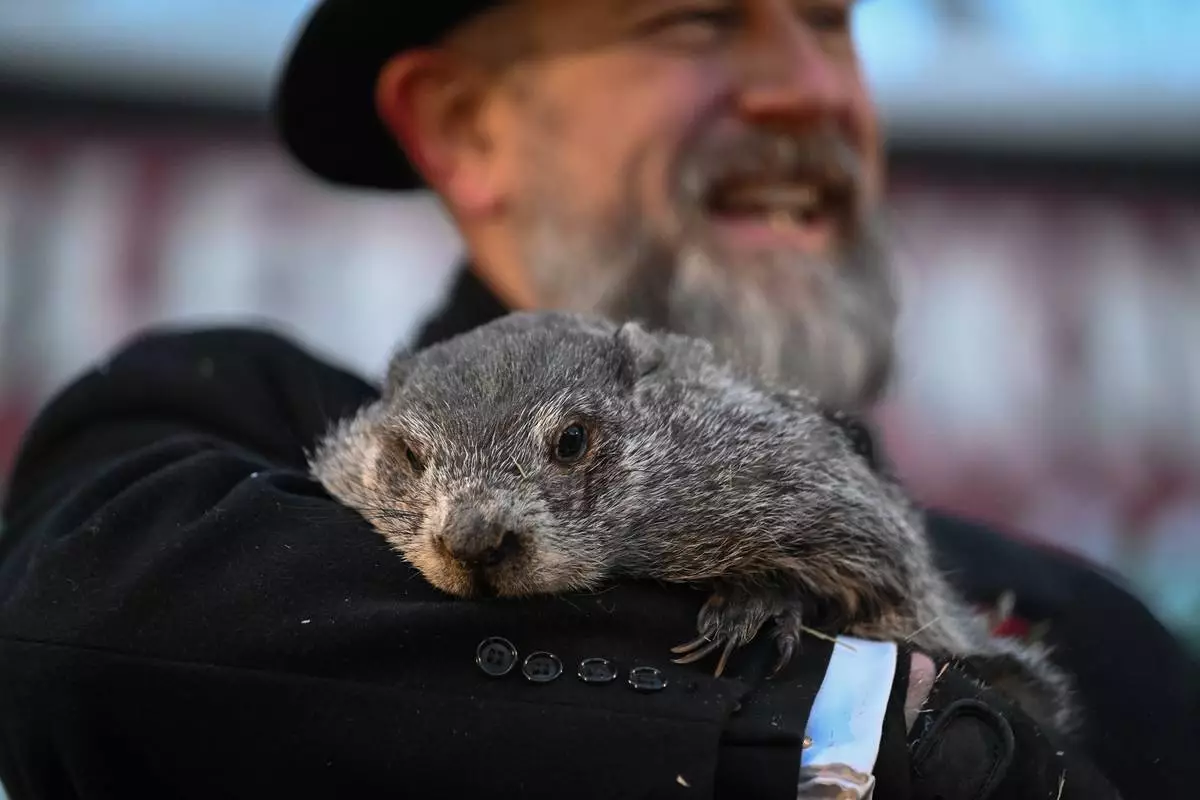
Groundhog Club handler A.J. Dereume holds Punxsutawney Phil, the weather prognosticating groundhog, during the 140th celebration of Groundhog Day on Gobbler's Knob in Punxsutawney, Pa., Monday, Feb. 2, 2026. Phil's handlers said that the groundhog has forecast six more weeks of winter. (AP Photo/Barry Reeger)
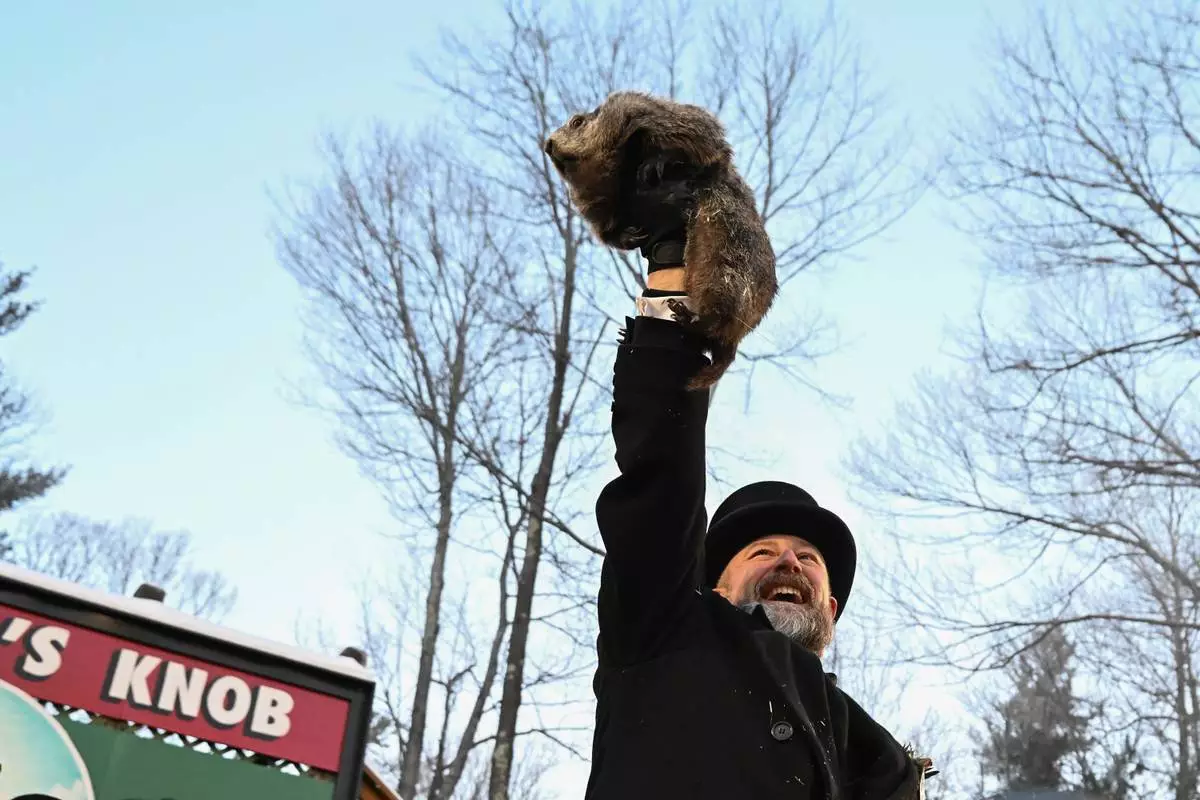
Groundhog Club handler A.J. Dereume holds Punxsutawney Phil, the weather prognosticating groundhog, during the 140th celebration of Groundhog Day on Gobbler's Knob in Punxsutawney, Pa., Monday, Feb. 2, 2026. Phil's handlers said that the groundhog has forecast six more weeks of winter. (AP Photo/Barry Reeger)
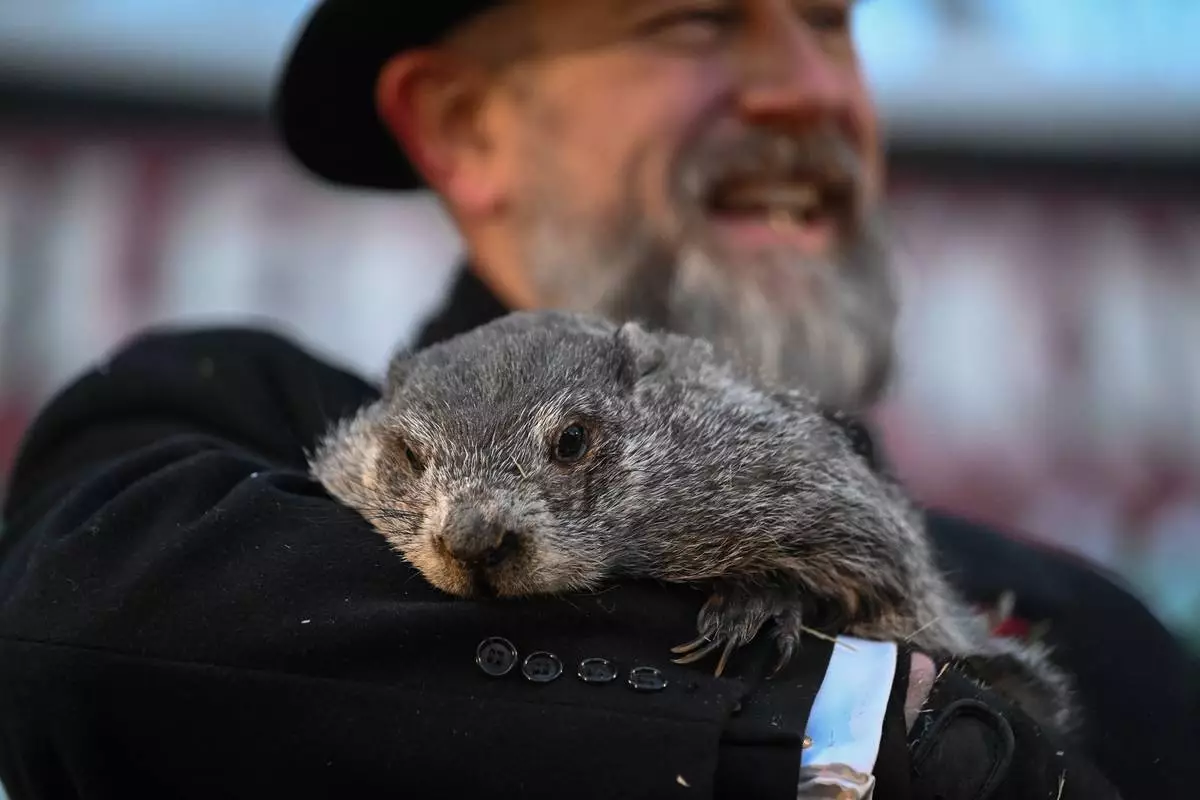
Groundhog Club handler A.J. Dereume holds Punxsutawney Phil, the weather prognosticating groundhog, during the 140th celebration of Groundhog Day on Gobbler's Knob in Punxsutawney, Pa., Monday, Feb. 2, 2026. Phil's handlers said that the groundhog has forecast six more weeks of winter. (AP Photo/Barry Reeger)
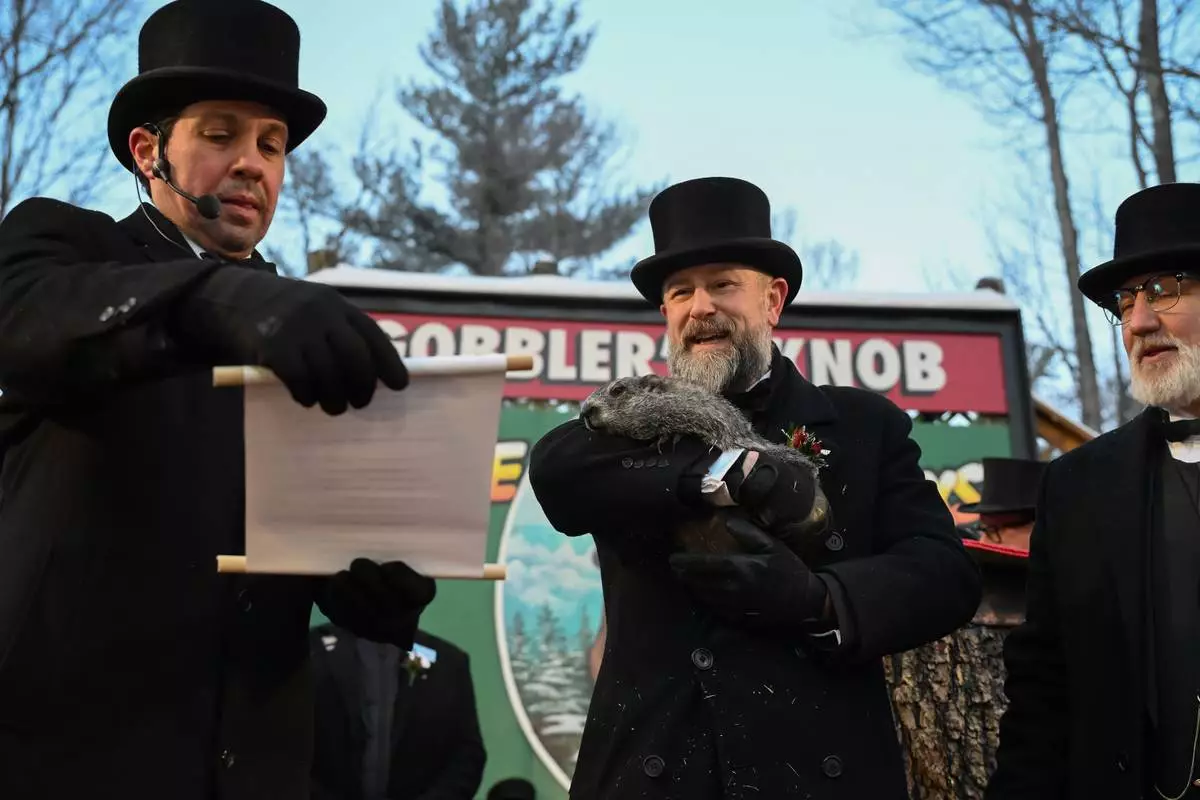
Groundhog Club Vice President Dan McGinley reads the scroll as handler A.J. Dereume holds Punxsutawney Phil, the weather prognosticating groundhog, during the 140th celebration of Groundhog Day on Gobbler's Knob in Punxsutawney, Pa., Monday, Feb. 2, 2026, Phil's handlers said that the groundhog has forecast six more weeks of winter. (AP Photo/Barry Reeger)
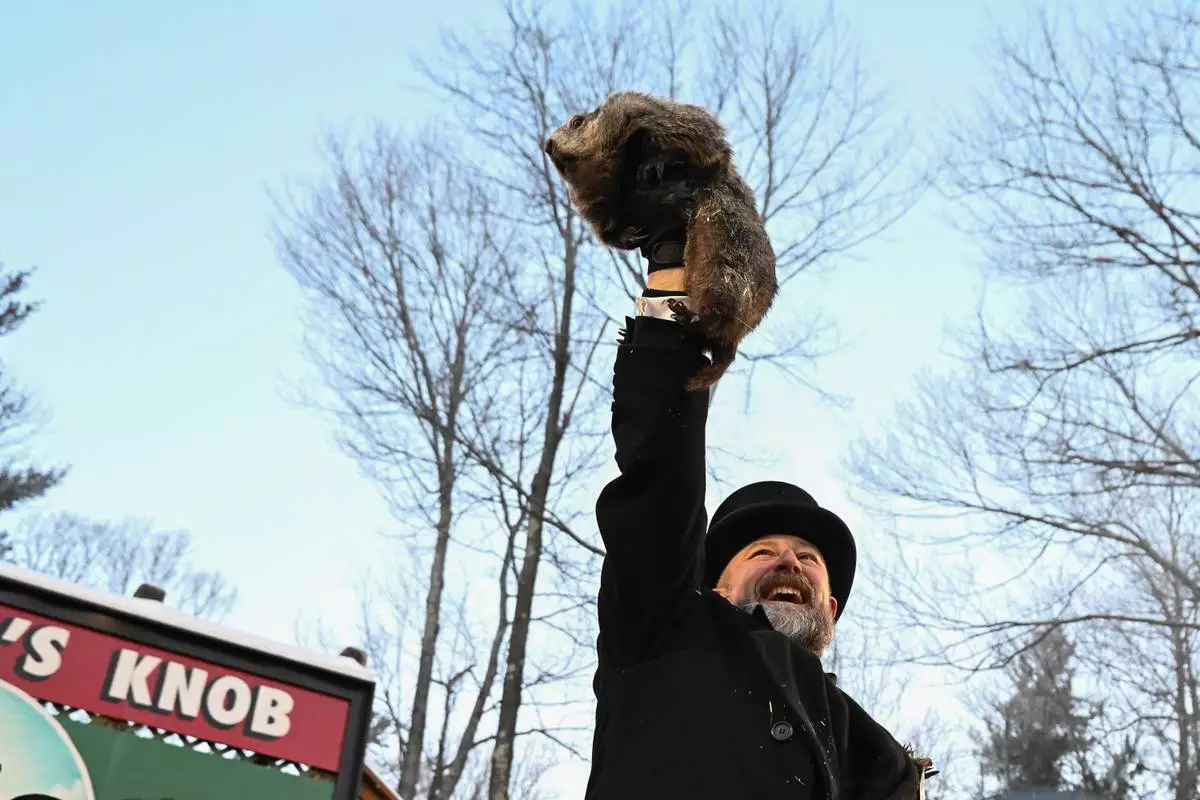
Groundhog Club handler A.J. Dereume holds Punxsutawney Phil, the weather prognosticating groundhog, during the 140th celebration of Groundhog Day on Gobbler's Knob in Punxsutawney, Pa., Monday, Feb. 2, 2026. Phil's handlers said that the groundhog has forecast six more weeks of winter. (AP Photo/Barry Reeger)
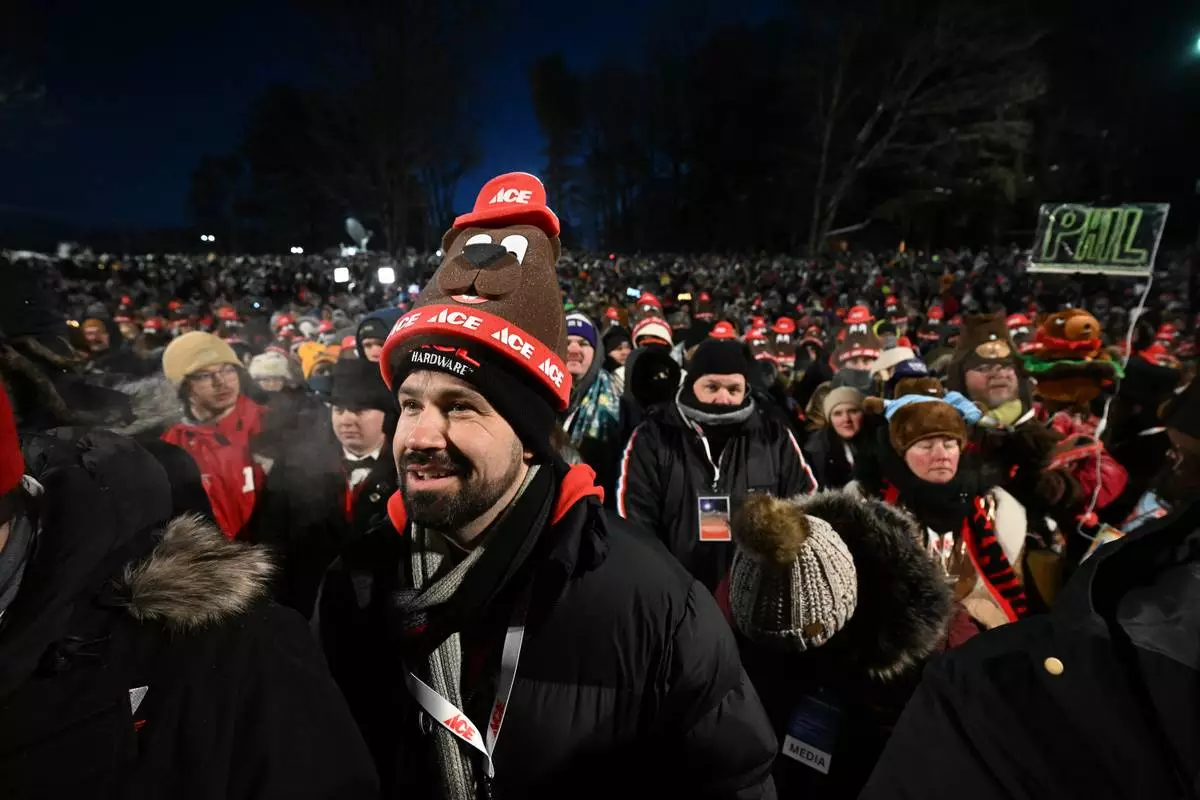
A crowd waits for Punxsutawney Phil, the weather prognosticating groundhog, to come out and make his prediction during the 140th celebration of Groundhog Day on Gobbler's Knob in Punxsutawney, Pa., Monday, Feb. 2, 2026. (AP Photo/Barry Reeger)
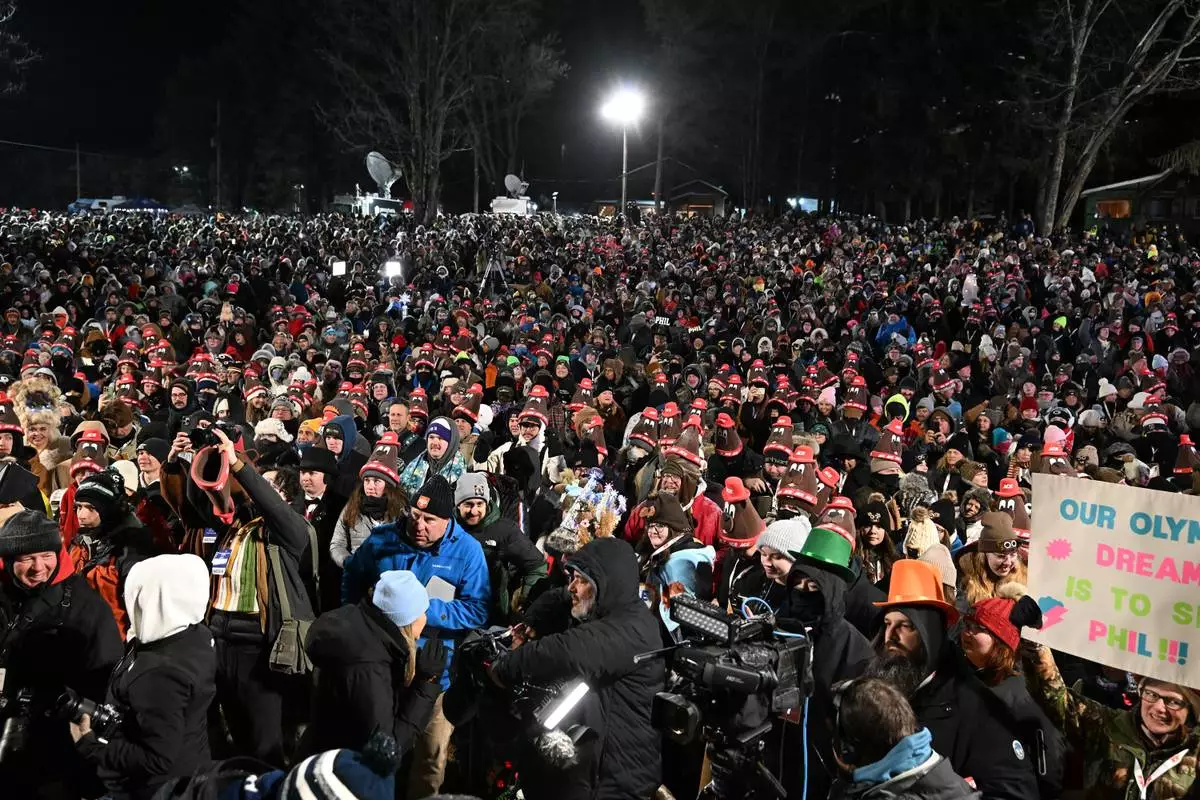
A crowd gathers while waiting for Punxsutawney Phil, the weather prognosticating groundhog, to come out and make his prediction during the 140th celebration of Groundhog Day on Gobbler's Knob in Punxsutawney, Pa., Monday, Feb. 2, 2026. (AP Photo/Barry Reeger)
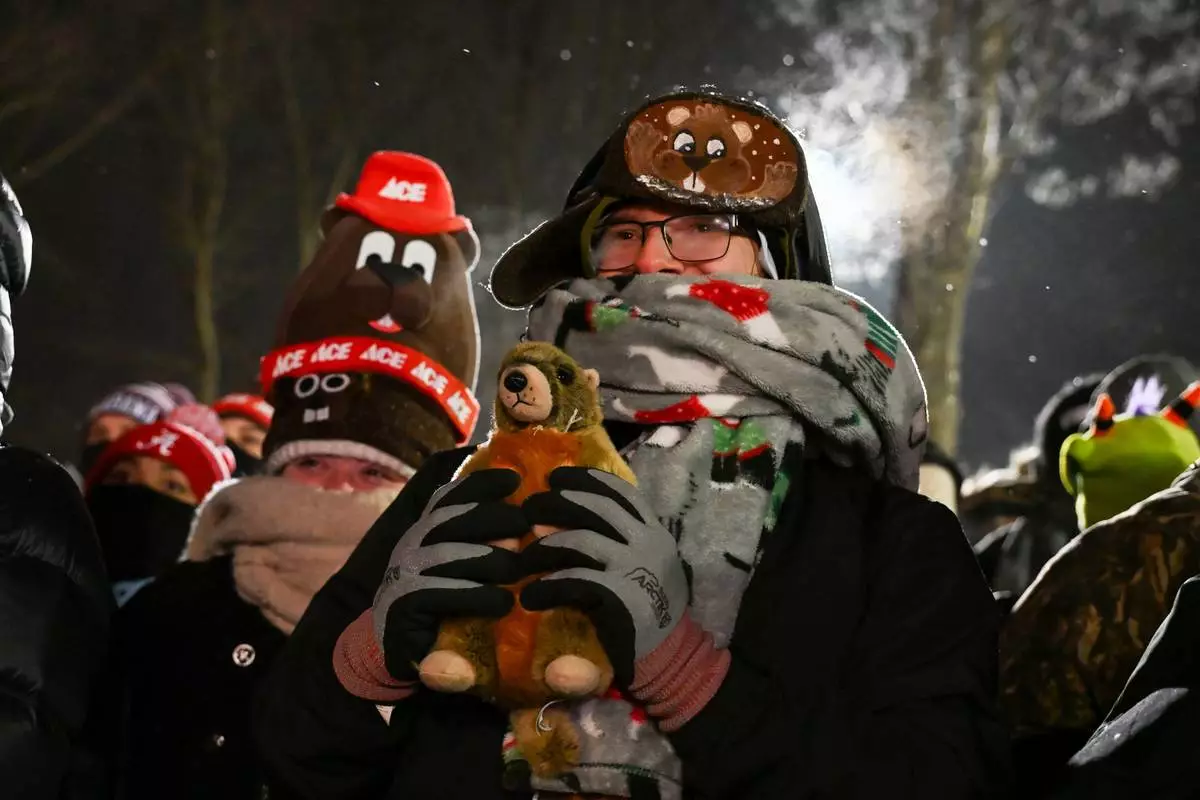
George Morar, of Youngstown, Ohio., celebrates while waiting for Punxsutawney Phil, the weather prognosticating groundhog, to come out and make his prediction during the 140th celebration of Groundhog Day on Gobbler's Knob in Punxsutawney, Pa., Monday, Feb. 2, 2026. (AP Photo/Barry Reeger)
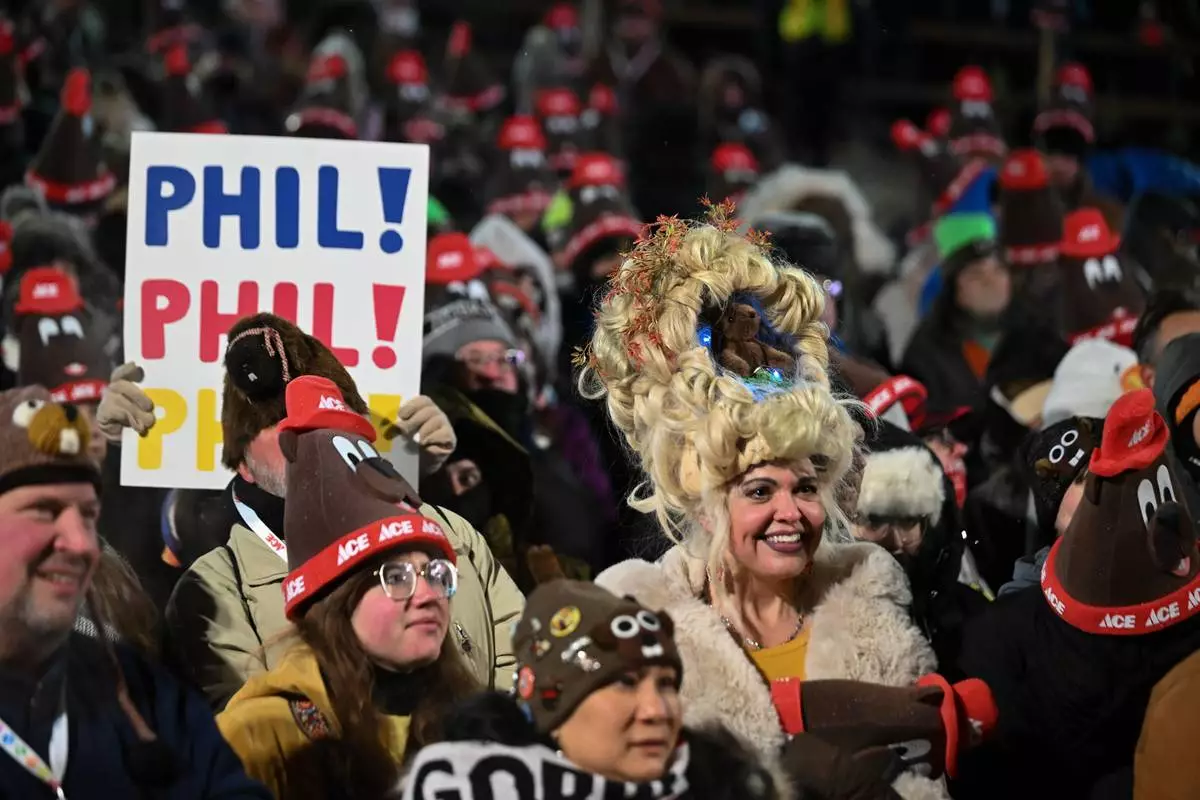
Toni Massey, of Bismack, N.D., right, celebrates while waiting for Punxsutawney Phil, the weather prognosticating groundhog, to come out and make his prediction during the 140th celebration of Groundhog Day on Gobbler's Knob in Punxsutawney, Pa., Monday, Feb. 2, 2026. (AP Photo/Barry Reeger)
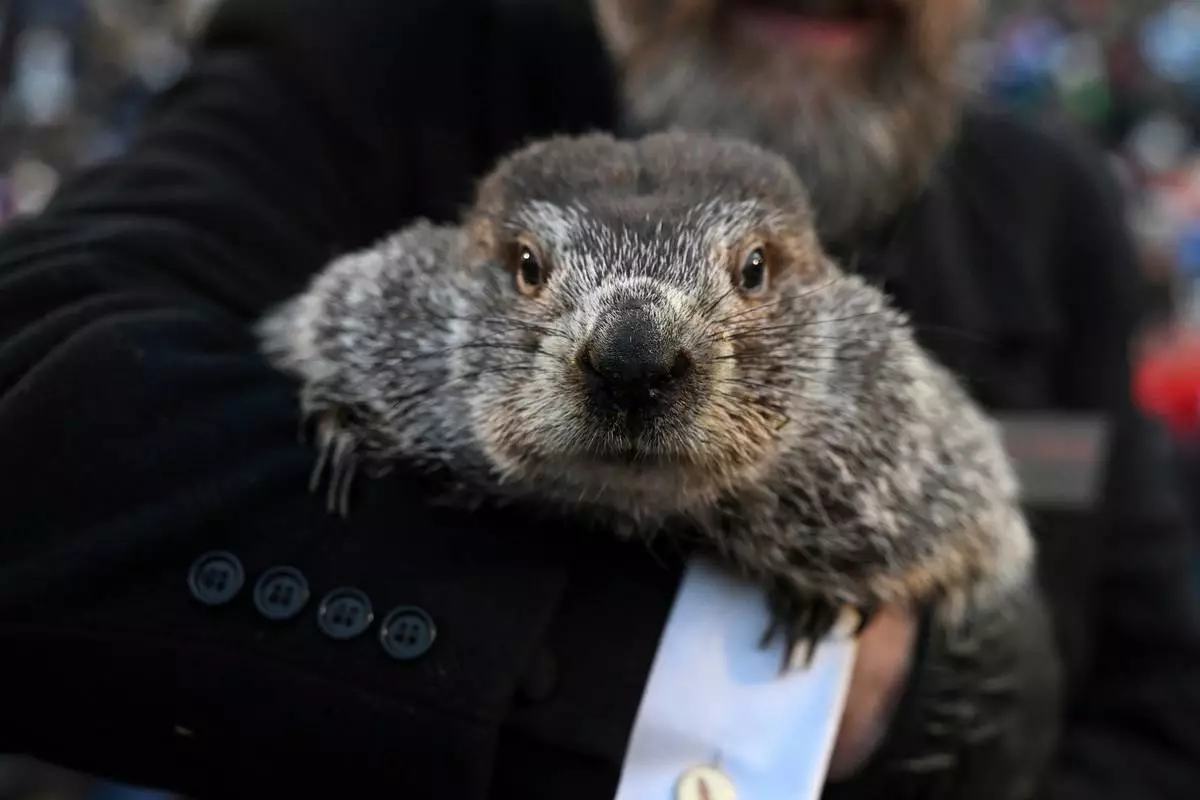
FILE - Groundhog Club handler A.J. Dereume holds Punxsutawney Phil, the weather prognosticating groundhog, during the 137th celebration of Groundhog Day on Gobbler's Knob in Punxsutawney, Pa., Feb. 2, 2023. (AP Photo/Barry Reeger, File)