Several lantern shows have lit up Xiamen, a coastal city in east China's Fujian Province, since Saturday, kicking off celebrations for the upcoming Chinese New Year, or Spring Festival, which falls on February 17 this year.
In the Xiamen Horticulture Expo Garden, the lantern show features nine themes, including Celebrating the Spring Festival and traditional Chinese mythological stories, with 31 lantern groups that create an immersive feast of lights for citizens and tourists.
Another lantern show in Fangte Theme Park of the city is dominated by a 16-meter-high lantern tower that attracts flows of visitors.
"We all wear Hanfu here, and I think it looks more beautiful this way, and it's also very interactive," said a visitor.
This year's Spring Festival marks the beginning of the Year of the Horse. It is one of the most important holidays in China, celebrated with family reunions and wishes for good luck in the coming year.

Lantern shows light up Xiamen for Spring Festival
Japanese people gathered in Tokyo on Friday to protest against the government's recent decision to revise the "three principles on transfer of defense equipment and technology" which now allows the export of lethal weapons.
On Tuesday, the Japanese government, led by Prime Minister Sanae Takaichi, officially revised the "three principles on transfer of defense equipment and technology" and their implementation guidelines.
The revisions scrap the restrictions that had limited arms exports to five non-combat categories, allow, in principle, the export of lethal weapons, permit transfers to nations engaged in active conflict under specified circumstances, and sideline parliament from the decision-making process -- crossing a line that previous governments had at least nominally upheld.
Protesters assembled in Shinjuku district on Friday evening, voicing strong opposition to the dangerous shift away from Japan's postwar pacifist principles and expressing deep concerns over Japan's failure to fully reflect on its wartime past.
"It's unforgivable. Revising the 'three principles on transfer of defense equipment and technology' through a simple Cabinet decision is absolutely unacceptable," said a protester.
"We should have properly reflected on the war that happened over 80 years ago, but we haven't. Is it acceptable if people are killed by the weapons, missiles, or bombs we export? Absolutely not. Such a thing must never be allowed to happen. That is why I strongly oppose this policy," said another protester.
Also on Friday, over a thousand protesters gathered in front of the Liberal Democratic Party (LDP) headquarters, holding placards and chanting slogans demanding the resignation of Takaichi.
They expressed growing frustration with the current administration and condemned the export of lethal weapons.
"This has gone too far. Japan is becoming an outrageous country. From exporting weapons to revising the Constitution, everything is shifting. The LDP has long had this tendency, and under the Takaichi administration, the situation has become even worse. If we don't stop this now, Japan will turn into a truly frightening nation," said a protester.
"Manufacturing and selling weapons that may be used to kill people is something the Japanese public cannot tolerate. The government made this decision arbitrarily, and it is completely unacceptable," said another protester.
"I really hope the government stops exporting lethal weapons. My child even asked me, 'Is Japan going to sell weapons and start a war?' We must do everything we can to prevent this from happening," said a mother participating in the rally, expressing her worry for future generations.
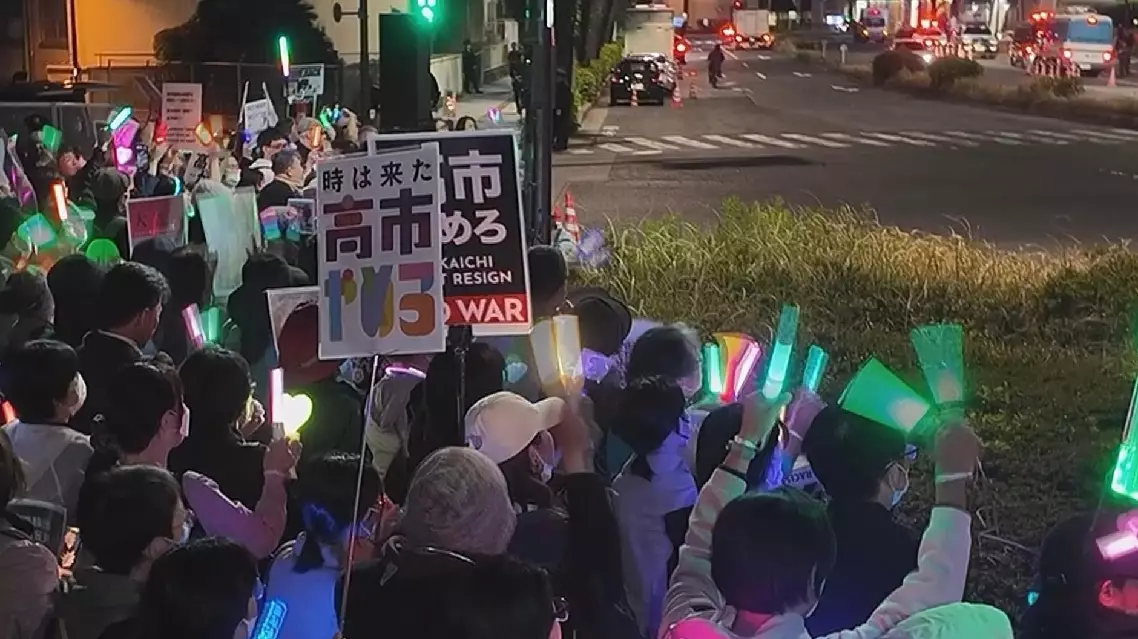
Protesters gather in Tokyo, protest against Japan's move to allow lethal weapon exports