As China's designer toy market scales up, localization is becoming a core business strategy for global brands, prompting overseas toymakers to rethink how they connect with Chinese consumers.
Chinese designer toys are stepping onto the world stage, but the influence isn't moving in just one direction. As Chinese toys go global, international players are going increasingly local in China.
Operating in China for more than a decade, Danish toy giant LEGO offers a clear example as its building sets are deeply woven into Chinese culture.
"Chinese New Year and the Spring Festival are obviously the biggest occasion in the country. We have put a lot of emphasis of making that product locally relevant by weaving in elements of Chinese culture," said Maciek Selinski, head of LEGO Group in China.
Chinese consumers are buying into it.
"When designer toys combine with Chinese culture, they feel more approachable -- and more a part of everyday life," said a customer.
For overseas brands looking to stay for the long haul, they must keep adapting — especially in a fast-moving market like China's.
"It has been a market which indeed is very vital and very innovative. That's something we acknowledge and we actually get inspired a lot from. Actually, many design elements globally get already inspired by Chinese designers, by Chinese culture, and many of those become very relevant globally," said Selinski.
Industry data shows that China's designer toy market is set to surpass 110 billion yuan (around 15.8 billion U.S. dollars) by 2026, almost twice its 2023 size.
"The growth is now filled more by the emotional consumption, and also the cultural identity, not just only by the products. Consumers are shifting from impulsive blind box purchases to more curative selective collecting," said Kathy Jiang, a partner expert at global strategy consulting firm Roland Berger.
"Many of the leading international toy brands they are moving from the global with local marketing to real authentic, deep localization. It's no longer about a simple translation. So the winning strategy is fusing global IP with Chinese cultural elements and also contemporary aesthetics," she added.
For global brands, China is no longer just a market to enter -- it's a culture to understand, and a conversation to join.
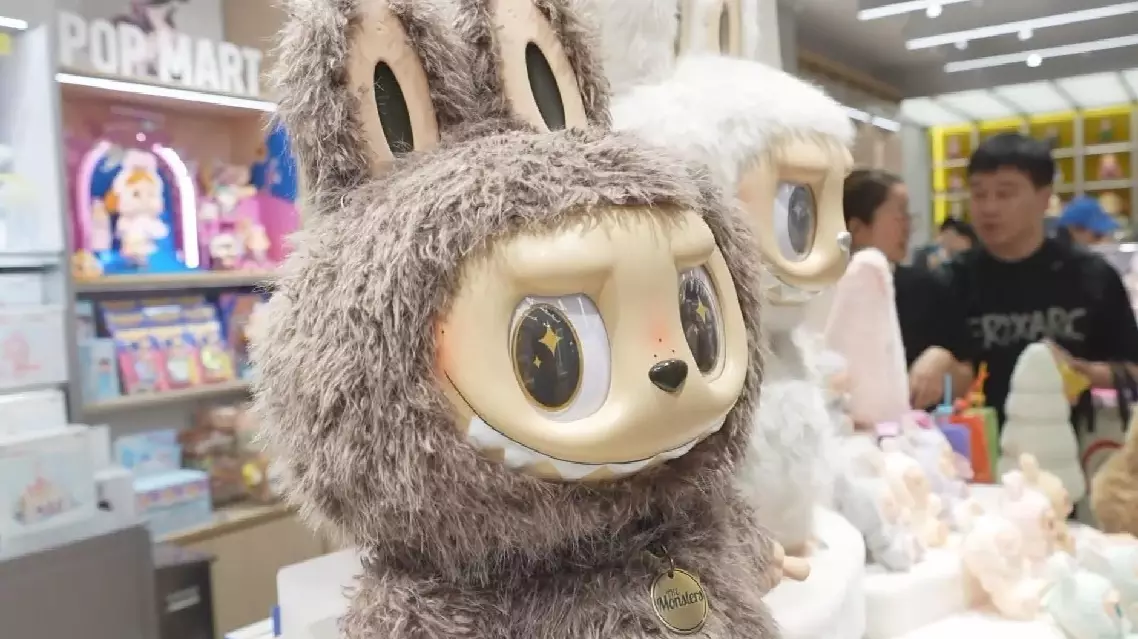
China's designer toy boom drives deeper localization by global brands