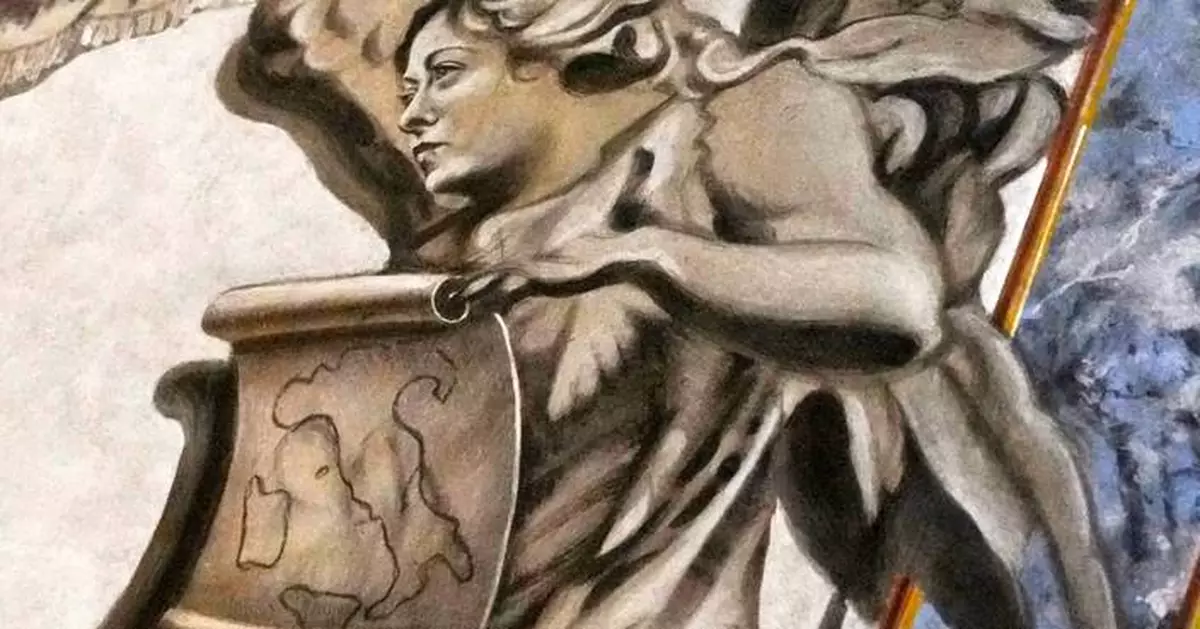
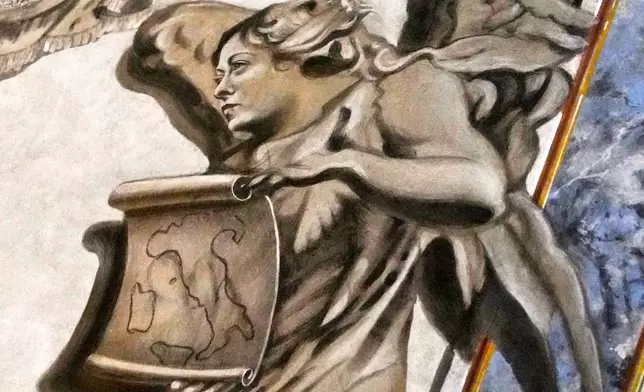
ROME (AP) — There is a long tradition of painters depicting real people in their religious art, but the appearance in a Roman church of a cherub that bears a striking resemblance to Premier Giorgia Meloni has sparked a minor scandal for both church and state in Italy.
The diocese of Rome and the Italian Culture Ministry both launched investigations into the recent renovations at the Basilica of San Lorenzo in Lucina, after photographs of the Meloni-esque cherub were published in Italian newspapers this weekend. Their swift and harsh reactions indicated little tolerance for the profane in a sacred place.
Click to Gallery
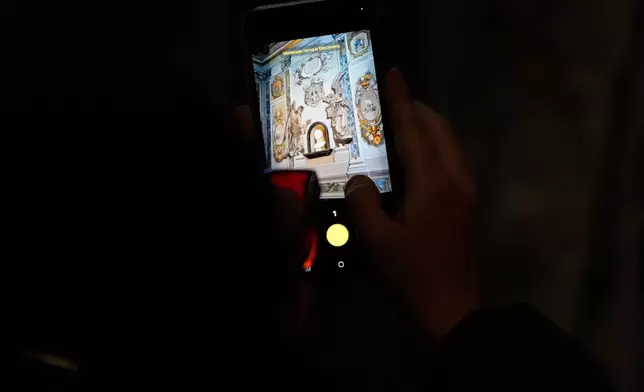
A man takes a picture at a restored fresco to the memory of late Italy's King Umberto II depicting Angels inside the Basilica of St. Lawrence in Lucina in Rome, Sunday, Feb. 1, 2026. (AP Photo/Gregorio Borgia)
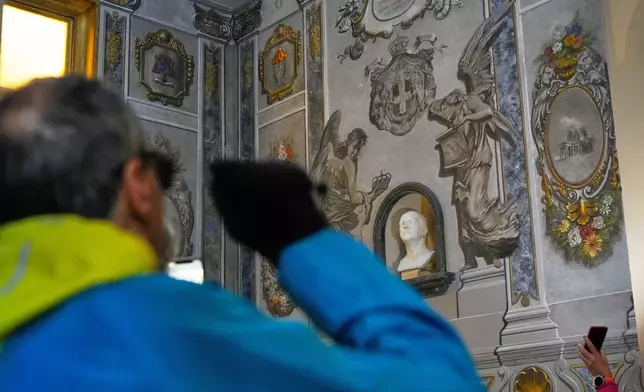
People take pictures at a restored fresco to the memory of late Italy's King Umberto II depicting Angels inside the Basilica of St. Lawrence in Lucina in Rome, Sunday, Feb. 1, 2026. (AP Photo/Gregorio Borgia)
A restored chapel with Angels depicted on a fresco to the memory of late Italy's King Umberto II is seen inside the Basilica of St. Lawrence in Lucina in Rome, Sunday, Feb. 1, 2026. (AP Photo/Gregorio Borgia)
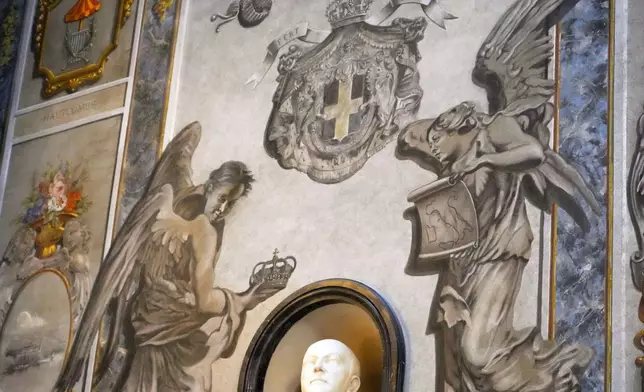
A detail of a restored chapel with Angels depicted on a fresco to the memory of late Italy's King Umberto II inside the Basilica of St. Lawrence in Lucina in Rome, Sunday, Feb. 1, 2026. (AP Photo/Gregorio Borgia)
The ruckus has given the basilica, already well known as one of the oldest churches in Rome, newfound celebrity status. It was jammed on Sunday and Monday with curiosity-seekers straining to photograph the angel in a side chapel up near the front altar, at times disrupting Mass.
Meloni, for her part, tried to tamp down the outcry and make light of it.
“No, I definitely don’t look like an angel,” Meloni wrote on social media with a laughing/crying emoji alongside a photo of the work.
The basilica is located on one of Rome’s fanciest piazzas just down the block from the Spanish Steps. It was consecrated in 440 by Pope Sixtus III and subsequently enlarged and rebuilt. It is now the property of the Interior Ministry, which is responsible for its upkeep.
In 2000, one of the front chapels was renovated to include a bust of the last king of Italy, Umberto II. Included in the decoration was a cherub holding a map of Italy, seemingly kneeling down before the king.
That figure is now under scrutiny since the cherub’s face, after a recent restoration, appears modeled on Meloni's. It is problematic because the cherub appears in a position of deference to the king. Italians rejected the monarchy after World War II because of its support for Fascist dictator Benito Mussolini; Meloni's right-wing party has its roots in the neo-fascist party that succeeded Mussolini.
The cherub was restored after water infiltrations damaged the basilica starting in 2023. The parish priest, the Rev. Daniele Micheletti, acknowledged the resemblance to Meloni but dismissed the significance, noting that plenty of artists depicted real life people in their works.
Caravaggio is said to have modeled the Virgin Mary on a prostitute in one of his works; Michelangelo painted himself as St. Bartholomew in the Sistine Chapel’s “The Last Judgement.”
“The priest is not responsible for the decorations in the sense that the owner is someone else,” Micheletti told The Associated Press on Monday in his office, as his phone rang constantly. “So, what do they want from me? I did not do the painting.”
Over the weekend, the Culture Ministry sent a special delegate, Daniela Porro, and ministry officials to the basilica to survey the angel. Their aim, according to a ministry statement, was to “ascertain the nature of the work” and “decide what to do.”
The restorer, for his part, has denied wrongdoing and denied he used Meloni as a model. In interviews with Italian media, Bruno Valentinetti said Meloni was in the eye of the beholder and that he merely restored the original painting, which he himself had made in 2000.
The investigations are looking to determine what the original 2000 cherub looked like.
The vicar of Rome, Cardinal Baldassare Reina, was far less forgiving. He announced an investigation and criticized Micheletti’s blasé attitude in insisting that a political figure had no place in church art.
“In renewing the diocese of Rome’s commitment to the preservation of its artistic and spiritual heritage, it is firmly reiterated that images of sacred art and Christian tradition cannot be misused or exploited, as they are intended exclusively to support liturgical life and personal and communal prayer,” the diocese said a statement.
Associated Press religion coverage receives support through the AP’s collaboration with The Conversation US, with funding from Lilly Endowment Inc. The AP is solely responsible for this content.
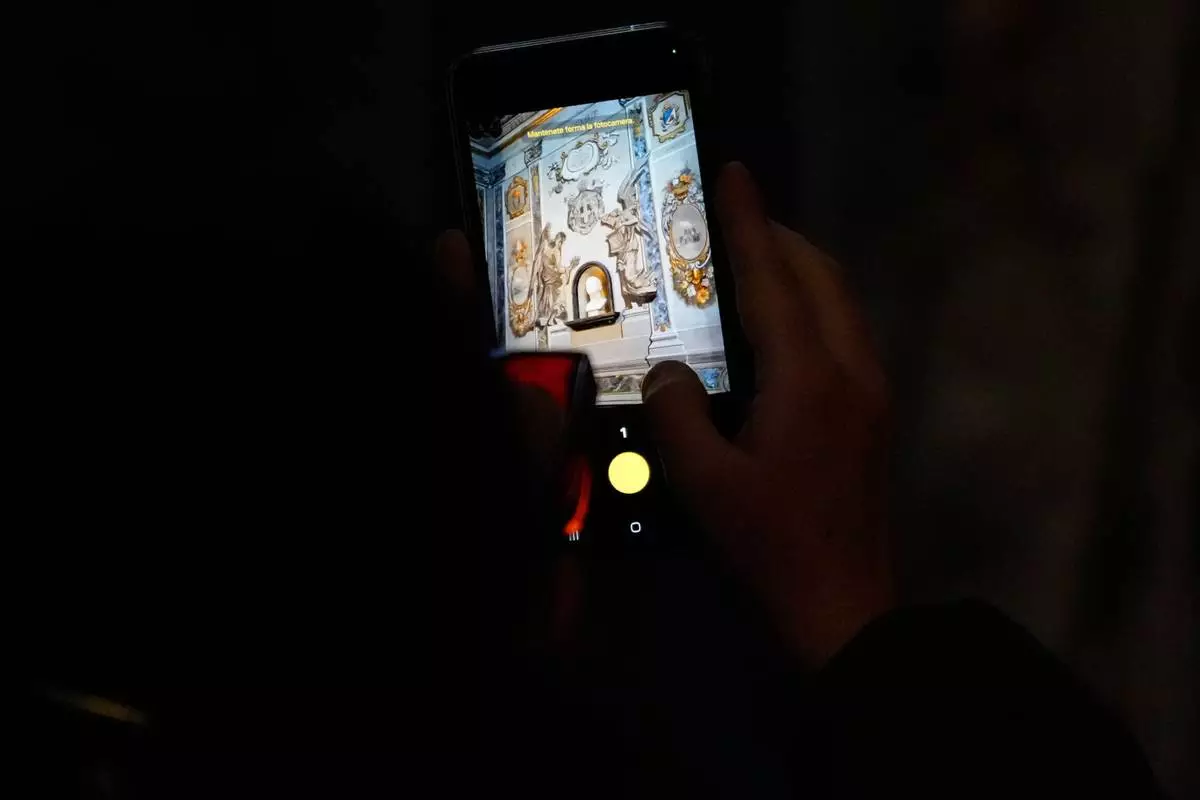
A man takes a picture at a restored fresco to the memory of late Italy's King Umberto II depicting Angels inside the Basilica of St. Lawrence in Lucina in Rome, Sunday, Feb. 1, 2026. (AP Photo/Gregorio Borgia)
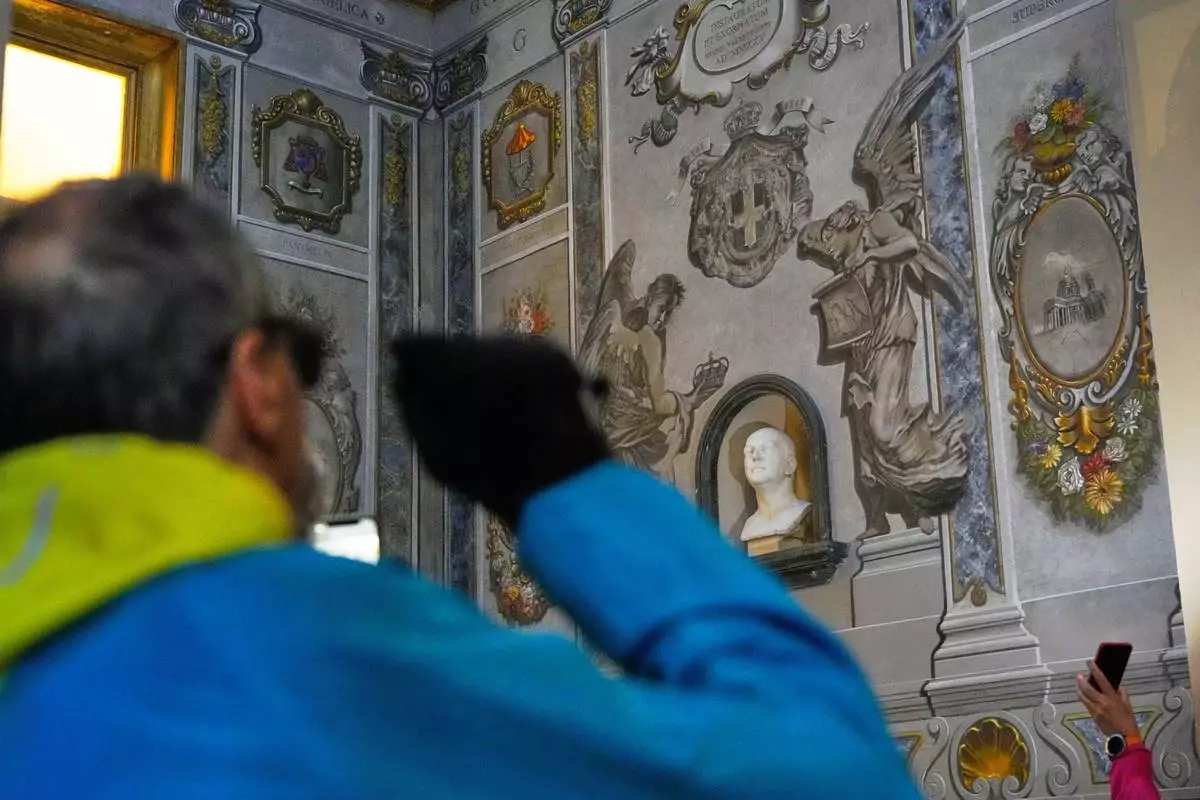
People take pictures at a restored fresco to the memory of late Italy's King Umberto II depicting Angels inside the Basilica of St. Lawrence in Lucina in Rome, Sunday, Feb. 1, 2026. (AP Photo/Gregorio Borgia)
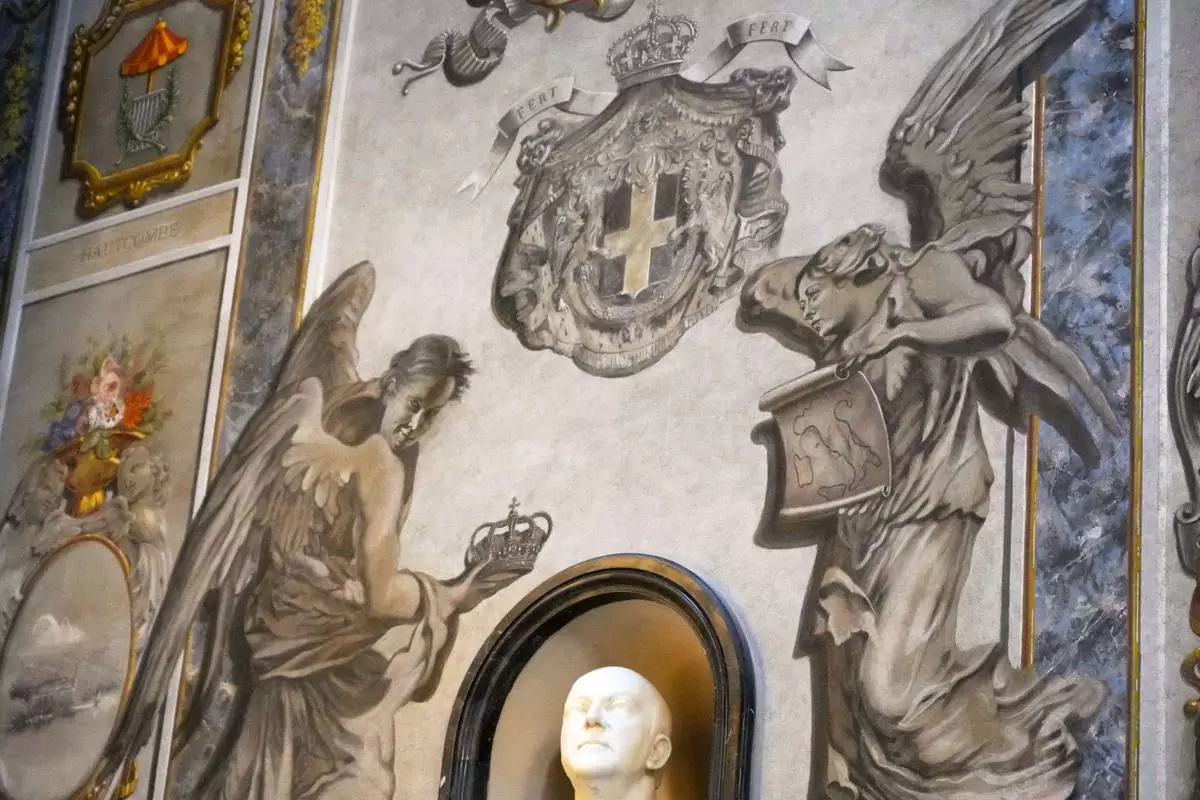
A restored chapel with Angels depicted on a fresco to the memory of late Italy's King Umberto II is seen inside the Basilica of St. Lawrence in Lucina in Rome, Sunday, Feb. 1, 2026. (AP Photo/Gregorio Borgia)
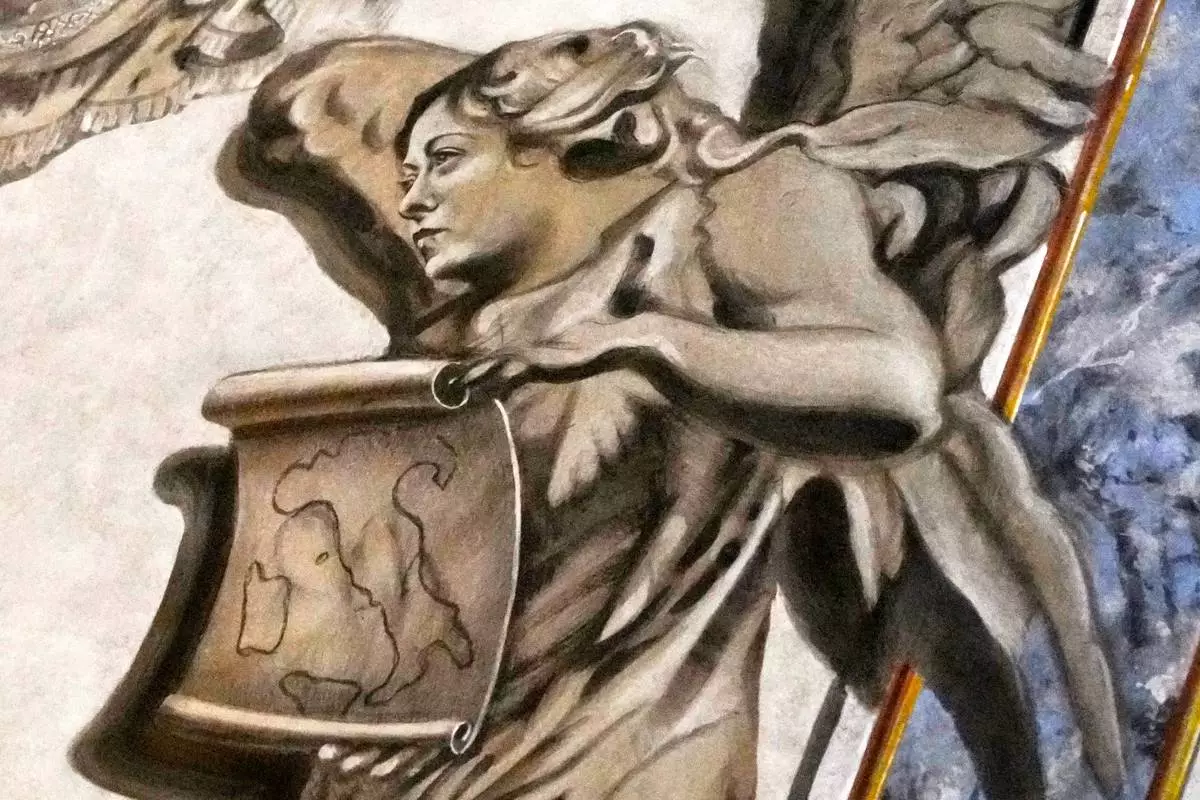
A detail of a restored chapel with Angels depicted on a fresco to the memory of late Italy's King Umberto II inside the Basilica of St. Lawrence in Lucina in Rome, Sunday, Feb. 1, 2026. (AP Photo/Gregorio Borgia)
KAMPALA, Uganda (AP) — Uganda on Wednesday ordered the closure of its border with Congo, where suspected cases of a rare type of Ebola are surging, and as cases have been confirmed at home after Ugandan health workers were exposed to the disease from Congolese patients.
The measure, which goes against the guidance by the World Health Organization, underscores growing fears of contagion in East Africa from Bundibugyo, a rare type of the Ebola virus that is behind this outbreak and that has no approved medicines or vaccines.
Like Congo, Uganda has faced Ebola outbreaks in the past. A local Ugandan task force made the decision on the border closure. The Ugandan health workers were exposed to the virus by Congolese patients who had crossed the border before the outbreak was declared in eastern Congo on May 15.
Border crossings will be authorized only in emergency cases, including for the outbreak response, cargo or security reasons, Dr. Diana Atwine of the Ugandan Ministry of Health, told journalists. Anyone entering from Congo under emergency circumstances will be taken into mandatory isolation for 21 days.
Tracing and isolating Ebola contacts is seen as key to stopping the spread of the disease, which usually manifests as hemorrhagic fever. The virus is spread through close contact with sick or deceased patients’ bodily fluids. Experts say healthcare workers and family members caring for patients face the highest risk.
The number of suspected cases in eastern Congo is nearing 1,000, with at least 220 suspected deaths. Congo’s health ministry on Tuesday said 101 cases have been confirmed, and they are looking into over 3,000 possible contacts.
On Wednesday, Congolese authorities said that the first person who recovered from the Bundibugyo virus has been released home from a treatment center in Rwampara, one of the towns in eastern Congo at the heart of the outbreak.
WHO has discouraged border closures with Congo while acknowledging that neighboring countries are at high risk of contagion. The U.N. health agency has declared this outbreak a public health emergency of international concern.
Closures "push the movement of people and goods to informal border crossings that are not monitored, thus increasing the chances of the spread of disease," the agency said.
The Uganda-Congo border is several hundred miles long and crossed by numerous footpaths beyond formal border posts. Many people come and go in the course of a day to visit families or to trade.
Congolese health authorities are struggling to contain the outbreak, which WHO says is outpacing them. The rare type of Ebola was confirmed weeks late as tests were carried out for a more common type. Challenges also include the threat from armed groups in eastern Congo, a large number of displaced people and poor infrastructure.
WHO's Director-General Tedros Adhanom Ghebreyesus called on Wednesday for a ceasefire in eastern Congo to allow safe access for responders and others, saying on social media that “attacks on health facilities make tracking cases and their contacts nearly impossible.”
Responders in Congo have said they are underprepared and under-protected for this outbreak, while conflict-traumatized residents, long wary of outsiders, have attacked a number of clinics and hurled stones and abuse at volunteers trying to make people aware of the virus and its risks.
Infected people or those have been in contact should not undertake international travel unless it’s a medical evacuation, WHO has said. On Wednesday, the Trump administration said it is planning to send Americans who are exposed to Ebola to a new facility in Kenya instead of flying them to the United States.
Uganda has reported seven cases of Ebola, including the first case of a 59-year-old man who died in Kampala, the country's capital, on May 14. While the Ebola case load is not spiking, the number of locals exposed to infection via health workers has been rising.
“They have families, and so the number has been increasing,” Atwine, the Ugandan health official, said of the health workers.
She also said she was dismayed to see some Ugandans forming crowds to celebrate Arsenal as British Premier League champions. The team has a large following in Uganda. Atwine urged people to be vigilant, avoid shaking hands and use sanitizer.
Congo has had 17 Ebola outbreaks. Health experts say aid cuts last year by the U.S. and other rich nations are devastating for eastern Congo, in part because of the region’s unique problems.
Aid groups fighting this outbreak say they don’t have the equipment they need, including face shields and suits to protect health workers from infection, testing kits and body bags needed to safely bury victims.
Associated Press writer Jean-Yves Kamale in Kinshasa, Congo, contributed to this report.
For more on Africa and development: https://apnews.com/hub/africa-pulse
The Associated Press receives financial support for global health and development coverage in Africa from the Gates Foundation. The AP is solely responsible for all content. Find AP’s standards for working with philanthropies, a list of supporters and funded coverage areas at AP.org.
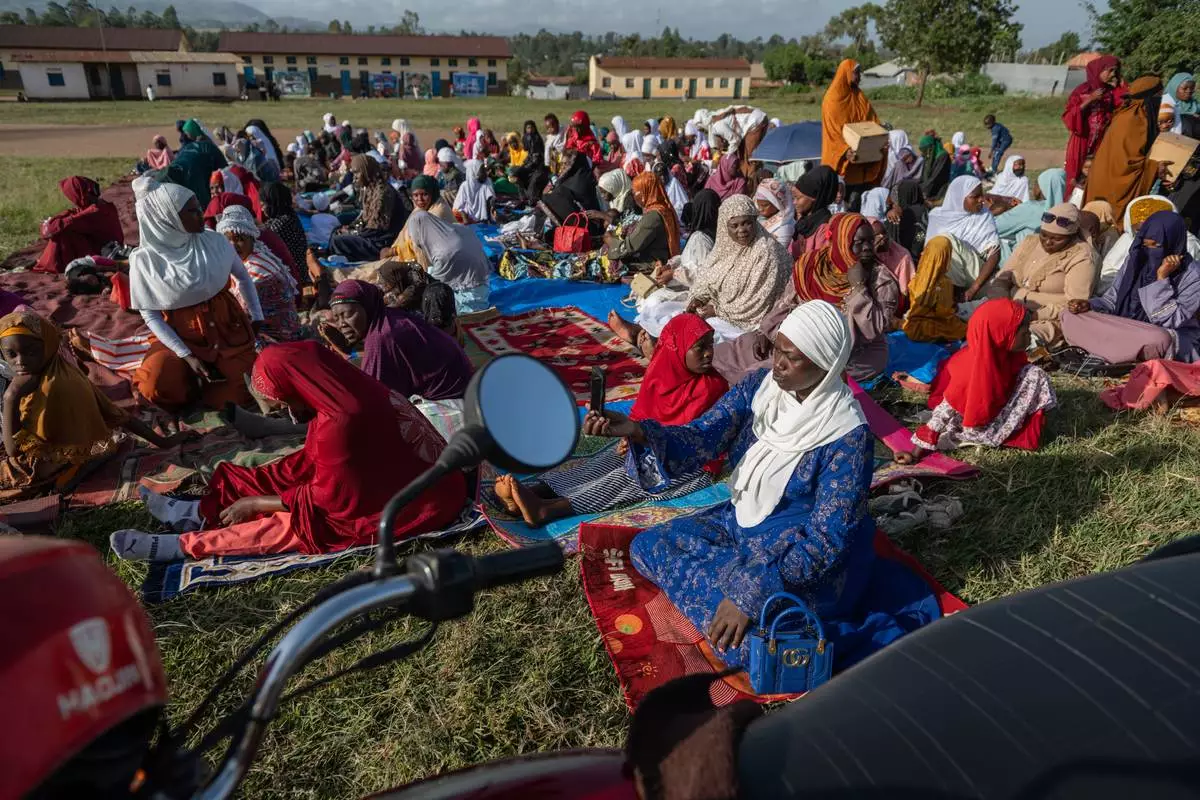
Muslims gather to pray at Sayo Muhamed School during the Eid al-Adha celebration amid an Ebola outbreak in Bunia, Congo, Wednesday, May 27, 2026. (AP Photo/Moses Sawasawa)
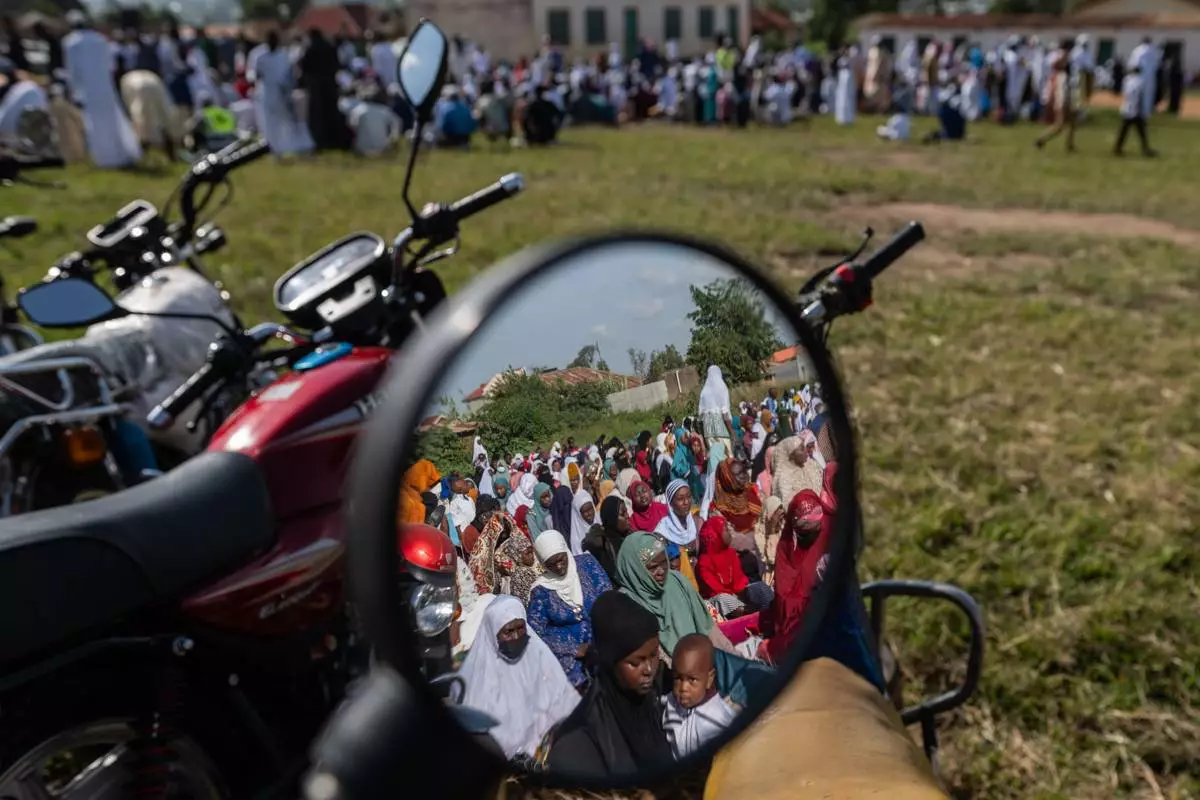
Muslims are reflected in a motorcycle mirror as they gather to pray at Sayo Muhamed School during the Eid al-Adha celebration amid an Ebola outbreak in Bunia, Congo, Wednesday, May 27, 2026. (AP Photo/Moses Sawasawa)
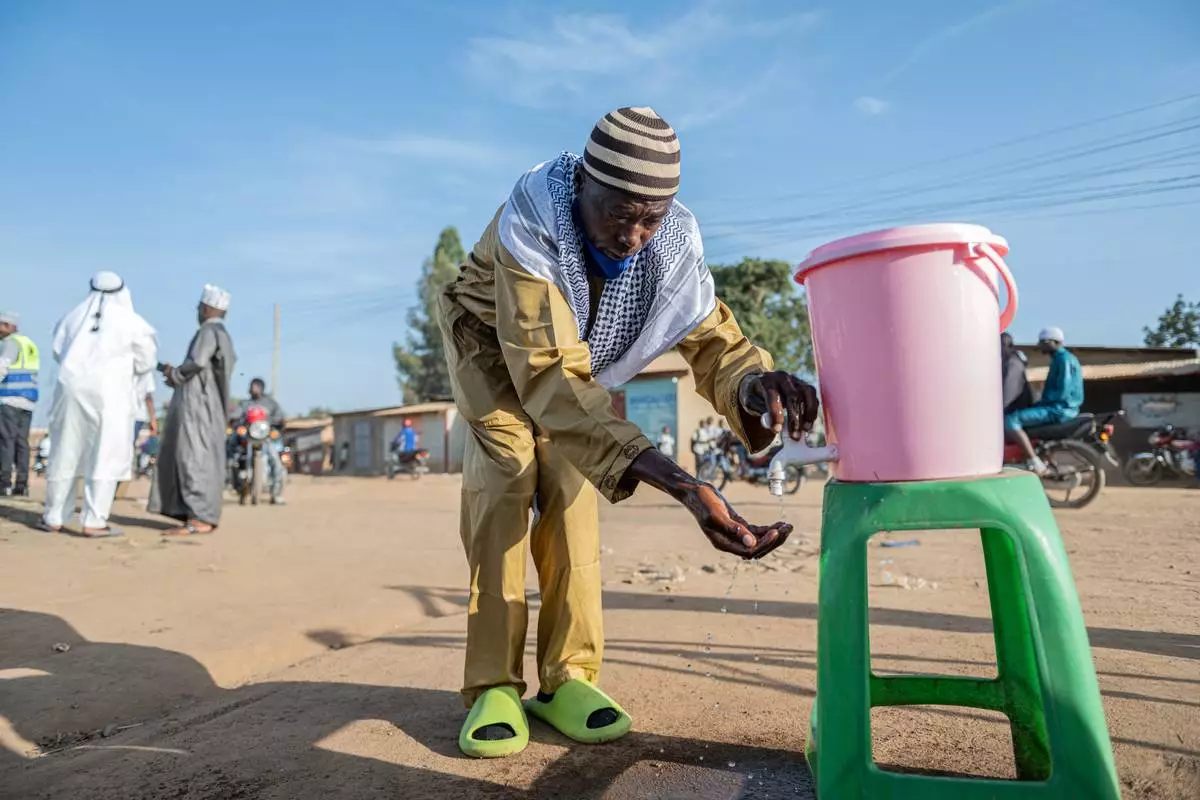
A Muslim washes his hands as a precaution against Ebola before attending the Eid al-Adha prayers at Sayo Muhamed School in Bunia, Congo, Wednesday, May 27, 2026. (AP Photo/Moses Sawasawa)
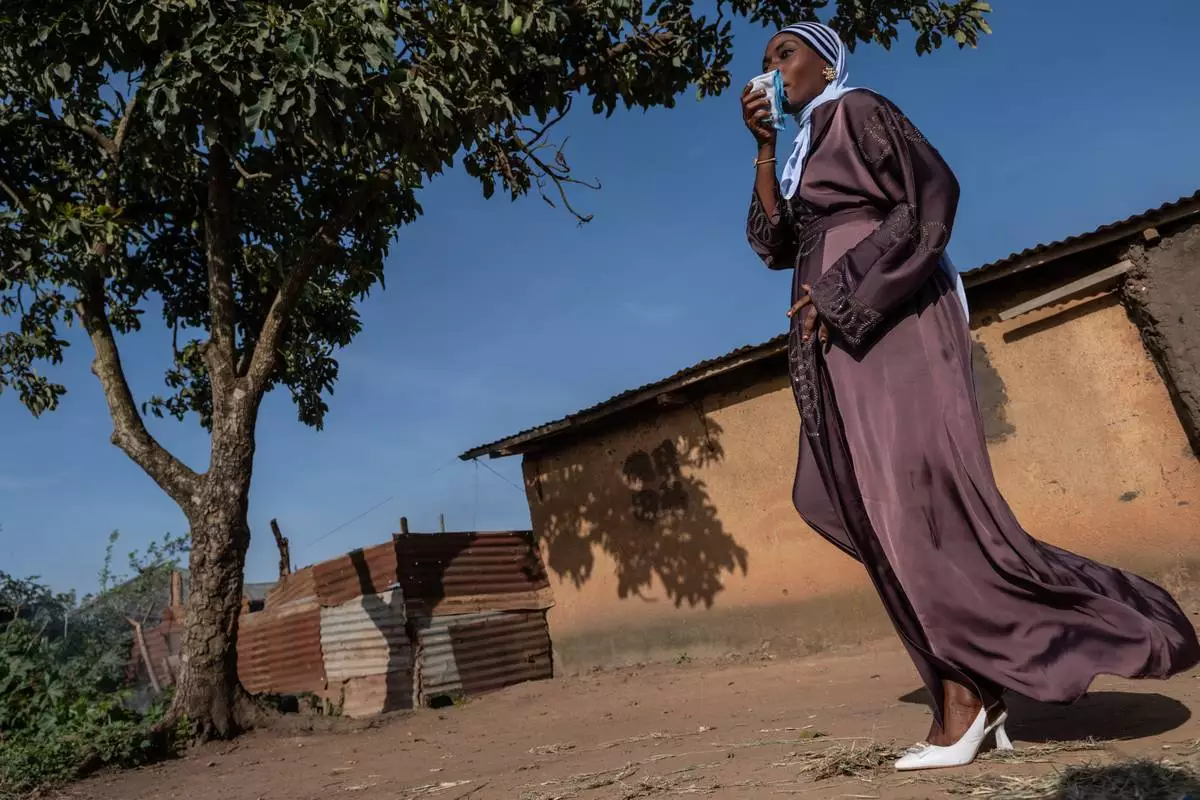
A Muslim woman walks towards the prayer grounds at Sayo Muhamed School to perform Eid al-Adha prayers amid an Ebola outbreak in Bunia, Congo, Wednesday, May 27, 2026. (AP Photo/Moses Sawasawa)