Skip to Content Facebook Feature Image

From Montreal to Milan: Christina Carreira's journey to US citizenship and the Winter Olympics

News

From Montreal to Milan: Christina Carreira's journey to US citizenship and the Winter Olympics
News

News

From Montreal to Milan: Christina Carreira's journey to US citizenship and the Winter Olympics

2026-02-03 03:12 Last Updated At:03:31

Christina Carreira made the trip across the Blue Water Bridge separating Port Huron in Northern Michigan from the Canadian town of Sarnia so many times that border officials came to know her by name.

They would ask how practice went. How she fared in her latest competition. What was next for Carreira and Anthony Ponomarenko, her long-time ice dance partner, and whether they'd heard any news as the Milan Cortina Olympics approached.

“Most of them were very friendly,” Carreira says.

The news the couple was waiting for finally arrived in November, when all the paperwork and years spent commuting from Port Huron to their training base in London, Ontario, paid off: Carreira, who was born in Montreal, had become a U.S. citizen.

That cleared the way for her to compete for the country at the Winter Games.

“The process of becoming an American was pretty tough, and it took forever,” Carreira says. “It was very, very stressful.”

The rules of the International Olympic Committee state that athletes must be citizens of the nation they represent. Many countries are accommodating to foreign talent, offering expedited citizenship through a practice known as “sports migration.” That is rarely the case in the U.S., where athletes typically must endure the yearslong process like anyone else.

In fact, the inability of pairs skater Alisa Efimova to get her passport in time — despite the efforts of U.S. Figure Skating, the Skating Club of Boston and even her elected Massachusetts senators — kept her from being on the American team headed to Italy.

It was a blow to the U.S. squad, too. Efimova and her partner, Misha Mitrofanov, are the reigning pairs national champions.

“We were waiting for a last-minute miracle to make it happen,” Mitrofanov says.

Carreira didn't want to leave her citizenship situation to a miracle. And she didn't want anybody reviewing her application to have any questions about it. So, rather than staying in Canada for a few days at a time, the 25-year-old would make the two-hour drive each way — longer if the bridge was out or there was road work — on a daily basis to get their training accomplished.

“I would listen to podcasts. I'd listen to music. I'm a huge ‘Dance Moms’ fan,” Carreiera says with a laugh.

One of the biggest rivals of Carreira and Ponomarenko — besides teammates Madison Chock and Evan Bates — are Laurence Fournier Beaudry and Guillaume Cizeron. She also was born in Montreal and has spent most of her career representing Canada, but had to search for a new partner when Nikolaj Sørensen was suspended by Skate Canada.

Cizeron was available after Gabriella Papadakis stepped away following their gold medal for France at the Beijing Olympics, so Beaudry asked him to team up early last year.

She was granted French citizenship in November, eight months later, and the IOC approved her nationality change in December.

There are many such cases in figure skating.

Anastasia Golubeva was born in Moscow but represents Australia in pairs with her partner, Hektor Moore. Olga Mikutina was born in Ukraine but has represented Austria for nearly a decade. Israeli-born Alexandra Feigin competes for Bulgaria, and pairs skater Deanna Stellato-Dudek, who still calls Chicago home, represents Canada in pairs with Maxime Deschamps.

Such nationality switches happen in plenty of other sports, whether it be American hockey players representing other, less powerful nations on Olympic ice, or San Francisco native Eileen Gu choosing to represent China in freestyle skiing.

Yet the movement of an athlete from another nation to the U.S. is relatively rare because its a long, tedious and time-consuming process.

"I've lived in the U.S. for almost 10 years at this point," says Olympic ice dancer Vadym Kolesnik, who was born in Kharkiv, Ukraine, who gained his American citizenship last summer and will compete in Milan with his partner, Emilea Zingas.

“I have a car. I have a house. I have a dog. I feel very honored to represent the U.S. at such a high level,” Kolesnik says.

“He represents the American dream very well,” Zingas says. "When he got here he didn’t speak the language; he learned the language. He works here, he puts so much into representing the United States well. It is very special.”

Newly minted Americans such as Carreira and Kolesnik realize they've obtained their citizenship during a fraught geopolitical time. Many actions of the Trump administration, whether related to Greenland or domestic immigration, have been deeply unpopular, especially among Europeans preparing to welcome the world to the Olympics.

They frankly have no idea how they will be received when they perform at the Milano Ice Skating Arena beginning next week.

“No matter what,” Carreiera says, "it’s an honor for me to represent the U.S. I’ve lived here for half of my life. I really consider it my home.”

AP Winter Olympics: https://apnews.com/hub/milan-cortina-2026-winter-olympics

Emilea Zingas and Vadym Kolesnik of the United States reacts after winning in the Ice Dance Free Dance of the ISU Four Continents Figure Skating Championships, in Beijing, China, Friday, Jan. 23, 2026. (AP Photo/Andy Wong)

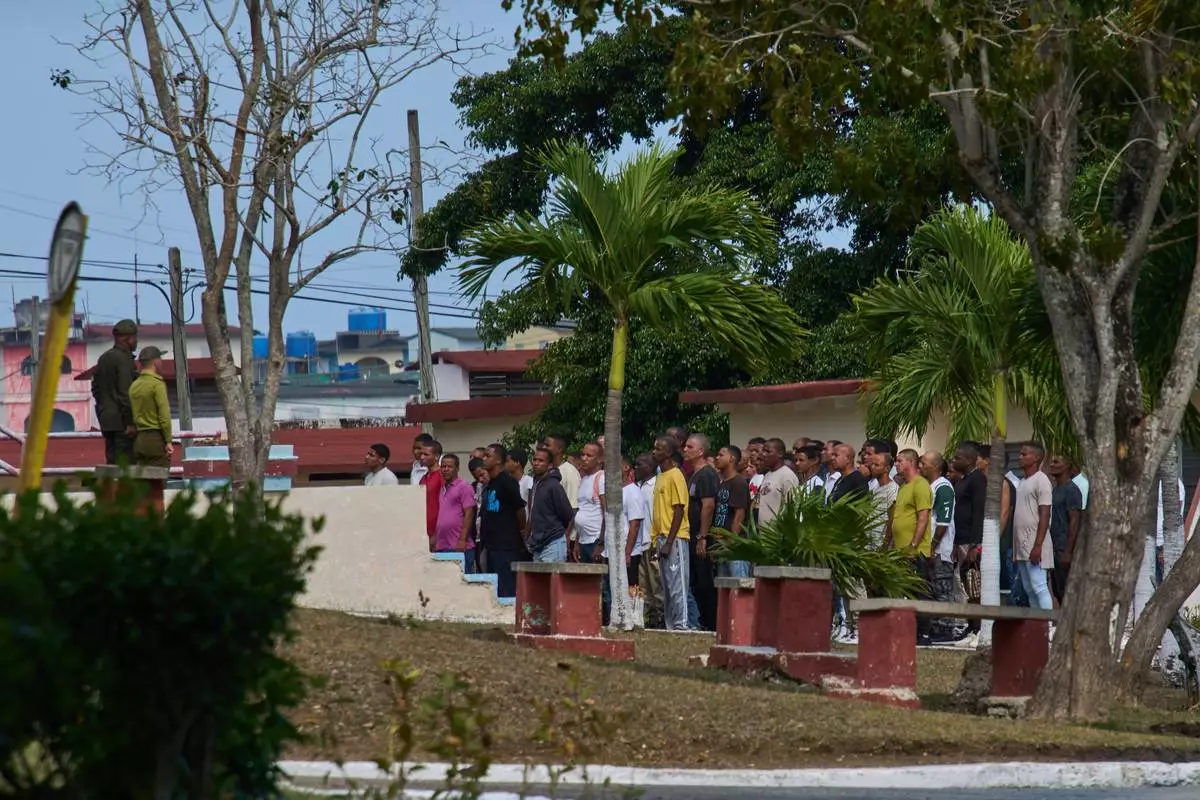
Emilea Zingas and Vadym Kolesnik of the United States reacts after winning in the Ice Dance Free Dance of the ISU Four Continents Figure Skating Championships, in Beijing, China, Friday, Jan. 23, 2026. (AP Photo/Andy Wong)
NEW YORK (AP) — Wild swings that swept through financial markets overnight eased as trading headed westward to Wall Street on Monday. U.S. stocks rose following sharp drops in Asia and then gains in Europe, while gold and silver prices rallied back from severe earlier losses.

The S&P 500 added 0.7% and is on track to snap a three-day losing streak. The Dow Jones Industrial Average was up 537 points, or 1.1%, as of 2:08 p.m. Eastern time, and the Nasdaq composite was 1% higher.

Stocks of companies that make computer storage helped lead the market, adding to gains from last week following several profit reports that topped analysts' expectations. Airlines and cruise-ship operators were also strong, benefiting from a sharp easing of oil prices.

The center of the action in financial markets was again precious metals, where momentum has suddenly halted after gold’s price had roughly doubled in just 12 months.

Gold briefly dropped below $4,500 per ounce in the overnight hours, down more than $1,000 from its high point reached just last week. It has since pulled back to $4,672.10, down 1.5%.

Silver’s price has been on an even wilder ride recently, and it swung from a 9% loss overnight to a gain of 0.1%.

Gold and silver prices had been surging as investors looked for safer things to own amid a wide range of worries, including a Federal Reserve that may be set to become less independent, a U.S. stock market that critics say is expensive, threats of tariffs and heavy debt loads for governments worldwide.

Their prices cratered on Friday, including a 31.4% plunge for silver. Some on Wall Street saw it as a result of President Donald Trump’s nomination of Kevin Warsh as the next chair of the Fed. Warsh’s reputation as a former Fed governor may have raised expectations among some investors that he may keep interest rates high to fight against inflation, which would reduce the need to hide out in gold and silver for protection.

But many on Wall Street are also skeptical of that initial reading and say the expectation from Trump is likely that Warsh will cut interest rates, something the president has been demanding. That could give the economy a boost, but also inflation.

The Fed chair has a big influence on the economy and markets worldwide by helping to dictate where the U.S. central bank moves interest rates. That affects prices for all kinds of investments, as the Fed tries to keep the U.S. job market humming without letting inflation get out of control.

The job market has been broadly weakening and is being closely watched by the Fed. The next big monthly update for January was scheduled to be released on Friday, but is now postponed because of the partial federal government shutdown.

The recent swoons for gold and silver are likely more about the washout for some traders who had borrowed money to bet on metals’ prices continuing to soar, rather than about a wholesale change in expectations for demand for metals, according to Darrell Cronk, chief investment officer for Wealth & Investment Management at Wells Fargo

On Wall Street, Sandisk leaped 16.1% to lead the S&P 500. The data-storage company added to its 6.9% gain from Friday, after it reported stronger profit for the latest quarter than analysts expected. It credited demand created by the artificial-intelligence boom, among other things.

That helped offset a 0.6% drop for Nvidia, whose chips are powering much of the world’s move into AI technology. The losses were worse in Asia, where AI winners plunged. South Korea’s Kospi fell 5.3% from its record for its worst day in almost 10 months after chip company SK Hynix lost nearly 9%.

The Walt Disney Co. fell 6.8% even though the entertainment giant reported a stronger profit for the latest quarter than analysts expected. It warned of challenges keeping international visitors away from its U.S. theme parks, among other things.

Oil prices dropped more than 5% after Trump told reporters that Iran is “seriously talking to us.” It’s a potential signal of improving relations between the two countries, which could prevent a possible disruption to the global flow of oil.

That could mean less painful fuel bills for airlines and cruise ships. Carnival steamed 8.2% higher, and United Airlines climbed 5.7%.

In the bond market, Treasury yields edged higher after a report said that U.S. manufacturing grew last month, when economists were expecting a contraction. The yield on the 10-year Treasury erased an earlier dip and rose to 4.27%, up from 4.26% late Friday.

In stock markets abroad, European indexes rose roughly 1% following Asia’s washout. Japan’s Nikkei 225 fell 1.3%, while stocks fell 2.2% in Hong Kong and 2.5% in Shanghai.

AP Business Writers Matt Ott and Elaine Kurtenbach contributed.

Trader Michael Capolino works on the floor of the New York Stock Exchange, Monday, Feb. 2, 2026. (AP Photo/Richard Drew)

Trader Michael Capolino works on the floor of the New York Stock Exchange, Monday, Feb. 2, 2026. (AP Photo/Richard Drew)

Trader Robert Charmak works on the floor of the New York Stock Exchange, Monday, Feb. 2, 2026. (AP Photo/Richard Drew)

Trader Robert Charmak works on the floor of the New York Stock Exchange, Monday, Feb. 2, 2026. (AP Photo/Richard Drew)

Traders Drew Cohen, left, and Dylan Halvorsan work on the floor of the New York Stock Exchange, Monday, Jan. 26, 2026. (AP Photo/Richard Drew)

Traders Drew Cohen, left, and Dylan Halvorsan work on the floor of the New York Stock Exchange, Monday, Jan. 26, 2026. (AP Photo/Richard Drew)

People walk in front of an electronic stock board showing Japan's Nikkei index at a securities firm Monday, Feb. 2, 2026, in Tokyo. (AP Photo/Eugene Hoshiko)

People walk in front of an electronic stock board showing Japan's Nikkei index at a securities firm Monday, Feb. 2, 2026, in Tokyo. (AP Photo/Eugene Hoshiko)

A person walks in front of an electronic stock board showing Japan's Nikkei index at a securities firm Monday, Feb. 2, 2026, in Tokyo. (AP Photo/Eugene Hoshiko)

A person walks in front of an electronic stock board showing Japan's Nikkei index at a securities firm Monday, Feb. 2, 2026, in Tokyo. (AP Photo/Eugene Hoshiko)

A person walks in front of an electronic stock board showing Japan's Nikkei index at a securities firm Monday, Feb. 2, 2026, in Tokyo. (AP Photo/Eugene Hoshiko)

A person walks in front of an electronic stock board showing Japan's Nikkei index at a securities firm Monday, Feb. 2, 2026, in Tokyo. (AP Photo/Eugene Hoshiko)

A person walks in front of an electronic stock board showing Japan's Nikkei index at a securities firm Monday, Feb. 2, 2026, in Tokyo. (AP Photo/Eugene Hoshiko)

A person walks in front of an electronic stock board showing Japan's Nikkei index at a securities firm Monday, Feb. 2, 2026, in Tokyo. (AP Photo/Eugene Hoshiko)

A currency trader talks on the phone near a screen showing the Korea Composite Stock Price Index (KOSPI), top center, and the foreign exchange rate between U.S. dollar and South Korean won, top center left, at the foreign exchange dealing room of the Hana Bank headquarters in Seoul, South Korea, Friday, Jan. 30, 2026. (AP Photo/Ahn Young-joon)

A currency trader talks on the phone near a screen showing the Korea Composite Stock Price Index (KOSPI), top center, and the foreign exchange rate between U.S. dollar and South Korean won, top center left, at the foreign exchange dealing room of the Hana Bank headquarters in Seoul, South Korea, Friday, Jan. 30, 2026. (AP Photo/Ahn Young-joon)

Recommended Articles