BOSTON (AP) — The union representing British soccer players will announce on Tuesday the first comprehensive protocol for preventing the brain disease CTE, expanding the heightened concern over concussions to include the damage that can be caused by the less forceful blows from heading the ball.
The guidelines from the Professional Footballers’ Association, which represents current and former players in the Premier League, the FA Women’s Super League and the English Football Leagues, recommend no more than 10 headers per week – including practice – for professionals. Children under 12 shouldn’t head the ball at all, the PFA said, part of a chronic traumatic encephalopathy prevention protocol designed to reduce head impacts across a player’s lifetime.
“CTE is preventable. Period,” Dr. Adam White, Director of Brain Health at the PFA, said on Monday at the first-ever Global CTE Summit, which was held in San Francisco while the NFL descended on the Bay Area for Sunday’s Super Bowl.
“It is the principles of less heading, less force, less often and later in life that matter,” White told The Associated Press. “These could apply to any sport and are the best hope we have of stopping current and future players from the same fate as former generations.”
Speakers at the summit included researchers, former athletes and lawmakers; those in the virtual and in-person audience also included family members who witnessed the dangers of CTE, which can cause memory loss, depression, violent mood swings and other cognitive and behavioral issues.
“This might be the most underreported public health challenge in the world right now," former U.S. Surgeon General Richard Carmona said. “CTE prevention requires courage – the courage to change tradition, the courage to confront denial, and the courage to put long-term health ahead of short-term gains."
The degenerative brain disease now known as CTE was studied in boxers more than a century ago as punch drunk syndrome and first diagnosed in American football players in 2005. It has since become a concern in ice hockey, soccer and other contact sports and among combat veterans and others who sustain repeated blows to the head.
A 2017 study found CTE in 110 of 111 brains donated by former NFL players. The disease can only be identified posthumously through an examination of the brain.
NFL Hall of Famer Warren Sapp, speaking about an hour away from Levi’s Stadium on the day of the Super Bowl’s much-ballyhooed Opening Night, said attention shouldn’t just be on professionals, who are at least compensated and able to make informed decisions about the risks of playing a dangerous sport.
“It’s our obligation to the game to make it better,” he said. “It’s how we apply it to our children and the age that we give it to them.”
The NFL, college football and many other sports have instituted protocols that guide teams and athletes on returning to play after sustaining a possible concussion.
But the British soccer protocol, a copy of whish was obtained by the AP, is the first comprehensive plan to combat CTE by addressing the less dramatic, subconcussive blows that can be common in practice, according to Chris Nowinski, the founder of the Concussion and CTE Foundation.
“For contact sports, CTE prevention protocols are equally important and possibly more important than concussion protocols,” he said.
Among the more recent concerns are the routine head hits sustained by football lineman, and those from soccer players heading the ball. Research funded by the union and the Football Association found that Scottish pros have a risk of dementia that is 3.5 times greater than the general population; studies of brains from British soccer players found the majority had CTE, including Jeff Astle, Gordon McQueen and Chris Nicholl.
“With what we know today about the disease, it would be a failure to our players to do nothing,” White said in a statement. “The science and solutions are clear, it just takes willingness from the sporting bodies to put athletes’ long-term health first and I am pleased that we have been able to do that in England. I encourage all sports to put as much, if not more, effort into CTE prevention protocols as they have concussion protocols.”
The protocol also includes annual education, support for research and care for ex-players who suspect they are living with CTE. It follows the publication of a CTE prevention framework published in 2023 by researchers assembled by the Concussion and CTE Foundation and Boston University’s CTE Center.
Nowinski called on sports leagues and their medical advisors to adopt CTE prevention protocols.
“There is now overwhelming evidence that more head impacts in sports will result in more athletes with CTE,” Nowinski said. “Sports administrators aren’t risking CTE themselves, but the policies they set are sentencing some athletes to a life with CTE, a burden that will primarily be carried by their spouses and children. Enough is enough.”
AP sports: https://apnews.com/sports

FILE - In this 1974 file photo, Oakland Raiders quarterback Ken Stabler looks to pass. (AP Photo/File)
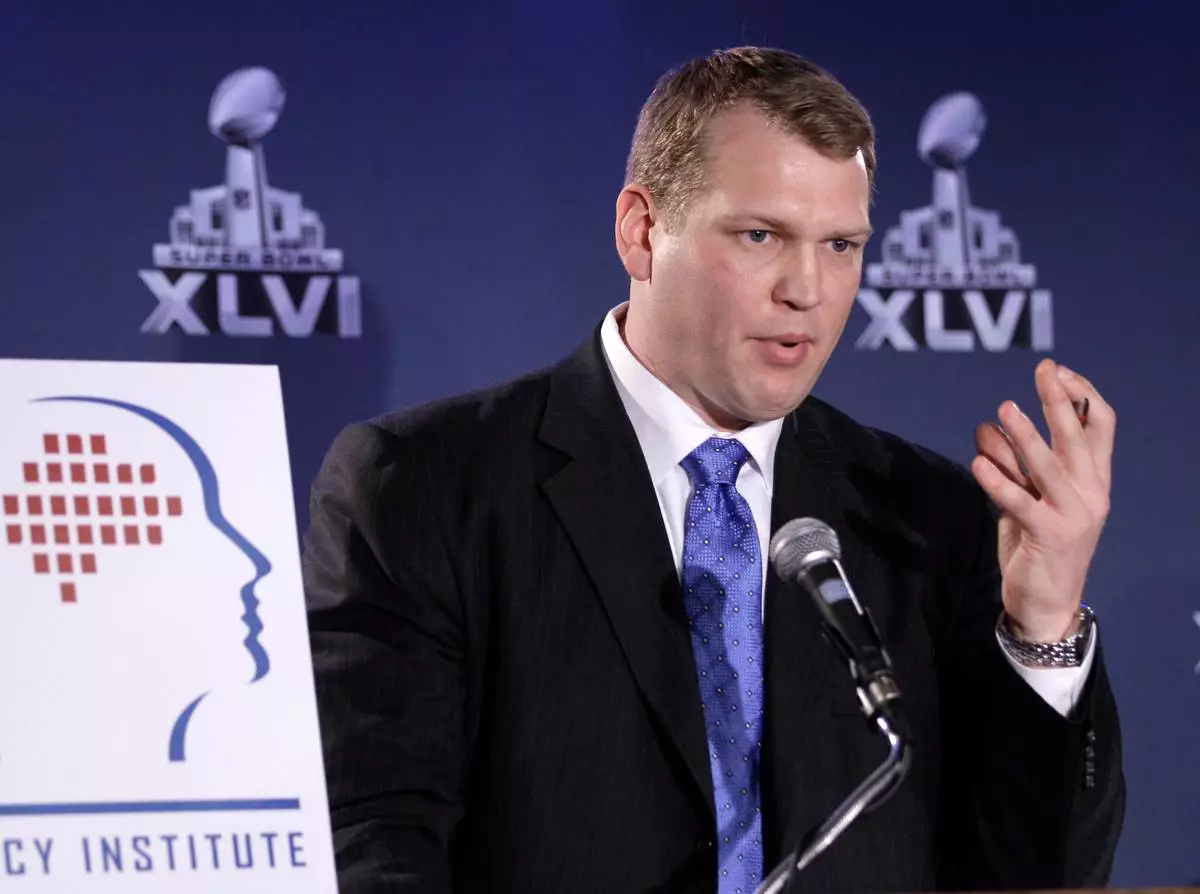
FILE - In this Feb. 3, 2012, file photo, Chris Nowinski, head of the Sports Legacy Institute in Boston, talks about a hit count proposal to dramatically reduce youth athletes' exposure to repetitive brain trauma in multiple sports during a news conference at the Super Bowl XLVI media center in Indianapolis. (AP Photo/David J. Phillip, File)
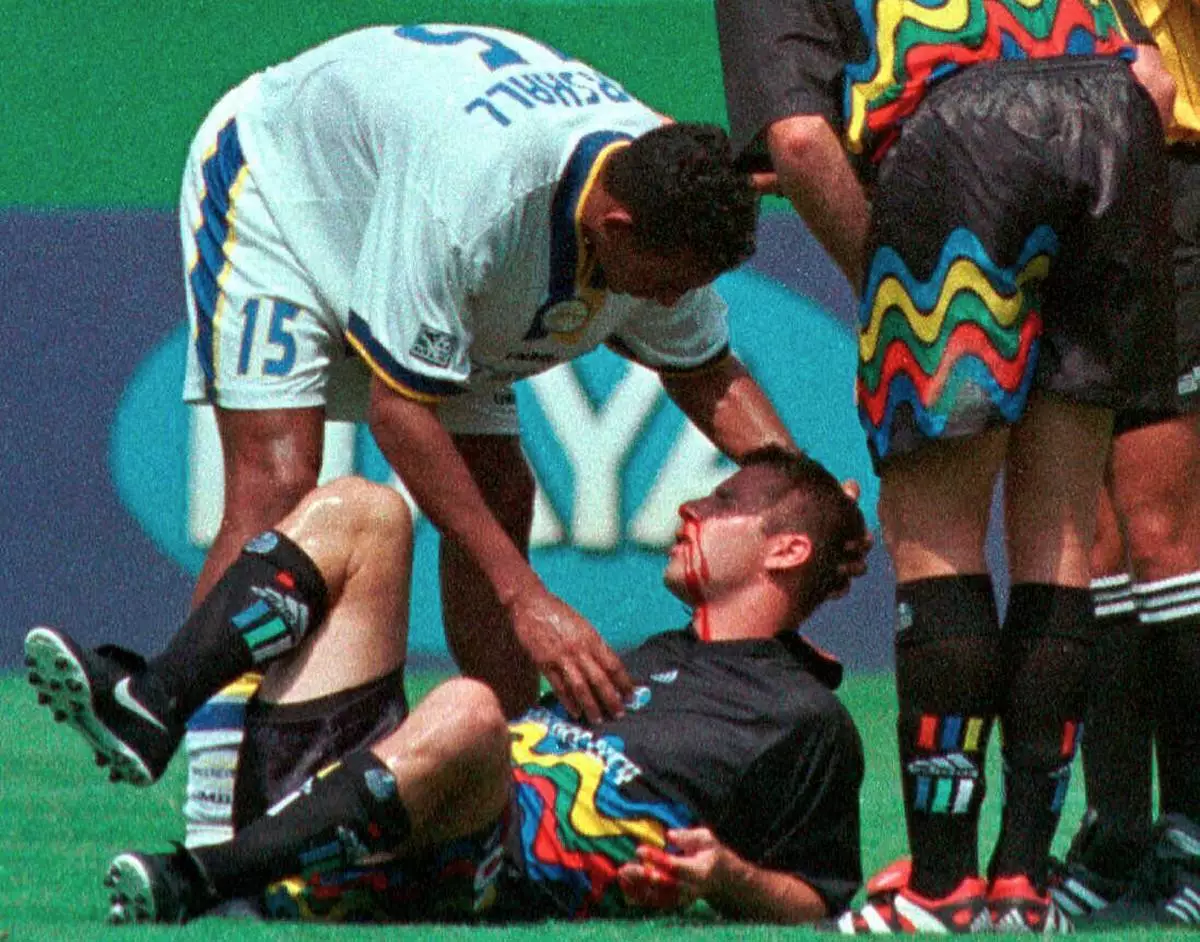
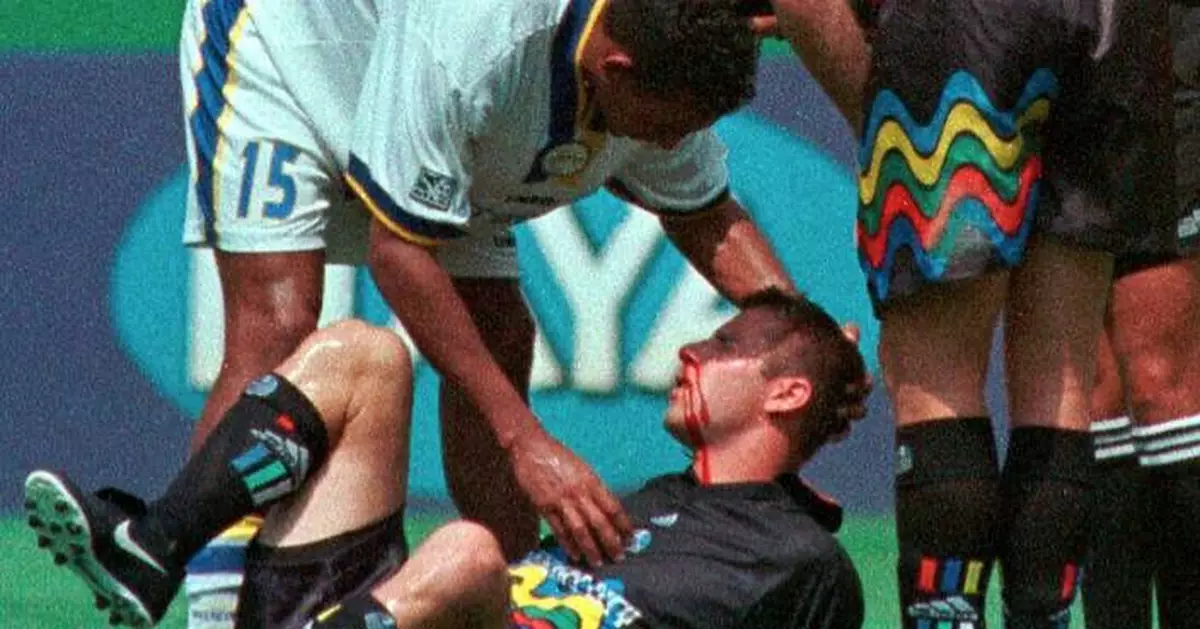
FILE - Miami Fusion's Tyrone Marshall (15) assists Kansas City Wizards' Scott Vermillion after the two collided while going up for a header in the first half of a soccer match Aug. 29, 1999, in Kansas City, Mo. (AP Photo/Ed Zurga, File)
WASHINGTON (AP) — The White House asserted to Congress in a letter Friday that hostilities with Iran have “terminated” despite the continued presence of U.S. armed forces in the region.
The message from President Donald Trump effectively skirts a May 1 legal deadline to gain approval from members of Congress to continue the war with Iran. That deadline was already set to pass without action from Republican lawmakers who are deferring to the president.
The letter brings into stark relief the bold but legally questionable assertion of presidential power at the heart of Trump’s war, which he began without congressional approval two months ago.
“The hostilities that began on February 28, 2026, have terminated,” Trump wrote House Speaker Mike Johnson, R-La., and Sen. Chuck Grassley, R-Iowa, the Senate president pro tempore.
Yet he also made it clear in the letter that the war may be far from over.
“Despite the success of United States operations against the Iranian regime and continued efforts to secure a lasting peace, the threat posed by Iran to the United States and our Armed Forces remains significant,” the Republican president said.
Under the War Powers Resolution of 1973, Congress must declare war or authorize the use of force within 60 days — Friday was the deadline — or within 90 days if the president asks for an extension. This Congress made no attempt at enforcing that requirement, leaving town Thursday for a week after the Senate rejected a Democratic attempt to halt the war for a sixth time.
Some GOP senators are growing uneasy about the war’s timeline, which Trump initially said would last a few weeks. But Trump's letter showed how the president continues to forego congressional approval. It contends the deadlines set by the law do not apply because the war in Iran effectively ended when a shaky ceasefire began in early April.
Senate Majority Leader John Thune, R-S.D., said Thursday he did not plan on a vote to authorize force in Iran or otherwise weigh in.
“I’m listening carefully to what the members of our conference are saying, and at this point I don’t see that,” Thune said.
The reluctance to defy Trump on the war comes at a politically perilous time for Republicans, with public frustration mounting both over the conflict and its impact on gas prices. Still, most GOP lawmakers say they are supportive of Trump’s wartime leadership or are at least willing to give him more time amid the fragile ceasefire.
Sen. Kevin Cramer, R-N.D., said he would vote for an authorization of war if Trump asked for it. But Cramer questioned whether the resolution passed during the Vietnam War era, as a way for Congress to claw back its power, was constitutional.
“Our founders created a really strong executive, like it or not like it,” Cramer said.
Some GOP senators did make it clear that they eventually want Congress to have a say.
Indiana Sen. Todd Young said in a statement that lawmakers “must ensure that the people, through their elected representatives, weigh in on whether to send our military into combat.”
He added that since the Trump administration is stating that “the Iran conflict has ceased, there should be no hostilities moving forward,” and that if the conflict resumes, he expects the White House to work with Congress to pass an authorization for use of military force.
A handful of GOP senators have said for weeks that Congress should assert its authority over the war at some point. One of those, Maine's Susan Collins, voted for the first time with Democrats on Thursday to halt the war. She said in a statement that she wants to see a defined strategy for bringing the conflict to a close.
“The president’s authority as commander in chief is not without limits," Collins said, adding that the 60-day deadline is “not a suggestion, it is a requirement."
In addition to Collins and Young, Republican Sens. John Curtis of Utah, Thom Tillis of North Carolina, Lisa Murkowski of Alaska and Josh Hawley of Missouri, among others, have said they would eventually like to see a vote.
Curtis said he would not support continued funding for the war until Congress votes to authorize it.
“It is time for decision-making from both the administration and from Congress — and that can happen in league with one another, not in conflict,” Curtis said.
Thune suggested the White House step up its outreach to lawmakers with briefings and hearings if it wants continued support from Capitol Hill.
“Obviously, getting readouts from our military leadership on a somewhat regular basis, I think, will be helpful in terms of shaping the views of our members about how comfortable they are with everything that’s happening there, and the direction headed forward,” Thune said.
With the 60-day window under the War Powers Resolution expiring Friday, Defense Secretary Pete Hegseth said during a congressional hearing Thursday, “We are in a ceasefire right now, which our understanding means, the 60-day clock pauses or stops.”
The administration is making that argument even though Iran maintains its chokehold on the Strait of Hormuz and the U.S. Navy is maintaining a blockade to prevent Iran’s oil tankers from getting out to sea.
Trump on Friday echoed Hegseth’s argument, and stressed that other presidents had similarly not sought congressional approval as laid out under the 1973 law.
“Every other president considered it totally unconstitutional, and we agree with that,” Trump said at the White House as he departed for Florida.
Democrats scoffed at the suggestion that May 1 was not the real deadline.
Sen. Richard Blumenthal, D-Conn., said on social media, “There’s no pause button in the Constitution, or the War Powers Act. We’re at war. We’ve been at war for 60 days. The blockade alone is a continuing act of war.”
The development came as little surprise to at least one House Democrat who oversees the military.
Washington Rep. Adam Smith, the ranking Democrat on the House Armed Services Committee, told The Associated Press: "Is the expectation that the Trump administration is going to follow the law? I do not have that expectation.”
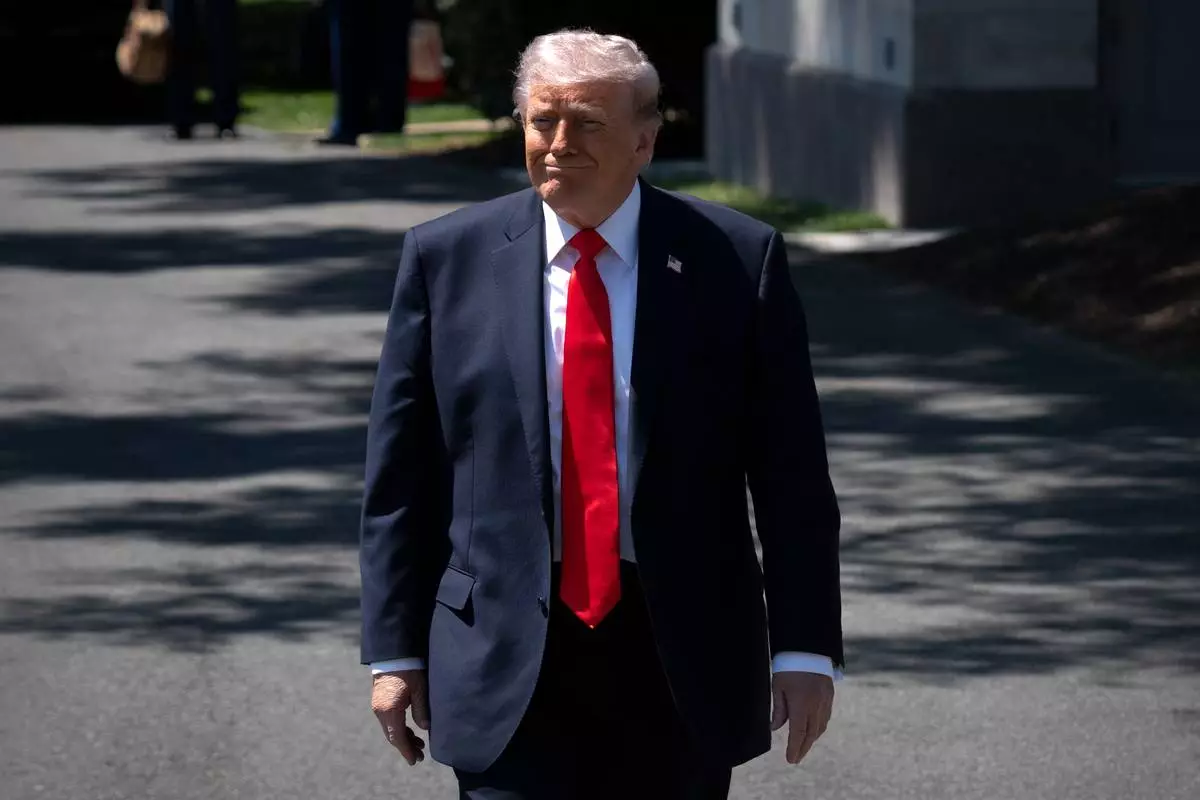
President Donald Trump walks to speak with reporters as he prepares to board Marine One on the South Lawn of the White House, Friday, May 1, 2026, in Washington. (AP Photo/Mark Schiefelbein)
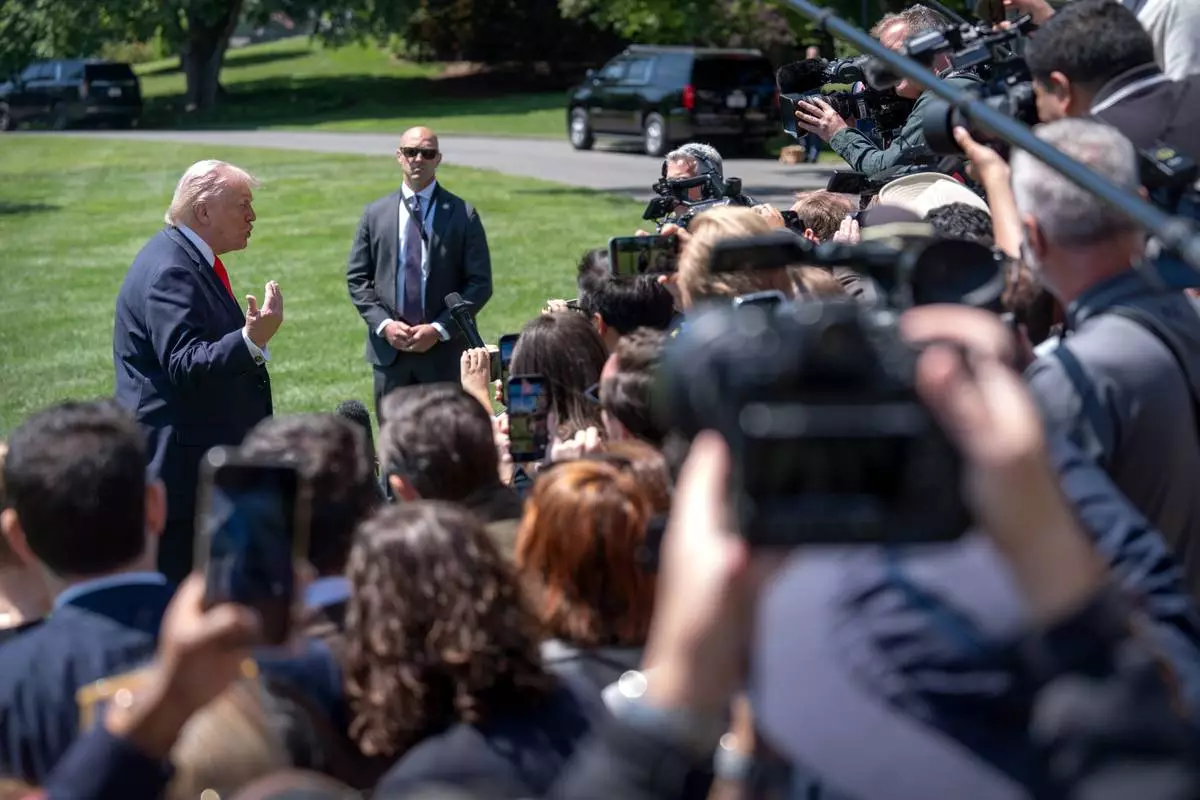
President Donald Trump speaks with reporters as he prepares to board Marine One on the South Lawn of the White House, Friday, May 1, 2026, in Washington. (AP Photo/Mark Schiefelbein)
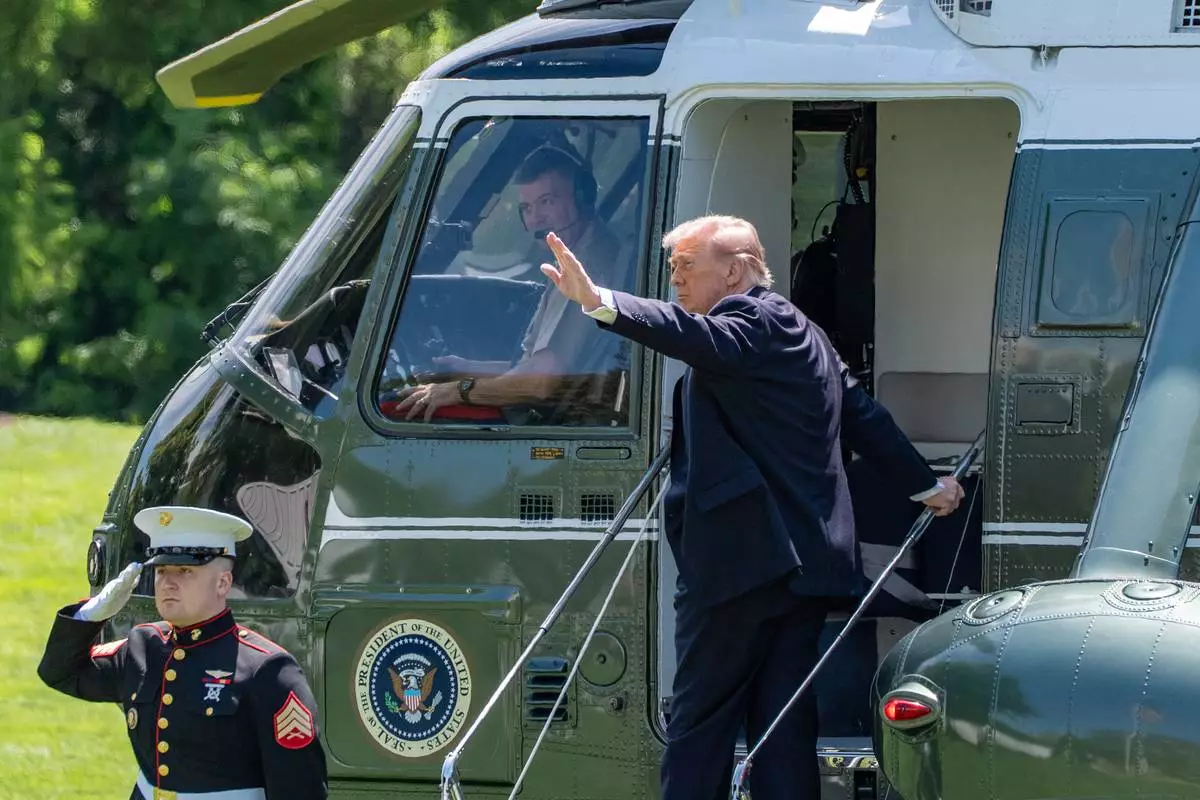
President Donald Trump waves before departing on Marine One from the South Lawn of the White House, Friday, May 1, 2026, in Washington. (AP Photo/Alex Brandon)
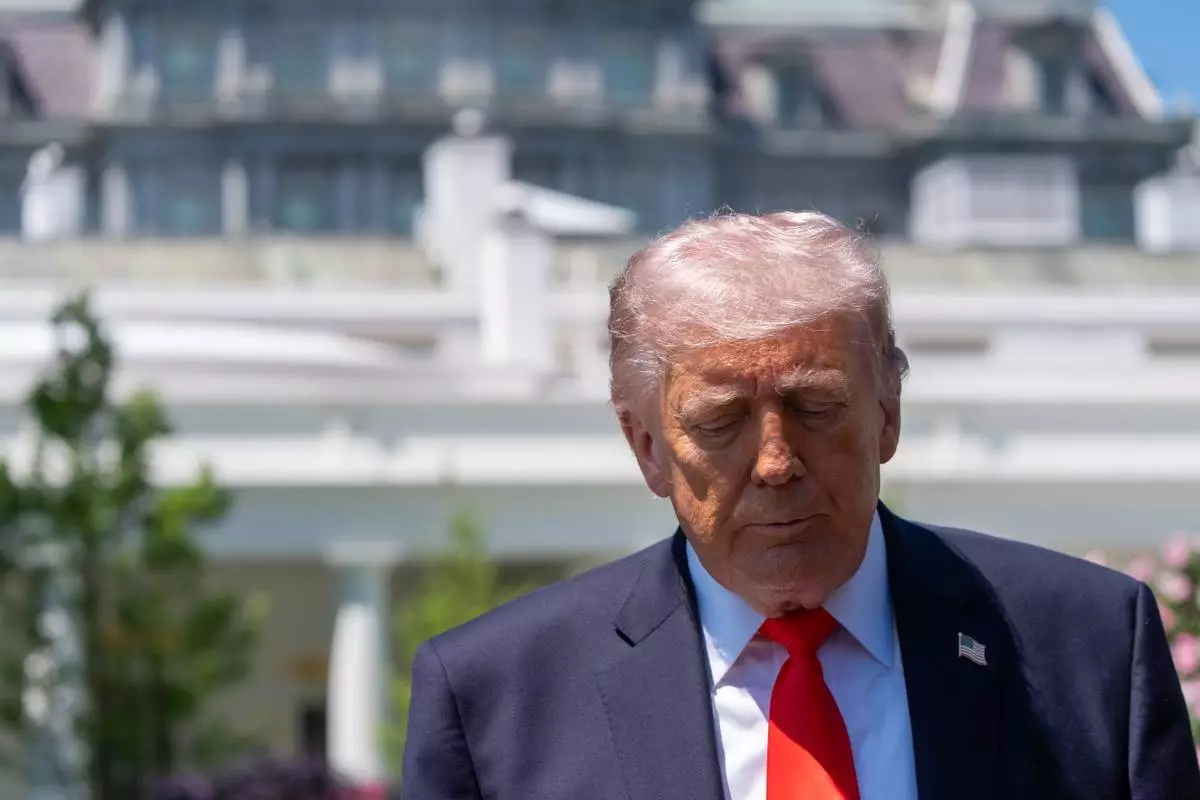
President Donald Trump speaks with reporters before departing on Marine One from the South Lawn of the White House, Friday, May 1, 2026, in Washington. (AP Photo/Alex Brandon)
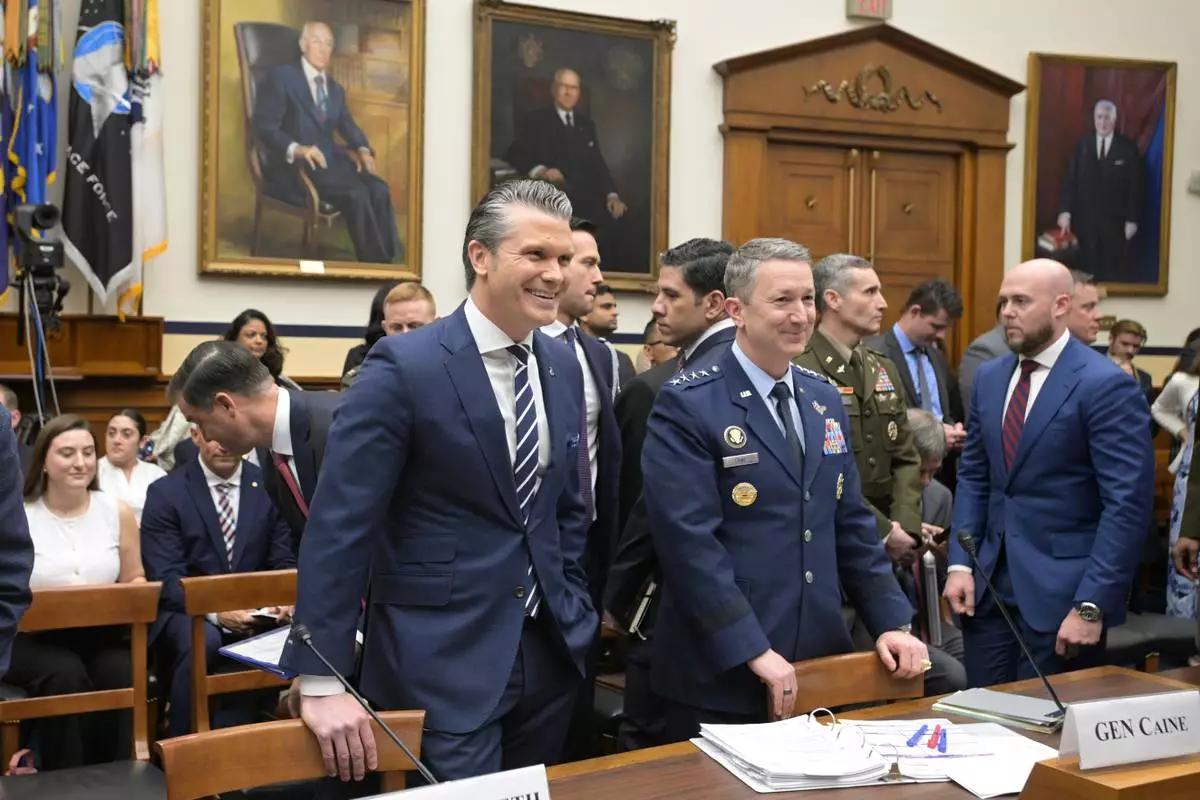
Secretary of Defense Pete Hegseth, left, and Gen. Dan Caine, Chairman of the Joint Chiefs of Staff, appear before a House Committee on Armed Services business meeting on the Department of Defense Fiscal Year 2027, on Capitol Hill, Wednesday, April 29, 2026, in Washington. (AP Photo/Rod Lamkey Jr.)
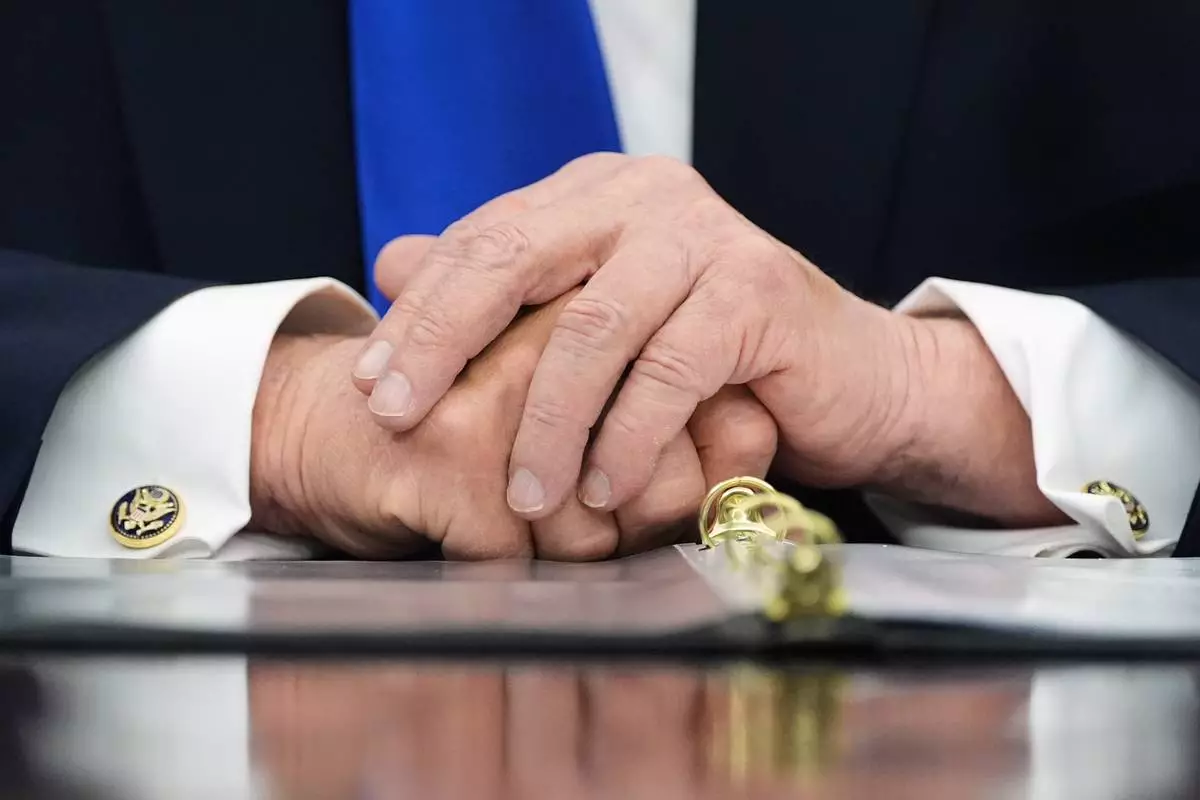
President Donald Trump clasps his hands on the Resolute Desk as he speaks before signing an executive order regarding retirement savings in the Oval Office of the White House, Thursday, April 30, 2026, in Washington. (AP Photo/Alex Brandon)
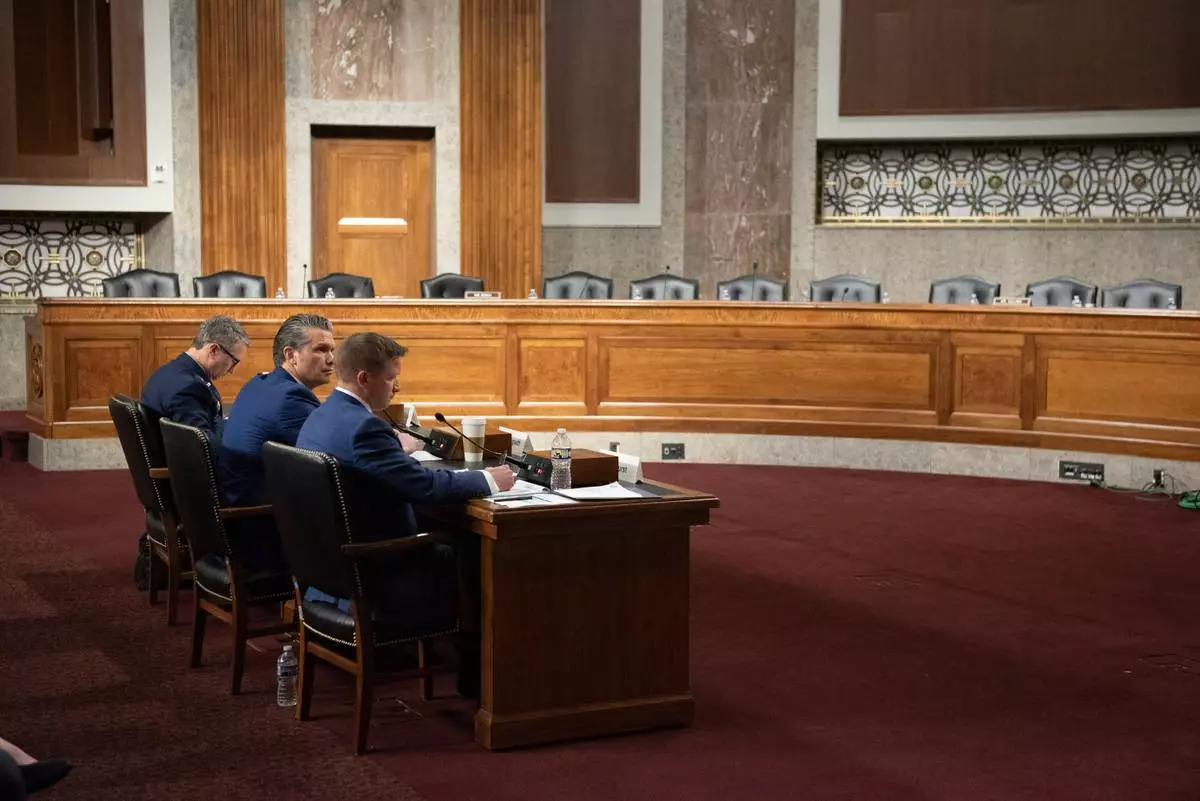
From l-r., Chairman of the Joint Chiefs of Staff Air Force Gen. Danial Caine, Secretary of Defense Pete Hegseth, and acting undersecretary of defense during the Senate Armed Services Committee hearing on the Department of Defense budget, on Capitol Hill, in Washington, Thursday, April 30, 2026. (AP Photo/Cliff Owen)