LONDON--(BUSINESS WIRE)--Feb 3, 2026--
US consumers are missing out on an estimated $10 billion in savings annually 1, as more than a quarter of shoppers’ loyalty points go unspent, and over one in ten are left to expire, new research reveals. Despite this, 41.7% of consumers take advantage of promotions every time they shop, and 81.8% use them at least a few times a month.
This press release features multimedia. View the full release here: https://www.businesswire.com/news/home/20260203778943/en/
So, despite Americans overwhelmingly embracing discounts, deals, and loyalty programs, why are they leaving money on the table?
In an effort to deliver compelling deals to customers, build relationships, and unlock repeat business, brands have made loyalty programs a fact of life for consumers. According to the Antavo Global Customer Loyalty Report 2026, a survey of more than 1,000 US consumers (of a global sample of 10,000) that unpacks the trends shaping the evolving consumer loyalty landscape, participation in loyalty programs is rising sharply: 43.2% of consumers are more likely to join one than last year.
A good loyalty program is becoming a big part of customer retention, with 31.3% of consumers saying they would be more likely to continue doing business with a brand that offers one. Clearly, there’s a shift in the role of loyalty programs from a “nice-to-have” perk to a core part of the customer relationship, driven by the economic climate.
While loyalty program membership is higher than ever, and traditional discount-driven promotions are still effective, customers want greater maturity and personalisation in their loyalty programs. They want more options and incentives to use the points they earn.
Chances to save remain the biggest reason people use their loyalty programs, but other motivators, like freebies and personalized rewards, are quickly becoming must-haves for shoppers.
People also expect flexibility in how they access loyalty programs, with mobile apps (44%), digital loyalty cards (42.4%), and even plastic cards (41%) all remaining popular. Convenience and a lack of friction are essential to a loyalty program that consumers actually use.
Attila Kecsmar, CEO and Co-founder at Antavo, commented: “Friction is the enemy of loyalty. Shoppers want to engage with brands and their loyalty programs on their own terms, and brands must rise to that challenge. Consumers want convenience - something that’s always at hand.”
Almost half (49.1%) of respondents said it takes too long to earn rewards, with 41.1% left frustrated by expiring points, and 38.9% of shoppers saying they found rewards unattractive.
Kecsmar continued: “When rewards feel out of reach, engagement fades, and points go unused - meaning consumers miss out on saving valuable cash. The brands that give their customers a loyalty experience that feels immediate, rewarding, and tailored to their wants and needs are seeing impressive returns. For those that are not, unspent points will continue to pile up while customers become less satisfied and, eventually, leave in search of a better experience elsewhere.”
The full Antavo Global Customer Loyalty Report 2026 is available [HERE]. It was sponsored by Bloomreach DataLab, EPAM, Digitas, and StratLX.
About Antavo
Antavo is revolutionizing the customer loyalty landscape with its cutting-edge AI Loyalty Cloud. As the market's most powerful pure-play loyalty technology, Antavo's platform seamlessly combines advanced AI capabilities with effortless integration, setting a new standard in the industry.
Antavo is the leading provider of AI-powered customer loyalty technology, offering a comprehensive platform that streamlines the entire loyalty program lifecycle. Its solutions include a Promotion Engine to engage the full customer base, a Loyalty Planner that accelerates program planning by up to 10 times, and a flexible Loyalty Engine with an intuitive Workflows editor to bring any loyalty concept to life. Once a program is live, Antavo’s Optimizer transforms loyalty data into clear, actionable insights. At the core of all the solutions is Timi AI, an agentic AI that enhances and supports every step of the loyalty journey.
This excellence has not gone unnoticed. Antavo is recognized by industry leaders such as Forrester, Gartner, and IDC, and it’s the preferred choice for global brands, loyalty consultants, and system integrators worldwide. Antavo’s diverse client portfolio, including household names like KFC, Skims, C&A, Flying Tiger, Notino, Scandic Hotels, Kathmandu, Brightline and Benefit Cosmetics, spans industries from fashion, beauty, retail, travel, and hospitality, showcasing the versatility and effectiveness of the platform.
Experience the future of customer loyalty with Antavo. Visitantavo.comto learn more.
1Research and Markets study values the US loyalty market at around $27 billion annually, resulting in consumers missing out on an estimated $10 billion in savings.
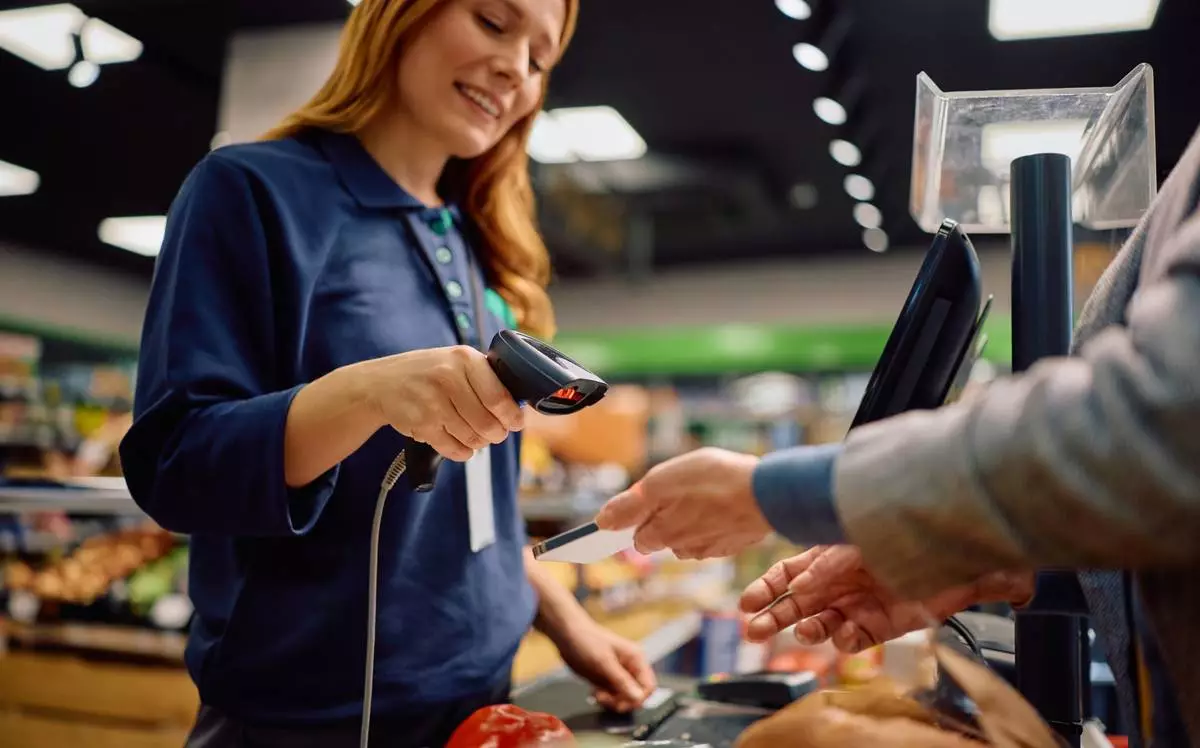
Antavo's Global Customer Loyalty Report 2026
DUBAI, United Arab Emirates (AP) — Iran's president said Tuesday he instructed the country’s foreign minister to “pursue fair and equitable negotiations” with the United States, the first clear sign from Tehran it wants to try to negotiate as tensions remain high with Washington after the Mideast country's bloody crackdown on nationwide protests last month.
The announcement marked a major turn for reformist President Masoud Pezeshkian, who broadly had warned Iranians for weeks that the turmoil in his country had gone beyond his control. It also signals that the president received support from Iran's Supreme Leader Ayatollah Ali Khamenei for talks that the 86-year-old cleric previously had dismissed.
Turkey had been working behind the scenes to make the talks happen there later this week as U.S. Mideast envoy Steve Witkoff is traveling in the region.
But whether Iran and the U.S. can reach an agreement remains to be seen, particularly as President Donald Trump now has included Iran's nuclear program in a list of demands from Tehran in any talks. Trump ordered the bombing of three Iranian nuclear sites during the 12-day war Israel launched against Iran in June.
Writing on X, Pezeshkian said in English and Farsi that the decision came after “requests from friendly governments in the region to respond to the proposal by the President of the United States for negotiations.”
“I have instructed my Minister of Foreign Affairs, provided that a suitable environment exists — one free from threats and unreasonable expectations — to pursue fair and equitable negotiations, guided by the principles of dignity, prudence, and expediency,” he said.
The U.S. has yet to acknowledge the talks will take place. A semiofficial news agency in Iran on Monday reported — then later deleted without explanation — that Pezeshkian had issued such an order to Foreign Minister Abbas Araghchi, who held multiple rounds of talks with Witkoff before the 12-day war.
Late Monday, the pan-Arab satellite channel Al Mayadeen, which is politically allied with the Iranian-backed Lebanese militant group Hezbollah, aired an interview with Ali Shamkhani, a top Khamenei adviser on security.
Shamkhani, who now sits on the country’s Supreme National Security Council and who in the 1980s led Iran's navy, wore a naval uniform as he spoke.
He suggested if the talks happened, they would be indirect at the beginning, then moving to direct talks if a deal appeared to be attainable. Direct talks with the U.S. long have been a highly charged political issue within Iran's theocracy, with reformists like Pezeshkian pushing for them and hard-liners dismissing them.
The talks would solely focus on nuclear issues, he added.
Asked about whether Russia could take Iran's enriched uranium like it did in Tehran's 2015 nuclear deal with world powers, Shamkhani dismissed the idea, saying there was “no reason” to do so. Kremlin spokesperson Dmitry Peskov on Monday said Russia had “long offered these services as a possible option that would alleviate certain irritants for a number of countries.”
“Iran does not seek nuclear weapons, will not seek a nuclear weapon and will never stockpile nuclear weapons, but the other side must pay a price in return for this," he said.
Iran had been enriching uranium up to 60% purity, a short, technical step away from weapons-grade levels. The International Atomic Energy Agency had said Iran was the only country in the world to enrich to that level that wasn't armed with the bomb.
Iran has been refusing requests by the IAEA to inspect the sites bombed in the June war.
“The quantity of enriched uranium remains unknown, because part of the stockpile is under rubble, and there is no initiative yet to extract it, as it is extremely dangerous," Shamkhani said.
Witkoff is expected to meet Prime Minister Benjamin Netanyahu and other Israeli security officials on Tuesday, according to a White House official who was not authorized to comment publicly about the talks and spoke on condition of anonymity.
While in Israel, Witkoff will meet with the head of the Mossad intelligence service and the Israeli military's chief of staff, according to another official who was not authorized to speak to the media and spoke on condition of anonymity.
Israel is expected to ask that any agreement with Iran include removing enriched uranium from the country, stopping the enrichment of uranium, limiting the creation of ballistic missiles and ending support for Tehran's proxies.
However, Shakhani in his interview rejected giving up uranium enrichment — a major obstacle in earlier talks with the U.S. In November, Araghchi said Iran was doing no enrichment in the country because of the U.S. bombing of the nuclear sites.
Witkoff later will travel to Abu Dhabi, the capital of the United Arab Emirates, later in the week for Russia-Ukraine talks, the official said.
“We have talks going on with Iran, we’ll see how it all works out,” Trump told reporters in the Oval Office on Monday. Asked what his threshold was for military action against Iran, he declined to elaborate.
“I’d like to see a deal negotiated,” Trump said. “Right now, we’re talking to them, we’re talking to Iran, and if we could work something out, that’d be great. And if we can’t, probably bad things would happen.”
Mike Pompeo, a hard-liner on Iran who served as CIA director and secretary of state in Trump's first term, said it was “unimaginable that there can be a deal.”
“I think they may come away with some set of understandings,” Pompeo said at Dubai's World Governments Summit. "But to think that there’s a long-term solution that actually provides stability and peace to this region while the ayatollah is still in power is something I pray for but find unimaginable.”
Associated Press writers Melanie Lidman in Jerusalem and Aamer Madhani, Matthew Lee and Konstantin Toropin in Washington contributed to this report.
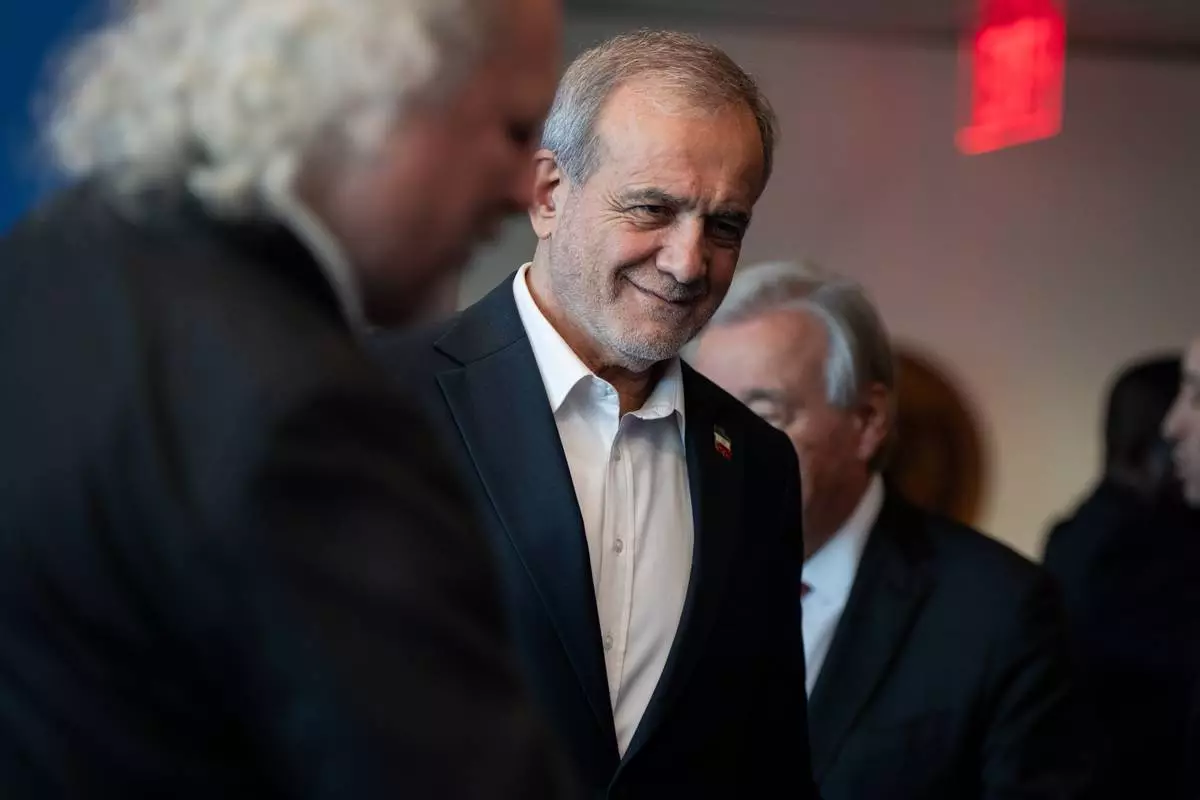
FILE - Masoud Pezeshkian, the President of Iran, attends the United Nations General Assembly at United Nations headquarters, on Sept. 25, 2025. (AP Photo/Angelina Katsanis, File)