MELBOURNE, Australia (AP) — A 13-year-old boy swam for four hours in cold and choppy waters to save his mother and two younger siblings who had been swept out to sea off the coast of Western Australia.
The family, from the state capital Perth, were using kayaks and paddleboards on Friday morning when rough ocean and wind conditions started dragging them out. Teenager Austin Appelbee swam about 4 kilometers (2.5 miles) to shore to raise the alarm, police said.
Click to Gallery
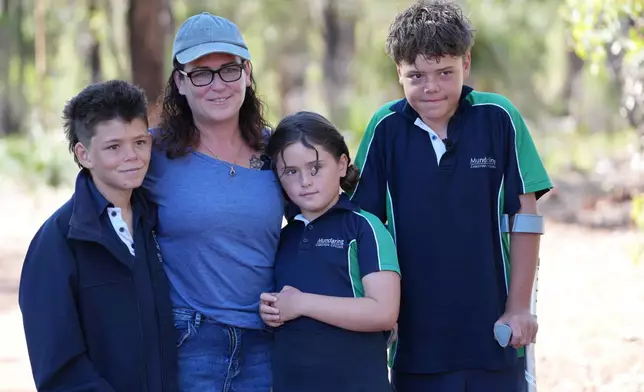
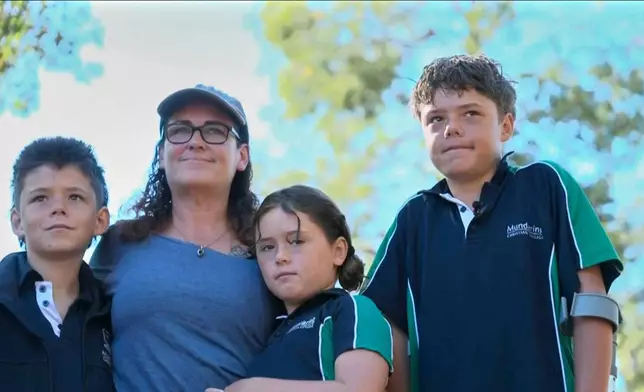
Austin Appelbee, right, poses with his brother, Beau, left, his mother, Joanne, second left, and sister Grace, in Gidgegannup, Australia, Tuesday Feb. 3, 2026, after 13-year-old Austin made an hourslong swim to raise an alarm after his family was swept out to sea off the Australian coast. (Briana Shepherd/ABC via AP)
Austin Appelbee, right, poses with his brother, Beau, left, his mother, Joanne, second left, and sister Grace, in Gidgegannup, Australia, Tuesday Feb. 3, 2026, after 13-year-old Austin made an hourslong swim to raise an alarm after his family was swept out to sea off the Australian coast. (Briana Shepherd/ABC via AP)
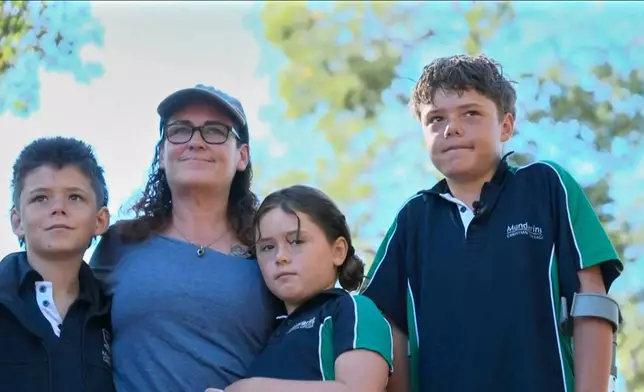
This image taken from video shows Austin Appelbee, right, posing with his family in Gidgegannup, Australia, Tuesday Feb. 3, 2026. (ABC via AP)
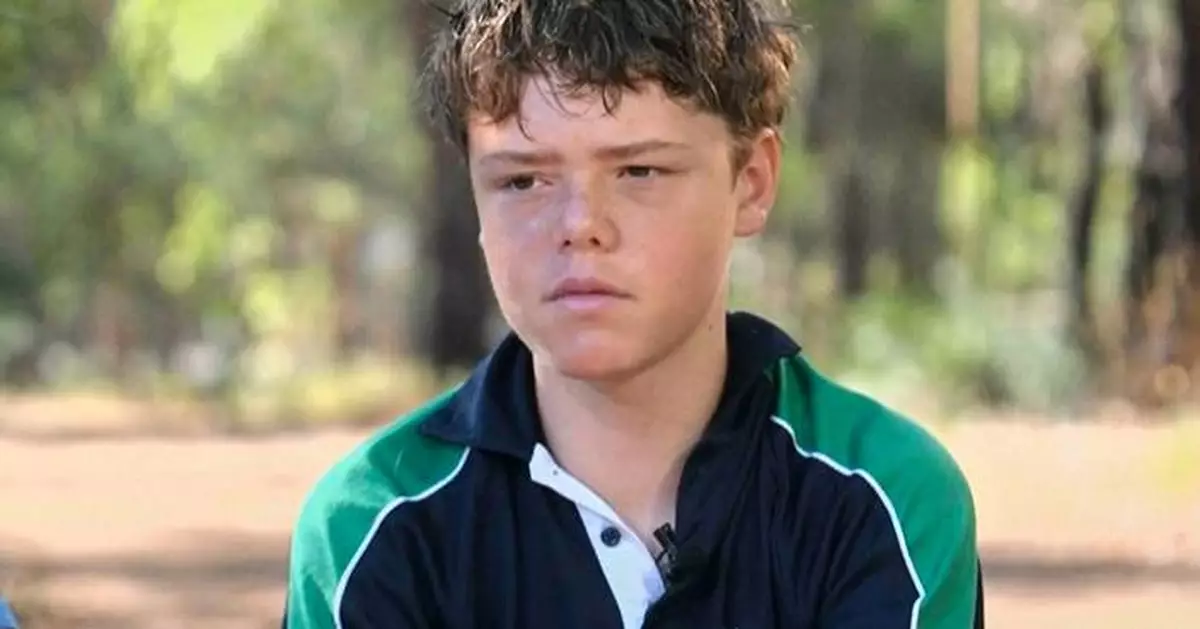
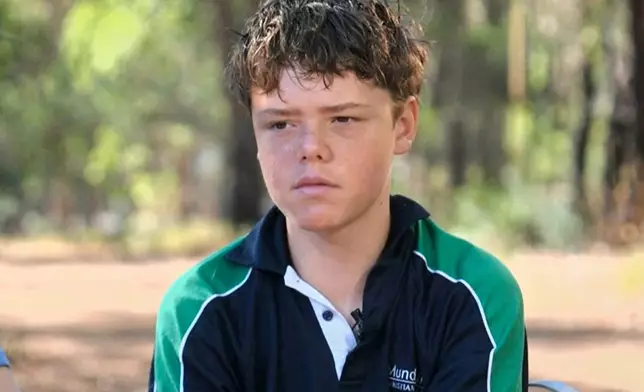
Austin Appelbee poses for a photo in Gidgegannup, Australia, Tuesday Feb. 3, 2026, after the 13-year-old made an hourslong swim to raise an alarm after his family was swept out to sea off the Australian coast. (Briana Shepherd/ABC via AP)
This image taken from video shows Austin Appelbee, right, posing with his family in Quindalup, Western Australia, Tuesday Feb. 3, 2026. (AuBC via AP)
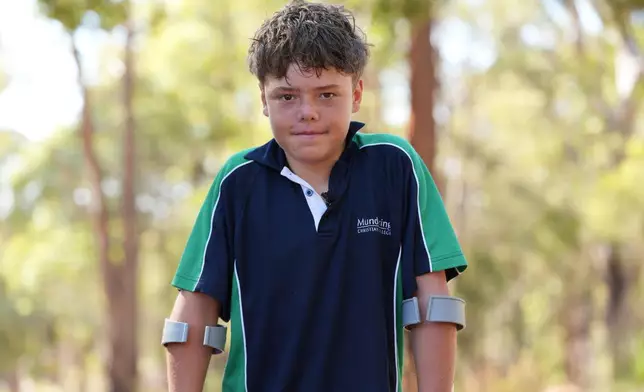
This image taken from video shows Austin Appelbee being interviewed in Quindalup, Western Australia, Tuesday Feb. 3, 2026. (ABC via AP)
“The waves are massive and I have no life jacket on. … I just kept thinking ‘just keep swimming, just keep swimming,’” Austin said Tuesday. “And then I finally I made it to shore and I hit the bottom of the beach and I just collapsed.”
Austin said he initially set off in an inflatable kayak and wearing a life jacket, but the ocean was rough and the vessel was taking in too much water so he abandoned it. He then discarded the life jacket because it impeded his swimming. He said he tried to focus on positive thoughts.
The family had set off on their seaside adventure before noon, Austin raised the alarm at 6 p.m. and a helicopter spotted his mother Joanne Appelbee, 47, his 12-year-old brother Beau and his 8-year-old sister Grace around 8:30 p.m.
The family had drifted about 14 kilometers (9 miles) from Quindalup in Western Australia state and spent about 10 hours in the water.
“The actions of the 13-year-old boy cannot be praised highly enough — his determination and courage ultimately saved the lives of his mother and siblings,” Police Inspector James Bradley said.
Joanne Appelbee told reporters that she sent her oldest child for help because she could not leave all her children stranded in the ocean.
“One of the hardest decisions I ever had to make was to say to Austin: ‘Try and get to shore and get some help. This could get really serious really quickly,‘” she told Australian Broadcasting Corp.
She said she started out feeling confident he would reach the shore but was filled with doubt when the sun started to set and help had still not arrived.
“We kept positive, we were singing and we were joking and … we were treating it as a bit of a game until the sun started to go down and that’s when it was getting very choppy. Very big waves,” Joanne Appelbee said.
By the time they were rescued, all three of them were shivering and Beau had lost sensation in his legs because of the cold, the mom said.
“I have three babies. All three made it. That was all that mattered,” she said.
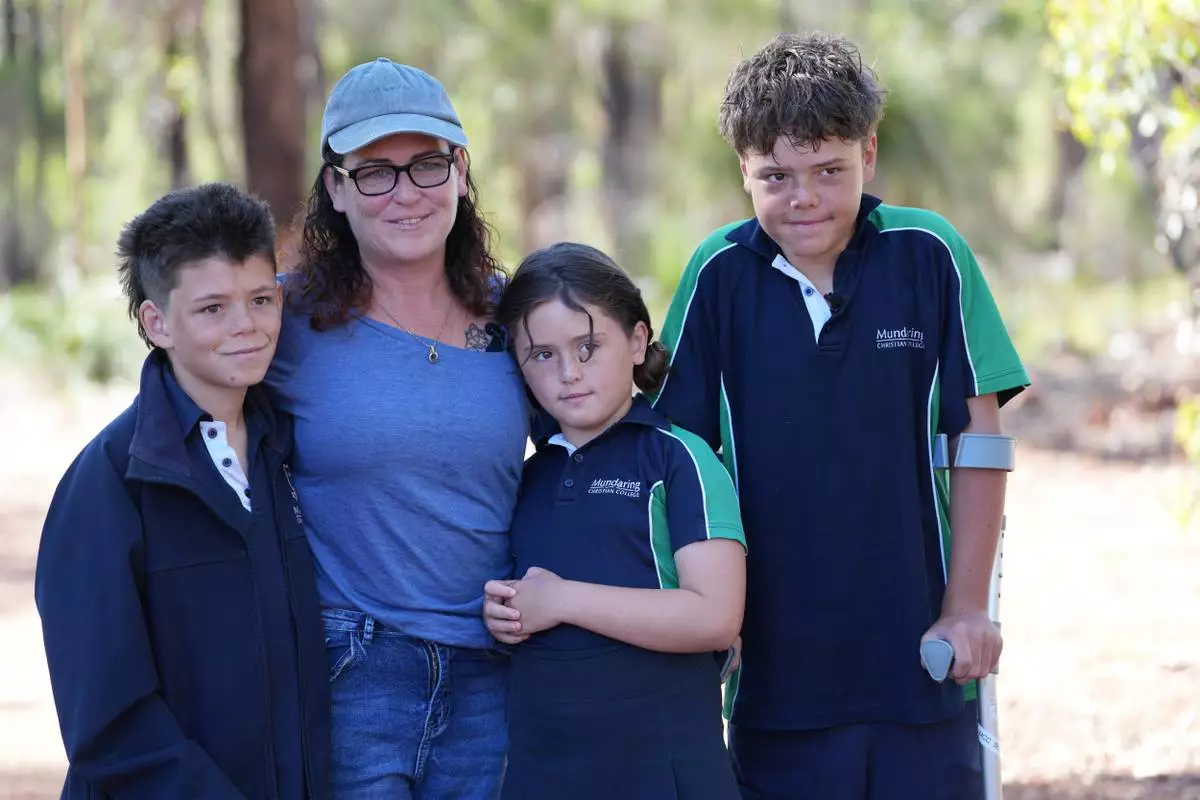
Austin Appelbee, right, poses with his brother, Beau, left, his mother, Joanne, second left, and sister Grace, in Gidgegannup, Australia, Tuesday Feb. 3, 2026, after 13-year-old Austin made an hourslong swim to raise an alarm after his family was swept out to sea off the Australian coast. (Briana Shepherd/ABC via AP)
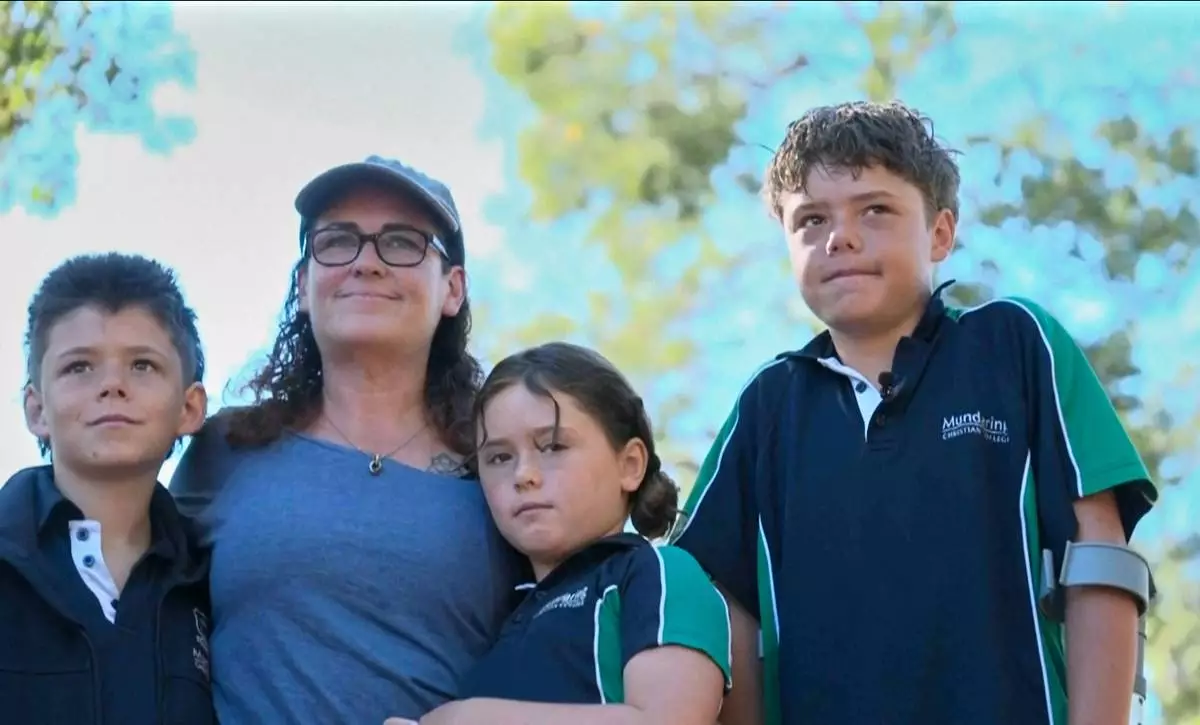
This image taken from video shows Austin Appelbee, right, posing with his family in Gidgegannup, Australia, Tuesday Feb. 3, 2026. (ABC via AP)
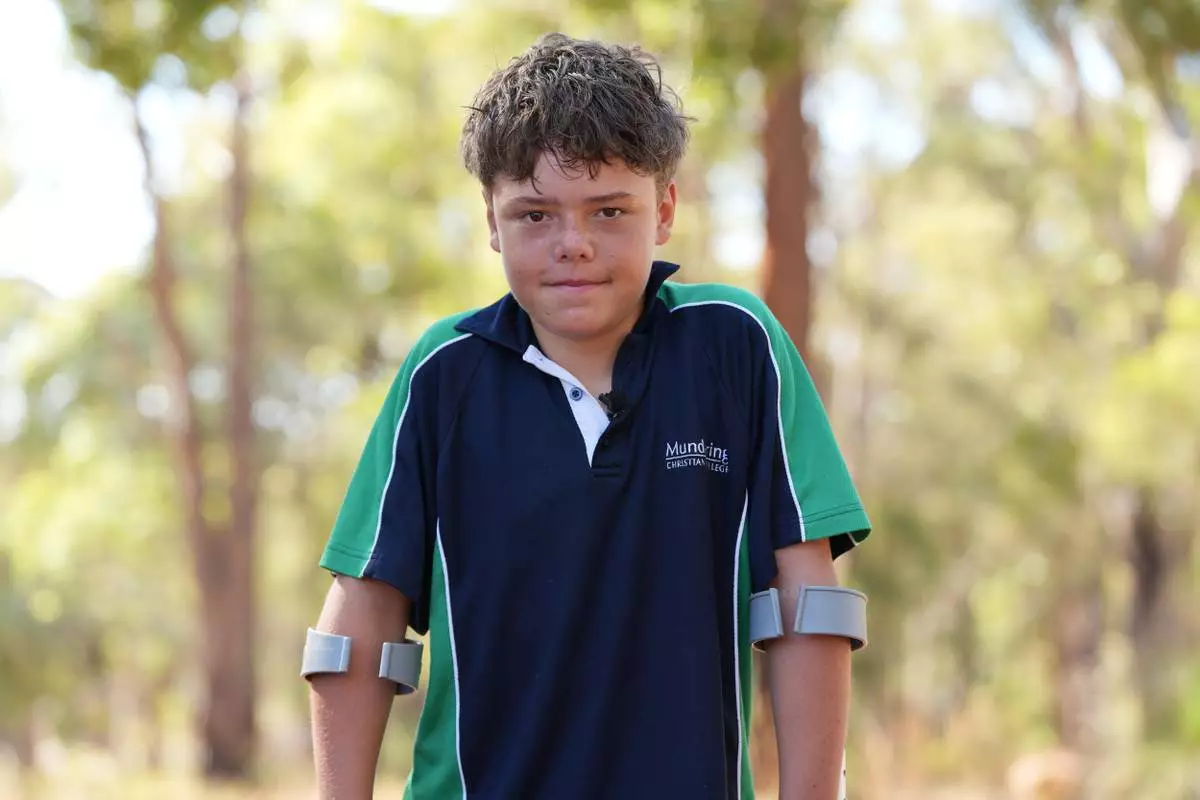
Austin Appelbee poses for a photo in Gidgegannup, Australia, Tuesday Feb. 3, 2026, after the 13-year-old made an hourslong swim to raise an alarm after his family was swept out to sea off the Australian coast. (Briana Shepherd/ABC via AP)
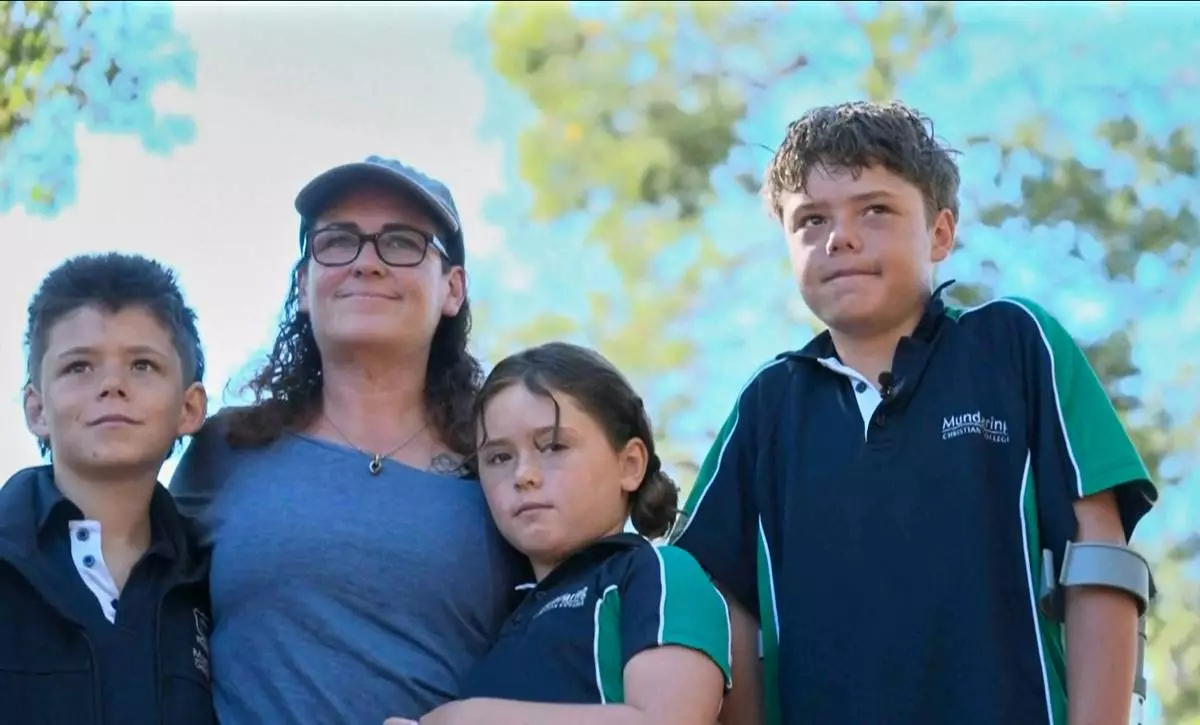
This image taken from video shows Austin Appelbee, right, posing with his family in Quindalup, Western Australia, Tuesday Feb. 3, 2026. (AuBC via AP)
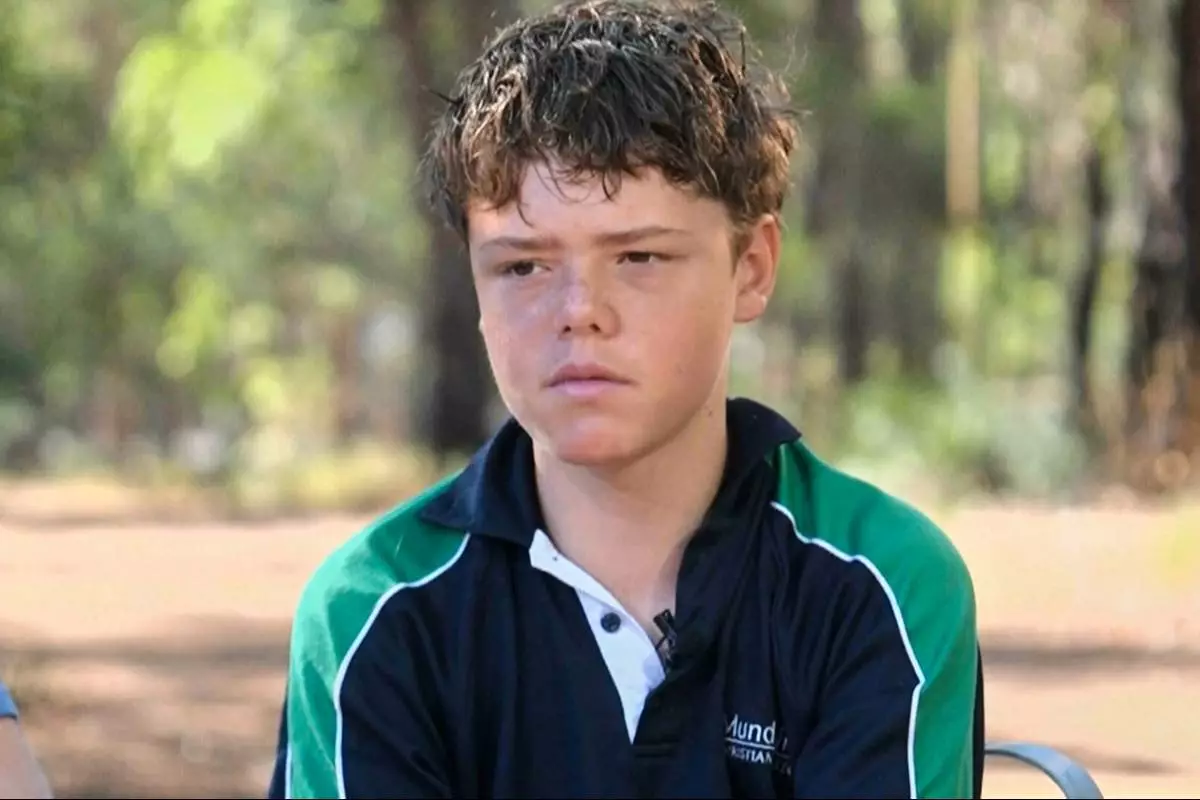
This image taken from video shows Austin Appelbee being interviewed in Quindalup, Western Australia, Tuesday Feb. 3, 2026. (ABC via AP)
Iran fired missiles at Israel and some Gulf nations while explosions could be heard around Tehran and the central Iranian city of Isfahan on Friday, as the United States prepared to further reinforce its already significant military forces in the Middle East.
As the war that began Feb. 28 was to enter its sixth week, Israel, Bahrain, Kuwait warned about incoming missile fire, although it was unclear if anything was struck. Activists reported strikes around Tehran and the central city of Isfahan but it wasn’t immediately clear what was hit.
Iran’s attacks on Gulf region energy infrastructure and its tight grip on the Strait of Hormuz, through which a fifth of the world’s oil and natural gas transits in peacetime, has sent oil prices skyrocketing.
Oil prices surged while Asian financial markets rose moderately during cautious trading. Benchmark U.S. crude rose 11.4% to $111.54 a barrel. The price of Brent crude, the international standard, jumped 7.8% to $109.03 per barrel.
U.S. President Donald Trump said U.S. forces will keep hitting Iran “very hard” in the next two or three weeks.
The largest American aircraft carrier in service sailed out of Split, in Croatia and “remains poised for full mission tasking in support of national objectives in any area of operation,” the Navy’s 6th Fleet announced.
It was unclear where it was going. The USS Abraham Lincoln remains in the Arabian Sea and the USS George H. W. Bush aircraft carrier departed Norfolk on Wednesday to head to the Mideast.
Here is the latest:
Oil prices continued to surge on worries of a prolonged Iran war but the Asian markets that were open Friday rose moderately in cautious trading, while others were closed for the Good Friday holidays.
Benchmark U.S. crude rose 11.4% to $111.54 a barrel. The price of Brent crude, the international standard, jumped 7.8% to $109.03 per barrel.
The U.S. only relies on the Persian Gulf for a fraction of the oil it imports, but oil is a commodity and prices are set in a global market.
The situation is very different in Asia. Japan, for example, relies on access to the Strait of Hormuz for much of the nation’s oil import needs and would need to rely on alternative routes. But some analysts say Japan and oher nations are counting on an agreement with Iran to allow transports.
Japan’s benchmark Nikkei 225 gained 0.9% in Friday morning trading to 52,938.62. South Korea’s Kospi jumped 2.1% to 5,344.41. The Shanghai Composite sank 0.5% to 3,899.57. Trading was closed in Hong Kong, Singapore, Australia, New Zealand, the Philippines, Indonesia and India.
Wall Street, where trading is closed Friday, finished its first winning week since the start of the Iran war, although trading started out with a decline driven by a surge in oil prices.
Bangladesh is curtailing office hours and enforcing early closure of malls and shops beginning Friday to handle its energy crisis related to the war.
The country’s cabinet ordered 30% spending cuts for fuel and power at government offices, suspended some staff training and stopped purchases of new vehicles, ships and aircraft. Decorative lighting will not be allowed for celebrations.
Bangladesh, a nation of more than 170 million people, is seeking alternative fuel sources and $2.5 billion in external financing for imports, which account for 95% of its fuel.
Australian Energy Minister Chris Bowen on Friday urged motorists getting away for a long weekend during the Easter holiday to fill up in cities because most of the nation’s fuel shortages are in rural areas.
Among 2,400 gas stations in New South Wales, Australia’s most populous state, 182 had run out of diesel by Friday.
In Australia’s second-most populous state, Victoria, 76 gas stations were out of diesel. In the remaining states ranked by the most populous first, Queensland had 75 stations without diesel, Western Australia had 37, South Australia had 28 and in Tasmania there were seven.
“For those Australians planning a road trip this weekend, given our shortages are predominantly in rural and regional Australia, it makes sense to fill up in the city to help the country if you can,” Bowen said in Sydney.
The government, which blamed regional shortages on panic buying and distribution problems, is concentrating on delivering fuel to farmers for planting crops.
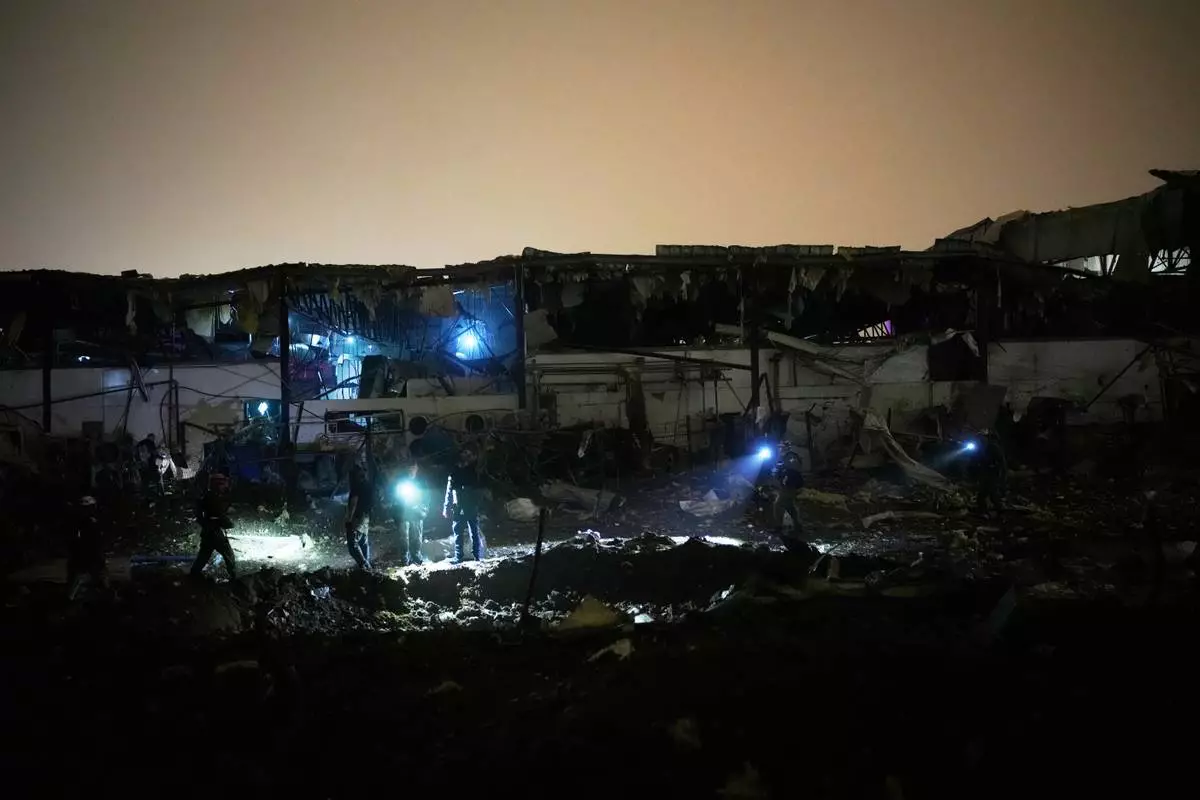
Israeli security forces and rescue teams inspect a site struck by an Iranian missile in Petah Tikva, Israel,Thursday, April 2, 2026. (AP Photo/Ohad Zwigenberg)
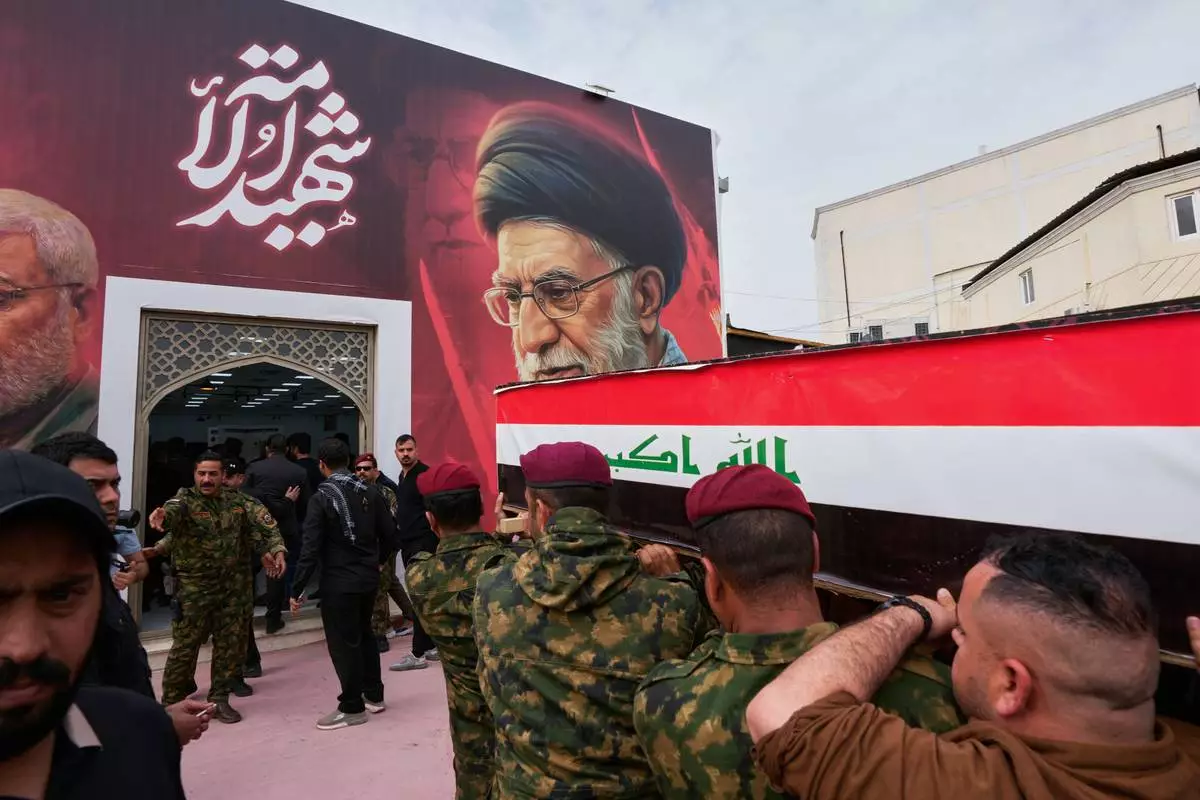
Members from the Popular Mobilization Forces attend a funeral of fighters who were killed in a U.S. airstrike, in Tal Afar, Nineveh province, north of Baghdad, Iraq, Thursday, April 2, 2026. (AP Photo/Hadi Mizban)

A man with burn wounds from an Israeli airstrike on southern Lebanon sits on a bed at the Sidon Government Hospital in Sidon, Lebanon, Thursday, April 2, 2026. (AP Photo/Emilio Morenatti)
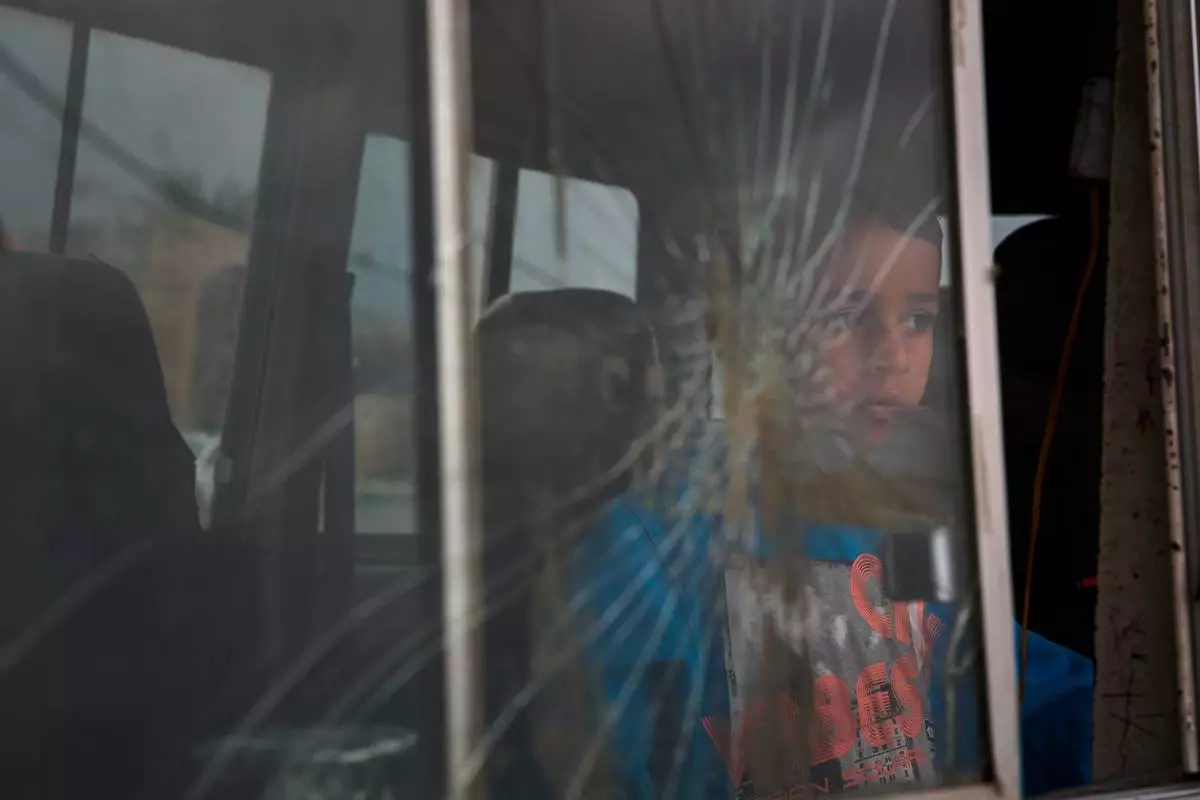
A boy who fled with his family following Israeli strikes in southern Lebanon sits inside the van they are using as shelter in Sidon, Lebanon, Thursday, April 2, 2026. (AP Photo/Emilio Morenatti)

President Donald Trump arrives from the Blue Room to speak about the Iran war from the Cross Hall of the White House on Wednesday, April 1, 2026, in Washington. (AP Photo/Alex Brandon, Pool)