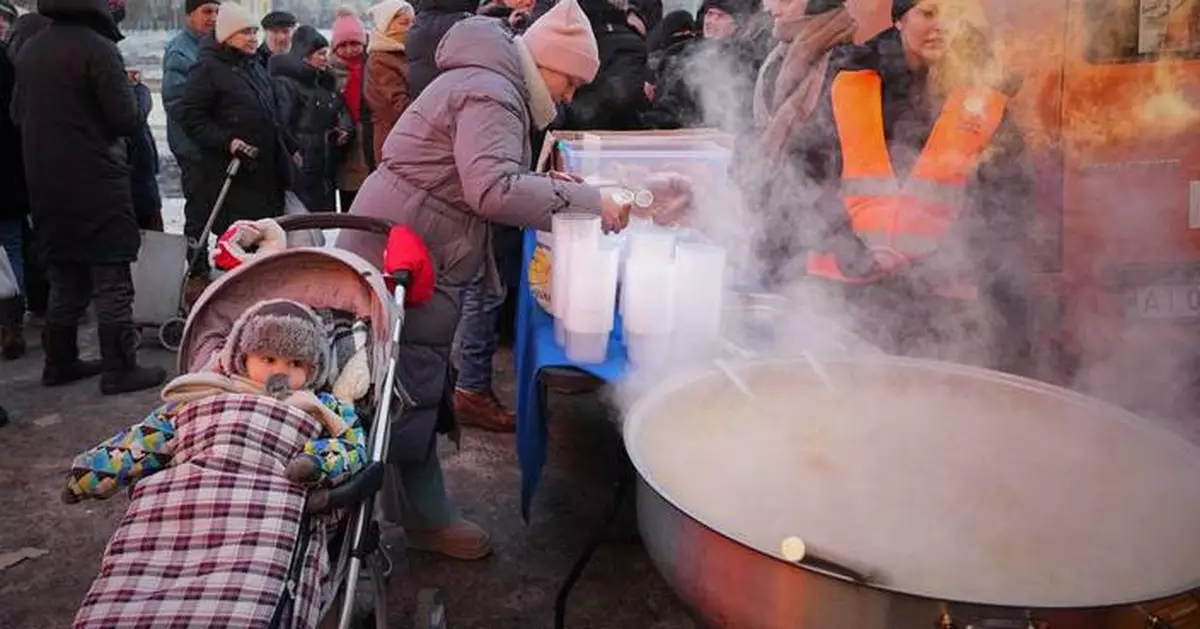
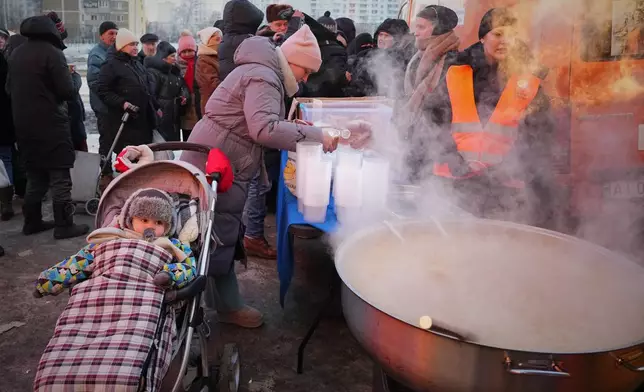
KYIV, Ukraine (AP) — On the edge of the Ukrainian capital, Kyiv, volunteers ladle hot soup into plastic containers as residents wrapped in heavy coats queue for a meal they cannot cook at home. Yuliia Dolotova, a mother of two, is among them, waiting with her 18-month-old son, Bohdanchyk, bundled in layers against the biting cold.
Life, she says, has been reduced to the most basic essentials: warmth, light and food.
Click to Gallery
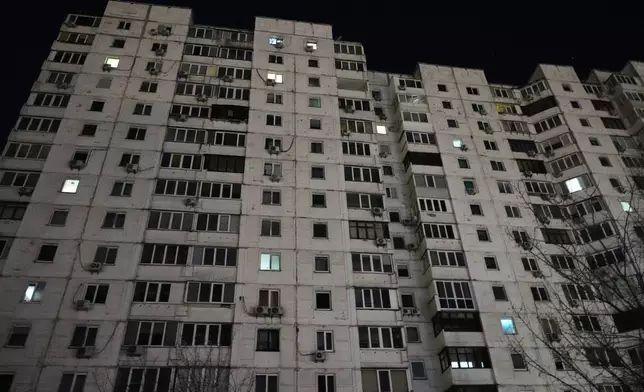
An apartment block is seen during a power outage caused by Russia’s repeated air strikes on the country’s power grid, in Kyiv, Ukraine, Monday, Feb. 2, 2026. (AP Photo/Sergey Grits)
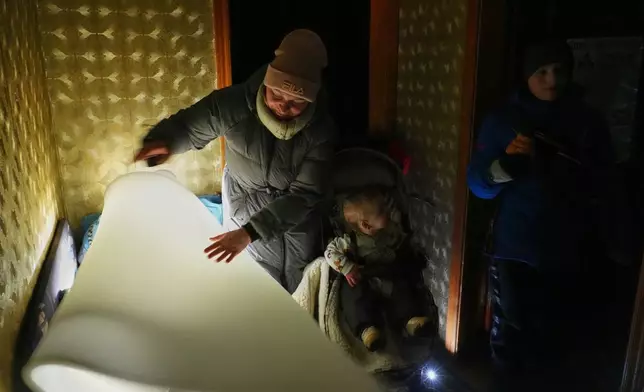
Yuliia Dolotova, 37, uses foam rubber to insulate her children’s bed in her apartment during a power outage caused by Russia’s repeated air strikes on the country’s power grid, in Kyiv, Ukraine, Monday, Feb. 2, 2026. (AP Photo/Sergey Grits)
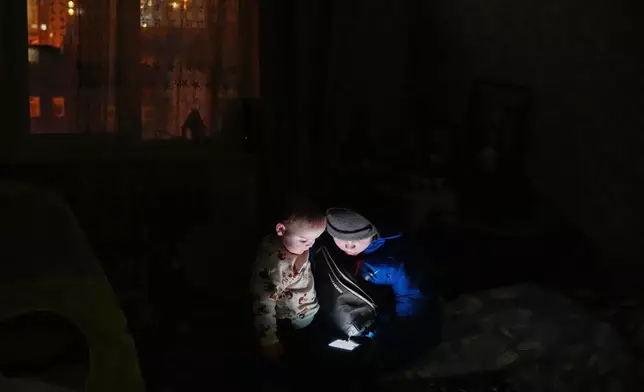
Daniil Dolotov, 11, plays on a phone with his brother Bohdanchyk, 18 months, in their apartment during a power outage caused by Russia’s repeated air strikes on the country’s power grid, in Kyiv, Ukraine, Monday, Feb. 2, 2026. (AP Photo/Sergey Grits)
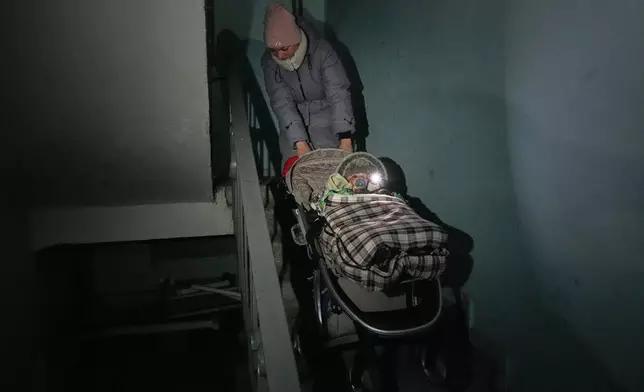
Yuliia Dolotova, 37, pulls her son in his stroller up the stairs in an apartment block during a power outage caused by Russia’s repeated air strikes on the country’s power grid, in Kyiv, Ukraine, Monday, Feb. 2, 2026. (AP Photo/Sergey Grits)
Yuliia Dolotova, 37, receives hot food at a distribution point during a power outage caused by Russia’s repeated air strikes on the country’s power grid, in Kyiv, Ukraine, Monday, Feb. 2, 2026. (AP Photo/Sergey Grits)
“All day long, there’s no electricity, no way to cook food for the kids. Pretty much everyone is in this situation,” Dolotova, 37, said.
She lives in Troieshchyna, one of Kyiv’s hardest-hit districts, battered by repeated Russian attacks since the full-scale Russian invasion four years ago. Russian strikes using drones and missiles have left hundreds of thousands of people without heat or electricity as temperatures plunge as low as minus 30 degrees Celsius (minus 22 Fahrenheit). The harsh winter is expected to continue in the coming weeks.
Without heat, water pipes in the district have also frozen and burst, adding to the strain on daily life.
Damage to the grid and power stations is at its worst since the war began. As soon as utility and energy crews restore heating to some buildings and power engineers finally manage to set outage schedules so people know when electricity will be cut, Russia launches another strike — and the same work has to be done all over again.
The hardship is compounded by the long absence of Dolotova's husband, who is fighting in the east and has seen his youngest son only twice since birth. She looks after her two sons — Bohdanchyk and 11-year-old Daniil — and the family dog, who rarely gets out for a walk.
At night her building, a Soviet-era tower block, goes completely dark. Her toddler son has learned to grip her cellphone, flashlight on, as she manhandles his stroller up six flights of stairs to their apartment. The stairs have already broken two strollers.
Inside, she flicks on battery-powered lamps one by one. Before bedtime, the two brothers huddle together for warmth, playing in silence near the frost-lined windows by flashlight. At bedtime, Dolotova insulates the bed with foam rubber to try to keep them warm.
Dolotova's husband is serving in the Zaporizhzhia area — one of the war’s most volatile sectors.
“He should be coming soon. I live from leave to leave," Dolotova said. "I wait for him — that’s what keeps me going. You tell yourself, just a little longer, and he’ll come. You count the days.”
Follow AP’s coverage of the war in Ukraine at https://apnews.com/hub/russia-ukraine
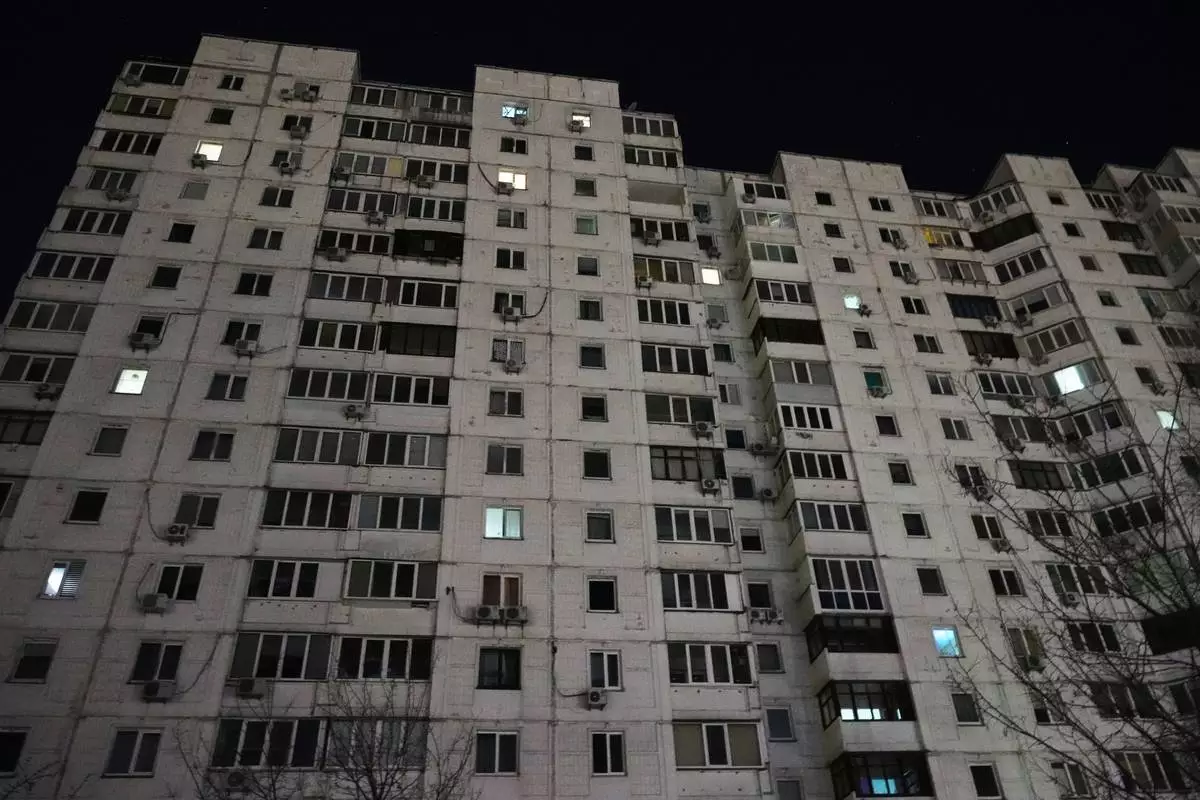
An apartment block is seen during a power outage caused by Russia’s repeated air strikes on the country’s power grid, in Kyiv, Ukraine, Monday, Feb. 2, 2026. (AP Photo/Sergey Grits)
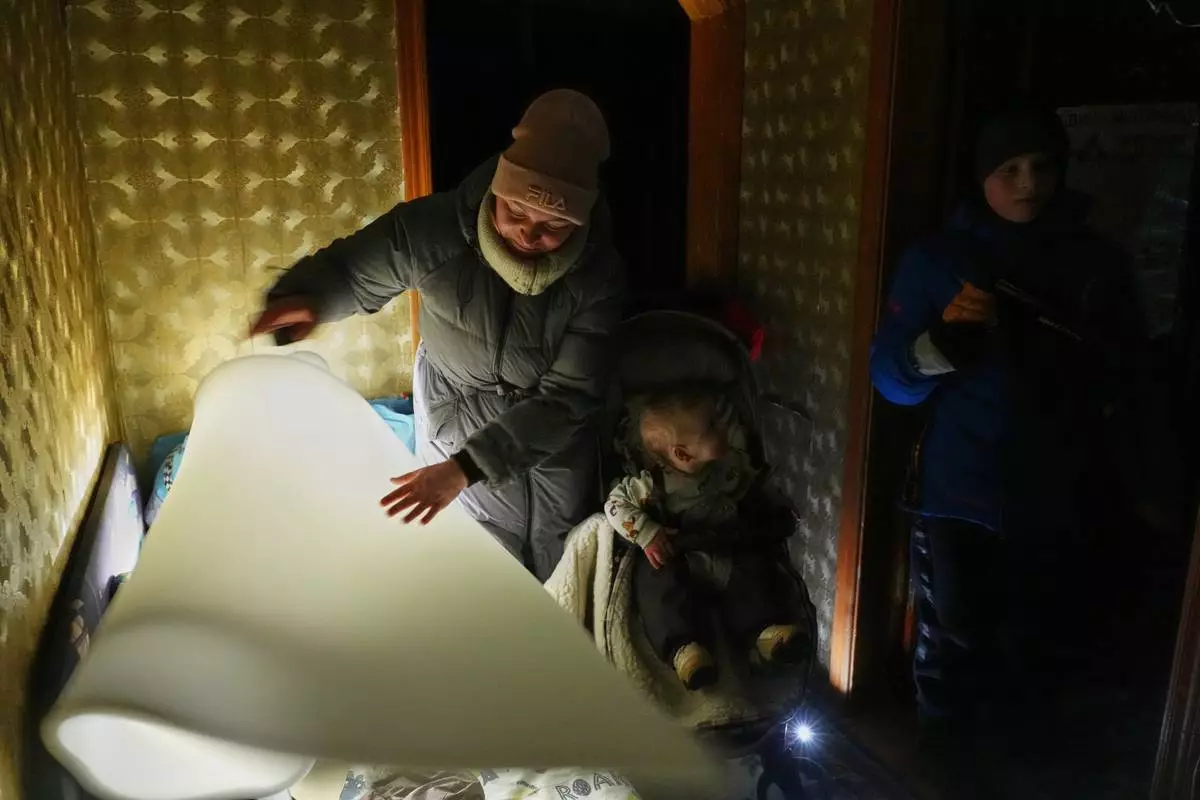
Yuliia Dolotova, 37, uses foam rubber to insulate her children’s bed in her apartment during a power outage caused by Russia’s repeated air strikes on the country’s power grid, in Kyiv, Ukraine, Monday, Feb. 2, 2026. (AP Photo/Sergey Grits)
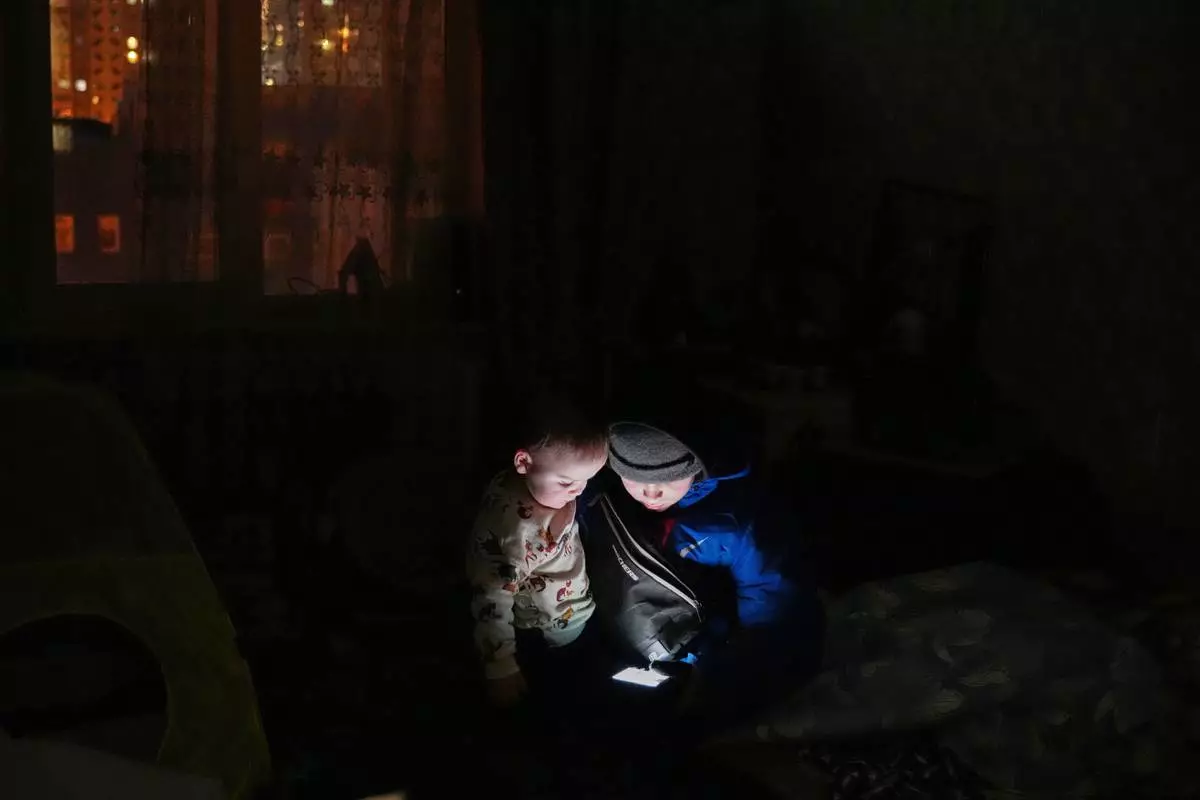
Daniil Dolotov, 11, plays on a phone with his brother Bohdanchyk, 18 months, in their apartment during a power outage caused by Russia’s repeated air strikes on the country’s power grid, in Kyiv, Ukraine, Monday, Feb. 2, 2026. (AP Photo/Sergey Grits)
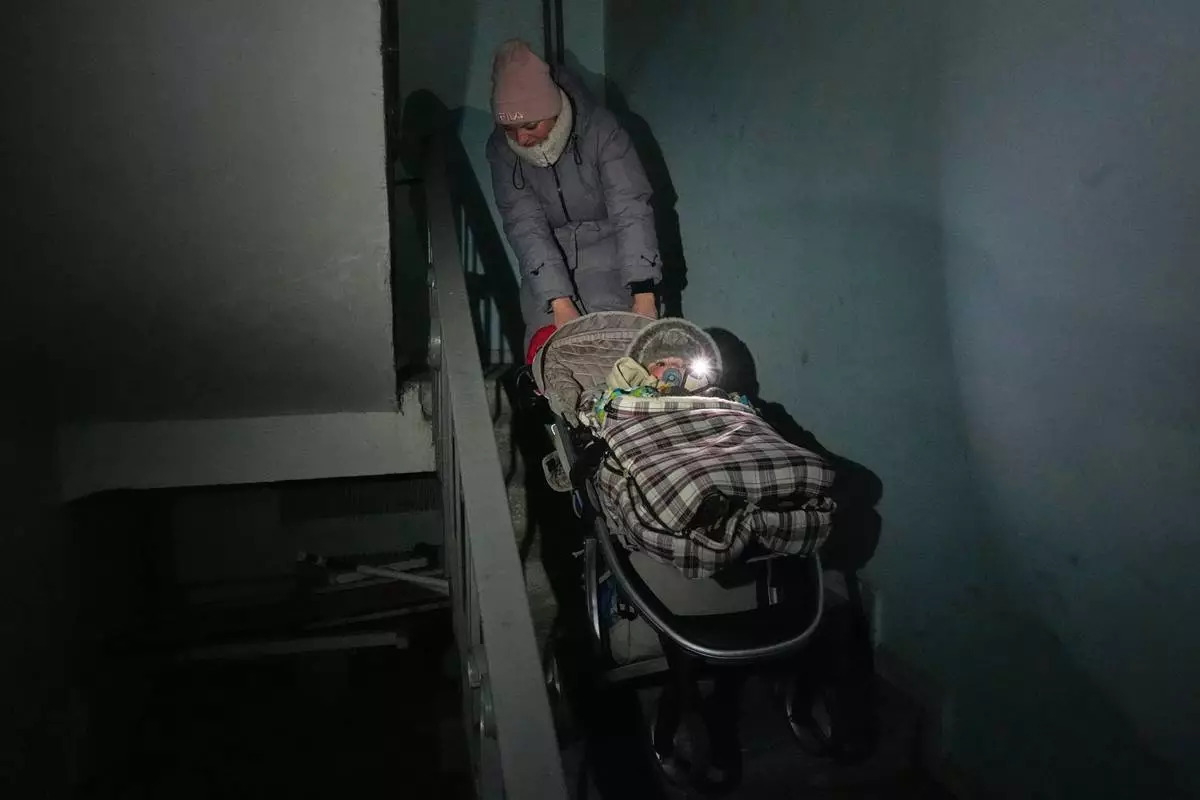
Yuliia Dolotova, 37, pulls her son in his stroller up the stairs in an apartment block during a power outage caused by Russia’s repeated air strikes on the country’s power grid, in Kyiv, Ukraine, Monday, Feb. 2, 2026. (AP Photo/Sergey Grits)
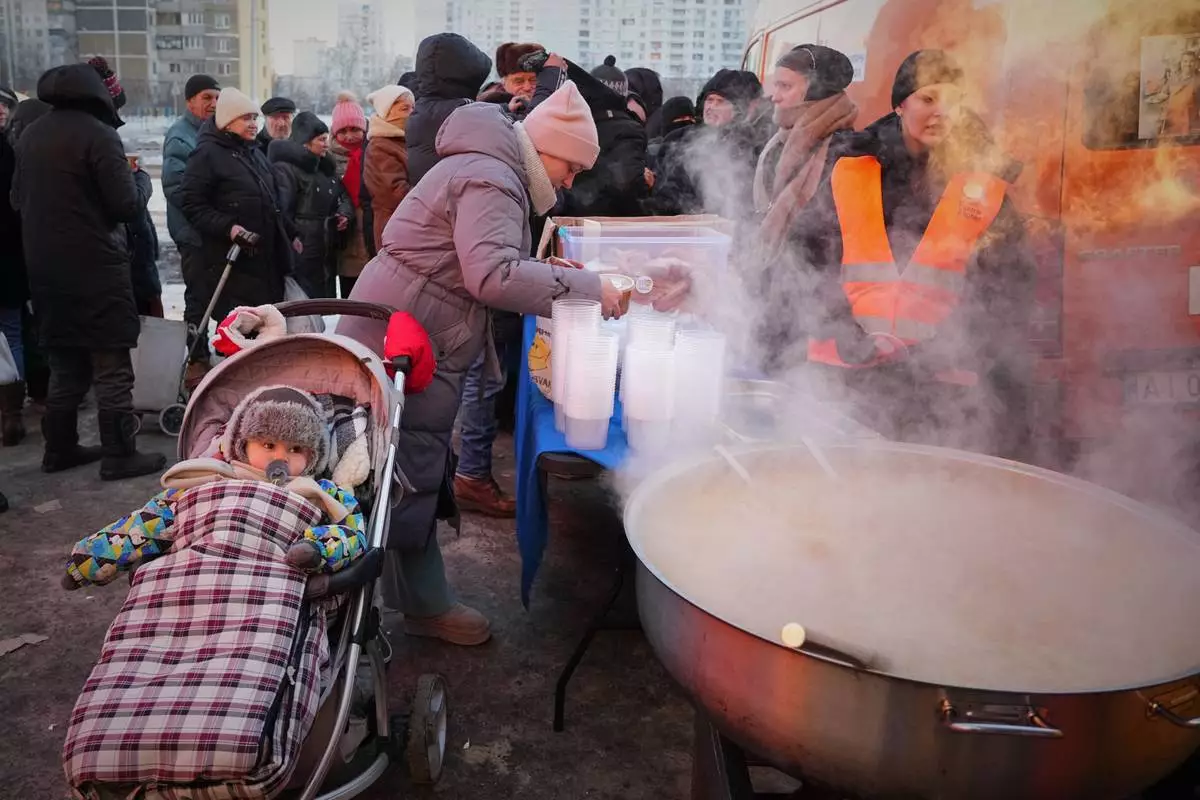
Yuliia Dolotova, 37, receives hot food at a distribution point during a power outage caused by Russia’s repeated air strikes on the country’s power grid, in Kyiv, Ukraine, Monday, Feb. 2, 2026. (AP Photo/Sergey Grits)
Cameron Boozer was at the center of everything for Duke this season.
The 6-foot-9, 250-pound forward proved tough enough to score through physical play. Rangy enough to space the floor and shoot from outside. Deft enough as a passer to find teammates, whether against constant double teams coming for him as the top name on every scouting report or while running the entire offense from up top.
“You just want to affect winning in whatever way you can,” Boozer said.
The high-end NBA prospect did that all season for a team that won 35 games, reached No. 1 in the AP Top 25 poll, claimed the top overall seed for March Madness and reached the NCAA Tournament's Elite Eight. Now he's The Associated Press men’s college basketball national player of the year, only the fifth freshman to earn the honor and the second in a row for a Duke program that keeps adding to the longest list of winners in the country.
“It just goes to show more about what our team has done, just because I think that really helps awards like this, having great team success,” Boozer told the AP. “It’s really just not me.”
Boozer, named unanimous first-team AP all-American last month, received 59 of 61 votes from AP Top 25 voters in results released Friday. BYU freshman AJ Dybantsa, another potential top NBA pick, received the other two votes after averaging a national-best 25.5 points per game.
Boozer, son of Duke and longtime NBA player Carlos Boozer, ranked averaged 22.5 points (ninth in Division I) and 10.2 rebounds (12th) while finishing tied for the national lead with 22 double-doubles. He also averaged 4.1 assists while posting efficient shooting numbers at 55.6% overall and 39.1% from 3-point range.
He joins fellow Blue Devils star Cooper Flagg last year, another Duke player in Zion Williamson (2019), Kentucky’s Anthony Davis (2012) and Texas star Kevin Durant (2007) as freshmen to win the AP award. Each went No. 1 or No. 2 in the NBA draft that year.
“I’m very grateful just that I’m even in those (NBA) conversations,” Boozer said. “I think a lot of people dream of being where I am. Sometimes you’ve got to take a step back and just remember that once upon a time, you were a kid dreaming to be here. So I think it’s very special.”
His coaches think the same of him.
“We’ve been fortunate enough the last two years to have two of the best freshmen to ever play in college basketball back to back,” Duke associate head coach and former Blue Devils player Chris Carrawell said. “And Cam is right up there.
Boozer is Duke's ninth AP winner, each coming from a different player. UCLA is the next closest with five winners, though that included Kareem Abdul-Jabbar (1967 and 1969) and Bill Walton (1972 and 1973) as two-time selections.
UCLA, Ohio State and Duke rival North Carolina are the only other programs with as many as three different players to win the award.
Boozer arrived at Duke alongside twin brother Cayden after the two led Miami's Columbus High to four straight state championships. By late February, the Blue Devils were starting a four-week reign atop the AP Top 25 that would carry to March Madness. Boozer — who said he looks at winning as a skill — routinely posted top performances in Duke's biggest games, including during a rugged nonconference slate.
He matched a season high with 35 points in a November win against Arkansas. He followed with 29 points against defending national champion Florida. He also had big performances at Michigan State (18 points, 15 rebounds) and flirted with a triple-double (18 points, 10 rebounds, seven assists) in a February win against Michigan.
Along the way, he pushed through bumps and shoves. He closed Sunday's season-ending loss to UConn with 27 points and his right eye swollen from a first-half blow.
“There’s no agenda other than figuring out a way to win,” Wolverines coach Dusty May said. “I’ve seen him play a number of times this year where there’s six guys in the paint, and it’s not as if he’s jumping 40, 50 inches off the floor. His desire to rebound the ball, to set physical screens, to play to his advantages, is as impressive as any freshman that I can recall.”
The other challenge was managing the scrutiny that comes from expectations for greatness. A missed shot. A turnover. The 3-for-17 shooting while battling rising frustration and Virginia shot-blocker Ugonna Onyenso in the ACC title game.
“He does a great job of flushing it and not letting it dwell on him too much,” Cayden said. “That’s something he’s always been able to do since we were younger. Obviously I talk to him when he needs me to. And I sometimes just understood that, hey, he’s going through something, give him some space for a little bit and he’ll figure it out.”
Cameron said getting away for time alone and putting down the phone helps. He points to prayer and even a recent effort to read more.
The rest of the time, though, he'll throw himself into becoming a better player. There's comfort in that routine, the results yet to fail him.
“I think just being prepared alleviates pressure," Cameron said. "Being ready for a game, watching film, working out, knowing you put your time in, being confident in yourself — I think all that takes away a lot of the pressure that people talk about. At the end of the day, pressure really is what you put on yourself.”
AP March Madness bracket: https://apnews.com/hub/ncaa-mens-bracket and coverage: https://apnews.com/hub/march-madness
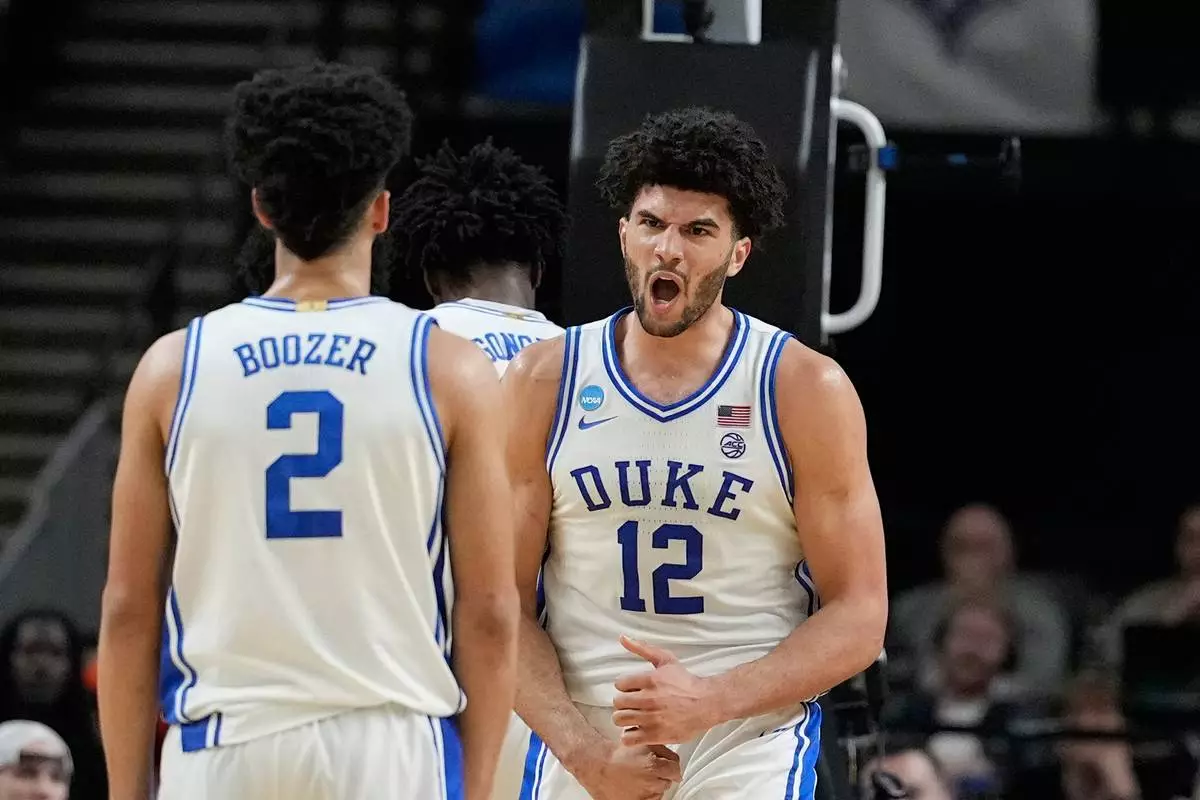
Duke forward Cameron Boozer (12) reacts after scoring during the second half in the second round of the NCAA college basketball tournament against TCU, Saturday, March 21, 2026, in Greenville, S.C. (AP Photo/Brynn Anderson)
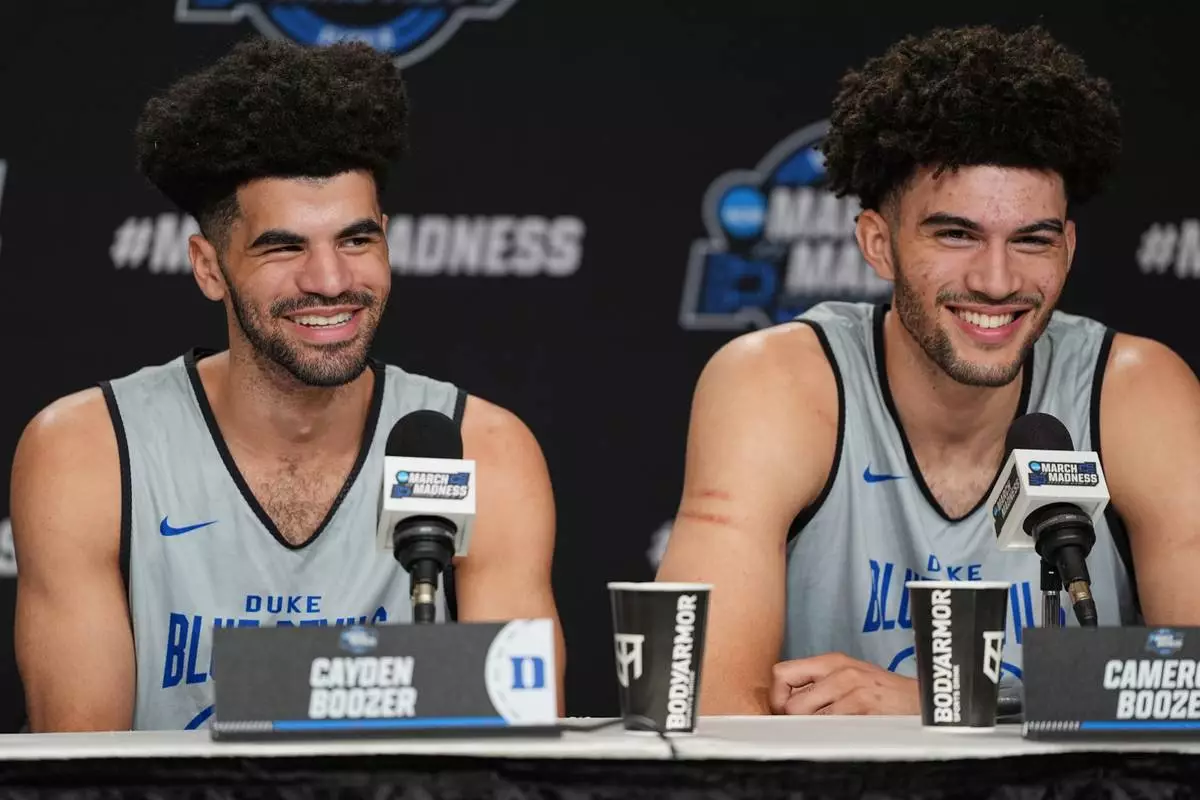
Duke guard Cayden Boozer, left, and Duke forward Cameron Boozer, right, share a laugh during a press conference ahead of a game against UConn in the Elite Eight of the NCAA college basketball tournament Saturday, March 28, 2026, in Washington. (AP Photo/Abbie Parr)
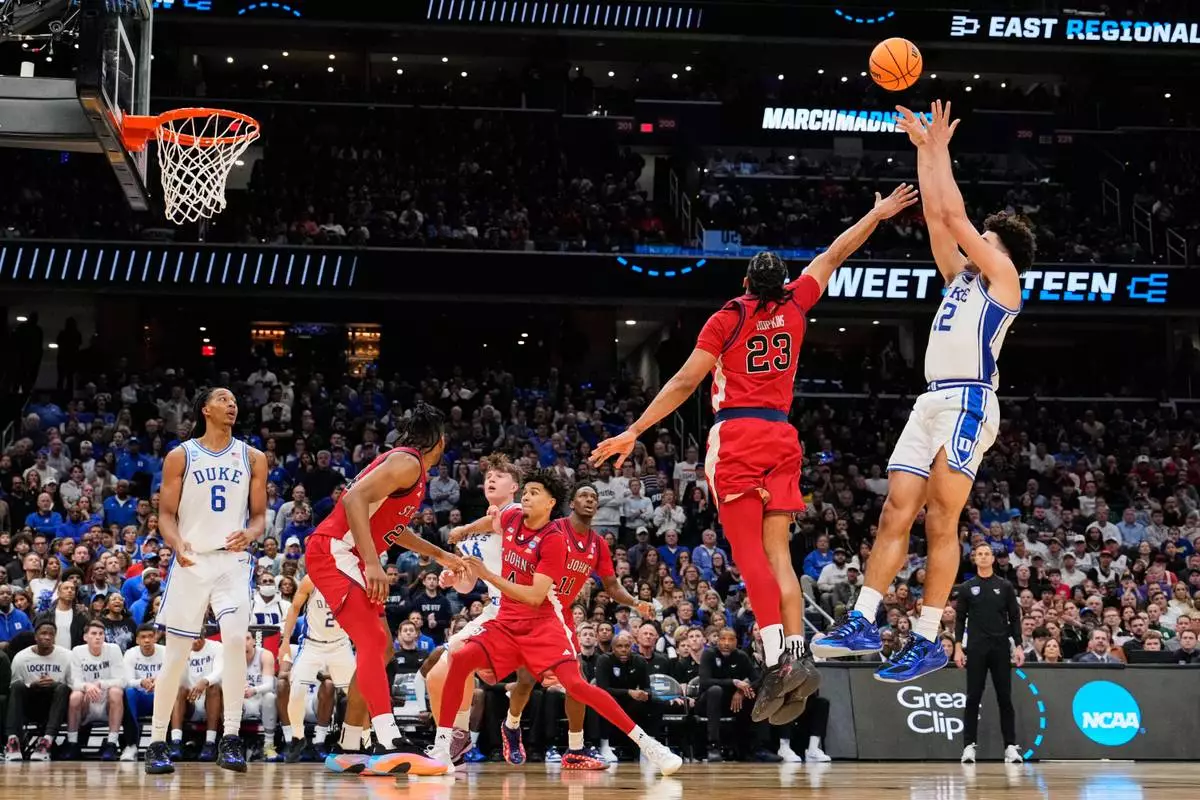
Duke forward Cameron Boozer (12) shoots over St. John's forward Bryce Hopkins (23) during the second half in the Sweet 16 of the NCAA college basketball tournament, Friday, March 27, 2026, in Washington. (AP Photo/Abbie Parr)
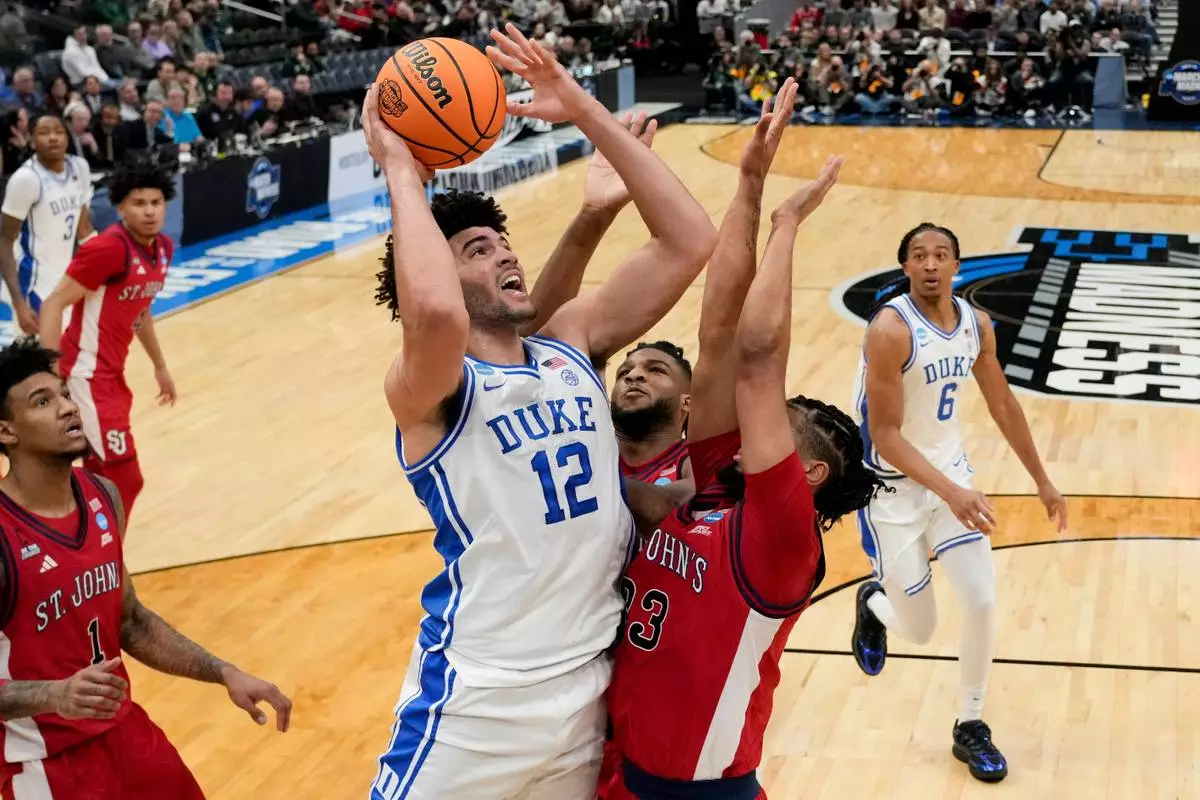
Duke forward Cameron Boozer (12) shoots over St. John's forward Bryce Hopkins (23) during the first half in the Sweet 16 of the NCAA college basketball tournament, Friday, March 27, 2026, in Washington. (AP Photo/Stephanie Scarbrough)