China announced Wednesday six major archaeological discoveries that were unearthed in 2025, offering fresh insights into the origins, development, and cultural diversity of ancient Chinese civilization.
The findings, revealed in Beijing by the Chinese Academy of Social Sciences (CASS), highlight breakthroughs across periods from the Paleolithic Age to the Tang Dynasty.
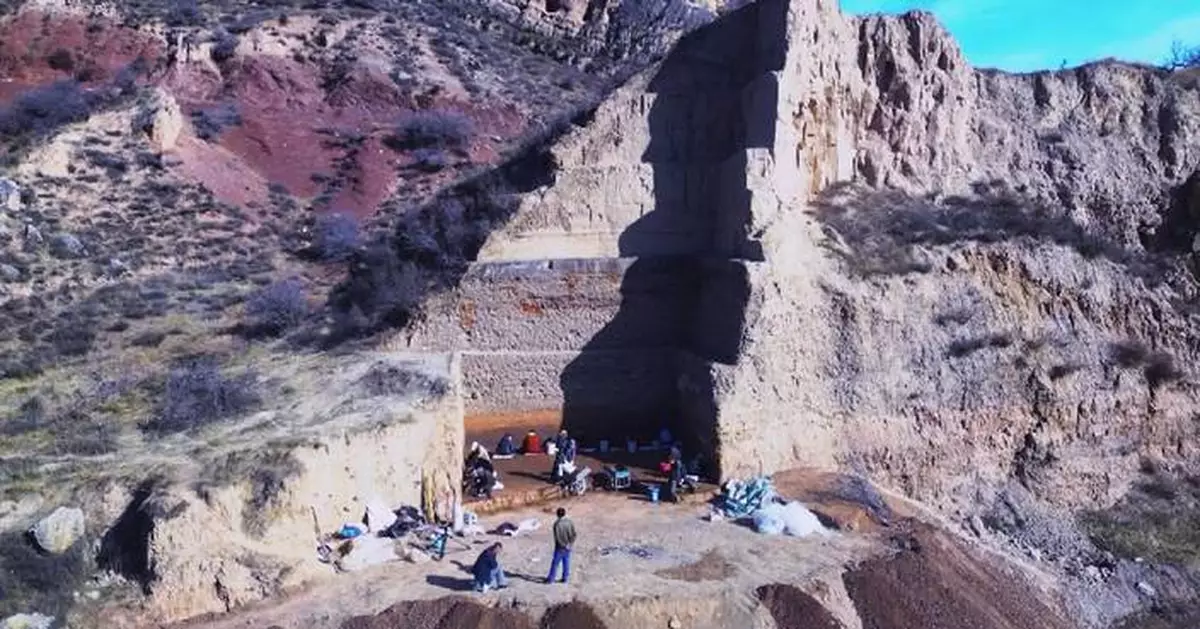
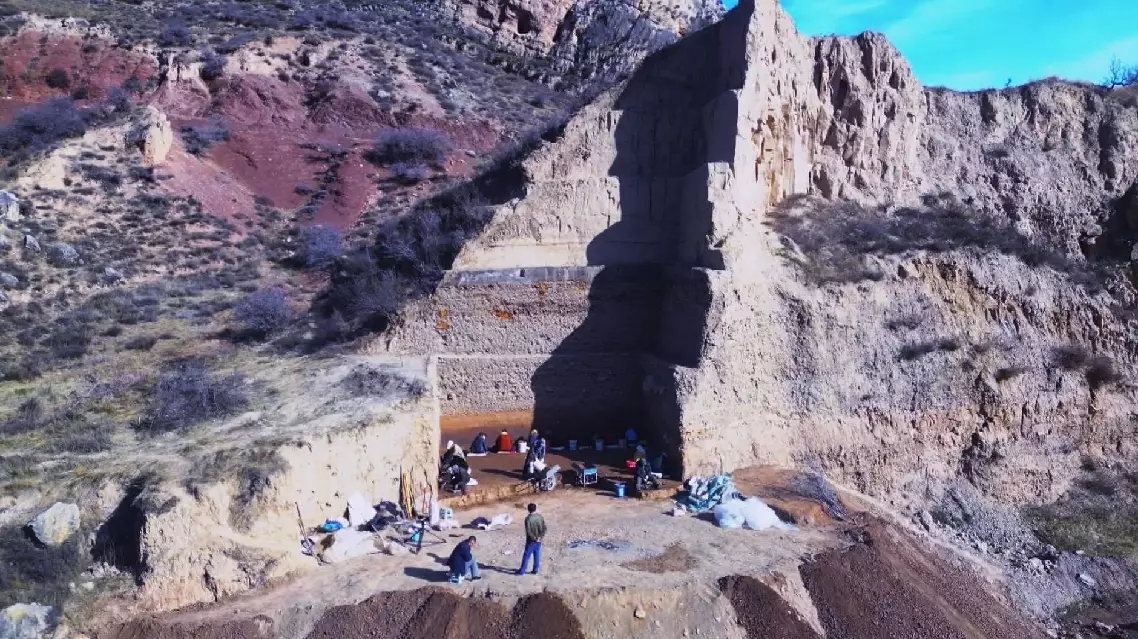
The first discovery takes us back to the Paleolithic Age. At the Xinmiaozhuang Site in Yangyuan County, Hebei Province, archaeologists carried out continuous excavations between 2022 and 2025, ultimately uncovering ancient human remains dating from roughly 120,000 to 13,000 years ago. These findings provide a rare and systematic body of evidence that deepens understanding of the origins and evolutionary path of modern humans in northern China.
The second discovery was at the Peiligang Site in Xinzheng city, Henan Province, which uncovered remains from both the Paleolithic and Neolithic periods. Excavations in 2025 revealed a multi-room building structure, inside which archaeologists unearthed finely carved pottery sculptures featuring human face with fangs. Dating back approximately 8,000 to 7,500 years, the artifacts are believed to be linked to the spiritual beliefs of early inhabitants.
The third discovery was at the Zhengjiagou Site in Zhangjiakou, Hebei Province. Archaeologists uncovered nine stone tombs, with the largest yielding artifacts that display the distinctive traits of the Hongshan culture. Radiocarbon dating places this tomb complex between 5,300 and 4,800 years ago, adding important evidence to the study of Neolithic traditions in northern China.
The fourth discovery was at the Husta Site in Wenquan County, Xinjiang Uygur Autonomous Region. Dating mainly to around 1600 BC, the site belongs to the late Bronze Age and had earlier yielded a tin-bronze knife, considered one of the earliest bronze artifacts ever found in China. Excavations carried out in 2025 further revealed two tombs from the Sui and Tang dynasties (581–907), adding new layers of cultural and historical depth to the site.
The fifth discovery was uncovered at the Langyatai Site in Qingdao, Shandong Province. After more than six years of excavation, archaeologists determined that the mountaintop architectural complex spans about 45,000 square meters. The findings corroborate historical records of Emperor Qinshihuang’s eastern inspection tours and the construction of Langyatai, offering tangible evidence of the engineering prowess and governance capacity of China's early feudal dynasties during the Qin (221–207 BC) and Han (202 BC–25 AD) periods.
The sixth discovery was at the Badam East cemetery in Turpan, Xinjiang Uygur Autonomous Region, dating to the Jin (265-420) and Tang (618-907) dynasties. A Tang Dynasty tomb excavated in 2025 contained a rare assemblage of painted wooden couches, wooden coffins and wooden screens. Many of the artifacts represent the first discovery of their kind, vividly reflecting cultural exchanges and coexistence among different ethnic groups during the Tang Dynasty.
China unveils six archaeological discoveries unearthed in 2025