Uruguayan President Yamandu Orsi's state visit to China is viewed by experts as a signal of Uruguay's determination to expand agricultural and trade cooperation with its largest export market.
At the invitation of Chinese President Xi Jinping, Orsi is paying a week-long visit from February 1 to 7, coinciding with the 38th anniversary of diplomatic relations. He is the first Latin American leader to visit China in 2026, arriving with nearly 100 business leaders, one of the largest delegations Uruguay has ever sent.
The trip is centered on economic development, with agriculture at the forefront. China and Uruguay already share strong trade ties in beef and dairy, and industry leaders say they expect the visit to open new opportunities. The prominence of agriculture was underscored when China’s Minister of Agriculture became the first official to welcome Orsi upon his arrival on Sunday.
"This trip is very important for us. China is very important for us, it's the most important market in terms of dairy products," said Conaprole president Gabriel Fernandez Secco.
"I feel proud of this possibility. Exports are very important for our economy. I can see Uruguay increasing the production of meat," said Gaston Scayola, president of the Uruguayan National Meat Institute.
The visit also carries geopolitical weight. As the United States intensifies its engagement in Latin America, including recent strikes on Venezuela, Uruguay is signaling that it will make its own choices.
"At present, Trump has warned Latin American countries not to cooperate with China. Yet Uruguay, one of the wealthiest countries in the region, still chose to engage with China, ignoring these U.S. warnings. I think this clearly has some strategic significance," said Xu Tianqi, deputy director of the Areas Study Department of the Chongyang Institute for Financial Studies at Renmin University of China.
For Uruguay, China represents long-term economic opportunity rather than a geopolitical question. China has been Uruguay's largest export destination for more than a decade, accounting for 26 percent of total goods exports in 2025. At last year's China-CELAC ministerial meeting, both sides announced over 100 cooperation projects for 2025--2027, underscoring the depth of engagement.
A closer partnership reflects the choices of both Chinese and Latin American societies, and serves the shared interests of both sides.
"Latin America and the Caribbean is an independent region and a sovereign region. It's willing to trade with the United States, if it is treated on equal terms. But it also wants to trade with China and other countries. It wants to have its own independent policy," said Benjamin Norton, the founder and editor-in-chief of Geopolitical Economy Report.

Uruguayan president’s China trip highlights strategic push for stronger economic cooperation
Yemen's Houthi group and the Saudi-led coalition traded heavy strikes on Saturday as the Houthis claimed widespread missile and drone attacks across Saudi Arabia, while intensive airstrikes rocked Houthi-held areas in Yemen, causing multiple casualties.
Houthi military spokesman Yahya Sarea said in a statement that the group launched seven missile and drone attacks targeting airports, oil facilities, and a military base in the Saudi cities of Riyadh, Yanbu, Rabigh, Dammam, Najran and Khamis Mushait.
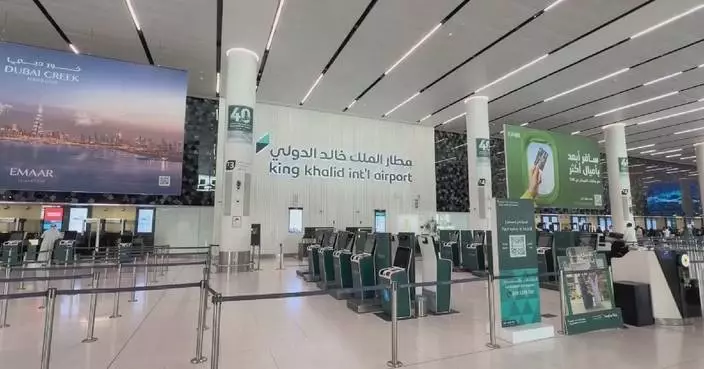
Sarea said the King Khalid International Airport in Riyadh was targeted in two stages. Other attacks struck targets including Saudi Aramco facilities in Yanbu and the King Fahd International Airport in Dammam.
Meanwhile, the Saudi-led coalition announced it had intercepted and destroyed several missiles launched by the Houthi group toward the cities of Riyadh, Taif and Yanbu, as well as a drone in the Eastern Province.
Saudi Arabia's General Directorate of Civil Defense said debris from two intercepted missiles fell in the Mecca and Medina regions. The Houthi group later denied targeting the two holy cities, calling such claims "false and unfounded."
The group claimed that Saturday's attacks followed what it described as 100 Saudi airstrikes on Houthi-held areas of Yemen over the previous 24 hours, including the Houthi-held capital Sanaa and the Red Sea port city of Mocha in the southwestern province of Taiz.
Houthi-run al-Masirah TV reported multiple casualties from the strikes, including eight killed and more than 10 others wounded when airstrikes hit facilities housing cement factory workers in the Hamdan district of Sanaa province.
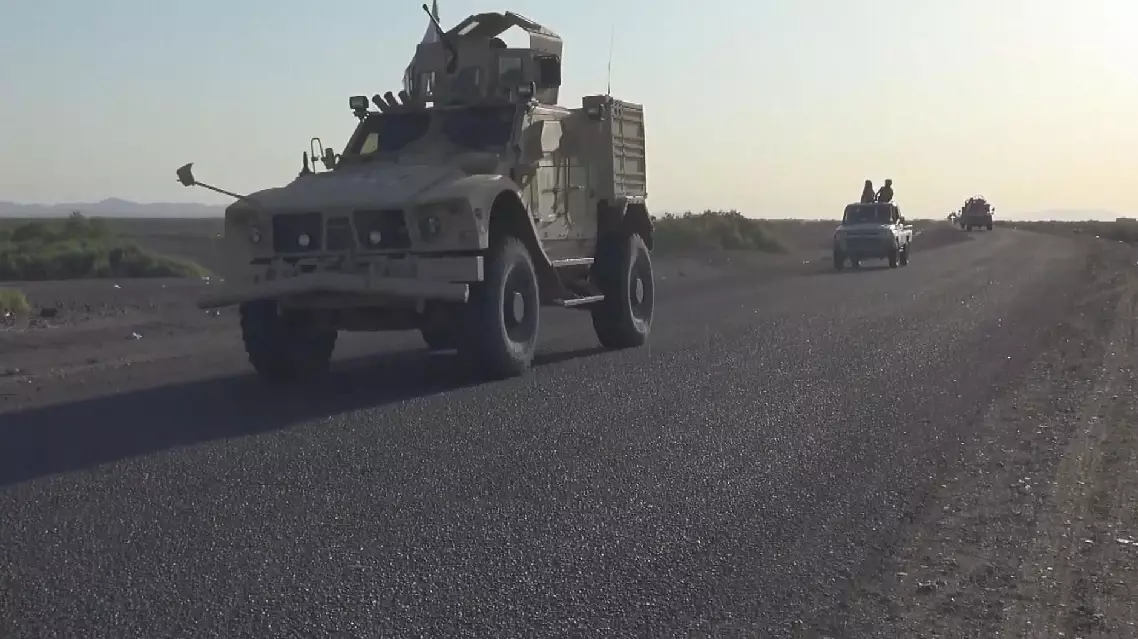
The strikes came as Yemen's internationally recognized government forces, backed by the Saudi-led coalition, intensified their "Dawn of Yemen" offensive against the Houthis, while the group has responded with missile and drone attacks.
In a separate statement, Sarea said Houthi forces had targeted what he called Saudi-backed "mobilizations" at Al-Nasr camp and a naval military base in the southern port city of Aden, where Yemen's government is based.
A local security official said that the Houthis fired nearly four ballistic missiles at the city, with some striking near the Aden International Airport and key military facilities in the Khormaksar district, and another hitting the Coast Guard Troops headquarters in Al-Tawahi district.
Amid the escalation, the U.S. Department of State Saturday updated travel advisories for Middle East countries, including Saudi Arabia, Qatar, the United Arab Emirates, Bahrain, Iraq, Lebanon and Israel, citing threats from the Houthis.
Yemen has been mired in conflict since late 2014, when the Houthis seized Sanna, the capital, and much of the country's north. A Saudi-led coalition intervened in 2015 to support the internationally recognized Yemeni government.
Houthis, Saudi-led coalition trade heavy strikes, report fresh casualties