SAN FRANCISCO (AP) — Google’s latest quarterly report provided further evidence that its internet empire is withstanding an artificial intelligence shakeup that’s turning into another potential boon for the company.
The numbers released Wednesday marked Google's third consecutive quarter of digital ad growth of more than 10% from the previous year, while also posting more than 30% sales growth in its division that powers data centers for AI services.
Those increases during the October-December period propelled Google’s corporate parent Alphabet Inc. well past the earnings forecasts of stock market analysts.
Alphabet’s fourth-quarter profit rose 30% from the prior year to $34.5 billion, or $2.82 per share, while revenue climbed 18% to $113.8 billion.
The collective momentum of Google’s main business in search and advertising and the still-nascent AI field indicates a company born during the late 1990s internet boom is becoming even stronger during another technology phenomenon nearly 30 years later.
“Search saw more usage than ever before, with AI continuing to drive an expansionary moment," Alphabet CEO Sundar Pichai said.
Google’s successful evolution has helped drive up Alphabet’s stock price nearly 60% in the past five months, giving it a $4 trillion market value. Even so, some investors are still skeptical whether Google will be able to sustain enough growth to justify the more than $300 billion that Alphabet will have spent from 2024 through the end of this year on expanding the computing capacity needed for AI features. Those worries caused Alphabet's shares to see-saw between slight gains and declines during extended trading after Wednesday's report came out.
Apple, also currently worth $4 trillion, thinks so highly of Google’s AI that the iPhone maker recently struck a deal to use Google’s Gemini technology in a long-delayed upgrade to its virtual assistant, Siri.
Google is also embedding more of its Gemini AI into its long-dominant search engine, Gmail and Chrome browser as it tries to avoid complacency and being outmaneuvered by up-and-coming companies such as OpenAI, Anthropic and Perplexity.
To meet the challenge, Alphabet has been on a spending spree to expand its AI capacity. After pouring $91 billion into capital expenditures devoted mostly to AI, the Mountain View, California, company disclosed Wednesday that it expects to double down by spending another $175 billion to $185 billion this year. Its capital expenditure budget has ballooned from about $30 billion annually since 2022 when OpenAI released its ChatGPT chatbot to much acclaim, prompting Google to pull out all the stops to catch up.
Alphabet's projected budget for capital expenditures represents nearly half of its 2025 revenue of $403 billion — a “jarring” commitment, said Ethan Feller, a stock strategist for Zacks Investment Research.
But the past quarter “supports the view that Google is spending into strength and differentiation, not spending to stay relevant,” said Investing.com Thomas Monteiro.
Google's thriving digital ad business is helping to finance the spending spree. Its digital ad sales totaled $82.3 billion in the fourth quarter, up 14% from the previous year. Google Cloud, which oversees the data centers behind many AI services, posted revenue of $17.7 billion, a 48% increase.
It looked like Google might be facing a potentially huge setback in 2024 when a federal judge condemned its search engine as an illegal monopoly in a case brought by the U.S. Justice Department. To curb Google’s abuses, the Justice Department proposed a breakup that would have required the sale of its Chrome browser.
But U.S. District Judge Amit Mehta rejected that idea and ordered less severe changes, partly because he believed the rise of AI would help rein in Google. Both the Justice Department and Google are appealing that decision.
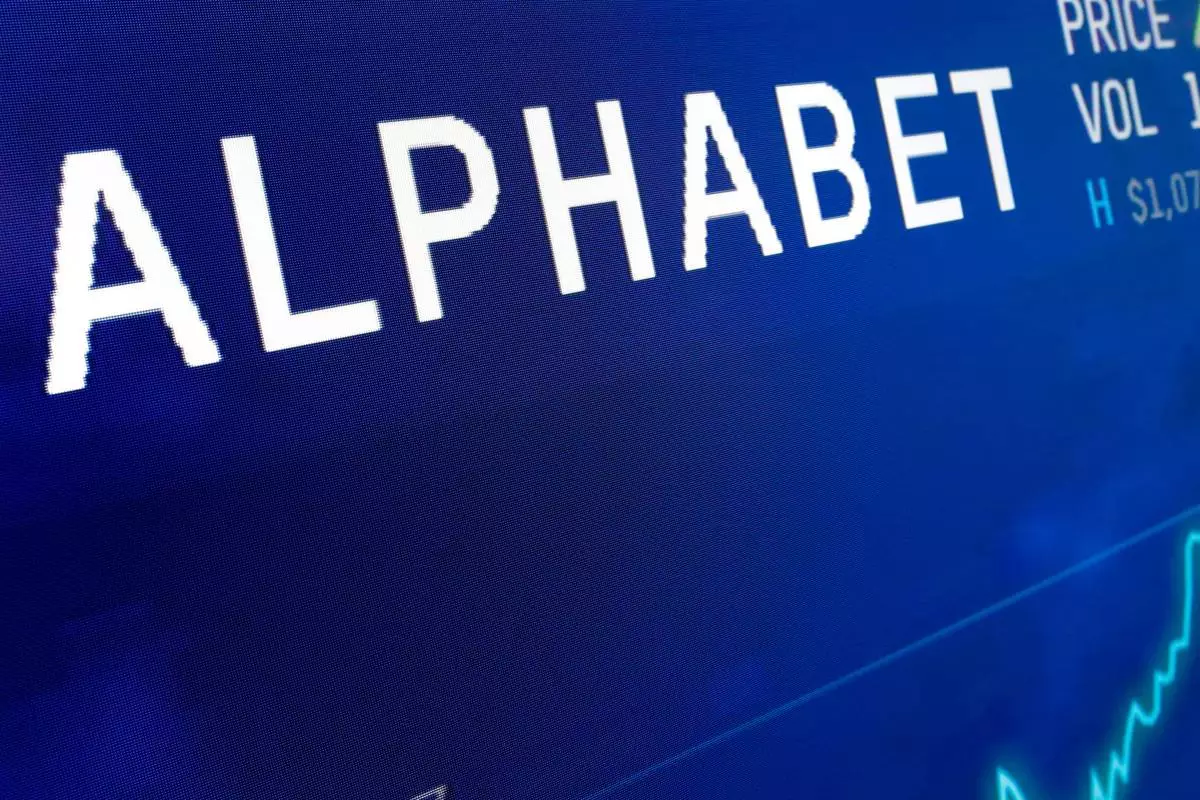
FILE - The logo for Alphabet appears on a screen at the Nasdaq MarketSite in New York, Feb. 14, 2018. (AP Photo/Richard Drew, File)
DUBAI, United Arab Emirates (AP) — Iran fired more missiles at Israel and Gulf Arab states Thursday, demonstrating Tehran’s continued ability to strike its neighbors even as U.S. President Donald Trump claimed the threat from the country was nearly eliminated.
Iran’s attacks on Gulf states along with its chokehold on the Strait of Hormuz have disrupted the world’s energy supplies with effects far beyond the Middle East. That has proved to be Iran’s greatest strategic advantage in the war. Britain planned to hold a call with nearly three dozen countries about how to reopen the strait once the fighting is over.
Trump has insisted the strait can be taken by force — but said it is not up to the U.S. to do that. In an address to the American people Wednesday night, he encouraged countries that depend on oil from Hormuz to “build some delayed courage” and go “take it.”
Before the U.S. and Israel started the war on Feb. 28 with strikes on Iran, the waterway was open to traffic and 20% of all traded oil used passed through it.
Iran responded defiantly to Trump’s speech, in which the American president claimed U.S. military action had been so decisive that “one of the most powerful countries” is “really no longer a threat.”
A spokesman for Iran’s military, Lt. Col. Ebrahim Zolfaghari, insisted Thursday that Tehran maintains hidden stockpiles of arms, munitions and production facilities. He said facilities targeted so far by U.S. strikes are “insignificant.”
Just before Trump began his address — in which he said U.S. “core strategic objectives are nearing completion” — explosions were heard in Dubai as air defenses worked to intercept an Iranian missile barrage.
Less than a half-hour after the president was done, Israel said its military was also working to intercept incoming missiles. Sirens sounded in Bahrain, home to the U.S. Navy’s 5th Fleet, immediately after the speech.
Attacks continued across Iran on Thursday, with strikes reported in multiple cities.
In Lebanon — home to Iran-backed Hezbollah militants who are fighting Israel, which has launched a ground invasion — an Israeli strike killed four people in the south, the Health Ministry said.
More than 1,900 people have been killed in Iran during the war, while 19 have been reported dead in Israel. More than two dozen people have died in Gulf states and the occupied West Bank, while 13 U.S. service members have been killed.
More than 1,200 people have been killed and more than 1 million displaced in Lebanon. Ten Israeli soldiers have also died there.
Iranian attacks on about two dozen commercial ships, and the threat of more, have halted nearly all traffic in the waterway that connects the Persian Gulf to the open ocean.
Since March 1, traffic through the strait has dropped 94% over the same period last year, according to the Lloyds List Intelligence shipping data firm. Two ships are confirmed to have paid a fee, the firm said, while others were allowed through based on agreements with their home governments.
In order to bypass Hormuz, Saudi Arabia has been piping more oil to a Red Sea port, and Iraq said Thursday that it had started to truck oil across Syria to the Mediterranean.
The 35 countries speaking Thursday, including all G7 industrialized democracies except the U.S., as well as the United Arab Emirates and Bahrain, signed a declaration last month demanding Iran stop blocking the strait.
Thursday’s talks were focused on political and diplomatic measures, but British Foreign Secretary Yvette Cooper said military planners from an unspecified number of countries will also plot ways to ensure security once fighting ends, including potential mine-clearing work and “reassurance” for commercial shipping.
No country appears willing to try to open the strait by force while the war is raging. French President Emmanuel Macron, while on a visit to South Korea, called a military operation to secure the waterway “unrealistic.”
But there is a concern that Iran might limit traffic through the waterway even after U.S. and Israeli attacks on it cease.
The idea of an international effort has echoes of the “coalition of the willing,” led by the U.K. and France, that was assembled to underpin Ukraine’s security in the event of a ceasefire in that war. The coalition is, in part, an attempt to demonstrate to Washington that Europe is doing more for its own security in the face of frequent criticism from Trump.
The conflict is driving up prices for oil and natural gas, roiling stock markets, pushing up the cost of gasoline and threatening to make a range of goods, including food, more expensive.
On Thursday, Brent crude, the international standard, rose again and was at $108 in spot trading, up about 50% from Feb. 28 when Israel and the U.S. started the war.
Though the oil and gas that typically transits the strait is primarily sold to Asian nations, Japan and South Korea were the only two countries from the region joining Thursday's call about the strait. The supply of jet fuel has also been interrupted by the conflict, with consequences for travel worldwide.
Weissert reported from Washington and Rising from Bangkok. Associated Press writer David McHugh in Frankfurt, Germany, contributed to this story.
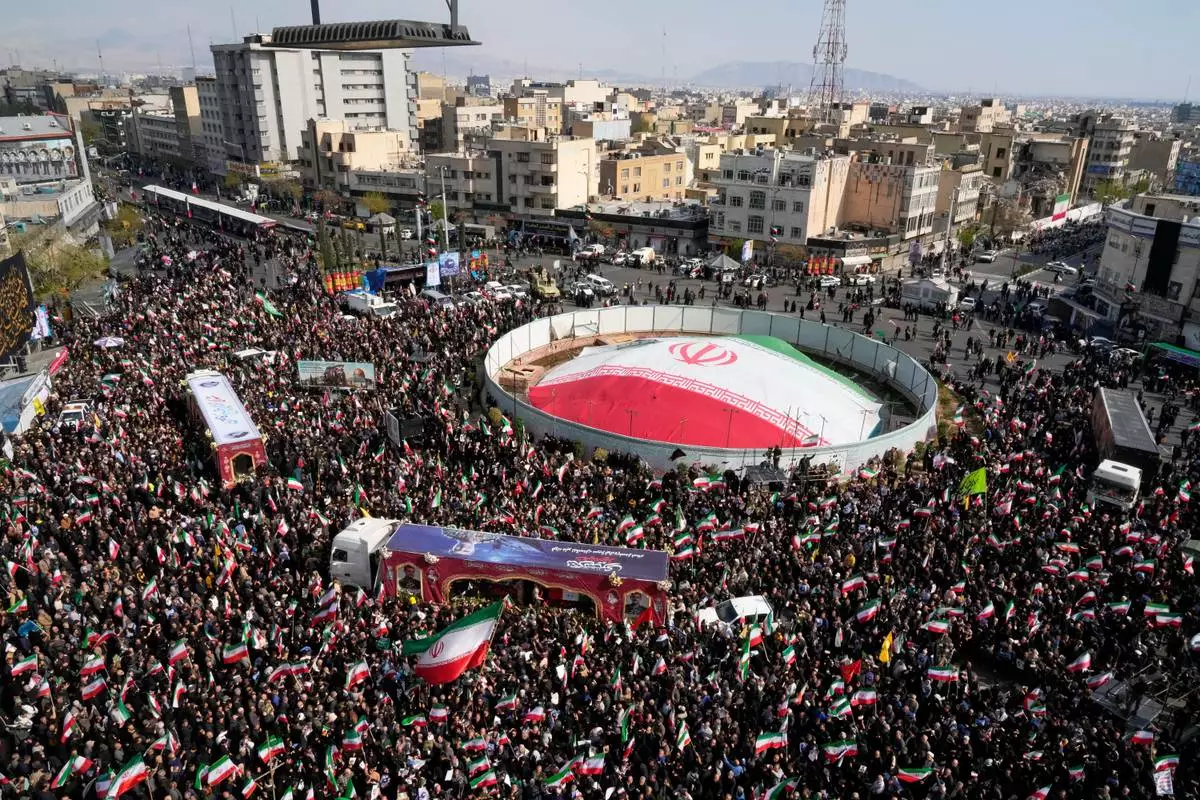
Mourners gather during a funeral procession for Alireza Tangsiri, head of Iran's Islamic Revolutionary Guard Corps Navy, and others killed in Israeli strikes in late March, in Tehran, Iran, Wednesday, April 1, 2026. (AP Photo/Vahid Salemi)
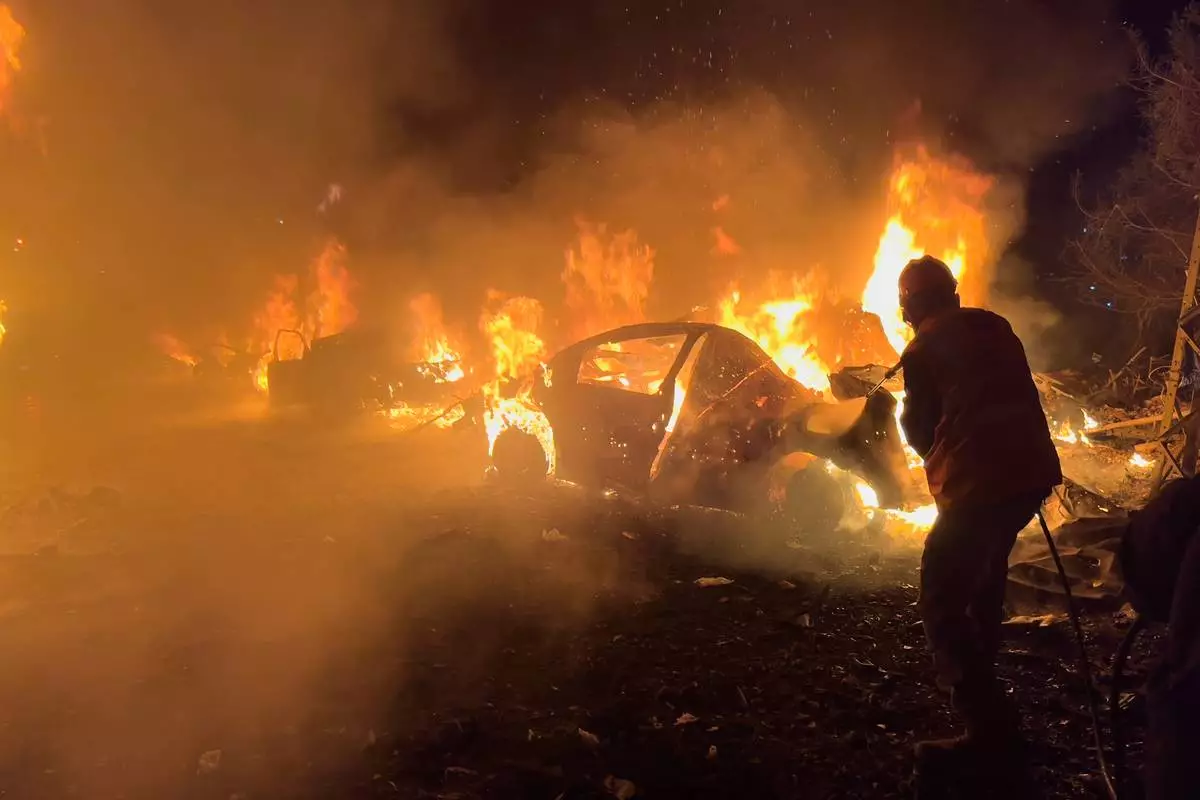
A firefighter extinguishes a car at the site of Israeli airstrikes, in Beirut, Lebanon, Wednesday, April 1, 2026. (AP Photo/Hussein Malla)

People take cover in a bomb shelter as air raid sirens warn of incoming Iranian missile strikes in Bnei Brak, Israel, Wednesday, April 1, 2026. (AP Photo/Oded Balilty)
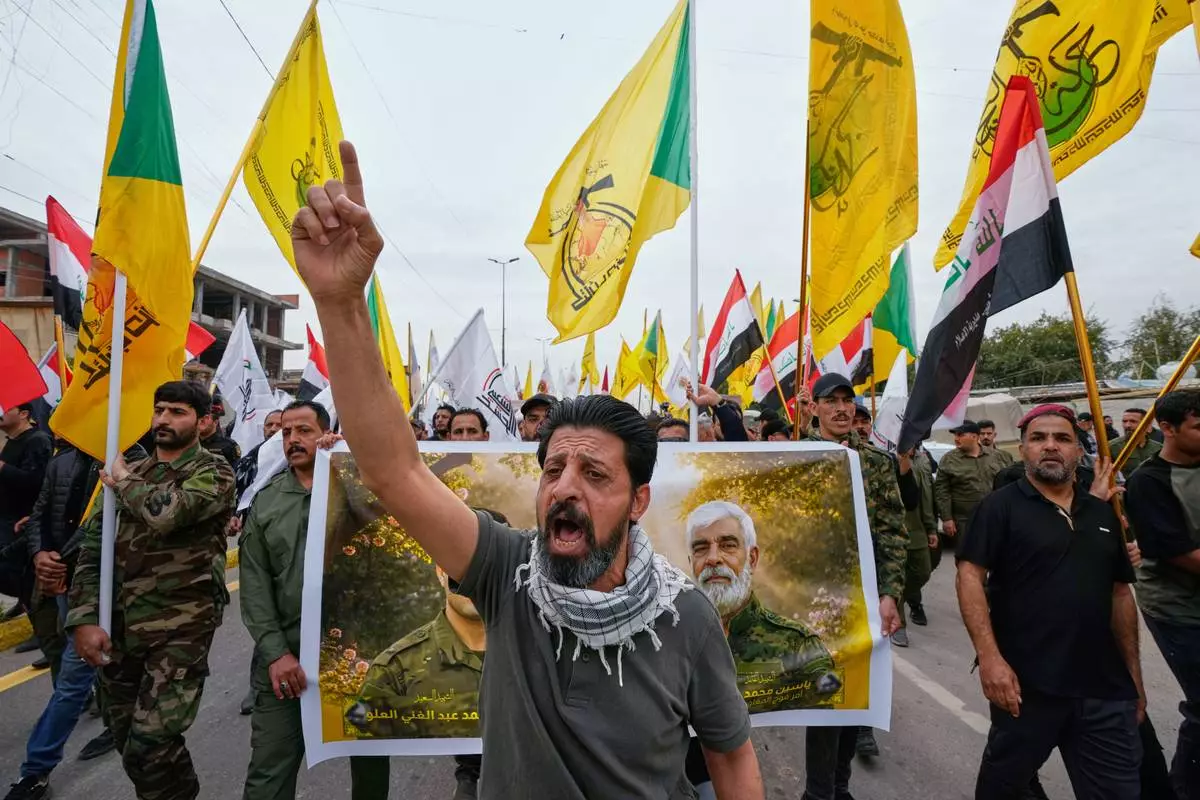
Members from the Popular Mobilization Forces attend a funeral of fighters who were killed in a U.S. airstrike, in Tal Afar, Nineveh province, north of Baghdad, Iraq, Thursday, April 2, 2026. (AP Photo/Hadi Mizban)
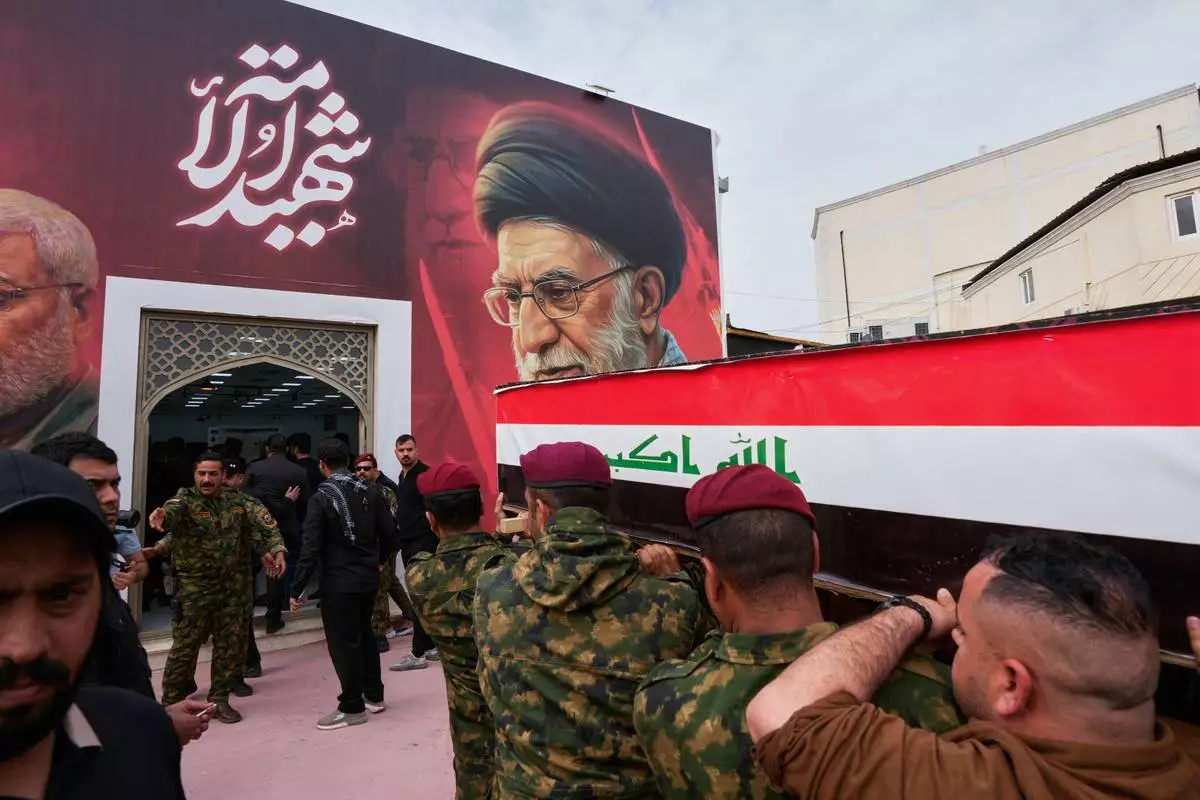
Members from the Popular Mobilization Forces attend a funeral of fighters who were killed in a U.S. airstrike, in Tal Afar, Nineveh province, north of Baghdad, Iraq, Thursday, April 2, 2026. (AP Photo/Hadi Mizban)
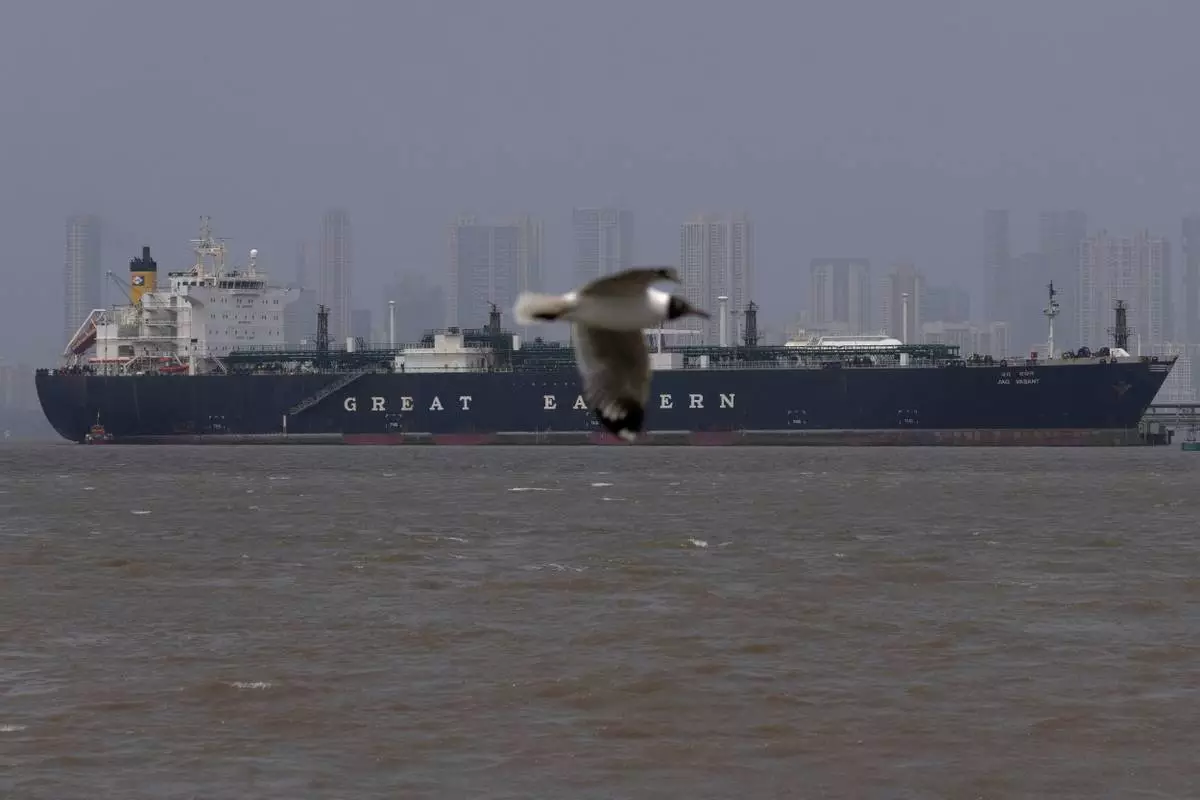
The Indian flagged LPG carrier Jag Vasant transporting liquefied petroleum gas, is seen at the Mumbai Port in Mumbai, India, after it arrived clearing the Strait of Hormuz, Wednesday, April 1, 2026. (AP Photo/Rafiq Maqbool)
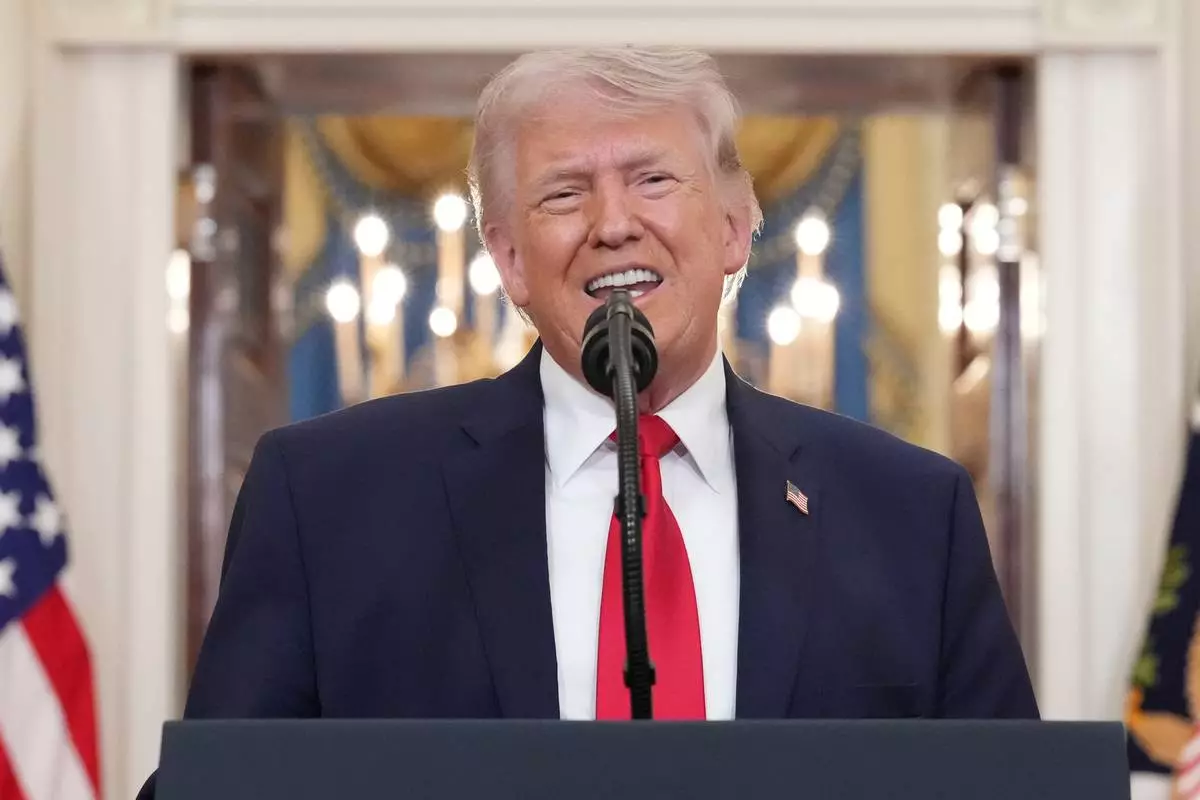
President Donald Trump speaks about the Iran war from the Cross Hall of the White House on Wednesday, April 1, 2026, in Washington. (AP Photo/Alex Brandon, Pool)
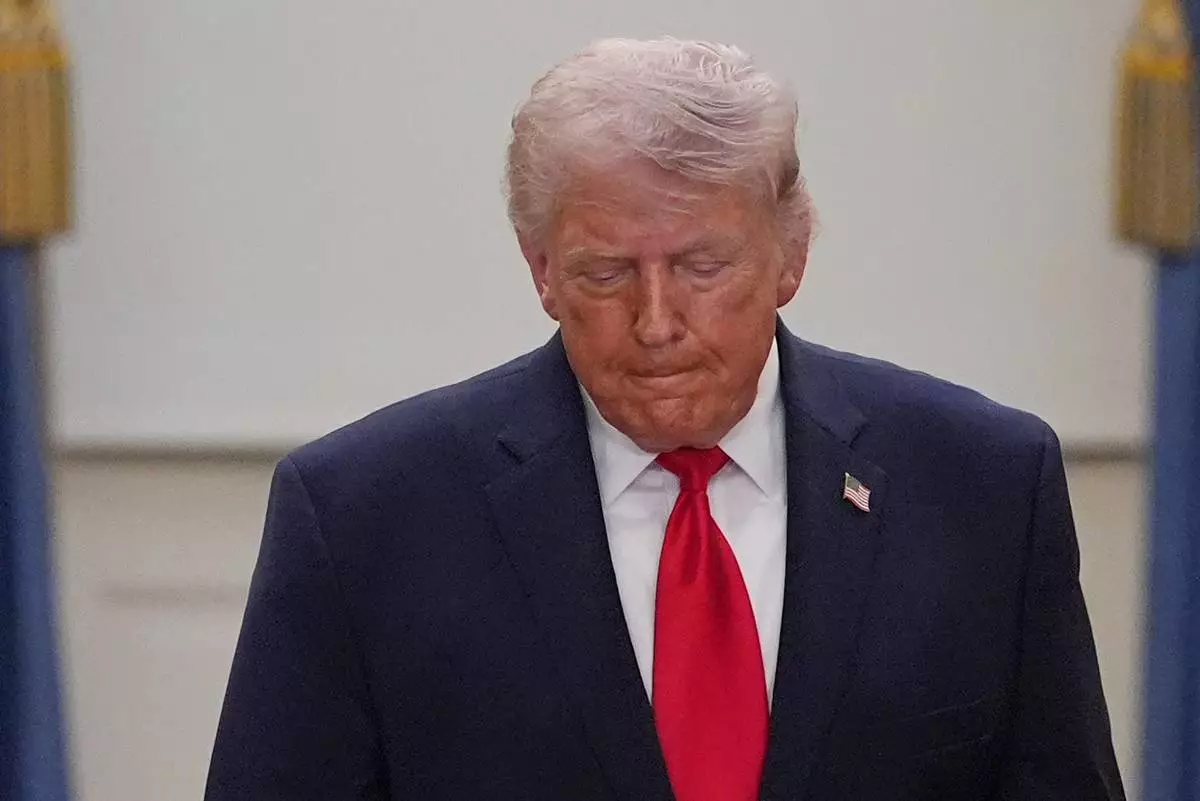
President Donald Trump walks from the Blue Room to speak about the Iran war from the Cross Hall of the White House on Wednesday, April 1, 2026, in Washington. (AP Photo/Alex Brandon, Pool)
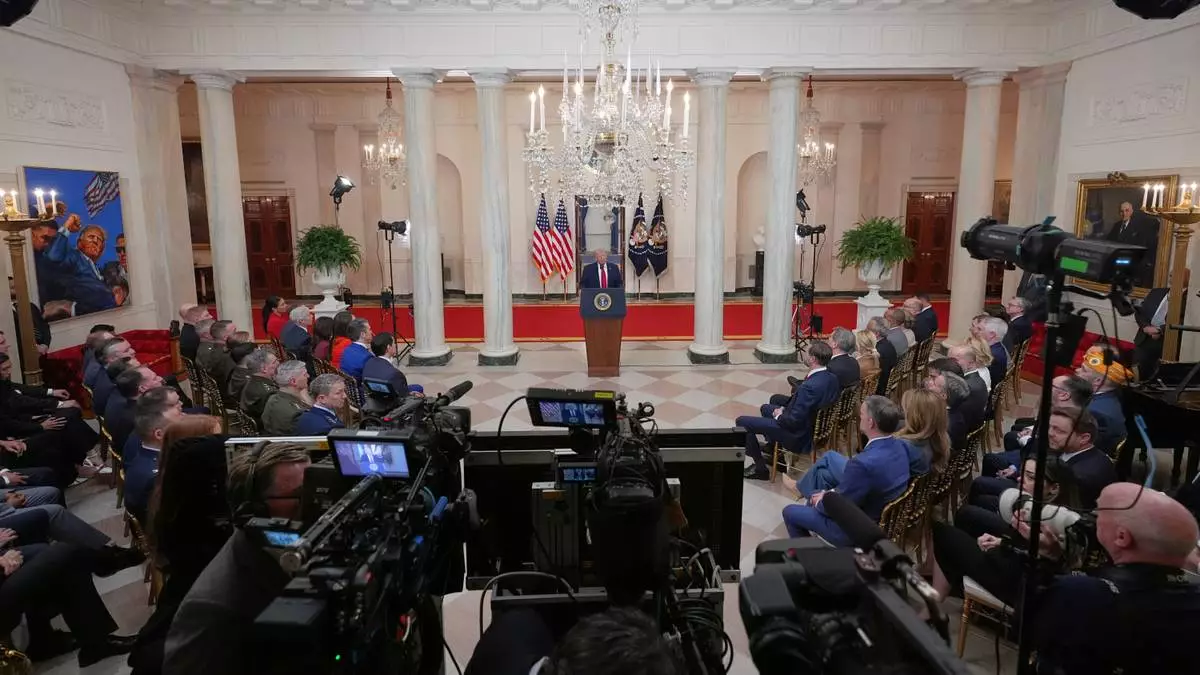
President Donald Trump speaks about the Iran war from the Cross Hall of the White House on Wednesday, April 1, 2026, in Washington. (AP Photo/Alex Brandon, Pool)
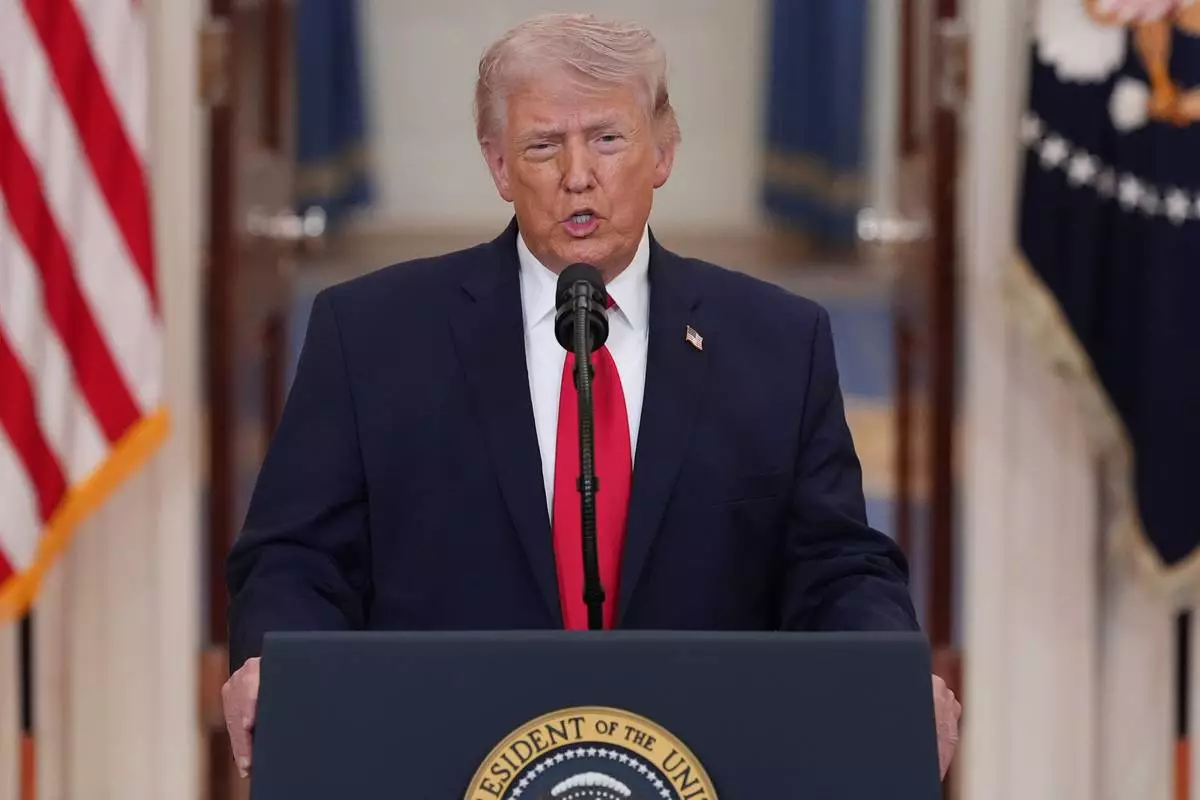
President Donald Trump speaks about the Iran war from the Cross Hall of the White House on Wednesday, April 1, 2026, in Washington. (AP Photo/Alex Brandon, Pool)