Skip to Content Facebook Feature Image

EPA administrator outlines Trump's plan to speed up rebuilding of homes destroyed by LA wildfires

News

EPA administrator outlines Trump's plan to speed up rebuilding of homes destroyed by LA wildfires
News

News

EPA administrator outlines Trump's plan to speed up rebuilding of homes destroyed by LA wildfires

2026-02-05 10:22 Last Updated At:10:30

LOS ANGELES (AP) — Trump administration officials traveled to Los Angeles on Wednesday to outline the president's plan to override state and local rules and speed up the permitting process for reconstruction of tens of thousands of homes destroyed by last year's wildfires.

Last week the president signed an executive order that the White House promised would allow homeowners to rebuild without contending with “unnecessary, duplicative, or obstructive” requirements. The plan is to allow federal loan recipients to “self-certify” that they meet all state and local building requirements if their permits aren't approved within 60 days,

Trump's goal is to help homeowners cut through bureaucratic red tape and “tear through every single obstacle” that's slowing rebuilding, said U.S. Environmental Protection Agency Administrator Lee Zeldin, whom Trump tapped to oversee the effort.

His staff will examine why over 1,000 permit applications have been returned to residents seeking to rebuild, Zeldin said during a Wednesday news conference after meeting with residents in Pacific Palisades, where the first of the two infernos erupted in January 2025.

“We want to know why every single one of these applications are sent back to the applicant,” he said. “What is that hurdle ... that’s preventing them the ability to be able to rebuild their home?”

It is unclear whether he was referring to permit applications for the Palisades or Eaton fire areas. LA County's permitting progress dashboard shows 619 permit applications were returned with comments for those in unincorporated areas of both fires.

Helen Chavez, a spokesperson for Los Angeles County Supervisor Kathryn Barger's office, said they were mostly returned for local code compliance issues, such as building too close to property lines, and adherence to building height and roofing standards.

State and local officials maintain permits are being approved in a timely manner. They questioned whether the Trump administration can legally take over the permitting process and said they've received little to no information about how the new process is to work.

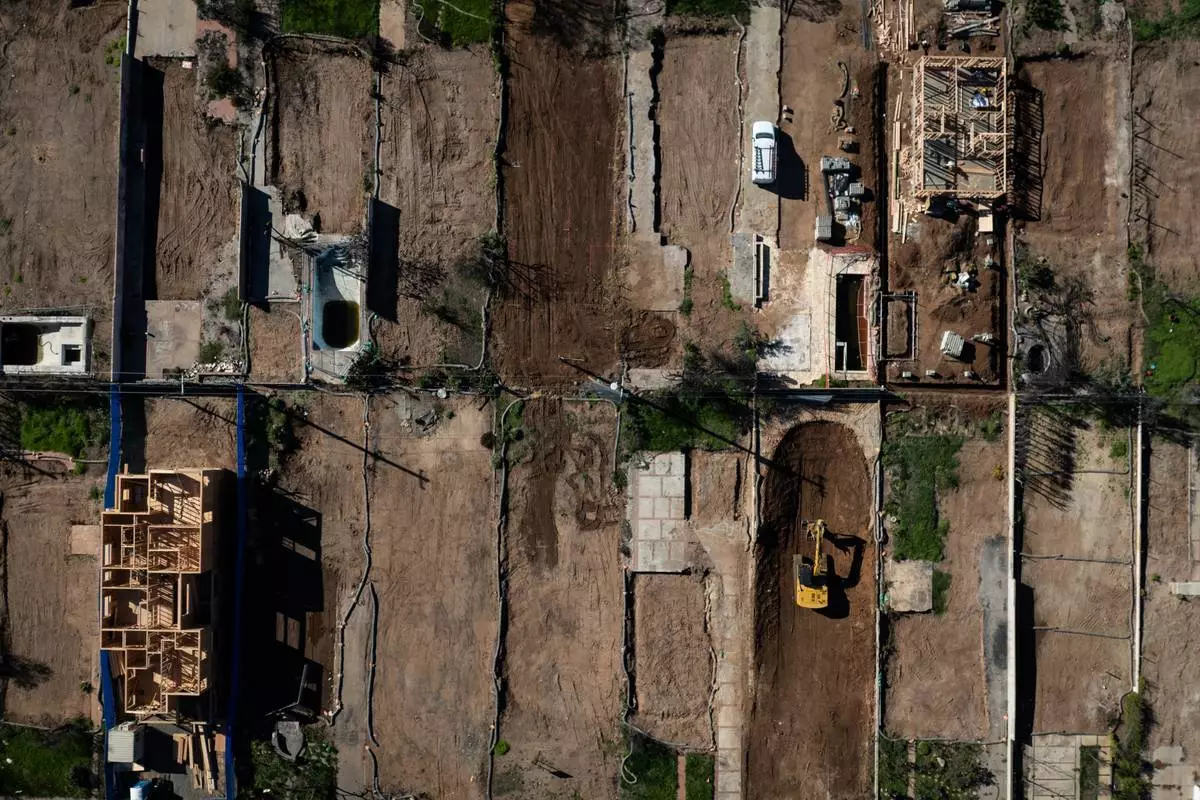
Roughly 3,000 permits have been approved, with more than 1,000 homes under construction, according to county data.

“Now (Trump) has signed an executive order that goes into effect, when? We don’t know. Is it legal? Almost certainly not," California Gov. Gavin Newsom said at a news conference Monday in San Diego. "He hasn’t coordinated with anyone to tell them. It’s just typical Trump,” he said during a news conference in San Diego.

The Palisades and Eaton fires killed 31 people and destroyed about 13,000 residential properties, becoming some of the most destructive blazes in the region's history. The fires burned for more than three weeks and cleanup efforts took about seven months — a timeline that both Newsom and Trump have praised as particularly quick.

Zeldin called on insurance companies to speed up payouts to policyholders.

“There are a number of number of people waiting for their full insurance payment," he said. "They are desperate to receive every last penny that they need from their policy to be able to rebuild their lives.”

Under the new federal rules, anyone approved for a Small Business Administration Disaster loan can self-certify that their building plan meets state and local rules if they don't get a permit within 60 days of applying. The order also directs federal agencies to expedite waivers, permits and approvals to work around any environmental, historic preservation or natural resource laws that might stand in the way of rebuilding.

Barger, whose district was hit by the Eaton Fire, pointed out that there are already local self-certification rules in place that help expedite reconstruction. Most permits are handled by local officials within a month, she said.

Barger, who joined Zeldin on Wednesday, said she shared it's a lack of money, not permitting issues, that are keeping many from rebuilding.

The Trump administration has not approved the state’s $33.9 billion disaster aid request.

Los Angeles Mayor Karen Bass did not join the roundtable, but Zeldin said they met privately. Bass has called the executive order a political stunt and recently said rebuilding plans in Pacific Palisades are being approved in half the time compared to single-family home projects citywide before the wildfires, “with more than 70% of home permit clearances no longer required.”

The office of Supervisor Lindsey Horvath, who represents Palisades, said she was not invited and said the Trump administration's effort would not bring meaningful relief.

The Board of Supervisors passed a motion Tuesday directing county attorneys and planning officials to monitor the federal government's implementation of Trump's executive order and, if necessary, take legal action to defend local permitting authority.

Also Tuesday, the Los Angeles City Council took steps to wave permitting fees in the Palisades, a move that could cost as much as $90 million over three years, according to Matt Szabo, the city’s top budget analyst.

Justin Levitt, a law professor at Loyola Law School, said there's little the president can do in the short term to speed up rebuilding. Trump could press Congress to pass new national permitting laws, which might take years.

But an attempt by the administration to supersede state and local regulations would spark a long fight in the courts.

“The claim that the federal government can just come in and boot these local laws out of existence, that’s not a thing,” Levitt said.

Associated Press reporter Julie Watson contributed from San Diego.
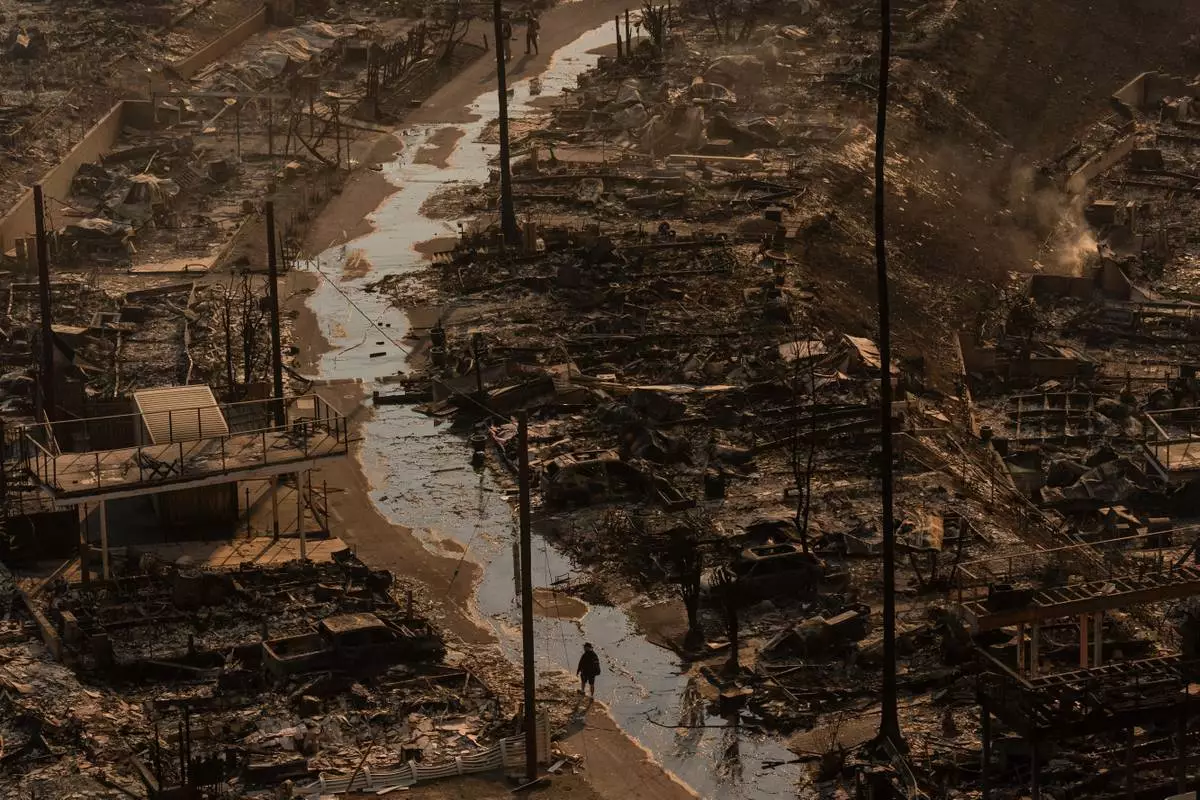
FILE - A person walks amid the destruction left behind by the Palisades Fire in the Pacific Palisades neighborhood of Los Angeles, Jan. 9, 2025. (AP Photo/Jae C. Hong, File)
FILE - A person walks amid the destruction left behind by the Palisades Fire in the Pacific Palisades neighborhood of Los Angeles, Jan. 9, 2025. (AP Photo/Jae C. Hong, File)

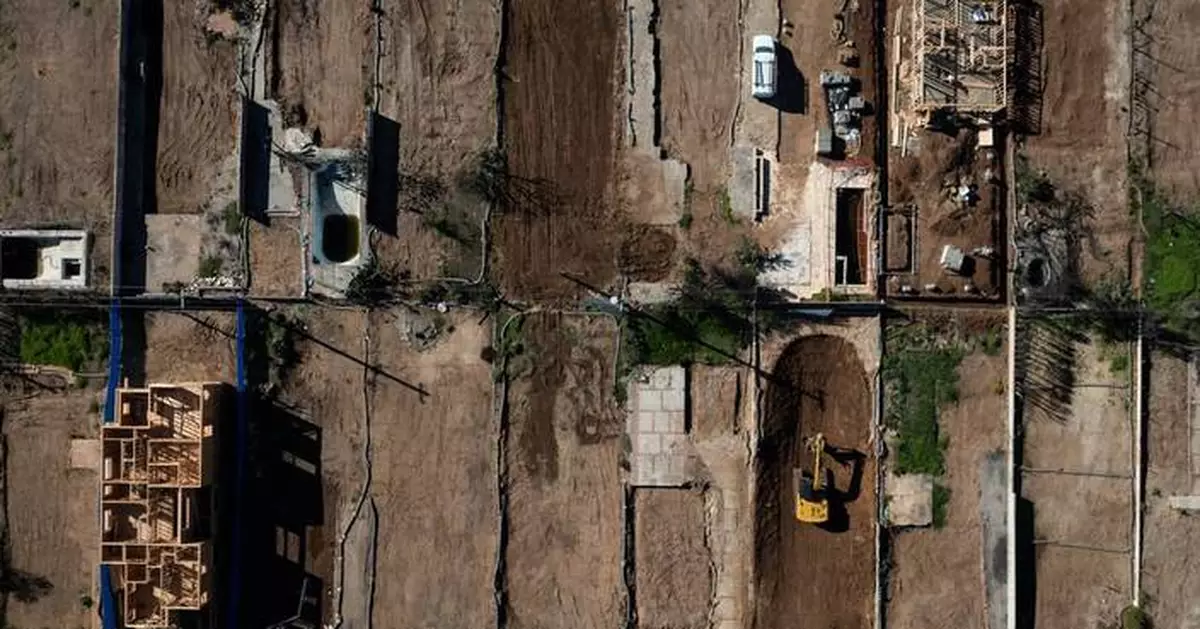
FILE - An aerial view shows houses being rebuilt on cleared lots months after the Palisades Fire, Dec. 5, 2025, in the Pacific Palisades neighborhood of Los Angeles. (AP Photo/Jae C. Hong, File)

FILE - An aerial view shows houses being rebuilt on cleared lots months after the Palisades Fire, Dec. 5, 2025, in the Pacific Palisades neighborhood of Los Angeles. (AP Photo/Jae C. Hong, File)

NEW YORK (AP) — Nude photos. The names and faces of sexual abuse victims. Bank account and Social Security numbers in full view.

All of these things appeared in the mountain of documents released Friday by the U.S. Justice Department as part of its effort to comply with a law requiring it to open its investigative files on Jeffrey Epstein.

That law was intended to preserve important privacy protections for Epstein's victims. Their names were supposed to have been blacked out in documents. Their faces and bodies were supposed to be obscured in photos.

Mistakes, though, have been rampant. A review by The Associated Press and other news organizations has found countless examples of sloppy, inconsistent or nonexistent redactions that have revealed sensitive private information.

A photo of one girl who was underage when she was hired to give sexualized massages to Epstein in Florida appeared in a chart of his alleged victims. Police reports with the names of several of his victims, including some who have never stepped forward to identify themselves publicly, were released with no redactions at all.

Despite the Justice Department’s efforts to fix the oversights, a selfie taken by a nude female in a bathroom and another by a topless female remained on the site, their ages unknown but their faces in full view, as of Wednesday evening.

Some accusers and their lawyers called this week for the Justice Department to take down the site and appoint an independent monitor to prevent further errors.

A judge scheduled a hearing for Wednesday in New York on the matter, then canceled it after one of the lawyers for victims cited progress in resolving the issues. But that lawyer, Brittany Henderson, said they were still weighing “all potential avenues of recourse” to address the “permanent and irreparable” harm caused to some women.

“The failure here is not merely technical,” she said in a statement Wednesday. “It is a failure to safeguard human beings who were promised protection by our government. Until every document is properly redacted, that failure is ongoing.”

Annie Farmer, who said she was 16 when she was sexually assaulted by Epstein and his confidant, Ghislaine Maxwell, said that while her name has previously been public, other details she'd rather be kept private, including her date of birth and phone number, were wrongly revealed in the documents.

“At this point, I’m feeling really most of all angry about the way that this unfolded,” she told NBC News. “The fact that it’s been done in such a beyond careless way, where people have been endangered because of it, is really horrifying.”

The Justice Department has blamed technical or human errors on the problems and said it has taken down many of the problematic materials and is working to republish properly redacted versions.

The task of reviewing and blacking out millions of pages of records took place in a compressed time frame. President Donald Trump signed the law requiring the disclosure of the documents on Nov. 19. That law gave the Justice Department just 30 days to release the files. It missed that deadline, in part because it said it needed more time to comply with privacy protections.

Hundreds of lawyers were pulled from their regular duties, including overseeing criminal cases, to try and complete the document review — to the point where at least one judge in New York complained that it was holding up other matters.

The database, which is posted on the Justice Department website, represents the largest release of files to date in the yearslong investigations into Epstein, who killed himself in a New York jail cell in 2019 while awaiting trial on federal sex trafficking charges.

Associated Press reporters analyzing the documents have so far found multiple examples of names and other personal information of potential victims revealed.

They have also found many cases of overzealous redactions.

In one news clipping included in the file, the Justice Department apparently blacked out the name “Joseph” from a photo caption describing a Nativity scene at a California church. “A Nativity scene depicting Jesus, Mary and (REDACTED),” it said.

In an email released in the files, a dog’s name appeared to have been redacted: “I spent an hour walking (REDACTED) and then another hour bathing her blow drying her and brushing her. I hope she smells better!!” the email said.

The Justice Department has said staff tasked with preparing the files for release were instructed to limit redactions only to information related to victims and their families, though in many documents the names of many other people were blacked out, including lawyers and public figures.

The Justice Department has said it intended to black out any portion of a photo showing nudity, and any photos of women that could potentially show a victim.

In some photos reviewed by The AP, those redactions did obscure women's faces, but left plenty of their bare skin exposed in a way that would likely embarrass the women anyway. Photos showed identifiable women trying on outfits in clothing store dressing rooms or lounging in bathing suits.

One set of more than 100 images of a young woman were nearly all blacked out, save for the very last image, which revealed her entire face.

Associated Press reporters from around the world contributed to this report.

The AP is reviewing the documents released by the Justice Department in collaboration with journalists from CBS, NBC, MS NOW and CNBC. Journalists from each newsroom are working together to examine the files and share information about what is in them. Each outlet is responsible for its own independent news coverage of the documents.

A document that was included in the U.S. Department of Justice release of the Jeffrey Epstein files, photographed Monday, Feb. 2, 2026, shows a diagram prepared by the FBI attempting to chart the network of Epstein's victims and the timeline of their alleged abuse. (AP Photo/Jon Elswick)

A document that was included in the U.S. Department of Justice release of the Jeffrey Epstein files, photographed Monday, Feb. 2, 2026, shows a diagram prepared by the FBI attempting to chart the network of Epstein's victims and the timeline of their alleged abuse. (AP Photo/Jon Elswick)

Recommended Articles