FRANKFURT, Germany (AP) — The European Central Bank left interest rates unchanged Thursday as the economy in the 21 countries that use the euro chugs past the disruption from U.S. President Donald Trump’s tariffs with modest yet resilient growth.
The bank left its benchmark deposit rate at 2%, where it has been since June. after a series of cuts from the peak of 4% starting in mid-2024.
Click to Gallery
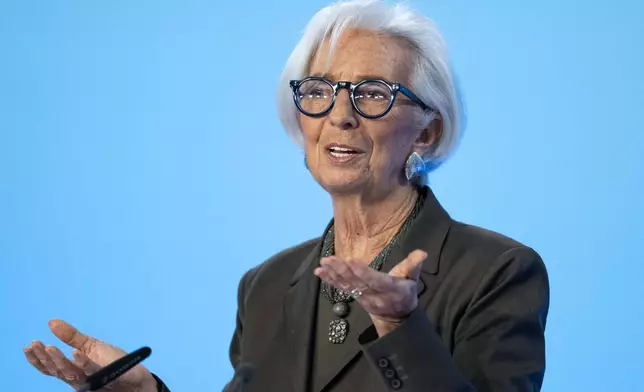
President of the European Central Bank (ECB) Christine Lagarde speaks at the press conference after the Governing Council meeting of the ECB, in Frankfurt, Germany, Thursday Feb. 5, 2026. (Florian Wiegand/dpa via AP)
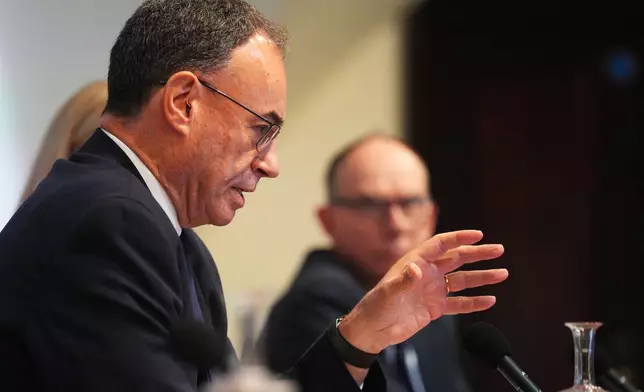
Governor of the Bank of England, Andrew Bailey, talks during a Bank of England Monetary Policy Report press conference in London, Thursday, Feb. 5, 2026. (Carl Court/Pool Photo via AP)
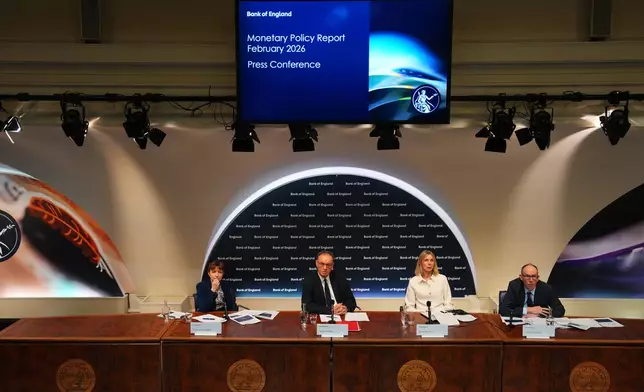
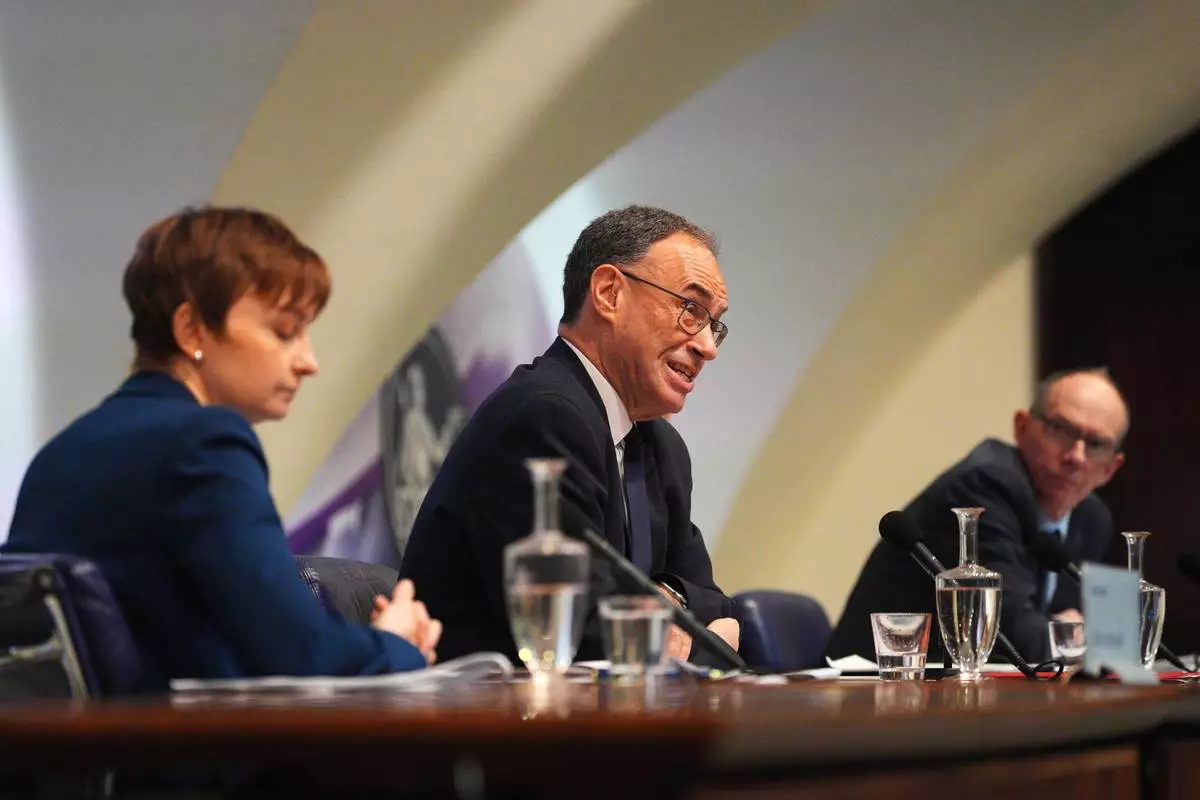
Governor of the Bank of England, Andrew Bailey, 2nd left, flanked by Clare Lombardelli, from left, Katie Martin, and Dave Ramsden talks during a Bank of England Monetary Policy Report press conference in London, Thursday, Feb. 5, 2026. (Carl Court/Pool Photo via AP)
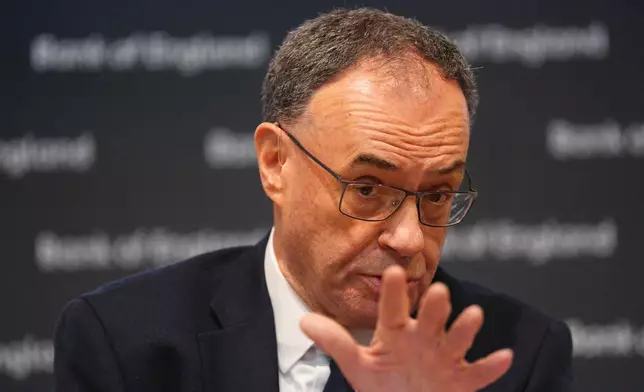
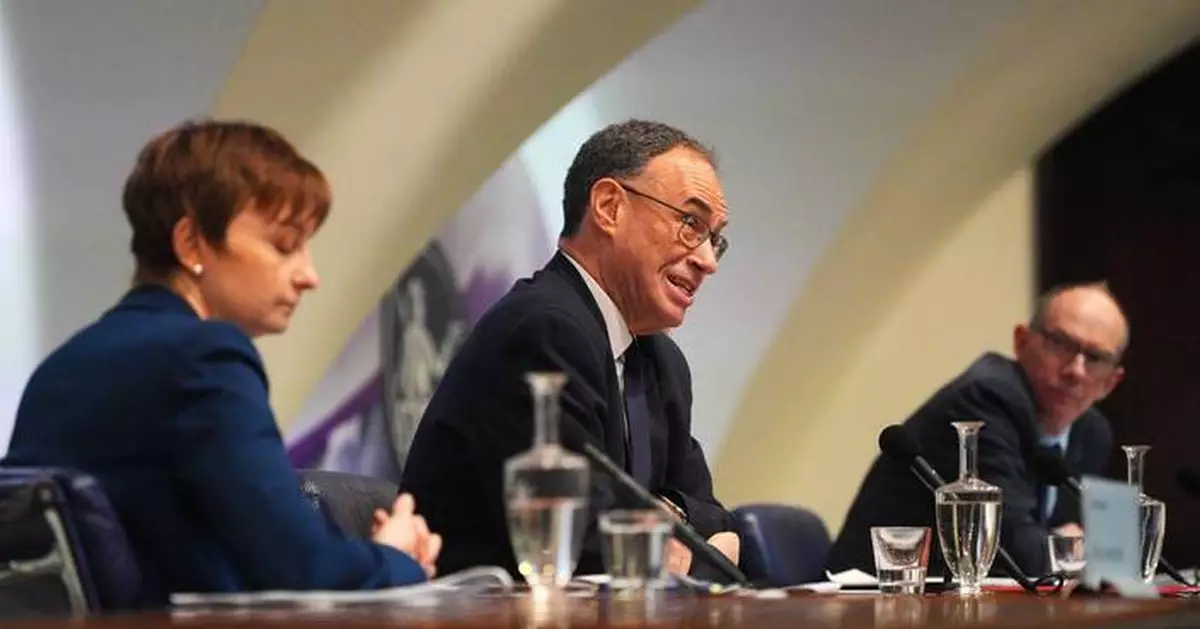
Governor of the Bank of England, Andrew Bailey, talks during a Bank of England Monetary Policy Report press conference in London, Thursday, Feb. 5, 2026. (Carl Court/Pool Photo via AP)
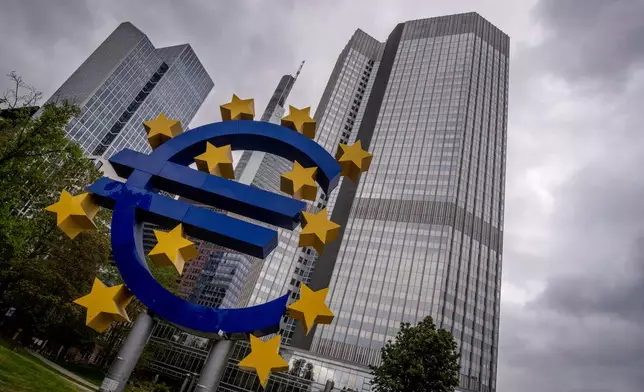
FILE - The Euro sculpture stands in front of the former headquarters of the European Central Bank (ECB) in Frankfurt, Germany, Tuesday, May 23, 2023. (AP Photo/Michael Probst, File)
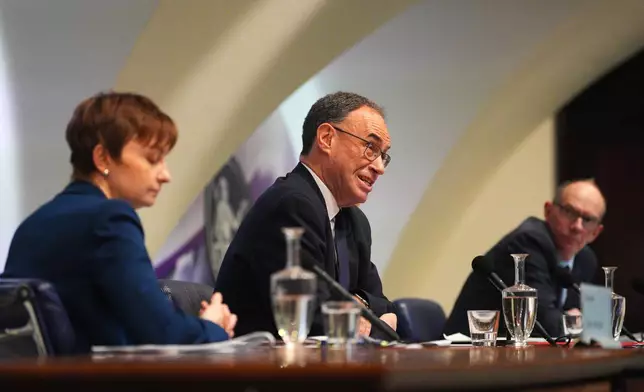
Governor of the Bank of England, Andrew Bailey, talks during a Bank of England Monetary Policy Report press conference in London, Thursday, Feb. 5, 2026. (Carl Court/Pool Photo via AP)
“The economy remains resilient in a challenging global environment,” bank President Christine Lagarde said, opening her post-meeting news conference. She said growth is being supported by low unemployment, increased government spending on defense and infrastructure, and the past series of rate cuts.
“At the same time, the external environment remains challenging owing to higher tariffs and a stronger euro," she said.
She said “our monetary policy is in good shape” and offered no indication of future rate moves, saying that the bank would make decisions “meeting by meeting... in this world of signicant uncertainty.”
The reduced rate has been low enough to re-start mortgage lending for home sales and new construction due to reduced credit costs, boosting growth. Low unemployment is also contributing to demand for goods by consumers and helping keep the economy resilient without the stimulus of further rate cuts.
As a result, the chief monetary authority for the eurozone may leave its rates unchanged into 2027, analysts say. The eurozone grew a stronger than expected 0.3% in the last three months of 2025, and may reach growth of 1.3% for all of this year, according to forecasts by Berenberg bank.
Growth prospects have brightened due to anticipation of higher spending on infrastructure and defense by Germany, the eurozone’s biggest economy. In France, the culmination of Prime Minister Sebastien Lecornu’s long and difficult battle to enact a 2026 budget -- eventually using special powers to force it through a deadlocked parliament without a vote -- lifted a dark shadow from the No. 2 eurozone economy.
Meanwhile energy costs have abated since a painful spike in the wake of Russia’s invasion of Ukraine in 2022.
Europe weathered months of uncertainty as Trump threatened to raise tariffs to levels that could have choked off much of Europe’s trade with the US. In the end, a deal with the EU’s executive commission capped the tariff rate at 15%, a sharp increase from 4.8% previously but not as bad as feared. The deal removed uncertainty and let businesses plan. That’s despite Trump’s brief threat to add more tariffs on some EU countries that opposed his demands for a US takeover of Greenland.
Inflation has fallen to below bank’s target of 2%, coming in at 1.7% in January. Economists at Berenberg said they expect the bank to leave rates unchanged until strengthening growth calls for a rate hike in mid-2027. Rate hikes combat inflation by raising credit costs and dampening demand for good bought on credit, from houses to new factories.
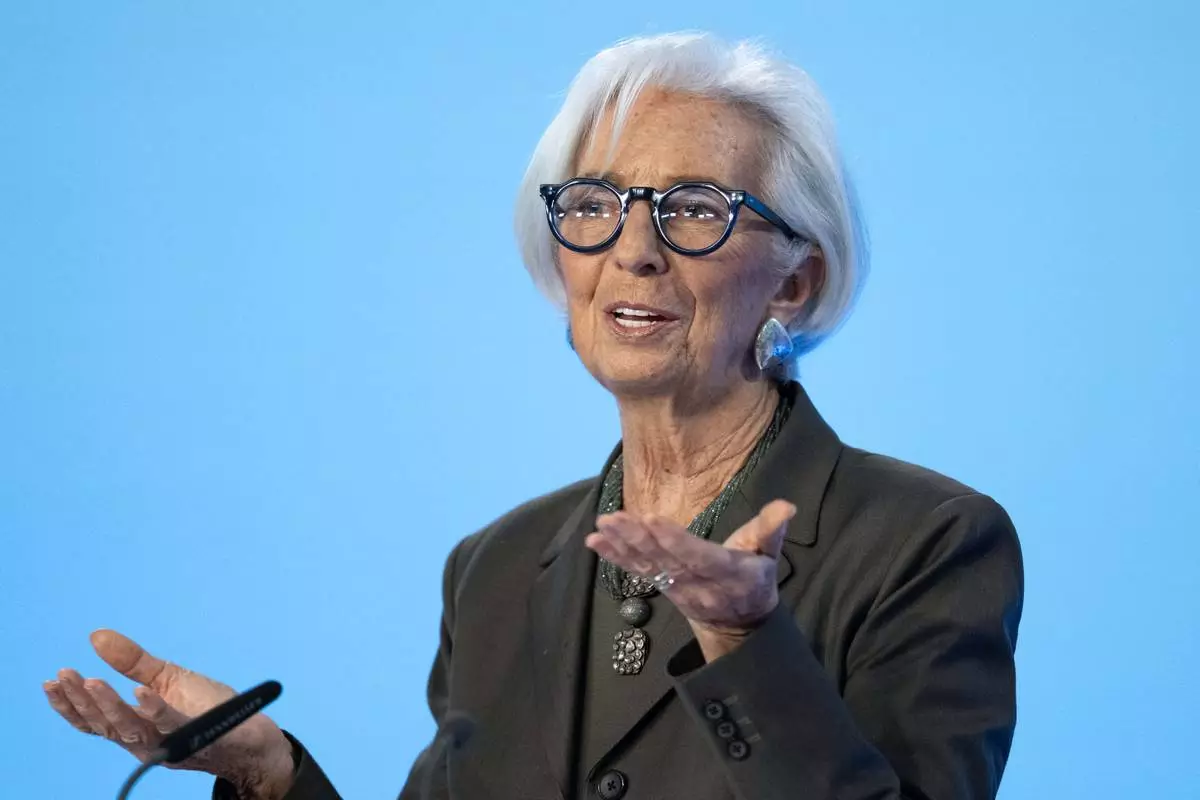
President of the European Central Bank (ECB) Christine Lagarde speaks at the press conference after the Governing Council meeting of the ECB, in Frankfurt, Germany, Thursday Feb. 5, 2026. (Florian Wiegand/dpa via AP)
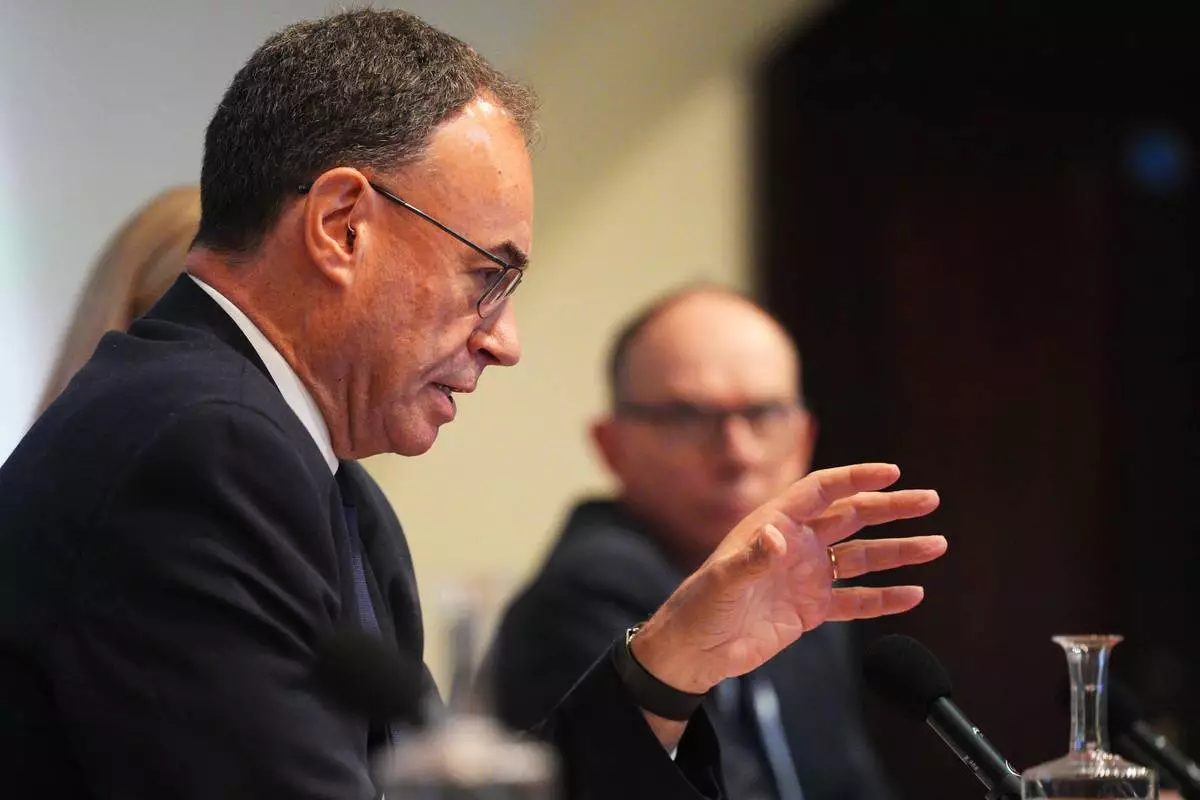
Governor of the Bank of England, Andrew Bailey, talks during a Bank of England Monetary Policy Report press conference in London, Thursday, Feb. 5, 2026. (Carl Court/Pool Photo via AP)
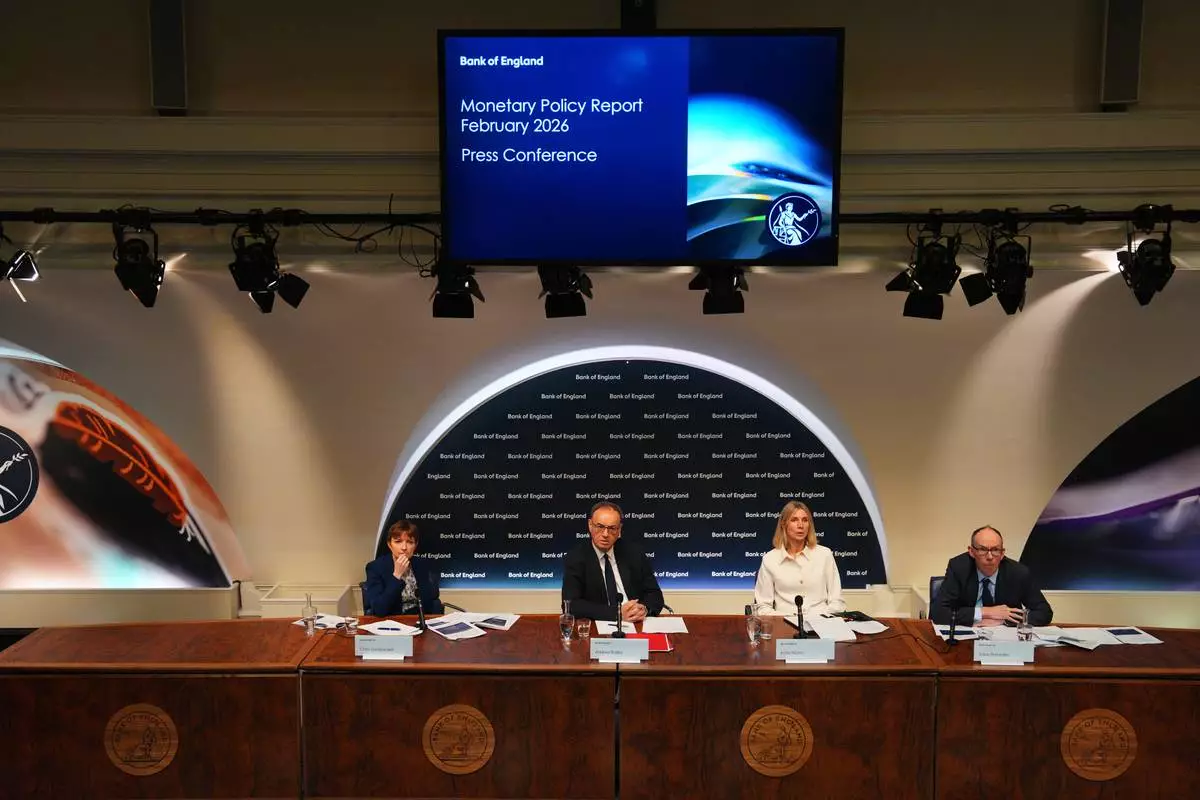
Governor of the Bank of England, Andrew Bailey, 2nd left, flanked by Clare Lombardelli, from left, Katie Martin, and Dave Ramsden talks during a Bank of England Monetary Policy Report press conference in London, Thursday, Feb. 5, 2026. (Carl Court/Pool Photo via AP)
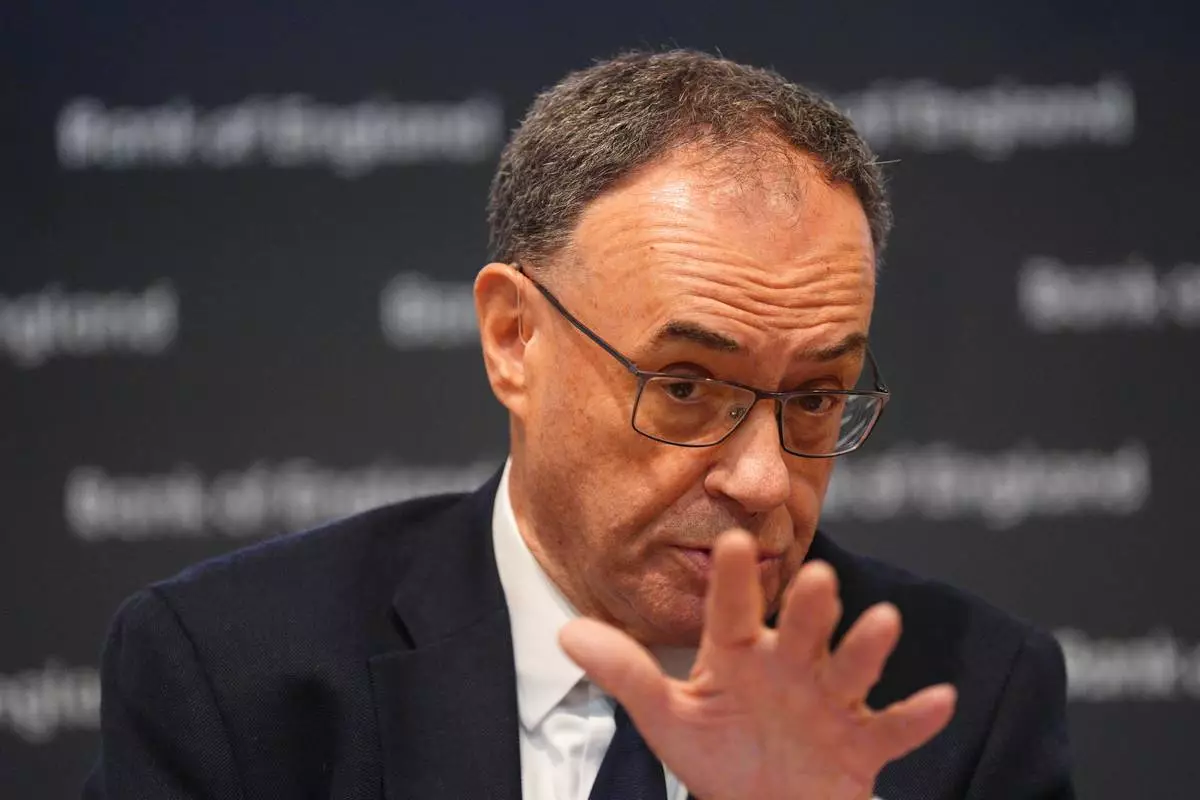
Governor of the Bank of England, Andrew Bailey, talks during a Bank of England Monetary Policy Report press conference in London, Thursday, Feb. 5, 2026. (Carl Court/Pool Photo via AP)
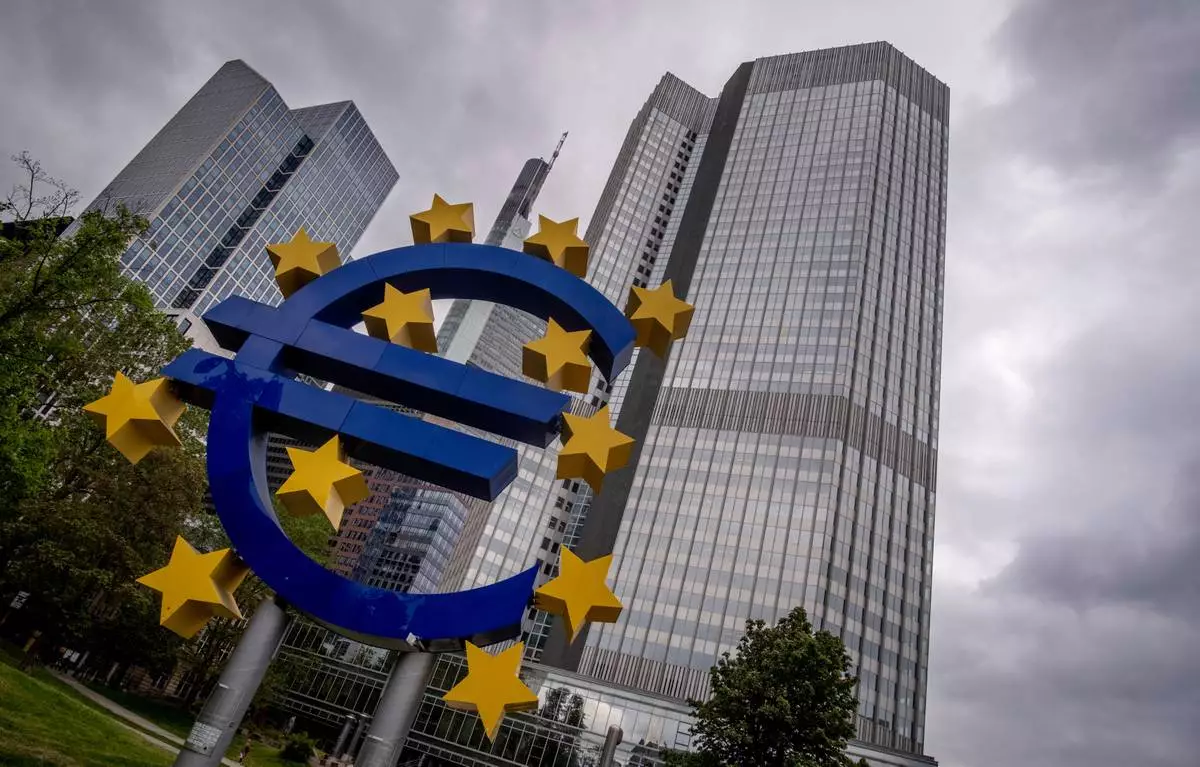
FILE - The Euro sculpture stands in front of the former headquarters of the European Central Bank (ECB) in Frankfurt, Germany, Tuesday, May 23, 2023. (AP Photo/Michael Probst, File)
Governor of the Bank of England, Andrew Bailey, talks during a Bank of England Monetary Policy Report press conference in London, Thursday, Feb. 5, 2026. (Carl Court/Pool Photo via AP)