The two artificial intelligence startups behind rival chatbots ChatGPT and Claude are bracing for an existential showdown this year as both need to prove they can grow a business that will make more money than they're losing.
The fiercest competition between the two AI developers, along with bigger companies like Google, is a race to win over corporate leaders looking to adopt AI tools to boost workplace productivity. The rivalry is also spilling into other realms, including the Super Bowl.
Anthropic is airing a pair of TV commercials during Sunday's game that ridicule OpenAI for the digital advertising it's beginning to place on free and cheaper versions of ChatGPT. While Anthropic has centered its revenue model on selling Claude to other businesses, OpenAI has opened the doors to ads as a way of making money from the hundreds of millions of consumers who get ChatGPT for free.
Anthropic’s commercials humorously mock the dangers of manipulative chatbots — represented as real people speaking in a stilted and unnaturally effusive tone — that form a relationship with a user before trying to hawk a product. The commercials end with a written message — “Ads are coming to AI. But not to Claude.” — followed by the opening beat and lyrics of the Dr. Dre song “What’s the Difference.”
In a sign they struck a nerve, OpenAI CEO Sam Altman said in a social media post that he laughed at the “funny” ads but blasted them as dishonest and threw shade at his competitor's smaller customer base.
“Anthropic serves an expensive product to rich people,” Altman wrote on X. He also boasted that more Texans “use ChatGPT for free” than all the people in the United States who use Claude.
Chiming in to directly challenge Anthropic CEO Dario Amodei was OpenAI's president and co-founder Greg Brockman, who questioned whether Anthropic was truly committing to never selling Claude “users’ attention or data to advertisers." Amodei, who rarely posts on X, did not respond.
The rivalry has existed ever since Amodei and other OpenAI leaders quit the AI research laboratory and formed Anthropic in 2021, promising a clearer focus on the safety of the better-than-human technology called artificial general intelligence that both San Francisco firms wanted to build. That was before OpenAI first released ChatGPT in late 2022, revealing the huge commercial potential of large language models that could help write emails, homework or computer code.
The competition ramped up this week as both companies launched product updates. OpenAI on Thursday launched a new platform called Frontier, designed to be a one-stop shop for businesses adopting a variety of AI tools, including those not made by OpenAI, that can work in tandem. It's part of a push toward AI agents that work autonomously as “AI co-workers” on someone's behalf.
“We can be the partner of choice for AI transformation for enterprise. The sky is the limit in terms of revenue we can generate from a platform like that,” Fidji Simo, OpenAI’s CEO of applications, told reporters this week.
Anthropic, in turn, on Thursday announced an upgrade to its “smartest model,” claiming that the new Claude Opus 4.6 “plans more carefully, sustains agentic tasks for longer, operates reliably in massive codebases, and catches its own mistakes.” OpenAI followed that shortly after with yet another update, a new version of its Codex coding tool it says can “do nearly anything” professionals do on a computer.
“Both OpenAI and Anthropic are really trying to position themselves as a platform company,” said Gartner analyst Arun Chandrasekaran. “The models are important, but the models aren’t a means to an end.”
The two startups aren't just competing with each other. They also face competition from Google, which is both a leading developer of a powerful AI model, Gemini, and has its own cloud computing infrastructure backed by revenue from its legacy digital advertising business. They also have complicated relationships with Amazon, which is Anthropic's primary cloud provider, and Microsoft, which holds a 27% stake in OpenAI.
The first choice for businesses looking to adopt AI agents is typically cloud computing “hyperscalers” like Microsoft, Google and Amazon, which offer a package of services, while AI model providers like Anthropic and OpenAI “tend to come in second place,” said Nancy Gohring, a senior research director at IDC.
But there's an opening because none of the players are giving businesses what they want, which are stronger security and compliance assurances to enable the more widespread use of AI agents that can access corporate systems and data.
“Adopting AI and agents is inherently somewhat risky,” Gohring said.
There's also the AI division of Elon Musk’s newly merged SpaceX and its chatbot, Grok, which is not yet a viable contender for business customers. Musk has long set his sights on challenging the market dominance of OpenAI, which he co-founded and is now suing in a court case set for trial in April.
SpaceX, OpenAI and Anthropic are among the world's most valuable privately held firms and Wall Street investors expect any, or all of them, could become publicly traded within the next year or so. But unlike SpaceX, which has its rocket business to fall back on, or established tech giants — like Amazon, Google and Microsoft — both Anthropic and OpenAI must find a way to make enough from selling AI products to pay for the huge costs in computer chips and data centers to run their energy-hungry AI systems.
It’s not that Anthropic and OpenAI aren’t making money or growing their product lines. The private firms don’t publicly disclose sales but both have signaled they are making billions of dollars in revenue on their existing products, including paid chatbot subscriptions for individual users.
But it costs a lot more money to fund the computing infrastructure needed to build these powerful AI models and respond to the millions of prompts they get each day. OpenAI, in particular, has said it owes more than $1 trillion in financial obligations to backers — including Oracle, Microsoft and Nvidia — that are essentially fronting the compute costs on the expectation of future payoffs.
For some, the wait will likely be worth it.
“Profitability matters, but not as a near‑term decision factor for investors who remain focused on scale, differentiation and infrastructure leverage,” said Forrester analyst Charlie Dai. “Both companies continue to post heavy losses, yet investors still back them because the frontier‑model race demands extraordinary capital intensity.”
Denise Dresser, OpenAI's newly hired chief revenue officer, told reporters this week that the company's priority is “building the best enterprise platform for all industries, all segments.”
“I don’t think we’re thinking about it from a revenue standpoint, but truly from a customer outcome standpoint,” she said, in part reflecting the “sense of urgency” she's heard from CEOs who want a smoother way of applying AI.
“There’s a recognition that AI is becoming a core operating advantage,” Dresser said. “They don’t want to be on the wrong side of that shift.”
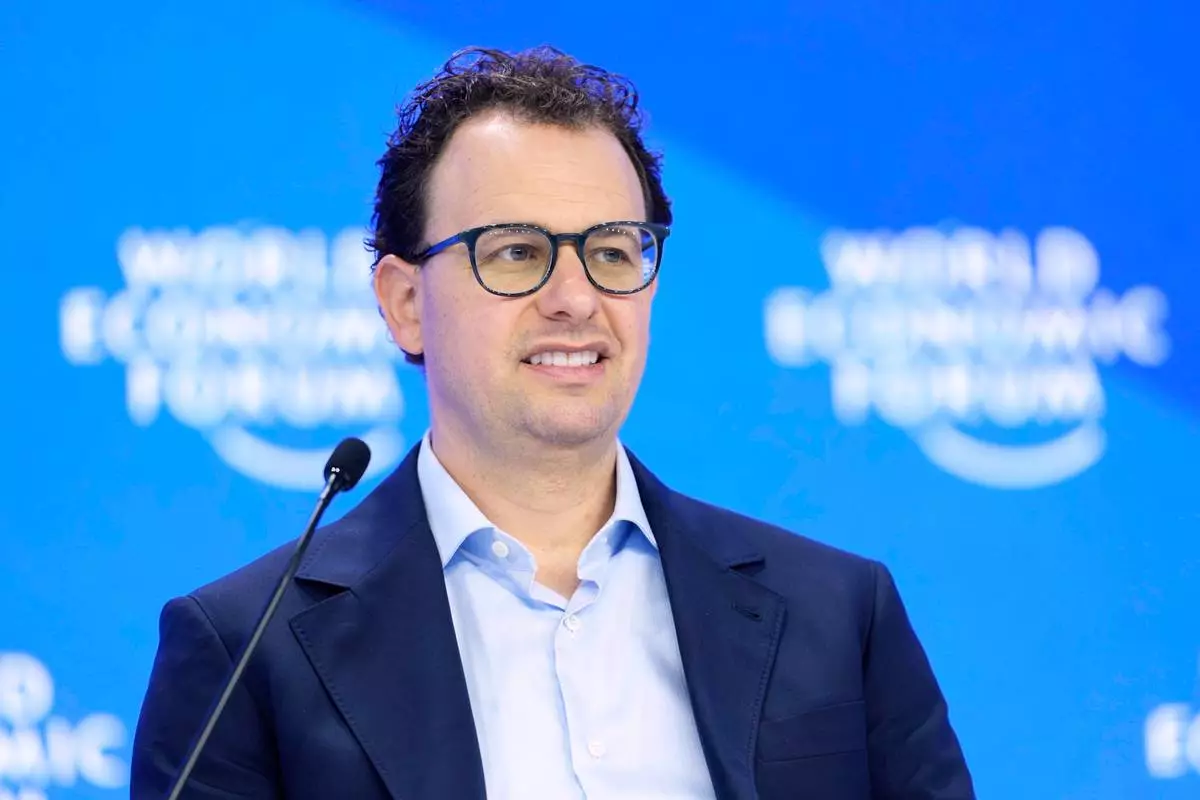
FILE - Dario Amodei, CEO and co-founder of Anthropic, attends the annual meeting of the World Economic Forum in Davos, Switzerland, Jan. 23, 2025. (AP Photo/Markus Schreiber, File)
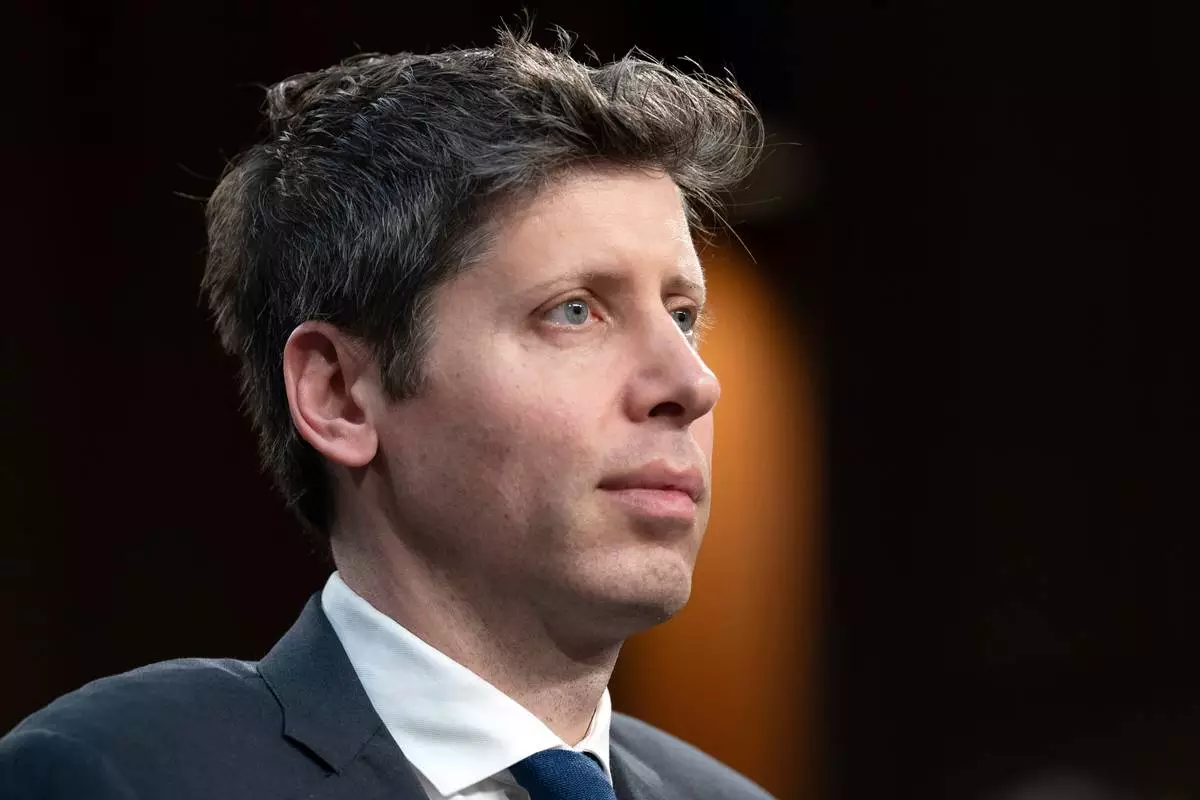
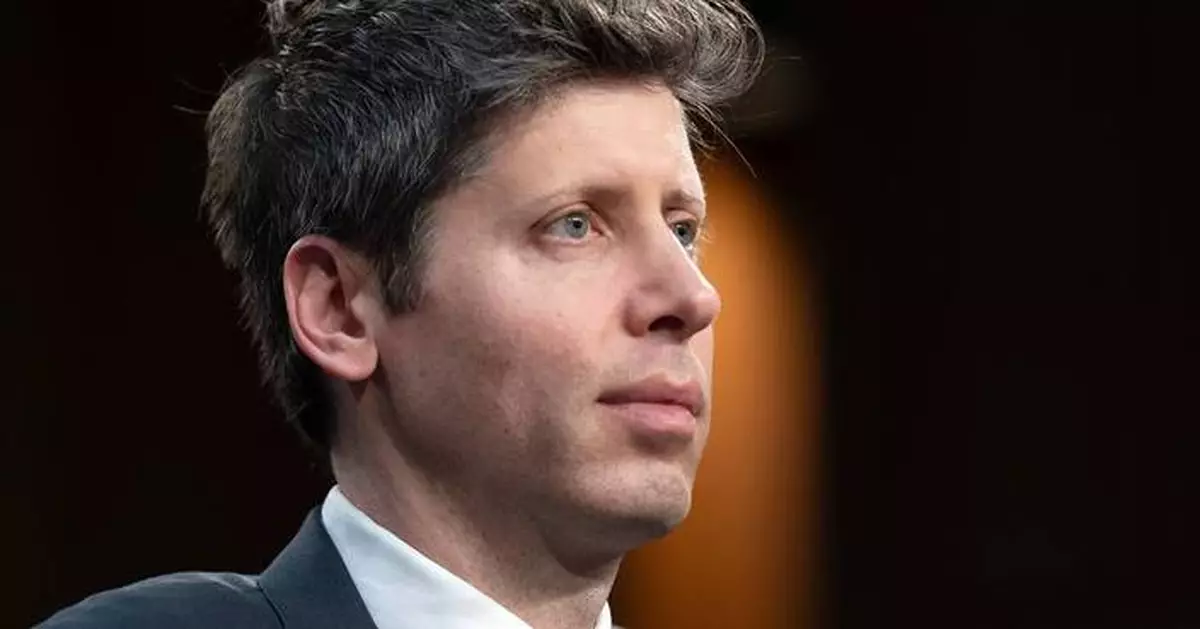
FILE - Sam Altman, co-founder and CEO of OpenAI, testifies before a Senate committee hearing on Capitol Hill in Washington on May 8, 2025. (AP Photo/Jose Luis Magana, File)