NEW YORK (AP) — During the early years of the COVID-19 pandemic, experts worried that disruptions to cancer diagnosis and treatment would cost lives. A new study suggests they were right.
The federally funded study published Thursday by the medical journal JAMA Oncology is being called the first to assess the effects of pandemic-related disruptions on the short-term survival of cancer patients.
Researchers found that people diagnosed with cancer in 2020 and 2021 had worse short-term survival than those diagnosed between 2015 and 2019. That was true across a range of cancers, and whether they were diagnosed at a late or early stage.
Of course, COVID-19 itself was especially dangerous to patients already weakened by cancer, but the researchers worked to filter out deaths mainly attributed to the coronavirus, so they could see if other factors played a role.
The researchers were not able to definitively show what drove worse survival, said Todd Burus of the University of Kentucky, the study’s lead author.
“But disruptions to the health care system were probably a key contributor,” said Burus, who specializes in medical data analysis.
COVID-19 forced many people to postpone cancer screenings — colonoscopies, mammograms and lung scans — as the coronavirus overwhelmed doctors and hospitals, especially in 2020.
Earlier research had shown that overall cancer death rates in the U.S. continued to decline throughout the pandemic, and there weren’t huge shifts in late diagnoses.
Recinda Sherman, a researcher on that earlier paper, applauded the new work.
“As this study is the first to document pandemic-related, cause-specific survival, I think it is important," said Sherman, of the North American Association of Central Cancer Registries. “The more we understand about the impact of COVID-19, the better we will be able to prepare for the next one.”
How could overall cancer death rates decline in 2020 and 2021, while short-term survival worsen for newly diagnosed patients?
Cancer prevention, diagnosis and treatment measures that for years had been pushing cancer death rates down did not suddenly disappear during the pandemic, Burus noted.
“We didn’t forget how to do those things," he said. “But disruptions could have changed access, could have changed how quickly people were getting treated.”
Further research will show if any impact was lasting, said Hyuna Sung, senior principal scientist and cancer epidemiologist at the American Cancer Society.
“Transient declines in survival that quickly recover may have little impact on long-term mortality trends," she said.
The new study tapped national cancer registry data to focus more specifically on patients who had a first diagnosis of a malignant cancer in 2020 and 2021. More than 1 million people were diagnosed with cancer in those two years, and about 144,000 died within one year, according to the researchers' data.
The researchers looked at one-year survival rates for those patients, checking for what stage they were at the time of diagnosis.
They calculated that one-year survival was lower for both early- and late-stage diagnoses, for all cancer sites combined. Most worrisome were large differences seen in colorectal, prostate and pancreatic cancers, they said.
Overall, the researchers found that more than 96% of people who got an early-stage cancer diagnosis in 2020 and 2021 — and more than 74% of those with a late-stage diagnosis — survived more than a year. Those rates were slightly lower than would have been expected based on 2015-2019 trends, resulting in about 17,400 more deaths than expected.
The Associated Press Health and Science Department receives support from the Howard Hughes Medical Institute’s Department of Science Education and the Robert Wood Johnson Foundation. The AP is solely responsible for all content.
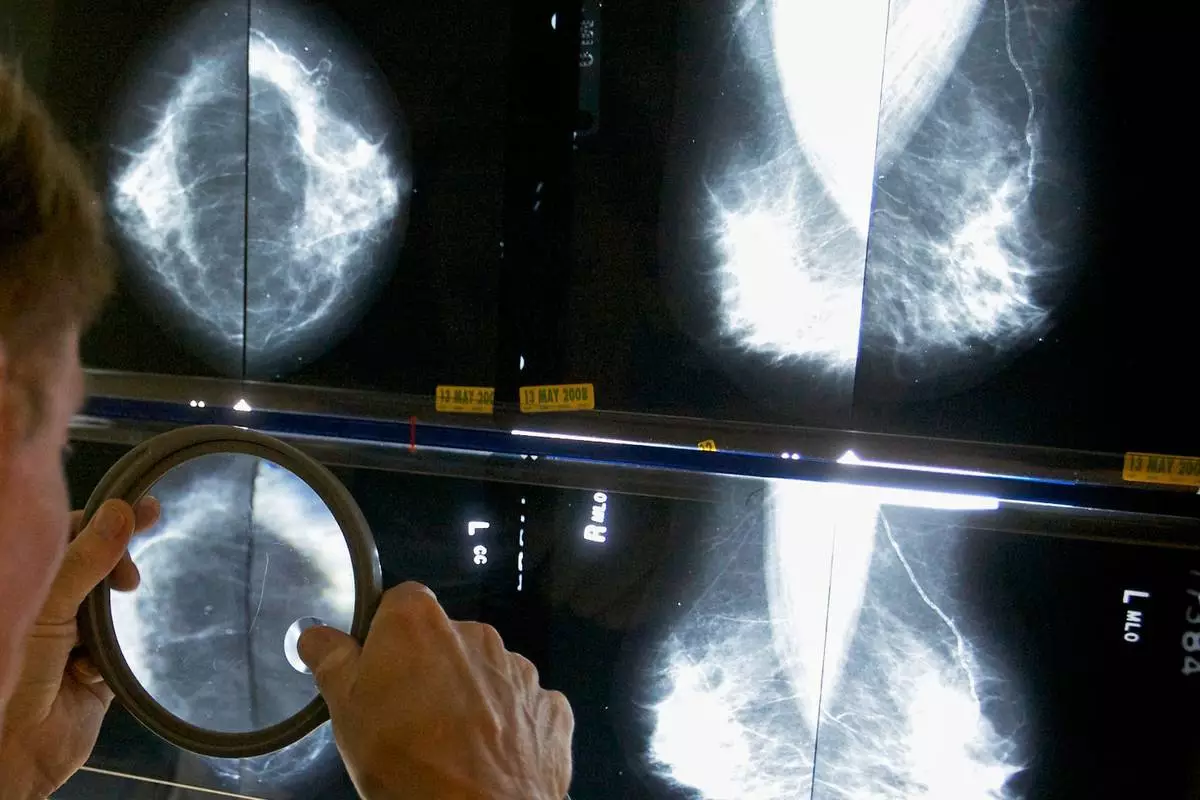
FILE - A radiologist uses a magnifying glass to check mammograms for breast cancer in Los Angeles, May 6, 2010. (AP Photo/Damian Dovarganes, File)
COPENHAGEN, Denmark (AP) — More than 200 years after being sunk by Adm. Horatio Nelson and the British fleet, a Danish warship has been discovered on the seabed of Copenhagen Harbor by marine archaeologists.
Working in thick sediment and almost zero visibility 15 meters (49 feet) beneath the waves, divers are working against the clock to unearth the 19th-century wreck of the Dannebroge before it becomes a construction site in a new housing district being built off the Danish coast.
Denmark’s Viking Ship Museum, which is leading the monthslong underwater excavations, announced its findings on Thursday, 225 years to the day since the Battle of Copenhagen in 1801.
“It’s a big part of the Danish national feeling,” said Morten Johansen, the museum’s head of maritime archaeology.
A great deal has been written about the battle “by very enthusiastic spectators, but we actually don’t know how it was to be onboard a ship being shot to pieces by English warships and some of that story we can probably learn from seeing the wreck, Johansen said.
In the Battle of Copenhagen, Nelson and the British fleet attacked and defeated Denmark’s navy as it formed a protective blockade outside the harbor.
Thousands were killed and wounded during the brutal hourslong naval clash, considered one of Nelson’s “great battles.” The intention was to force Denmark out of an alliance of Northern European powers, including Russia, Prussia and Sweden.
At the center of the fighting was the Danish flagship, the Dannebroge, commanded by Commodore Olfert Fischer.
The 48-meter (157-foot) Dannebroge was Nelson’s main target. Cannon fire tore through its upper deck before incendiary shells sparked a fire aboard.
“(It was) a nightmare to be on board one of these ships,” Johansen said. “When a cannonball hits a ship, it’s not the cannonball that does the most damage to the crew, it’s wooden splinters flying everywhere, very much like grenade debris.”
The battle also is believed to have inspired the phrase “to turn a blind eye.” After deciding to ignore a superior’s signal, Nelson, who had lost sight in his right eye, reportedly remarked: “I have only one eye, I have a right to be blind sometimes.”
Nelson eventually offered a truce and a ceasefire was later agreed with Denmark’s Crown Prince Frederik.
The stricken Dannebroge slowly drifted northward and exploded. Records say the sound created a deafening roar across Copenhagen.
Marine archaeologists have discovered two cannons, uniforms, insignia, shoes, bottles and even part of a sailor’s lower jaw, perhaps one of the 19 unaccounted-for crew members who likely lost their lives that day.
The dig site will soon be enveloped by construction work for Lynetteholm, a megaproject to build a new housing district in the middle of Copenhagen Harbor that is expected to be completed by 2070.
Marine archaeologists began surveying the area late last year, targeting a spot thought to match the flagship’s final position.
Experts say the sizes of the wooden parts found match old drawings. Dendrochronological dating, the method of using tree rings to establish the age of wood, match the year the ship was built. They also say the darkened dig site is full of cannonballs, a hazard for divers navigating waters darkened by clouds of silt stirred up from the seabed.
“Sometimes you can’t see anything, and then you really have to just feel your way, look with your fingers instead of with your eyes,” diver and maritime archaeologist Marie Jonsson said.
Chronicled in books and painted on canvases, the 1801 battle is deeply embedded in Denmark’s national story.
Archaeologists hope their discoveries may help reexamine the event that shaped the Scandinavian country and perhaps uncover personal stories of those who went into battle on that day 225 years ago.
“There are bottles, there are ceramics, and even pieces of basketry,” Jonsson said. “You get closer to the people onboard.”
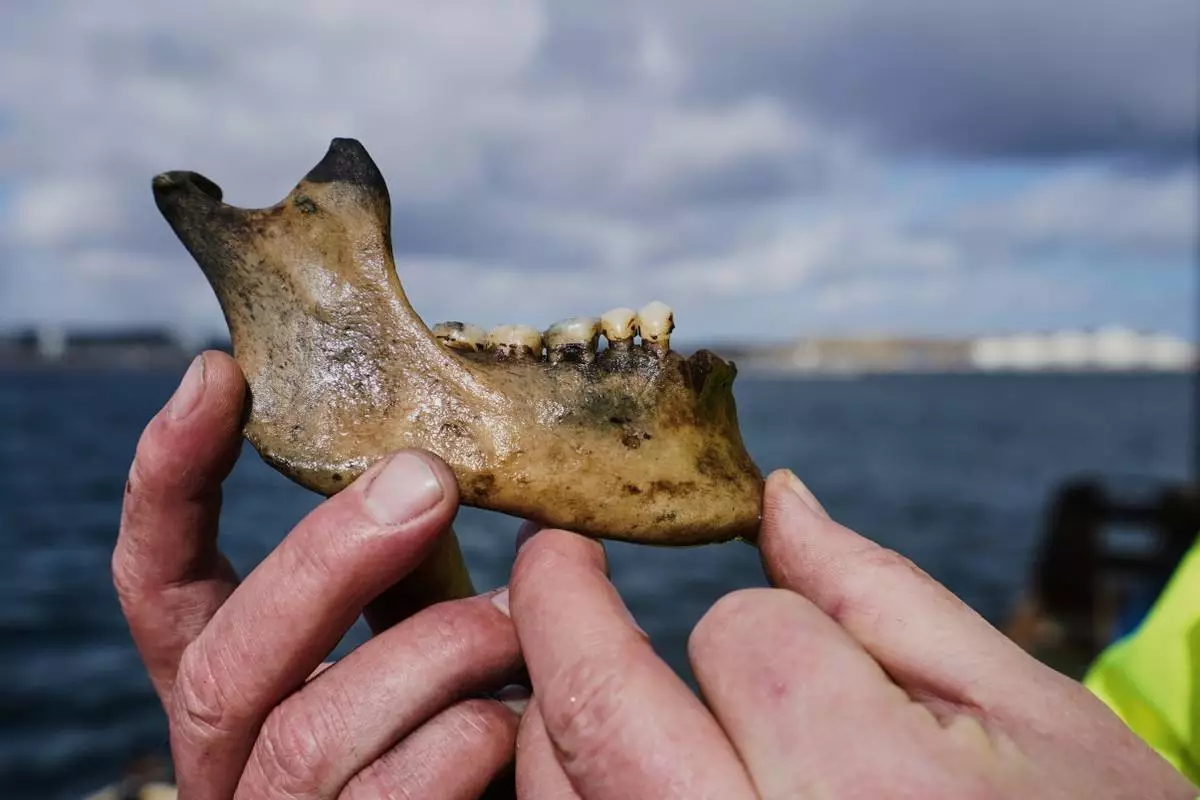
Morten Johansen, head of maritime archaeology at Denmark's Viking Ship Museum, shows part of a human lower jawbone recovered from the wreck of Danish flagship "Dannebroge" that sank during the Battle of Copenhagen in 1801, in Copenhagen, Denmark, Tuesday, March 31, 2026. (AP Photo/James Brooks)
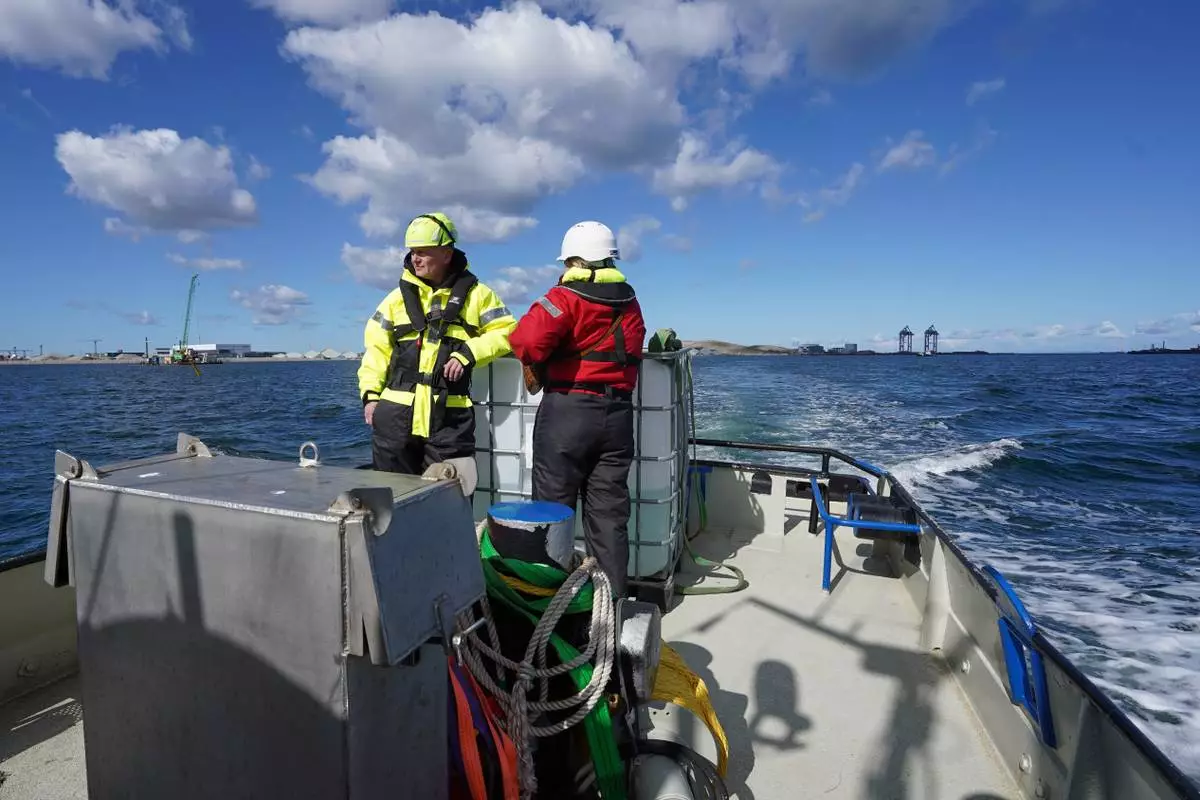
Archaeologists sail with boat through the harbor in Copenhagen, Denmark, Tuesday, March 31, 2026. (AP Photo/James Brooks)
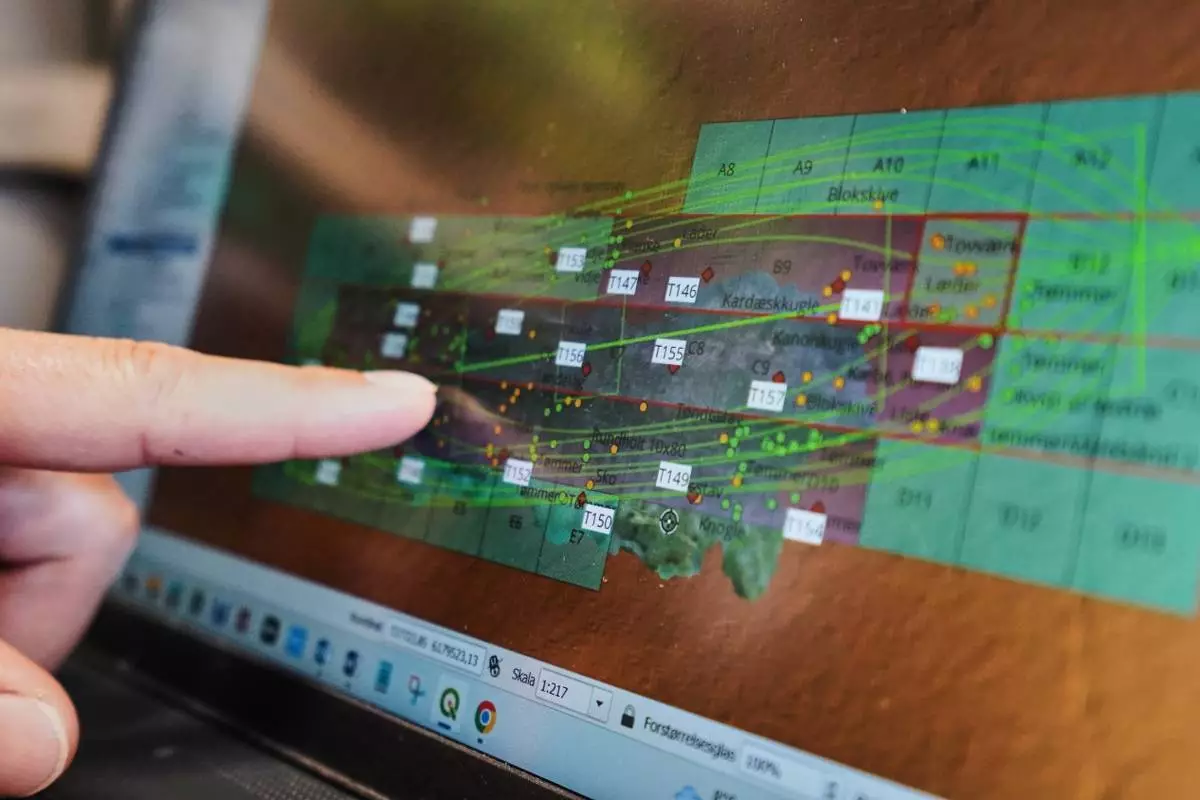
An archaeologist points to a computer screen, showing a map of the wreck of Danish flagship "Dannebroge" that sank during the Battle of Copenhagen in 1801. in Copenhagen, Denmark, Tuesday, March 31, 2026. (AP Photo/James Brooks)
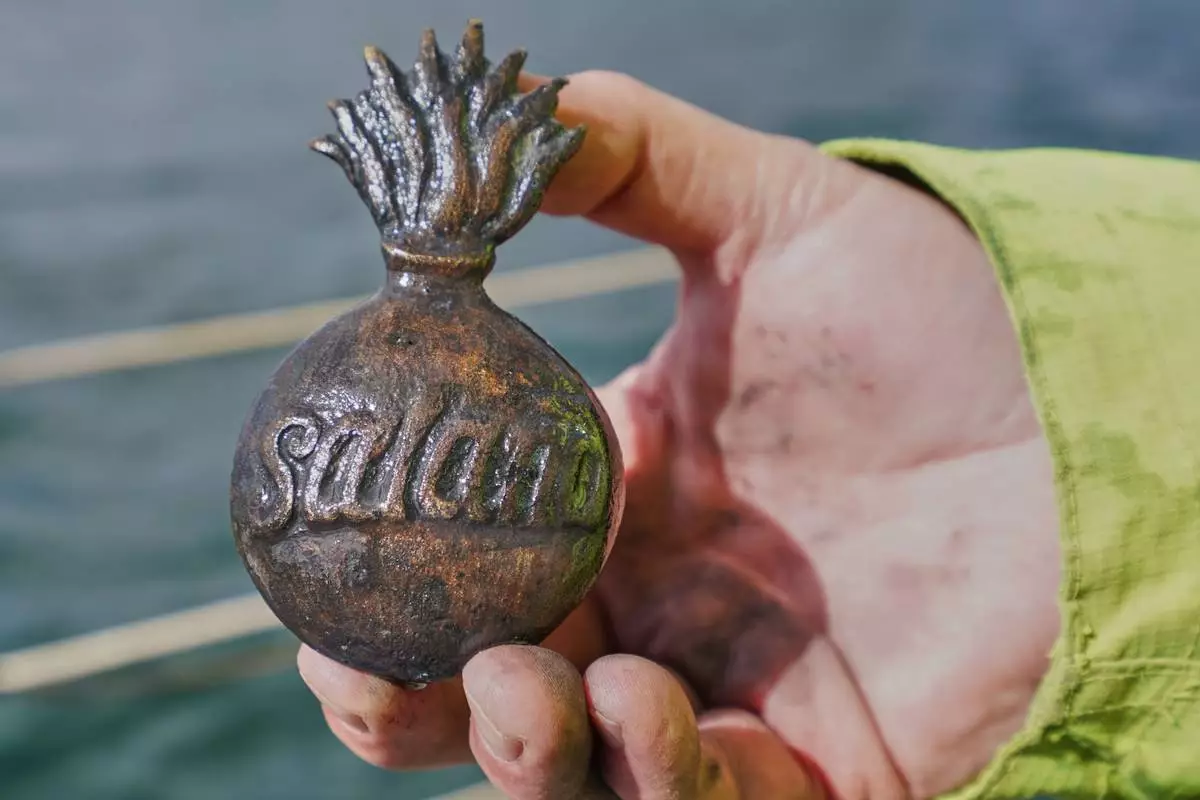
Morten Johansen, head of maritime archaeology at Denmark's Viking Ship Museum, shows a metal insignia recovered from the wreck of Danish flagship "Dannebroge" that sank during the Battle of Copenhagen in 1801, in Copenhagen, Denmark, Tuesday, March 31, 2026. (AP Photo/James Brooks)
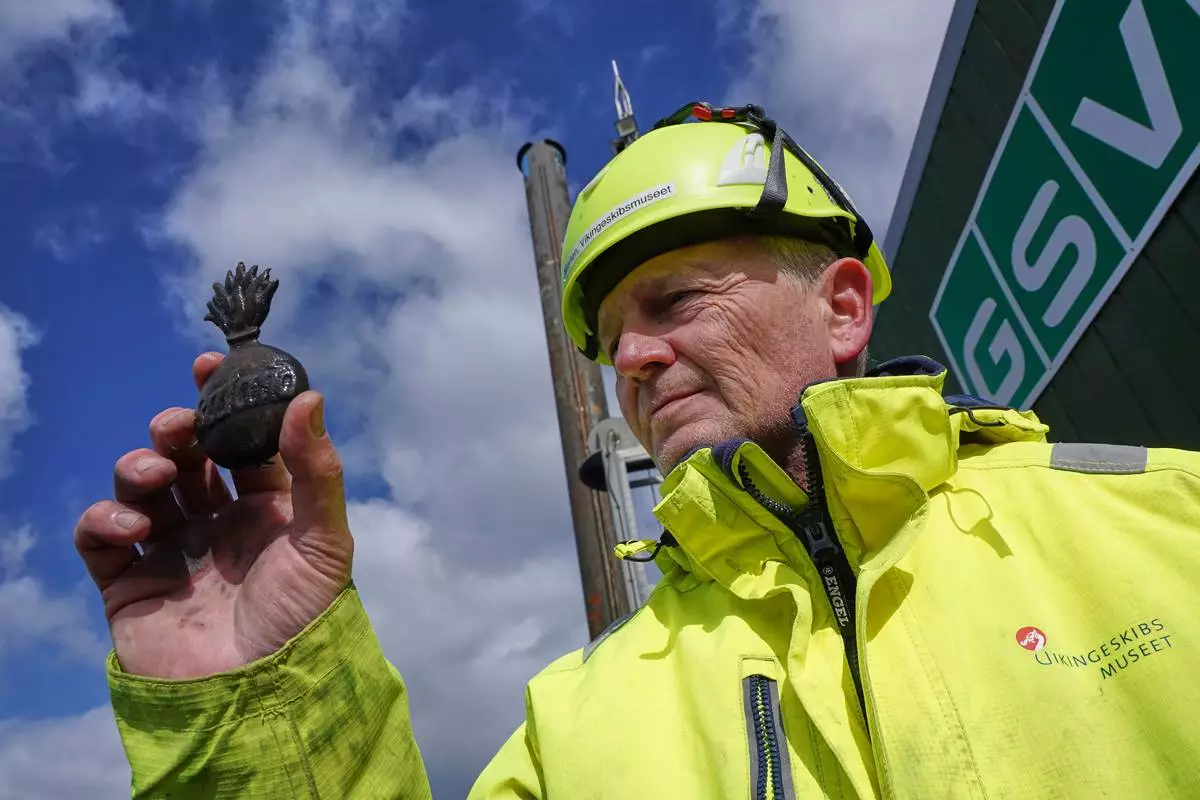
Morten Johansen, head of maritime archaeology at Denmark's Viking Ship Museum, shows a metal insignia recovered from the wreck of Danish flagship "Dannebroge" that sank during the Battle of Copenhagen in 1801, in Copenhagen, Denmark, Tuesday, March 31, 2026. (AP Photo/James Brooks)