Skip to Content Facebook Feature Image

China activates major supercomputing node in Henan

China

China

China

China activates major supercomputing node in Henan

2026-02-06 14:06 Last Updated At:15:15

China on Thursday launched the trial operation of a pivotal node for its national supercomputing internet network, marking a significant milestone in the country's push to build a unified, nationwide computing power network.

The newly activated node is located in Zhengzhou, the capital city of central China's Henan Province. It represents the largest single-body computing resource pool in China.

Powered by Sugon's scaleX 10,000-card supercluster, it delivers computing capacity exceeding 30,000 domestically produced AI accelerator cards, positioning its comprehensive performance among the world's leading supercomputing facilities.

Based in north China's Tianjin Municipality, Sugon is one of China's earliest and largest high-performance computing vendors.

The Zhengzhou node will connect with more than 30 computing centers across the country. The overarching vision is to transform computing power into a ubiquitous public utility as readily available as electricity and water.

To sustain innovation and optimize resource allocation, the Sugon Zhengzhou Advanced Computing Research Institute has assembled a dedicated research and development team of over 500 members, specializing in the development of domestic computing ecosystems and advanced scheduling software essential for seamless cross-regional resource management.

Spearheaded by the Ministry of Science and Technology, the construction of the national supercomputing network began in April 2023, with the aim of alleviating the imbalance of computing power supply and demand between different regions.

China activates major supercomputing node in Henan

China activates major supercomputing node in Henan

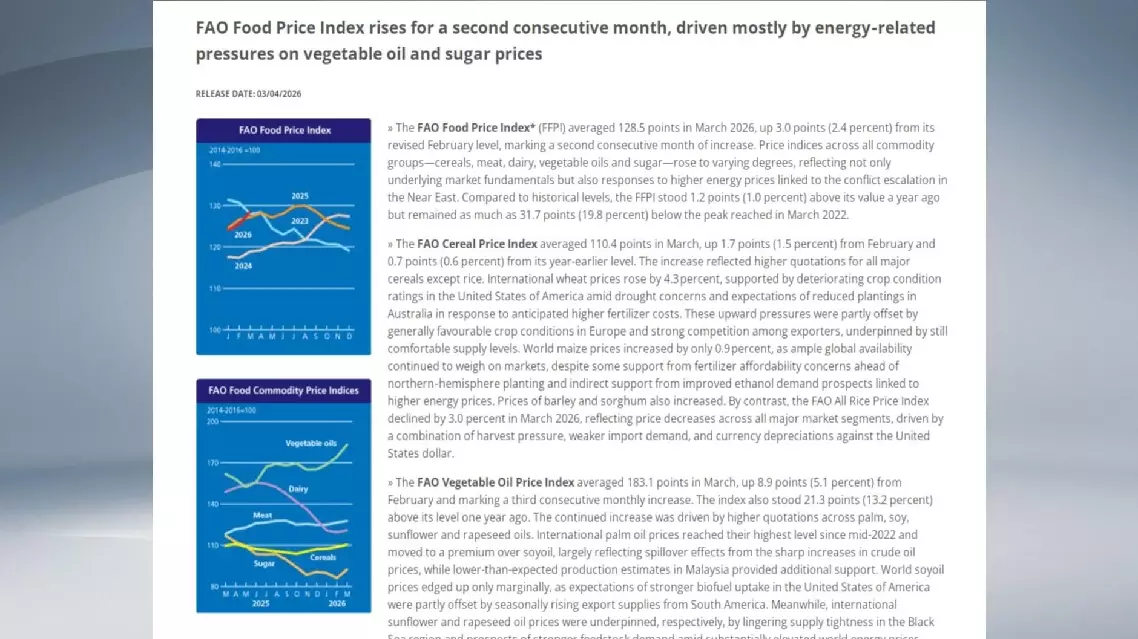
Global food commodity prices climbed for a second consecutive month in March, driven mainly by higher energy costs linked to escalating conflict in the Middle East, the Food and Agriculture Organization of the United Nations (FAO) said in report released on Friday.

The FAO Food Price Index, which tracks monthly changes in the international prices of a basket of globally traded food commodities, averaged 128.5 points in March, up 2.4 percent from February and 1.0 percent above its level a year ago.

According to the report, the FAO Vegetable Oil Index and Sugar Price Index showed the largest increases, up 5.1 percent and 7.2 percent, respectively.

The FAO Cereal Price Index increased by 1.5 percent from the previous month, driven primarily by higher world wheat prices, which rose 4.3 percent.

The FAO Meat Price Index rose by 1.0 percent from the previous month, and the FAO All-Rice Price Index declined by 3.0 percent in March, according to the report.

FAO stated that rising energy and fertilizer prices have been driving up agricultural input costs.

If the conflict stretches beyond 40 days, farmers will have to choose to farm the same with fewer inputs, plant less, or switch to less intensive fertilizer crops, according to FAO Chief Economist Maximo Torero.

These choices will hit future yields and shape food supply and commodity prices for the rest of this year and beyond, Torero said.

Global food prices rise for 2nd consecutive month in March amid Middle East conflict: FAO

Global food prices rise for 2nd consecutive month in March amid Middle East conflict: FAO

Recommended Articles