Skip to Content Facebook Feature Image

Suicide bombing at a Shiite mosque on Islamabad's outskirts kills at least 31 and wounds scores

News

Suicide bombing at a Shiite mosque on Islamabad's outskirts kills at least 31 and wounds scores
News

News

Suicide bombing at a Shiite mosque on Islamabad's outskirts kills at least 31 and wounds scores

2026-02-07 02:17 Last Updated At:02:20

ISLAMABAD (AP) — A suicide bomber targeted a Shiite mosque on the outskirts of Islamabad during Friday prayers, killing 31 people and wounding at least 169 others, officials said, a rare bombing in Pakistan's capital as its Western-allied government struggles to rein in a surge in militant attacks across the country.

Television footage and social media images showed police and residents transporting the wounded to nearby hospitals. Some of the wounded in the attack on the sprawling mosque of Khadija Al-Kubra were reported to be in critical condition.

More Images
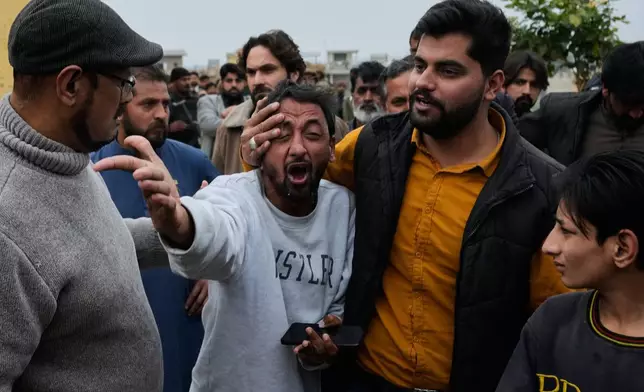
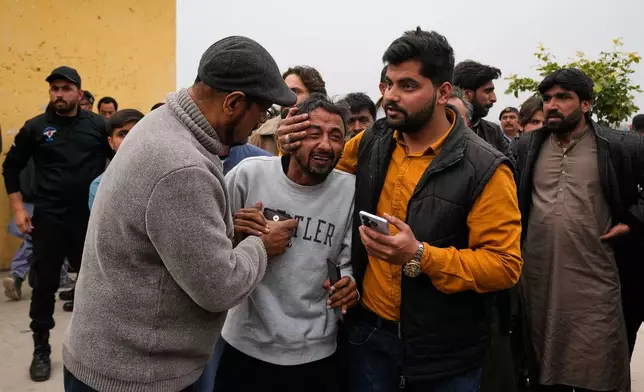
People comfort a man, center, mourning over the death of his relative, close to the site of a bomb explosion at a Shiite mosque, in Islamabad, Pakistan, Friday, Feb. 6, 2026. (AP Photo/Anjum Naveed)
People comfort a man, center, mourning over the death of his relative, close to the site of a bomb explosion at a Shiite mosque, in Islamabad, Pakistan, Friday, Feb. 6, 2026. (AP Photo/Anjum Naveed)
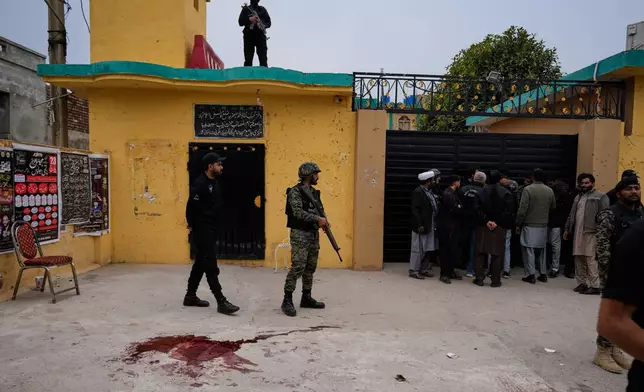
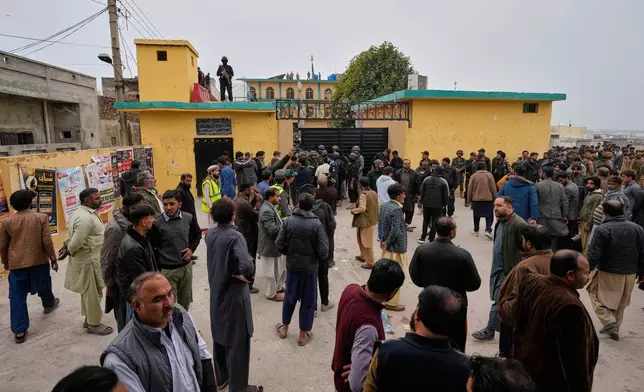
Pakistani security officers and rescue worker gather at the site of a bomb explosion at a Shiite mosque, in Islamabad, Pakistan, Friday, Feb. 6, 2026. (AP Photo/Anjum Naveed)
Pakistani security officers and rescue worker gather at the site of a bomb explosion at a Shiite mosque, in Islamabad, Pakistan, Friday, Feb. 6, 2026. (AP Photo/Anjum Naveed)
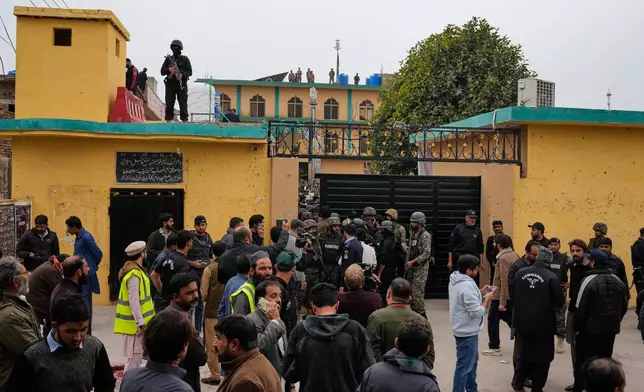
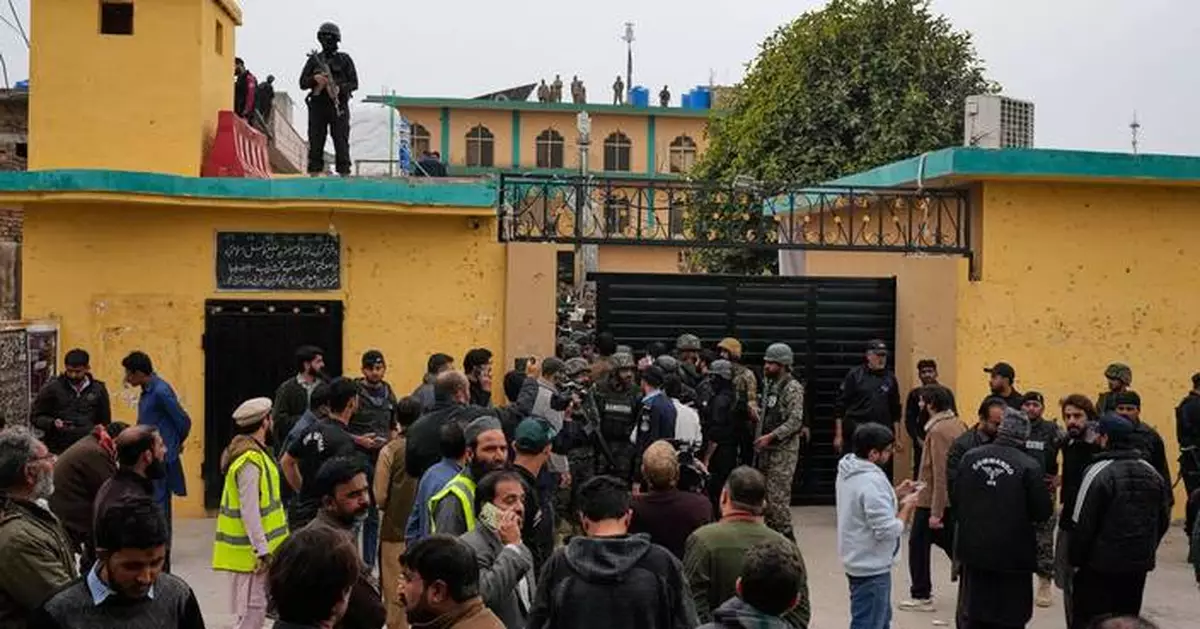
Pakistani paramilitary and police commandos take positions at the site of a bomb explosion at a Shiite mosque, in Islamabad, Pakistan, Friday, Feb. 6, 2026. (AP Photo/Anjum Naveed)

Pakistani paramilitary and police commandos take positions at the site of a bomb explosion at a Shiite mosque, in Islamabad, Pakistan, Friday, Feb. 6, 2026. (AP Photo/Anjum Naveed)

People comfort a man, center, mourning over the death of his relative, close to the site of a bomb explosion at a Shiite mosque, in Islamabad, Pakistan, Friday, Feb. 6, 2026. (AP Photo/Anjum Naveed)

People comfort a man, center, mourning over the death of his relative, close to the site of a bomb explosion at a Shiite mosque, in Islamabad, Pakistan, Friday, Feb. 6, 2026. (AP Photo/Anjum Naveed)

Pakistani security officers and rescue worker gather at the site of a bomb explosion at a Shiite mosque, in Islamabad, Pakistan, Friday, Feb. 6, 2026. (AP Photo/Anjum Naveed)

Pakistani security officers and rescue worker gather at the site of a bomb explosion at a Shiite mosque, in Islamabad, Pakistan, Friday, Feb. 6, 2026. (AP Photo/Anjum Naveed)

Rescuers and witnesses described a harrowing scene, with bodies and wounded lying on the mosque's carpeted floor. Hussain Shah said he was praying in the mosque courtyard when he heard a sudden, loud explosion.

“I immediately thought that some big attack had happened,” he said. He then went into the mosque to utter chaos — many of the wounded were screaming and crying out for help. Shah said he counted around 30 bodies inside the mosque, while the number of the wounded appeared to be significantly higher.

No one immediately claimed responsibility for the explosion, but suspicion is likely to fall on militants such as the Pakistani Taliban or the Islamic State group, which has been blamed for previous attacks on Shiite worshippers, a minority in the country. Militant groups across Pakistan often target security forces and civilians.

Though attacks are not so frequent in Islamabad, Pakistan has seen a surge in militant violence in recent months, largely blamed on Baloch separatist groups and the Pakistani Taliban, known as Tehrik-e-Taliban Pakistan, or TTP, which is a separate group, but allied with Afghanistan’s Taliban. A regional affiliate of the Islamic State group has also been active in the country.

In the initial aftermath of the explosion, a lower number of casualties was released, but Islamabad Deputy Commissioner Irfan Memon gave the latest tolls.

Pakistan’s Defense Minister Khawaja Mohammad Asif wrote on X that preliminary findings suggest the suicide bomber had been on the move to and from Afghanistan. Asif said the mosque's security guards tried to intercept the suspect, who opened fire at them and then detonated his explosives among the worshippers.

The condition of the guards was not immediately known.

The Afghan Defense Ministry said Afghanistan condemned the mosque attack in Islamabad and said the Pakistani defense minister had “irresponsibly” linked the attack to Afghanistan.

Pakistan often accuses Afghanistan, where the Taliban seized power again in August 2021 as American and NATO troops were withdrawing after a 20-year war, of harboring militants and members of the Pakistani Taliban. Kabul denies the accusation.

Afghanistan's Ministry of Foreign Affairs issued a statement Friday saying that the “Islamic Republic of Afghanistan condemns such attacks that violate the sanctity of sacred rituals and mosques and target worshippers and innocent people.”

The attack also drew condemnation from the international community, including the United Sates and European Union. Condolences and condemnation also poured in from various embassies in Islamabad.

President Asif Ali Zardari and Prime Minister Shehbaz Sharif extended condolences to the families of the victims in sperate statements and asked that all possible medical assistance be provided for those wounded.

“Targeting innocent civilians is a crime against humanity,” Zardari said. “The nation stands with the affected families in this difficult time.”

“Those who are responsible must be identified and punished,” Sharif said. Pakistan’s Interior Minister Mohsin Naqvi also condemned the attack.

Friday’s attack occurred as Uzbekistan President Shavkat Mirziyoyev, who is on an official two-day visit, was attending an event with Sharif. The event in Islamabad was several miles away from the site of the explosion.

A top Shiite leader, Raja Nasir, expressed deep sorrow over the attack at Khadija Al-Kubra.

“Such a terrorist act in the federal capital is not only a serious failure in protecting human lives but also raises significant questions about the performance of the authorities and law enforcement agencies,” he said and asked for people to give blood as the hospitals in Islamabad were in urgent need for blood supplies for the wounded.

It was the deadliest attack in Islamabad since 2008 when a suicide bombing targeted the Marriott Hotel in the capital, killing 63 people and wounding over 250 others. In November, a suicide bomber had struck outside a court in Islamabad, killing 12 people.

The latest attack came nearly a week after the outlawed Baloch Liberation Army carried out multiple attacks in insurgency-hit southwestern Balochistan province, killing about 50 people.

Security forces responding to those attacks also killed more than 200 “terrorists,” according to the military.

Hours after the Islamabad bombing, Punjab Chief Minister Maryam Nawaz Sharif said on X that she had canceled her events at the music and kite-flying festival in the city of Lahore for Saturday. The festival, which got underway on Friday, was still expected to continue.

Associated Press writers Babar Dogar in Lahore and Asim Tanveer in Multan, Pakistan, and Abdul Qahar Afghan in Kabul, Afghanistan, contributed to this story.
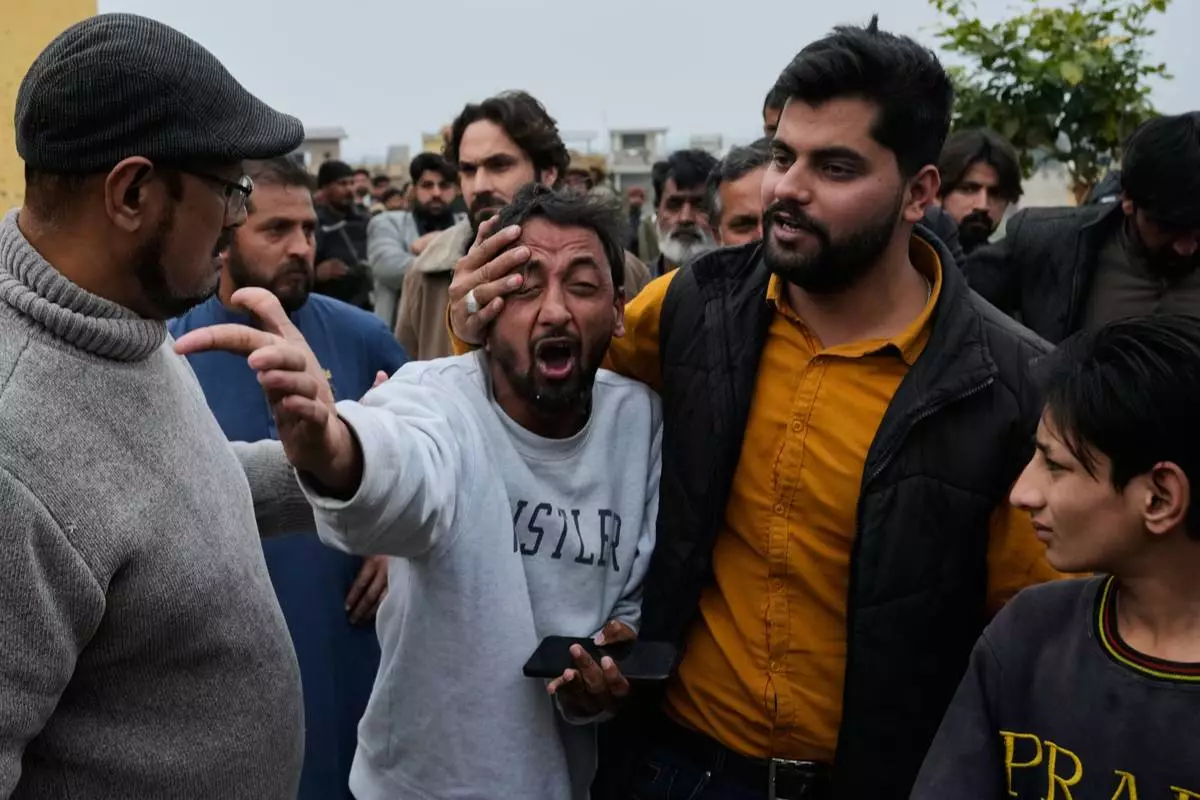
People comfort a man, center, mourning over the death of his relative, close to the site of a bomb explosion at a Shiite mosque, in Islamabad, Pakistan, Friday, Feb. 6, 2026. (AP Photo/Anjum Naveed)
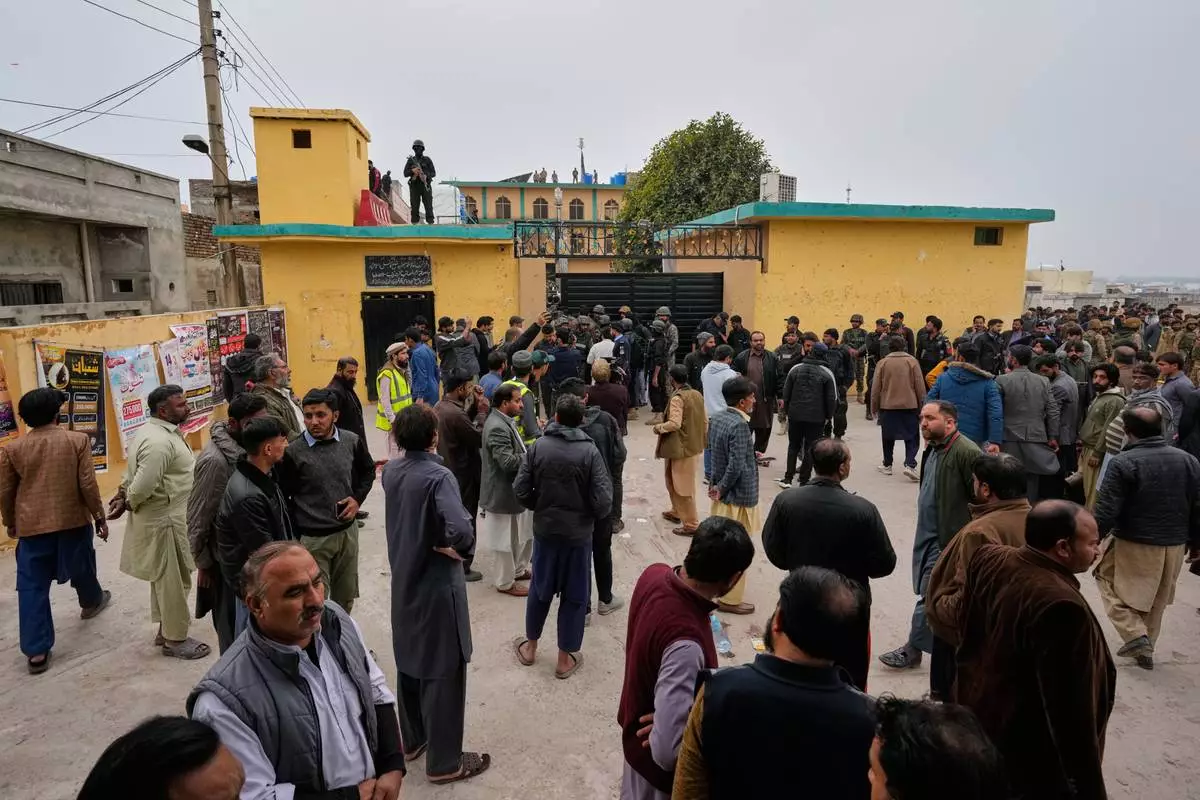
People comfort a man, center, mourning over the death of his relative, close to the site of a bomb explosion at a Shiite mosque, in Islamabad, Pakistan, Friday, Feb. 6, 2026. (AP Photo/Anjum Naveed)
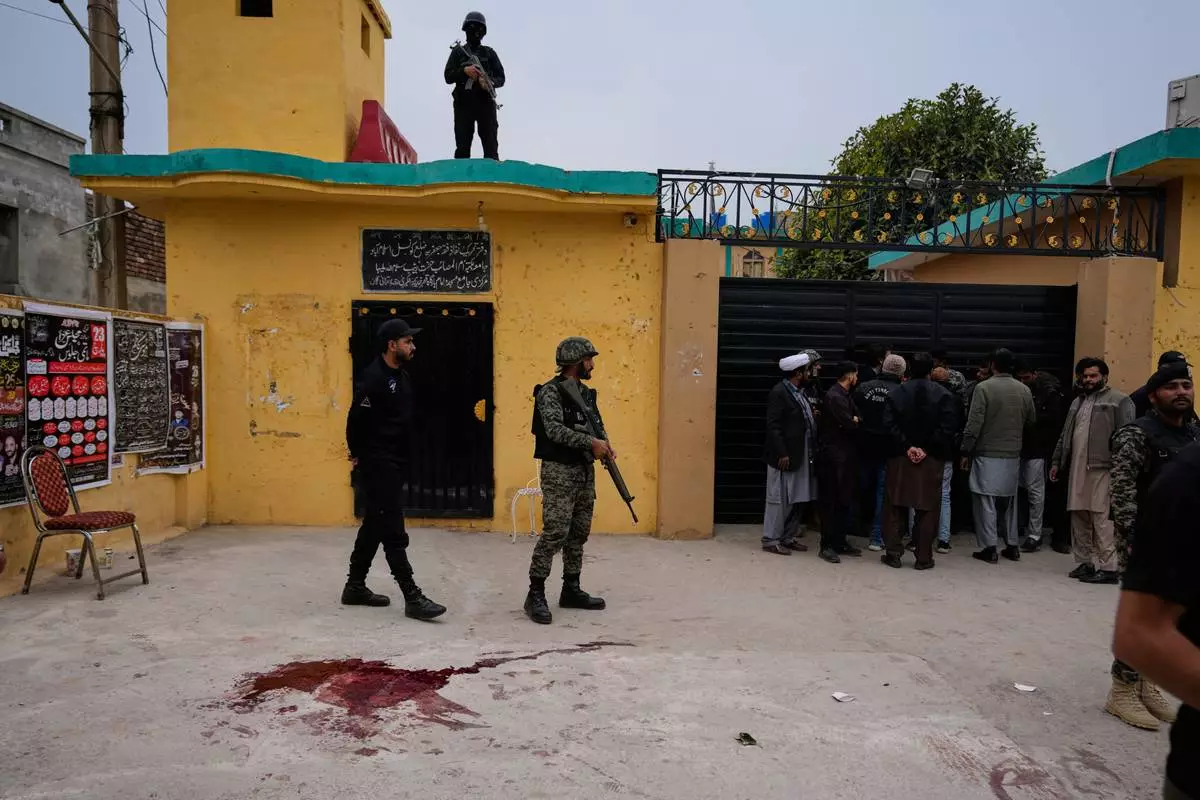
Pakistani security officers and rescue worker gather at the site of a bomb explosion at a Shiite mosque, in Islamabad, Pakistan, Friday, Feb. 6, 2026. (AP Photo/Anjum Naveed)
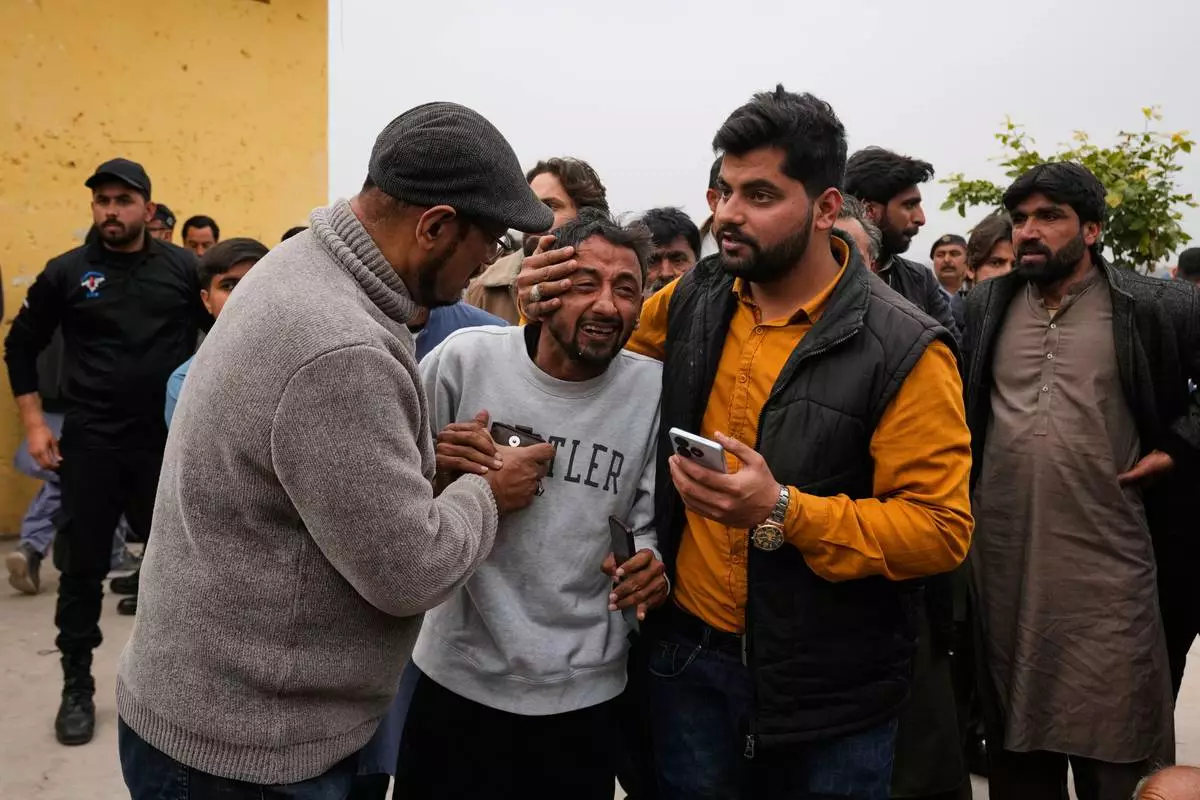
Pakistani security officers and rescue worker gather at the site of a bomb explosion at a Shiite mosque, in Islamabad, Pakistan, Friday, Feb. 6, 2026. (AP Photo/Anjum Naveed)
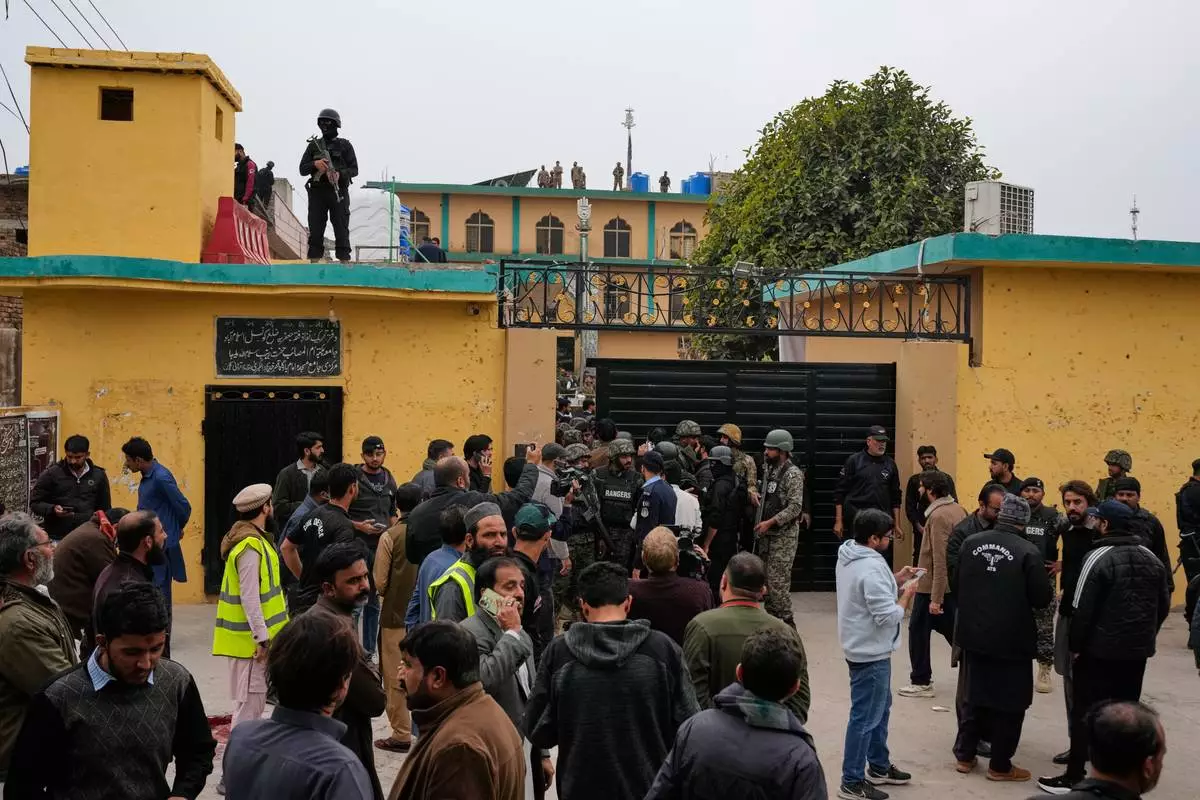
Pakistani paramilitary and police commandos take positions at the site of a bomb explosion at a Shiite mosque, in Islamabad, Pakistan, Friday, Feb. 6, 2026. (AP Photo/Anjum Naveed)
Pakistani paramilitary and police commandos take positions at the site of a bomb explosion at a Shiite mosque, in Islamabad, Pakistan, Friday, Feb. 6, 2026. (AP Photo/Anjum Naveed)
People comfort a man, center, mourning over the death of his relative, close to the site of a bomb explosion at a Shiite mosque, in Islamabad, Pakistan, Friday, Feb. 6, 2026. (AP Photo/Anjum Naveed)
People comfort a man, center, mourning over the death of his relative, close to the site of a bomb explosion at a Shiite mosque, in Islamabad, Pakistan, Friday, Feb. 6, 2026. (AP Photo/Anjum Naveed)
Pakistani security officers and rescue worker gather at the site of a bomb explosion at a Shiite mosque, in Islamabad, Pakistan, Friday, Feb. 6, 2026. (AP Photo/Anjum Naveed)
Pakistani security officers and rescue worker gather at the site of a bomb explosion at a Shiite mosque, in Islamabad, Pakistan, Friday, Feb. 6, 2026. (AP Photo/Anjum Naveed)
PARIS (AP) — Tennis players at the French Open say they haven’t experienced conditions this hot at Roland Garros since the Paris Olympics.

And the 2024 Olympics were held in July and August.

Temperatures for the opening two days of the clay-court Grand Slam have soared to 33 degrees C (91 F) — far beyond normal for late May in the French capital. And it’s forecast to stay that way for the entire first week.

Besides making it uncomfortable for fans and players alike, the sultry conditions have also created faster conditions on court — changing the pace of the game.

“It is much different. Maybe it was that hot in the Olympics but the balls were different, so I wouldn’t treat it as the same tournament,” four-time French Open champion Iga Swiatek said after routing Emerson Jones 6-1, 6-2 in the first round on Monday.

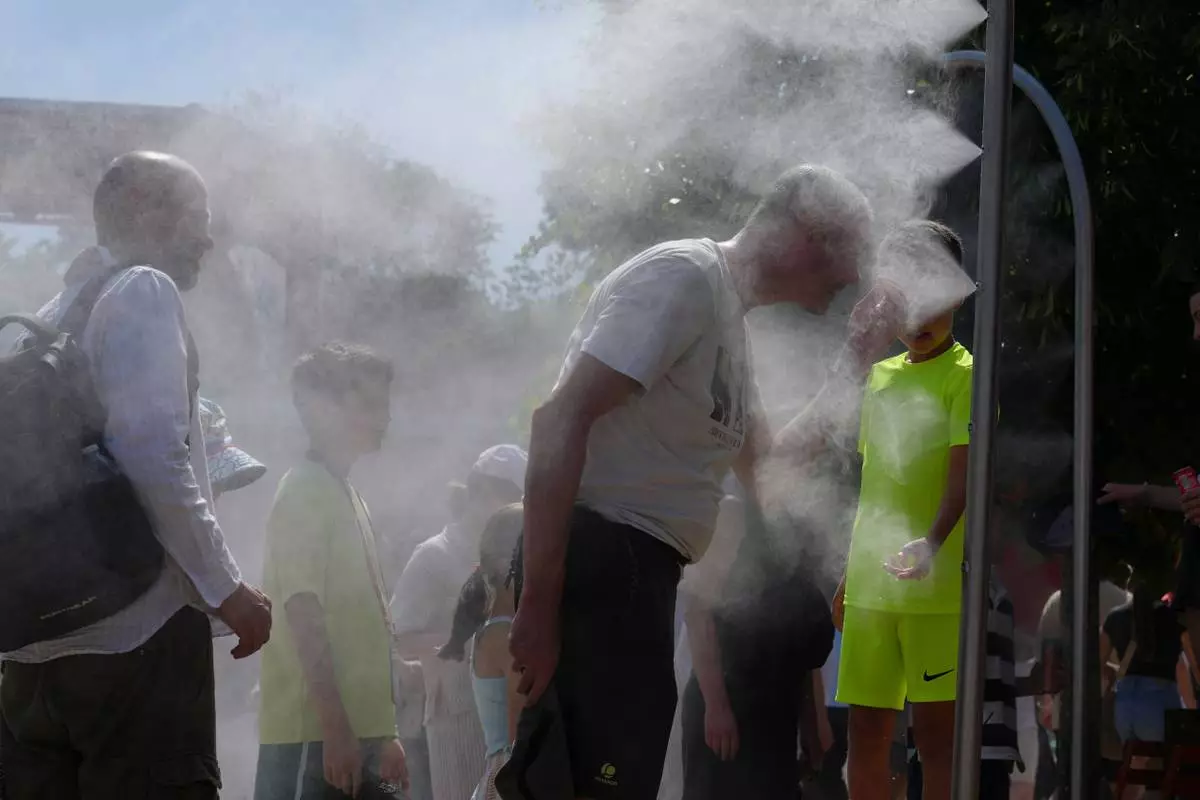
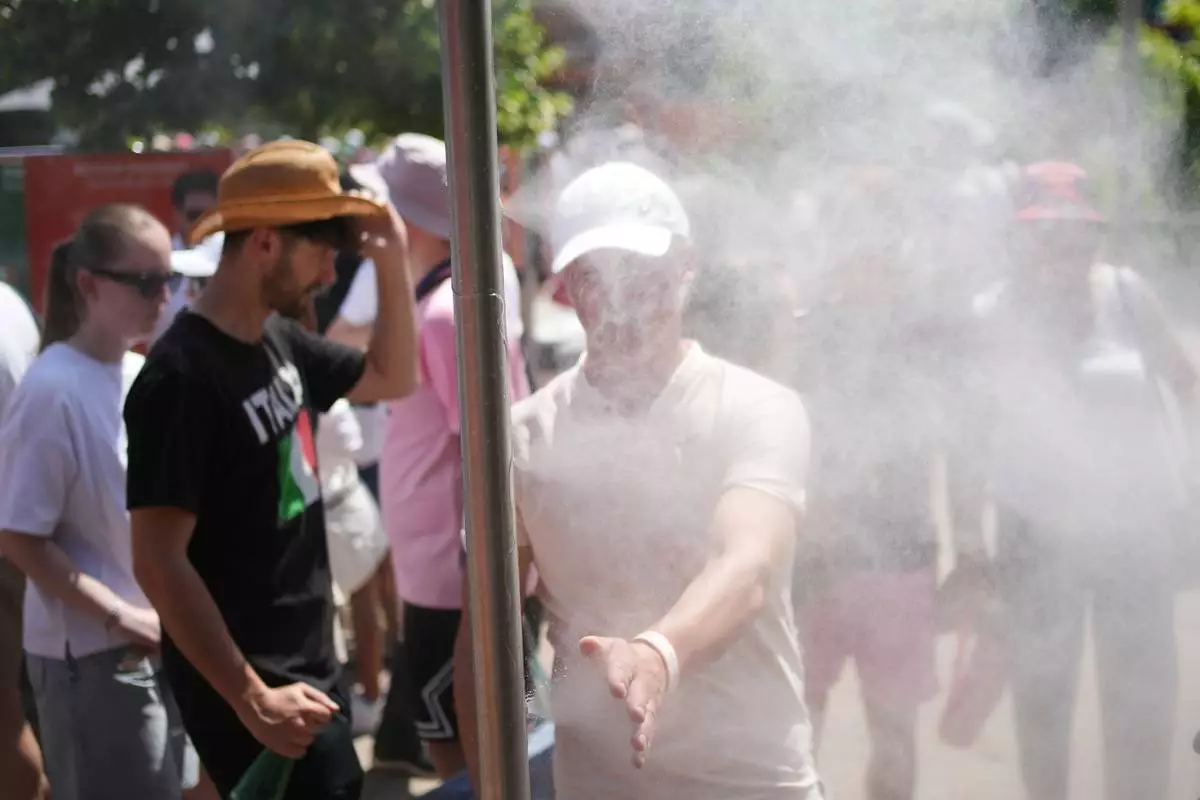
Players have been putting bags of ice around their necks on changeovers to stay cool, while fans are refreshing themselves under sprinklers.

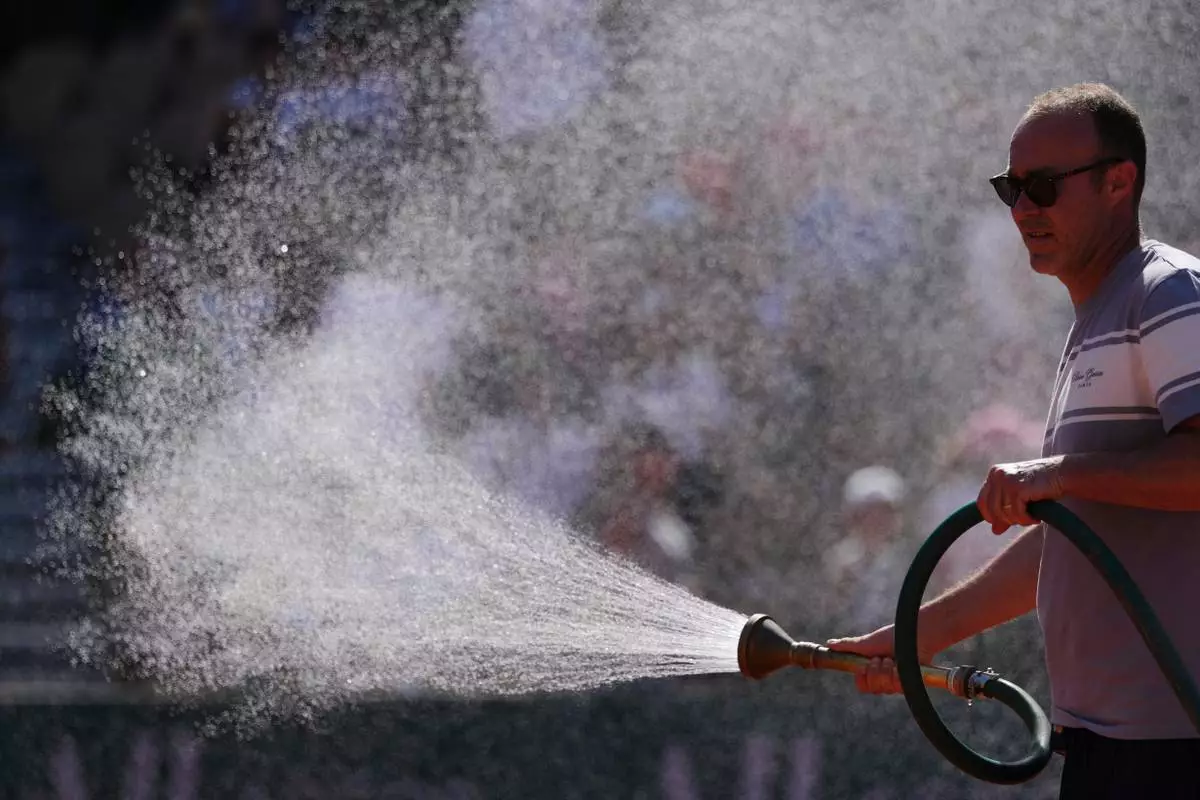
When workers water the clay courts between sets, they have taken to directing their hoses at spectators begging to be doused, too.

“I don’t remember the last time it was so hot at Roland Garros,” Russian-born Australian player Daria Kasatkina said after beating Zeynep Sonmez 6-4, 6-4. “Maybe one day. But we’re going to have it for the whole week.”

Kasatkina said the energy-sapping temperatures made for more up-and-down matches.

“You can suddenly just get out of the bench and feel that your focus dropped,” she said. “So this is a battle which you have to also win. … Whoever adapts better to today’s conditions gets it.”

Canadian player Gabriel Diallo said the heat was the main reason why he retired midway through his match against James Duckworth on Sunday.

Both Andrey Rublev and opponent Ignacio Buse called for the trainer on separate occasions during the second set of their match on Monday.

Buse took a medical timeout and had salts and minerals added to his water bottle as a stethoscope was placed on his chest. Rublev received treatment a few games later.

The French Open is usually cool compared to the heat at the Australian Open and U.S. Open.

But like in Australia and New York, the French Open has adopted an extreme weather policy.

If the Wet Bulb Globe Temperature (WBGT) — which takes into account temperature, humidity, sun, wind and other factors — reaches 30.1 degrees C (86 F) or higher, 10-minute cooling breaks can be installed between the second and third sets for women’s matches and between the third and fourth sets for men’s matches.

If the WBGT hits 32.2 C (90 F), play is suspended. It would require an air temperature of about 38 C (100 F) for play to be suspended.

Some players were embracing the hotter air.

“I’ve always preferred hot and lively conditions to chilly on a clay court, because I feel like I can bring a little bit more of my all-court tennis on this type of surface,” Australian player Alex de Minaur said after beating Toby Samuel 6-4, 6-4, 6-2.

“It’s easier to be a little bit more aggressive. The ball is jumping. I don’t necessarily have to use as much spin or heaviness, and I can let the conditions do the job for me. And it’s quite physical. I don’t mind the heat,” De Minaur added.

Same goes for American player Alex Michelsen, who eliminated Alexander Shevchenko in straight sets.

“It’s definitely good for us Americans,” Michelsen said. “Generally we’re big serve, big forehand, big ground game and like to play offense. When it’s super hot, the ball is moving through the air very fast. … I was so happy when I saw the forecast.”

AP tennis: https://apnews.com/hub/tennis

A stadium worker sprays the court with water before the first round men's singles tennis match at the French Open tennis tournament in Paris, Monday, May 25, 2026. (AP Photo/Aurelien Morissard)

A stadium worker sprays the court with water before the first round men's singles tennis match at the French Open tennis tournament in Paris, Monday, May 25, 2026. (AP Photo/Aurelien Morissard)

Visitors cool themselves with water from sprinklers during a hot day at the French Open tennis tournament in Paris, Monday, May 25, 2026. (AP Photo/Aurelien Morissard)

Visitors cool themselves with water from sprinklers during a hot day at the French Open tennis tournament in Paris, Monday, May 25, 2026. (AP Photo/Aurelien Morissard)

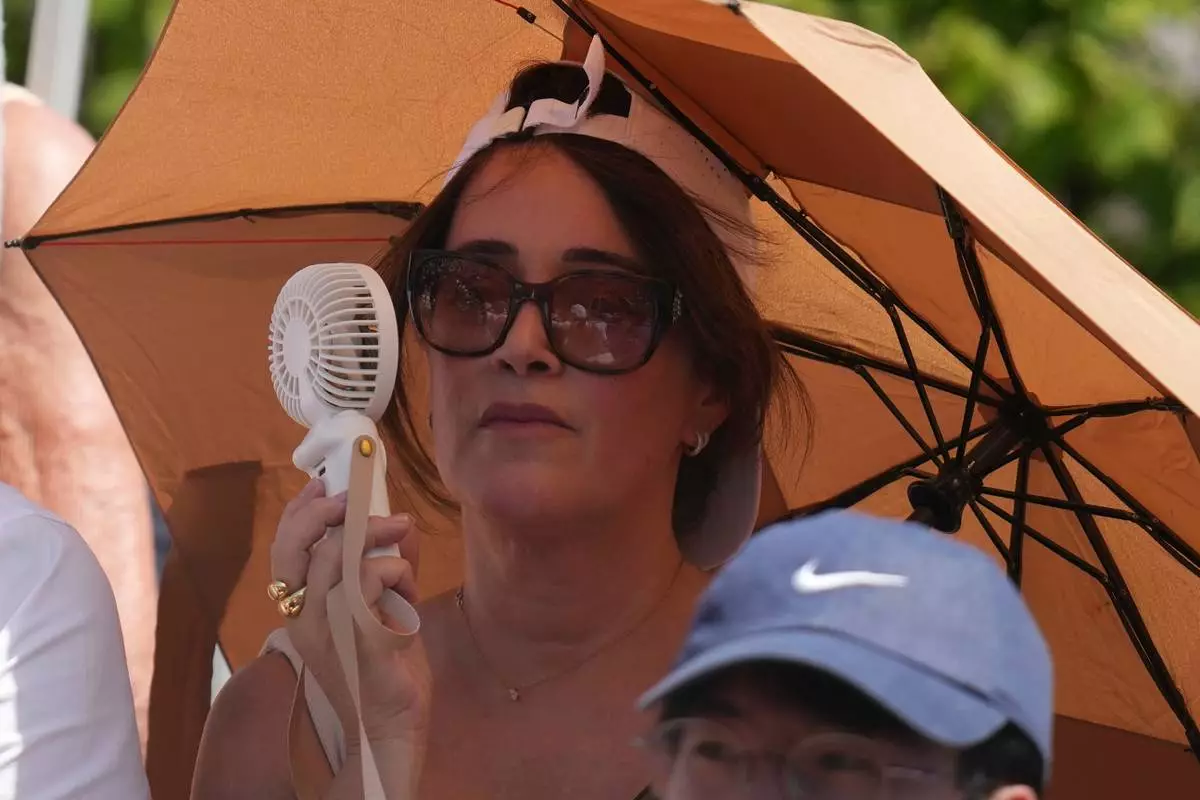
A woman cools herself with a portable fan during the first round men's singles tennis match between Alex De Minaur of Australia and Toby Samuel of Britain at the French Open tennis tournament in Paris, Monday, May 25, 2026. (AP Photo/Christophe Ena)

A woman cools herself with a portable fan during the first round men's singles tennis match between Alex De Minaur of Australia and Toby Samuel of Britain at the French Open tennis tournament in Paris, Monday, May 25, 2026. (AP Photo/Christophe Ena)

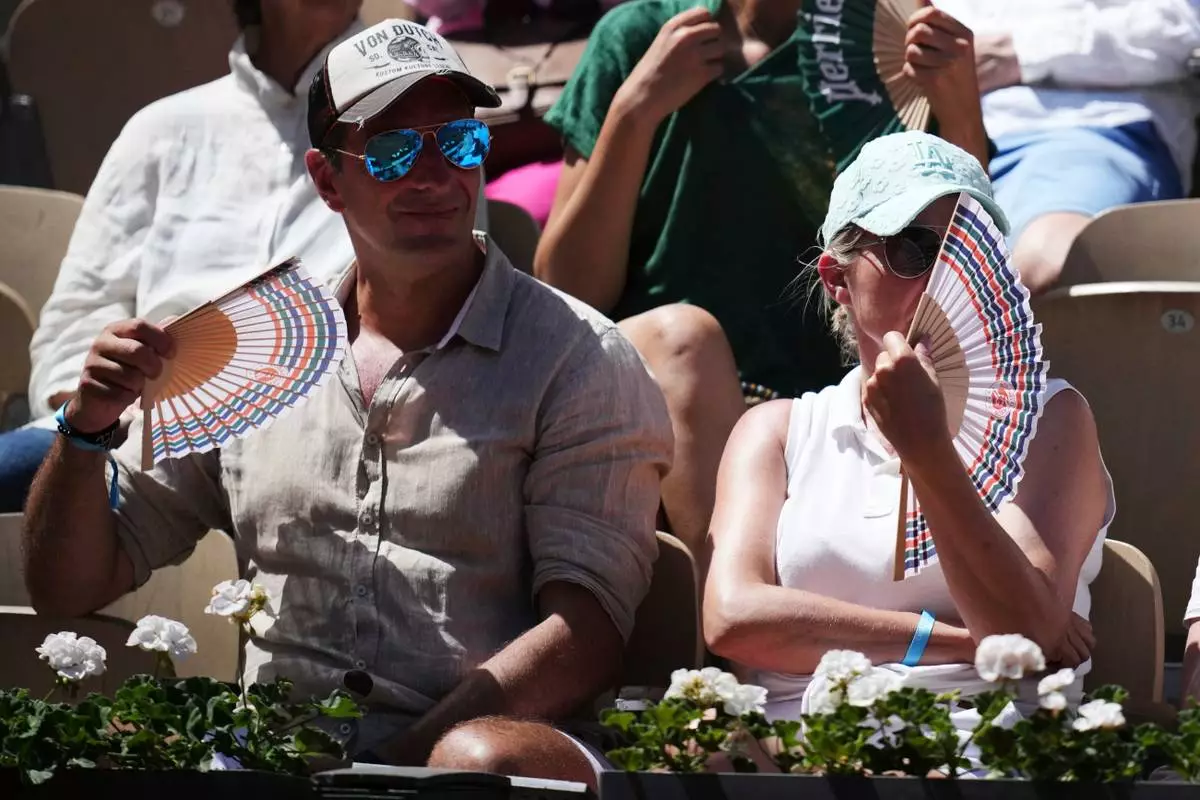
Spectators cool themselves with hand fans during the first round women's singles tennis match between Elina Svitolina of Ukraine and Anna Bondar of Hungary at the French Open tennis tournament in Paris, Monday, May 25, 2026. (AP Photo/Christophe Ena)

Spectators cool themselves with hand fans during the first round women's singles tennis match between Elina Svitolina of Ukraine and Anna Bondar of Hungary at the French Open tennis tournament in Paris, Monday, May 25, 2026. (AP Photo/Christophe Ena)

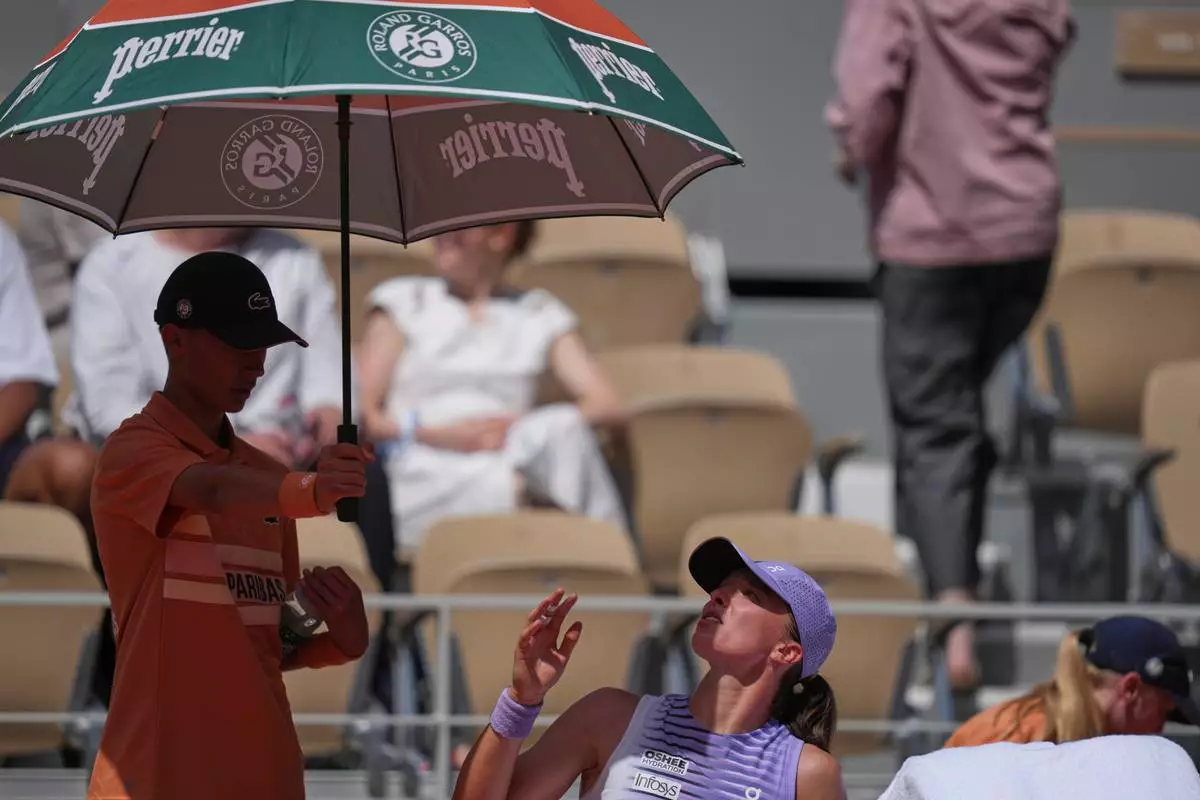
Poland's Iga Swiatek gestures for a ballboy as he shields her from the sun during a break at the first round women's singles tennis match against Emerson Jones of Australia at the French Open tennis tournament in Paris, Monday, May 25, 2026. (AP Photo/Thibault Camus)

Poland's Iga Swiatek gestures for a ballboy as he shields her from the sun during a break at the first round women's singles tennis match against Emerson Jones of Australia at the French Open tennis tournament in Paris, Monday, May 25, 2026. (AP Photo/Thibault Camus)

Visitors cool themselves with water from sprinklers during a hot day at the French Open tennis tournament in Paris, Monday, May 25, 2026. (AP Photo/Christophe Ena)

Visitors cool themselves with water from sprinklers during a hot day at the French Open tennis tournament in Paris, Monday, May 25, 2026. (AP Photo/Christophe Ena)

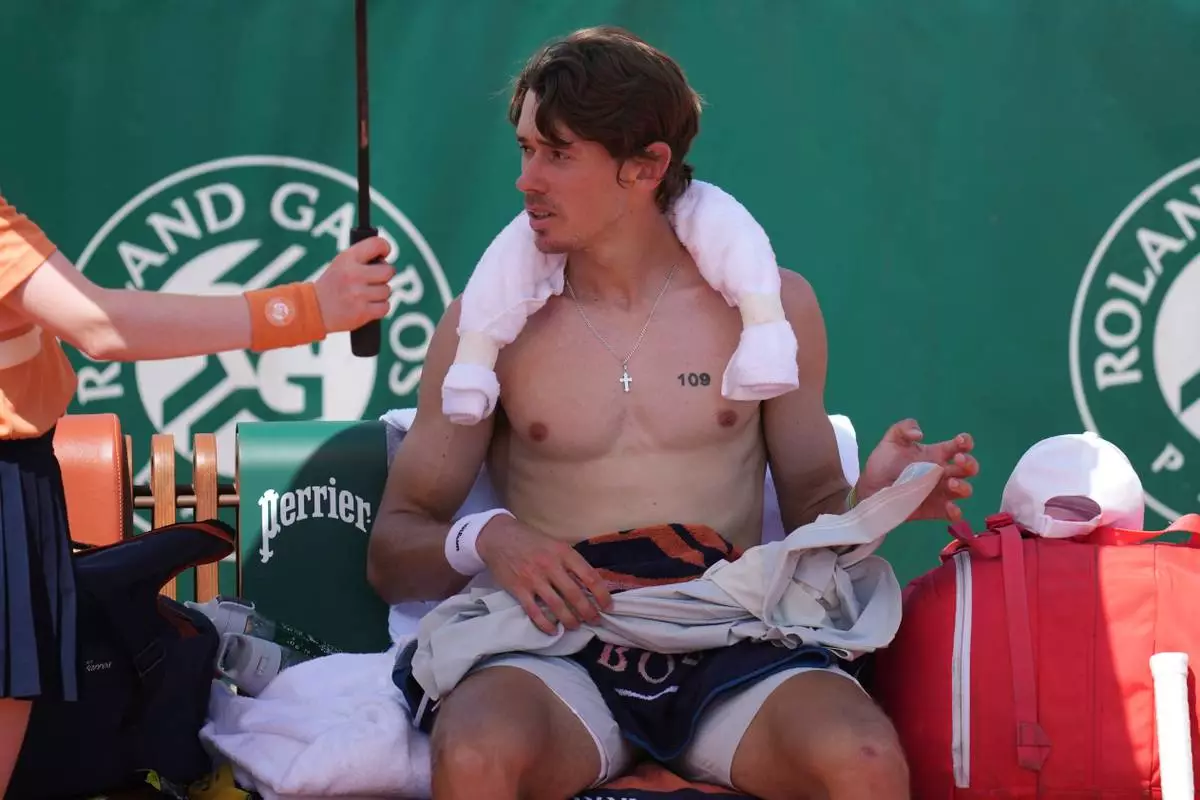
Alex De Minaur of Australia attends a break during the first round men's singles tennis match against Toby Samuel of Britain at the French Open tennis tournament in Paris, Monday, May 25, 2026. (AP Photo/Christophe Ena)

Alex De Minaur of Australia attends a break during the first round men's singles tennis match against Toby Samuel of Britain at the French Open tennis tournament in Paris, Monday, May 25, 2026. (AP Photo/Christophe Ena)

Recommended Articles