The world's first 20-megawatt offshore wind turbine unit was successfully connected to the grid for power generation off the coast of east China's Fujian Province on Thursday, marking a significant milestone in China's renewable energy advancement, according to the China Three Gorges Corporation.
Installed more than 30 kilometers offshore in waters exceeding 40 meters in depth, the colossal turbine began generating electricity as its 14-meter-long blades slowly rotated above the East China Sea.
Each full revolution produces more than 50 kilowatt-hours of clean electricity.
Developed and installed by the China Three Gorges Corporation, the unit features a hub height of 174 meters, equivalent to a 58-story building, and a rotor diameter of 300 meters, giving it a swept area comparable to ten standard soccer fields.
Operating at full capacity, the turbine is expected to generate over 80 million kilowatt-hours of electricity annually, enough to meet the power needs of about 44,000 households for a year while displacing roughly 22,000 tons of standard coal.
"Compared with currently common 13-megawatt offshore models, the 20-megawatt turbine can generate the same amount of electricity while using 30-percent less sea area and reducing costs by 25 percent in foundation construction, subsea cable laying, and other key processes. It offers a more economical solution for the future large-scale, intensive development of offshore wind power," said Lin Sheng, an executive at the Fujian branch of the China Three Gorges Corporation.
The unit incorporates domestically developed airfoil blade technology, lightweight design, and digital and smart integration systems. Its weight per megawatt is over 20 percent lower than industry averages, significantly boosting wind capture and power conversion efficiency.
This provides crucial technological and equipment support for further expanding China's offshore wind power development into deeper and more distant waters.
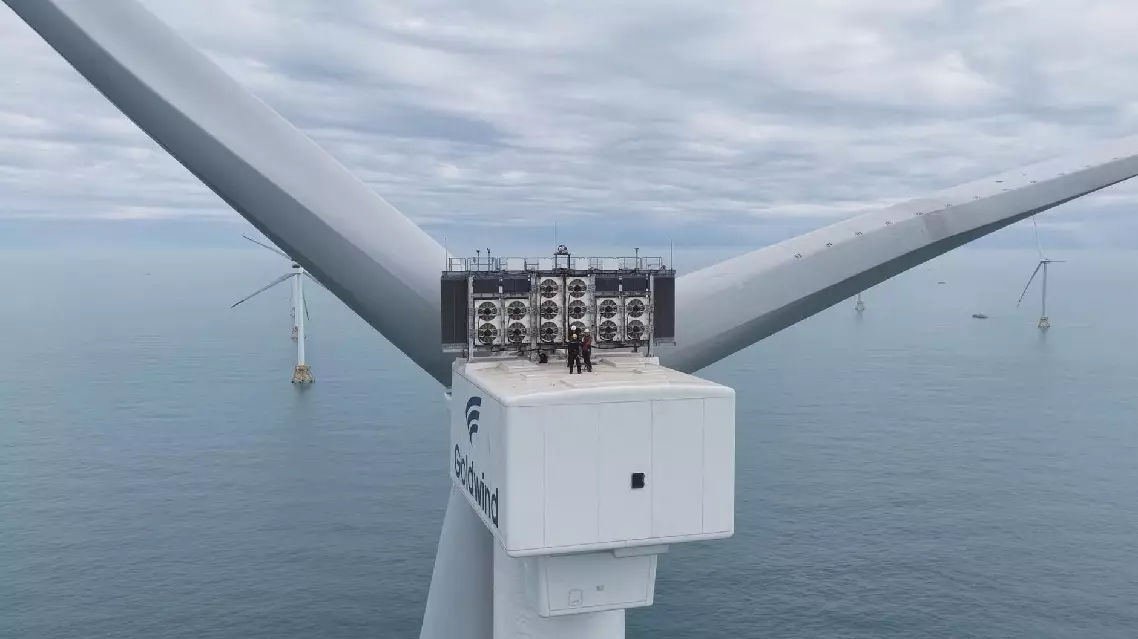
World's first 20-megawatt offshore wind turbine unit put into operation in East China Sea
The 32nd Asia-Pacific Economic Cooperation (APEC) Ministers Responsible for Trade Meeting concluded in east China's Suzhou on Saturday, yielding fruitful results and laying significant groundwork for the APEC Economic Leaders' Meeting in November.
The trade ministers' meeting focused on "building an open and predictable regional and multilateral economic and trade order" and "fostering new engines of innovative and dynamic trade and investment cooperation."
Chinese Commerce Minister Wang Wentao briefed the media on the meeting's outcomes at a press conference.
Wang said the meeting issued a joint statement titled the Suzhou Statement, and approved the latest edition of the APEC Roadmap for Innovative, Competitive and Resilient Services.
All parties agreed to advance policy innovation and reform in services trade, build an open and predictable investment environment, improve regional trade facilitation and supply chain resilience, strengthen standards coordination, and enhance intellectual property protection, Wang told the media.
He also said that substantial progress was made on a framework document for regional digital trade cooperation and the ministers emphasized promoting inclusive AI development, strengthening AI-related trade, and bridging the digital divide to ensure shared benefits from digital transformation.
The minister noted that the outcomes of the meeting demonstrated strong cooperation willingness, highlighted an innovation-oriented approach, and reflected inclusiveness and shared benefits. "The fact that Asia-Pacific economies can come together, uphold the original aspiration of promoting trade and investment liberalization and facilitation while supporting economic growth and prosperity, and engage in in-depth discussions on the important issue of 'where multilateral and regional economic and trade cooperation is headed,' fully demonstrates that open regionalism and true multilateralism enjoy broad support, and that mutual success and shared development serve the fundamental interests of all economies," Wang said.
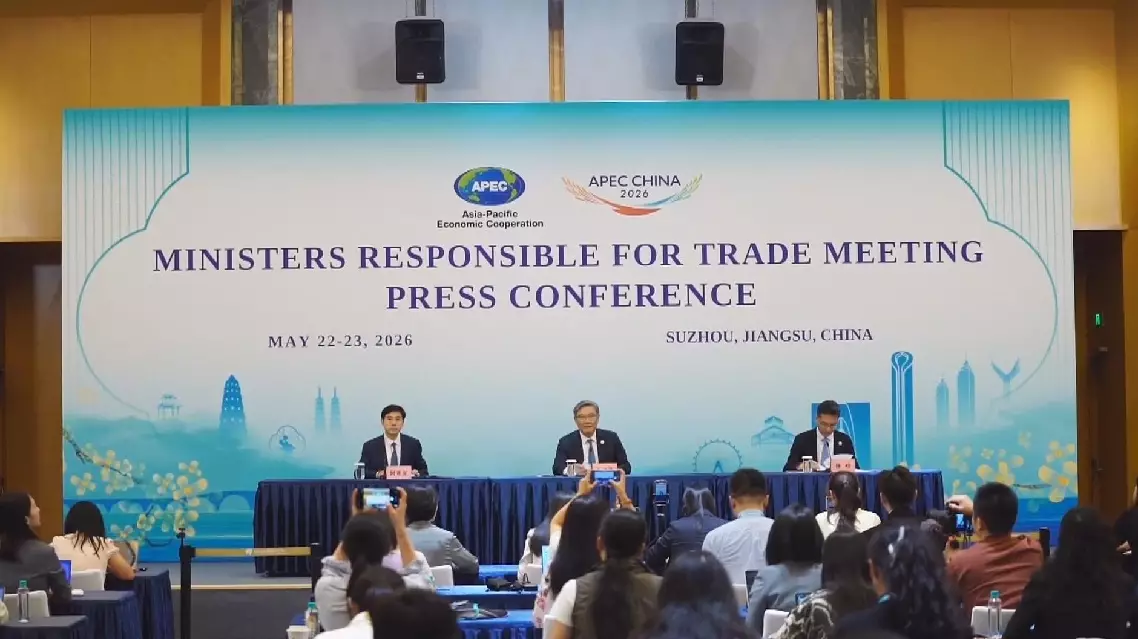
2026 APEC trade ministers' meeting concludes with fruitful results