HAVANA (AP) — After a day spent selling books, Solanda Oña typically boards a bus from a wealthy seaside district in Havana to her home in the city’s working-class center.
But on Thursday night, the bus never came. The 64-year-old bookseller spent the night sleeping in a nearby restaurant instead, worried that this could be the new normal if the gas that fuels the island runs out.
Click to Gallery
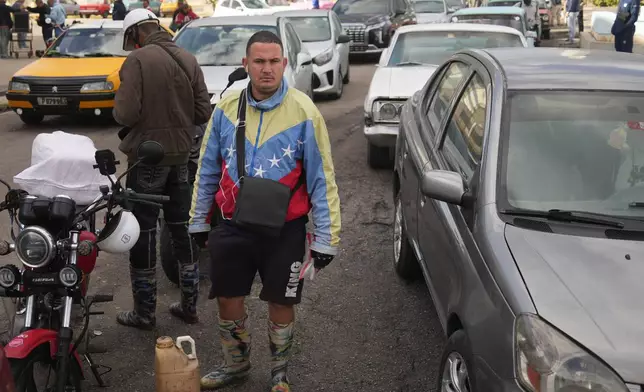
A man wearing a jacket in the colors of Venezuela's flag lines up to purchase fuel at a gas station in Havana, Cuba, Friday, Feb. 6, 2026. (AP Photo/Ramon Espinosa)
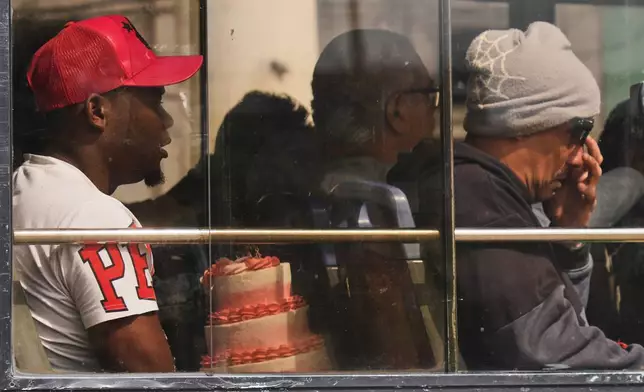
A commuter carries a cake in Havana, Cuba, Friday, Feb. 6, 2026. (AP Photo/Ramon Espinosa)
People use a bicycle taxi in Havana, Cuba, Friday, Feb. 6, 2026. (AP Photo/Ramon Espinosa)
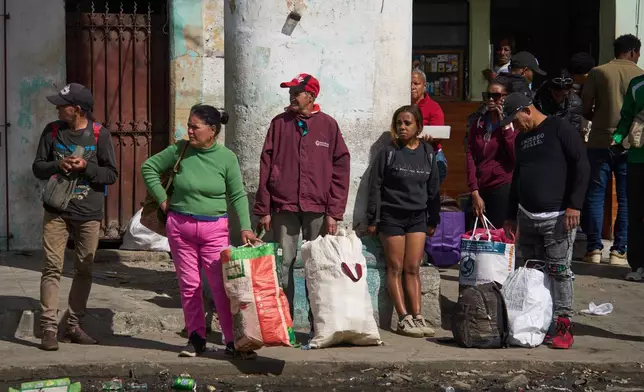
People wait to board transportation in Havana, Cuba, Friday, Feb. 6, 2026. (AP Photo/Ramon Espinosa)
People wait their turns to board shared taxis in Havana, Cuba, Friday, Feb. 6, 2026. (AP Photo/Ramon Espinosa)
Anxieties simmered in Havana on Friday, a day after Cuban President Miguel Díaz-Canel warned that U.S. efforts to block oil supplies would take a heavy toll on the Caribbean nation and asked Cubans to endure further sacrifices to weather the impending hardship.
Many Cubans, already reeling from years of deepening economic crisis, were left asking: What more can we sacrifice?
“I’m very worried,” Oña said. “Before, things were always difficult. But there was always one bus. One way to get home. Now, there are none.”
By Friday morning, working class residents like Oña were already seeing an inkling of what the future might hold.
Already unreliable public buses stopped running altogether, leaving many stranded for hours. Others were left walking large distances or hitchhiking. Long gas lines and black outs, a constant on the island, have grown even worse as U.S. President Donald Trump presses down on Cuba with an increasingly heavy hand.
Last week, Trump signed an executive order threatening to impose tariffs on countries providing oil to Cuba, a move that could further cripple an island plagued by a deepening energy crisis.
On Friday, the national transportation company also said it was cutting routes in the east of the island while the University of Havana said it would cancel some events and push for more remote learning, citing “energy deficits.”
Meanwhile, much of the city of 2 million – schools, banks, bakeries and shops – continued to operate as usual, underscoring how normal the crisis has become on the Caribbean island. Taxis, shared electric motorcycles and other transportation organized by some employers were still working in Havana’s capital. However, taxi fares remain far out of reach for the many Cubans living on a state salary of less than $20 a month.
While the U.S. announced $6 million in aid to Cubans Thursday night, severing the island from its primary energy sources has dealt a blow to the nation, especially to civilians who often bear the brunt of the economic crisis. Cuba only produces 40% of the oil it consumes.
The island’s communist government says U.S. sanctions cost the country more than $7.5 billion between March 2024 and February 2025, substantially more than the year before.
The crisis deepened after Venezuela — once Cuba’s primary oil-rich ally — ceased shipments in January, following a U.S. military operation that captured then-President Nicolás Maduro. Then, in late January Mexico, a long vocal ally of Cuba, halted its oil exports to the island.
Left with few alternatives, many Cubans now say the current economic turmoil U.S. policies have wrought on their daily lives is comparable to the severe economic depression in the 1990s known as the Special Period, following cuts in Soviet aid.
“What does it mean to not allow a single drop of fuel to reach a country?” Díaz-Canel said. “It affects the transportation of food, food production, public transportation, the functioning of hospitals, institutions of all kinds, schools, economic production, tourism. How do our vital systems function without fuel?”
For Cristina Díaz, a 51-year-old mother of two, the answer was to walk to her work as a house cleaner. She was joined by packs of others in the capital that strolled along the side of the road on Friday, once again adapting to a new reality.
“We’re living as best we can,” Díaz said. “What can I do? I live here, I was born here and this is my lot. I have to walk to get to work and to be able to feed my children.”
Follow AP’s coverage of Latin America and the Caribbean at https://apnews.com/hub/latin-america
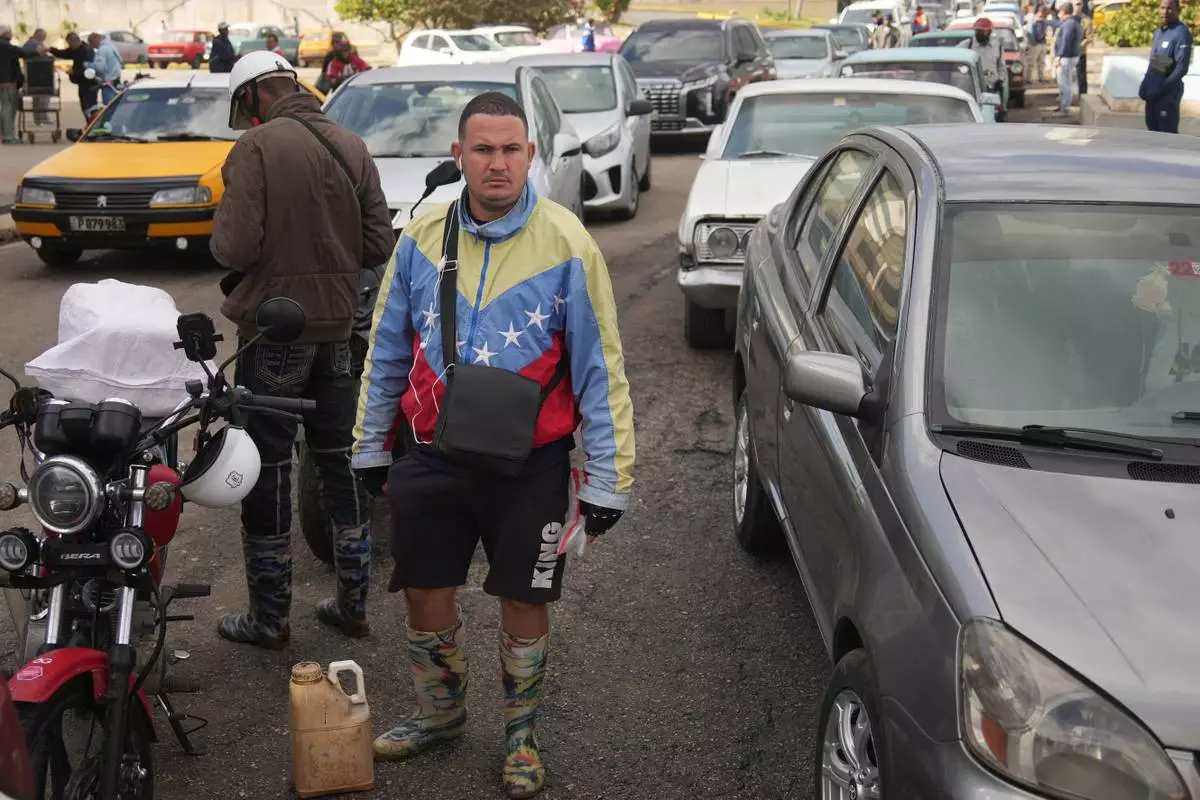
A man wearing a jacket in the colors of Venezuela's flag lines up to purchase fuel at a gas station in Havana, Cuba, Friday, Feb. 6, 2026. (AP Photo/Ramon Espinosa)
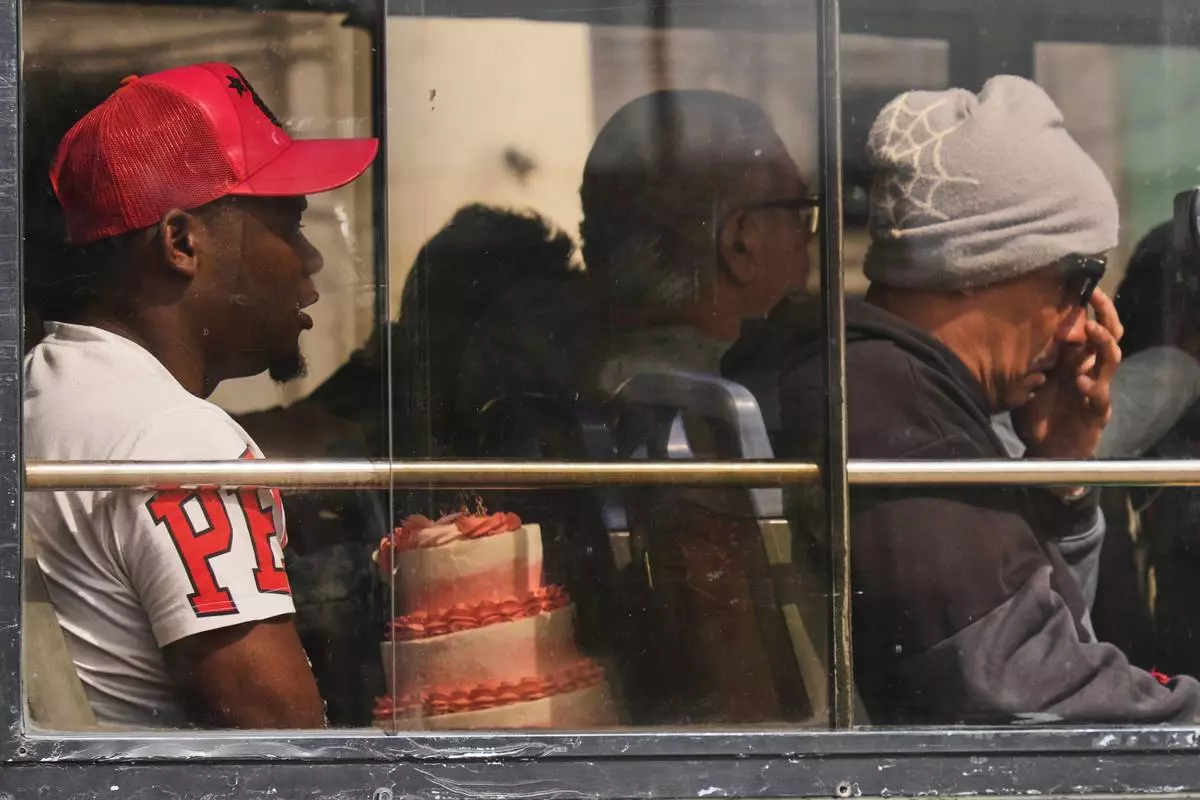
A commuter carries a cake in Havana, Cuba, Friday, Feb. 6, 2026. (AP Photo/Ramon Espinosa)

People use a bicycle taxi in Havana, Cuba, Friday, Feb. 6, 2026. (AP Photo/Ramon Espinosa)
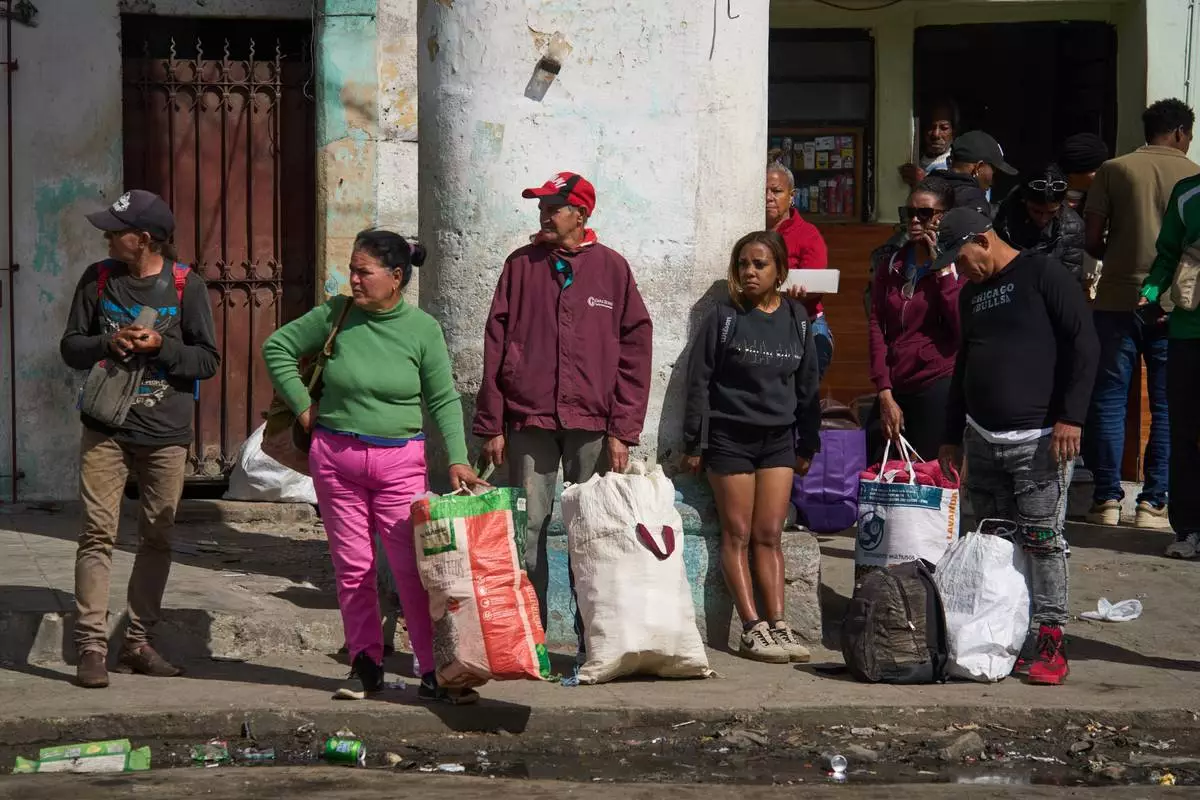
People wait to board transportation in Havana, Cuba, Friday, Feb. 6, 2026. (AP Photo/Ramon Espinosa)

People wait their turns to board shared taxis in Havana, Cuba, Friday, Feb. 6, 2026. (AP Photo/Ramon Espinosa)
COLORADO SPRINGS, Colo. (AP) — A Colorado funeral home owner who stashed 189 decomposing bodies in a building over four years and gave grieving families fake ashes was sentenced to 40 years in state prison Friday.
During the sentencing hearing, family members told Judge Eric Bentley they have had recurring nightmares about decomposing flesh and maggots since learning what happened to their loved ones. They called defendant Jon Hallford a “monster” and “vile” and had urged the judge to give him the maximum sentence of 50 years.
Hallford apologized before his sentencing and said he would regret his actions for the rest of his life.
His former wife, Carie Hallford, who co-owned the Return to Nature Funeral Home, is due to be sentenced April 24. She faces 25 to 35 years in prison. Both pleaded guilty in December to nearly 200 counts of corpse abuse under an agreement with prosecutors.
During the years they were stashing bodies, the Hallfords spent lavishly, according to court documents. That included purchasing a GMC Yukon and an Infiniti worth over $120,000 combined, along with $31,000 in cryptocurrency, luxury items from stores like Gucci and Tiffany & Co. and laser body sculpting.
The Hallfords also pleaded guilty to federal fraud charges after prosecutors said they cheated the government out of nearly $900,000 in pandemic-era small business aid. Jon Hallford was sentenced to 20 years in prison in that case, and Carie Hallford’s sentencing is pending.
“Clearly this is a crime motivated by greed,” prosecutor Shelby Crow said. The Hallfords charged more than $1,200 per customer, and the money the couple spent on luxury items would have covered the cost to cremate all of the bodies many times over, Crow said.
One of the family members who spoke at the hearing was Kelly Mackeen, whose mother's remains were handled by Return to Nature.
“I’m a daughter whose mother was treated like yesterday’s trash and dumped in a site left to rot with hundreds of others,” Mackeen said. “I’m heartbroken, and I ask God every day for grace.”
As they spoke Jon Hallford sat at a table to their right, wearing orange jail attire and looking directly ahead. The courtroom’s wooden benches were full of relatives of the deceased and also journalists.
The Hallfords stored the bodies in a building in the small town of Penrose, south of Colorado Springs, from 2019 until 2023, when investigators responding to reports of a stench from the building discovered the corpses.
Bodies were found throughout the building, some stacked on top of each other, with swarms of bugs and decomposition fluid covering the floors, investigators said. The remains — including adults, infants and fetuses — were stored at room temperature. Investigators believe the Hallfords gave families dry concrete that mimicked ashes.
The bodies were identified over months with fingerprints, DNA and other methods.
Families learned the ashes they had been given, and then spread or kept at home, weren't actually their loved ones' remains. Many said it undid their grieving process, others had nightmares and struggled with guilt that they let their relatives down.
The funeral home owners also pleaded guilty to federal fraud charges after prosecutors said they cheated the government out of nearly $900,000 in pandemic-era small business aid.
Jon Hallford was sentenced to 20 years in prison in that case. He told the judge he opened Return to Nature to make a positive impact in people’s lives, “then everything got completely out of control, especially me.”
“I still hate myself for what I’ve done,” he said at his sentencing last June.
Carie Hallford's federal sentencing is set for March 16.
During the years they were stashing bodies, the Hallfords spent lavishly, according to court documents. That included purchasing a GMC Yukon and an Infiniti worth over $120,000 combined, along with $31,000 in cryptocurrency, luxury items from stores like Gucci and Tiffany & Co., and laser body sculpting.
One of the recovered bodies was that of a former Army sergeant first class who was thought to have been buried at a veterans’ cemetery, said FBI agent Andrew Cohen.
When investigators exhumed the wooden casket at the cemetery, they found the remains of a person of a different gender inside, he said. The veteran, who was not identified in court, was later given a funeral with full military honors at Pikes Peak National Cemetery, he said.
The corpse abuse revelations spurred changes to Colorado's lax funeral home regulations.
The AP previously reported that the Hallfords missed tax payments, were evicted from one of their properties and were sued for unpaid bills, according to public records and interviews with people who worked with them.
In a rare decision, state District Judge Eric Bentley last year rejected previous plea agreements between the Hallfords and prosecutors that called for up to 20 years in prison. Family members of the deceased said the agreements were too lenient.
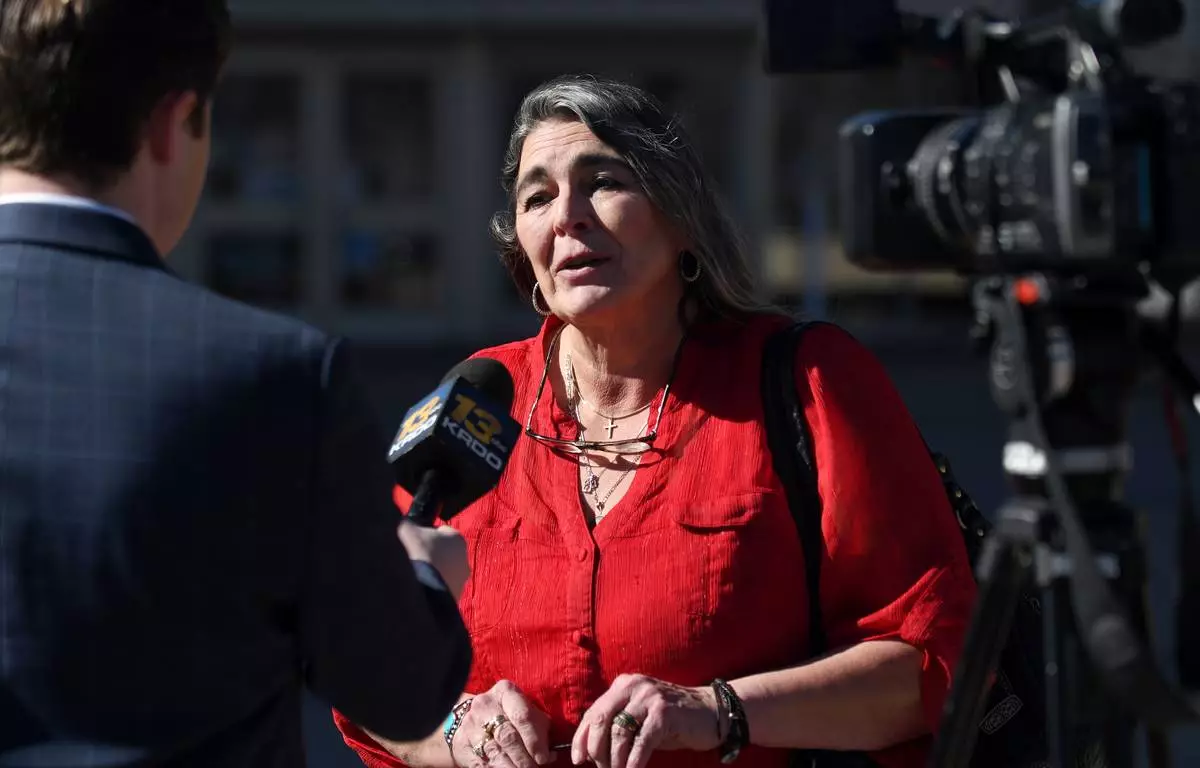
Angelika Stedman, who hired Return to Nature funeral home to cremate her daughter, speaks to a reporter outside of the El Paso County Courthouse in Colorado Springs, Colo., Friday, Feb. 6, 2026, ahead of the sentencing owner Jon Hallford. (AP Photo/Thomas Peipert)
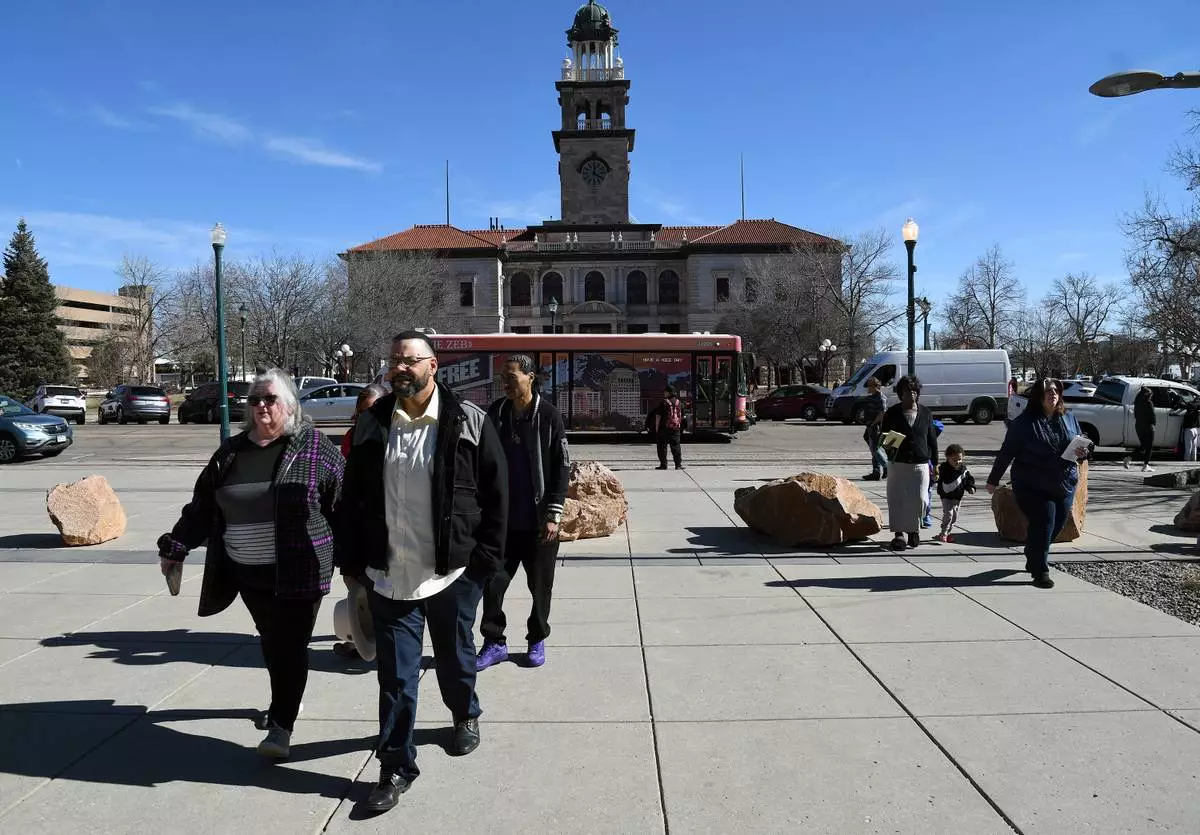
Derrick Johnson, whose mother's body was one of 189 left to decay in the Return to Nature Funeral Home in Penrose, Colo., walks toward the El Paso County Courthouse for owner Jon Hallford's sentencing in Colorado Springs, Colo., Friday, Feb. 6, 2026. (AP Photo/Thomas Peipert)
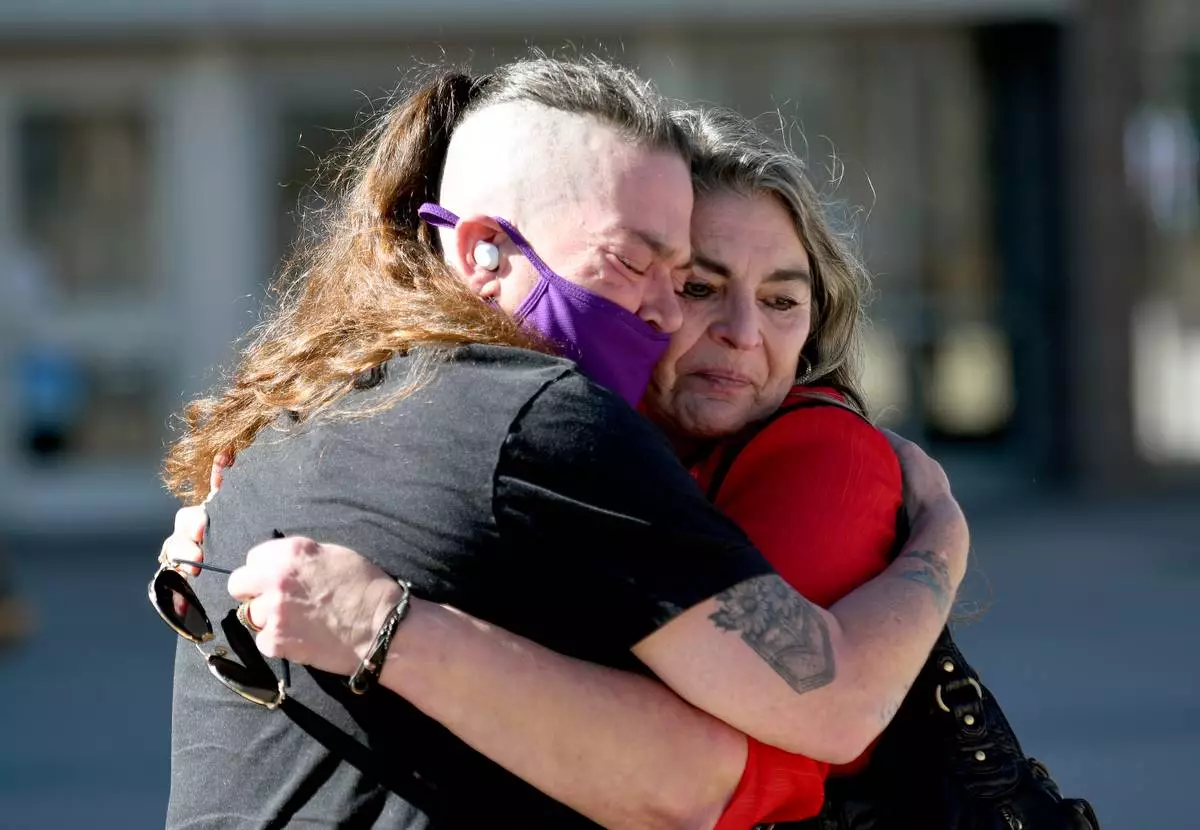
Crystina Page, left, hugs Angelika Stedman outside of the El Paso County Courthouse in Colorado Springs, Colo., Friday, Feb. 6, 2026, ahead of the sentencing of Return to Nature funeral home owner Jon Hallford. (AP Photo/Thomas Peipert)
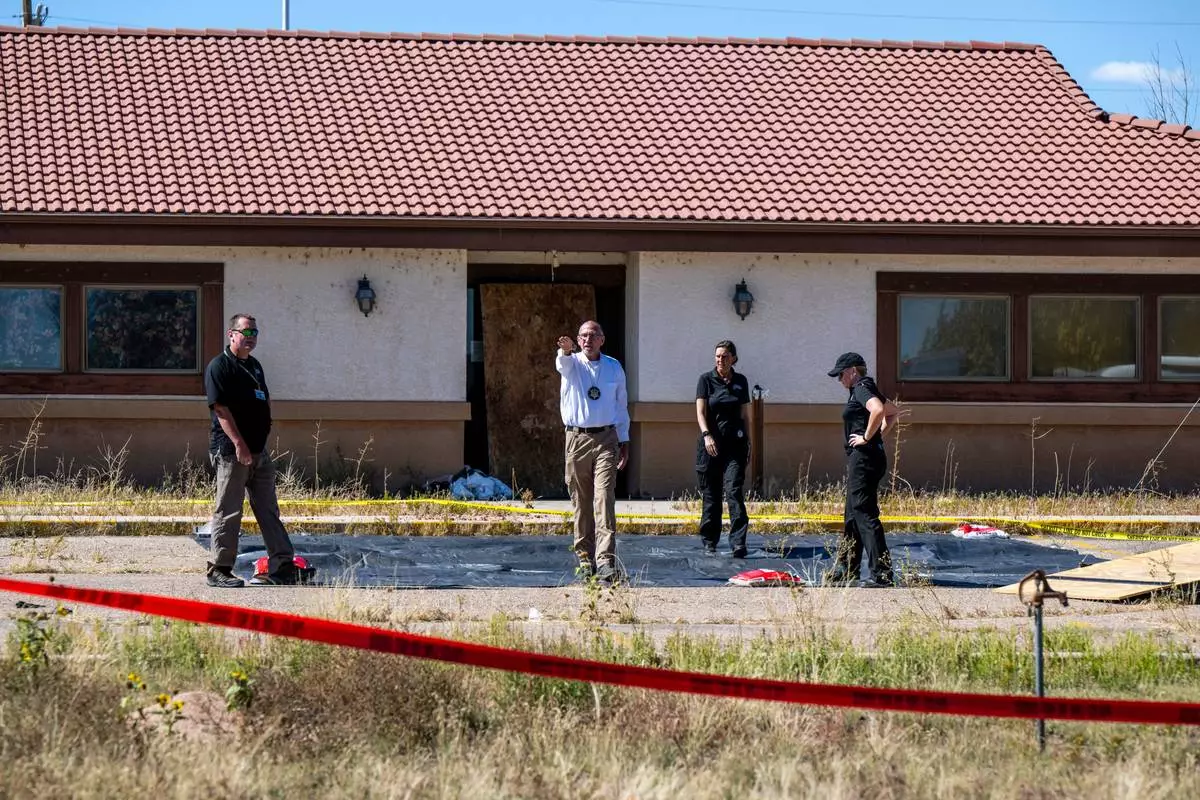
FILE - Fremont County coroner Randy Keller, center, and other authorities survey the area where they plan to put up tents at the Return to Nature Funeral Home where over 100 bodies have been improperly stored, Oct. 7, 2023, in Penrose, Colo. (Parker Seibold/The Gazette via AP, File)
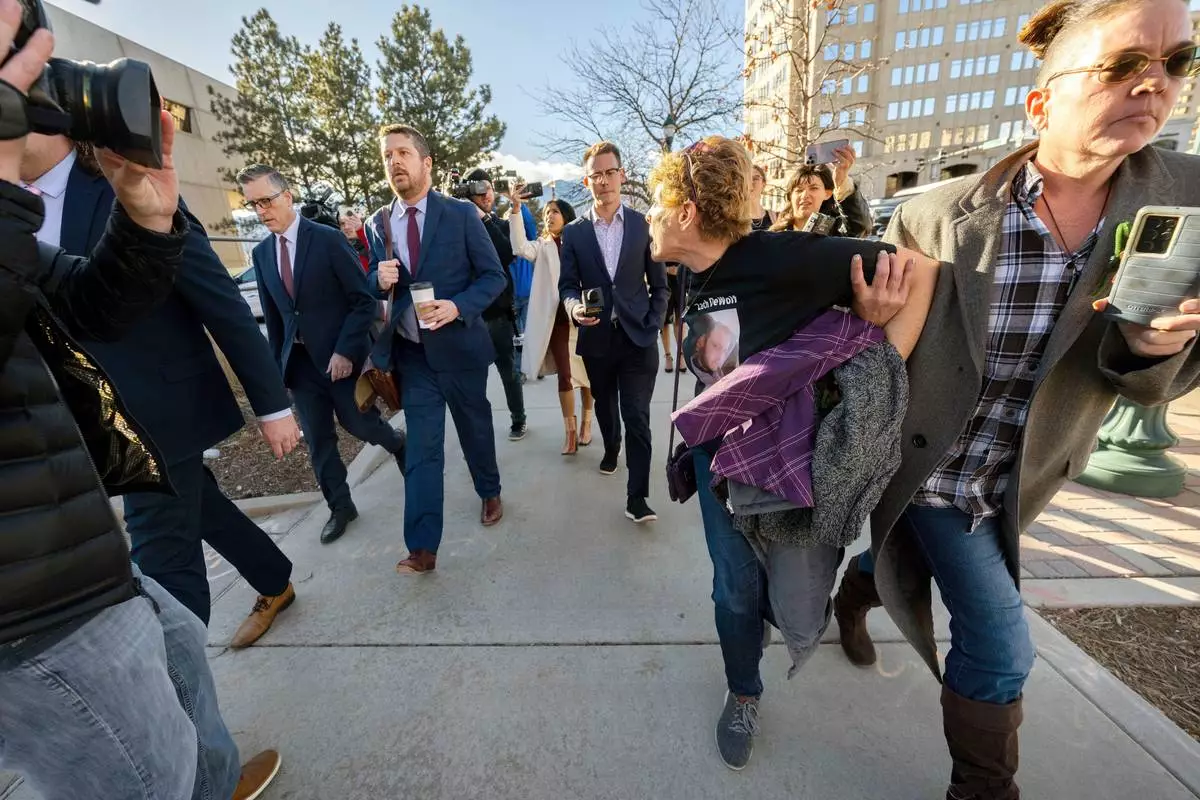
FILE - Chrystina Page, right, holds back Heather De Wolf, as she yells at Jon Hallford, left, the owner of Back to Nature Funeral Home, as he leaves with his lawyers following a preliminary hearing, Feb. 8, 2024, outside the El Paso County Judicial Building, in Colorado Springs, Colo. (Christian Murdock/The Gazette via AP, File)