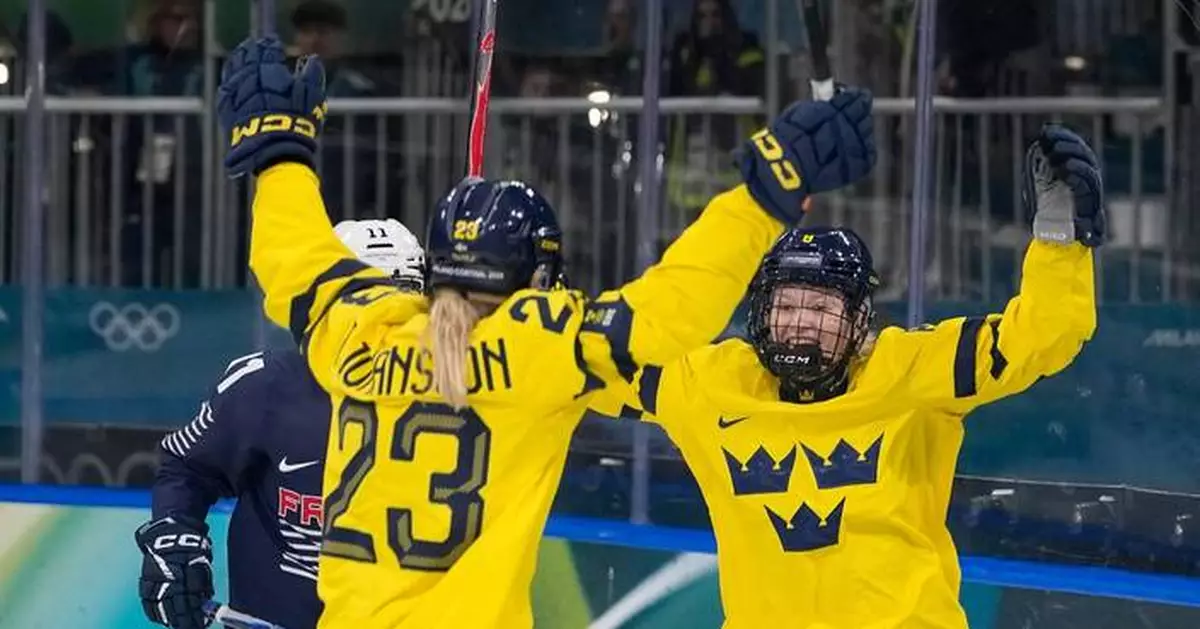
MILAN (AP) — At 19, Hilda Svensson wasn’t born the last time Sweden’s women’s hockey team medaled at the Olympics.
The Ohio State freshman and a collection of young and brashly confident teammates are eager to rectify what’s been a 20-year drought at the Milan Cortina Games.
Click to Gallery
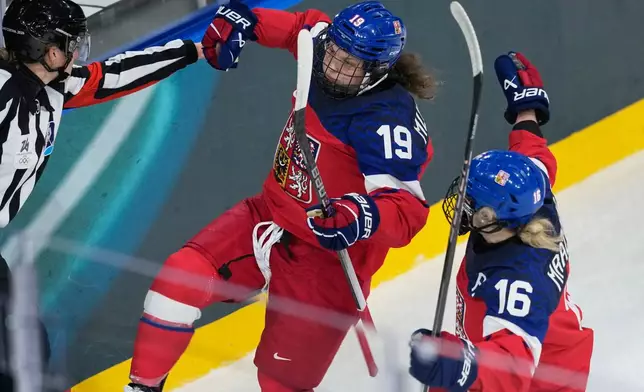
Czechia's Natalie Mlynkova, left, celebrates with Czechia's Katerina Mrazova after scoring her sides second goal during a preliminary round match of women's ice hockey between Czechia vs Finland at the 2026 Winter Olympics, in Milan, Italy, Sunday, Feb. 8, 2026. (AP Photo/Hassan Ammar)
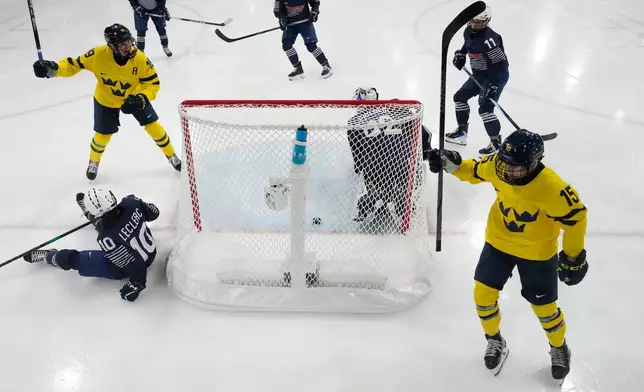
Sweden's Lisa Johansson, right, celebrates after scoring her side's fourth goal during a preliminary round match of women's ice hockey between France and Sweden at the 2026 Winter Olympics, in Milan, Italy, Sunday, Feb. 8, 2026. (AP Photo/Darko Bandic, Pool)
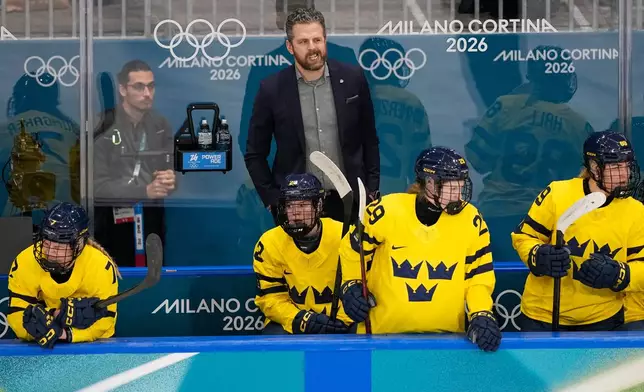
Sweden's Head Coach Ulf Lundberg gestures during a preliminary round match of women's ice hockey between France and Sweden at the 2026 Winter Olympics, in Milan, Italy, Sunday, Feb. 8, 2026. (AP Photo/Petr David Josek)
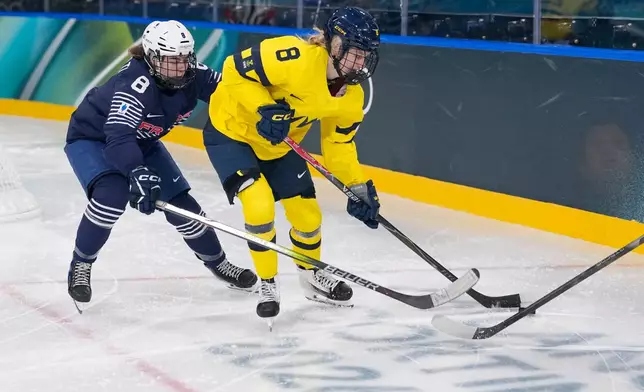
France's Jade Barbirati, left, challenges Sweden's Hilda Svensson during a preliminary round match of women's ice hockey between the France and Sweden at the 2026 Winter Olympics, in Milan, Italy, Sunday, Feb. 8, 2026. (AP Photo/Petr David Josek)
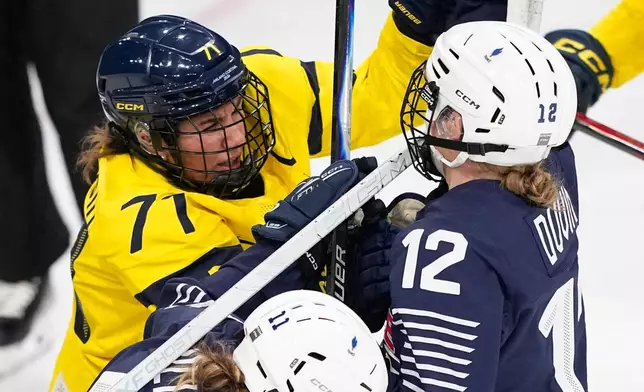
France's Estelle Duvin, right, fights with Sweden's Anna Kjellbin during a preliminary round match of women's ice hockey between France and Sweden at the 2026 Winter Olympics, in Milan, Italy, Sunday, Feb. 8, 2026. (AP Photo/Petr David Josek)
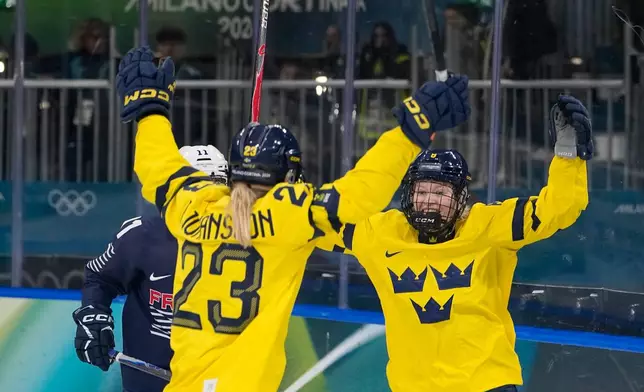
Sweden's Thea Johansson, left, celebrates after scoring her side's opening goal during a preliminary round match of women's ice hockey between the France and Sweden at the 2026 Winter Olympics, in Milan, Italy, Sunday, Feb. 8, 2026. (AP Photo/Petr David Josek)
“I think we have a good chance,” Svensson said after setting up two goals in a 4-0 win over France on Sunday.
“I think we have one of the best teams now since then. And we have a really good energy,” she added. “Everyone on this team wants to take that medal. And I think everyone’s going to work very hard for that.”
One step at a time.
Improving to 3-0, Sweden earned a berth in the quarterfinal round and is one win — or a loss by Japan (1-1) — from clinching Group B.
The next challenge is more daunting, with Sweden having to win two more games to medal in a tournament in which the U.S. entered as favorites, followed by defending Olympic champion Canada, Finland and Czechia.
Difficult as the road ahead appears, Svensson’s outlook reflects a transformational shift in the program’s trajectory. The core of Sweden’s roster is made up of players who won silver at the 2018 U-18 championships.
“I really like how they’re not afraid to lose,” 31-year-old captain Anna Kjellbin said of the youngsters. “They just see possibilities to win all the time. And I think that’s one of the strengths of that generation.”
Sweden’s roster features eight players 22 and younger, with seven currently competing at U.S. colleges. They include Svensson, who is tied for seventh in the nation with 44 points (15 goals, 29 assists) in 26 games.
Against France, Minnesota-Duluth senior forward Thea Johansson scored her Olympic tournament-leading fourth goal. Also scoring were Sara Hjalmarsson, Hanna Thuvik and Lisa Johansson. Emma Soderberg stopped 14 shots for her first Olympic shutout in six games.
France dropped to 0-3 in its Olympic debut, and is in jeopardy of not qualifying for the quarterfinals. Only the top three of five Group B nations advance. Alice Philbert had 45 saves in a game the Swedes outshot France 49-14.
Sweden has so far played to its high expectations by outscoring opponents by a combined margin of 14-1. The team has finished no better than seventh at the past two Olympics after finishing fourth at the 2014 Sochi Games.
The drop-off has been dramatic for the only nation other than Canada and the U.S. to win an Olympic silver medal. The Swedes did so at the 2006 Turin Games by upsetting the Americans in the semifinals. Sweden also won bronze in 2002.
“The time for us is now,” coach Ulf Lundberg declared before the tournament opened. He based that on what he called a “we don’t care” attitude his players have adopted.
“You have those youngsters coming in and they’re not afraid of anything. I love it," Lundberg said. “We want to be more like the Canadians and the Americans that feel that we are best, because then you have the grace and the swag."
Lundberg has been part of the transformation. He took over the women’s team after playing a role in developing several Swedish men’s stars, including Buffalo Sabres defenseman Rasmus Dahlin, the No. 1 pick in the 2018 draft.
Encouraged as he is, Lundberg is not looking beyond Sweden closing its preliminary round schedule against Japan on Tuesday.
“We’re not looking or listening to media talking about maybe semifinal, maybe medal, maybe 2006 again,” Lundberg said. “Slow down. Here and now.”
Tereza Pistekova and Natalie Mlynkova scored, Klara Peslarova stopped 25 shots and Czechia defeated Finland 2-0 in what could serve as a preview of the tournament's bronze-medal matchup.
Anni Kiesala stopped 22 shots for Finland, which has been blanked twice in two outings following a 5-0 loss to the Americans a day earlier. Czechia is 1-2.
It was the nations' first meeting in Olympic play, though they've developed a fierce rivalry at the world championships. The teams have won two bronze medals apiece over the past four world tournaments, with Finland winning the past two — both decided after regulation.
AP Olympic coverage: https://apnews.com/hub/milan-cortina-2026-winter-olympics
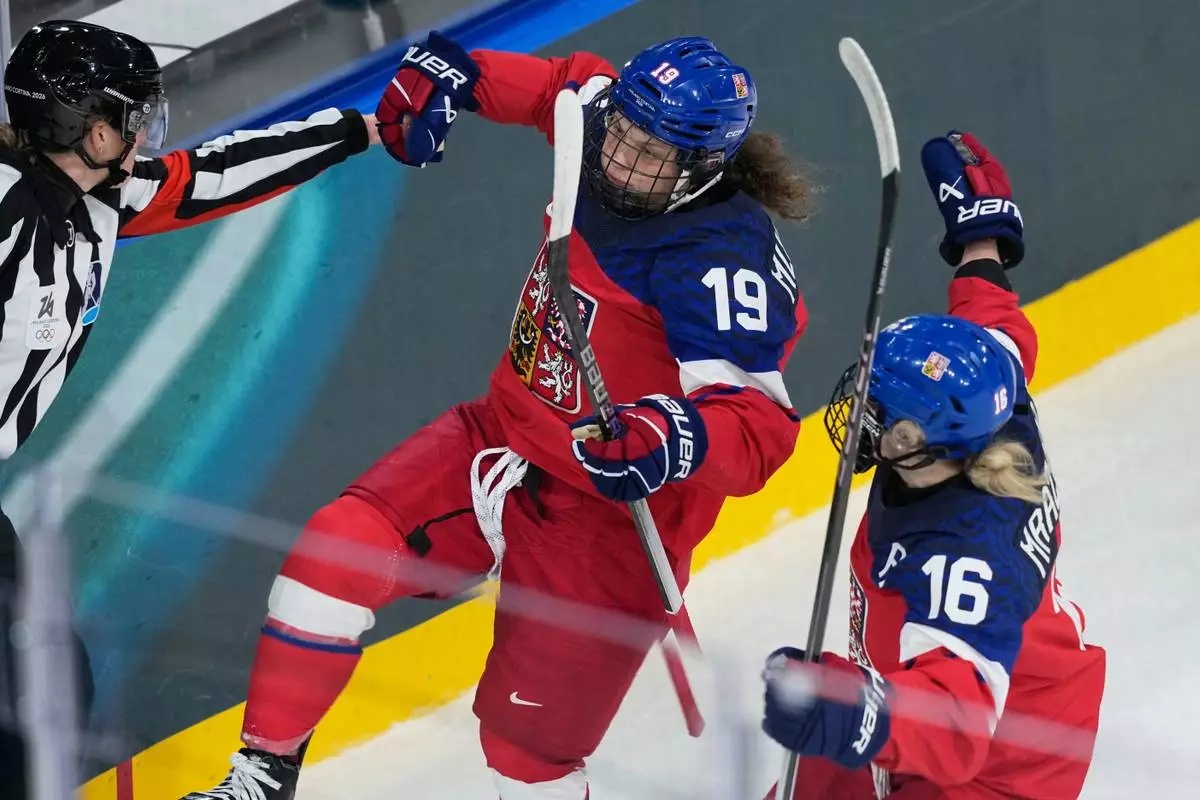
Czechia's Natalie Mlynkova, left, celebrates with Czechia's Katerina Mrazova after scoring her sides second goal during a preliminary round match of women's ice hockey between Czechia vs Finland at the 2026 Winter Olympics, in Milan, Italy, Sunday, Feb. 8, 2026. (AP Photo/Hassan Ammar)
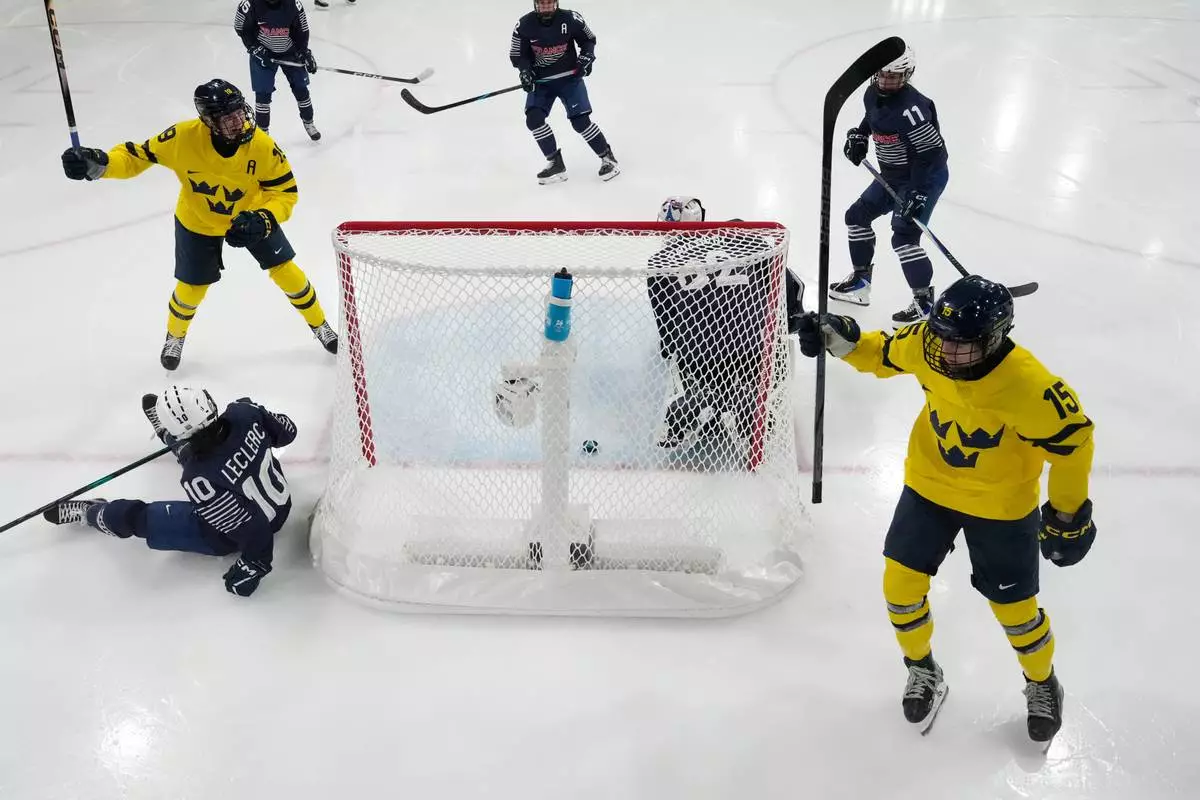
Sweden's Lisa Johansson, right, celebrates after scoring her side's fourth goal during a preliminary round match of women's ice hockey between France and Sweden at the 2026 Winter Olympics, in Milan, Italy, Sunday, Feb. 8, 2026. (AP Photo/Darko Bandic, Pool)
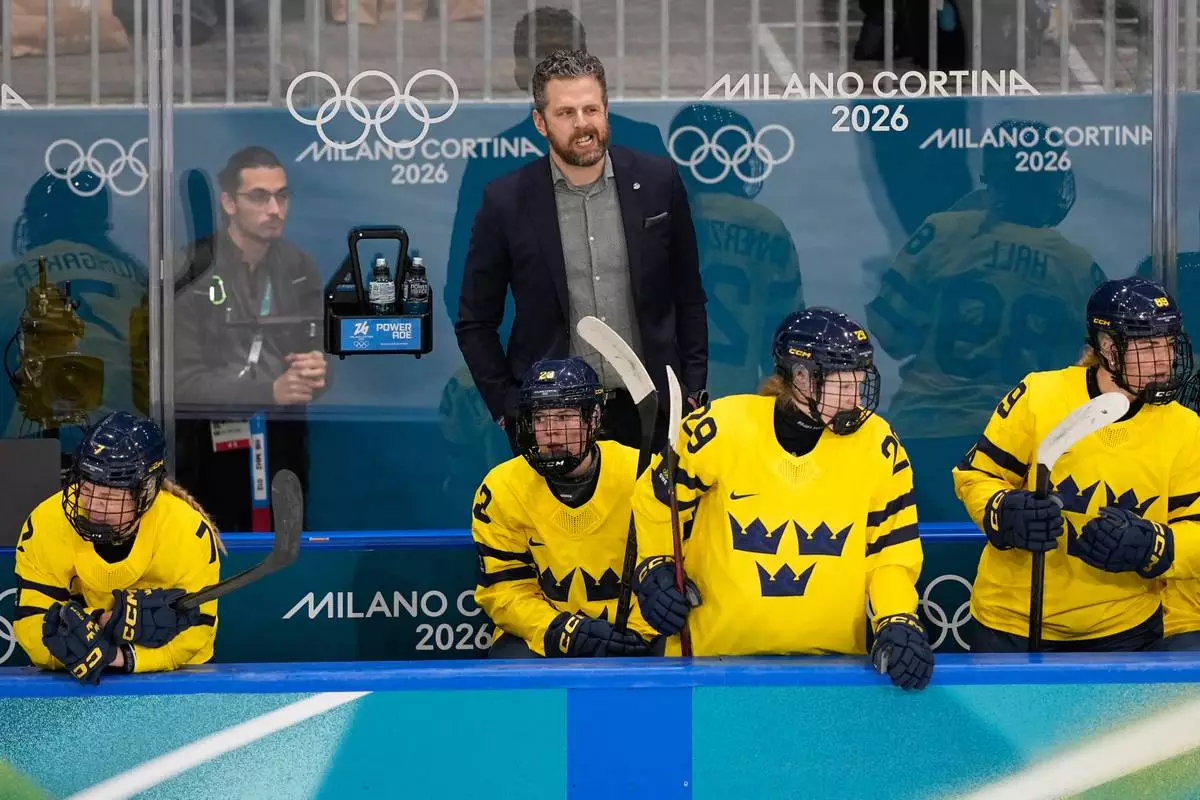
Sweden's Head Coach Ulf Lundberg gestures during a preliminary round match of women's ice hockey between France and Sweden at the 2026 Winter Olympics, in Milan, Italy, Sunday, Feb. 8, 2026. (AP Photo/Petr David Josek)
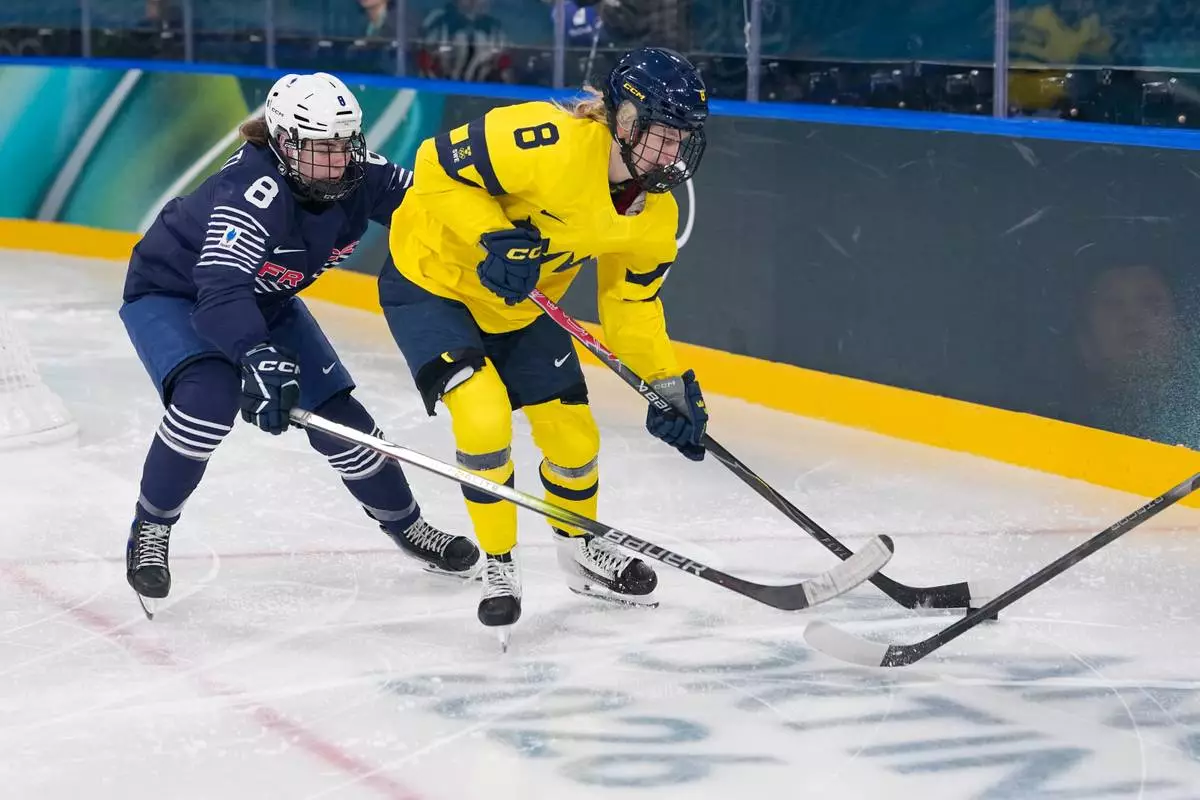
France's Jade Barbirati, left, challenges Sweden's Hilda Svensson during a preliminary round match of women's ice hockey between the France and Sweden at the 2026 Winter Olympics, in Milan, Italy, Sunday, Feb. 8, 2026. (AP Photo/Petr David Josek)
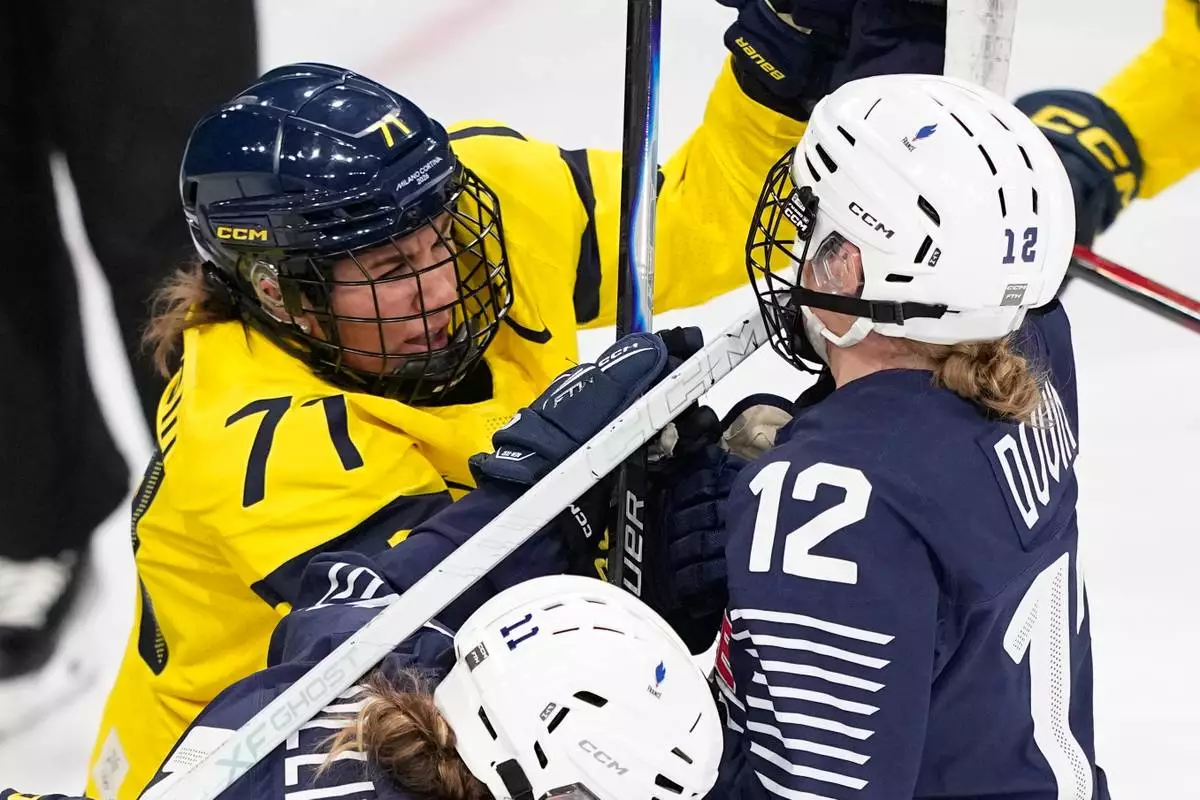
France's Estelle Duvin, right, fights with Sweden's Anna Kjellbin during a preliminary round match of women's ice hockey between France and Sweden at the 2026 Winter Olympics, in Milan, Italy, Sunday, Feb. 8, 2026. (AP Photo/Petr David Josek)
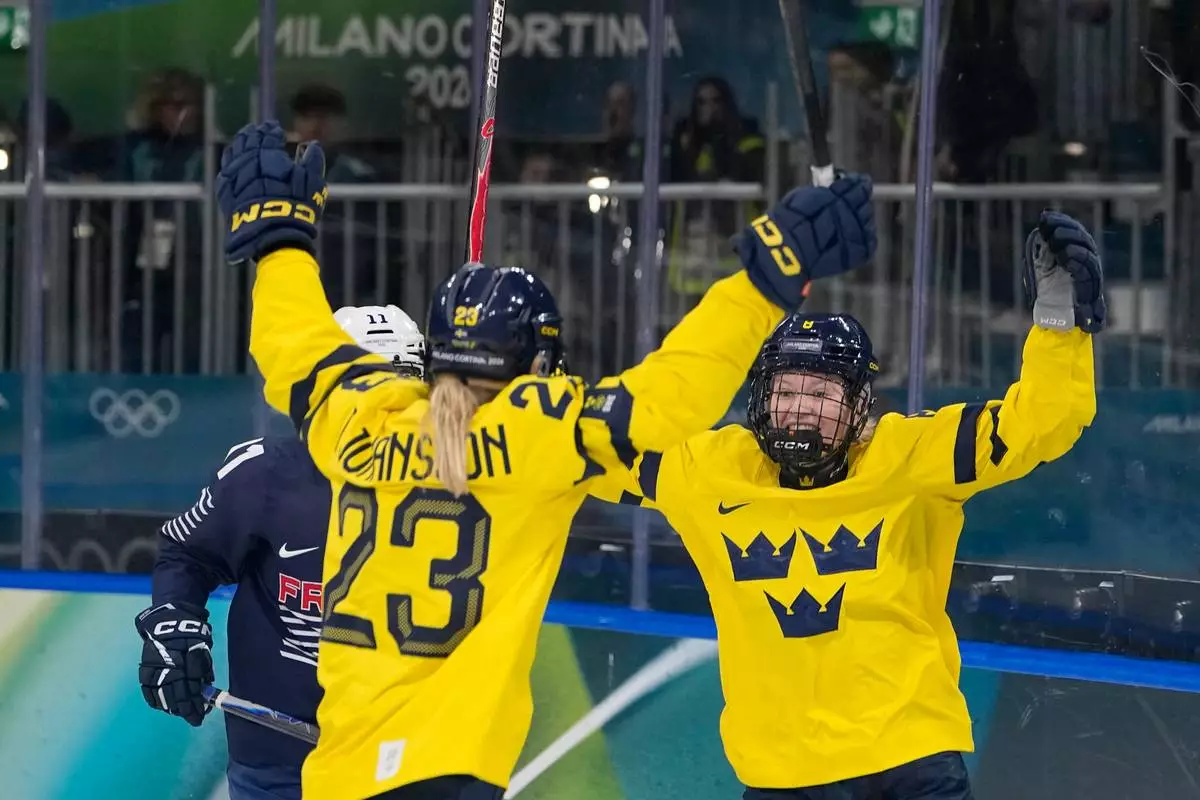
Sweden's Thea Johansson, left, celebrates after scoring her side's opening goal during a preliminary round match of women's ice hockey between the France and Sweden at the 2026 Winter Olympics, in Milan, Italy, Sunday, Feb. 8, 2026. (AP Photo/Petr David Josek)