RABAT, Morocco (AP) — Flash floods caused by a storm in northern Morocco killed at least four people as the country struggled with days of heavy rain and water releases from overfilled dams that forced mass evacuations, local authorities said Sunday.
Three children — a girl and two boys aged 2 to 14 — and a man in his 30s died in a car that was swept away in a village near Tétouan, about 270 kilometers (168 miles) north of the capital Rabat, according to a statement from the Interior Ministry citing local authorities. Another person remains missing.
Local authorities said they will open an investigation into what happened.
The flash floods were caused by a storm system known as Marta, which moved into Morocco over the weekend and dumped up to 92 millimeters (3.6 inches) of rain on some northern cities, Houssine Youabed of Morocco’s General Directorate of Meteorology told The Associated Press. Storm Marta also reached neighboring Spain and Portugal.
Days earlier, another storm, Leonardo, hit northern Africa and the Iberian peninsula. In Morocco, it overfilled dams and rivers, damaging homes and crops, triggering minor landslides and forcing more than 150,000 people to evacuate.
The turbulent weather has also secured at least a year’s supply of drinking water for Morocco and boosted resources for the country’s critical agricultural sector, officials said, providing relief after a yearslong drought.

A mother and her son evacuate through a flooded street road after heavy rainfall in Ksar El Kebir, Morocco, Friday, Jan. 30, 2026. (AP Photo)
CAPE CANAVERAL, Fla. (AP) — The Artemis II astronauts have captured our blue planet’s brilliant beauty as they zoom ever closer to the moon.
NASA released the crew’s first downlinked images Friday, 1 1/2 days into the first astronaut moonshot in more than half a century.
The first photo taken by commander Reid Wiseman shows a curved slice of Earth in one of the capsule’s windows. The second shows the entire globe with the oceans topped by swirling white tendrils of clouds. A green aurora even glows, according to NASA.
“It’s great to think that with the exception of our four friends, all of us are represented in this image," said NASA's Lakiesha Hawkins, an exploration systems leader. She added the mission was going well.
As of late Friday afternoon, Wiseman and his crew were more than 110,000 miles (180,000 kilometers) from Earth and were quickly gaining on the moon with another 150,000 miles (240,000 kilometers) to go. They should reach their destination on Monday.
The three Americans and one Canadian will swing around the moon in their Orion capsule, hang a U-turn and then head straight back home without stopping. They fired Orion's main engine Thursday night that set them on their course.
After Mission Control shifted the position of their capsule, the entire Earth complete with northern lights filled their windows.
“It was the most spectacular moment, and it paused all four of us in our tracks,” Wiseman said in a TV interview.
They're the first lunar travelers since Apollo 17 in 1972.
The Associated Press Health and Science Department receives support from the Howard Hughes Medical Institute’s Department of Science Education and the Robert Wood Johnson Foundation. The AP is solely responsible for all content.
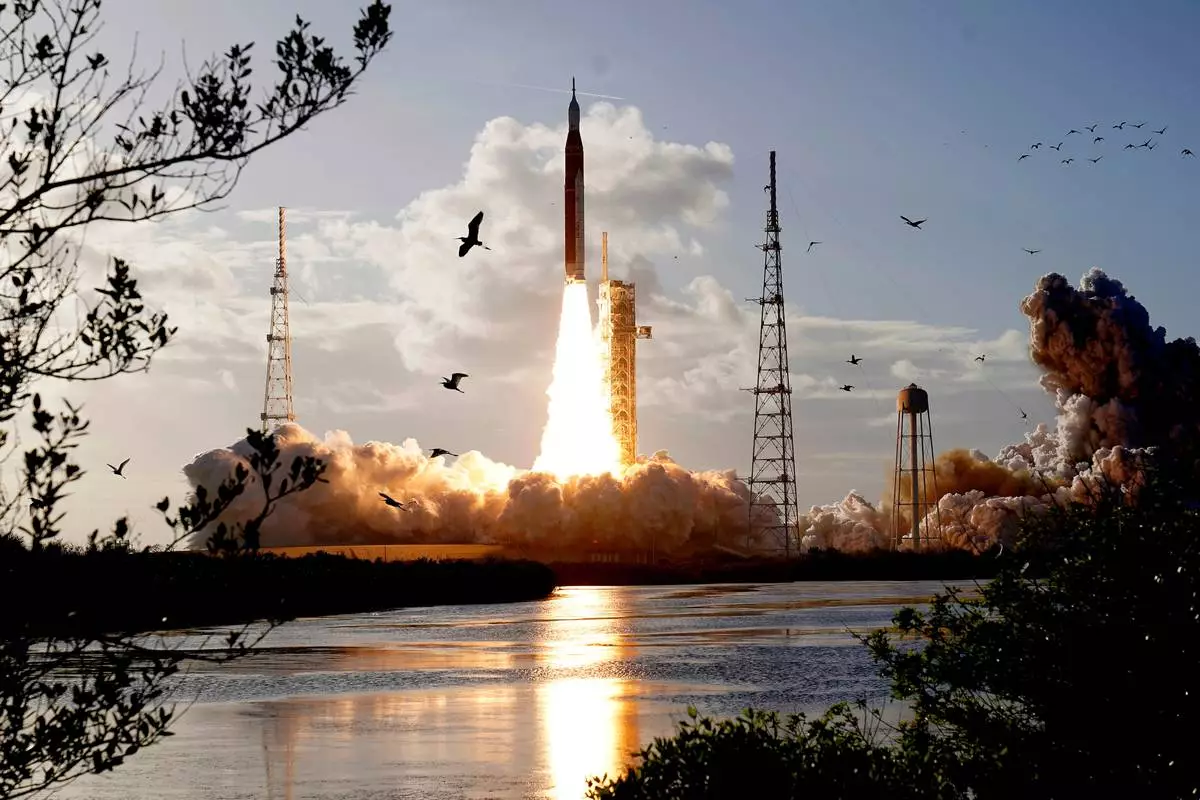
NASA's Artemis II moon rocket lifts off from the Kennedy Space Center's Launch Pad 39-B Wednesday, April 1, 2026, in Cape Canaveral, Fla. (AP Photo/Chris O'Meara)
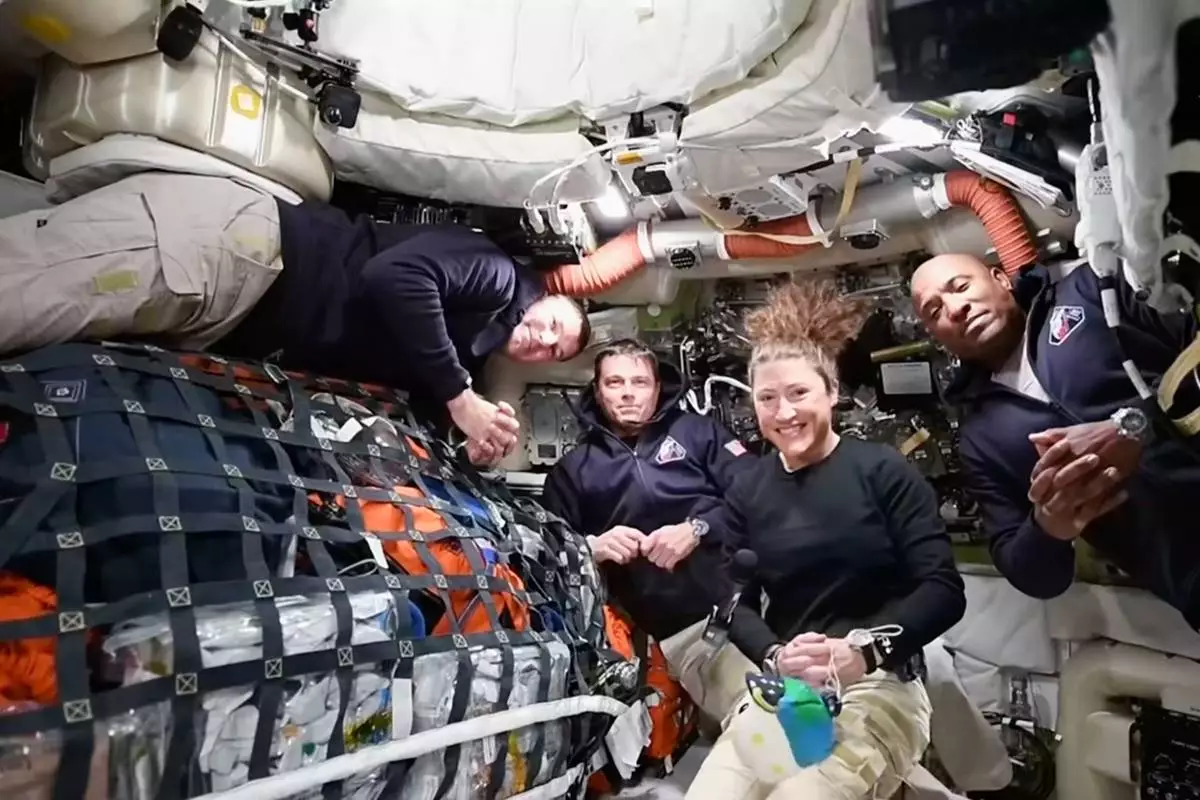
This image taken from video provided by NASA shows the Artemis II crew, from left, Canadien astronaut and mission specialist Jeremy Hansen, Commander Reid Wiseman, mission specialist Christina Koch and pilot Victor Glover as they appear on a video conference from the moon's orbit Thursday, April 2, 2026. (NASA via AP)
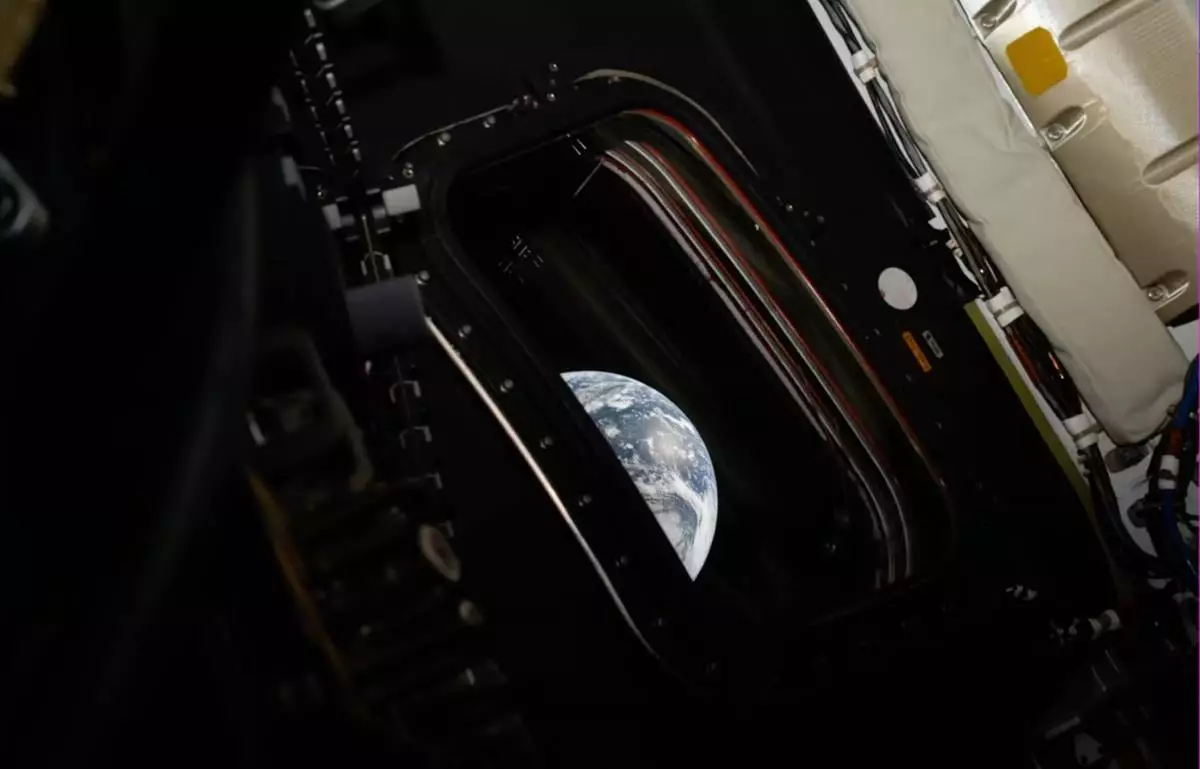
This image provided by NASA shows a downlink image of Earth taken by NASA’s Artemis II astronaut commander Reid Wiseman inside the Orion capsule on Friday, April 3, 2026. (NASA via AP)
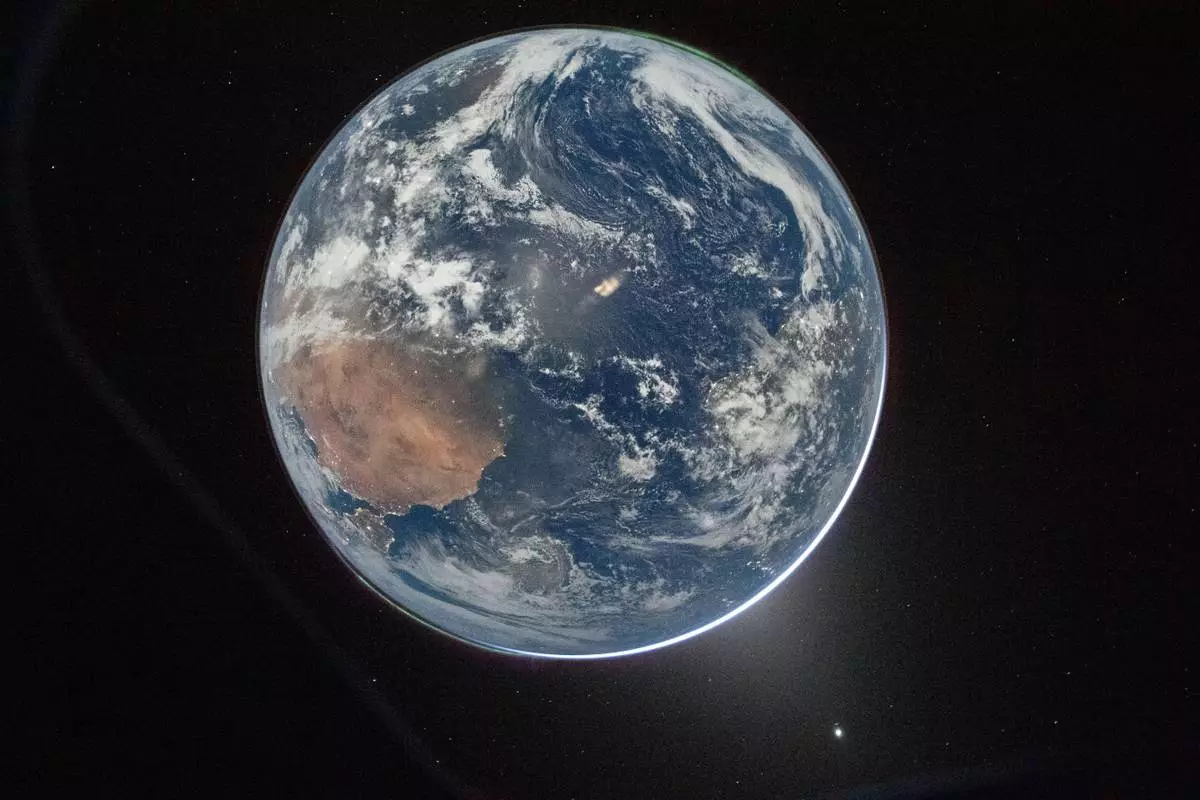
This image provided by NASA shows a view of Earth taken by NASA astronaut and Artemis II Commander Reid Wiseman from of the Orion spacecraft's window after completing the translunar injection burn on April 2, 2026. (NASA via AP)