A long-sealed landfill in south China’s Shenzhen is being transformed into a source of electricity and a supplier of materials for infrastructure construction, as the country pushes to further modernize its environmental governance.
At the foot of Yinhu Mountain in Shenzhen’s Luohu District, a vast green canopy covers a 116,900-square-meter worksite, where excavators and bulldozers operate at full capacity. Workers are busy covering leveled areas with anti-seepage film to prevent rainwater from seeping into the ground.
The site is the former Yulong landfill -- once Shenzhen’s largest dumping ground -- now undergoing the country’s largest full-excavation relocation project.
Established in 1983 and closed in 1997, the landfill was sealed in 2005 after accumulating 2.55 million cubic meters of waste. It remained dormant for nearly two decades, standing as a reminder of the city’s rapid expansion and a long-standing concern for nearby residents.
Located near the city center, the massive waste pile had long been an urban eyesore, plaguing nearby communities with odor, leachate, groundwater pollution, and geological risks.
As Shenzhen grapples with scarce land resources in its urban core, addressing historical environmental issues while creating new development space has become critical.
In 2024, Luohu designated the site's rehabilitation as its "top project," investing 2.17 billion yuan (about 305.6 million U.S. dollars) in what has become one of China's most challenging environmental remediation efforts.
At the site equipped with sound barriers, trucks transport different categories of waste to screening facilities, environmental parks, and recycling enterprises. The project handles 6,000 cubic meters of excavation daily, with a screening capacity of 5,000 tonnes.
Lightweight materials screened from the waste are transported to a nearby incineration plant, which can process 5,100 tonnes of household waste per day. According to a general manager at Shenzhen Energy Environment Co., Ltd., the incineration process can generate up to 3.4 million kilowatt-hours of electricity daily.
Incineration slag is also used -- transported to specialized processing plants to be made into eco-friendly bricks for paving roads.
Giving landfills a second life is proving to be a win-win strategy: it addresses historical pollution while converting dormant land into assets for urban growth.
Through continued efforts in urban micro-space governance during the 15th Five-Year Plan period (2026-2030), China aims to open more pathways for the sustainable development of its megacities.
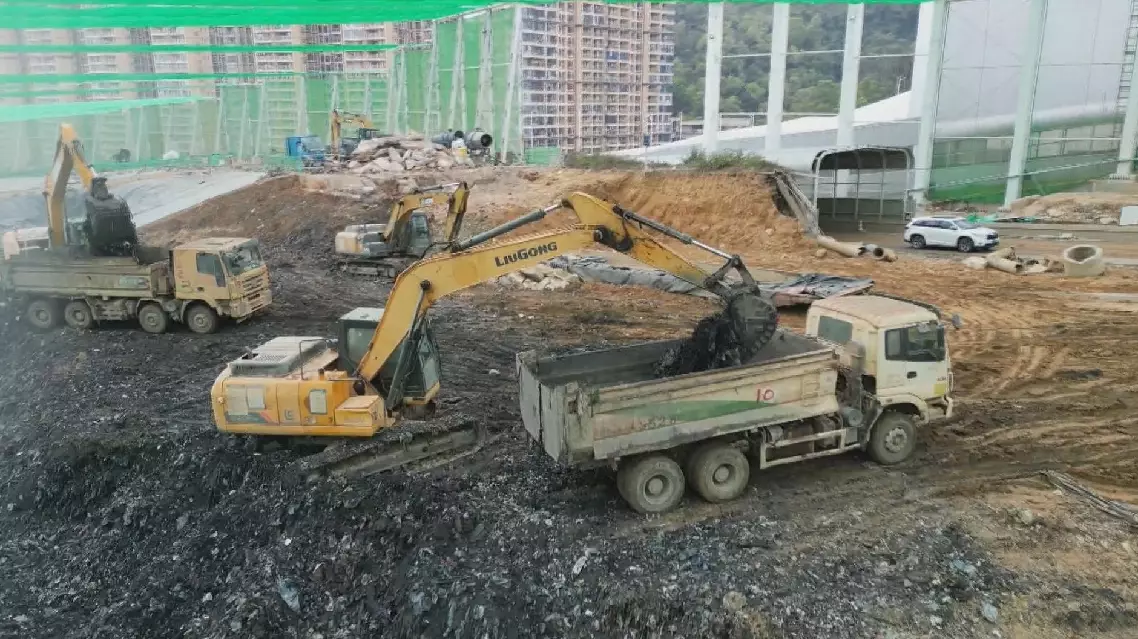
China turns long-sealed Shenzhen landfill into power source as green governance pushes ahead