KAMPALA, Uganda (AP) — Drought conditions have left over 2 million people facing hunger in parts of Kenya, with cattle-keeping communities in the northeast the hardest hit, according to the United Nations and others.
In recent weeks, images of emaciated livestock in the arid area near the Somali border have shocked many in a region that reels from the effects of climate change.
Click to Gallery
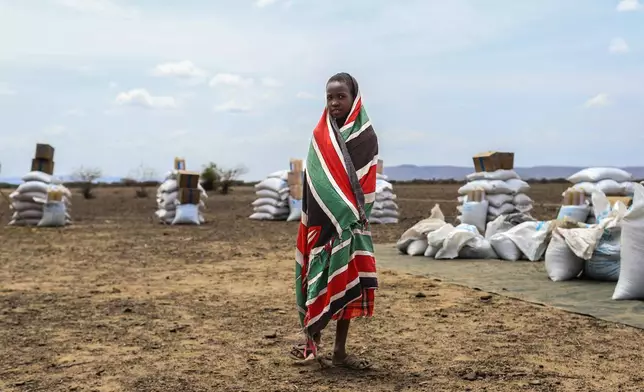
A child stands in front of food aid supplied by the World Food Programme (WFP) ahead of distribution in Nalemkais Village, Turkana County, Kenya, Sunday, Feb. 8, 2026. (AP Photo/Patrick Ngugi)
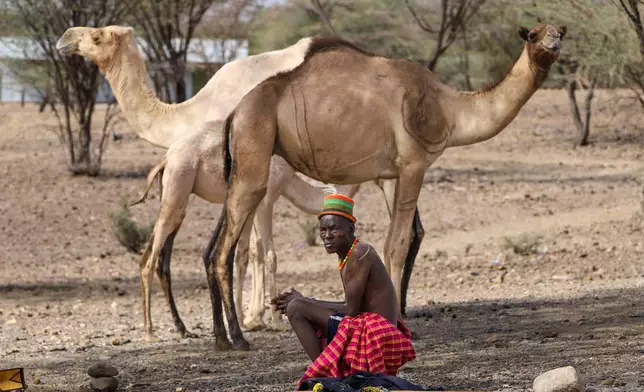
A man sits beside his camel in Lomekulu Village, Turkana County, Kenya, Sunday, Feb. 8, 2026. (AP Photo/Patrick Ngugi)
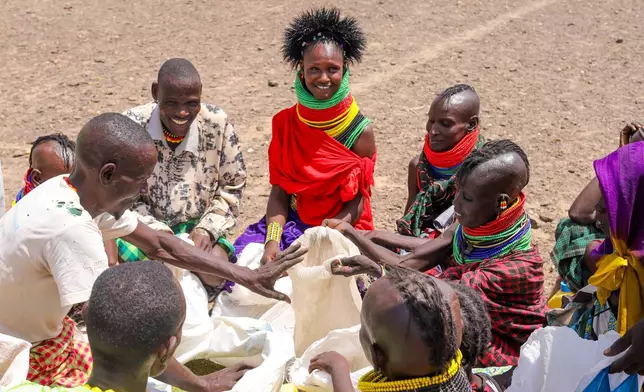
Locals share food rations distributed by World Vision Kenya as severe drought continues, in Nalemkais Village, Turkana County, Kenya, Sunday, Feb. 8, 2026. (AP Photo/Patrick Ngugi)
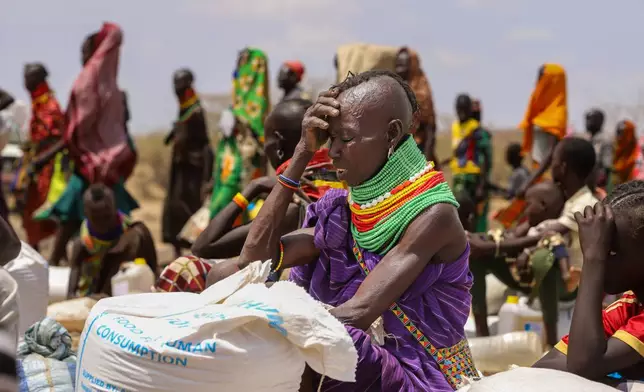
An elderly Turkana woman covers herself from the hot sun after receiving her food ration, in Lomeluku Village, Turkana County, Kenya, Sunday, Feb. 8, 2026. (AP Photo/Patrick Ngugi)
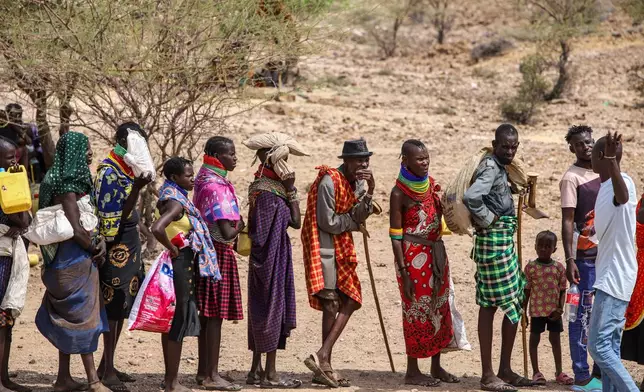
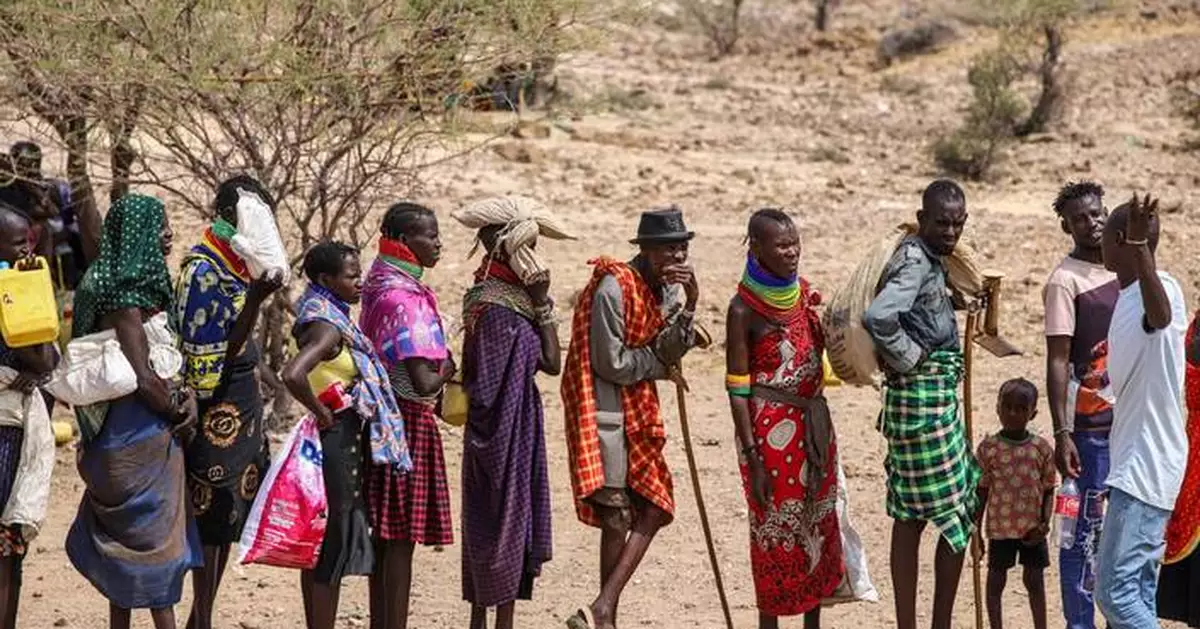
Locals queue to receive relief food as severe drought continues, in Lomekulu Village, Turkana County, Kenya, Sunday, Feb. 8, 2026. (AP Photo/Patrick Ngugi)
In recent years, rainy seasons have become shorter for some communities, exposing them to drought. Normally, animals are the first to die.
The livestock losses echo what happened between 2020 and 2023, when millions of animals died in the region that extends from Kenya into parts of Ethiopia and Somalia. At the time, a famine predicted for Somalia was averted by a surge in international aid.
Four consecutive wet seasons have failed in parts of the Horn of Africa, which juts into the Indian Ocean.
The wet season from October to December was one of the driest ever recorded, according to the U.N. health agency. Because the rains were brief, parts of eastern Kenya were the driest they have been during that season since 1981.
Some 10 counties in Kenya are experiencing drought conditions, according to the National Drought Management Authority.
The northeastern county of Mandera, bordering Somalia, has reached the “alarm" classification, which means critical water shortages have led to the death of livestock and the wasting of children.
The suffering extends into Somalia, Tanzania and even Uganda, where many are threatened by similar weather patterns and water shortages, the World Health Organization said in late January.
In southern Somalia, an assessment by the Islamic Relief aid group found “shocking food shortages as families flee the region’s worsening drought.”
In Somalia, long vulnerable to drought conditions, over 3 million people have left their homes, seeking shelter in camps for the internally displaced.
But support is not enough, with 70% of the internally displaced in the city of Baidoa surviving on one meal a day or less, Islamic Relief said in a statement, adding that children in the camps are "showing visible signs of malnutrition and wasting.”
Experts say much of what's happening is due to climate change.
The Indian Ocean has become warmer, feeding some of the more destructive tropical storms in recent years. At the same time, drought conditions have become longer, more intense and more severe.
All of that is devastating for Africans whose economic mainstay is rain-fed agriculture, making them vulnerable to extreme weather. Many farmers say increasing temperatures deny livestock pasture and kill their crops.
Africa is particularly vulnerable to extreme weather events because it is less equipped to prepare for natural disasters. Despite contributing only 3% to 4% of global emissions, according to the U.N., the continent is one of the most exposed to the effects of climate change.
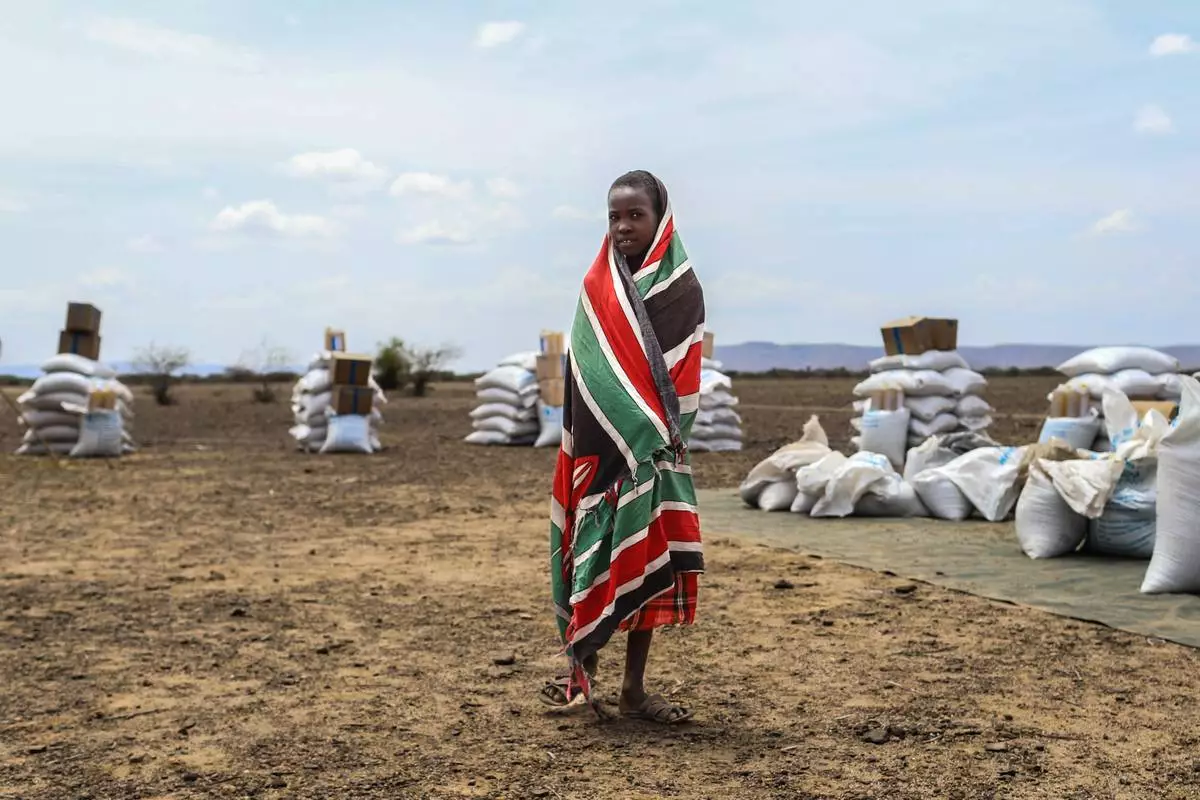
A child stands in front of food aid supplied by the World Food Programme (WFP) ahead of distribution in Nalemkais Village, Turkana County, Kenya, Sunday, Feb. 8, 2026. (AP Photo/Patrick Ngugi)
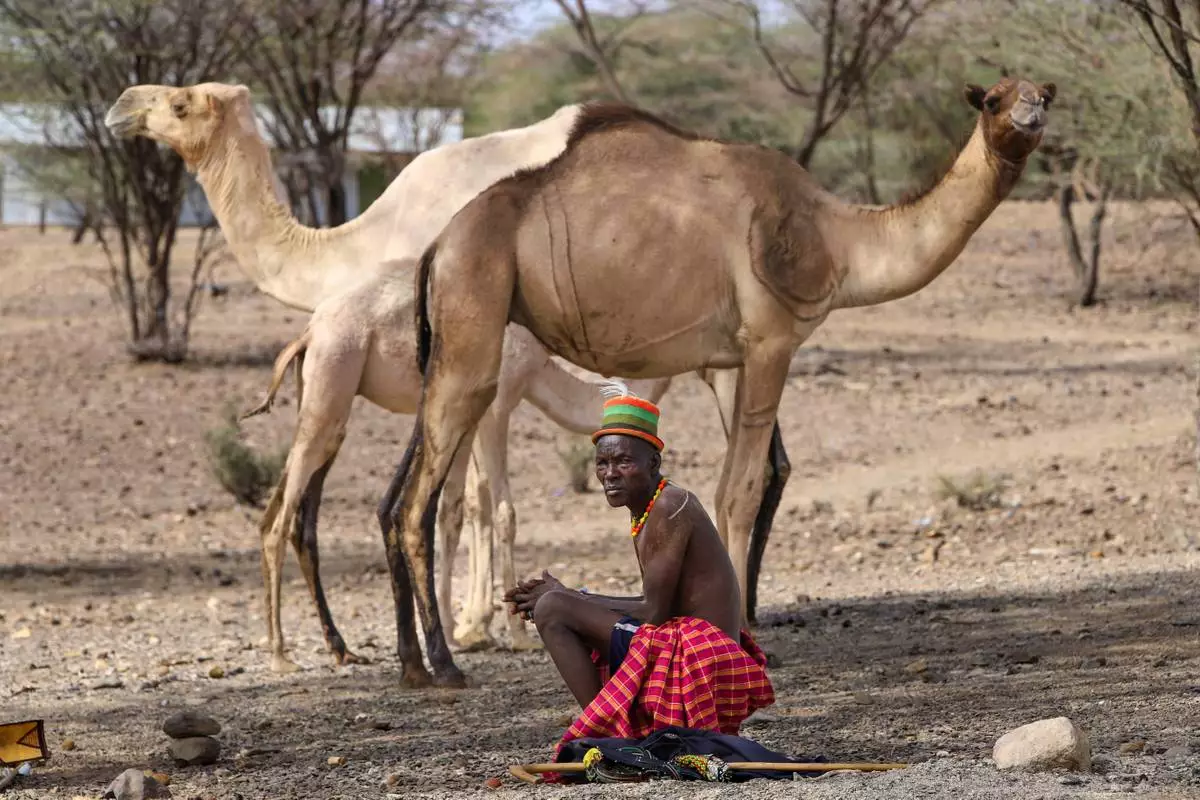
A man sits beside his camel in Lomekulu Village, Turkana County, Kenya, Sunday, Feb. 8, 2026. (AP Photo/Patrick Ngugi)
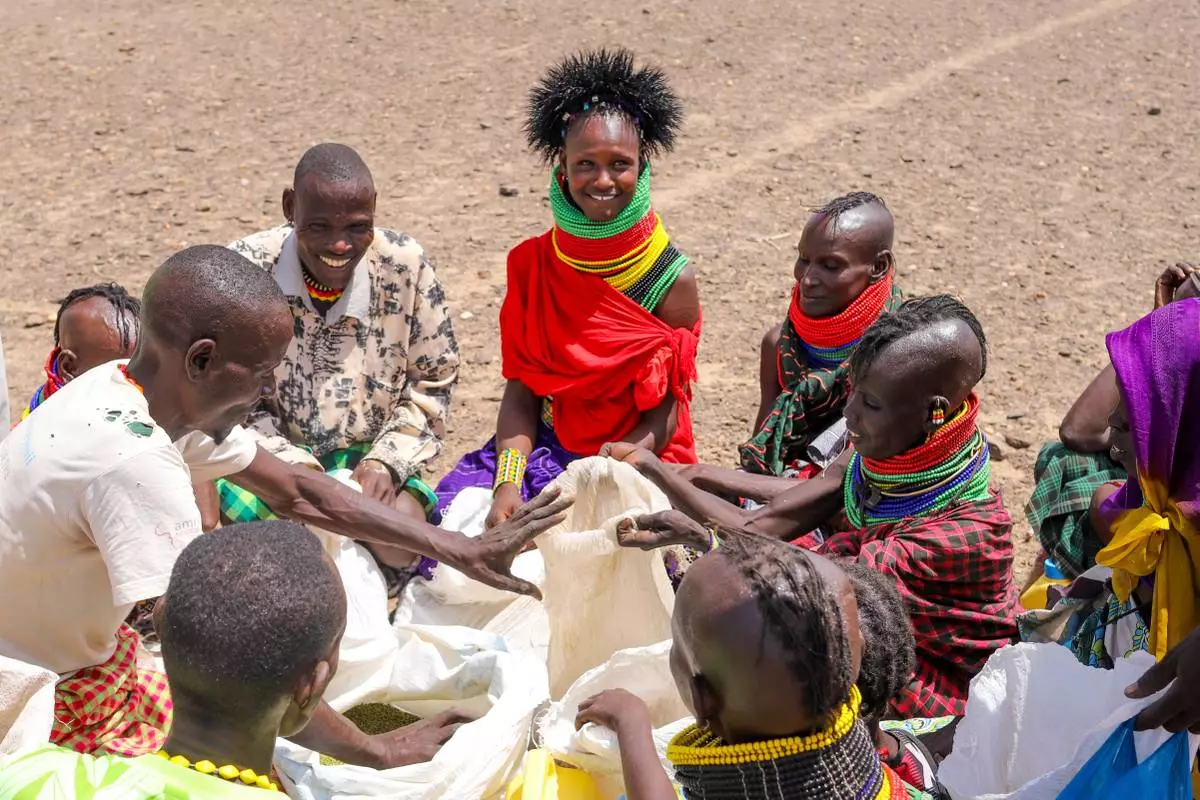
Locals share food rations distributed by World Vision Kenya as severe drought continues, in Nalemkais Village, Turkana County, Kenya, Sunday, Feb. 8, 2026. (AP Photo/Patrick Ngugi)
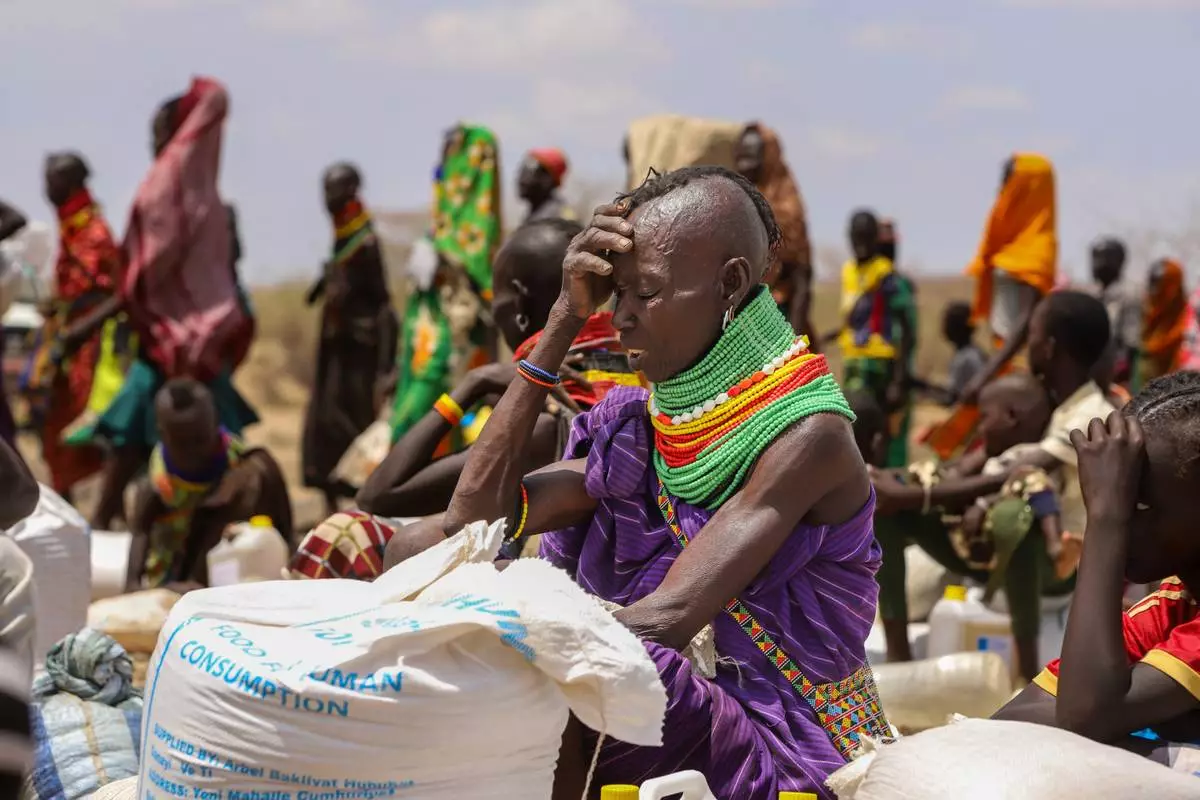
An elderly Turkana woman covers herself from the hot sun after receiving her food ration, in Lomeluku Village, Turkana County, Kenya, Sunday, Feb. 8, 2026. (AP Photo/Patrick Ngugi)
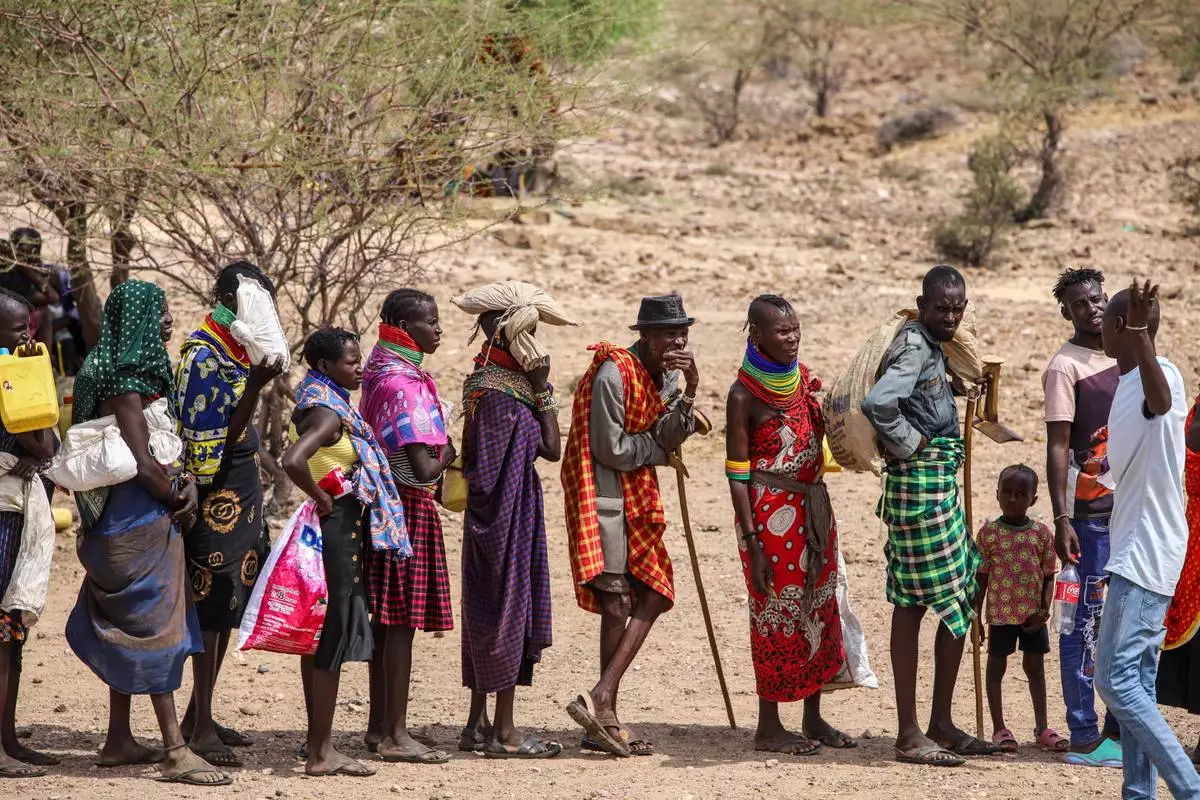
Locals queue to receive relief food as severe drought continues, in Lomekulu Village, Turkana County, Kenya, Sunday, Feb. 8, 2026. (AP Photo/Patrick Ngugi)

BANGKOK (AP) — Thailand’s political parties were considering their options Monday after the conservative Bhumjaithai Party’s decisive election victory showed that voters chose stability over change, analysts said.
“This will be the first time in the 21st century that a conservative party has won the most seats in a general election, and it is a seismic shift in Thai politics,” said Ken Lohatepanont, a University of Michigan doctoral candidate, remarked in his online newsletter about Thai politics.
Electoral politics since 2001 had been dominated by populist parties loyal to billionaire Thaksin Shinawatra, who served as prime minister until he was ousted by an army coup in 2006, setting off a tussle for power against Thailand’s conservative royalist-military establishment.
“In the short term, the signs point toward continuity, consolidation, and a relatively smooth transition into government — much to the bitterness of reformist and progressive forces,” said Napon Jatusripitak, director of the Center for Politics and Geopolitics at Thailand Future, a Bangkok-based think tank.
Bhumjaithai won 193 seats in the 500-member House of Representatives, positioning it to form the next government and return incumbent Prime Minister Anutin Charnvirakul to office. However, it will still need to recruit coalition partners to attain the 251 House votes required to elect the prime minister.
While the progressive People’s Party, which finished second with 118 seats, has ruled out joining a Bhumjaithai coalition, the populist Pheu Thai Party, in third place with 74 seats, has left the possibility open. Bhumjaithai has not yet revealed its intentions.
Bhumjaithai’s surge in popularity followed its self-presentation as a “defender of the nation” during the Thailand--Cambodia border conflict, which strengthened nationalist sentiment among voters, said Purawich Watanasukh, a political scientist at Bangkok’s Thammasat University.
Thailand twice last year fought with Cambodia over competing territorial claims along their border.
He said a second aspect that gave Bhumjaithai a big boost was strategic alliances it made with regional power brokers who for decades have been carrying out voter-canvassing in rural villages.
At the same time, Bhumjaithai expanded beyond its rural roots by appointing accomplished technocrats to Anutin's government, said Kevin Hewison, a senior Thai scholar, making the party more appealing to the middle class.
The People’s Party had been expected to replicate the success of its predecessor, Move Forward Party, in 2023, when it won the most seats but was blocked from taking power by conservative lawmakers.
While it captured all 33 seats in Bangkok on Sunday and easily topped the separate party preference ballot, its calls for reform of the military's role in politics apparently did not resonate with nationalist sentiment prevailing at the time of the border conflict with Cambodia.
That position had been popular at the time of the 2023 election, when voters appeared tired of nine years of uninspired military-dominated governments.
Looking ahead, the People's Party is facing the same kind of trouble that brought down Move Forward, which was dissolved by the Constitutional Court in 2024.
The National Anti-Corruption Commission on Monday ruled that 44 former lawmakers from Move Forward committed a serious ethical violation by attempting to propose an amendment to a law that criminalizes defamation of the monarchy.
The 44 include People’s Party executives and its leader, Natthaphong Ruengpanyawut. The ruling will be forwarded to the Supreme Court, which could bar them from political activity and holding public office.
The Pheu Thai Party faces an uncertain future after suffering its worst performance in decades, even losing its traditional stronghold in Chiang Mai, patron Thaksin’s hometown.
It alienated some pro-democracy supporters in 2023 by breaking its campaign promise not to align with pro-military parties and instead forming a government with them.
It also angered conservatives when then-Prime Minister Paetongtarn Shinawatra, Thaksin’s daughter, was found to be too chummy with Cambodia’s leader Hun Sen in a leaked phone call last year. She was kicked out of office for an ethics violation, giving Anutin his chance to take her place.
Already weakened further by its disappointing election performance, joining a coalition with Bhumjaithai may be Pheu Thai’s “only political lifeline,” said Hewison.
Leader of People's Party and prime minister candidate Natthaphong Ruengpanyawut gestures after a press conference following the general election in Bangkok, Sunday, Feb. 8, 2026. (AP Photo/Wason Wanichakorn)
Thailand's Prime Minister and leader of Bhumjaithai Party Anutin Charnvirakul, right, speaks with journalists at the party headquarters while waiting for the results in the general election in Bangkok, Sunday, Feb. 8, 2026. (AP Photo/Sakchai Lalit)