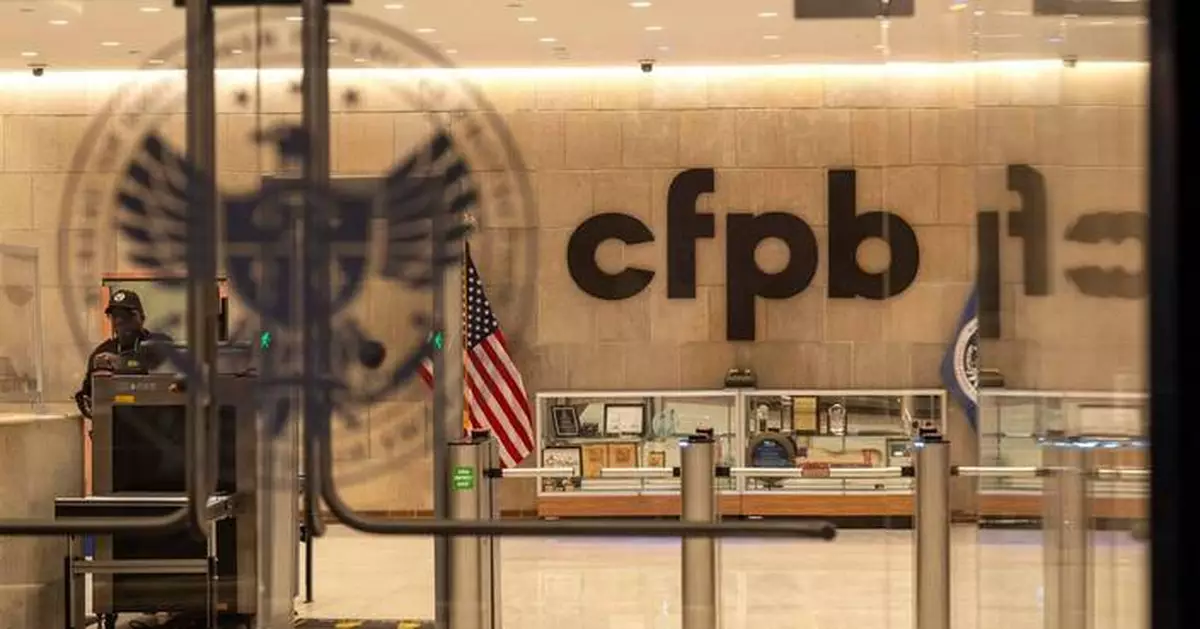
NEW YORK (AP) — One year after the Trump administration took control of the Consumer Financial Protection Bureau, the consumer watchdog has largely retreated from enforcement and regulatory work, changes that consumer advocates and Democrats now estimate have cost Americans at least $19 billion in financial relief.
In a report provided to The Associated Press ahead of its release by the office of Sen. Elizabeth Warren on Monday, the authors say the CFPB harmed consumers by abandoning major consumer protections, stalling investigation and dismissing a number of lawsuits.
“Trump’s attempt to sideline the CFPB has cost families billions of dollars over the last year alone,” said Warren, the top Democrat on the Senate Banking Committee, as well as one of the bureau’s fiercest defenders in Congress.
The administration and congressional Republicans have argued that the bureau needed to be downsized and reined in because it had grown too large and overreaching.
The administration assumed control of the CFPB in February 2025 after Rohit Chopra, the bureau’s director under President Joe Biden, resigned, leaving White House budget director Russell Vought as acting director. Since then, few new investigations have been opened, many employees have been ordered not to work and several pending enforcement actions against financial companies have been dropped.
The White House announced in April that it wanted to reduce the Bureau’s staff from 1,689 positions to 207 positions, but that move has been blocked by courts. Even if the employees’ union does succeed in its lawsuit against Vought, Congress cut the bureau’s budget by roughly half in Trump’s One Big Beautiful Bill Act. It’s unlikely that all of those employees will still have their jobs once all litigation is settled.
“The CFPB may still be standing, but it’s essentially on life support,” said Chuck Bell, advocacy program director at Consumer Reports, in a statement. Consumer Reports put out its own data Monday that arrives at similar conclusions as Warren's office.
A spokeswoman for the CFPB did not respond to a request for comment.
One form of relief the report said consumers were denied was a limit on overdraft fees, which the Biden CFPB finalized in 2024 but the Republican-led Congress overturned last year. That would have saved consumers $5 billion a year, according to the Bureau’s estimates at the time.
The bureau also tried to cap the amount of money consumers pay to credit card companies when they pay their bills late. That would have saved Americans roughly $10 billion, according to Bureau estimates when the rule was proposed. The regulation was blocked by a federal court last year, and the bureau, under the control of the Trump administration, decided not to fight the lawsuit in court.
Another roughly $4 billion in consumer relief would have come from a series of lawsuits or settlements that were dismissed by the bureau under Acting Director Vought. For example, the bureau sued Capital One in January 2025 for $2 billion, days before President Trump was to be sworn into office, alleging that Capital One has misrepresented the interest rate paid on its savings accounts to customers. That lawsuit was dismissed.
The bureau also sued Early Warning Systems, the company that runs the money transfer service Zelle, in December 2024 for $870 million alleging that the EWS and the banks that operate Zelle were negligent in protecting consumers from fraud and scams. That lawsuit was also dismissed last year.
There's also been a slowdown in the number of complaints resolved by the bureau as well. The CFPB runs its own consumer complaint database, where a consumer can allege wrongdoing by their bank or financial services company and the bureau will act as intermediary between the consumer and financial company to resolve the complaint. Under the Biden CFPB, roughly half of all consumer complaints were resolved with relief for the consumer, whereas under the Trump CFPB, that figure has dwindled to less than 5%.
The independent Government Accountability Office made public a separate report Monday outlining its attempts to keep track of the Trump administration’s reorganization and restructuring of the CFPB. The GAO said it received no cooperation from the White House or the bureau, and the GAO needed to rely on mostly public records to produce its report. In a response to the GAO, the CFPB cited ongoing litigation between its employees and management as the primary reason why it could not cooperate.
The GAO’s report largely matches what has been documented in news reports that the bureau has cancelled dozens of enforcement actions against alleged wrongdoers, unwound rules and regulations that previous bureau management said would protect consumers or bring them financial relief. There have been even rules and regulations enacted during President Trump’s first term that have been targeted by the bureau’s current management.
Mark Paoletta, the bureau's chief legal officer and effectively its deputy director under Vought, called the GAO’s report “biased and flawed” in a letter to the agency did not raise any specific issues with its conclusions, other than to say the GAO was working with incomplete information.
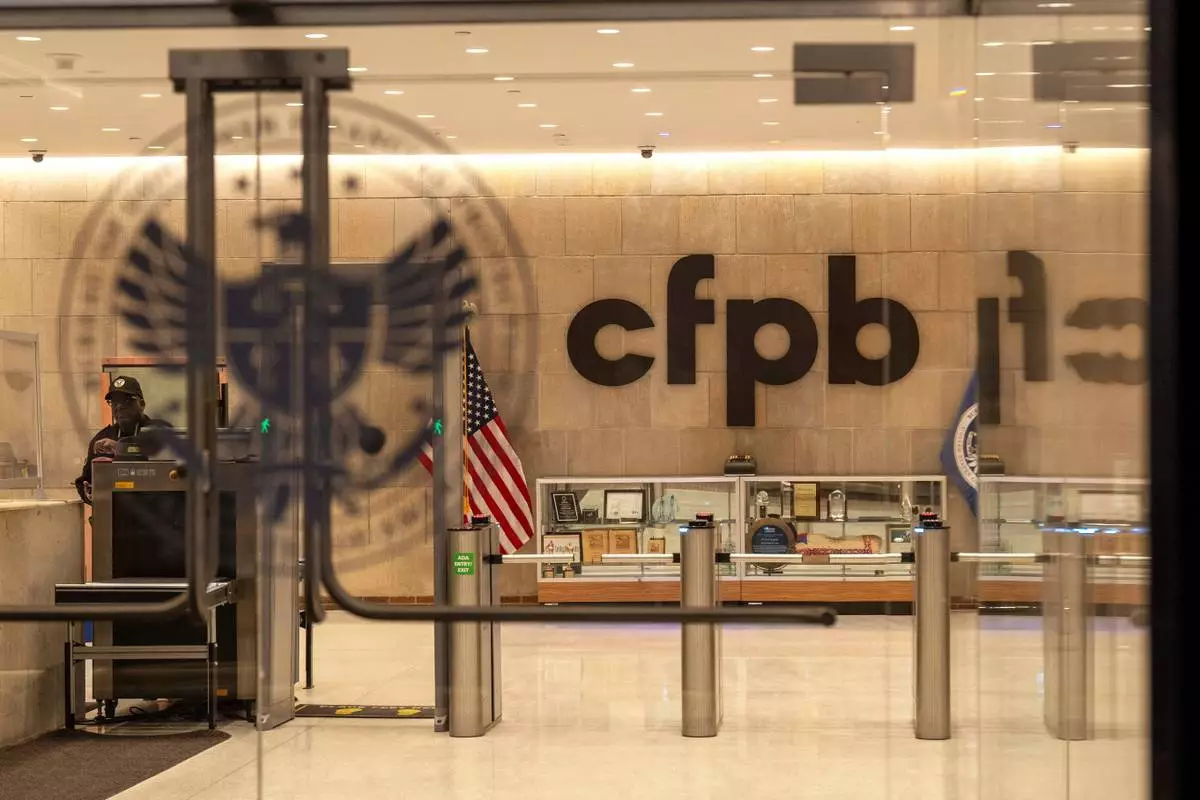
FILE - A security officer works inside of the Consumer Financial Protection Bureau (CFPB) building headquarters, Feb. 10, 2025, in Washington. (AP Photo/Jacquelyn Martin, File)
U.S. President Donald Trump said the war in Iran was “very close to over” in clips of an interview set to air Wednesday, while the U.S. military said its blockade on Iranian ports had been “fully implemented.”
Pakistan said Tuesday it was pursuing efforts to help the U.S. and Iran negotiate an end to the war, after Trump told the New York Post earlier that a second round of talks with Iran “could be happening over next two days.”
Lebanese Ambassador to the U.S. Nada Hamadeh Moawad said talks between Lebanon and Israel in Washington were “constructive,” and Israeli Ambassador to the U.S. Yechiel Leiter praised his Lebanese counterparts after the two-hour meeting, saying “we’re on the same side of the equation.”
The Lebanese militant group Hezbollah opposes the direct talks and has said it won’t abide by any agreements made as a result.
The fighting in the Middle East has killed at least 3,000 people in Iran, more than 2,100 in Lebanon, 23 in Israel and more than a dozen in Gulf Arab states. Thirteen U.S. service members also have been killed.
Here is the latest:
South Korea says it secured 273 million barrels of crude oil and 2.1 million tons of naphtha in agreements with Gulf states and Kazakhstan as it looks to mitigate an energy crunch caused by the war.
Kang Hoon-sik, chief of staff to President Lee Jae Myung, said Wednesday the agreements were reached during his visits last week to Kazakhstan, Oman, Saudi Arabia and Qatar.
Most of the crude secured for delivery later this year will come from Saudi Arabia, with some shipments routed through the Red Sea to avoid the Strait of Hormuz, Kang said.
Oman will supply about 1.6 million tons of naphtha, a key petrochemical feedstock used in plastics manufacturing that South Korea has largely sourced via the strait.
War-related shortfalls of naphtha have raised concerns about industrial disruption and shortages of medical supplies such as IV bags and syringes.
Two remotely operated, improvised explosive devices detonated in Tehran early Wednesday, Iran’s state media reported.
A Revolutionary Guard security source said the explosions slightly injured three people including a member of the paramilitary Basij, an all-volunteer force loyal to the Islamic Republic, the Islamic Republic News Agency said.
The state media agency reported a third device was defused.
Mohammad Balideh, a Revolutionary Guard commander for Tehran region 10, told the Hamshahri newspaper “the situation is normal and under control.”
“Nothing extraordinary happened here, just a limited explosion on the street at the hands of traitorous and unpatriotic elements, with no fatalities or serious damages,” Balideh said.
The head of the United Nations nuclear watchdog says “very detailed” measures to verify Iran’s nuclear activities must be included in a potential U.S.-Iran agreement to end their war in the Middle East.
International Atomic Energy Agency Director General Rafael Grossi said in Seoul on Wednesday that “Iran has a very ambitious, wide nuclear program so all of that will require the presence of IAEA inspectors.”
U.S. President Donald Trump said Tuesday that a second round of talks with Iran could happen over the next two days.
The Trump administration has said preventing Iran from gaining a nuclear weapon is a key war aim.
Iran has said it isn’t developing such weapons, but rejected limits on its nuclear program.
Saudi Arabia will deposit $3 billion into Pakistan’s central bank, Finance Minister Muhammad Aurangzeb said Wednesday.
The funds will provide a much-needed financial boost to Pakistan, where the economy has come under strain during regional tensions linked to the conflict between the United States and Iran.
Aurangzeb is in Washington to attend meetings of the World Bank and the International Monetary Fund.
Aurangzeb said an existing $5 billion Saudi deposit will no longer be subject to an annual rollover arrangement and will instead be extended for a longer period, a government statement said.
Pakistani authorities said earlier this month that the country would return $2 billion deposited by the United Arab Emirates in Pakistan’s central bank in 2019.
Australia’s Prime Minister Anthony Albanese and Brunei’s Sultan Hassanal Bolkiah signed a joint statement committing to avoid unjustified energy and food trade restrictions stemming from the Iran war.
They signed the agreement Wednesday while Albanese visited the tiny Southeast Asian nation.
Australia is the biggest trade partner of Brunei, which provides Australia with diesel and fertilizer-grade urea. Albanese said he discussed Brunei potentially increasing the supply of urea.
“What’s guaranteed is that they are not looking at export restrictions on Australia,” he said.
Albanese plans to meet Malaysian Prime Minister Anwar Ibrahim on Thursday to shore up Australian supplies of gasoline and diesel.
Pakistan Prime Minister Shehbaz Sharif will travel to Saudi Arabia, Qatar and Turkey this week during a diplomatic push to secure a new round of talks between the United States and Iran.
The trip comes days after Islamabad hosted rare negotiations that ended without a formal agreement.
Sharif is attempting to facilitate a second round before a temporary ceasefire expires on April 22.
Pakistan’s Foreign Ministry said in a statement that the visits starting Wednesday and ending Saturday will focus on bilateral relations.
Sharif is expected to discuss ongoing cooperation and regional peace and security with leaders of Saudi Arabia and Qatar.
In Turkey, Sharif is expected to participate in the fifth Antalya Diplomacy Forum and hold meetings with Turkish President Recep Tayyip Erdogan and other world leaders.
South Korea says it provided information to Iran, the United States and Gulf nations concerning 26 vessels from South Korea that are stuck in the Strait of Hormuz.
South Korea is attempting to secure their safe passage out the strait.
South Korean Foreign Minister Cho Hyun said in a legislative hearing Wednesday that officials consider the ceasefire between the U.S. and Iran as a window to ensure the safe exit of the ships from the region.

Residents sit on a sofa in front of charred cars at the site of a building destroyed in an Israeli airstrike last Wednesday in central Beirut, Lebanon, Tuesday, April 14, 2026. (AP Photo/Hassan Ammar)
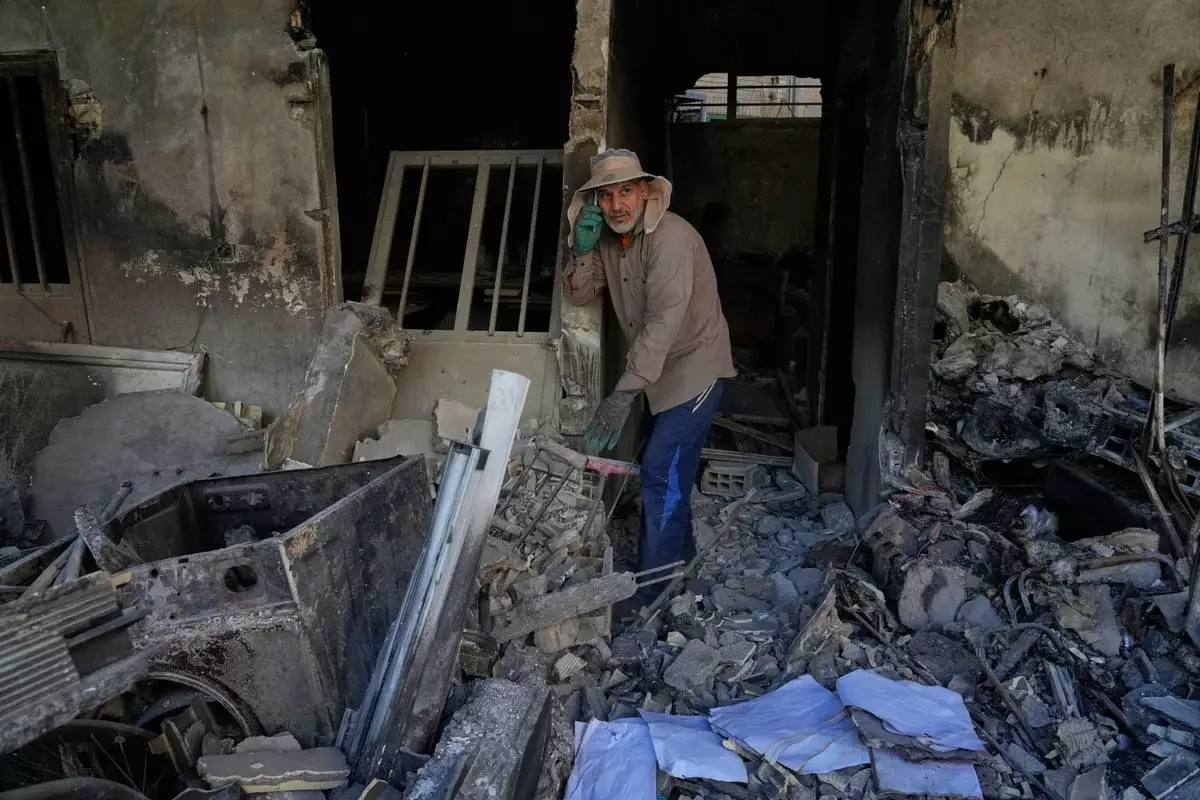
A volunteer talks on his phone while walking amid the debris of a residential building that, according to the authorities, was damaged on March 4 during the U.S.-Israeli military campaign, in southeastern Tehran, Iran, Tuesday, April 14, 2026. (AP Photo/Vahid Salemi)
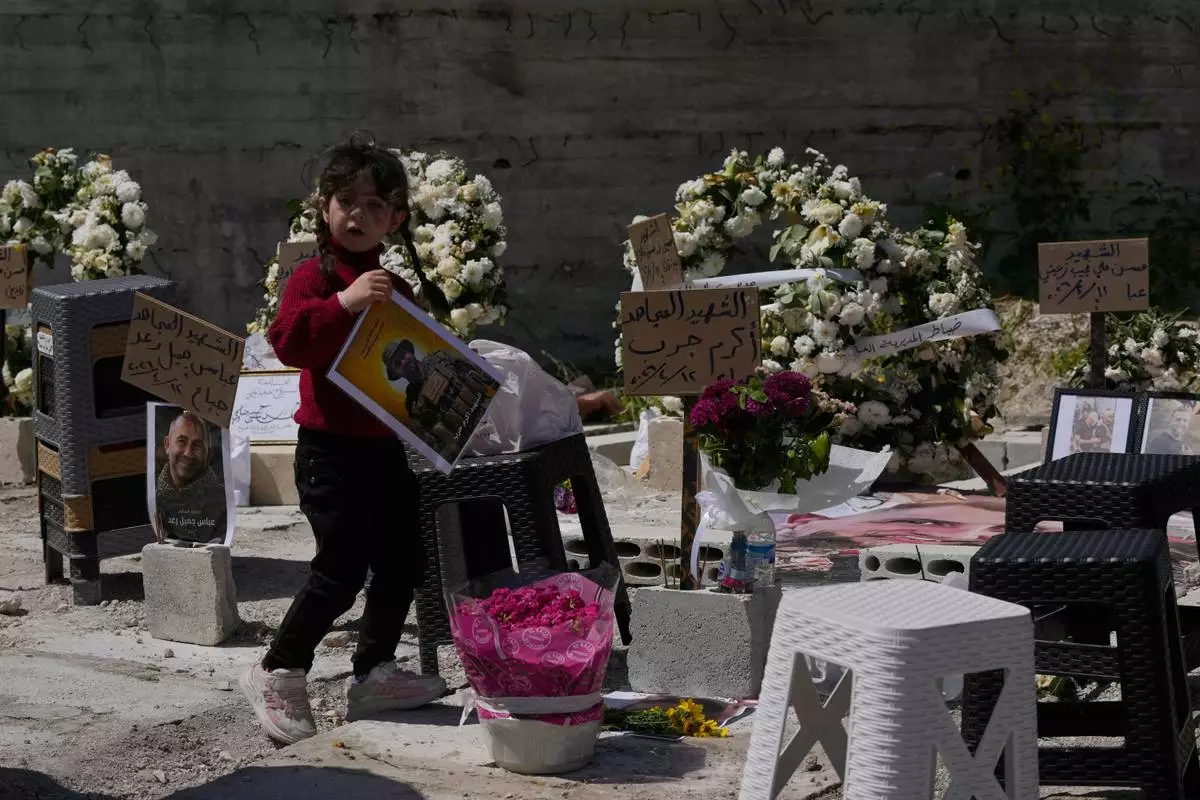
A young girl carries a portrait of a killed Hezbollah fighter at a mass grave where civilians and Hezbollah fighters killed in Israeli airstrikes are temporarily buried in the southern port city of Sidon, Lebanon, Tuesday, April 14, 2026. (AP Photo/Mohammed Zaatari)
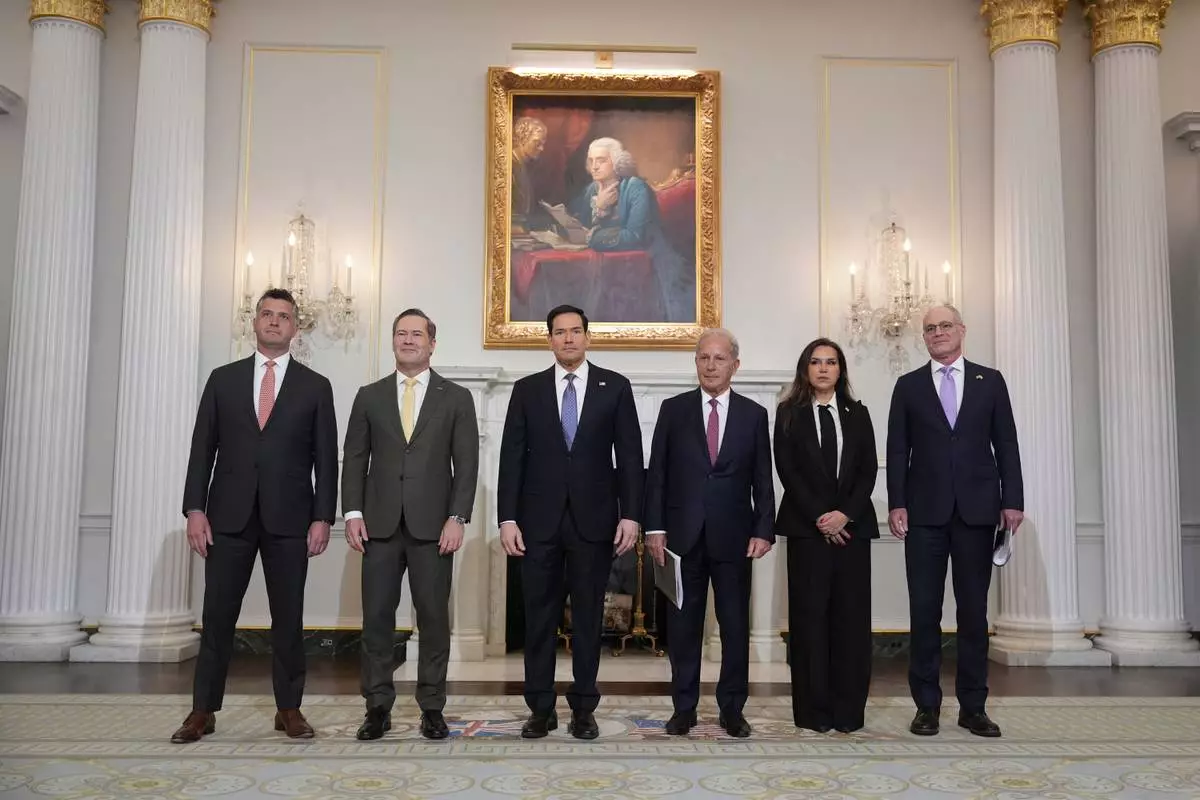
From left, Michael Needham, counselor for the U.S. Dept. of State, U.S. Ambassador to the United Nations Mike Waltz, Secretary of State Marco Rubio, U.S. Ambassador to Lebanon Michel Issa, Lebanese Ambassador to the U.S. Nada Hamadeh Moawad, and Israeli Ambassador to the U.S. Yechiel Leiter pose for a photo before a meeting at the State Department in Washington, Tuesday, April 14, 2026. (AP Photo/Jacquelyn Martin)
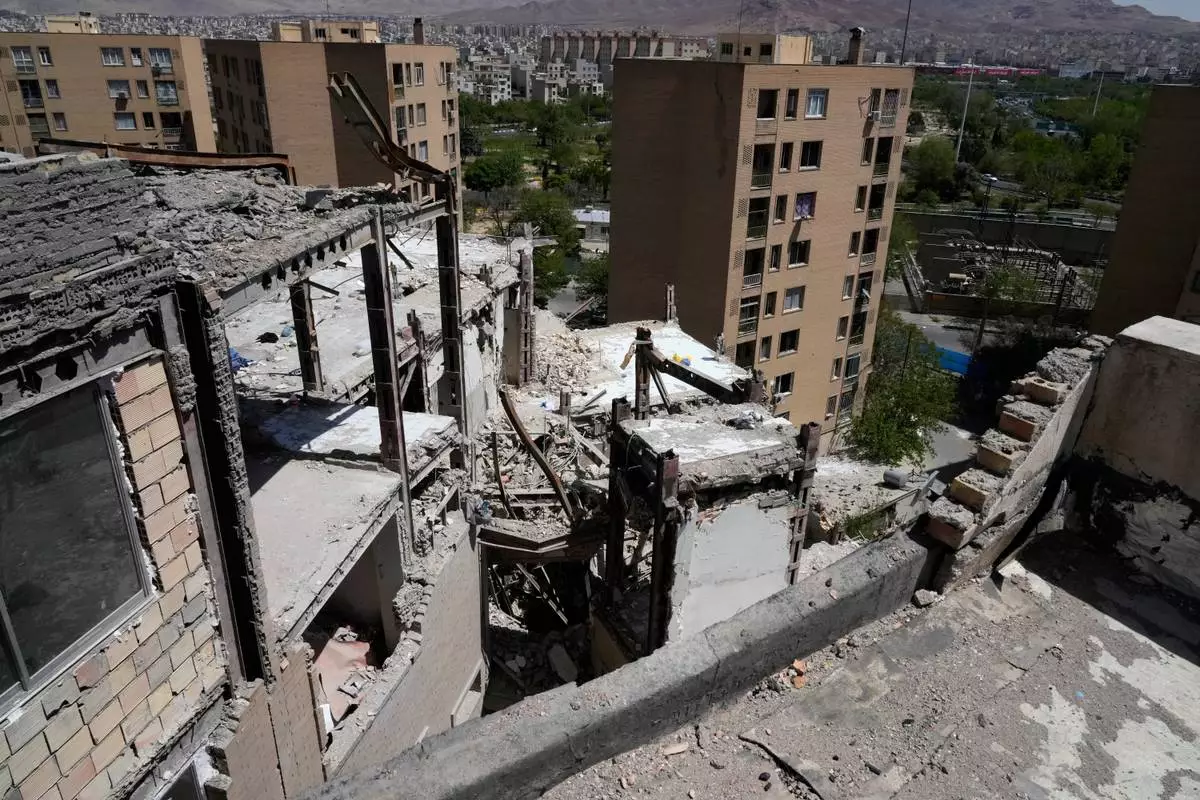
Damage is visible on a residential building that, according to Iranian authorities, was hit by a strike on March 4 during the U.S.-Israeli military campaign, in southeastern Tehran, Iran, Tuesday, April 14, 2026. (AP Photo/Vahid Salemi)