MILAN (AP) — Ilia Malinin, the U.S. figure skater nicknamed the “Quad God,” became the first person to legally land a backflip on one skate in the Olympics — but he’s not the first to pull it off at the Winter Games.
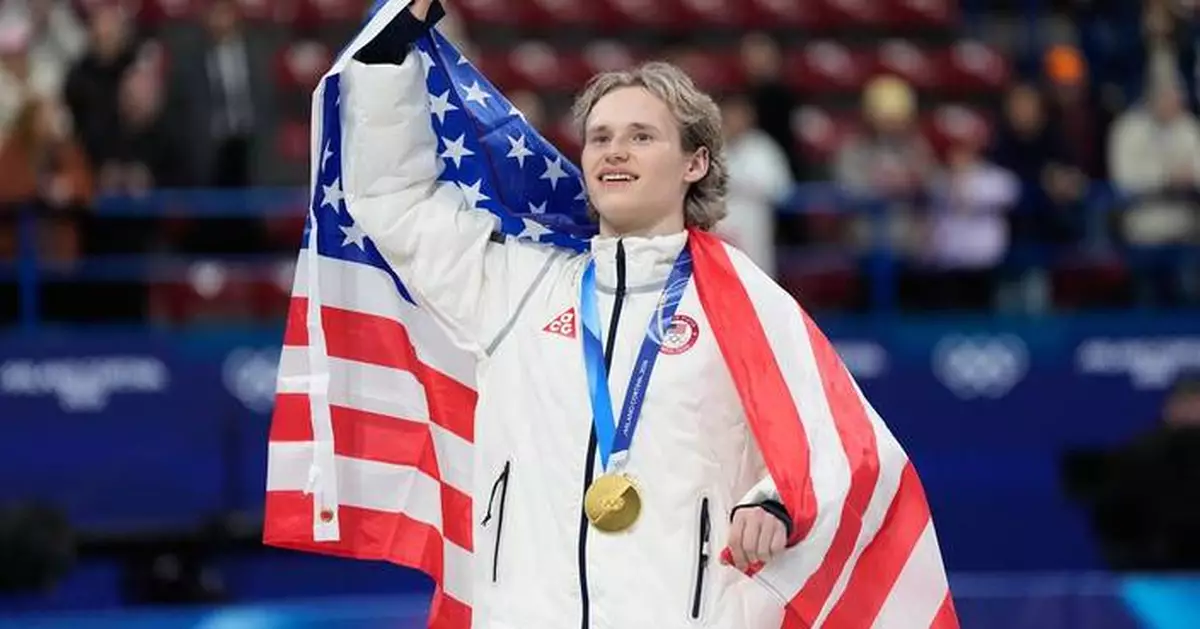
The 21-year-old from Virginia delivered a crucial free skate for the winning American team, filled with his trademark quadruple jumps, and punctuated the gold medal-clinching performance with a backflip that he landed on just one blade.
It’s a move known today as “the Bonaly flip” — named for its pioneer, France’s Surya Bonaly. Nevertheless, it is Malinin getting showered with praise, prompting many on social media to lament the way his achievement has eclipsed that of Bonaly, who is Black, and wondering if that is due to the color of her skin.
Ari Lu, 49, was among those on TikTok saying the figure skating world owed Bonaly an apology. Where Malinin is praised for his athleticism, Bonaly was judged, she told The Associated Press in a text message on Monday.
“Something a Black person used to be derided for is now celebrated when done by a white person,” said Lu, who is Black herself. She added that critiques of Bonaly at the time appeared related to her appearance rather than her skills.
The first person to pull off a backflip at the Olympics was former U.S. champion Terry Kubicka, in 1976, and he landed on two skates. The International Skating Union swiftly banned the backflip, considering it too dangerous.
Over 20 years later, at the 1998 Nagano Games, France’s Surya Bonaly flouted the rules and executed a backflip, this time landing on a single blade — an exclamation point to mark her final performance as a professional figure skater. The crowd cheered, and the television commentator exclaimed, “I think she's done that because she wants to, because it's not allowed. So good on her.”
Bonaly knew the move meant judges would dock her points, but she did it anyway. The moment would cement her legacy as a Black athlete in a sport that historically has lacked diversity.
For decades, Bonaly’s thrilling move could only be witnessed at exhibitions. That changed two years ago, when the ISU lifted its ban in a bid to make the sport more exciting and popular among younger fans.
Malinin, who is known for his high-flying jumps, soon put the backflip into his choreographed sequences for competitions. And on Sunday it was a part of a gold medal-winning free skate.
Bonaly, for her part, ended her professional career with a 10th place finish. Some argue the punishment of Bonaly back then and praise of Malinin today underscores a double standard that still exists in the figure skating world.
In a telephone interview from Minnesota, Bonaly told the AP on Monday that it was great to see someone do the backflip on Olympic ice, because skating needs to be taken to an upper level.
Regarding the criticism she received during her career, Bonaly said she was “born too early,” arriving on the Olympic scene at a time when people weren't used to seeing something different or didn’t have open minds.
“I broke ice for other skaters,” Bonaly said. “Now everything is different. People welcome anyone as long as they are good and that is what life is about.”
Before Bonaly there was Mabel Fairbanks, a pioneer whose Olympic dreams were dashed by racist exclusion from U.S. Figure Skating in the 1930s and Debi Thomas, the first African American to win a medal at the Winter Olympics and others have paved the road for more representation in the sport.
But there are still few professional Black figure skaters, and none competing for the U.S. this year; popular skater Starr Andrews failed to make the team, finishing seventh at nationals. The team does include five Asian American skaters and Amber Glenn, an openly vocal LGBTQ+ supporter.
Malinin’s teammate, Amber Glenn, said that while she thinks backflips are fun and is interested in learning how to do one after she’s done competing, the three-time and reigning U.S. champion does not plan to do them any time soon.
“I want to learn one once I’m done competing,” the 26-year-old Glenn said. “But the thought of practicing it on, like, a warmup or in training, it just scares me.”
Both the ISU and the International Olympic Committee have apparently begun to embrace Bonaly's backflip, sometimes posting it to social media in conjunction with Bonaly's own account.
“Backflips on ice? No problem for figure skating icon Surya Bonaly!” says one from last May. Another from November 2024 says: “Surya Bonaly’s backflip has been a topic of discussion, awe, and admiration for over two decades and continues to inspire young skaters to never give up on their dreams.”
Associated Press sports writer David Skretta contributed to this report.
AP Olympics: https://apnews.com/hub/milan-cortina-2026-winter-olympics
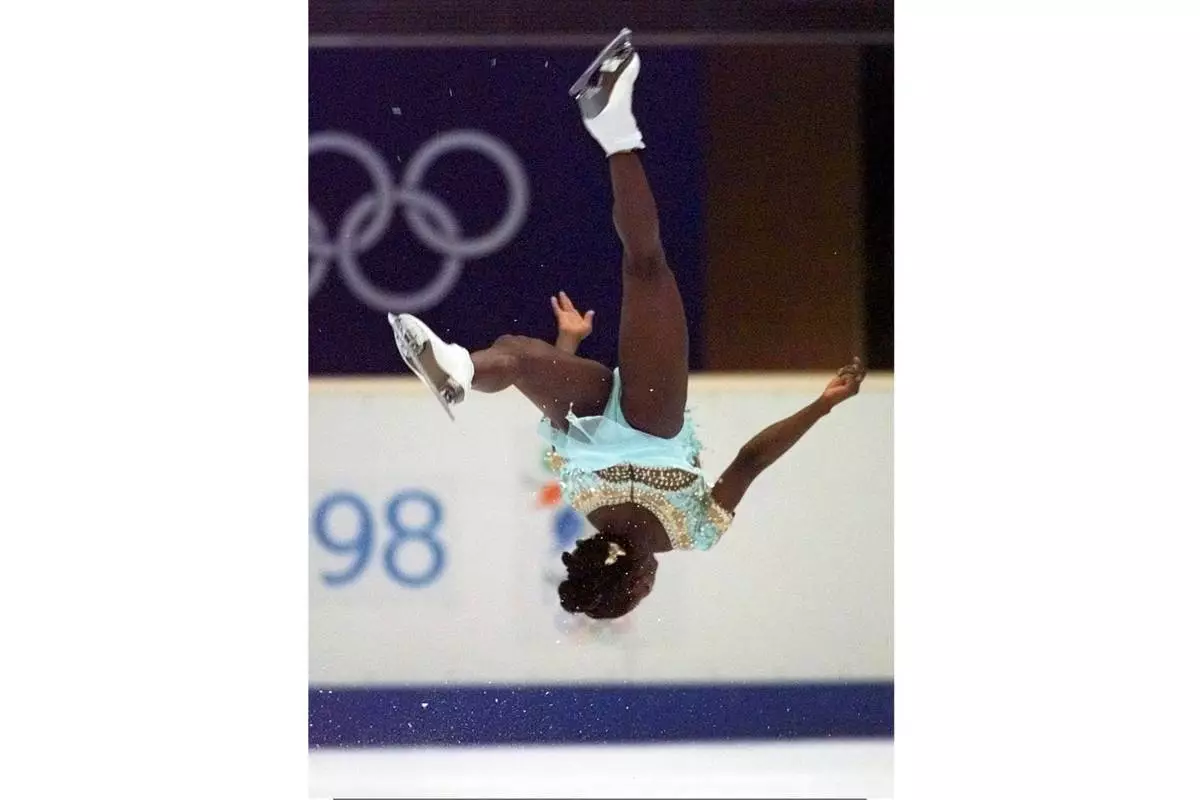
FILE - France's Surya Bonaly performs a back flip during her free skate program Feb. 20, 1998, in Nagano, Japan. (AP Photo/Eric Draper, File)
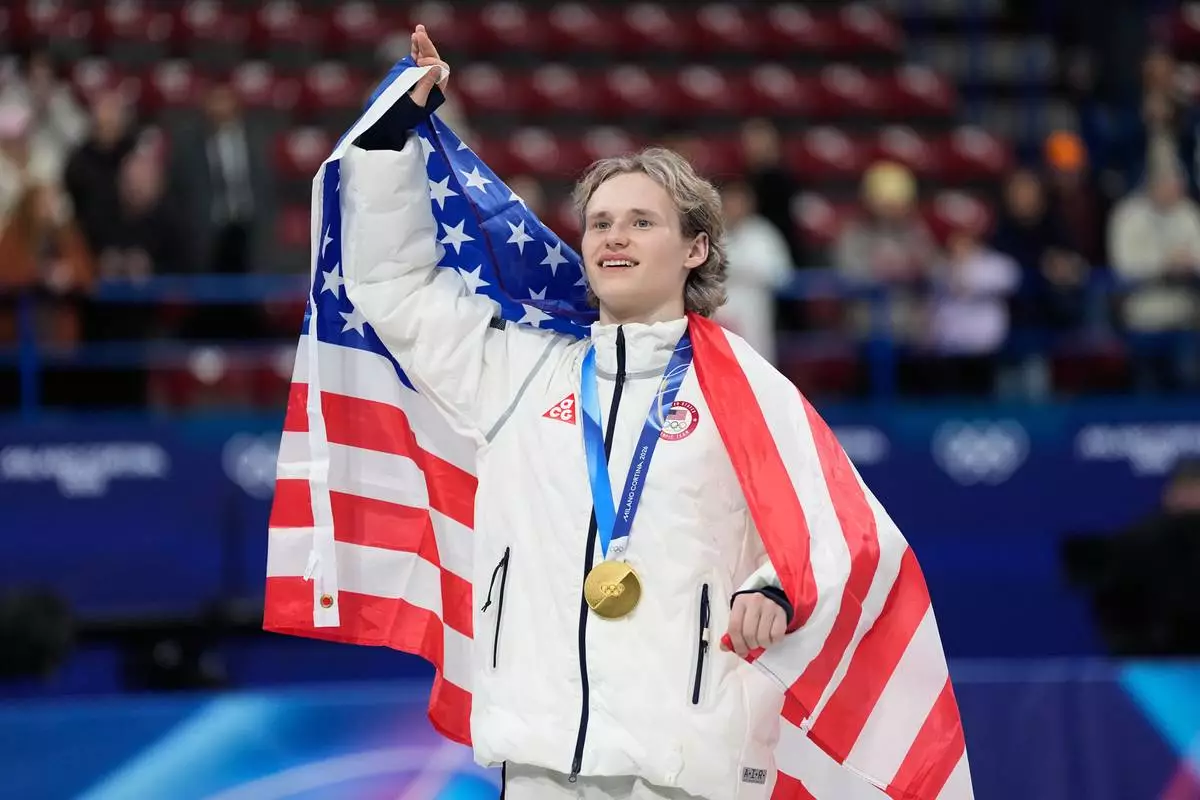
Team USA's Ilia Malinin celebrates with his gold medal after the figure skating team event at the 2026 Winter Olympics, in Milan, Italy, Sunday, Feb. 8, 2026. (AP Photo/Ashley Landis)
CORTINA D'AMPEZZO, Italy (AP) — Lindsey Vonn sustained a "complex tibia fracture that is currently stable but will require multiple surgeries to fix properly” after her devastating crash in the Olympic downhill, the skier said in a social media post late Monday.
Vonn posted on Instagram about her left leg injuries following her fall in Sunday's race.
“While yesterday did not end the way I had hoped, and despite the intense physical pain it caused, I have no regrets,” Vonn said.
Nine days before Sunday's crash, the 41-year-old Vonn ruptured the ACL in her left knee. It is an injury that sidelines pro athletes for months, but ski racers have on occasion competed that way. She appeared stable in two downhill training runs at the Milan Cortina Games.
Onlookers on social media wondered if Vonn’s ruptured ACL could have played a factor in her crash near the top of the Olympia delle Tofana course, where she has a World Cup record 12 wins. That maybe, on a healthy left knee, she would not have clipped a gate and been able to stave off a crash.
“Yesterday my Olympic dream did not finish the way I dreamt it would,” Vonn said. “It wasn’t a story book ending or a fairy tail, it was just life. I dared to dream and had worked so hard to achieve it. Because in Downhill ski racing the difference between a strategic line and a catastrophic injury can be as small as 5 inches.
“I was simply 5 inches too tight on my line when my right arm hooked inside of the gate, twisting me and resulted in my crash. My ACL and past injuries had nothing to do with my crash whatsoever.”
Vonn’s father said Monday that the American superstar will no longer race if he has any influence over her decision.
“She’s 41 years old and this is the end of her career,” Alan Kildow said in a telephone interview with The Associated Press. “There will be no more ski races for Lindsey Vonn, as long as I have anything to say about it.”
When she arrived in Cortina last week, Vonn said she had consulted with her team of physicians and trainers before deciding to move ahead with racing. The International Ski and Snowboard Federation does not check on the injury statuses of athletes.
“I firmly believe that this has to be decided by the individual athlete,” FIS president Johan Eliasch said Monday in Bormio. “And in her case, she certainly knows her injuries on her body better than anybody else. And if you look around here today with all the athletes, the athletes yesterday, every single athlete has a small injury of some kind.
“What is also important for people to understand, that the accident that she had yesterday, she was incredibly unlucky. It was a one in a 1,000,” Eliasch added. “She got too close to the gate, and she got stuck when she was in the air in the gate and started rotating. No one can recover from that, unless you do a 360. … This is something which is part of ski racing. It’s a dangerous sport.”
The Italian hospital in Treviso where Vonn was being treated said late Sunday she had undergone surgery to repair a broken left leg. The U.S. Ski Team has said only that Vonn “sustained an injury, but is in stable condition and in good hands with a team of American and Italian physicians.”
Pierre Ducrey, the sports director for the International Olympic Committee, noted Vonn was able to train and had experts counseling her decision.
“So from that point of view, I don’t think we can say that she should or shouldn’t have participated. This decision was really hers and her team to take,” he said. “She made the decision and unfortunately it led to the injury, but I think it’s really the way that the decision gets made for every athlete that participates to the downhill.”
Teammate Keely Cashman also said Vonn's ACL had nothing to do with her crash.
“Totally incorrect,” said Cashman — who was knocked unconscious in a serious crash five years ago. “People that don’t know ski racing don’t really understand what happened yesterday. She hooked her arm on the gate, which twisted her around. She was going probably 70 miles an hour, and so that twists your body around. That has nothing to do with her ACL, nothing to with her knee. I think a lot of people are ridiculing that, and a lot people don’t (know) what’s going on.”
The hours after her crash was filled with opinions, mostly of the second-guessing nature. Like, should someone have intervened?
“It’s her choice,” veteran skier Federica Brignone of Italy said. “If it’s your body, then you decide what to do, whether to race or not. It’s not up to others. Only you.”
Brignone suffered multiple fractures in her tibial plateau and fibula bone in her left leg during a crash in April and made it back to compete in the Olympic downhill — finishing 10th.
American downhiller Kyle Negomir echoed that thought.
“Lindsey’s a grown woman, and the best speed skier to ever do this sport. If she made her decision, I think she should absolutely be allowed to take that risk,” Negomir said. “She’s obviously good enough that she’s capable of pulling it off. Just because it happened to not pan out yesterday doesn’t mean that it definitely wasn’t a possibility that she could just crush it and have a perfect run.”
Graham reported from Bormio. AP Sports Writer Will Graves in Treviso and Daniella Matar in Milan contributed to this report.
AP Olympics: https://apnews.com/hub/milan-cortina-2026-winter-olympics
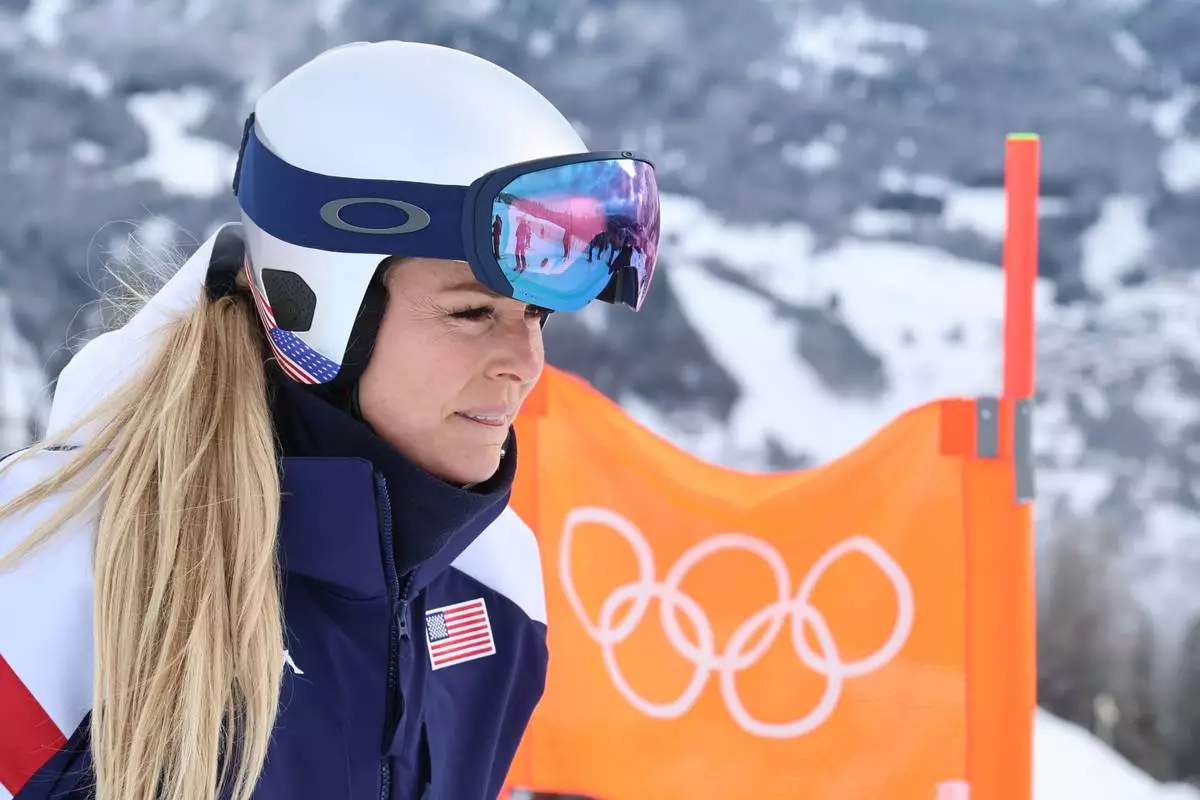
United States' Lindsey Vonn concentrates ahead of an alpine ski, women's downhill official training, at the 2026 Winter Olympics, in Cortina d'Ampezzo, Italy, Friday, Feb. 6, 2026. (AP Photo/Marco Trovati)

General view of Ca' Foncello Hospital in Treviso, Italy, Sunday, Feb. 8, 2026, where U.S. skier Lindsey Vonn is hospitalized with a broken leg after crashing during the women's downhill competition at the Milan-Cortina Olympics. (Paola Garbuio/LaPresse via AP)

United States' Lindsey Vonn crashes into a gate during an alpine ski women's downhill race, at the 2026 Winter Olympics, in Cortina d'Ampezzo, Italy, Sunday, Feb. 8, 2026. (AP Photo/Jacquelyn Martin)