Skip to Content Facebook Feature Image

Chinese community in Abuja hosts temple fair to mark Spring Festival, 55 years of China-Nigeria ties

China

China

China

Chinese community in Abuja hosts temple fair to mark Spring Festival, 55 years of China-Nigeria ties

2026-02-10 14:20 Last Updated At:22:17

The Chinese community in Nigeria's capital city of Abuja staged a temple fair on Saturday along with Nigerian partners to celebrate the Spring Festival and 55 years of bilateral diplomatic relations.

The Spring Festival, which falls on Feb 17 this year, marks the start of the Chinese New Year, the most important holiday in China. This year ushers in the Year of the Horse, the seventh animal in the 12-year Chinese zodiac cycle.

Held at the China Cultural Center in Abuja, the temple fair featured a diverse range of activities, including cultural performances and picture exhibition, attracting over 1,500 attendees.

In addition to enjoying traditional Chinese Wushu performances, attendees also had the opportunity to immerse themselves in authentic Chinese cultural experiences such as tea art, calligraphy, and traditional Chinese medicine, as well as savor a variety of classic Chinese dishes.

Ahead of the cultural performances, the promotional video of the China Media Group (CMG) 2026 Spring Festival Gala was displayed, adding to the festive atmosphere.

Zhou Hongyou, charge d'affaires of the Chinese Embassy in Nigeria, addressed the event.

Highlighting the historical significance of the occasion, Zhou said that after 55 years of close cooperation, China-Nigeria relations have gone beyond bilateral economic ties to become "a model of South-South cooperation."

Joseph Tegbe, director-general of the Nigeria-China Strategic Partnership, praised the tangible outcomes of China-Nigeria cooperation, particularly in infrastructure development.

He highlighted the one-billion-U.S.-dollar National Integrated Poultry Project, a flagship initiative inspired by Chinese agricultural models.

"We welcome Chinese businesses to Nigeria, encourage partnerships, prioritize capacity building, skills transfer, and shared growth. In return, Nigeria will continue to offer a welcoming environment rooted in hospitality, trust, and mutual respect. As we celebrate this New Year together, let us embrace the spirit of the horse," said Tegbe.

Other attendees also expressed admiration for China's rapid development and extended their heartfelt blessings.

"I wish the Chinese keep on progressing. There's a lot of fragmentation going in the multilateral space but China has emerged as a very resilient nation. I wish the country the best," said Chukwuka Ojukwuara, executive director with the Center for the Study of the Economies of Africa.

Chinese community in Abuja hosts temple fair to mark Spring Festival, 55 years of China-Nigeria ties

Chinese community in Abuja hosts temple fair to mark Spring Festival, 55 years of China-Nigeria ties

Chinese community in Abuja hosts temple fair to mark Spring Festival, 55 years of China-Nigeria ties

Chinese community in Abuja hosts temple fair to mark Spring Festival, 55 years of China-Nigeria ties
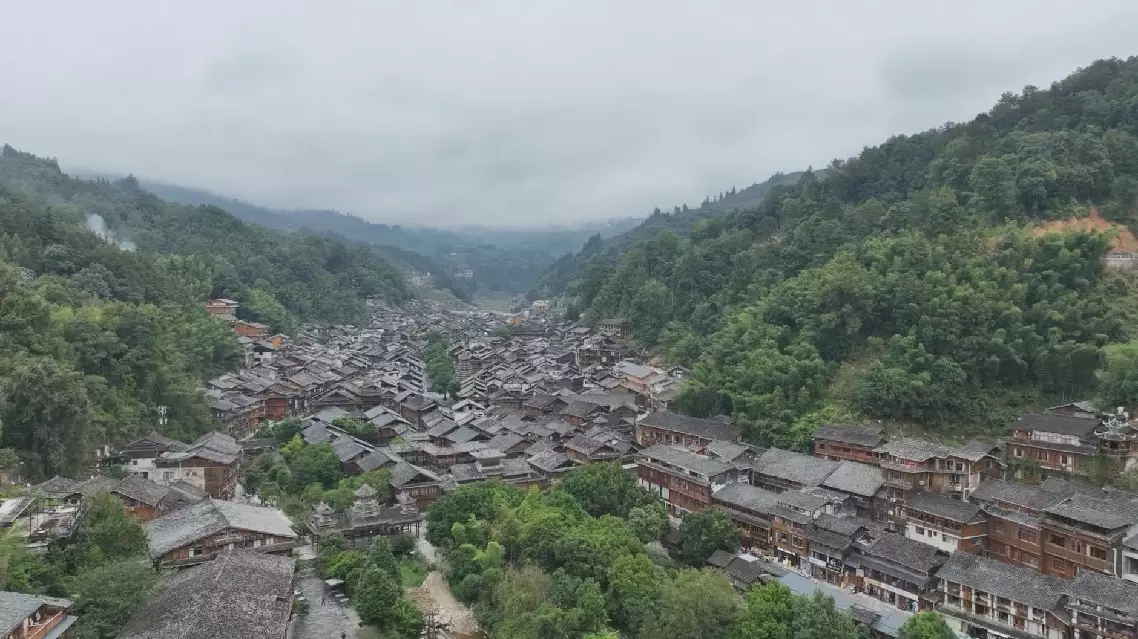
Traditional Dong ethnic attire is drawing travelers to Zhaoxing Dong Village in southwest China's Guizhou Province, where a travel photography boom is creating jobs and promoting local culture.

As one of China's largest villages primarily inhabited by Dong ethnic residents, Zhaoxing Dong Village in Liping County was once economically underdeveloped due to poor transportation and a lack of industrial diversity. In recent years, the village has leveraged its unique ethnic culture and ecological resources to develop cultural tourism.

At 08:00, a shop renting ethnic clothing in the village is already open. Tourists can rent traditional Dong outfits, with silver necklaces and headpieces included, for the day and pose for photos with traditional village buildings as a backdrop. Once reserved mainly for festivals, the garments now underpin a steady rental business, fueled by the growing popularity of travel photography.

"We have a peak season in July and August. During that time, the shop can serve over 100 customers a day. I usually serve at least 15 to 20 customers myself. In the off-season, we get about five or six customers on Saturdays and Sundays. In the peak season, my monthly income is over 10,000 yuan (about 1,500 U.S. dollars)," said Li Cancan, a makeup and styling artist at a local photo studio.

Some travelers hire local photographers. While some prefer daytime shoots, nighttime sessions keep photographers busy late into the night.

"It's quite common to start shooting at 07:00 or 08:00 and work until 01:00 or 02:00 the next morning. July and August tend to be busier, and the same goes for holidays like Labor Day and National Day," said Huang Liang, a photographer at a local studio.

From costume rentals and makeup services to outdoor shoots and photo editing, Zhaoxing Dong Village has developed a complete travel photography industry chain that offers visitors a full experience.

"I think the yellow really suits my skin tone. I was very happy today. I took a lot of photos and they came out really well," said Jiang Yuxin, a visitor from south China's Guangdong Province.

The village now has 76 photo studios, creating jobs for more than 200 villagers near their homes.

Travel photography booms in Guizhou's Dong ethnic village

Travel photography booms in Guizhou's Dong ethnic village

Recommended Articles