Hong Kong Customs dismantles two illegal fueling stations
Hong Kong Customs yesterday (February 9) mounted territory-wide surprise inspections targeting illicit fuel activities and detected two related cases, seizing a total of about 1 400 litres of suspected illicit motor spirit with an estimated market value of about $42,000 and a duty potential of about $8,700. Two persons were arrested and one vehicle involved in a case was detained.
Yesterday afternoon, Customs officers shut down an illegal fueling station inside a metal shed near the roadside in Tung Chung during a patrol. About 600 litres of suspected illicit motor spirit and a batch of filling equipment were seized. An investigation is ongoing. The likelihood of arrests is not ruled out.
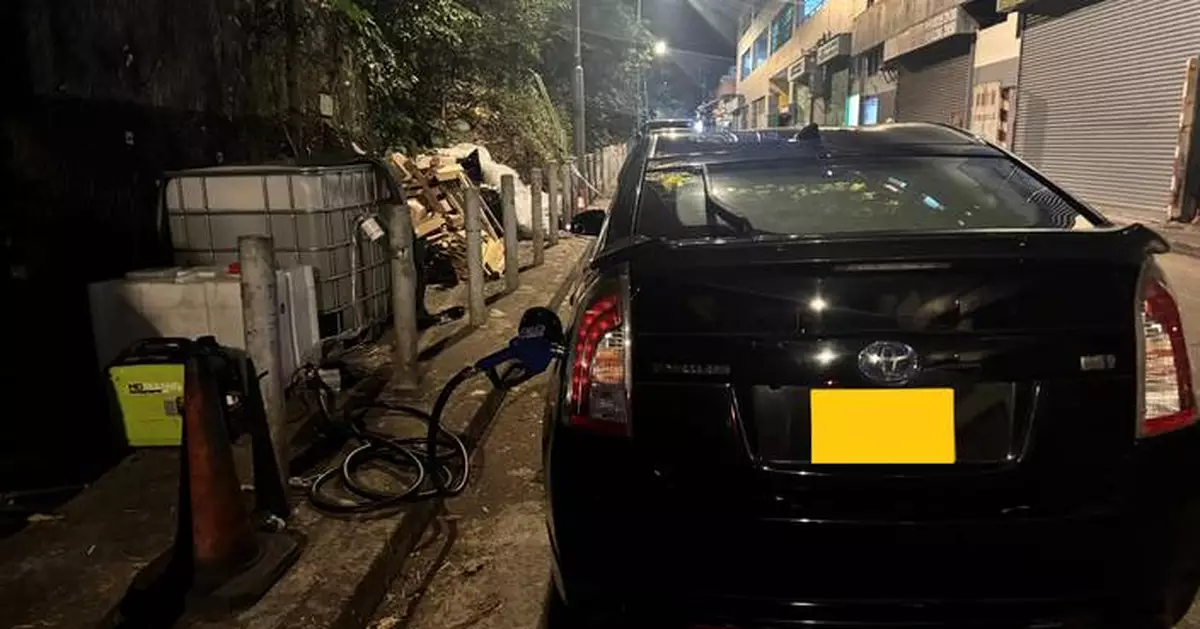
Moreover, Customs officers conducted an anti-illicit fuel operation in Fo Tan yesterday night and dismantled an illegal fueling station on a remote roadside. About 800 litres of suspected illicit motor spirit and a batch of filling equipment were seized. Two men, one believed to be the operator of the illegal fueling station, aged 38, and a private car driver coming for fueling, aged 32, were arrested. The private car was also detained.
The two arrested persons were charged with illegal dealing with dutiable commodities.
Customs will continue to carry out stringent enforcement action and step up inspections to combat illegal fuel activities. Members of the public are also urged not to patronise illegal fueling stations. The use of illicit fuel is a criminal offence, and vehicles involved may be liable to confiscation.
According to the Dutiable Commodities Ordinance, any vehicle found conveying illicit motor spirit, as well as any tools, equipment, or articles used or intended to be used in connection with the commission of related offences, shall be liable to forfeiture whether or not any person is convicted of any offence. Anyone involved in dealing with, possession of, selling or buying illicit motor spirit commits an offence. The maximum penalty upon conviction is a fine of $1 million and imprisonment for two years.
Members of the public may report any suspected illegal fuel activities to Customs' 24-hour hotline 182 8080 or its dedicated crime-reporting email account (crimereport@customs.gov.hk) or online form (eform.cefs.gov.hk/form/ced002).
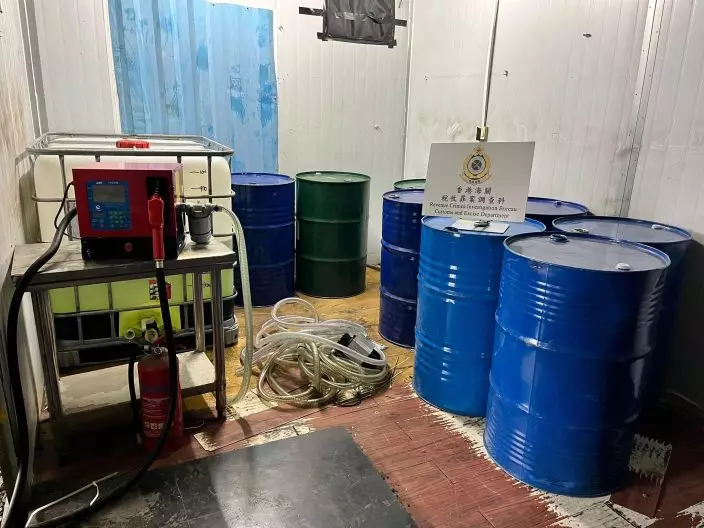
Photo shows the suspected illicit motor spirit seized. Source: HKSAR Government Press Releases
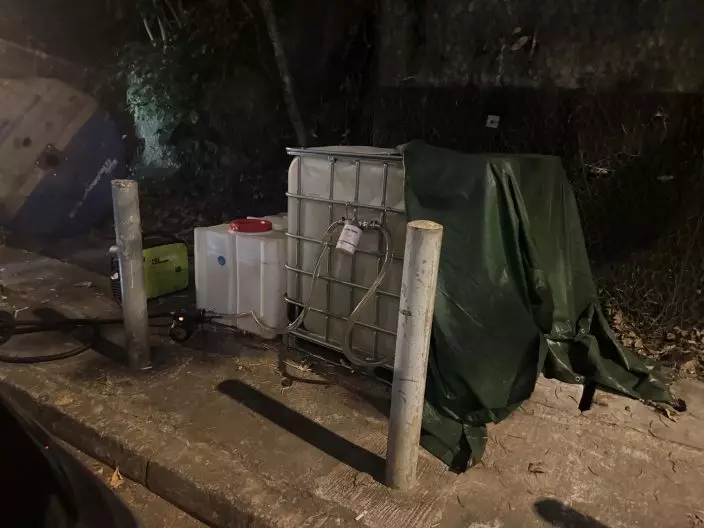
Photo shows the suspected illicit motor spirit seized. Source: HKSAR Government Press Releases
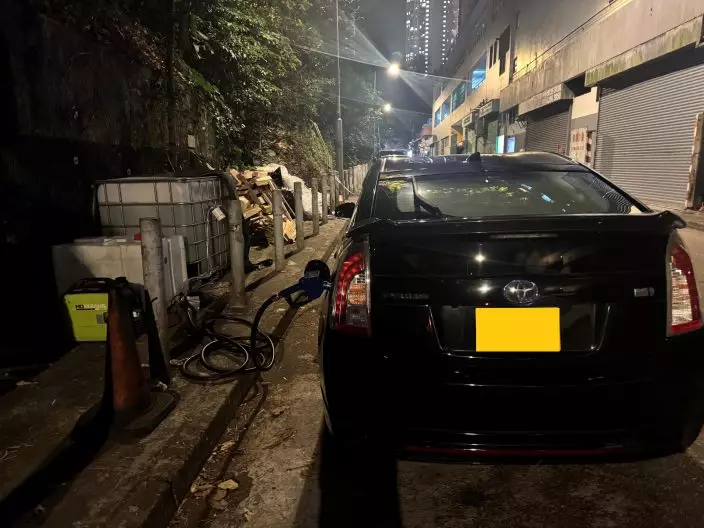
Photo shows the detained private car involved in the case. Source: HKSAR Government Press Releases
ExCo Non-official Members congratulate successful launch of manned Shenzhou-23 spacecraft
The following is issued on behalf of the Executive Council Secretariat:
Non-official Members of the Executive Council (ExCo) today (May 24) warmly congratulate the successful launch of the Shenzhou-23 manned spaceship. They extend their highest respect to all crew members, including Dr Lai Ka-ying, the first payload expert from the Hong Kong Special Administrative Region (HKSAR).
The Convenor of ExCo Non-official Members, Mrs Regina Ip, said, "This year marks the beginning of the National 15th Five-Year Plan. This mission is the first manned spaceflight during the 15th Five-Year Plan period and the first time a Hong Kong expert has participated, which is a truly momentous occasion. I extend my heartfelt gratitude to the country for providing Hong Kong's innovation and technology talent with this invaluable opportunity to take part in the country's aerospace endeavours. Dr Lai has successfully undergone the rigorous selection and training process to become one of the country's fourth batch of astronauts, and China's fourth female astronaut to reach space, contributing Hong Kong's strength to the national aerospace endeavours. She has exemplified the Lion Rock spirit of rising to challenges with resilience and perseverance. Her courage and determination are truly admirable, and all Hong Kong citizens are immensely inspired and proud of her. The understanding and support of her family are also essential for her to participate in this mission with resolution. I am deeply grateful for their support and commitment.
"The HKSAR Government is actively developing Hong Kong into an international innovation and technology centre and supporting promising research projects through various funding schemes. As an example, the Multi-Spectral Imaging Carbon Observatory (MUSICO) camera, developed under a project led by the Hong Kong University of Science and Technology and funded by the Government's Innovation and Technology Support Programme Special Call on Aerospace Technology, has successfully arrived at China's Tiangong Space Station, becoming Hong Kong's first scientific payload aboard the station. This fully demonstrates Hong Kong's innovation and technology edge and talent advantages."
Non-official Members of the Executive Council expressed their heartfelt gratitude to the country for its high recognition of Hong Kong's innovation and technology talent, development and achievements, as well as its profound emphasis, care and support for Hong Kong's scientific and technological development. They firmly believe that the HKSAR Government will seize this historic moment to nurture more outstanding innovation and technology talent for the country and Hong Kong, and better integrate into and serve the country's overall development.

Source: AI-found images