NEW YORK (AP) — Shoppers unexpectedly paused their spending in December from November, closing out the holiday shopping season and the year on a lackluster tone.
The report, issued by the Commerce Department on Tuesday, surprised economists who were looking for growth despite mounting concerns about slowing job growth, uncertainty about President Donald Trump's tariffs and other economic headwinds. And it raised questions about shoppers' ability to spend after they have remained resilient for months despite souring consumer confidence, economists said.
Retail sales were flat in December from November, when business was up 0.6%, according to the Commerce Department. Economists were expecting a 0.4% increase for December.
The report was delayed because of the 43-day government shutdown.
Sales in October fell 0.1%, rose 0.1% in September, but jumped 0.6% in July and August and 1% in June, according to the Commerce Department.
The retail sales figures, which are not adjusted for inflation, showed that many types of businesses posted declines including furniture and home furnishings stores and electronics and appliance retailers.
Among the few bright spots: building materials and garden stores, which posted a solid sales increase. Gas stations and food and beverage stores saw small sales gains.
The snapshot offers only a partial look at consumer spending and doesn’t include many services, including travel and hotel lodges. But the lone services category – restaurants – registered a dip of 0.1%.
The data comes as U.S. consumer confidence has been souring for months. In fact, confidence declined sharply in January, hitting the lowest level since 2014 as Americans grow increasingly concerned about their financial prospects.
“Consumer spending has finally caught up with consumer sentiment, and not in a good way,” Chris Zaccarelli, chief investment officer for Northlight Asset Management in Charlotte, North Carolina, wrote in a report published Tuesday.
He noted that consumer confidence numbers have been disappointing for months, and shoppers have been complaining about the cost of everything – and yet they kept spending.
But he added, “This month’s data show that consumers are no longer relentlessly increasing their level of spending.”
Thomas Ryan, North America economist at Capital Economics, also noted the report was worrisome, but given expected stimulus from the bigger tax refund checks, he thinks that consumption at the end of the first quarter of this year “may turn out to be a lot stronger than it currently looks at the start."
Economists will be closely monitoring a slew of economic reports on jobs and prices due out later this week.
But the economy is in a confusing place.
Growth is robust: Gross domestic product — the nation’s output of goods and services — advanced from July through September at the fastest pace in two years. But the job market is lackluster: Employers have added just 28,000 jobs a month since December.
In the 2021-2023 hiring boom that followed COVID-19 lockdowns, by contrast, they were creating 400,000 jobs a month.
When the agency releases hiring and unemployment numbers for January on Wednesday, they are expected to show that businesses, government agencies and nonprofits added about 80,000 jobs last month — modest but up from 50,000 in December.
Analysts will also be studying consumer price report, to be released Friday. In December, consumer prices matched the 0.3% increase in November. If inflation cools in the coming months, it could increase the likelihood the Federal Reserve will reduce its key interest rate later this year, economists say.
Against this backdrop, some chains like Walmart, whose everyday low prices have pulled in shoppers from rivals, are thriving but others struggle.
A growing number of retailers are closing stores as companies reorganize under bankruptcy protection or pare down their operations to focus on profitable operations.
On Monday, the operator of roughly 180 Eddie Bauer stores across the U.S. and Canada filed for Chapter 11 bankruptcy protection, blaming declining sales and a litany of other industry headwinds.
Last month, the parent company of Saks Fifth Avenue said it was seeking bankruptcy protection, buffeted by rising competition and the massive debt it took on to buy its rival in the luxury sector, Neiman Marcus, just over a year ago. A few days later, the parent company said it was closing most of its Saks Off 5th stores.
Amazon said earlier this month that it was closing almost all of its Amazon Go and Amazon Fresh locations within days as it narrows its focus on food delivery and its grocery chain, Whole Foods Market.
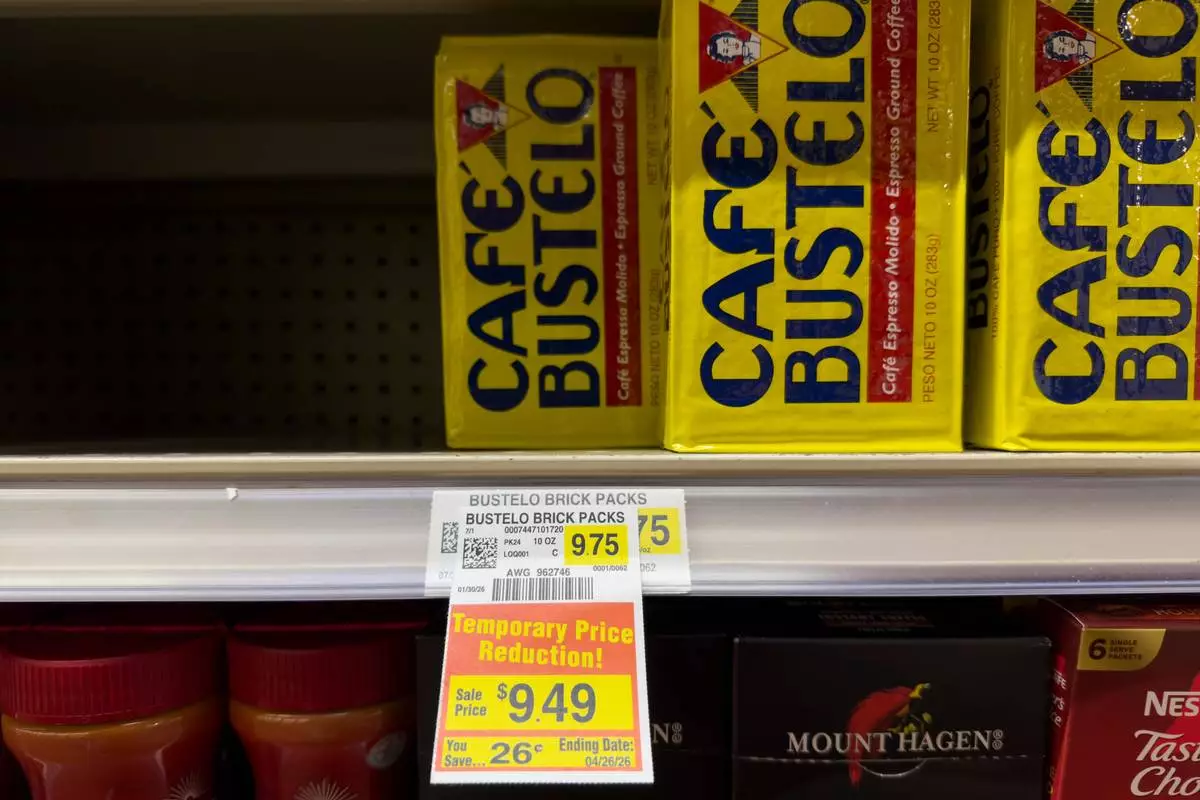
Coffee is for sale at a grocery store Monday, Feb. 9, 2026, in Chicago. (AP Photo/Erin Hooley)
PHOENIX (AP) — Ta'Niya Latson scored 16 and Agot Makeer added 14 points and South Carolina played stifling defense to beat UConn 62-48 on Friday night, ending the Huskies' 54-game winning streak and advancing to the women's NCAA Tournament championship game.
The Gamecocks will face the winner of Texas and UCLA semifinal on Sunday for the title, capping off another March Madness. South Carolina (36-3) will be looking to win its fourth national championship. Their other three have come in the last decade.
UConn (38-1) entered the Final Four undefeated for the ninth time in school history and for the third straight time left without a title. The Huskies also lost in the 2017 and 2018 national semifinals. This was the fewest points UConn had scored since putting up 49 points in a national championship game loss to the Gamecocks in 2022.
The Huskies and Gamecocks played last season for the title and UConn came away with an 82-59 rout for the school’s 12th national championship. UConn also beat South Carolina handily during the 2024-25 regular season.
With less than a second remaining in the game, UConn coach Geno Auriemma walked across the court to shake hands with Dawn Staley and had an animated conversation with the South Carolina coach while pointing to the floor. Staley yelled back at him as assistants from both teams separated the two.
When the clock ran out finally, Auriemma walked straight to the tunnel and didn’t shake hands. The two teams did shake hands.
The teams came into the game as the second- and third-leading scoring teams in the nation, both averaging over 87 points per game. This was a defensive battle.
Leading 46-44 a few minutes into the third quarter, South Carolina scored five straight points, capped by Agot Makeer’s 3-pointer to extend the advantage to seven.
Sarah Strong hit a 3-pointer to get the Huskies back within 51-47 with 4:39 left. The Huskies didn't score again until Strong hit a free throw with 30.8 seconds left, after South Carolina had scored 11 straight points.
South Carolina clamped down on UConn’s two stars. Strong, who was honored as the AP Player of the Year on Thursday, had 12 points and 12 rebounds, but went 4 for 16 from the field. Azzi Fudd had just eight points for the Huskies, making only 3 of 15 shots.
UConn had its worst shooting night of the season finishing 19 for 61 (31.1%) from the field.
Trailing 26-24 at the half, South Carolina opened the third quarter with a 12-2 run to take the lead. The Gamecocks extended the advantage to 40-30 — the biggest deficit the Huskies’ had faced this season.
UConn, which missed 10 of its first 11 3-point attempts, then started to get hot from the field, hitting three consecutive 3-pointers, the last by Fudd to get within 40-39. The All-America guard had missed seven of her first eight shots as she was blanketed by South Carolina’s defense.
South Carolina’s Tessa Johnson scored the final four points of the quarter to make it 44-39.
Both teams had cruised to the Final Four, each winning in the first four rounds of the tournament easily. The Huskies had been rarely challenged all season long, routing their Big East opponents by record margins.
Facing their first real test in a long time, they had no answer.
The opening 20 minutes was full of missed shots and turnovers. The two teams combined to shoot 22 for 62 from the field (35.4%) and had 14 turnovers. UConn led 26-24 at the half.
There were dozens of former Huskies and Gamecocks players in the crowd including Diana Taurasi, Paige Bueckers and Aliyah Boston. Boston was sitting next to Flavor Flav, who is a huge supporter of women’s sports.
AP March Madness bracket: https://apnews.com/hub/ncaa-womens-bracket and coverage: https://apnews.com/hub/march-madness
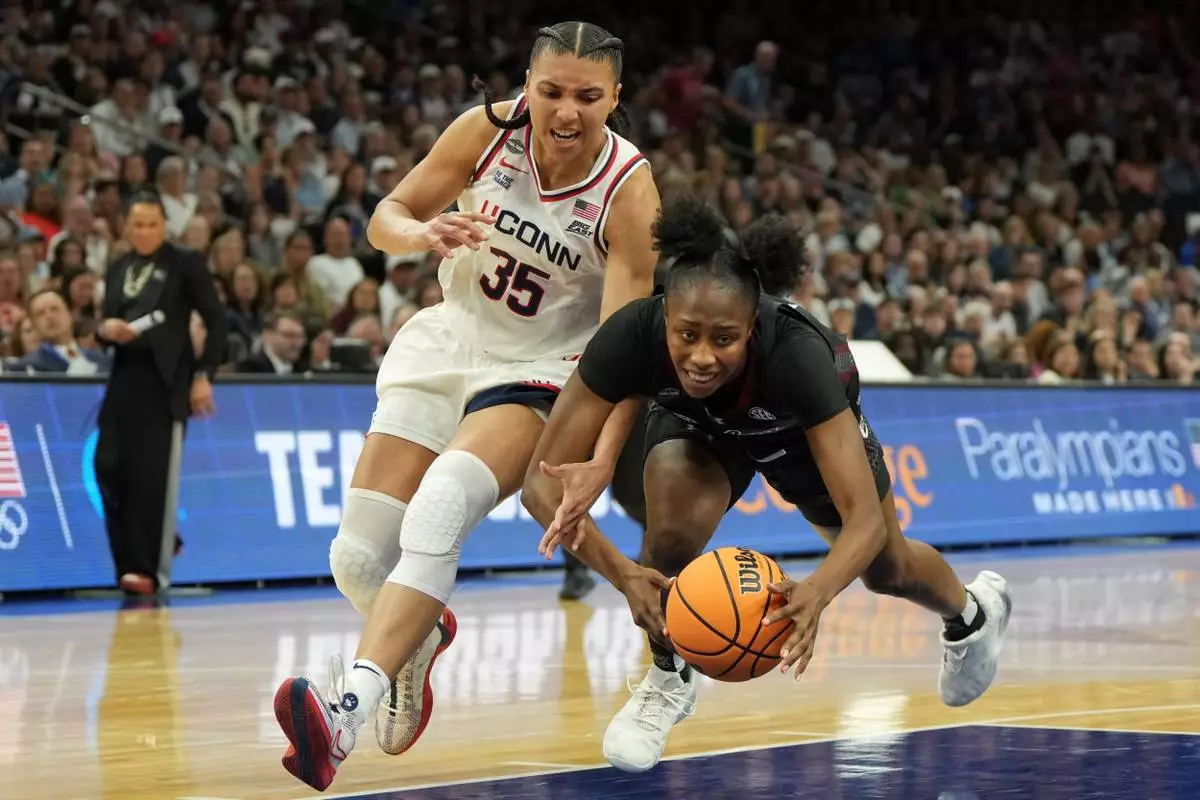
UConn guard Azzi Fudd (35) fouls South Carolina forward Joyce Edwards (8) during the second half of a woman's NCAA college basketball tournament semifinal game at the Final Four, Friday, April 3, 2026, in Phoenix. (AP Photo/Rick Scuteri)
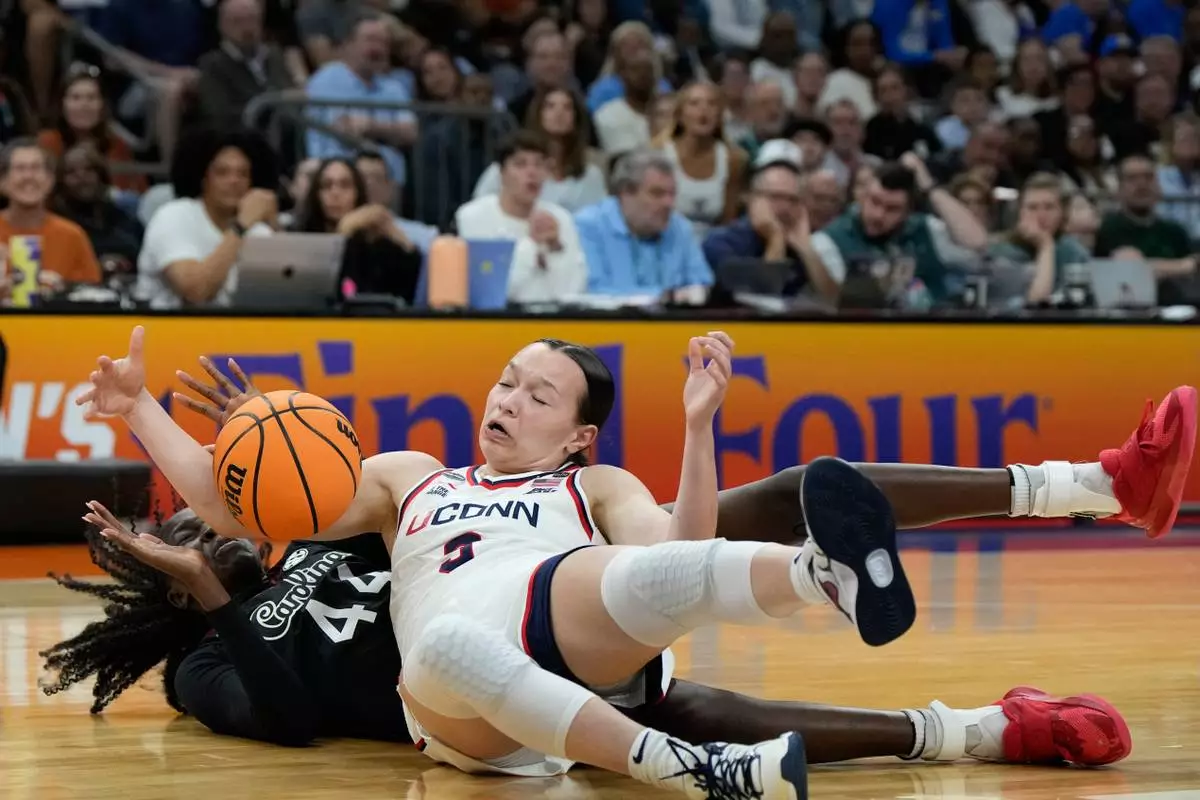
South Carolina guard Agot Makeer (44) and UConn guard Kayleigh Heckel (9) scramble for the ball during the second half of a woman's NCAA college basketball tournament semifinal game at the Final Four, Friday, April 3, 2026, in Phoenix. (AP Photo/Ross D. Franklin)
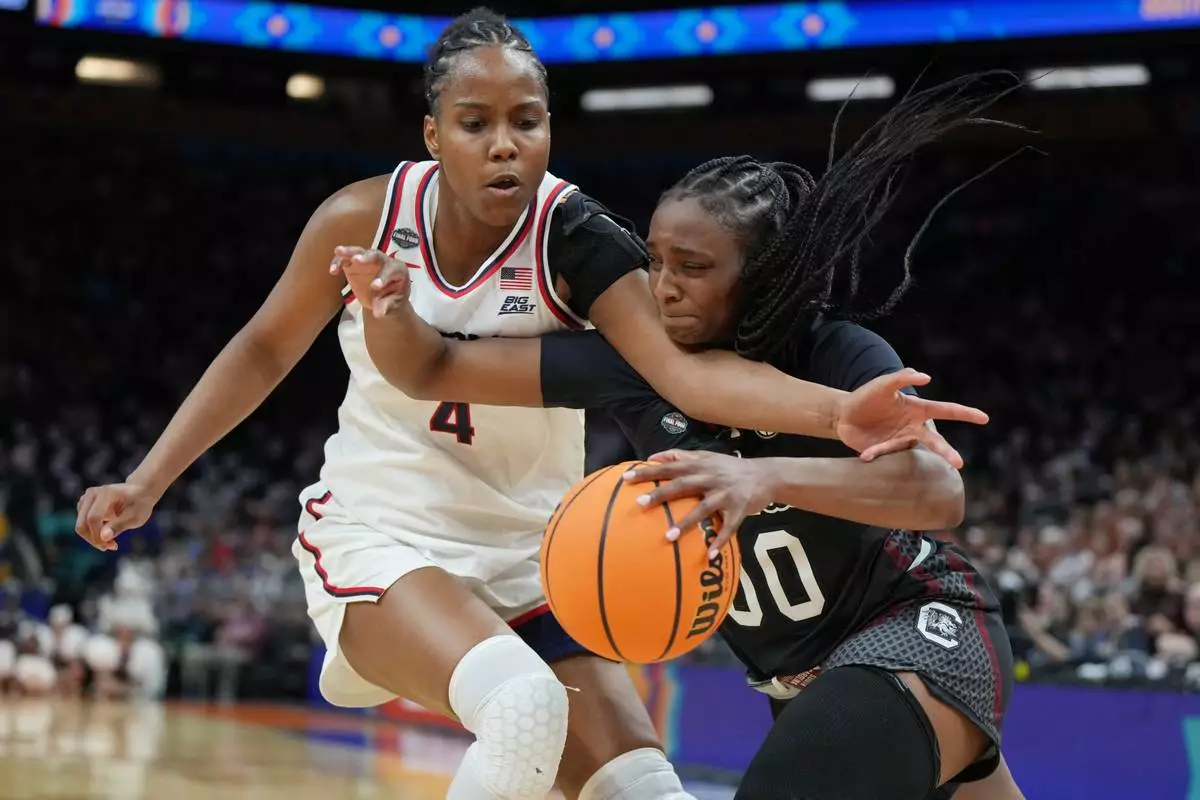
South Carolina guard Ta'Niya Latson (00) drives against UConn guard Blanca Quinonez (4) during the second half of a woman's NCAA college basketball tournament semifinal game at the Final Four, Friday, April 3, 2026, in Phoenix. (AP Photo/Rick Scuteri)
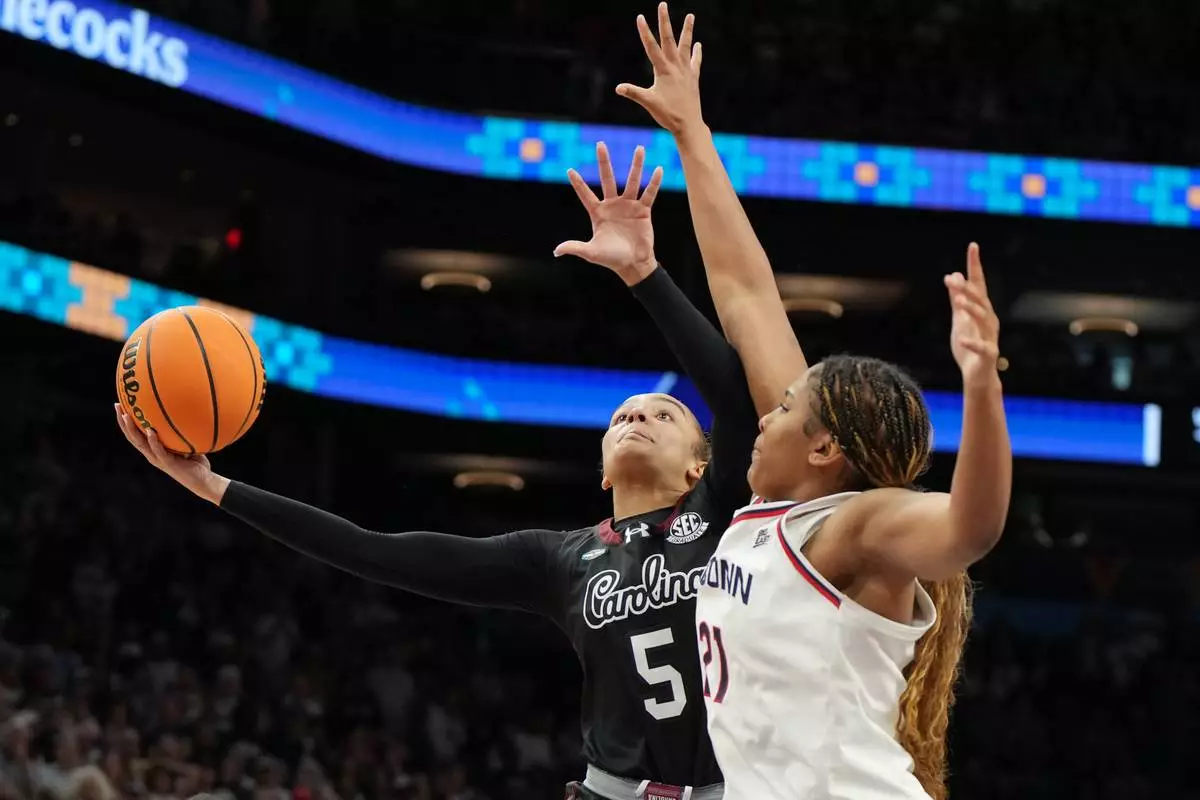
South Carolina guard Tessa Johnson (5) shoots over UConn forward Sarah Strong (21) during the second half of a woman's NCAA college basketball tournament semifinal game at the Final Four, Friday, April 3, 2026, in Phoenix. (AP Photo/Rick Scuteri)
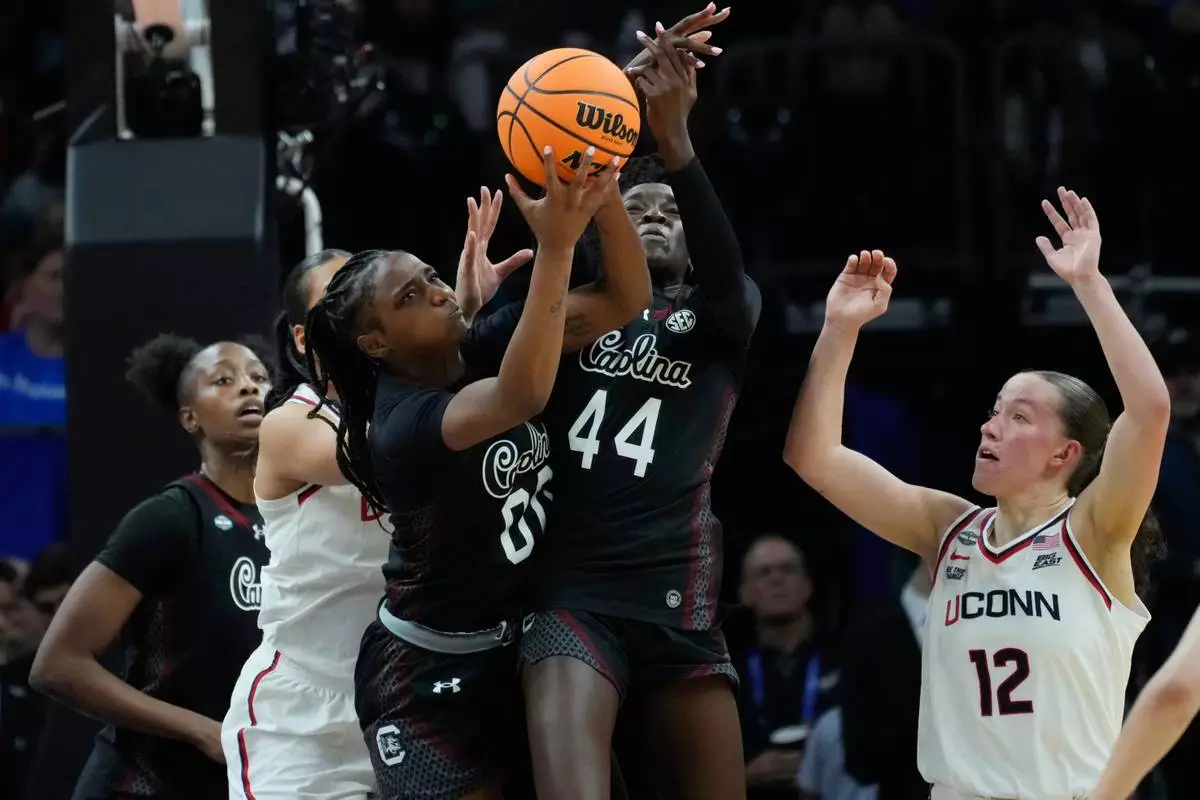
South Carolina guard Ta'Niya Latson (00) and South Carolina guard Agot Makeer (44) go for a rebound against UConn during the first half of a woman's NCAA college basketball tournament semifinal game at the Final Four, Friday, April 3, 2026, in Phoenix. (AP Photo/Ross D. Franklin)