MILAN (AP) — The U.S. women’s hockey team so thoroughly overwhelmed rival Canada that coach John Wroblewski issued a reminder that the 5-0 victory still left the Americans a long way from Olympic gold.
“What’s the hardest part of climbing the mountain?” the fourth-year coach asked.
Click to Gallery
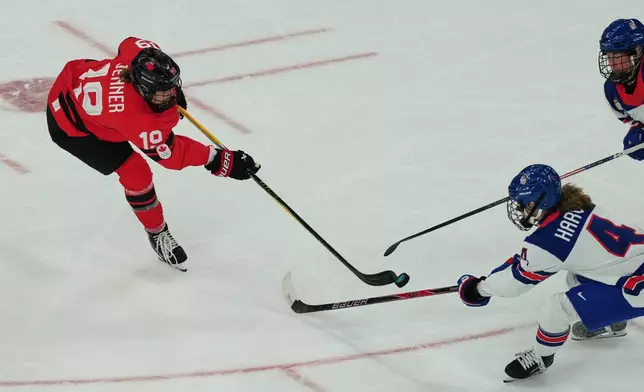
Canada's Brianne Jenner, left, challenges for the puck with United States' Caroline Harvey during a preliminary round match of women's ice hockey between USA and Canada at the 2026 Winter Olympics, in Milan, Italy, Tuesday, Feb. 10, 2026. (AP Photo/Antonio Calanni)
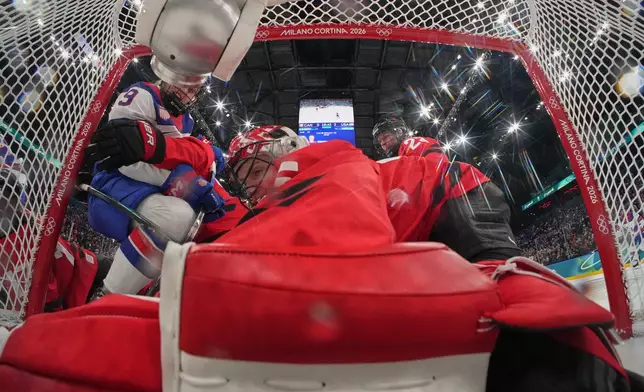
United States' Kirsten Simms, left, scores her side's third goal during a preliminary round match of women's ice hockey between Canada and the United States at the 2026 Winter Olympics, in Milan, Italy, Tuesday, Feb. 10, 2026. (Mike Segar/Pool Photo via AP)

US supporters cheer during a preliminary round match of women's ice hockey between USA and Canada at the 2026 Winter Olympics, in Milan, Italy, Tuesday, Feb. 10, 2026. (AP Photo/Petr David Josek)
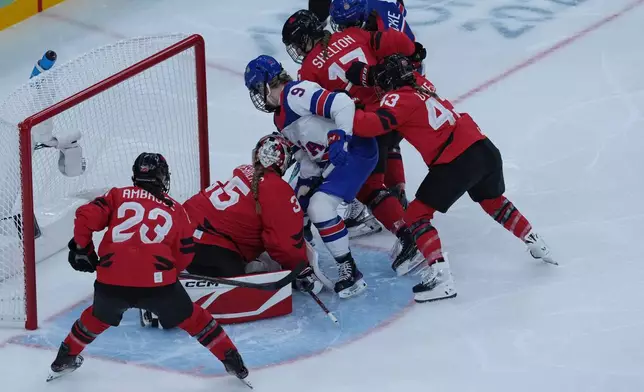
United States' Kirsten Simms scores her side's third goal during a preliminary round match of women's ice hockey between USA and Canada at the 2026 Winter Olympics, in Milan, Italy, Tuesday, Feb. 10, 2026. (AP Photo/Antonio Calanni)

United States players celebrate a goal by Kirsten Simms (9) during second period against Canaday in a preliminary round match of women's ice hockey between USA and Canada at the 2026 Winter Olympics in Milan, Italy, Tuesday, Feb. 10, 2026. (Nathan Denette/The Canadian Press via AP)

Germany's Emily Nix, left, scores her side's opening goal during a preliminary round match of women's ice hockey between Italy and Germany at the 2026 Winter Olympics, in Milan, Italy, Tuesday, Feb. 10, 2026. (AP Photo/Darko Bandic, Pool)
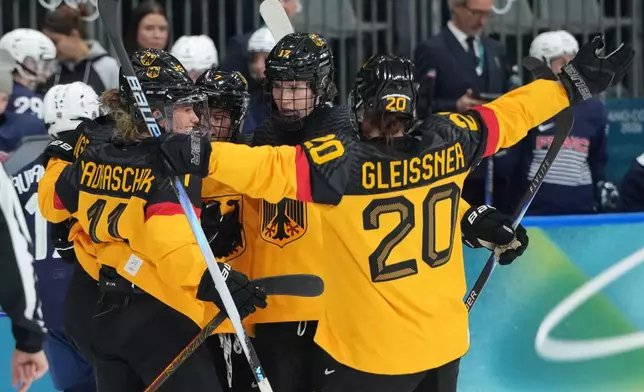
Germany's Laura Kluge (25), at left, celebrates with teammates including Nicola Hadraschek (11) and Daria Gleissner (20) and Emily Nix (17), after scoring a goal in the first period against France during a preliminary round match of women's ice hockey at the 2026 Winter Olympics, in Milan, Italy, Monday, Feb. 9, 2026. (AP Photo/Carolyn Kaster)
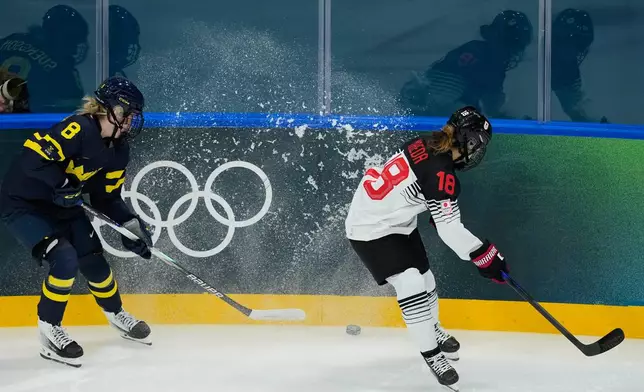
Japan's Suzuka Maeda, right, challenges Sweden's Hilda Svensson during a preliminary round match of women's ice hockey between Japan and Sweden at the 2026 Winter Olympics, in Milan, Italy, Tuesday, Feb. 10, 2026. (AP Photo/Hassan Ammar)
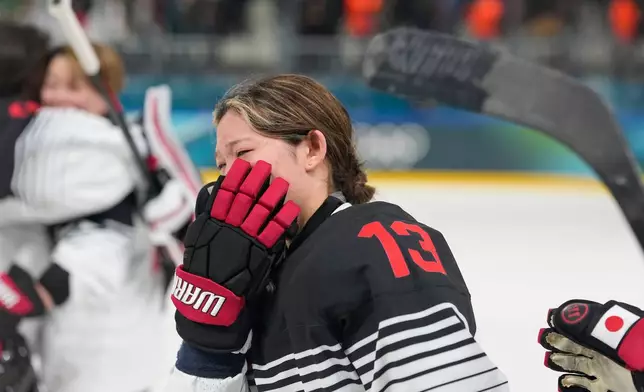
Japan's Yumeka Wajima cries end of a preliminary round match of women's ice hockey between Japan and Sweden at the 2026 Winter Olympics, in Milan, Italy, Tuesday, Feb. 10, 2026. (AP Photo/Hassan Ammar)
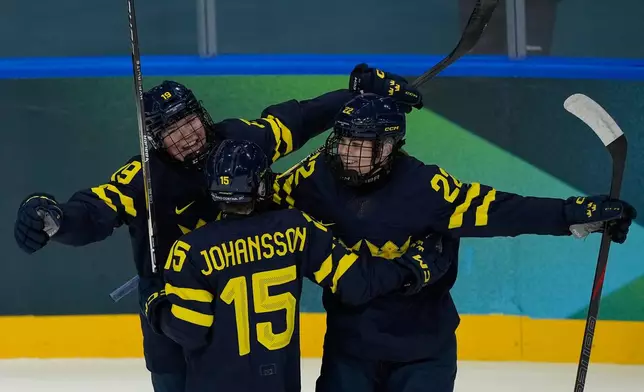
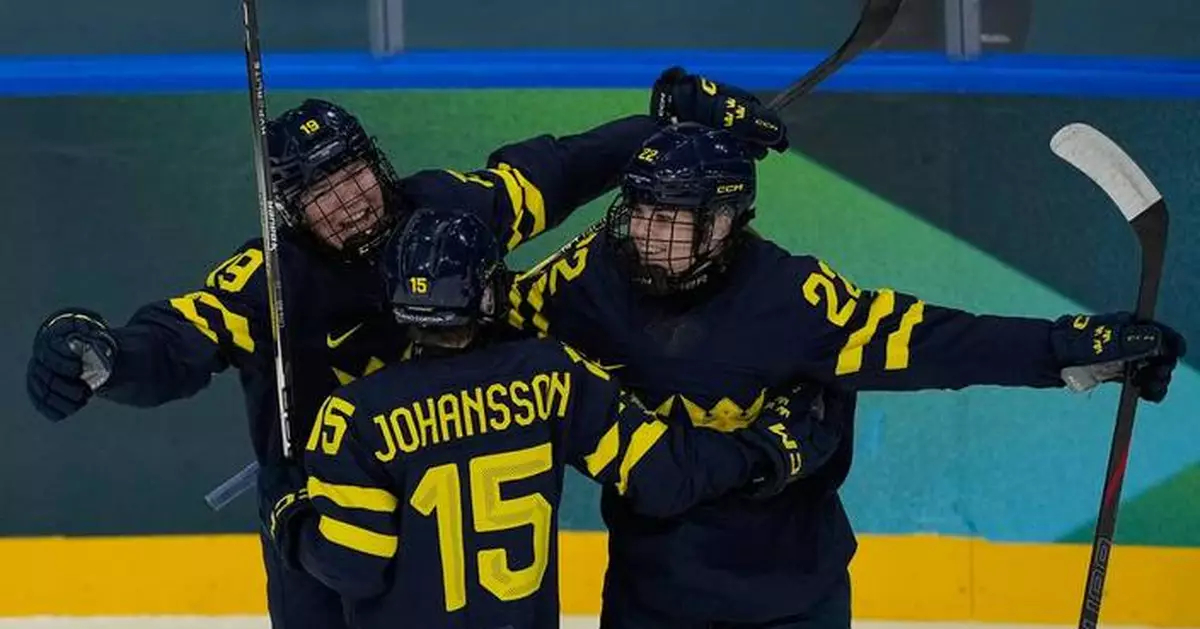
Sweden's Hanna Thuvik, right, celebrates after scoring her side's opening goal during a preliminary round match of women's ice hockey between Japan and Sweden at the 2026 Winter Olympics, in Milan, Italy, Tuesday, Feb. 10, 2026. (AP Photo/Hassan Ammar)
“Getting home,” he said, answering his own question. “If you ever feel good about climbing Mount Everest, it’s the way down. Oh, you think you’ve done something, that’s when the mountain eats you up.”
This was just a preliminary-round meeting between the sport's two global powers. The gold-medal game isn’t until Feb. 19.
The Americans are three wins away from a third gold medal after their lopsided victory over a Canadian team missing its captain, and clinched first place in Group A entering the quarterfinals. It was a performance that continued confirming why the U.S. entered the tournament as favorites.
“I don’t think it’s any easier than expected,” forward Tessa Janecke said of Canada’s most lopsided loss in Olympic play, and first time the team has ever been blanked.
“I think we go in with the same mindset, and I think it was just a good team win overall for us,” she added. “So I think we just went in and did it like any other game. It doesn’t matter who we’re playing.”
Team USA swept all four preliminary-round games by a combined score of 20-1, and brought back memories of how a Canadian team in its prime rolled to winning gold at the 2022 Beijing Games.
The tables have since turned, and it was evident on the scoresheet from a roster featuring seven players still in college.
The University of Wisconsin’s Caroline Harvey had a goal and two assists, with Badger teammates Laila Edwards and Kristen Simms also scoring. The goal was Edwards’ first in her Olympic debut in being the first Black woman to represent the U.S.
University of Minnesota captain Abbey Murphy set up three goals.
Canada, meantime, opened tentatively, and then ran into penalty problems minus its longtime leader, Marie-Philip Poulin, who sustained a lower-body injury in a 5-1 win over Czechia a day earlier.
Not having their so-called “Captain Clutch” in the lineup was still no excuse for coach Troy Ryan.
“We just didn’t play very well at all. Irresponsible with the puck, like just poor puck management,” Ryan said. “And it’s not that there’s not confidence, but we played like we didn’t have confidence with the puck.”
Ryan said Poulin will be re-assessed and would likely miss Canada’s preliminary-round finale against Finland on Thursday. He was otherwise optimistic Poulin would be back in the lineup potentially as soon as Saturday for the Canadians' quarterfinal game.
The U.S. will open the quarterfinals against host nation Italy, which went 2-2 in clinching the third and final Group B playoff spot.
Aerin Frankel stopped 20 shots for her third win and second shutout in her first Olympic tournament. And even 36-year-old captain Hilary Knight added an assist — the 32nd Olympic point of her career to tie Jenny Potter for most by a U.S. women’s hockey player.
“Our team’s making my life pretty easy,” Frankel said. “It’s been so much fun to play behind them.”
And impressive to watch.
“It’s incredible. So much speed, so much skill,” Frankel said. “It’s hopefully really, really hard to play against us and frustrating as well.”
Whatever “O, Canada” buzz there was amid a large Maple Leaf flag-waving capacity crowd quickly dampened on a drizzly day outside the 11,600-seat Santagiulia Ice Hockey Arena. And the soundtrack instead became the sound of the U.S. goal song, Lynyrd Skynyrd’s “Free Bird.”
Harvey opened the scoring 3:45 in by driving in from the left point and snapping a shot beating Ann-Renee Desbiens.
The Americans’ speed and quick-strike ability was evident on their next goal wiht 2:42 left in the first period, when Murphy chased down Harvey’s pass in the right corner. Murphy immediately spun and sent a no-look pass Bilka converted by driving to the net.
Simms made it 3-0 by jamming the puck over the line 72 seconds into the second period and Murphy set up Bilka for another one-timer some six minutes later.
Desbiens allowed five goals on 27 shots and was pulled after Edwards scored with 8:07 left. She was replaced by Emerance Maschmeyer, who finished with five saves.
Canada’s worst fears were realized in opening the game minus Poulin, after concerns were already raised after the U.S. dominated in sweeping a four-game exhibition pre-Olympic Rivalry Series. The Americans outscored Canada by a combined margin of 24-7.
The U.S. has now defeated Canada in seven straight meetings, dating to the preliminary round and gold-medal game of the world championships in April.
“We had a lot of breakdowns in our game. We would make one mistake that led to another mistake, and sometimes those things kind of compound,” Canadian assistant captain Blayre Turnbull said. “I think there’s a lot of things that we can learn and move forward and hopefully make some positive changes.”
Ebba Svensson Traff stopped 20 shots to post her first Olympic shutout and Group B champion Sweden completed its four-game preliminary round sweep with a 4-0 win over Japan. Sweden outscored its opponents by a combined 18-2, and will play Group A’s third seed in the quarterfinals.
Sweden forward Hilda Svensson did not return after falling awkwardly into the boards five minutes into the game. The team said she sustained a lower-body injury. They described the injury as not serious and said a doctor decided to keep her from returning to play for precautionary reasons.
Japan's ninth-place finish is the lowest in the nation's five Olympic appearances, and after finishing sixth at the 2022 Beijing Games.
Finland beat Switzerland 3-1, scoring for the first time this tournament after being shut out in each of its first two games following a norovirus outbreak that decimated the roster.
Laura Kluge’s breakaway goal with 1:29 left in regulation secured Germany’s 2-1 win over Italy and second place in the Group B standings. Emily Nix also scored for Germany.
Justine Reyes scored for Italy, which advanced for the first time in two Olympic appearances — both as the host team.
AP Olympic coverage: https://apnews.com/hub/milan-cortina-2026-winter-olympics
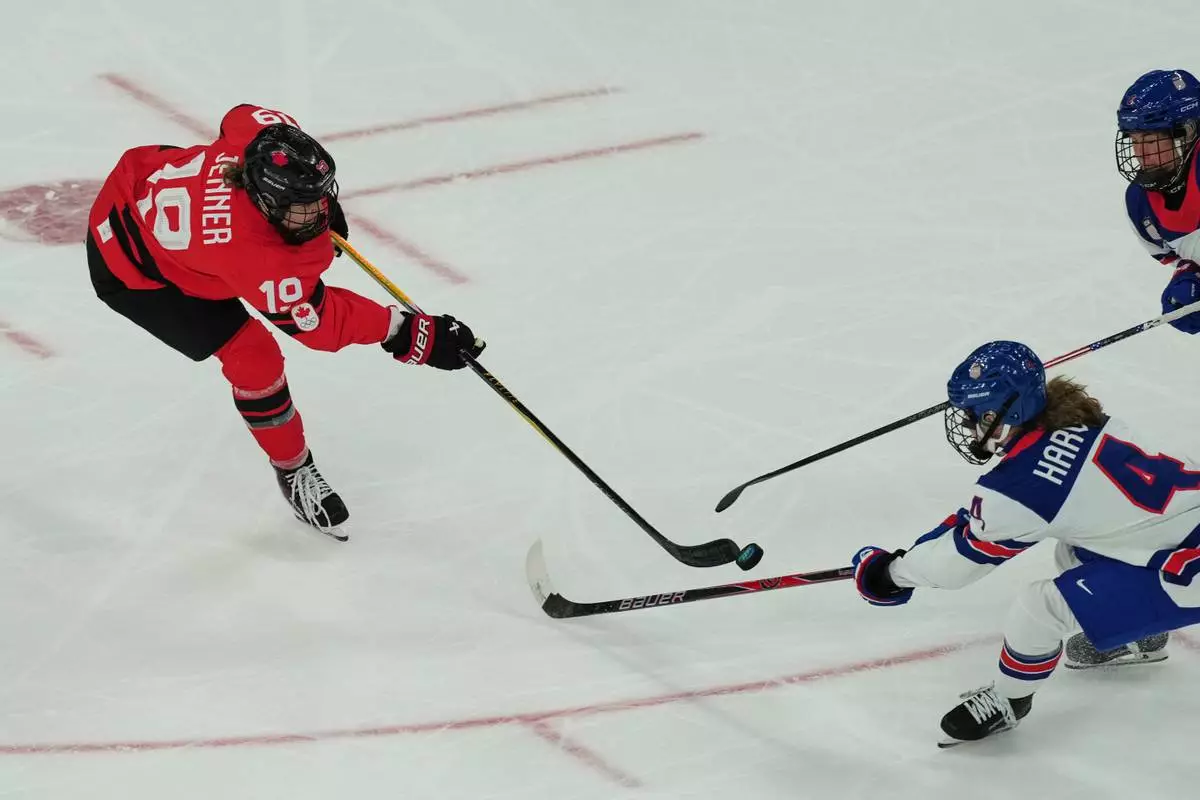
Canada's Brianne Jenner, left, challenges for the puck with United States' Caroline Harvey during a preliminary round match of women's ice hockey between USA and Canada at the 2026 Winter Olympics, in Milan, Italy, Tuesday, Feb. 10, 2026. (AP Photo/Antonio Calanni)
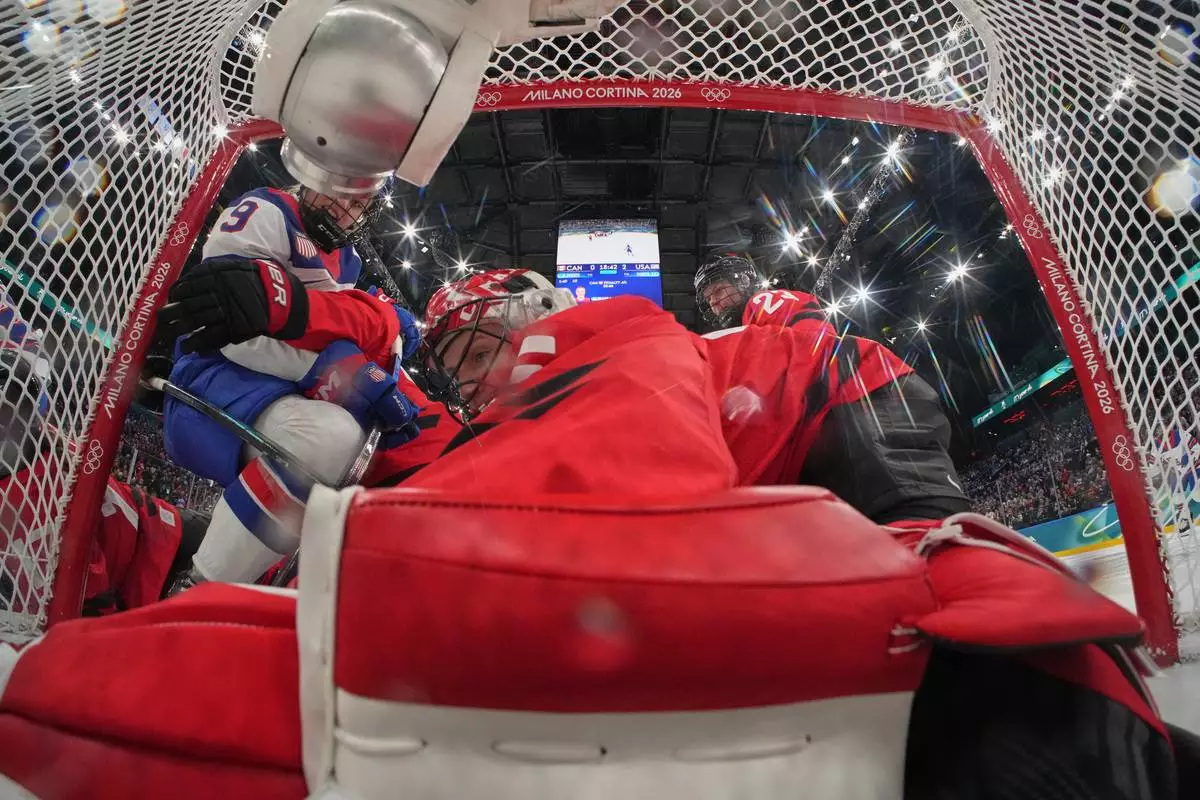
United States' Kirsten Simms, left, scores her side's third goal during a preliminary round match of women's ice hockey between Canada and the United States at the 2026 Winter Olympics, in Milan, Italy, Tuesday, Feb. 10, 2026. (Mike Segar/Pool Photo via AP)

US supporters cheer during a preliminary round match of women's ice hockey between USA and Canada at the 2026 Winter Olympics, in Milan, Italy, Tuesday, Feb. 10, 2026. (AP Photo/Petr David Josek)
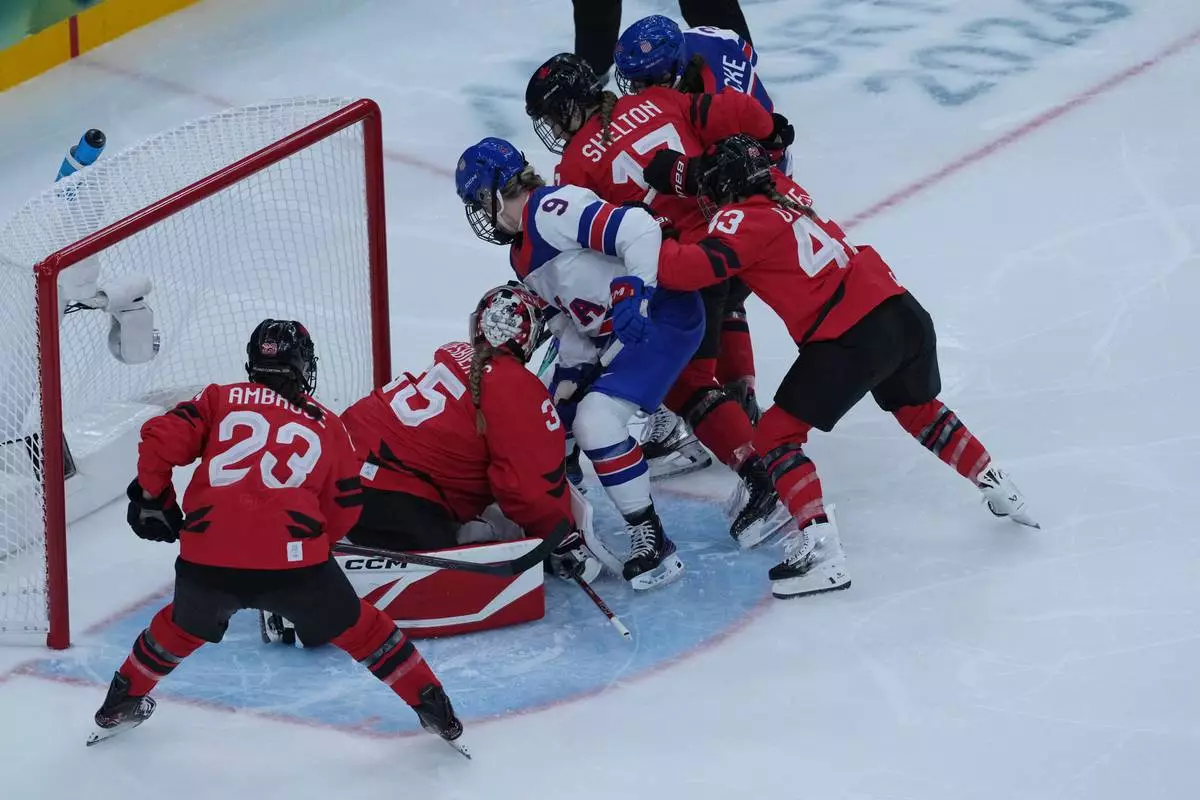
United States' Kirsten Simms scores her side's third goal during a preliminary round match of women's ice hockey between USA and Canada at the 2026 Winter Olympics, in Milan, Italy, Tuesday, Feb. 10, 2026. (AP Photo/Antonio Calanni)
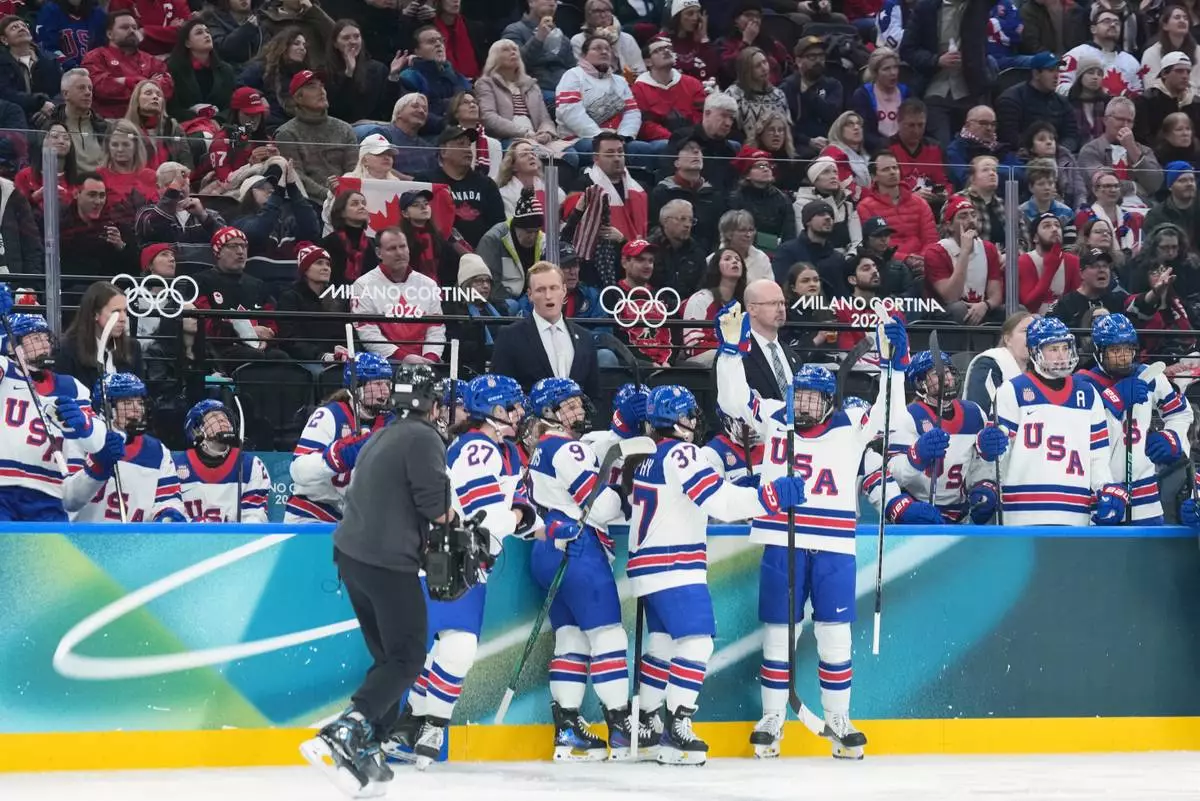
United States players celebrate a goal by Kirsten Simms (9) during second period against Canaday in a preliminary round match of women's ice hockey between USA and Canada at the 2026 Winter Olympics in Milan, Italy, Tuesday, Feb. 10, 2026. (Nathan Denette/The Canadian Press via AP)
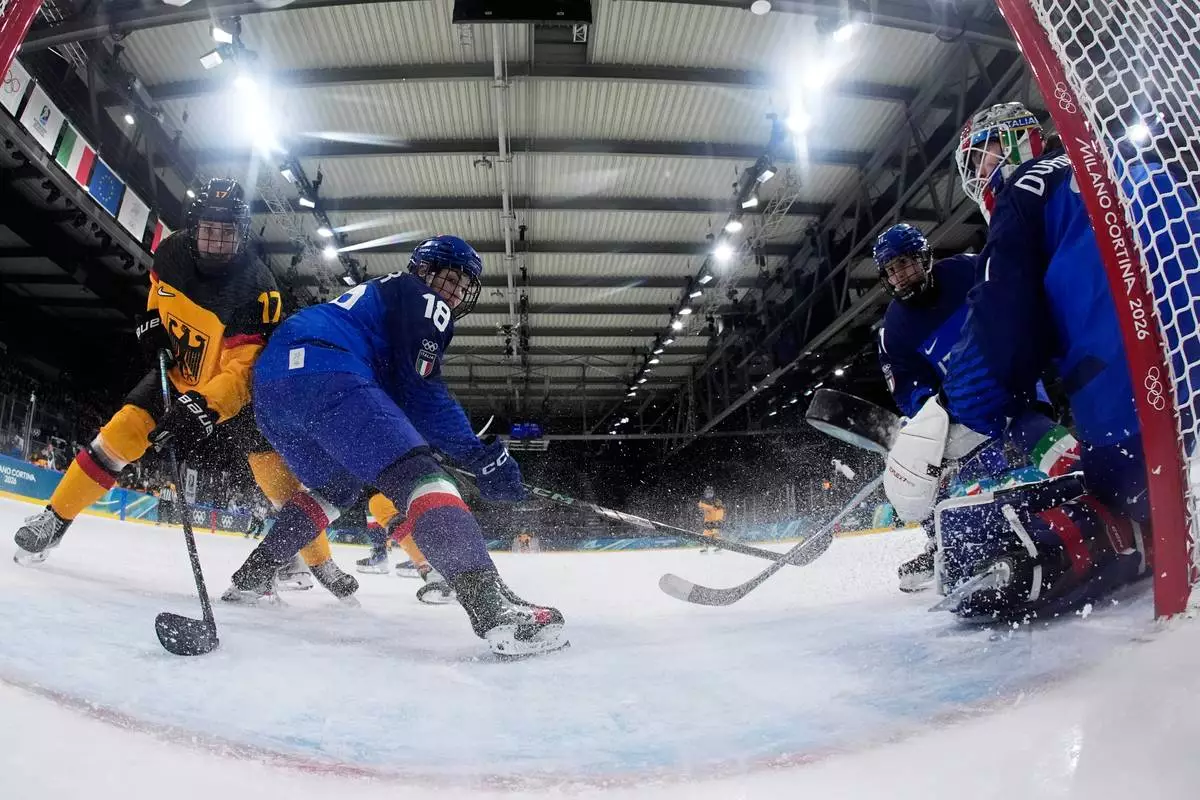
Germany's Emily Nix, left, scores her side's opening goal during a preliminary round match of women's ice hockey between Italy and Germany at the 2026 Winter Olympics, in Milan, Italy, Tuesday, Feb. 10, 2026. (AP Photo/Darko Bandic, Pool)
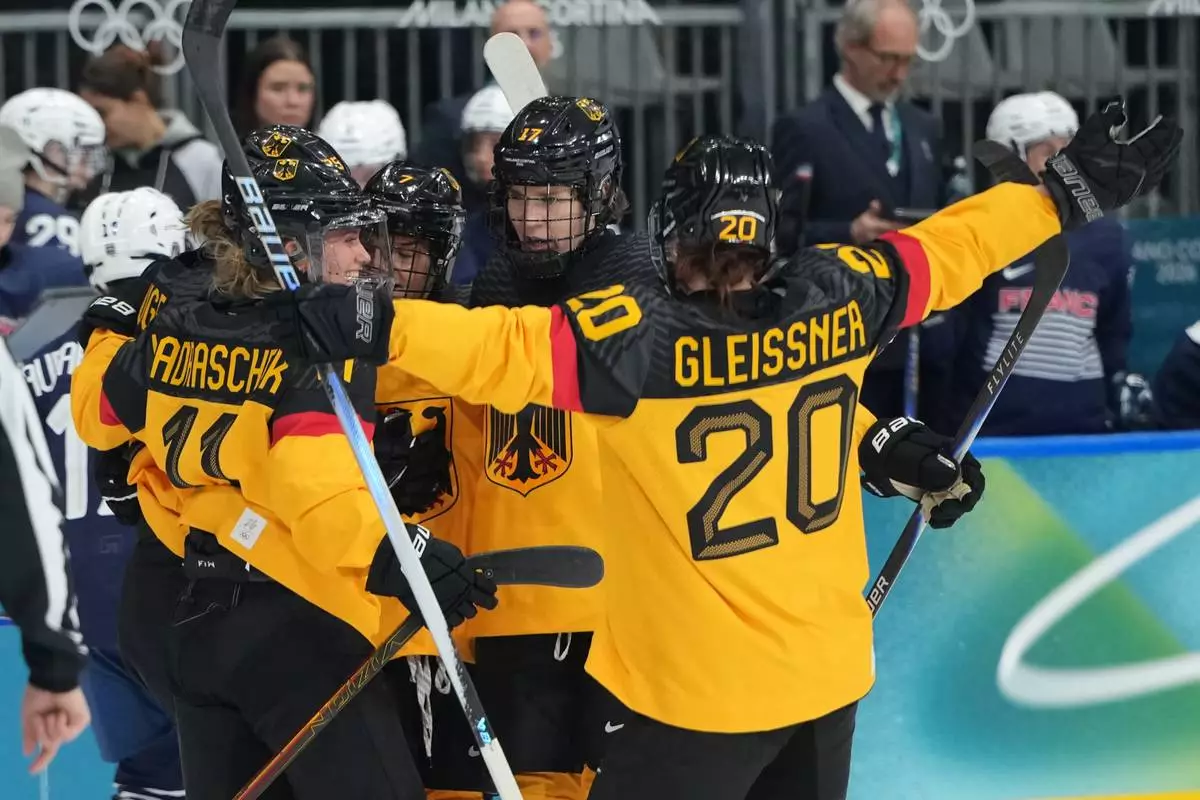
Germany's Laura Kluge (25), at left, celebrates with teammates including Nicola Hadraschek (11) and Daria Gleissner (20) and Emily Nix (17), after scoring a goal in the first period against France during a preliminary round match of women's ice hockey at the 2026 Winter Olympics, in Milan, Italy, Monday, Feb. 9, 2026. (AP Photo/Carolyn Kaster)
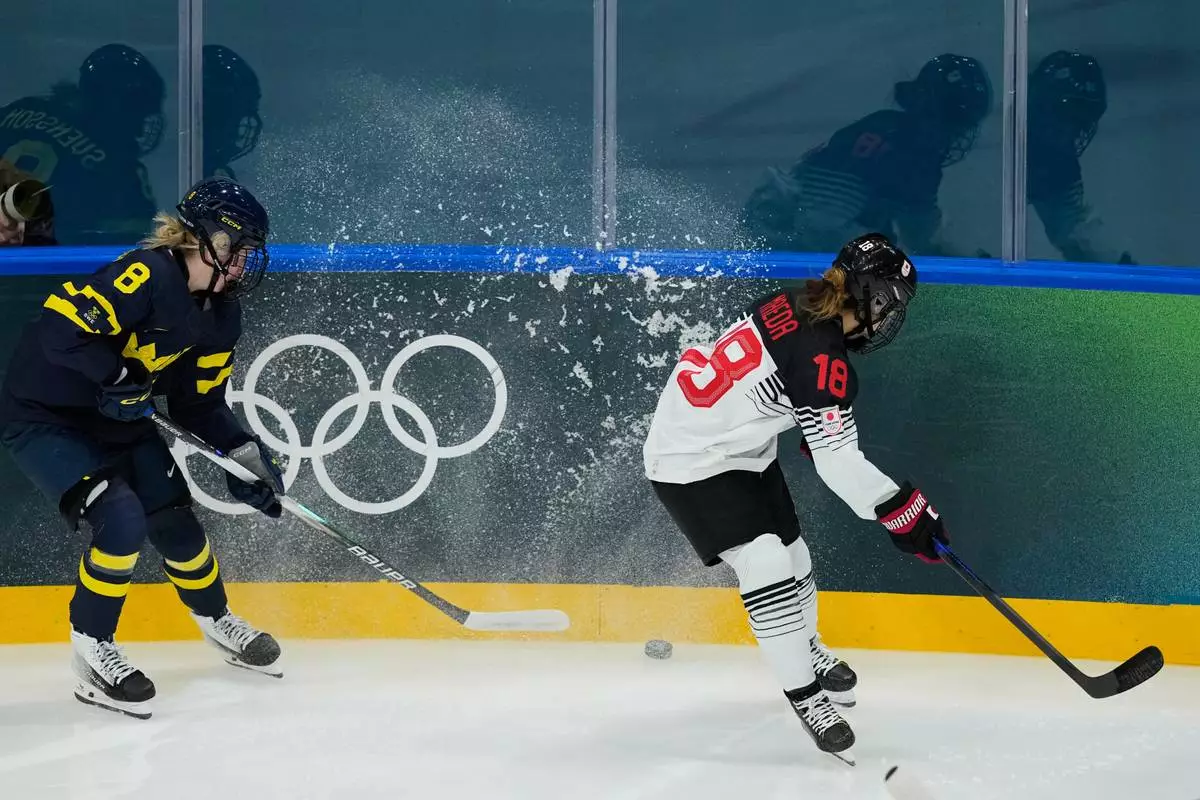
Japan's Suzuka Maeda, right, challenges Sweden's Hilda Svensson during a preliminary round match of women's ice hockey between Japan and Sweden at the 2026 Winter Olympics, in Milan, Italy, Tuesday, Feb. 10, 2026. (AP Photo/Hassan Ammar)
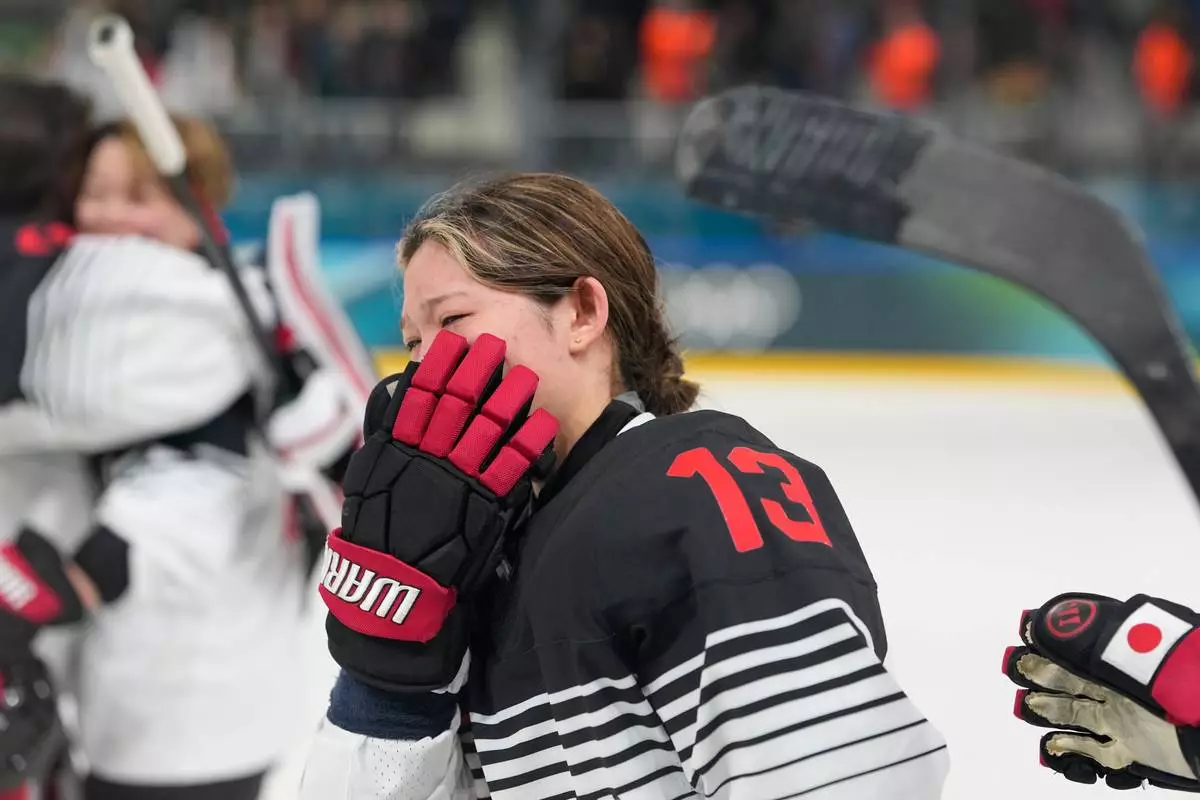
Japan's Yumeka Wajima cries end of a preliminary round match of women's ice hockey between Japan and Sweden at the 2026 Winter Olympics, in Milan, Italy, Tuesday, Feb. 10, 2026. (AP Photo/Hassan Ammar)
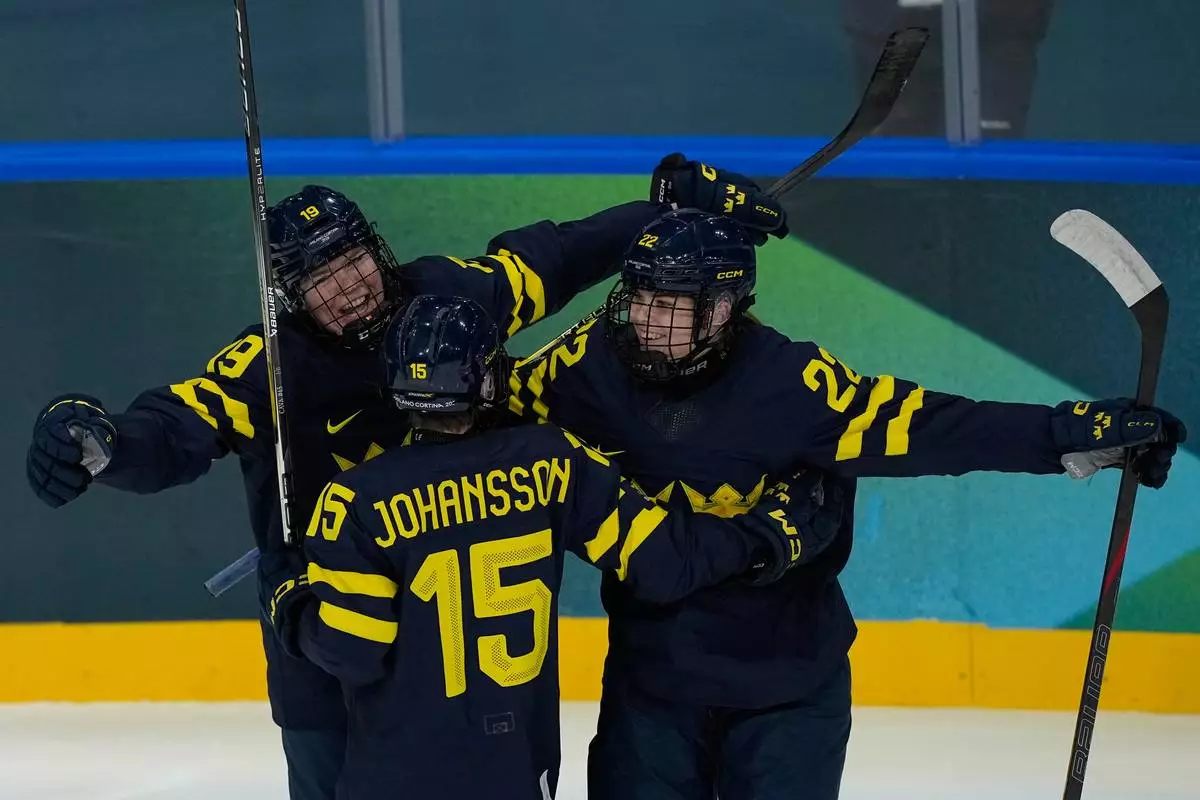
Sweden's Hanna Thuvik, right, celebrates after scoring her side's opening goal during a preliminary round match of women's ice hockey between Japan and Sweden at the 2026 Winter Olympics, in Milan, Italy, Tuesday, Feb. 10, 2026. (AP Photo/Hassan Ammar)