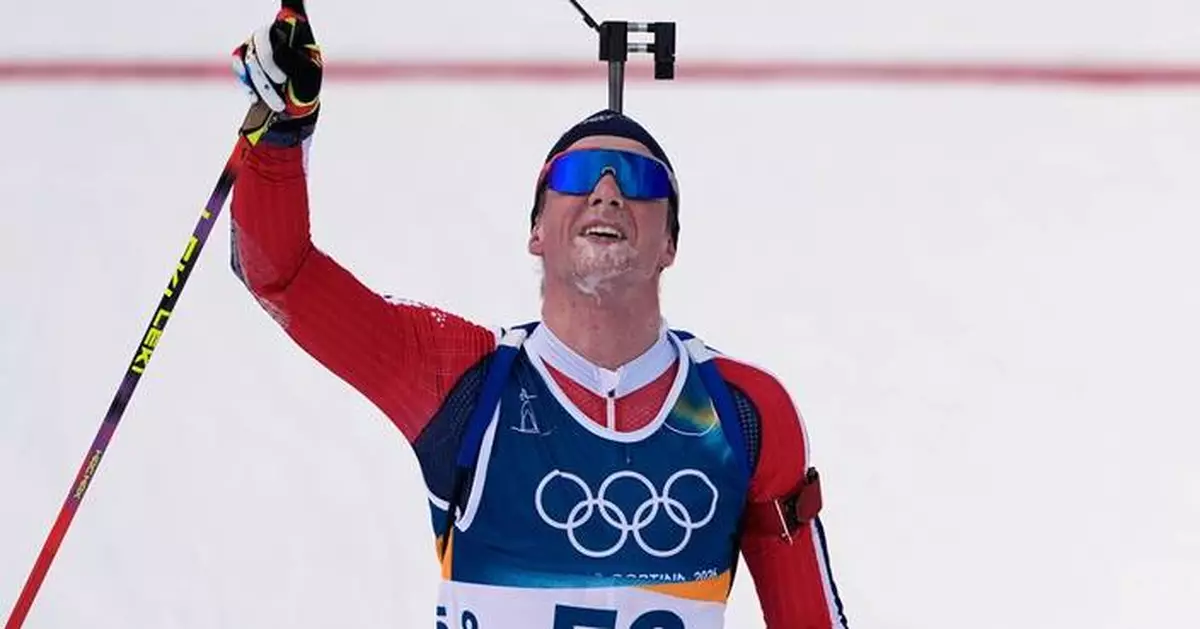
ANTERSELVA, Italy (AP) — Johan-Olav Botn of Norway shot perfectly in his Olympic debut to secure the gold medal in the men’s 20-kilometer individual biathlon at the Milan Cortina Winter Games on Tuesday.
Eric Perrot of France, the overall World Cup leader, missed one shot and finished 14.8 seconds behind to take silver. Botn's teammate, Sturla Holm Laegreid, was 48.3 seconds behind for third, also with one miss.
Click to Gallery
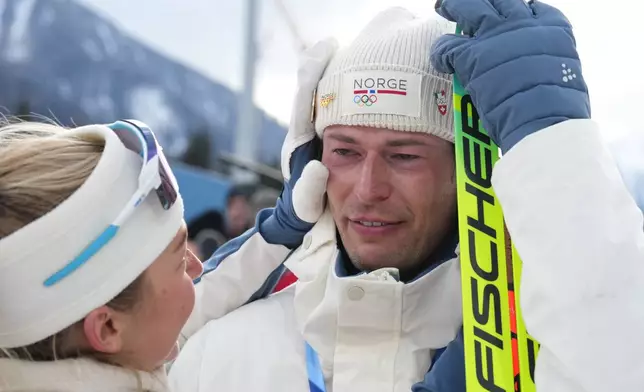
ADDS NAME OF TEAMMATE - Sturla Holm Laegreid, of Norway, reacts after he won bronze as teammate Ingrid Landmark Tandrevold comforts him after the men's 20-kilometer individual biathlon race at the 2026 Winter Olympics in Anterselva, Italy, Tuesday, Feb. 10, 2026. (AP Photo/Andrew Medichini)
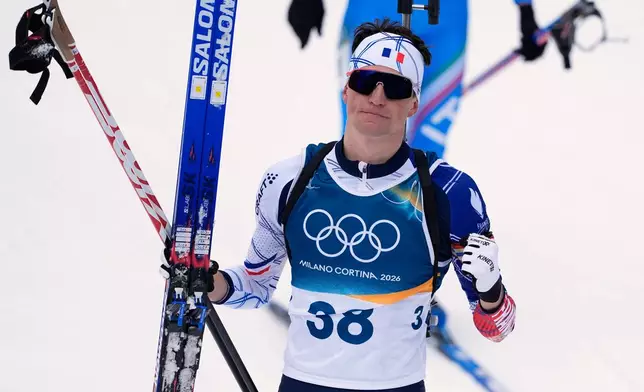
Eric Perrot, of France, reacts after finishing the men's 20-kilometer individual biathlon race at the 2026 Winter Olympics in Anterselva, Italy, Tuesday, Feb. 10, 2026. (AP Photo/Andrew Medichini)
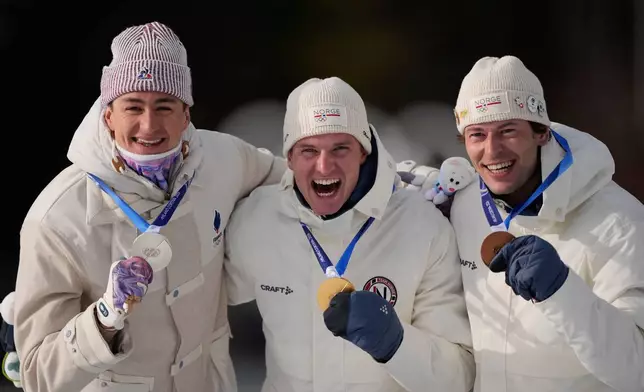
Silver medalist Eric Perrot, of France, from left, gold medalist Johan-Olav Botn, of Norway, and bronze medalist Sturla Holm Laegreid, of Norway, pose after the men's 20-kilometer individual biathlon race at the 2026 Winter Olympics in Anterselva, Italy, Tuesday, Feb. 10, 2026. (AP Photo/Mosa'ab Elshamy)
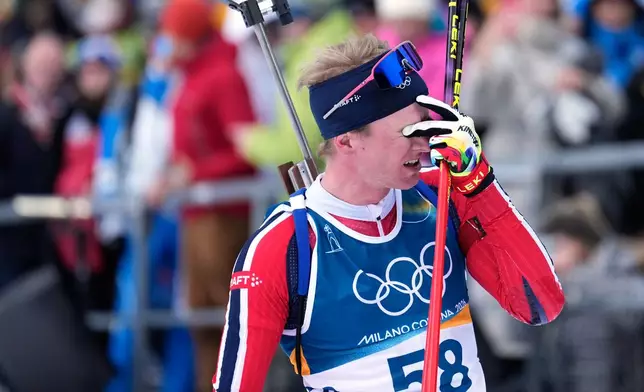
Johan-Olav Botn, of Norway, reacts after competing in the men's 20-kilometer individual biathlon race at the 2026 Winter Olympics in Anterselva, Italy, Tuesday, Feb. 10, 2026. (AP Photo/Mosa'ab Elshamy)
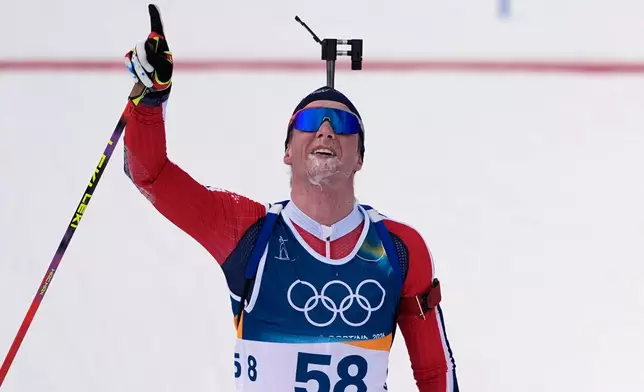
Johan-Olav Botn, of Norway, reacts after finishing the men's 20-kilometer individual biathlon race at the 2026 Winter Olympics in Anterselva, Italy, Tuesday, Feb. 10, 2026. (AP Photo/Andrew Medichini)
Norway’s seventh Olympic gold in the individual race was complemented by Laegreid's first individual Olympic medal.
Botn pointed to the sky as he crossed the finish line, remembering teammate Sivert Guttorm Bakken, who was found dead in his hotel room in Lavaze, Italy, in December. Botn said his thoughts went to his friend after his last shoot.
“It was quite an emotional last loop for me,” Botn said. “I felt like I was racing with him. I hope he was watching and I hope he is proud of what I was doing.”
Perrot, also racing in his first Olympics, said it was “a crazy day and a crazy fight."
“No regrets, I gave it my all,” Perrot said. "I’m proud about that. Johan was just better than me today so congratulations to him.”
Laegreid also wept after the race, saying he was struggling with a personal situation that made racing difficult. He led the race for a while but said he cracked under the pressure.
“In the shooting, when I missed I went a bit defensive to secure the gold, but in this sport you can’t be defensive, you have to attack all the time,” he said. “Luckily I managed to turn the tables on the last shoot, and with amazing skis from the team, and (my) good shape, I was able to win bronze.”
Under cloudy skies, each racer left the start gate at 30-second intervals, skied four-kilometer loops five times and alternated shooting twice each in the prone and standing positions. The individual is the most challenging biathlon race format. Instead of skiing a 150-meter penalty loop for each missed shot, one minute is added to their overall time. The Südtirol Arena sits at 5,200 feet (1,600 meters) above sea level, making skiing more challenging.
Tommaso Giacomel of Italy, ranked second in the world, was sixth, 2:27 back, after missing three targets. Defending Olympic individual champion Quentin Fillon Maillet of France missed four and finished eighth, 2:49 behind. Perrot and Fillon Maillet were partnered on the gold-medal winning mixed relay team on Sunday.
American biathlete Campbell Wright drew cheers as he passed in front of the packed stands, smiling widely and waving his arms to encourage support. But he said his body wasn't responding as he wanted, which set him back. He was 27th with two penalties.
“I'll try again in a few days," Wright said, referring to Friday's 10K sprint race. "Just because you have a bad day doesn't mean you need to be in a (bad) mood. So I was trying to enjoy myself. Legs didn't show up. Hopefully they'll return to me."
Johannes Thingnes Bø won four gold medals and one bronze four years ago at the Beijing Games, but Norway rebuilt the biathlon team after he retired last year.
“I’ve felt like we have done a good job,” Botn said, “but we can always perform better.”
Norwegian biathlon coach Siegfried Mazet said coming into the Milan Cortina Olympics without Bø was different but he was confident in their medal chances.
“We have a new routine with the new guys,” Mazet said. “For sure we would love to see Johannes here. It’s not that I’m missing Johannes for the race, it’s just that I’m missing Johannes as a person.”
The women race their individual event on Wednesday.
AP Olympics: https://apnews.com/hub/milan-cortina-2026-winter-olympics
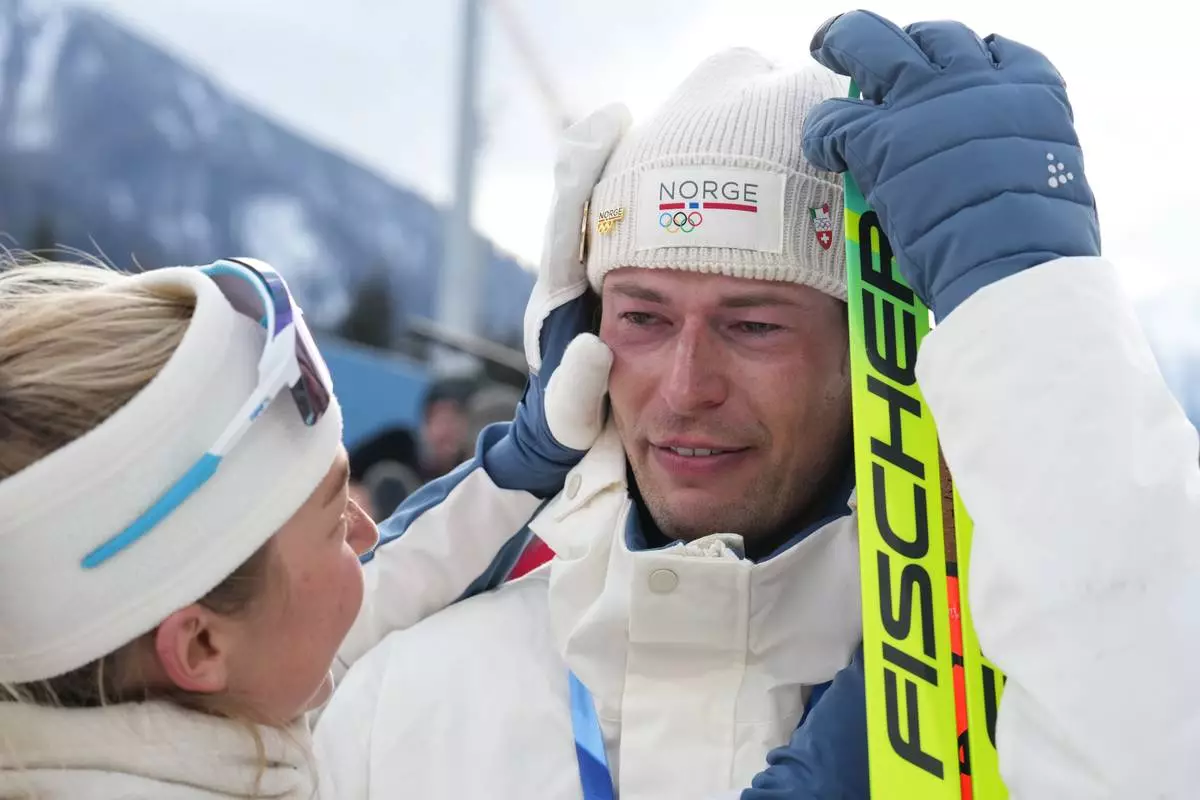
ADDS NAME OF TEAMMATE - Sturla Holm Laegreid, of Norway, reacts after he won bronze as teammate Ingrid Landmark Tandrevold comforts him after the men's 20-kilometer individual biathlon race at the 2026 Winter Olympics in Anterselva, Italy, Tuesday, Feb. 10, 2026. (AP Photo/Andrew Medichini)
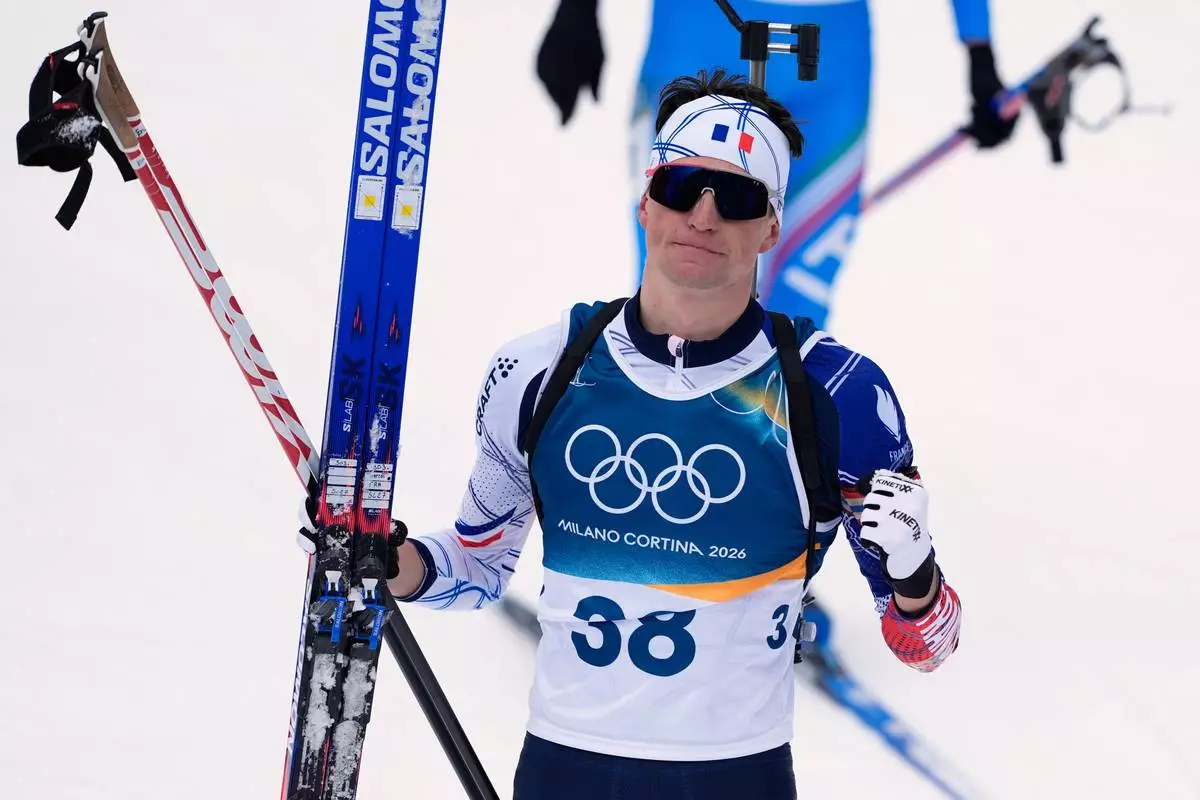
Eric Perrot, of France, reacts after finishing the men's 20-kilometer individual biathlon race at the 2026 Winter Olympics in Anterselva, Italy, Tuesday, Feb. 10, 2026. (AP Photo/Andrew Medichini)
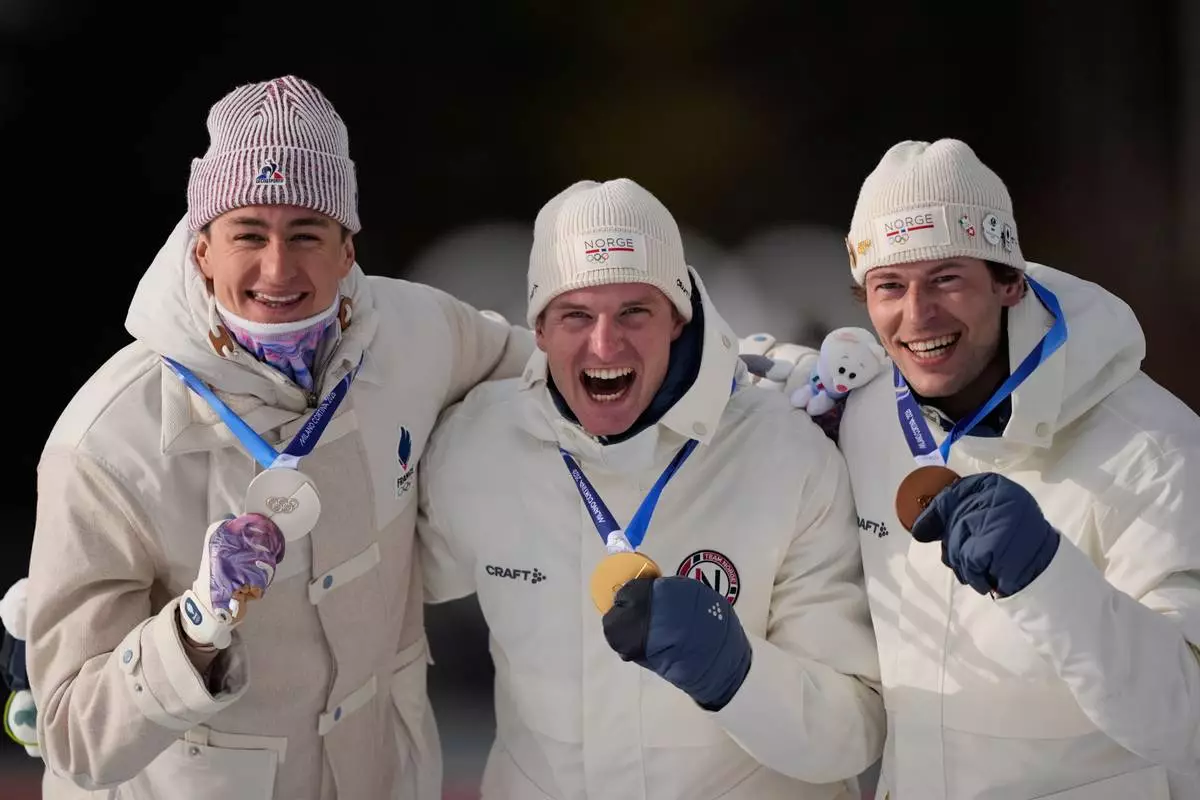
Silver medalist Eric Perrot, of France, from left, gold medalist Johan-Olav Botn, of Norway, and bronze medalist Sturla Holm Laegreid, of Norway, pose after the men's 20-kilometer individual biathlon race at the 2026 Winter Olympics in Anterselva, Italy, Tuesday, Feb. 10, 2026. (AP Photo/Mosa'ab Elshamy)
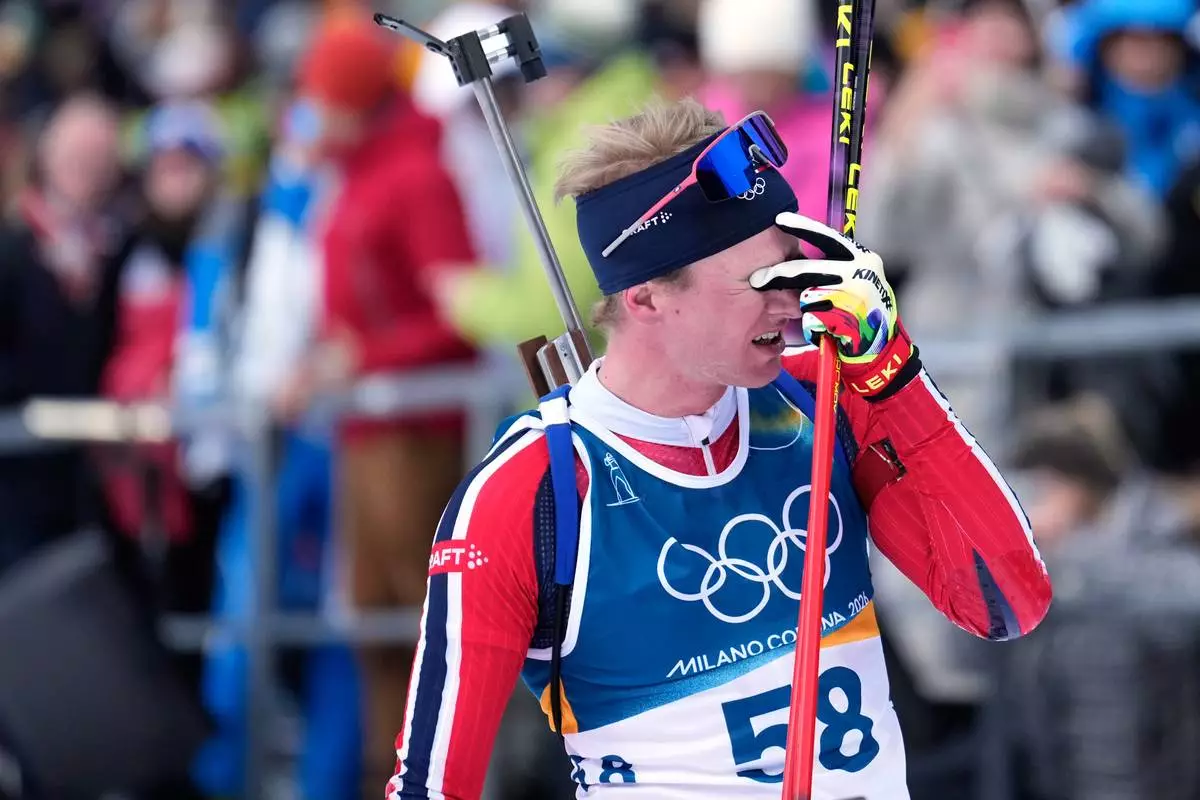
Johan-Olav Botn, of Norway, reacts after competing in the men's 20-kilometer individual biathlon race at the 2026 Winter Olympics in Anterselva, Italy, Tuesday, Feb. 10, 2026. (AP Photo/Mosa'ab Elshamy)
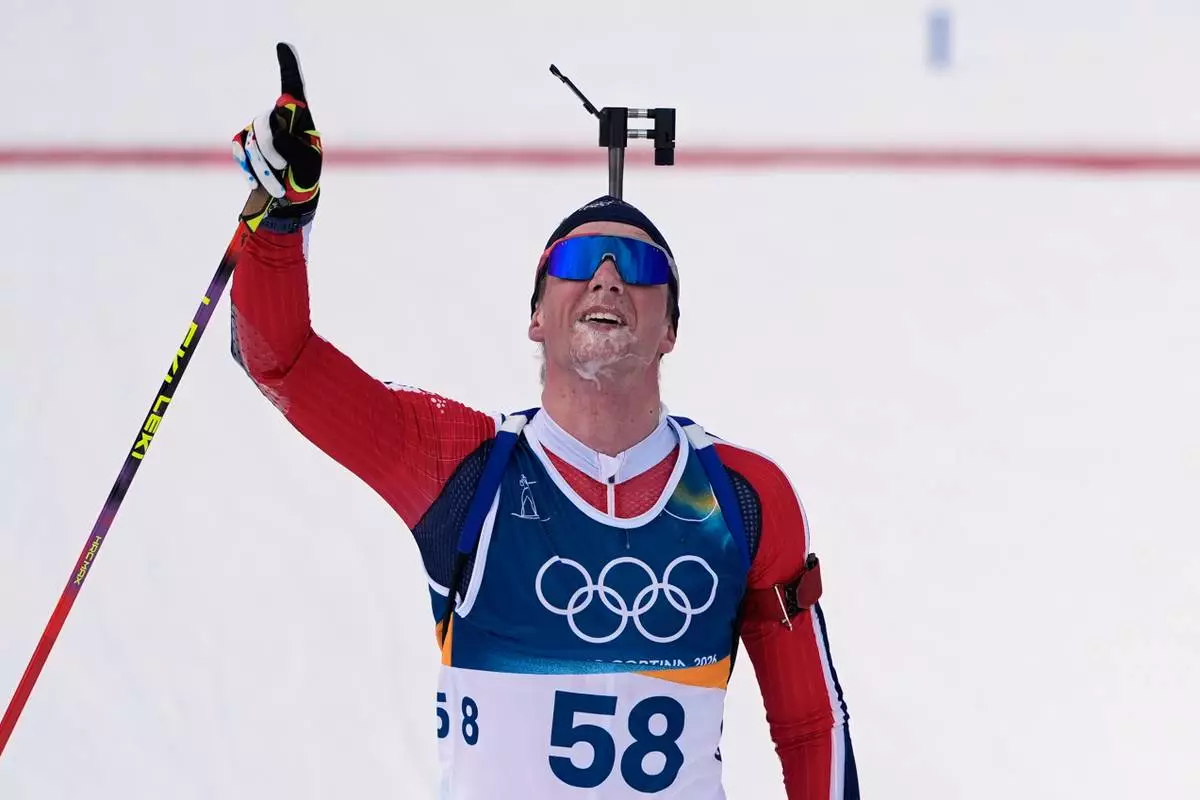
Johan-Olav Botn, of Norway, reacts after finishing the men's 20-kilometer individual biathlon race at the 2026 Winter Olympics in Anterselva, Italy, Tuesday, Feb. 10, 2026. (AP Photo/Andrew Medichini)