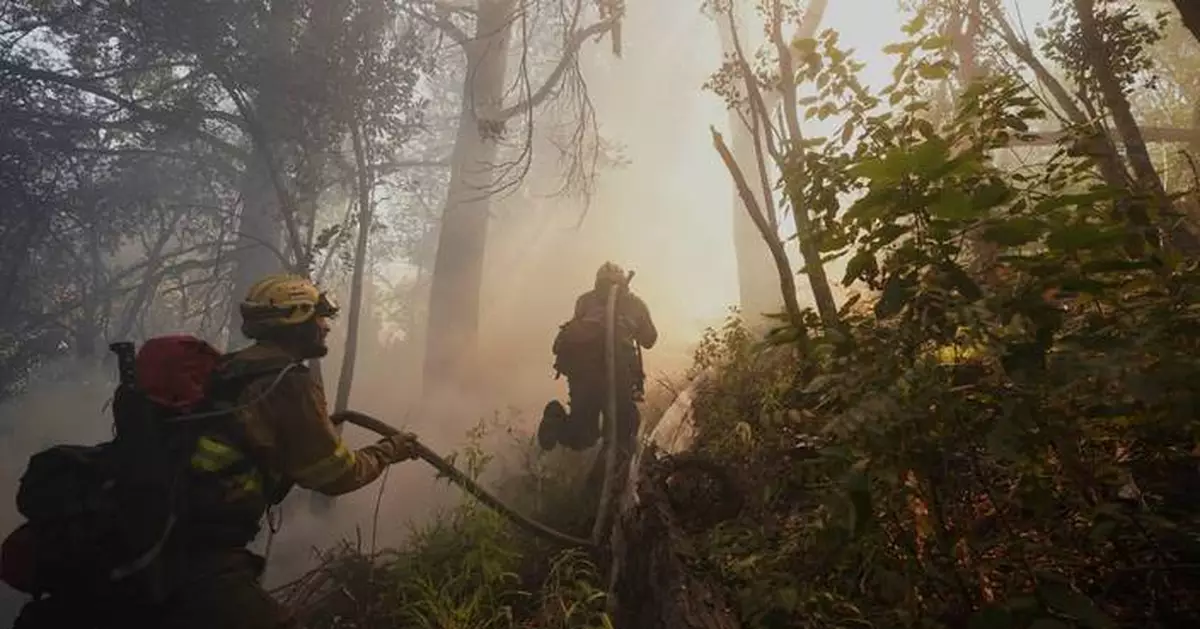
BUENOS AIRES, Argentina (AP) — Human-caused climate change had an important impact on the recent ferocious wildfires that engulfed parts of Chile and Argentina's Patagonia region, making the extremely high-risk conditions that led to widespread burning up to three times more likely than in a world without global warming, a team of researchers warned on Wednesday.
The hot, dry and gusty weather that fed last month's deadly wildfires in central and southern Chile was made around 200% more likely by human-made greenhouse gas emissions while the high-fire-risk conditions that fueled the blazes still racing through southern Argentina were made 150% more likely, according to World Weather Attribution, a scientific initiative that investigates extreme weather events soon after they happen.
Click to Gallery
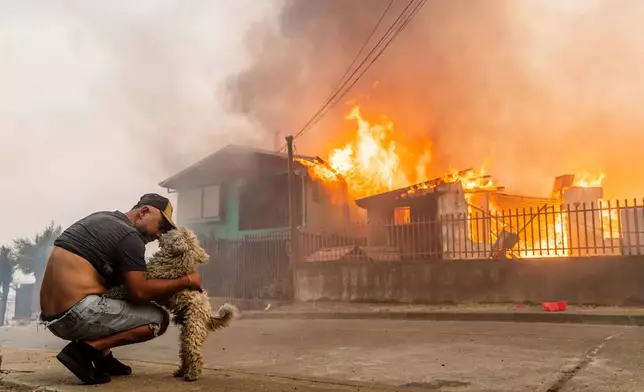
FILE - Manuel Lagos pets his dog as the family home is engulfed by an encroaching wildfire in Lirquen, Chile, Jan. 18, 2026. (AP Photo/Javier Torres, File)
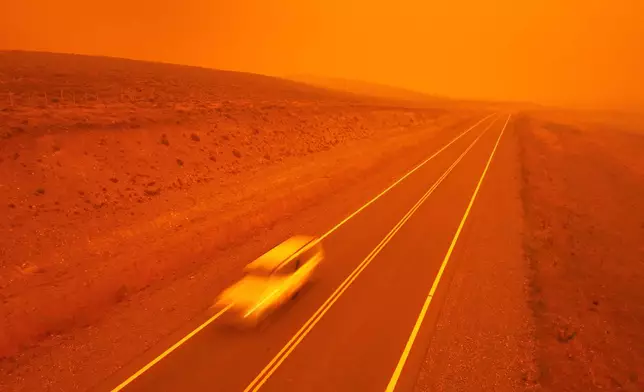
A car speeds along a road as smoke from wildfires turns the sky red near Cholila, Argentina, Sunday, Feb. 1, 2026. (AP Photo/Victor R. Caivano)
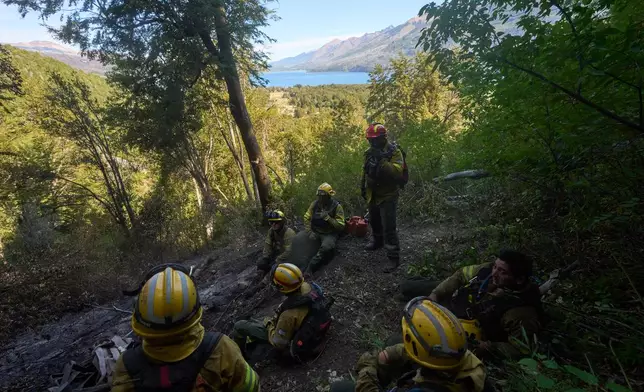
Firefighters battle wildfires in Los Alerces National Park, Argentina, Saturday, Jan. 31, 2026. (AP Photo/Victor R. Caivano)
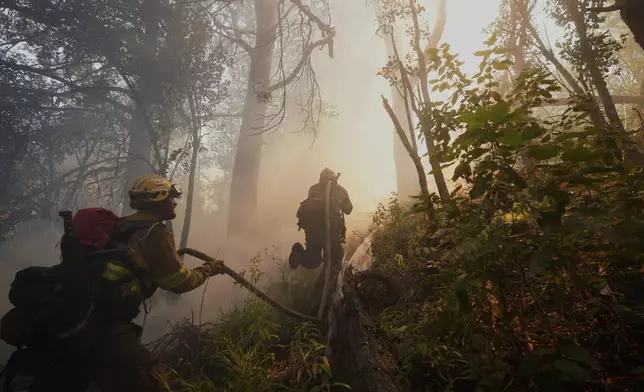
Firefighters battle wildfires in Los Alerces National Park, Argentina, Saturday, Jan. 31, 2026. (AP Photo/Victor R. Caivano)
That probability will only increase, the experts added, as humans continue to blanket the planet with heat-trapping gases.
“Overall, we’re confident in saying that the main driver of this increased fire risk is human-caused warming,” Clair Barnes, a research associate with World Weather Attribution, told reporters in a briefing. “These trends are projected to continue in the future as long as we continue to burn fossil fuels.”
The blazes that tore through Chile’s Biobio and Ñuble regions in mid-January killed 23 people, destroyed over 1,000 houses and other structures and forced tens of thousands of people to flee their homes. All the blazes were ignited by human activity, whether arson or negligence.
In southern Argentina, the fires first ignited by lightning forced the evacuation of thousands of tourists and residents and burned through over 45,000 hectares (174 square miles) of native forest, including vast swaths of the Los Alerces National Park, a UNESCO World Heritage site home to 2,600-year-old trees.
Carolina Vera, a professor of climate sciences at the University of Buenos Aires who is not related to World Weather Attribution, said the findings were in keeping with what previous studies have shown about the effects of global warming on wildfires, specifically in the native forests of Argentina's Chubut province where she lives.
Extreme heat and strong winds caused wildfires to spread 20 km (12 miles) across Patagonia’s native forests in just two days last month.
“This particular fire case, in my opinion, is the one in which the influence of anthropogenic climate change dominates over other factors,” she said.
The study, confirming what had been widely suspected, brings the first scientific assessment of global warming's role in intensifying some of the most serious wildfire emergencies to grip Chile and Argentina in years.
It's the latest in an emerging subfield of climate science known as weather attribution, which is evolving rapidly in response to a growing thirst for public information about how climate change influences natural disasters.
The World Weather Attribution report has not yet been peer-reviewed or published in a scientific journal, but it relies on widely accepted methods, including the analysis of data and computer model simulations to compare today’s climate with past weather patterns.
Dominique Bachelet, a climate change scientist at Oregon State University who wasn’t involved in World Weather Attribution’s analysis, said the findings didn’t surprise her.
Climate modelers have run computer simulations predicting increased fire danger for more than two decades now, she said, citing the role of global warming in deepening droughts, altering prevailing wind patterns and disrupting the length and timing of seasons.
“Climate change has been called a threat multiplier,” she said. “I only wish land managers and policy makers had paid attention when we first started publishing our results and prepared for the challenges they face today."
Record droughts and scorching temperatures created conditions conducive to wildfires in Chile and Argentina, the study found, while single-species plantations of highly flammable trees like pines helped the fires spread more easily in both areas. The invasive species have replaced native, more fire-resistant ecosystems in the region, turning shrub, brush and grass into kindling.
In Argentina's Patagonia, some weather stations established 70 years ago recorded heat waves unprecedented in length and severity. The town of El Bolsón recorded its highest January temperature on record — 38.4 degrees Celsius (101 degrees Fahrenheit). The town of Esquel, near Los Alerces National Park, logged 11 consecutive days of maximum temperatures in January, its second-longest warm spell in 65 years. Temperatures in Chile before the fires erupted were high but not record-breaking.
The researchers estimated that seasonal rainfall from November to January, before the peak burning period, was around 25% weaker in Chile and 20% less intense in Argentine Patagonia than it would have been without a rise in global temperatures of at least 1.3 degrees Celsius (2.3 degrees Fahrenheit) since pre-industrial times.
“This, together with higher-than-average temperatures, led to vegetation being submitted to stress, very low humidity in the soil,” said Juan Antonio Rivera, an author of the study from the National Scientific and Technical Research Council in Argentina's province of Mendoza. “Once the wildfires began there was sufficient fuel for them to extend and be sustained over time.”
Chile has increased its budget for fighting wildfires by 110% in the last four years under left-wing President Gabriel Boric, improving fire forecasting and investing in new equipment.
But in Argentina, a harsh austerity program under libertarian President Javier Milei may have hobbled the country’s ability to respond to the fires, researchers said, citing budget cuts to firefighting crews, a lack of planning and deregulation of tourism activities in Patagonia’s national parks. It’s a claim echoed to The Associated Press by firefighters, park rangers and officials involved in disaster relief.
Milei, like his ally U.S. President Donald Trump, has denied that climate change is related to human presence. His office did not respond to a request for comment Wednesday.
“Unfortunately, with a government that does not understand climate change and its connection to human activities, where nature is secondary in terms of priorities, these situations get worse and wildfires end up having greater impacts than they should,” said Rivera. “The situation is still not under control.”
Follow AP’s coverage of Latin America and the Caribbean at https://apnews.com/hub/latin-america
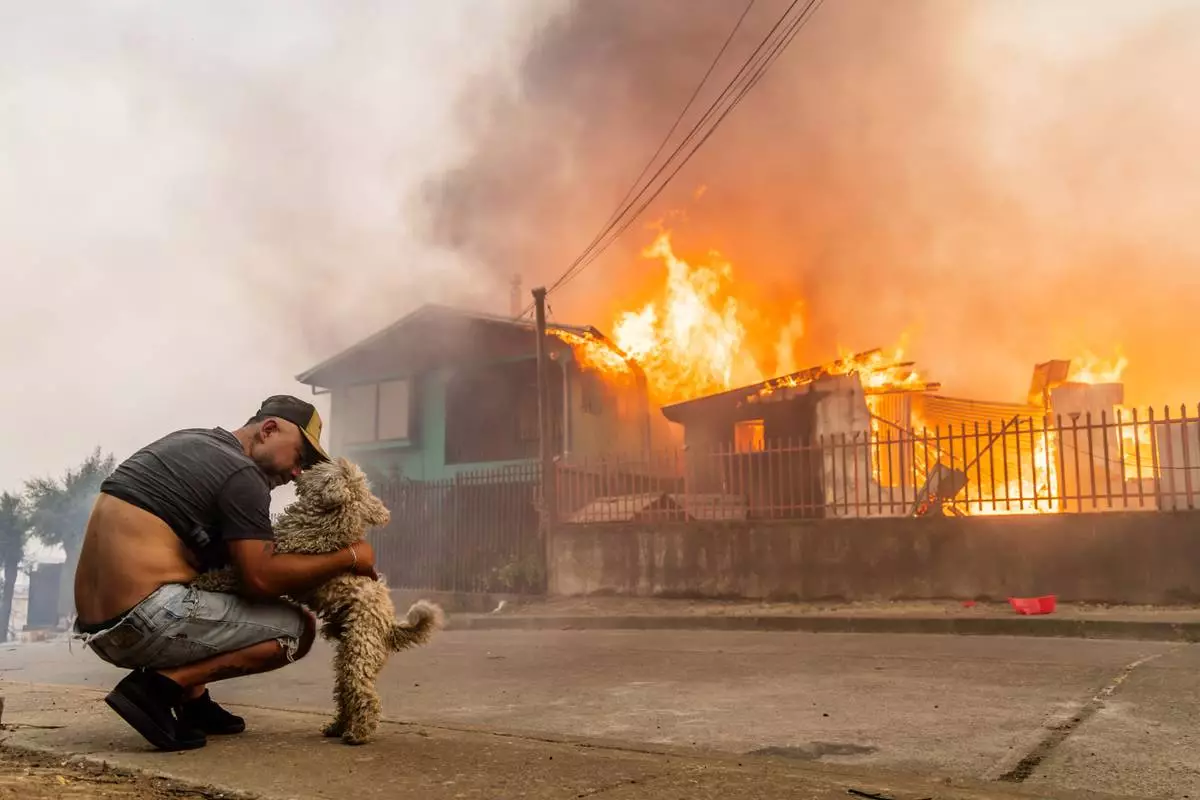
FILE - Manuel Lagos pets his dog as the family home is engulfed by an encroaching wildfire in Lirquen, Chile, Jan. 18, 2026. (AP Photo/Javier Torres, File)
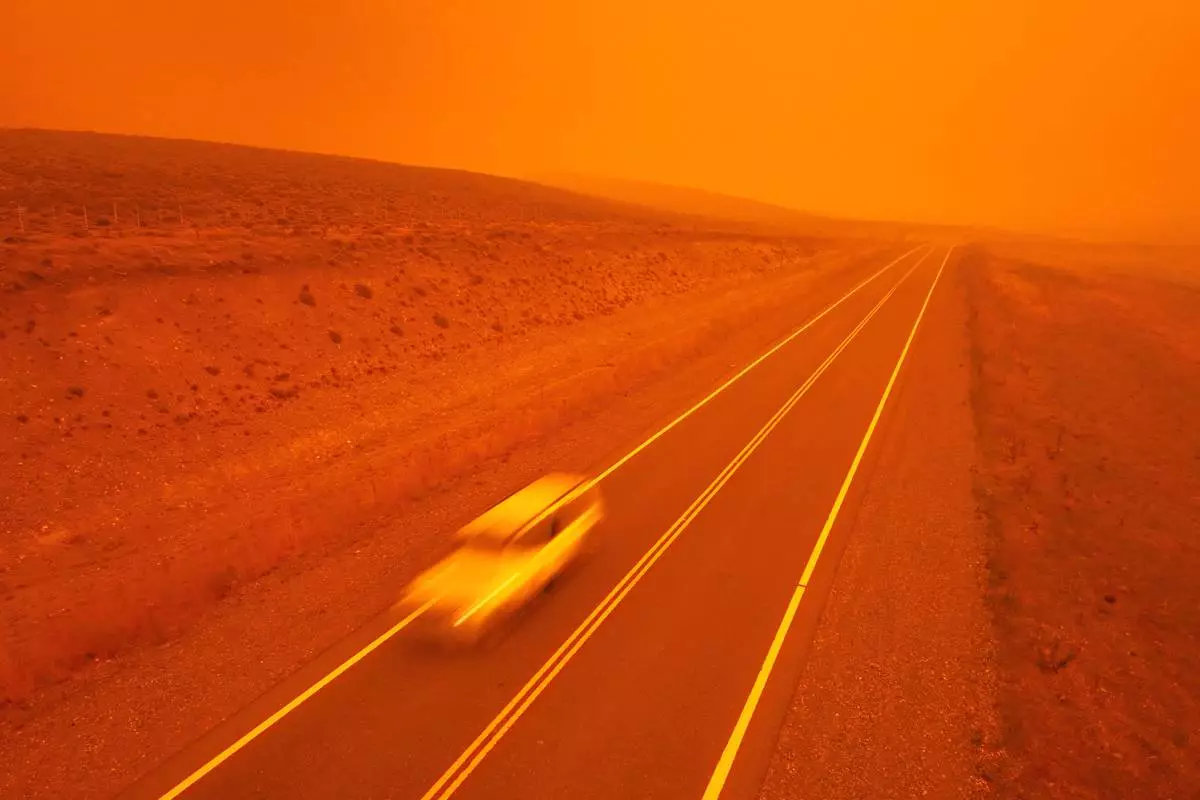
A car speeds along a road as smoke from wildfires turns the sky red near Cholila, Argentina, Sunday, Feb. 1, 2026. (AP Photo/Victor R. Caivano)
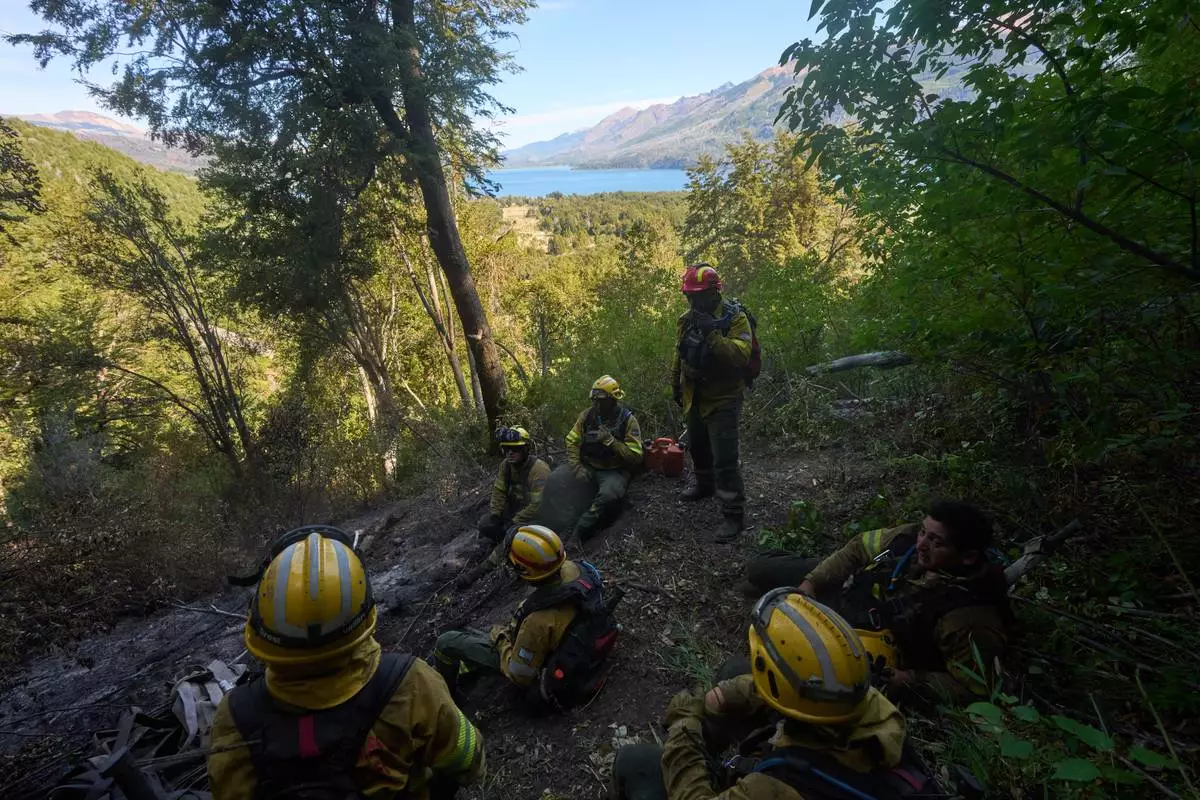
Firefighters battle wildfires in Los Alerces National Park, Argentina, Saturday, Jan. 31, 2026. (AP Photo/Victor R. Caivano)
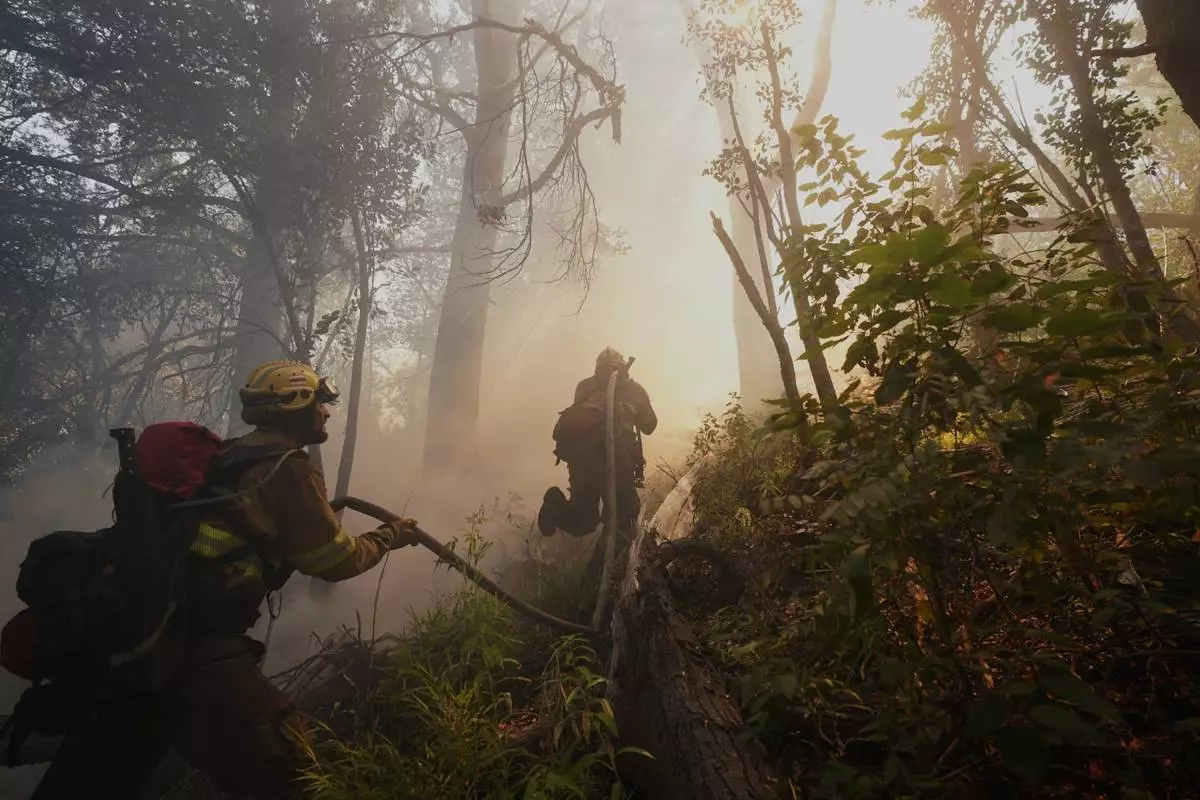
Firefighters battle wildfires in Los Alerces National Park, Argentina, Saturday, Jan. 31, 2026. (AP Photo/Victor R. Caivano)