CHP reminds public to avoid consuming raw oysters and undercooked bivalve shellfish for the time being to prevent norovirus infection
In view of the recent surge in norovirus food poisoning cases linked to the consumption of raw oysters, the Centre for Health Protection (CHP) of the Department of Health today (February 11) reiterated its call for the public to stay alert and maintain good personal, food and environmental hygiene at all times. The public, especially the elderly, pregnant women, children and those with weakened immune systems, should refrain from consuming raw oysters and undercooked bivalve shellfish as they are at higher risk of developing complications (such as dehydration) if infected with norovirus.

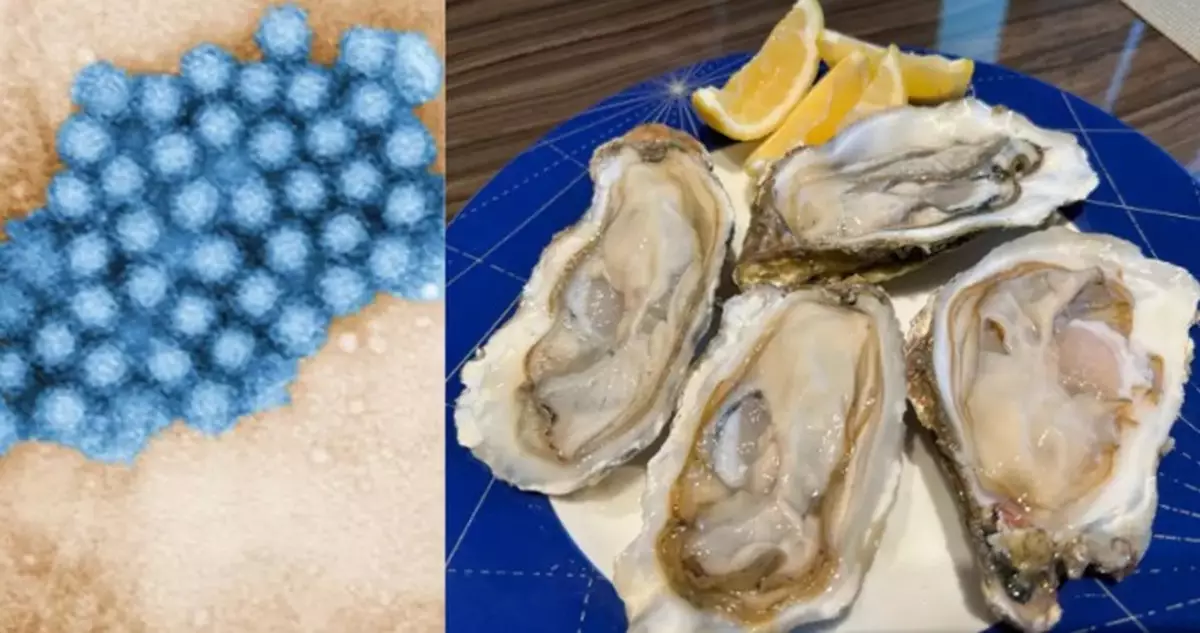
The norovirus, Photo source: CDC
"The number of food poisoning cases recorded over the past few weeks has continued to rise, increasing from an average of one case per week in late December to an average of four cases per week in January. From January 18 to February 10, the CHP recorded 39 food poisoning cases, affecting 44 males and 75 females aged between 15 and 75. Nearly 90 per cent (35 cases) were associated with norovirus, affecting 105 persons. Epidemiological investigations showed that all the individuals affected by the abovementioned food poisoning cases related to norovirus had consumed raw oysters during the incubation period. Six of them required hospitalisation. All are in stable condition. The CHP has notified the Centre for Food Safety (CFS) of the Food and Environmental Hygiene Department (FEHD) of all food poisoning cases for appropriate follow-up and source tracing. Investigations are ongoing," the Controller of the CHP, Dr Edwin Tsui, said.
"As oysters feed by filtering a large volume of seawater, pathogens can accumulate in them if they are grown in or harvested from contaminated water. Raw or undercooked oysters are considered a high-risk food. Persons who consume contaminated or undercooked oysters may contract food-borne diseases, such as norovirus, hepatitis A virus or other bacteria. During the Lunar New Year, people usually gather for meals with relatives and friends. I particularly remind the public that only thoroughly cooked food, especially shellfish, should be consumed, whether dining at home or in restaurants, to avoid contracting enteric diseases. Norovirus cannot be killed by alcoholic beverages, lemon juice or wasabi. When cooking oysters in a hot pot or on the grill, ensure that they are thoroughly cooked to effectively minimise the risk of norovirus infection. Given the recent increase in norovirus activity and epidemiological data indicating that most food poisoning cases are related to raw oyster consumption, the CFS of the FEHD is investigating the source of raw oysters. Hence, members of the public should not take the risk of consuming undercooked oysters," Dr Tsui explained.
"It is worth noting that norovirus is highly contagious. Individuals infected with norovirus through contaminated food can spread the virus to others through person-to-person contact or environment contaminated by vomitus. In addition to causing food poisoning, norovirus is also one of the primary causes of acute gastroenteritis (AGE). According to our surveillance data, the AGE activity level in Hong Kong has been rising since early January. The latest data showed that, as of February 10, a total of 38 AGE outbreaks in institutions and schools were recorded so far this year, involving 294 persons. Laboratory testing indicated that over 75 per cent of the outbreaks were caused by norovirus. Additionally, norovirus activity has increased in other popular travel destinations for Hong Kong citizens, including Japan and Korea. Surveillance data from Korea showed that the norovirus activity has reached its highest level in nearly five years for this time of year. Members of the public should remain vigilant and maintain good personal, environmental and food hygiene when travelling abroad and pay attention to minimise the risk of infection," Dr Tsui added.
To prevent AGE and norovirus infection, members of the public should perform hand hygiene frequently. Since alcohol is not effective in killing norovirus, alcohol-based handrubs are not a substitute for handwashing with soap and water, especially before handling food or eating, and after using the toilet. Wash hands with liquid soap and water, and rub for at least 20 seconds. Then rinse with water and dry with a disposable paper towel or hand dryer.
Members of the public may visit the CHP's dedicated webpages for the prevention of Norovirus Infection and Viral Gastroenteritis.
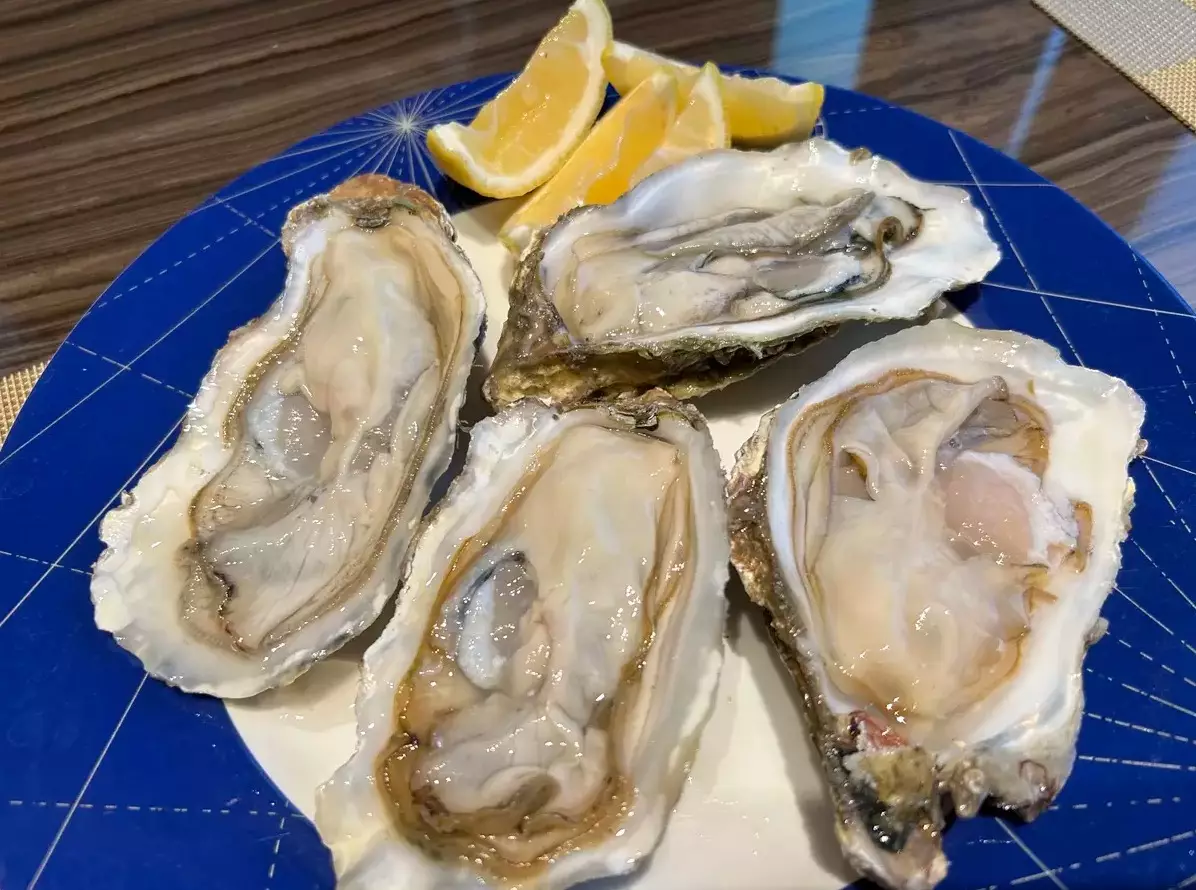
The raw oysters, Photo by Bastille Post
InvestHK highlights Hong Kong's "AI+" and "Finance+" strengths at Inclusion Conference on the Bund 2026 to support Chinese Mainland enterprises' going global
Invest Hong Kong (InvestHK) participated in the Inclusion Conference on the Bund 2026 in Shanghai on September 9 and 10. Through a thematic forum, dedicated exhibition booth and a series of engagement activities, InvestHK showcased Hong Kong's unique strengths as an international financial centre and international innovation and technology hub. It also highlighted how the city's 'Finance+' and 'AI+' strengths support Chinese Mainland enterprises in advancing innovation and expanding into international markets. Held under the theme "Co-creating the New AI Economy", this year's Conference brought together technology companies, industry leaders, innovation and technology organisations, and start-ups from around the world. InvestHK has deepened its engagement further this year, by promoting Hong Kong’s integrated strengths in capital, technology, talent and professional services, helping enterprises seize new opportunities and accelerate their international expansion.
The Secretary of the CPC Shanghai Huangpu District, Ms Xu Huili, said, "As globalisation continues to accelerate, going global has become a priority for many enterprises. As a world-renowned international financial centre, Hong Kong offers a mature capital market, a strong professional services ecosystem, a legal system aligned with international standards, and a rich pool of talent. Hong Kong has become an important platform for Chinese Mainland enterprises seeking to expand globally. In the first half of this year, the Huangpu District (Hong Kong) Talent Liaison and Enterprise Going Global Service Station was officially launched in Hong Kong, alongside the successful staging of the 'Creator·H²' Global Innovation and Entrepreneurship Competition. From connecting I&T resources to developing high-level innovation platforms, and from talent exchanges to project matchmaking, a series of practical initiatives is gradually translating into tangible results as Huangpu District and Hong Kong join forces to support Chinese Mainland enterprises in going global. Looking ahead, Huangpu District will further deepen collaboration with relevant departments and organisations in Hong Kong, and actively promote co-operation between Shanghai and Hong Kong in areas including policy alignment, talent exchanges and capital connectivity, creating a pathway for enterprises to expand from Shanghai to the global stage."
The Global Head of Financial Services, Fintech & Sustainability at InvestHK, Mr King Leung, said, "Chinese Mainland enterprises are entering a new phase of internationalisation, where integrated development is driven by technology, brands, capital and supply chain. As a key node in the country's dual circulation strategy, the Yangtze River Delta is home to a growing number of companies with global competitiveness. Hong Kong is uniquely positioned to support this next stage of growth. As an international financial centre and international innovation and technology hub, the city brings together capital, market and talent connectivity, while providing comprehensive support across financing, research and development, professional services and overseas business expansion for enterprises. As a "Super Connector" and "Super Value-Adder", Hong Kong will continue to help Chinese Mainland enterprises seize opportunities arising from the AI era, connect with international markets and accelerate their global development."
Hong Kong Forum explores new opportunities for enterprise global expansion
One of the highlights of this year's Conference was the Hong Kong Forum organised by InvestHK under the theme "Sailing the Digital Ocean — Hong Kong's 'FinTech+' Empowers Chinese Mainland Enterprises to Expand Globally". The Forum formed part of a broader Hong Kong delegation of more than 20 representatives from the Hong Kong Special Administrative Region Government, regulators, financial institutions, innovation and technology organisations, and the business community to explore emerging trends and opportunities of Chinese Mainland enterprise globalisation. Discussions focused on key issues ranging from fundraising and treasury management to innovation, talent, cross-border compliance and international expansion, showcasing how Hong Kong supports enterprises at different stages of their global growth journey.
As a showcase of Hong Kong's "Finance+" and "AI+" advantages, the Forum convened representatives from the Financial Services and the Treasury Bureau, the Innovation, Technology and Industry Bureau, InvestHK, the Hong Kong Monetary Authority, and Hong Kong Exchanges and Clearing Limited alongside leaders from the financial, technology and professional services sectors. Through policy dialogues, thematic discussions and business case studies, participants examined how Hong Kong supports Chinese Mainland enterprises throughout their go-global journey, from policy advantages, financing and innovation to global market expansion.
Participants noted that Chinese Mainland enterprises are moving beyond traditional product exports towards a more sophisticated phase of globalisation. They must develop endtoend capabilities spanning global capital mobility, innovation and research and development (R&D), compliance and crossborder operations. Against this backdrop, the Forum explored practical strategies for enhancing global treasury efficiency through Hong Kong's cross-border Renminbi network, multi-currency treasury management capabilities and fintech infrastructure; promoting offshore R&D and AI innovation capabilities through Hong Kong's research talent pool, start-up ecosystem and IP protection regime fosters offshore R&D and AI innovation; and navigating cross-border compliance , supply chain, digital infrastructure challenges across markets and other challenges. Discussions also covered the role of policy initiatives and market mechanisms, ranging from company establishment, tax incentives, talent attraction, to capital markets access and cross-border financing solutions, providing enterprises with a clearer development path from establishing a presence in Hong Kong and consolidating resources to expanding their global business.
Hong Kong pavilion highlights the city's advantages and deepening Shanghai-Hong Kong collaboration
During the Conference, InvestHK showcased Hong Kong's integrated strengths as a platform for enterprise globalisation through a dedicated booth, with Hong Kong FinTech Week x StartmeupHK highlighting as the city's latest developments in financial services, innovation and technology. The pavilion demonstrated how Hong Kong's "AI+" and "Finance+" strengths support innovation of Chinese Mainland enterprises, connect them with global opportunities and help businesses expand internationally. Through its participation in the Conference, InvestHK further strengthened engagement with enterprises from the Yangtze River Delta, encouraging them to leverage Hong Kong's flagship platforms, including Hong Kong FinTech Week x StartmeupHK, as gateways to international markets and growth opportunities.
InvestHK's participation in the Inclusion Conference on the Bund for a second consecutive year reflects the growing momentum of collaboration between Shanghai and Hong Kong in fintech, innovation, entrepreneurship and enterprise internationalisation. Looking ahead, InvestHK will continue to strengthen engagement with the Yangtze River Delta and other regions across the country, fostering closer connections betwen innovation, industry and capital. As enterprises navigate the opportunities presented by AI, industrial transformation and a rapidly evolving global economy, Hong Kong will continue to play a unique role in helping businesses connect with global markets, build international capabilities, and achieve high quality growth.

Invest Hong Kong participated in the Inclusion Conference on the Bund 2026 in Shanghai on September 9 and 10. Source: HKSAR Government Press Releases

Invest Hong Kong participated in the Inclusion Conference on the Bund 2026 in Shanghai on September 9 and 10. Its Hong Kong Forum, themed "Sailing the Digital Ocean - Hong Kong's 'FinTech+' Empowers Chinese Mainland Enterprises to Expand Globally", was held yesterday (September 10). Photo shows the Senior Vice President (Fintech) at InvestHK, Ms Pauline Fan (first left) moderating the fireside chat on "HKSAR Government Incentives and Policy Dividends", with the Vice President (Global Issuer Services) at Hong Kong Exchanges and Clearing Limited, Mr Sam Luk (second left); the Senior Vice President (Startups) at InvestHK, Mr Chin-yung Lu (third left); and the Senior Manager (Market Outreach) at the Hong Kong Monetary Authority, Ms Sandy Chow (first right). Source: HKSAR Government Press Releases

Invest Hong Kong participated in the Inclusion Conference on the Bund 2026 in Shanghai on September 9 and 10. Its Hong Kong Forum, themed "Sailing the Digital Ocean - Hong Kong's 'FinTech+' Empowers Chinese Mainland Enterprises to Expand Globally", was held yesterday (September 10). Photo shows the General Manager, Hong Kong & Macau at OceanBase, Mr Bosco Fung, sharing how enterprises can leverage Hong Kong's ecosystem to navigate challenges related to cloud costs, cross-border compliance and global business expansion, helping them scale more effectively in international markets. Source: HKSAR Government Press Releases

Invest Hong Kong participated in the Inclusion Conference on the Bund 2026 in Shanghai on September 9 and 10. Its Hong Kong Forum, themed "Sailing the Digital Ocean - Hong Kong's 'FinTech+' Empowers Chinese Mainland Enterprises to Expand Globally", was held yesterday (September 10). Photo shows the Honorable President of the Hong Kong Association of Interactive Marketing, Mr Francis Fong (first left), moderating a panel discussion on "Hong Kong as Tech Innovation R&D Center for Going-Global Enterprises", with the Commissioner for Industry (Innovation and Technology) at Innovation, Technology and Industry Bureau, Dr Ge Ming (second left); the General Manager, Innovation Finance Department of the Shanghai Pudong Development Bank, Mr Zhao Jun (third left); the Chief Executive Officer of AlipayHK and General Manager of Greater China, Ant International, Ms Venetia Lee (third right); the Executive Director and Chief Executive Officer of the Alibaba Hong Kong Entrepreneurs Fund, Ms Cindy Chow (second right); and the Vice President of Overseas Strategic Business of Ant Digital Technologies, Mr Wang Bo (first right). Source: HKSAR Government Press Releases

Invest Hong Kong participated in the Inclusion Conference on the Bund 2026 in Shanghai on September 9 and 10. Its Hong Kong Forum, themed "Sailing the Digital Ocean - Hong Kong's 'FinTech+' Empowers Chinese Mainland Enterprises to Expand Globally", was held yesterday (September 10). Photo shows the General Manager of China Business at WorldFirst Ant International, Ms Tang Yan (first left); the Director of AI Solutions at OceanBase, Mr Dai Tao (second left); the Board Director of the Hong Kong FinTech Association and the Managing Director, Head of SME Banking at DBS Bank (Hong Kong), Ms Lareina Wang (third left); the Chief Executive Officer of Westwell Holdings (Hong Kong) Limited, Ms Kay Yang (second right); and the Founder and President of Orcauboat, Mr Jacky Zhu (first right), sharing practical perspectives on enterprise globalisation. Source: HKSAR Government Press Releases

Invest Hong Kong participated in the Inclusion Conference on the Bund 2026 in Shanghai on September 9 and 10. Its Hong Kong Forum, themed "Sailing the Digital Ocean - Hong Kong's 'FinTech+' Empowers Chinese Mainland Enterprises to Expand Globally", was held yesterday (September 10). Photo shows the Commissioner for Industry (Innovation and Technology) at the Innovation, Technology and Industry Bureau, Dr Ge Ming, delivering a keynote address. He highlighted how Hong Kong is strengthening its position as an international innovation and technology hub by fostering the development of infrastructure, talent, and an innovation and technology ecosystem; promoting integration of technology innovation and industry innovation as well as advancing new industrialisation; and advancing alongside the development of an international financial centre, thereby creating new opportunities for enterprises to land in Hong Kong and expand globally. Source: HKSAR Government Press Releases

Invest Hong Kong participated in the Inclusion Conference on the Bund 2026 in Shanghai on September 9 and 10. Its Hong Kong Forum, themed "Sailing the Digital Ocean - Hong Kong's 'FinTech+' Empowers Chinese Mainland Enterprises to Expand Globally", was held yesterday (September 10). Photo shows the Founder & Managing Director of FinStep Asia, Mr Syed Musheer Ahmed (first left) moderating a panel discussion on "Hong Kong as Treasury Management Centre for Going Global Enterprises", with the Assistant Chief Executive at the Industrial and Commercial Bank of China (Asia), Mr Liu Yanbin (second left); the General Manager of Platform Tech and Senior Vice President at Ant International, Mr Kelvin Li (third left); the Executive Director (Financial Infrastructure) at the Hong Kong Monetary Authority, Mr Nelson Chow (third right); the Chief Executive Officer of Luxembourg for Finance, Mr Tom Théobald (second right); and Senior Vice President (Financial Services) at InvestHK, Mr Benson Wan (first right). Source: HKSAR Government Press Releases

Invest Hong Kong participated in the Inclusion Conference on the Bund 2026 in Shanghai on September 9 and 10. Its Hong Kong Forum, themed "Sailing the Digital Ocean - Hong Kong's 'FinTech+' Empowers Chinese Mainland Enterprises to Expand Globally", was held yesterday (September 10). Photo shows Partner at Bain & Company Mr Frankie Leung (left) moderating a fireside chat on "Trends in Chinese Mainland Enterprises Going Global", with the Political Assistant to the Secretary for Financial Services and the Treasury, Mr Julian Ip (right), and the Global Head of Financial Services, Fintech and Sustainability at InvestHK, Mr King Leung (centre). The discussion explored how Chinese Mainland enterprises are evolving from product-led international expansion towards building globally competitive brands, technologies, AI capabilities and industrial ecosystems. Source: HKSAR Government Press Releases

Invest Hong Kong participated in the Inclusion Conference on the Bund 2026 in Shanghai on September 9 and 10. Its Hong Kong Forum, themed "Sailing the Digital Ocean - Hong Kong's 'FinTech+' Empowers Chinese Mainland Enterprises to Expand Globally", was held yesterday (September 10). Photo shows the Political Assistant to the Secretary for Financial Services and the Treasury, Mr Julian Ip, delivering a keynote address. He highlighted Hong Kong's strategic role in supporting Chinese Mainland enterprises' international expansion through its globally connected legal and financial systems, open business environment and vibrant innovation and technology ecosystem. Source: HKSAR Government Press Releases

Invest Hong Kong participated in the Inclusion Conference on the Bund 2026 in Shanghai on September 9 and 10. Its Hong Kong Forum, themed "Sailing the Digital Ocean - Hong Kong's 'FinTech+' Empowers Chinese Mainland Enterprises to Expand Globally", was held yesterday (September 10). Photo shows the Secretary of the CPC Shanghai Huangpu District, Ms Xu Huili (sixth left), the Political Assistant to the Secretary for Financial Services and the Treasury, Mr Julian Ip (fifth left), the Commissioner for Industry (Innovation and Technology) at the Innovation, Technology and Industry Bureau, Dr Ge Ming (fifth right), and the Global Head of Financial Services, Fintech and Sustainability at InvestHK, Mr King Leung (fourth left). Source: HKSAR Government Press Releases