The British Nigerian director Akinola Davies Jr. and his brother Wale were both toddlers when their father died. As adults, they could hardly remember him. Then Wale had an idea for movie. What if, by some movie miracle, they had gotten to spend a day with their dad?
In “My Father’s Shadow,” the Davies brothers pay tribute to him in a shattering father-son tale set across such a day in Nigeria. The film, Akinola's directing debut, has gone on to become one of the most acclaimed films of the past year, making history at the Cannes Film Festival and winning awards around the world.
Click to Gallery
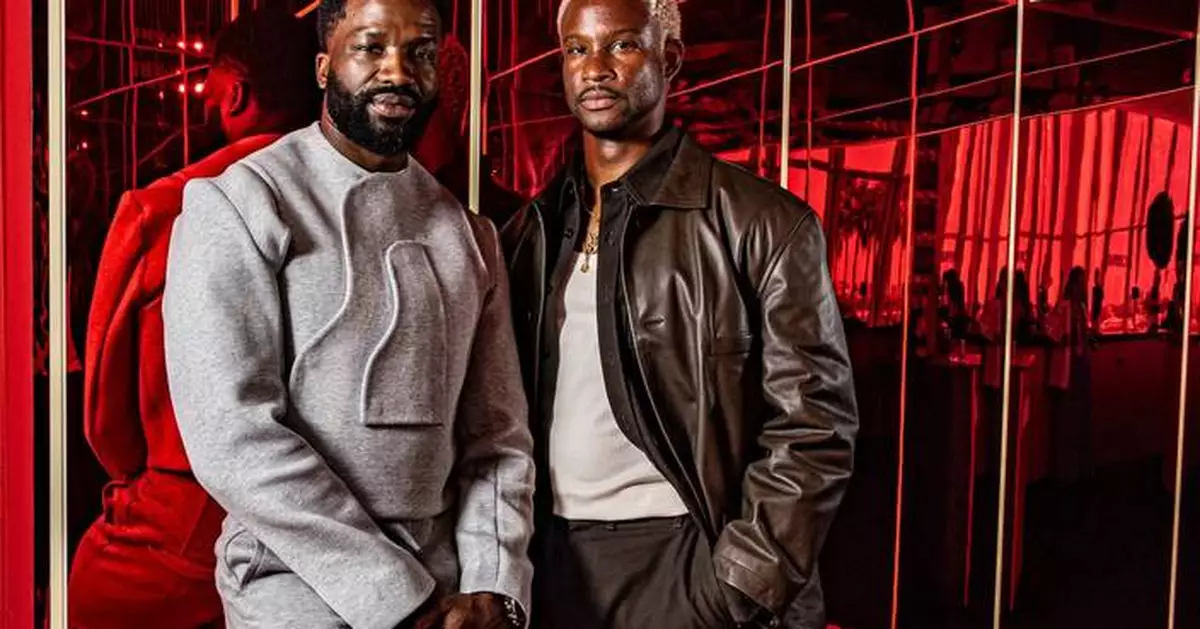
FILE - Sope Dirisu, star of the film "My Father's Shadow," left, poses with director Akinola Davies Jr. at the 78th international film festival in Cannes, southern France, on May 19, 2025. (Photo by Joel C Ryan/Invision/AP, File)
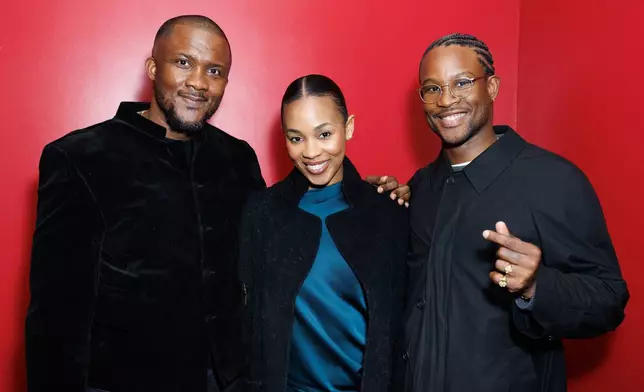
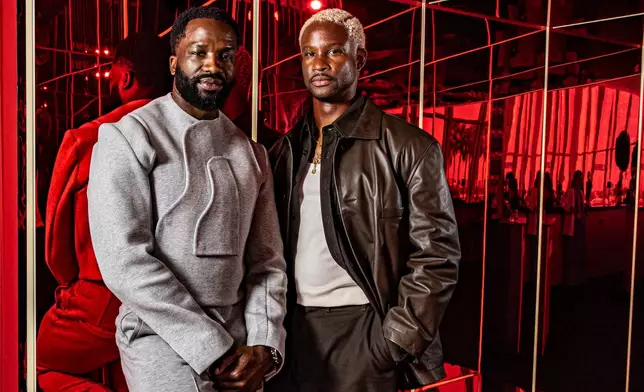
Writer Wale Davies, from left, producer Funmbi Ogunbanwo and director Akinola Davies Jr. pose for photographers upon arrival at the screening of the film "My Father's Shadow" on Friday, Feb. 6, 2026, in London. (Photo by Millie Turner/Invision/AP)
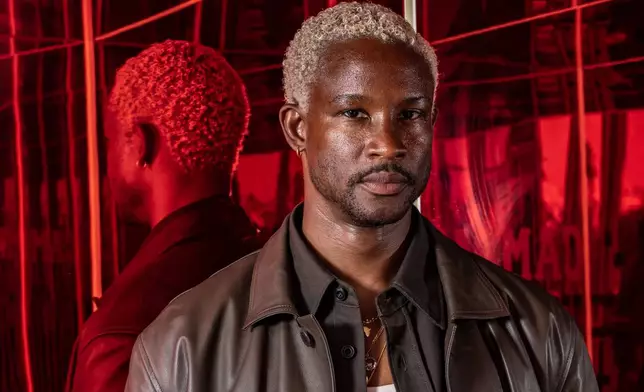
FILE - Akinola Davies Jr., director of the film "My Father's Shadow," poses at the 78th international film festival in Cannes, southern France, on May 19, 2025. (Photo by Joel C Ryan/Invision/AP, File)
FILE - Sope Dirisu, star of the film "My Father's Shadow" poses with director Akinola Davies Jr. at the 78th international film festival in Cannes, southern France, on May 19, 2025. (Photo by Joel C Ryan/Invision/AP, File)
A powerfully autobiographic work resonate with memory and loss, “My Father's Shadow” is the culmination of more than a decade’s worth of the Davies' brothers wondering. Wale first sent Akinola a script in 2012. Wale had never before written a movie script; Akinola had never read one.
“With zero context, he sent it to me and I just had this real emotional reaction,” Akinola Davies said in an interview at last year in Cannes. “I actually cried when I read it because I had never conceived of the idea of spending a day with my father and what we would say to him and what he would be like.”
In the film, set over a single day in Lagos in 1993, “Gangs of London” actor Ṣọpẹ́ Dìrísù plays the father, Folarin. At the family’s home outside Lagos, the young brothers (Chibuike Marvellous Egbo and Godwin Egbo) return home to unexpectedly find him inside. They hardly ever see him — he works in Lagos — but Folarin takes them along on a trip in the city that will be revelatory for the boys.
It's set on a pivotal day for Nigeria, when democracy is hanging in the balance. Having taken power in a coup, Gen. Ibrahim Badamasi Babangida refuses to accept the results of a democratic election. “My Father's Shadow” evolves as not just a conjured portrait of Davies' father, but of a national moment of hope. In both cases, the dream is fleeting.
At its Cannes debut last May, “My Father’s Shadow” made history. It was the first Nigerian film in the festival's official selection, a milestone that Nigeria, a country with its own large film industry, nicknamed Nollywood, celebrated with a new presence at the global cinema gathering.
“It means a lot to people back in Nigeria. It means we can exist on these platforms and our stories can exist in these spaces,” said Davies. “It’s a testament to talent that’s around in Nigeria. It’s a testament to the stories that are there. It’s a testament to the industry that’s flourishing.”
“My Father’s Shadow,” which Mubi releases in North American theaters Friday, is a British-Nigerian production that the U.K. selected for its Oscar submission. It received 12 nominations from the British Independent Film Awards. Davies, who lives in London, is also nominated for best British debut by the BAFTAs. At the Gotham Awards in New York, Davies won breakthrough director and Dìrísù won outstanding lead performance.
By any measure, it's a remarkable distance for a movie made independently in Nigeria to go.
“The Nigerian press asks me a lot if the film is Nollywood or not Nollywood. I would say it is because all the technicians work in Nollywood,” said Davies. “You can’t borrow people from that whole industry and say it’s not part of it.”
Shot in Lagos, “My Father's Shadow” gets a tremendous amount of its texture and atmosphere from Nigeria. “Point a camera at anything in Lagos, and it’s so cinematic,” Davies says.
“I have this real sense of romance for Nigeria,” he adds. “Everyone’s like, ‘It’s super chaotic,’ but for me it’s actually very still. Just driving around in the car feels really cinematic to me. I just take pictures of people all the time.”
When Akinola was 20 months old and Wale was 4 years old, their father rapidly developed epilepsy and died during a seizure while lying in bed next to their mother. To create the fictional version of their father, the Davies brothers tried to remember what they could. They tried to separate their real memories from their imagined ones.
“It’s kind of the confluence of memory, dream and hearsay,” says Davies, whose named after his dad. “How do you work through all of that to create a portrait?”
“My Father’s Shadow” represents the realization of Davies’ filmmaking aspirations. His BAFTA-nominated short “Lizard” got him on the radar in Britain's film industry. But “My Father's Shadow” has firmly established him as a major up-and-coming director.
Yet for Davies, all the accolades don't come close to what the movie has meant for him and his family.
“Being the age I am, I’ve done my grieving,” Davies says. “But just before we shot, I realized I was still grieving. Our prep started about a week after the anniversary of my dad’s passing. Every year, my mum calls me or texts me. I took my brother to his grave, put flowers down and made kind of a ceremony out of it.”
This story first moved May 19, 2025. It was resent on Feb. 11, 2025, ahead of the movie’s release in North America.
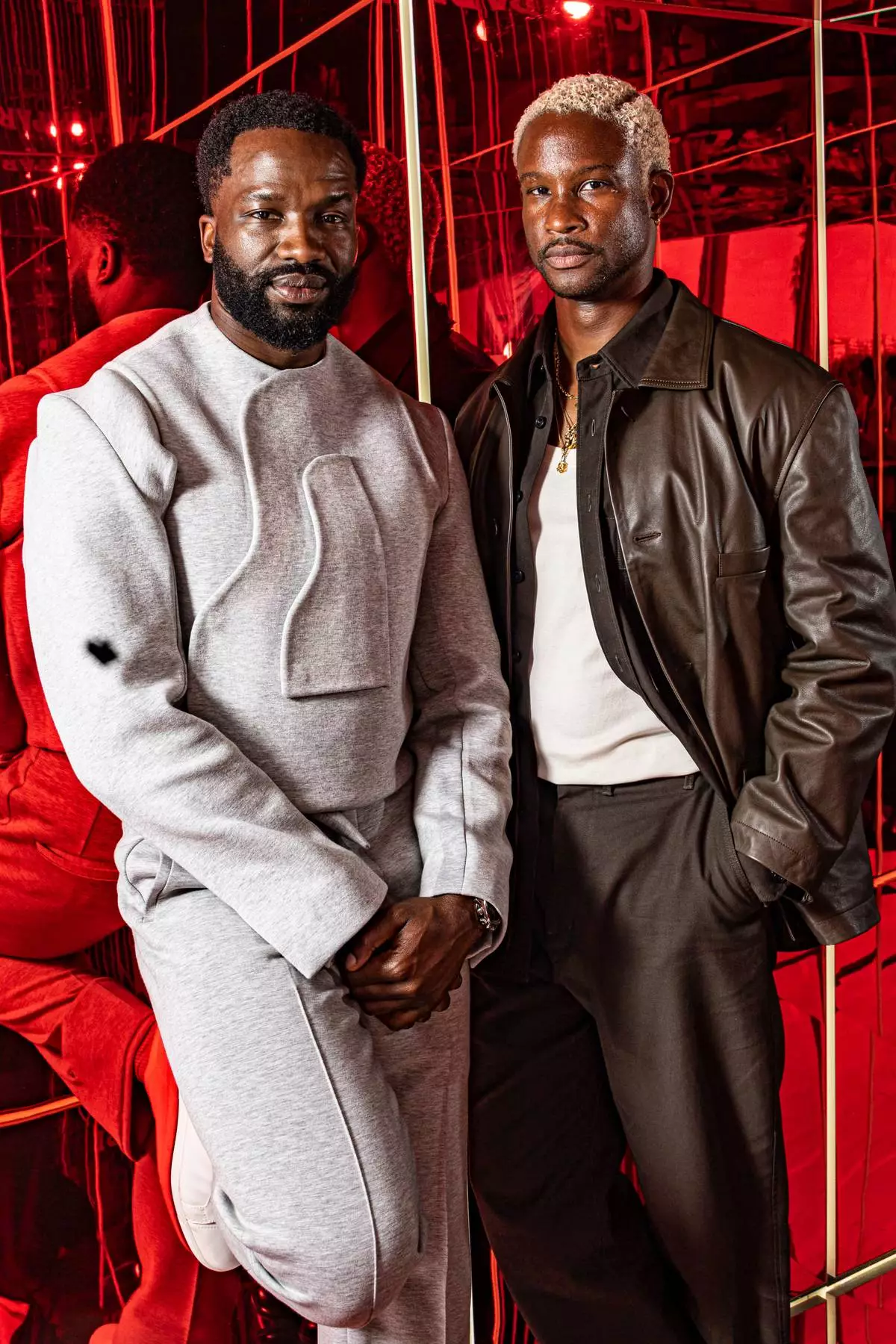
FILE - Sope Dirisu, star of the film "My Father's Shadow," left, poses with director Akinola Davies Jr. at the 78th international film festival in Cannes, southern France, on May 19, 2025. (Photo by Joel C Ryan/Invision/AP, File)
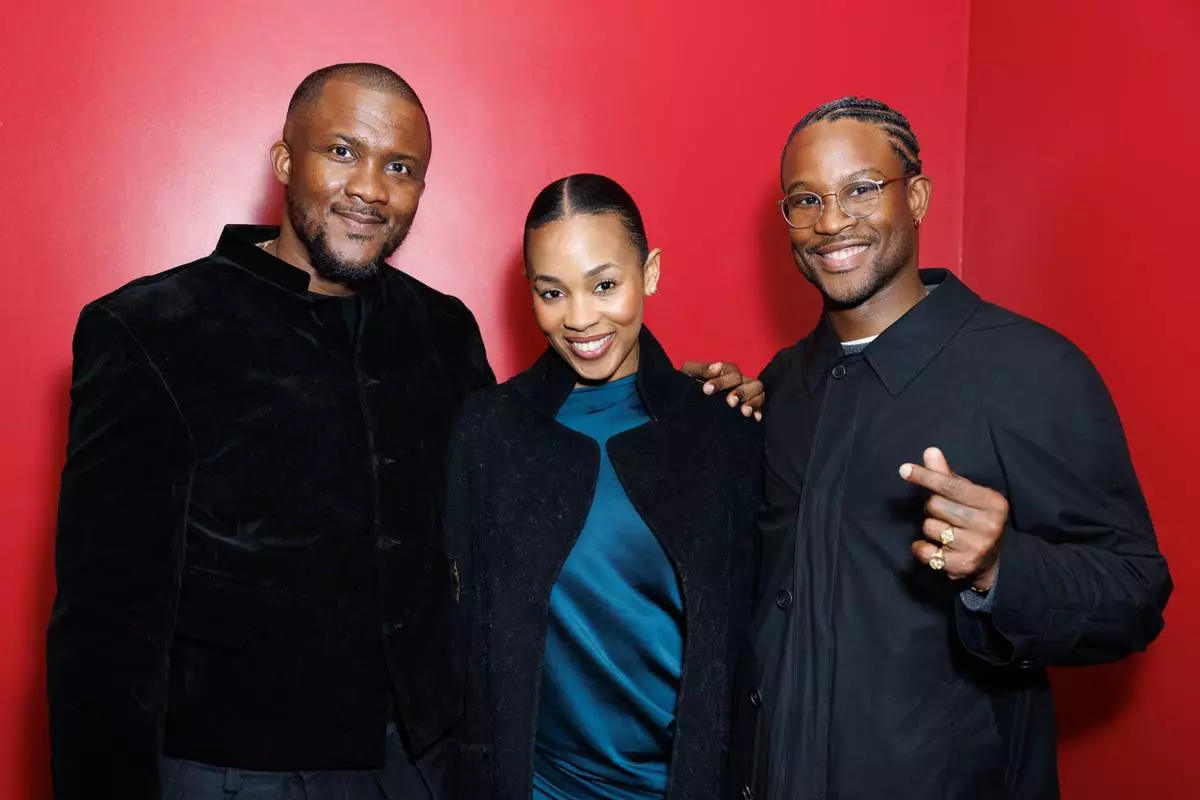
Writer Wale Davies, from left, producer Funmbi Ogunbanwo and director Akinola Davies Jr. pose for photographers upon arrival at the screening of the film "My Father's Shadow" on Friday, Feb. 6, 2026, in London. (Photo by Millie Turner/Invision/AP)
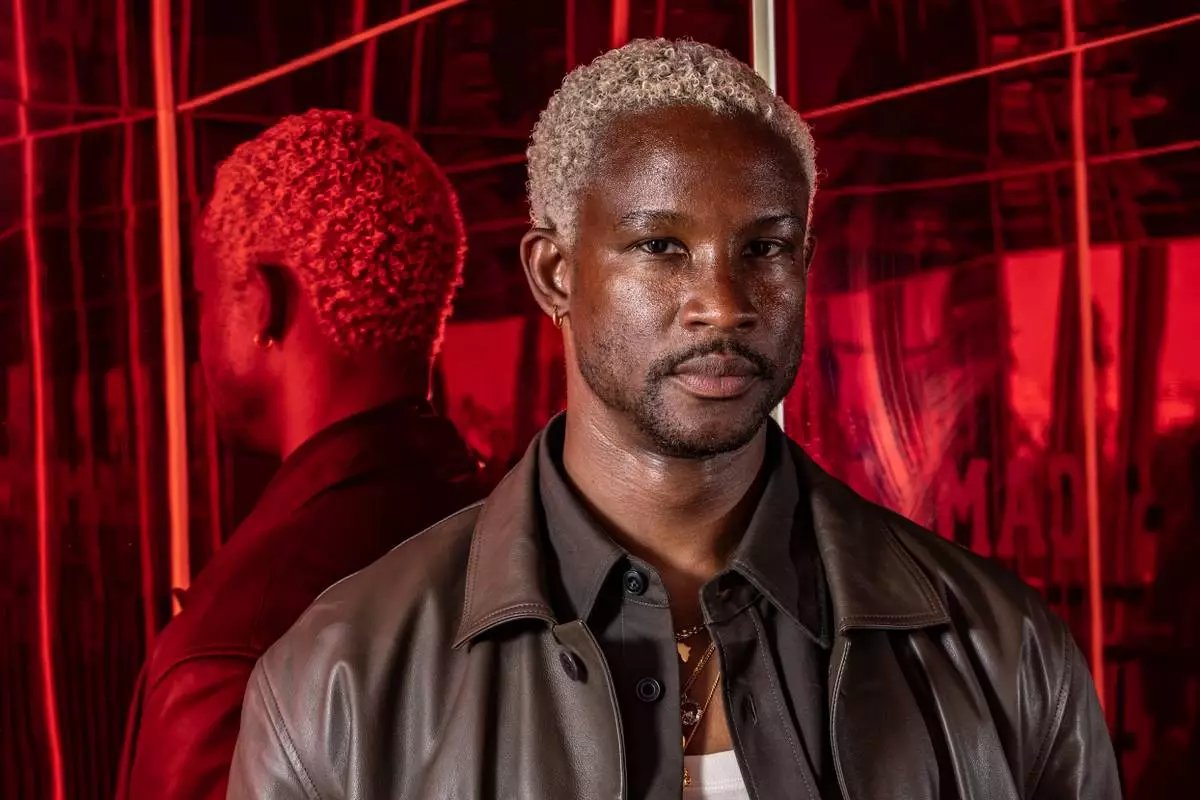
FILE - Akinola Davies Jr., director of the film "My Father's Shadow," poses at the 78th international film festival in Cannes, southern France, on May 19, 2025. (Photo by Joel C Ryan/Invision/AP, File)
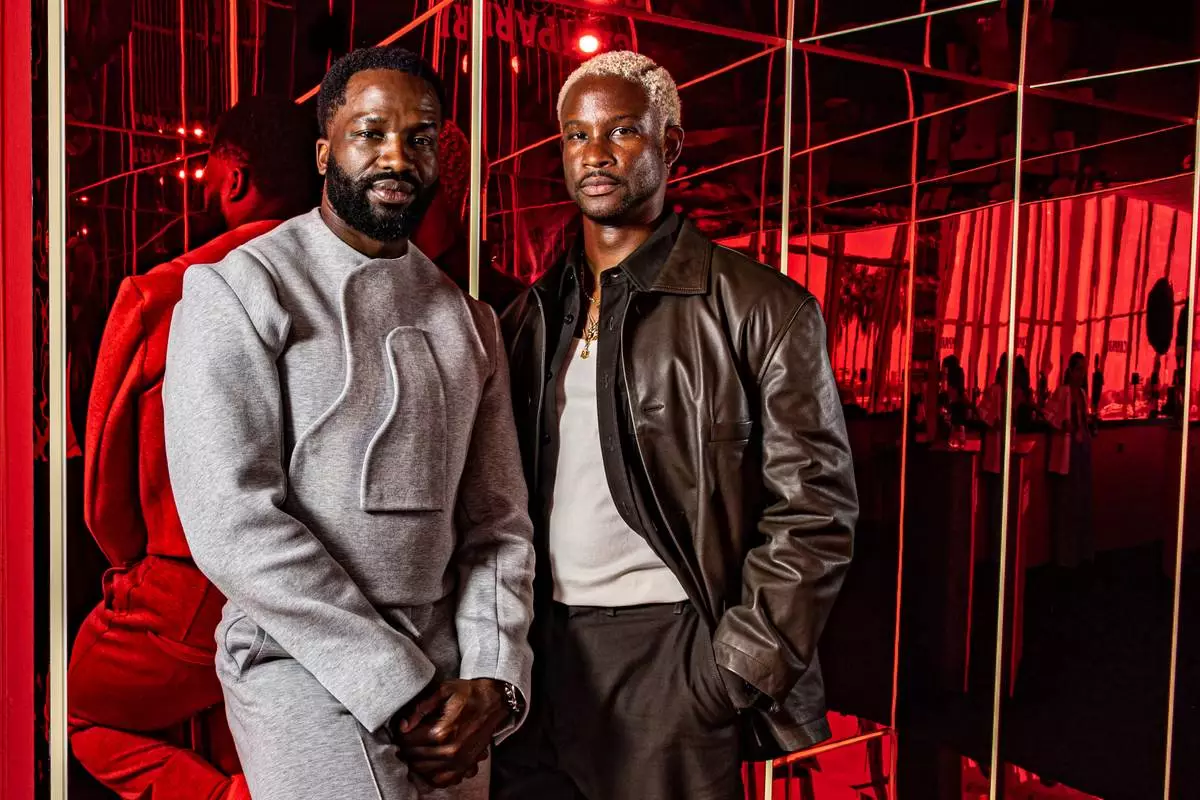
FILE - Sope Dirisu, star of the film "My Father's Shadow" poses with director Akinola Davies Jr. at the 78th international film festival in Cannes, southern France, on May 19, 2025. (Photo by Joel C Ryan/Invision/AP, File)
NEW YORK (AP) — On a recent weeknight, three tenants of an aging Bronx building were trading apartment horror stories inside a packed ballroom lined with city bureaucrats.
The occasion was the third in a series of “rental rip-off hearings,” a new forum launched by New York Mayor Zohran Mamdani for disgruntled renters to air their complaints directly to housing officials — and in some cases, the mayor himself.
As she waited in line, Gulhayo Yuldosheva said she worried that noxious mold in her apartment had worsened her child’s asthma. Nearby, her downstairs neighbor, Marina Quiroz, was showing a video of rats scurrying through her kitchen to a representative of the city’s tenant protection office.
Ann Maitin, a longtime resident of the same building, had just met with the mayor.
“He let me go over my three minutes,” she said, holding up a spiral notebook’s worth of grievances.
Mamdani, a democratic socialist swept into office on a promise of zealous tenant advocacy, framed the event as a struggle session for renters, assuring the standing room only crowd that their stories would guide the city's efforts “to actually hold landlords accountable when they don’t follow the law."
To the residents of 705 Gerard Avenue, this raised a practical problem: No one seemed to know who actually owned their building.
“It feels like such a basic question,” said Maitin, a retired Verizon technician who recently organized the building’s tenant association. “You’d think we’d have the right to that information.”
Their situation is hardly unique. As corporate owners and investor groups have grown their share of the rental market in New York City, they are increasingly shielding their identities behind limited liability companies, or LLCs.
The practice, which has also been spreading nationally, is legal. But experts warn it could complicate Mamdani’s promised crackdown, making it harder for the city and tenants to track the chronically negligent owners whose buildings the mayor has vowed to target and even seize.
“There are these big slumlords that everyone knows are doing predatory investment, but pinning them down is going to be difficult, for the LLC reason,” said Oksana Mironova, a housing policy analyst at the Community Service Society. “That’s a problem for the administration, and it’s even worse for tenants.”
For Yuldosheva and her neighbors, finding their landlord is one of many problems afflicting their six-story building near Yankee Stadium.
Heat and hot water outages are regular enough that some tenants keep a thermometer on their fridge and the city’s complaint hotline on speed dial. Common areas are often filthy, and increasingly populated by drug users. Getting help with an urgent maintenance issue “feels like waiting for Christmas in July,” said Maitin.
During a monthslong elevator outage, a tenant who uses a wheelchair, Tommy Rodriguez, said he was forced to “slide down the steps, like a kid.” Calls to the building management about a repair timeline went unanswered, he said.
Growing up in the building in the 1980s, Rodriguez recalled the previous landlord as a friendly and responsive neighborhood presence.
“This felt like a home before,” Rodriguez said. “Now they treat us the same as the rats.”
A large rodent had recently chewed a hole through his couch cushion. He handled the extermination himself, with a two-by-four.
Recently, tenants received a clue about their landlord, following the partial collapse of another Bronx building. The man identified in news stories as the owner of that building, David Kleiner, shared a Brooklyn office with their building manager, Binyomin Herzl.
A handful of tenants visited each of the building’s 72 units, logging an array of decrepit conditions and unusual alterations.
“We didn’t want to become the next news story,” said Yuldosheva, pointing to a crack in the wall of a bedroom shared by her three children — a result, she feared, of the subway that rumbles just below her windows.
Lawsuits show that Herzl has been ordered to pay more than $100,000 for violations across at least six Bronx buildings, several of which were found by a judge to pose an imminent hazard.
Reached by phone, Herzl said he didn't own any of those properties, but simply acted as a middleman between tenants and the true owners, whom he declined to list. “There’s no one landlord,” he said. “It’s a group of investors.”
Kleiner, who was previously featured on the city’s “worst landlord” list, confirmed his partial ownership of 705 Gerard in a brief phone call, but declined further comment.
Herzl, meanwhile, attributed the tenants’ complaints to “normal wear and tear” of a nearly century old building. He said Mamdani should focus on improving the city’s public housing, rather than going after private landlords.
“Our buildings look like five star hotels against his,” he added.
When landlords refuse to address a serious violation, like heat or hot water outages, the city can step in and order repairs, then bill the owner directly.
In the last three years, inspectors have ordered emergency repairs at 38 buildings that list either Herzl or Kleiner as an owner, according to records provided by the city’s housing department. The men have been billed $446,521 for those repairs.
Mamdani has proposed using such fines as a vehicle to bring distressed rental properties under city stewardship, by aggressively pursuing liens on delinquent landlords and buying up their portfolios through foreclosure auctions.
Just as the city can shut down unsanitary restaurants, Mamdani has said, landlords that “repeatedly put New Yorkers at risk will not be allowed to operate in New York City — with no exceptions."
In reality, the process is resource-intensive and legally fraught. It is made more complex by the nest of LLCs often used by landlords to obfuscate the full scope of their portfolios, according to Cea Weaver, director of the Mayor’s Office to Protect Tenants.
“It’d be great to have a better sense of who owns the buildings that we are regulating and overseeing,” she said.
State legislation that would have made it easier to identify LLC owners was recently vetoed by New York Gov. Kathy Hochul amid pressure from landlords.
Kenny Burgos, the CEO of the New York Apartment Association, a landlord lobbying group, said Mamdani’s tenant proposals — including freezing the rent for regulated tenants — would force landlords to cut back on maintenance and services.
“That’s going to take away from the elevator budget, the boiler budget, the heating budget,” he said. “It’s a question of math: These buildings are crumbling because of policy, not because of bad landlords.”
He characterized the rental rip-off hearings as “show trials” that took a “tribal approach” to the city’s affordable housing crisis.
Despite the combative branding — “New Yorkers vs. Bad Landlords,” blares one promotion — the Bronx event mostly resembled a standard constituent service night: City officials fielded questions about local laws, helped residents with paperwork and connected them to service providers.
Maitin left feeling “glad to be heard by someone who can actually do something about the problem,” but felt it was too early to tell “if it’s all talk."
The next morning, she was surprised to find the building’s superintendent applying a fresh coat of paint to a staircase. Outside, workers were removing scaffolding that had been in front of the building for years.
“I think they caught wind of the rental rip-off,” Maitin said. “They’re scared.”
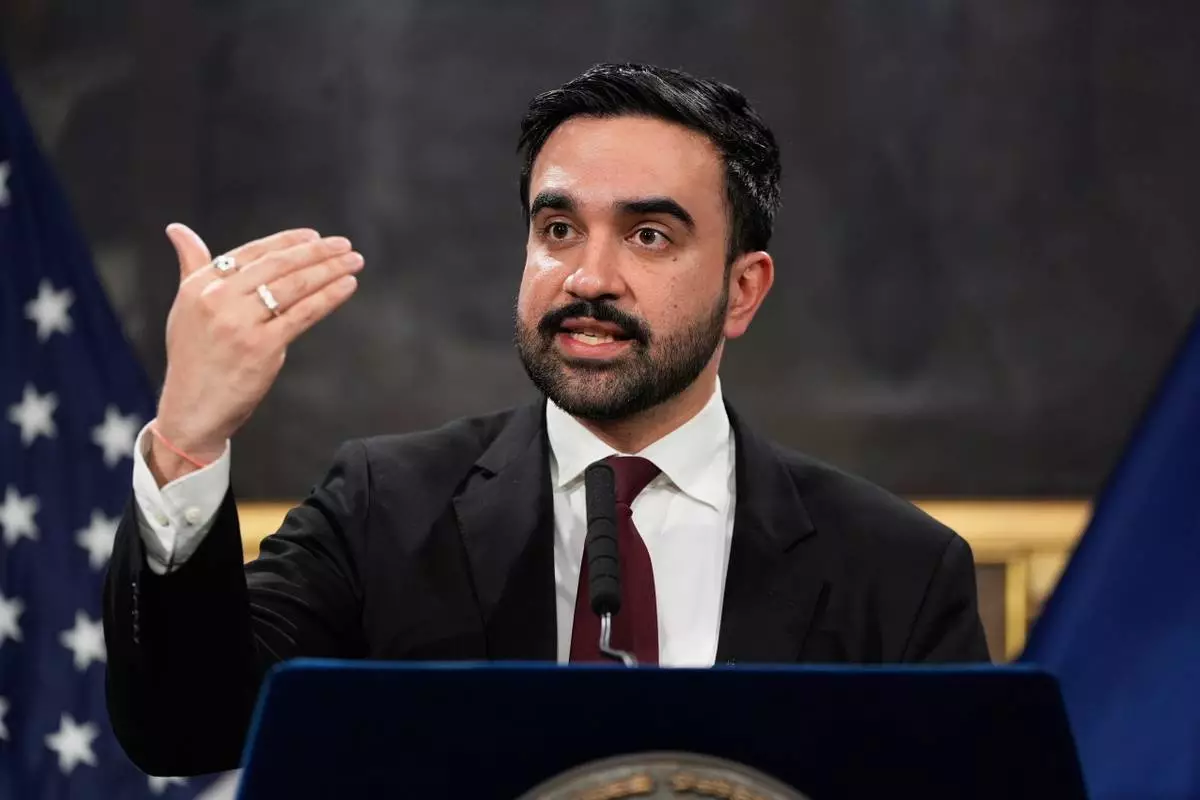
FILE - New York City Mayor Zohran Mamdani speaks to reporters during a news conference in New York, Tuesday, Feb. 17, 2026. (AP Photo/Seth Wenig, File)
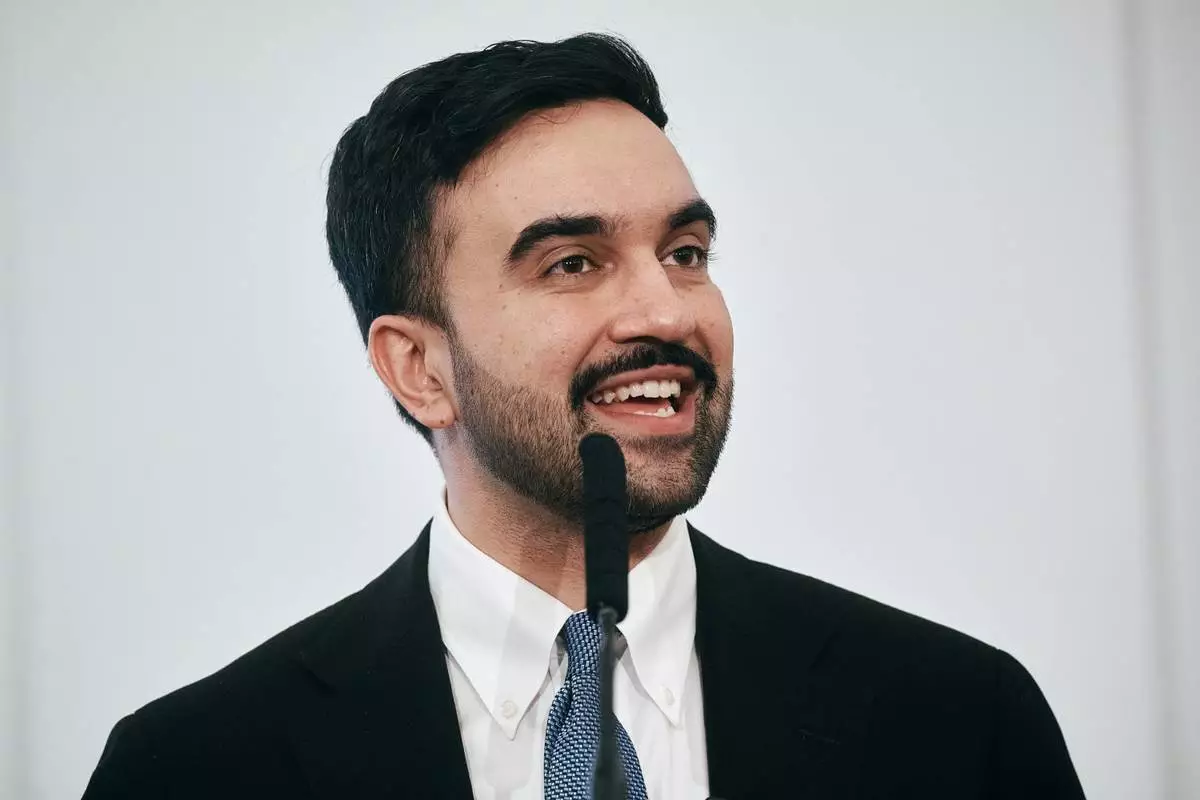
FILE - New York City Mayor Zohran Mamdani speaks during a Rental Ripoff Hearing at Fordham University on Wednesday, March 11, 2026, in New York. (AP Photo/Andres Kudacki, File)
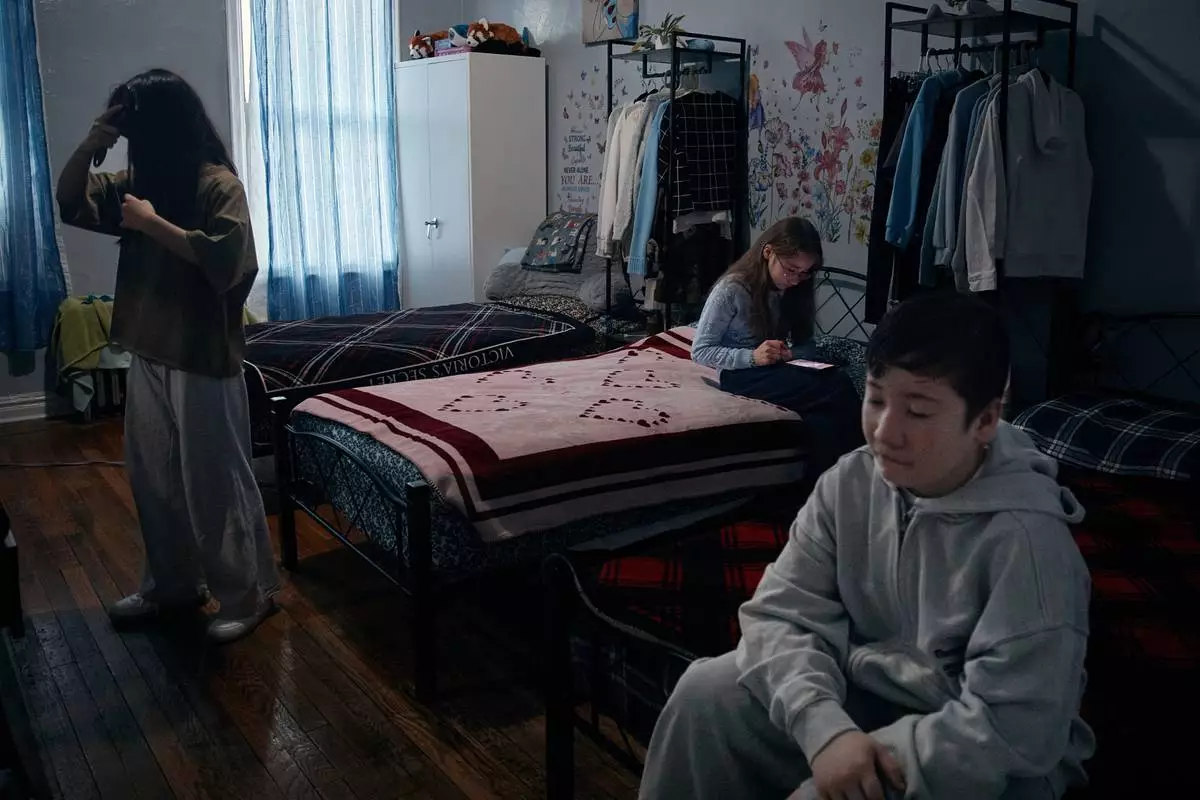
Gulhayo Yuldosheva's children get ready for school in an apartment building where tenants report maintenance issues and pest infestations, in the Bronx borough of New York, Tuesday, March 17, 2026. (AP Photo/Andres Kudacki)
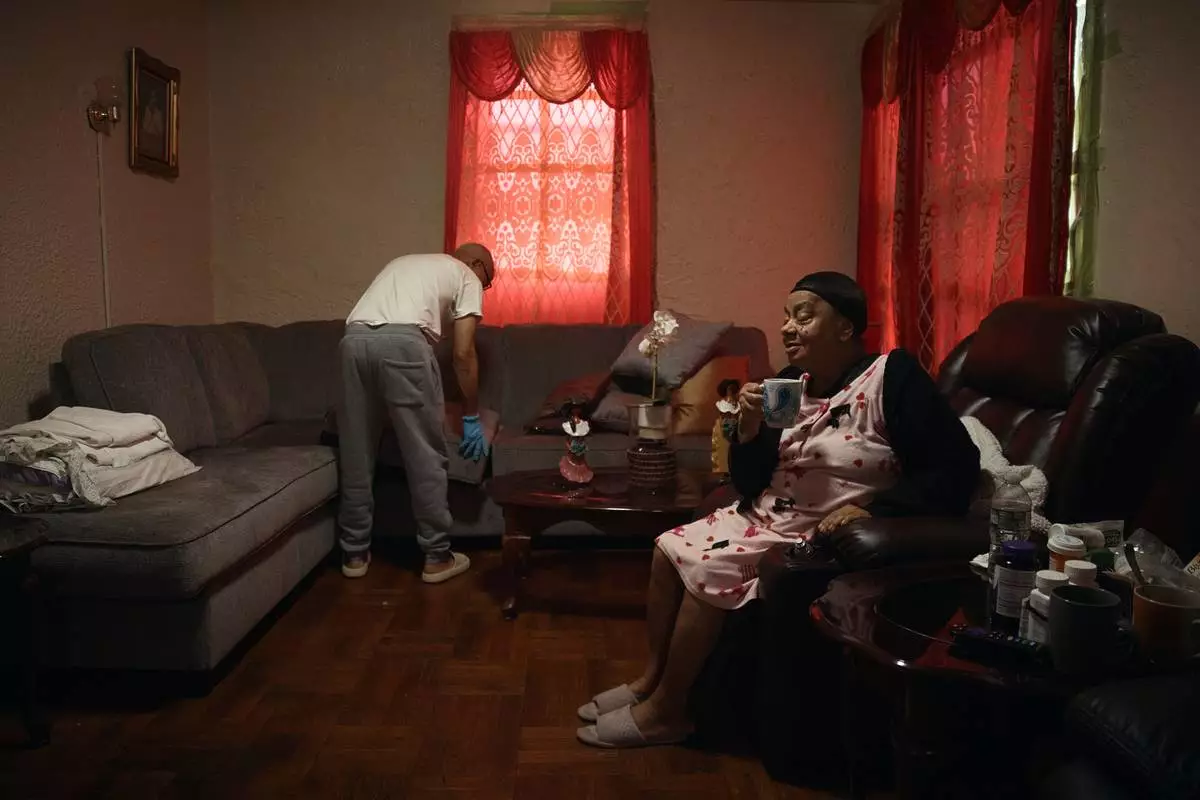
Francisco Medina, left, cleans his apartment next to his relative, Maria Frias, right, in an apartment building where tenants report maintenance issues and pest infestations, in the Bronx borough of New York, Tuesday, March 17, 2026. (AP Photo/Andres Kudacki)
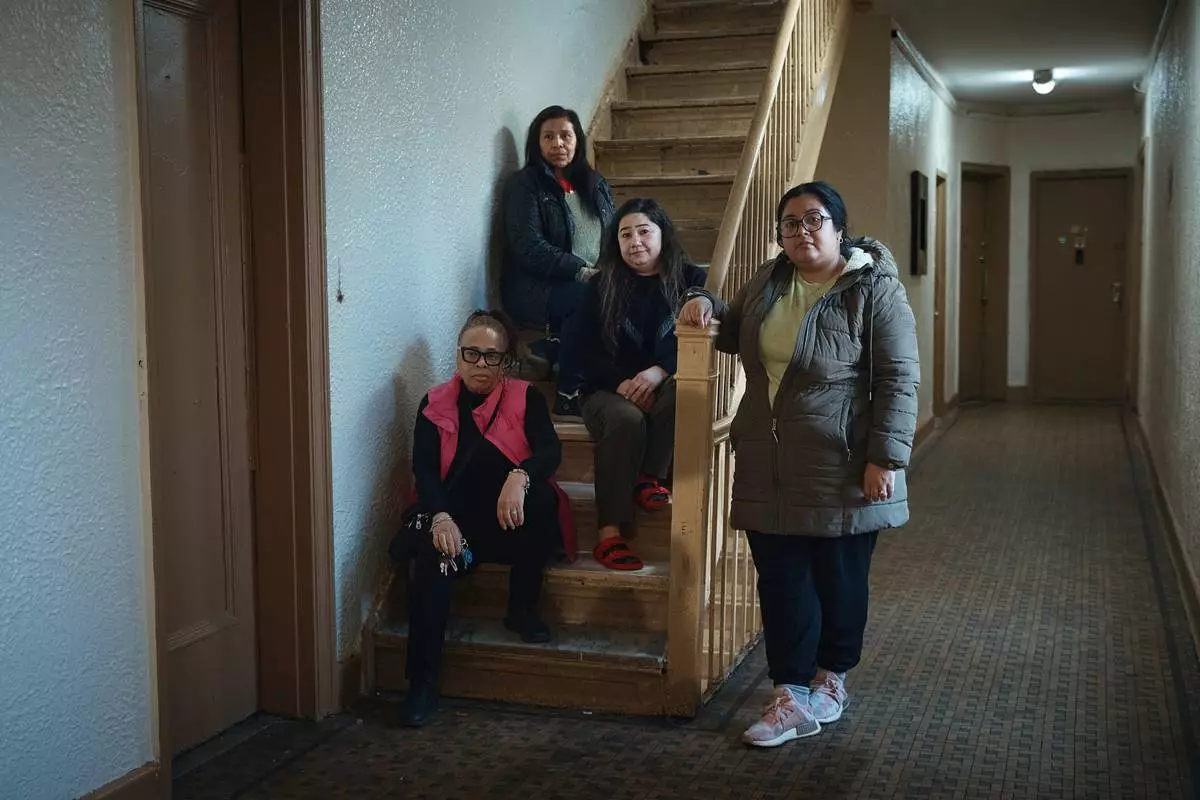
Gulhayo Yuldosheva, 33 , center right, Marina Quiroz, 65, top, pose for a portrait with other two residents in an apartment building where tenants report maintenance issues and pest infestations, in the Bronx borough of New York, Tuesday, March 17, 2026. (AP Photo/Andres Kudacki)
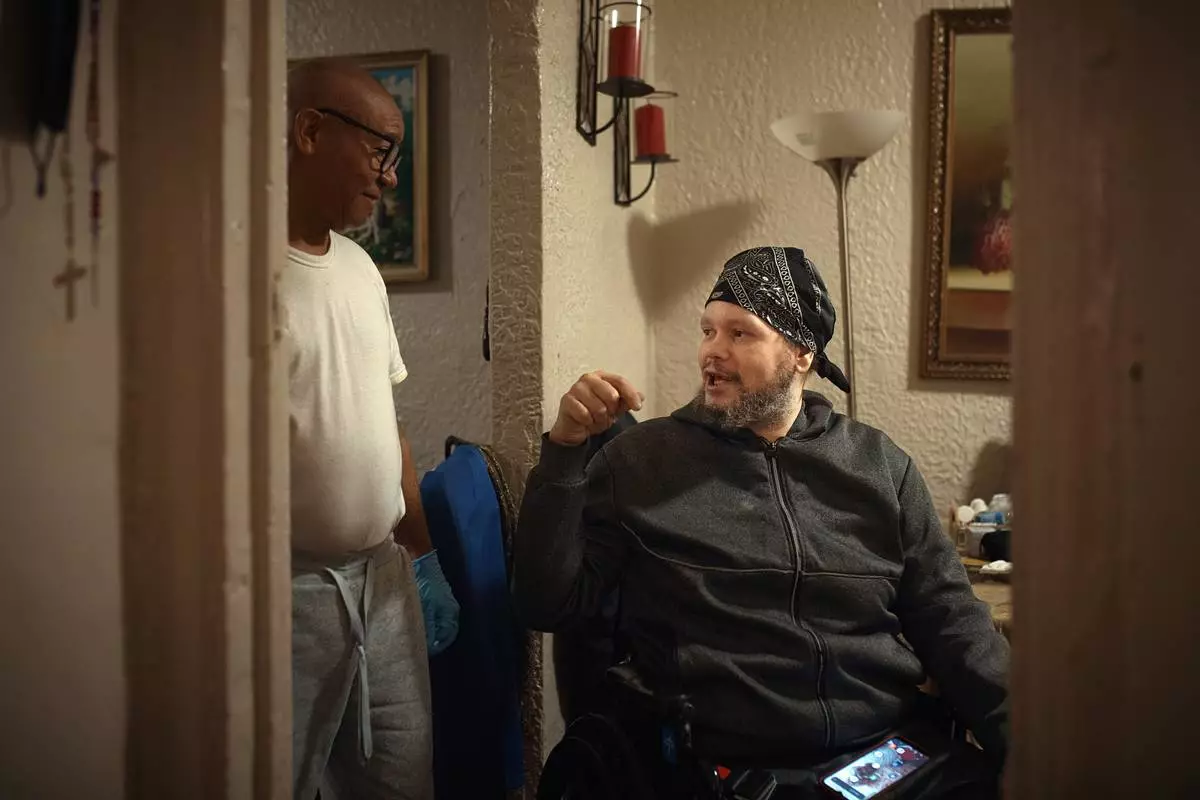
Tommy Rodriguez, right, talks to his relative, Francisco Medina, left, in an apartment building where tenants report maintenance issues and pest infestations, in the Bronx borough of New York, Tuesday, March 17, 2026. (AP Photo/Andres Kudacki)
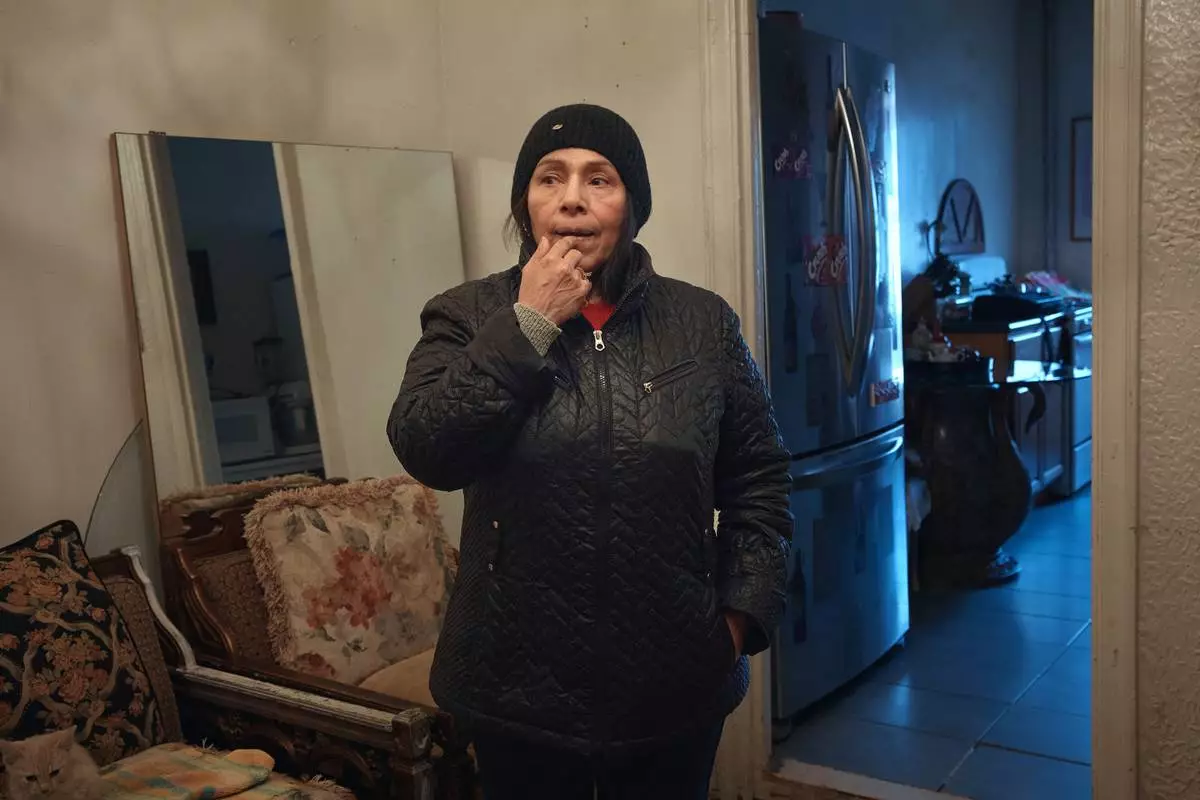
Marina Quiroz stands in her living room in a Bronx apartment building, where tenants report maintenance issues, pest infestations, Tuesday, March 17, 2026, in New York. (AP Photo/Andres Kudacki)