WASHINGTON (AP) — Scientists are testing an entirely new way to fight heart disease: a gene-editing treatment that might offer a one-time fix for high cholesterol.
It’s very early stage research, tried in only a few dozen people so far. But gene-editing approaches being developed by two companies show hints that switching off certain genes could dramatically lower artery-clogging cholesterol, raising hopes of one day being able to prevent heart attacks without having to take pills.
“People want a fix, not a bandage,” said Dr. Luke Laffin, a preventive cardiologist at the Cleveland Clinic. After co-authoring a promising study published in the New England Journal of Medicine, he said he was flooded with queries about how to participate in the next clinical trial.
Everyone needs a certain amount of cholesterol. But too much, especially a “bad” kind called LDL cholesterol, builds plaque in the artery walls and is a main driver of heart attacks and strokes. Cardiovascular disease is the nation’s — and world’s — leading killer.
Millions take cholesterol-lowering medicines such as statins, the cornerstone of treatment. But many still struggle to lower their cholesterol enough, and sticking with the drugs for life is difficult, with some quitting because of side effects.
While your diet contributes, your liver produces the cholesterol your body needs, according to the American Heart Association, and genes play a role in how it's managed. Some people inherit genes that trigger very high cholesterol. Others have cholesterol that’s naturally extremely low over their lifetime and seldom develop heart disease.
Years ago, Dr. Kiran Musunuru, a cardiologist now at the University of Pennsylvania, reported some of those lucky people harbor a mutation that turns off a gene named ANGPTL3, lowering their levels of both LDL cholesterol and another bad fat, triglycerides.
Separately, geneticists at UT Southwestern Medical Center found still other people’s extremely low LDL was due to loss of function of another gene named PCSK9.
“It’s a natural experiment in what would happen if we actually changed the gene,” said the Cleveland Clinic’s Dr. Steven Nissen, who with Laffin oversaw an ANGPTL3 study funded by Swiss-based CRISPR Therapeutics.
Today there are injected medicines that block proteins produced by the PCSK9 and ANGPTL3 genes in the liver, thus helping the body clear away cholesterol. The new research uses CRISPR, the Nobel Prize-winning gene-editing tool, to try switching off one of those genes in people at high risk from uncontrolled cholesterol.
In one study, 15 adults received a single infusion of tiny particles that carried the CRISPR tool to the liver, switching off the ANGPTL3 gene inside that organ’s cells. Within two weeks, those getting the highest dose saw their LDL and triglyceride levels both drop by half, Laffin and Nissen reported in November.
Boston’s Verve Therapeutics, a subsidiary of pharmaceutical giant Eli Lilly, earlier reported that its PCSK9-targeted editing infusion cut LDL cholesterol by a similar amount in a small study.
Both companies’ initial studies were done in Australia, the U.K. and other countries. A Lilly spokesperson said U.S. study sites are opening. Nissen said a next-step study of CRISPR Therapeutics' approach should start later this year, with sites yet to be announced. Each company is pursuing several gene targets.
While people with naturally nonfunctioning ANGPTL3 or PCSK9 have no apparent bad consequences, longer studies of the gene-editing approach in far more people are needed, said Penn’s Musunuru, who co-founded Verve. He said some participants in an earlier Verve study have been tracked for two years, their cholesterol still lowered.
Gene editing is considered permanent. If edited liver cells reproduce, their progeny contain the altered genes, and Musunuru said the edits have lasted a lifetime in mice.
There are major safety questions to be answered, cautioned Dr. Joseph Wu of Stanford University, who wasn’t involved in either study. CRISPR-based therapies for any disease haven’t been used enough to know long-term safety — and the particles carrying the gene-editing tool can irritate or inflame the liver, he said. Another unknown is whether gene-editing hits only the intended target.
That's why for now, studies largely target people at very high risk.
Whether gene editing eventually pans out, the American Heart Association lists eight key factors for better heart health that everyone should work on now.
Some involve lifestyle. Eat a heart-healthy diet with lots of fruits and vegetables, whole grains and healthy fats like those found in nuts. Saturated fats can increase cholesterol while healthier diets can lower LDL levels and raise levels of HDL, the so-called good cholesterol.
Also, be physically active, as exercise can increase good HDL and help lower triglycerides.
Maintain a healthy weight. If you smoke, quit. And get enough sleep.
On the medical side, control your blood pressure — levels measuring less than 120 over 80 are optimal. Diabetes also harms the heart so control your blood sugar.
As for cholesterol, keeping levels of that “bad” LDL kind at 100 is considered fine for healthy people. But once people develop high cholesterol or heart disease, guidelines recommend lowering it to at least 70, even lower for those at very high risk.
When lifestyle changes aren't enough, statin pills like Lipitor, Crestor or their cheap generic equivalents block some of the liver’s production of cholesterol and are highly effective at lowering LDL. There are a few other pill options for people who need additional help or can’t take statins, as well as some injected medicines.
—-
The Associated Press Health and Science Department receives support from the Howard Hughes Medical Institute’s Department of Science Education and the Robert Wood Johnson Foundation. The AP is solely responsible for all content.

FILE - This undated image made available by the National Human Genome Research Institute shows the output from a DNA sequencer. (NHGRI via AP, File)
U.S. President Donald Trump said the military could end its Iran offensive in two to three weeks and will shift responsibility for the Strait of Hormuz to countries that rely on it for oil and shipping as the White House announced a prime-time presidential address Wednesday evening on the war.
Trump expressed frustration Tuesday with allies who have been unwilling to do more to support the U.S. war effort, telling them to “go get your own oil.” Trump recently has vacillated between insisting there is progress in diplomatic talks with Iran and threatening to widen the war.
In an interview with pan-Arab broadcaster Al Jazeera, Iranian Foreign Minister Abbas Araghchi acknowledged receiving direct messages from U.S. Mideast envoy Steve Witkoff. He insisted, however, that there were no direct negotiations and said Iran has no faith that talks with the U.S. could yield any results, saying “the trust level is at zero.”
Trump said the U.S. “will not have anything to do with” what happens next in the vital waterway that has been closed by the Islamic Republic. Instead, he told reporters, the responsibility for keeping the strait open will rest with countries that rely on it. Gulf states rely on the waterway for both exports and imports, including food, and 20 percent of the world's oil supply flows through it.
U.S. gas prices jumped past an average of $4 a gallon for the first time since 2022 on Tuesday, as the Iran war continues to push fuel prices higher worldwide. Analysts say those high fuel costs will trickle into groceries as businesses’ transportation and packaging costs pile up.
Here is the latest:
Speaking to Al Jazeera, Iranian Foreign Minister Abbas Araghchi signaled Tehran’s willingness to keep fighting no matter what Trump may threaten.
Trump’s April 6 deadline for the Strait of Hormuz to open still stands, otherwise he threatened to hit power plants.
“You cannot speak to the people of Iran in the language of threats and deadlines,” Araghchi said.
Asked if the United States would launch a ground war in Iran, Araghchi dismissed the idea.
“I do not think they would dare to do such a thing,” he said. “Very heavy casualties would await them.”
Oil fell below $100 per barrel and Asian shares jumped Wednesday over renewed optimism about a de-escalation of the Iran war.
Brent crude, the international standard, was down 4.7% to $99.05 per barrel.
Benchmark U.S. crude dropped 4% to $97.33 a barrel.
South Korea’s Kospi recovered its losses from earlier this week, surging 8.4% to 5,478.70, while Tokyo’s Nikkei 225 rose 5.2% to 53,739.68.
Hong Kong’s Hang Seng was up 2.3% to 25,346.42, while the Shanghai Composite index was trading 1.5% higher at 3,948.55.
An airstrike in Iran’s capital, Tehran, on Wednesday morning appears to have struck inside of the former U.S. Embassy compound there.
The embassy has been controlled by Iran’s Revolutionary Guard since the 1979 hostage crisis.
Its all-volunteer Basij force operates the compound, running an anti-American museum inside the embassy and having different operations on its grounds in newer buildings.
Witnesses saw blown-out windows surrounding the massive compound on Tehran’s Taleghani Street. However, there was no missile strike visible around the compound, with witnesses saying they believe the strike happened inside the compound.
The 444-day hostage crisis saw American diplomats held until President Ronald Reagan took office from President Jimmy Carter in 1981.
An oil tanker contracted to Qatar was struck by an Iranian cruise missile on Wednesday while two others were intercepted, authorities said.
The missile slammed into the tanker off Qatar's coast that is contracted by state-owned QatarEnergy. The ministry said the tanker’s 21-member crew was evacuated, and no casualties were reported.
In a statement, the Defense Ministry said two other missiles were intercepted.
QatarEnergy said there was no environmental impact from the tanker attack.
The British military’s United Kingdom Maritime Trade Operations center said earlier that a projectile slammed into the side of the ship.
The Iranian-backed Houthis in Yemen said Wednesday they fired a barrage of ballistic missiles toward Israel.
Air raid sirens went off in southern Israel in the early morning, from Beersheba to the Mediterranean coast following the launch. There were no immediate reports of impacts.
Brig. Gen. Yahya Saree, a military spokesman for the Houthis, said in a prerecorded statement that they fired at “sensitive targets” in southern Israel.
The attack is the third since the Houthis joined the war on Friday when they fired their first missile towards Israel since the U.S. and Israel launched massive airstrikes on Iran on Feb. 28.
Their entry has raised concerns that they could resume attacks on vessels in the Red Sea further disrupting the global shipping industry and sending oil prices much higher
A drone attack has killed a citizen of Bangladesh in Fujairah, one of the UAE’s seven emirates, authorities said.
He was killed Wednesday when Emirati air defense systems intercepted a drone, and shrapnel landed in a farm, the Fujairah media office said.
The fatality has brought the death toll in the UAE to nine civilians and two soldiers. A Moroccan contractor with the UAE army was also killed in Bahrain.
Earlier Saudi Arabia said it had destroyed two Iranian drones.
Emergency personnel said an 11-year-old girl was severely wounded in central Israel in the latest missile attack from Iran.
Two more people suffered moderate injuries including a 13-year-old boy and a 36-year-old woman, according to Israel’s Magen David Adom rescue services.
Iran’s foreign minister has acknowledged receiving direct messages from U.S. Mideast envoy Steve Witkoff.
The comments by Abbas Araghchi came in an interview with pan-Arab broadcaster Al Jazeera aired late Tuesday. He insisted that the messages didn’t constitute negotiations.
U.S. President Donald Trump has repeatedly described Iran and America has having talks over the war, while Pakistan has been a key intermediary along with Egypt and Turkey during the conflict.
“I receive messages from Witkoff directly, as before, and this does not mean that we are in negotiations,” he said.
He added: “We do not have any faith that negotiations with the U.S. will yield any results. The trust level is at zero.”
Asked about a possible ground offensive by the U.S., Araghchi said “we are waiting for them.”
“We know very well how to defend ourselves,” Araghchi reportedly told the Qatar-based broadcaster. “In a ground war, we can do it even better. We are completely ready to confront any sort of ground attack. We hope they do not make such a mistake.”
Lebanon’s Health Ministry said in a preliminary count early Wednesday 21 people were also wounded in the strike in Jnah.
The strike came without warning, and Israel did not declare the target. When it does, it often says it is targeting operatives from the Hezbollah militant group.
Emergency workers rushed to the scene to search for victims.
Israel’s military warned the public Wednesday a missile was incoming from Yemen, yet another attack from the country’s Houthi rebels who have just entered the war on Iran’s side.
Air raid sirens went off in southern Israel, from Beersheba to the Mediterranean coast.
The warning, just around dawn, broke a long lull, more than 19 hours since the last time Israel’s military warned of an incoming missile launch from Iran, and more than six hours from the last alarms in the northern part of Israel, which in past days received near-constant fire from Hezbollah in Lebanon.
A drone attack by Iran and its allies hit a fuel tank at Kuwait International Airport, sparking a fire, authorities said.
The state-run KUNA news agency said the attack early Wednesday sparked a “large fire” at the airport.
It said there were no immediate injuries from the attack and firefighters were working to control the blaze.
Kuwait International Airport has been attacked before by Iran during the war. The KUNA report suggested the attack may have been launched by Iranian-supported militias in Iraq with Tehran’s support.
In another strike, Bahrain said early on Wednesday morning that it was working to extinguish a fire at a business facility that resulted from an Iranian attack.
Israel said early Wednesday it struck a plant supplying Iran’s theocracy with fentanyl, a powerful synthetic opioid, to allegedly use in a chemical weapons program. Iran acknowledged the strike on Tofigh Daru factory, but insisted it only supplied “hospital drugs” used in medical operations.
The strike happened Tuesday, both the Israelis and the Iranians said.
Iranian Foreign Minister Abbas Araghchi posted a picture of the factory in Tehran, writing on X: “The war criminals in Israel are now openly and unashamedly bombing pharmaceutical companies.”
Hospitals extensively use fentanyl to treat severe pain. But a small amount of the drug can be fatal.
Both Israel and the United States have warned in recent years Iran was experimenting with fentanyl in munitions. The U.S. previously pointed to Iranian academic research studying how Russia likely used a fentanyl derivative during the 2002 Moscow theater hostage seizure by Chechen militants.
Israel alleged Tofigh Daru supplied fentanyl to an advanced research institute in Tehran, known by its acronym SPND. The U.S alleges SPND has conducted research and testing that could be applicable to the development of nuclear explosive devices and other weapons.
The United Arab Emirates has barred Iranians from entering or transiting the country as the war rages, three major airlines said Wednesday.
Long-haul carriers Emirates and Etihad, as well as the lower-cost airline FlyDubai, made the announcements on their websites.
Entry rules can sometimes be opaque in the autocratic United Arab Emirates, a federation of seven sheikhdoms, the three airlines agreed on the order. It said holders of 10-year Golden Visa residency permits could still enter the country.
Authorities have offered no official comment. But Dubai has already shut down the city-state’s Iranian Hospital and Iranian Club, institutions that date back to the time of the shah.
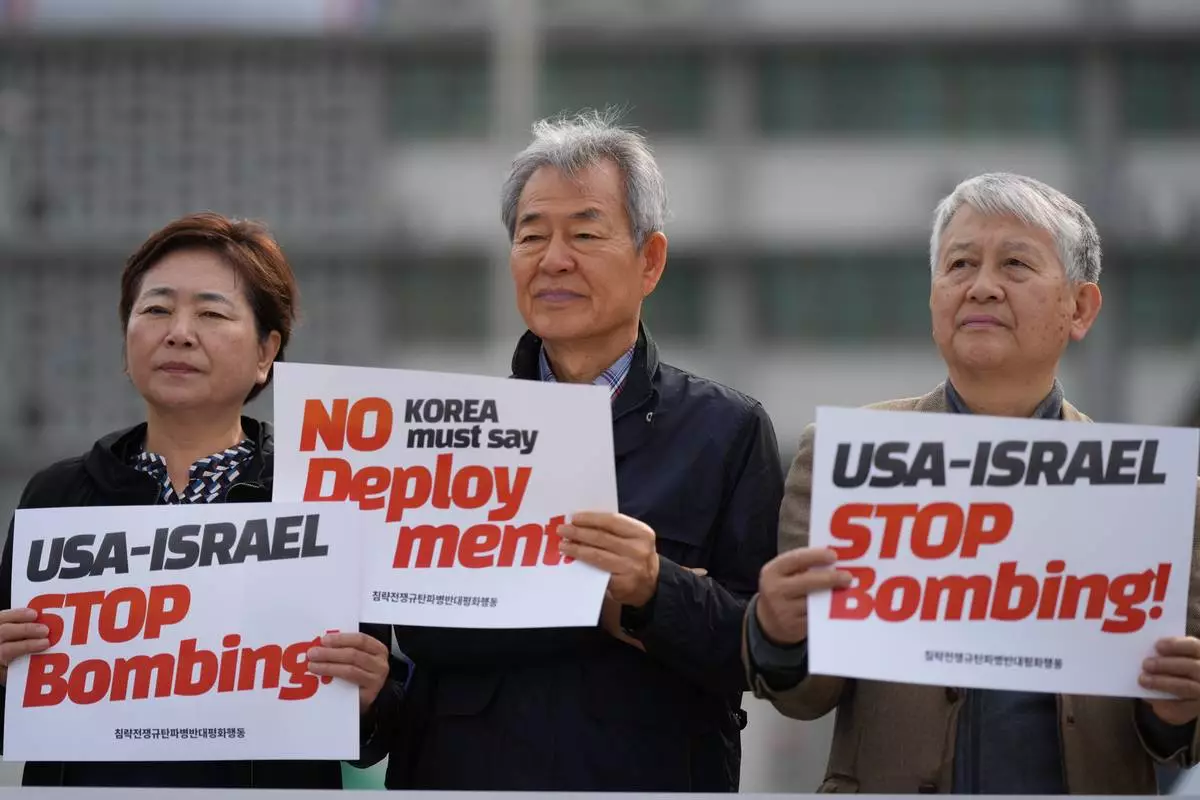
Members of civic groups hold signs against the U.S. and Israel attacks on Iran near the U.S. Embassy in Seoul, South Korea, Wednesday, April 1, 2026. (AP Photo/Lee Jin-man)
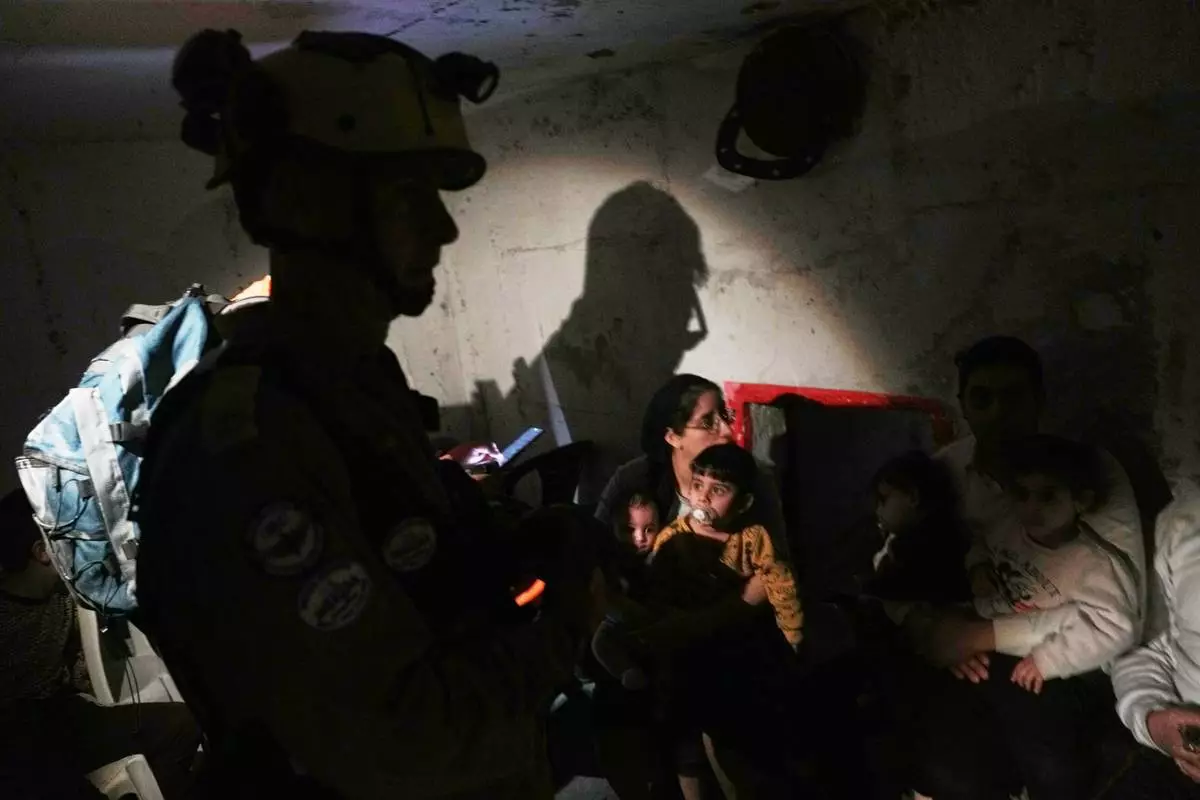
Israel's rescue teams and residents take shelter as sirens sounds next to a site struck by an Iranian missile in Bnei Brak, Wednesday, April 1, 2026. (AP Photo/Oded Balilty)
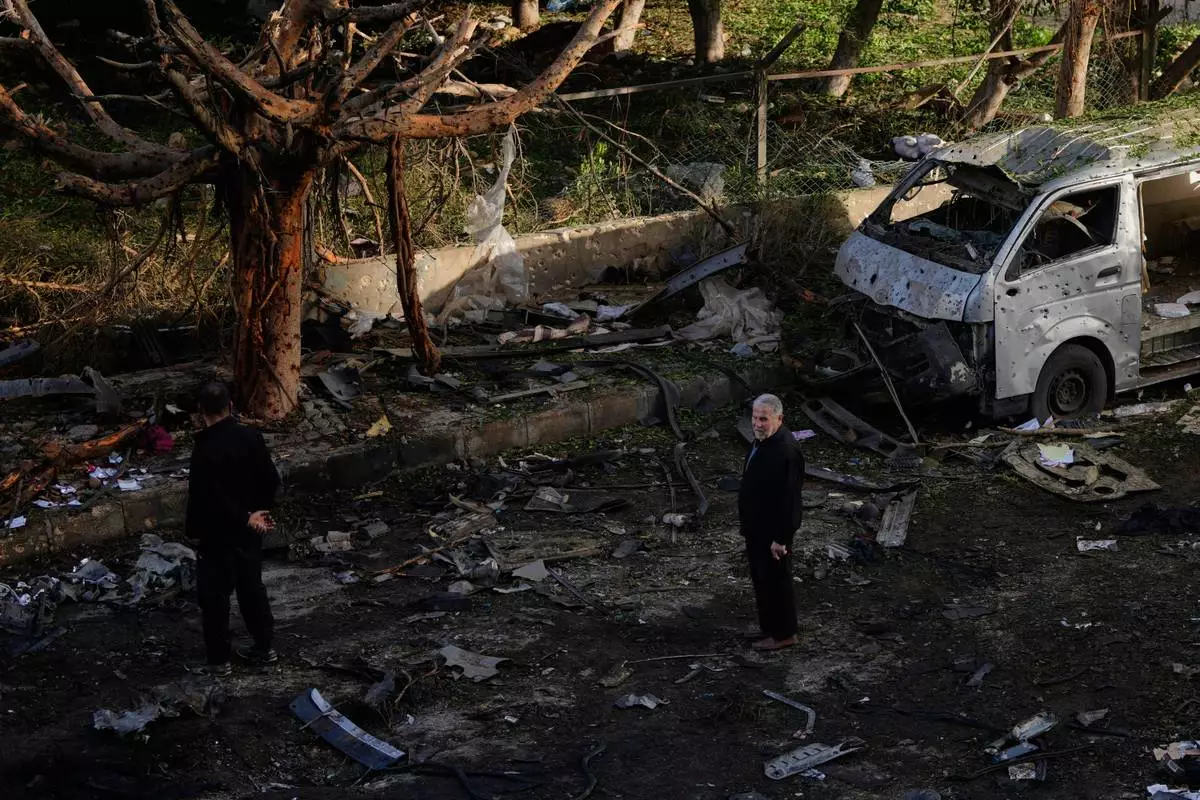
People stand near a damaged van beside scattered debris following an Israeli strike in Beirut, Lebanon, Wednesday, April 1, 2026. (AP Photo/Hassan Ammar)

A firefighter extinguishes a car at the site of Israeli airstrikes, in Beirut, Lebanon, Wednesday, April 1, 2026. (AP Photo/Hussein Malla)

Residents and Israeli security forces inspect a site struck by an Iranian missile in Petah Tikva, Israel, Tuesday, March 31, 2026. (AP Photo/Ohad Zwigenberg)
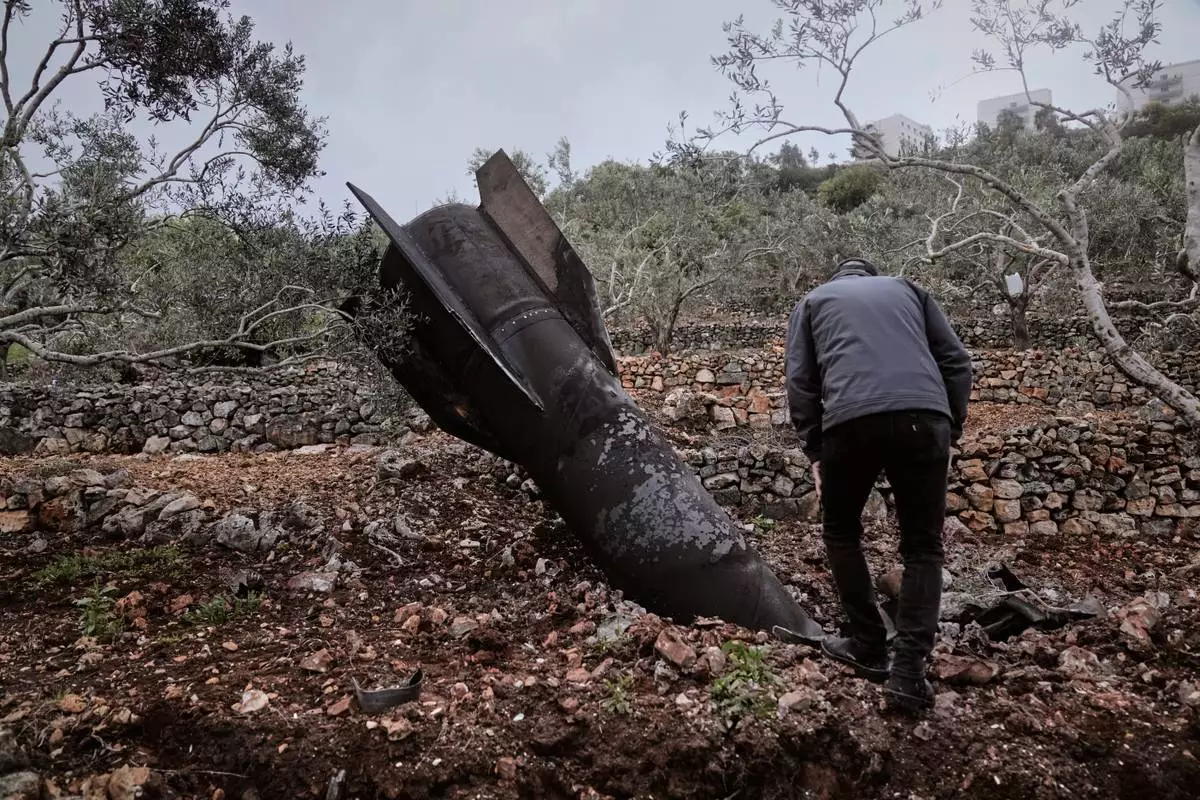
A man inspect the wreckage of an Iranian missile that landed near the West Bank village of Marda, Tuesday, March 31, 2026. (AP Photo/Majdi Mohammed)
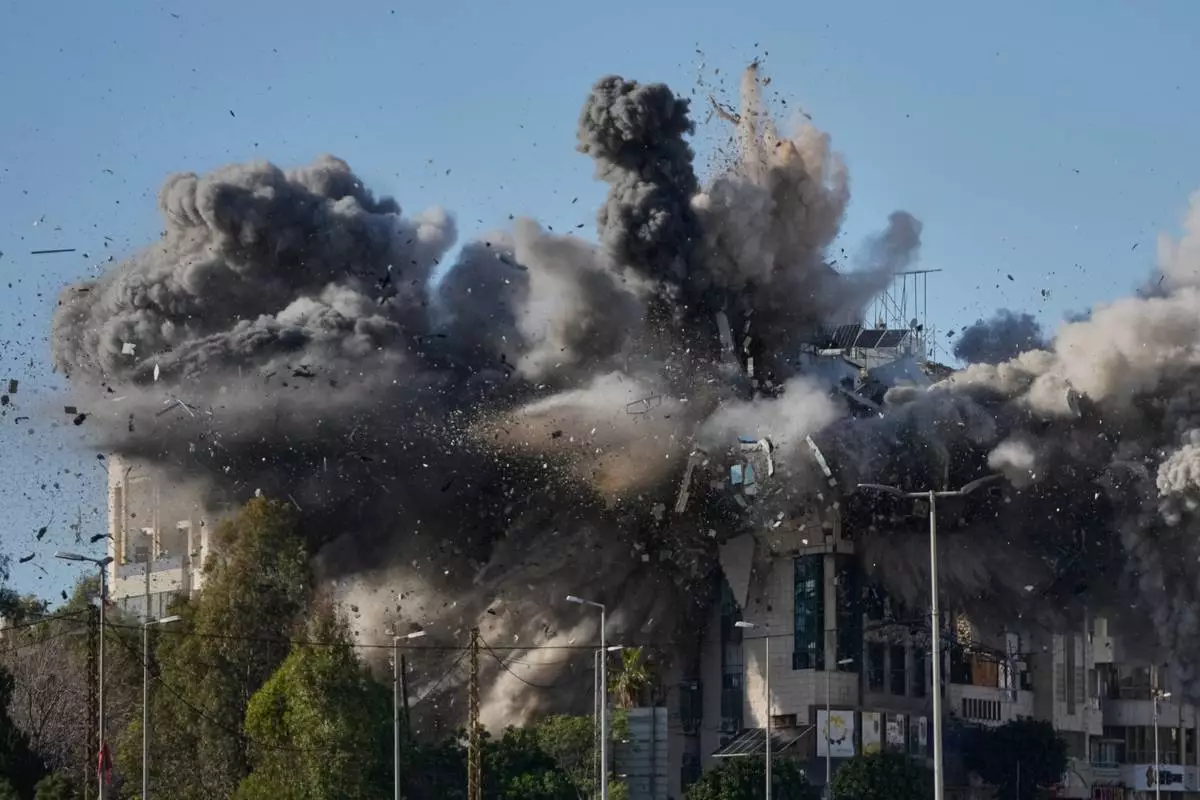
Smoke rises after an Israeli airstrike hits a building near the airport road in Beirut, Lebanon, Tuesday, March 31, 2026. (AP Photo/Hussein Malla)
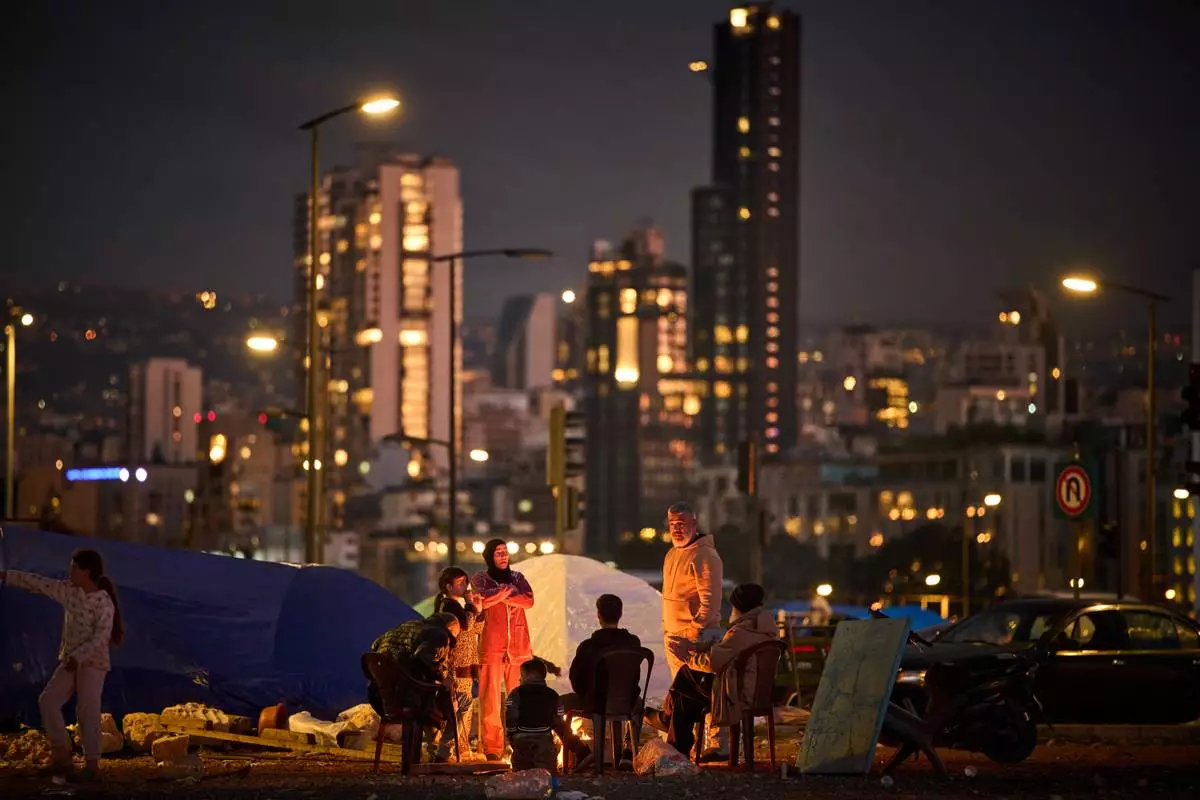
A family who fled Israeli shelling in southern Lebanon warm themselves by a bonfire next to tents used as shelters in Beirut, Lebanon, Tuesday, March 31, 2026. (AP Photo/Emilio Morenatti)