MEXICO CITY (AP) — The temporary closure of airspace over El Paso, Texas, on Wednesday caused unease south of the U.S.-Mexico border and put the spotlight on the use of drones by Mexican cartels.
The criminal groups have used the technology to modernize their operations, smuggle fentanyl, organize migrant border crossings, surveil territory and wage war on rival cartels and Mexican authorities.
Click to Gallery
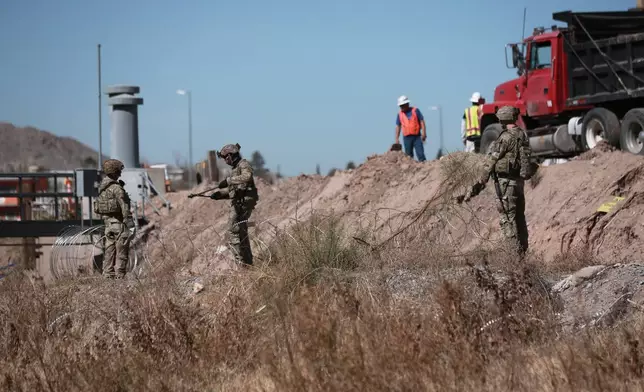
Security forces install barbed wire along the U.S. border in Ciudad Juarez, Mexico, Wednesday, Feb. 11, 2026, near El Paso, Texas. (AP Photo/Christian Chavez)
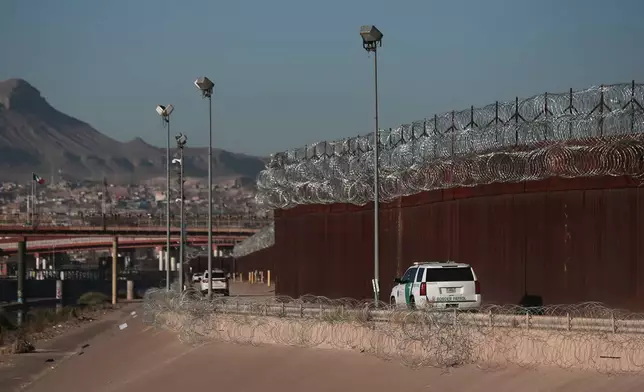
A U.S. Border Patrol patrol along the U.S.-Mexico border in El Paso, Texas, near the Paso del Norte International Bridge, seen from Ciudad Juarez, Mexico, Wednesday, Feb. 11, 2026. (AP Photo/Christian Chavez)
Cars cross the "Paso del Norte" International Bridge at the U.S.-Mexico border between Ciudad Juarez, Mexico, bottom, and El Paso, Texas, top, Wednesday Feb. 11, 2026. (AP Photo/Christian Chavez)
Officers of Michoacan state's Specialized Investigation Subsecretariat use an anti-drone signal jammer during a demonstration for the press in Morelia, Mexico, Wednesday, March 26, 2025. (AP Photo/Eduardo Verdugo)
An officer of Michoacan state's Specialized Investigation Subsecretariat uses an anti-drone signal jammer during a demonstration for the press in Morelia, Mexico, Wednesday, March 26, 2025. (AP Photo/Eduardo Verdugo)
U.S. officials initially said the airspace was closed to halt an incursion by Mexican cartel drones, though others familiar with the situation later put that explanation in doubt.
Steven Willoughby, deputy director of the Department of Homeland Security’s counter-drone program, told Congress in July that cartels use drones almost daily to move drugs across the border and to monitor Border Patrol agents.
According to their data, in the last six months of 2024 more than 27,000 drones were detected within 500 meters (1,640 feet) of the U.S. southern border, mainly at night.
Here's what you need to know:
Drug trafficking by air is not new and is linked to the history of Ciudad Juarez, across the border from El Paso.
In the 1990s, drug trafficker Amado Carrillo Fuentes, founder of the Juarez Cartel, specialized in transporting large drug shipments in small aircraft, earning him the nickname “The Lord of the Skies.”
When he died under suspicious circumstances following botched plastic surgery in 1997, his brothers and sons continued operating out of Ciudad Juarez.
Fifteen years later, when his brother Vicente was arrested — Vicente was sent from Mexico to the United States last year — it was estimated that 70% of the cocaine entering the United States came through Juarez.
Mexico issued an international alert in 2010 about drug traffickers’ use of remotely piloted aircraft systems, and from then on the practice grew.
Between 2012 and 2014, U.S. authorities detected 150 unmanned aircraft systems crossing the border with Mexico. A decade later, U.S. Customs and Border Protection reported 10,000 incursions in the Rio Grande Valley area of southern Texas alone, according to data from the International Narcotics Control Board.
Over time, the drugs flowing into the U.S. were changing too, shifting from heavy bales of marijuana to more compact synthetics like methamphetamine and fentanyl that drones could carry.
In 2021, the Mexican government began publicly reporting the use of explosive-laden drones to attack security forces.
At the time, it was a tactic of the Jalisco New Generation Cartel (CJNG) detected in the states of Michoacan, Guanajuato and Jalisco.
The army said then that the drones were not as effective as criminals would like because they could only carry small explosive charges, sometimes taped onto the drone.
The use of drones spread to nearly all criminal groups and, according to Mexican authorities, they are used both for attacks and for surveillance, even transmitting real-time images.
In states such as Michoacan, both commercial drones and larger agricultural drones about one meter (3.3 feet) in diameter are used; instead of sprayers, they are fitted with adapters for explosives, according to data from that state’s government.
In 2025, the International Narcotics Control Board reported that cartels were increasingly using this method to smuggle fentanyl, sometimes with homemade drones capable of carrying up to 100 kilograms (220.46 pounds) of cargo, because with new satellite technologies traffickers can pre-program precise landing sites and reduce risks in deliveries.
Mexico's government, too, has used drones for their own purposes, both to combat cartels and to monitor migrant caravans in 2018 and 2019. It has also used specialized anti-drone equipment to fight back in states.
The army operates such systems along the borders dividing Sinaloa, Jalisco and Michoacan, primarily, although the latter state has its own unit dedicated to that work.
Last July, the southern state of Chiapas went a step further, announcing the purchase of a fleet of armed drones to battle the Sinaloa and Jalisco cartels that were fighting for control of Mexico's southern border.
Follow AP’s Latin America coverage at https://apnews.com/hub/latin-america
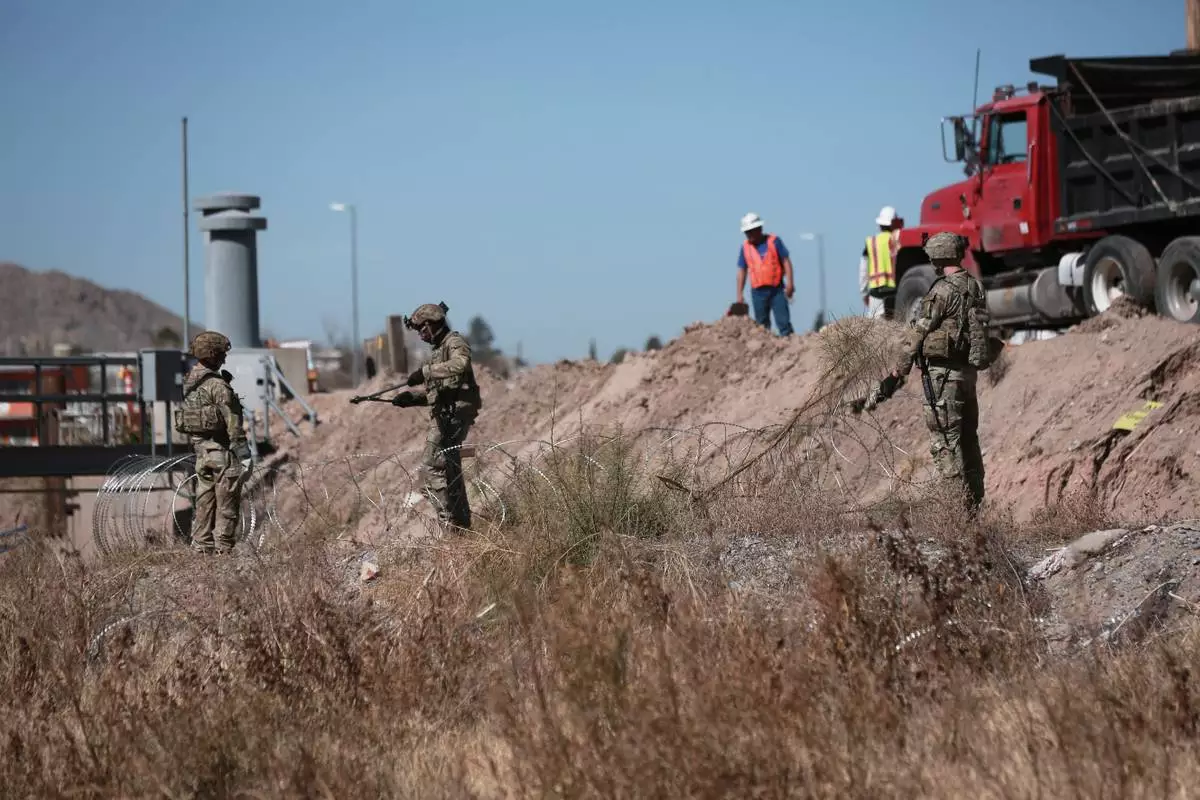
Security forces install barbed wire along the U.S. border in Ciudad Juarez, Mexico, Wednesday, Feb. 11, 2026, near El Paso, Texas. (AP Photo/Christian Chavez)
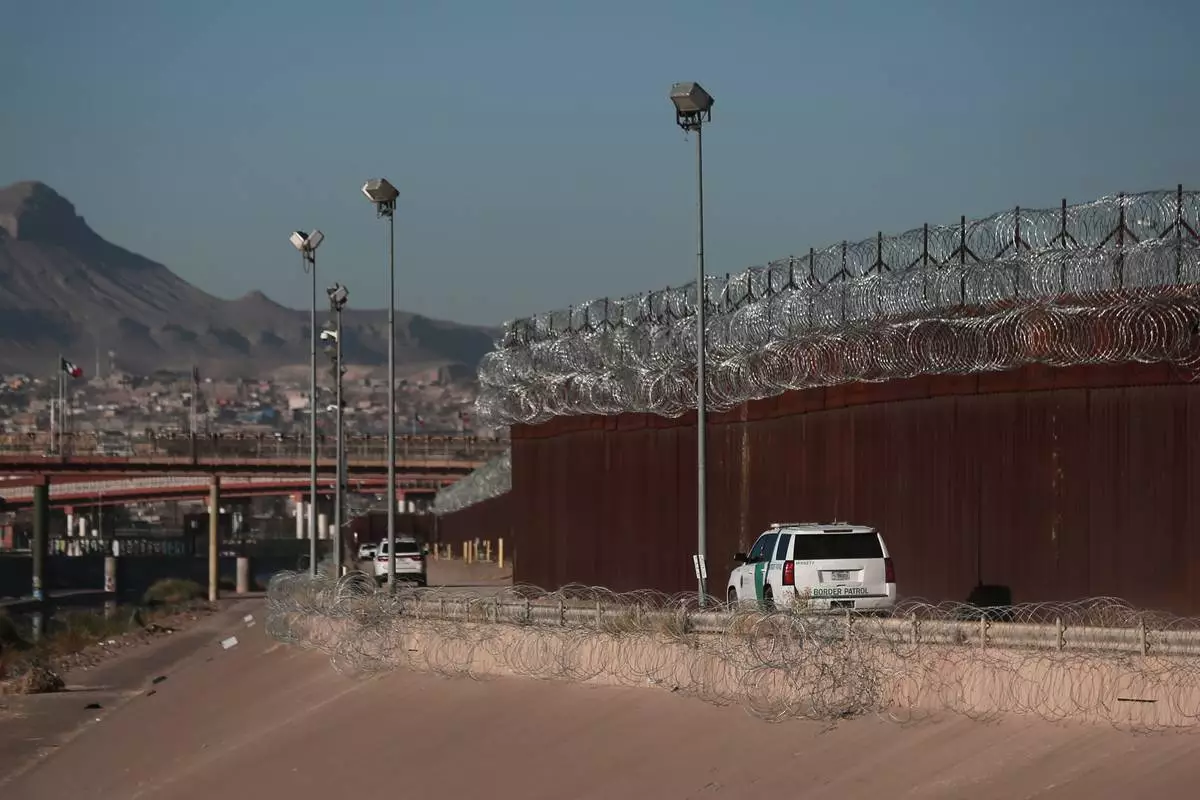
A U.S. Border Patrol patrol along the U.S.-Mexico border in El Paso, Texas, near the Paso del Norte International Bridge, seen from Ciudad Juarez, Mexico, Wednesday, Feb. 11, 2026. (AP Photo/Christian Chavez)

Cars cross the "Paso del Norte" International Bridge at the U.S.-Mexico border between Ciudad Juarez, Mexico, bottom, and El Paso, Texas, top, Wednesday Feb. 11, 2026. (AP Photo/Christian Chavez)

Officers of Michoacan state's Specialized Investigation Subsecretariat use an anti-drone signal jammer during a demonstration for the press in Morelia, Mexico, Wednesday, March 26, 2025. (AP Photo/Eduardo Verdugo)

An officer of Michoacan state's Specialized Investigation Subsecretariat uses an anti-drone signal jammer during a demonstration for the press in Morelia, Mexico, Wednesday, March 26, 2025. (AP Photo/Eduardo Verdugo)
TENERIFE, Spain (AP) — The head of the World Health Organization sought Saturday to reassure residents of the Spanish island where passengers of a hantavirus-stricken cruise ship are expected to be evacuated, issuing them a direct message that the virus was “not another COVID.”
The Dutch-flagged MV Hondius, with more than 140 passengers and crew on board, is headed to Spain's Canary Islands, off the coast of West Africa, and is expected to arrive at the island of Tenerife early Sunday.
WHO Director-General Tedros Adhanom Ghebreyesus, along with Spain’s Health Minister Monica Garcia and Interior Minister Fernando Grande-Marlaska, were due on the island Saturday to coordinate the disembarkation of passengers and some crew.
“I know you are worried. I know that when you hear the word ‘outbreak’ and watch a ship sail toward your shores, memories surface that none of us have fully put to rest. The pain of 2020 is still real, and I do not dismiss it for a single moment,” Tedros said in a message to the people of Tenerife.
“But I need you to hear me clearly: This is not another COVID. The current public health risk from hantavirus remains low. My colleagues and I have said this unequivocally, and I will say it again to you now,” Tedros added.
The WHO, Spanish authorities and cruise company Oceanwide Expeditions said nobody on the Hondius is currently showing symptoms of the virus.
Hantavirus can cause life-threatening illness. It usually spreads when people inhale contaminated residue of rodent droppings and isn’t easily transmitted between people. But the Andes virus detected in the cruise ship outbreak may be able to spread between people in rare cases. Symptoms usually show between one and eight weeks after exposure.
Three people have died since the outbreak, and five passengers who left the ship are infected with hantavirus.
Some on Tenerife say they are worried. On board the cruise ship, some Spanish passengers have voiced concern about being stigmatized.
“I tell you, I don’t like this very much,” said 69-year-old resident Simon Vidal. “Anyone can say what they want. Why did they have to bring a boat from another country here? Why not anywhere else, why bring it to the Canary Islands?”
Others said they empathized with the boat's passengers, but were still concerned.
“The truth is that it is very worrying,” said 27-year-old Venezuelan immigrant Samantha Aguero. She added: “We feel a bit unsafe, we don’t feel as there are 100% security measures in place to welcome it. This is a virus after all and we have lived this during the pandemic. But we also need to have empathy.”
Spanish Health Minister Monica Garcia said passengers and some crew would disembark in Tenerife “under maximum safety conditions.”
The ship will not dock but will remain at anchor. Everyone disembarking will be checked for symptoms and won't be taken off the ship until a flight is already in Tenerife waiting to fly them off the island, Garcia said during a news conference in Madrid. There are currently people of more than 20 different nationalities on board.
Both the U.S. and the U.K. have agreed to send planes to evacuate their citizens. Americans are to be quarantined at a medical center in Nebraska.
All Spanish passengers will be transferred to a medical facility and quarantined, Garcia said. Oceanwide has listed 13 Spanish passengers and one Spanish crew member on board.
Those disembarking will leave behind their luggage, Garcia said, and will be allowed to take only a small bag with essential items, a cellphone, charger and documentation.
Some crew, as well as the body of a passenger who died on board, will remain on the ship, which will sail on to the Netherlands, where it will undergo disinfection, the minister added.
According to a letter sent by the Dutch foreign and health ministers to parliament late Friday, Spain has activated the EU civil protection mechanism for a medical evacuation plane equipped for infections diseases to be on standby in case anyone on the ship becomes ill. That person would then be transported by air to the European mainland.
The Dutch government will work with Spanish authorities and the ship company to arrange repatriation of Dutch passengers and crew as soon as possible after arrival in Tenerife, subject to medical conditions and advice from the European Centre for Disease Prevention and Control, the letter said. Those without symptoms will go into home quarantine for six weeks and be monitored by local health services.
As the ship is Dutch-flagged, the Netherlands may also temporarily accommodate people of other nationalities and monitor them in quarantine, it said.
Health authorities across four continents were tracking down and monitoring more than two dozen passengers who disembarked before the deadly outbreak was detected. They were also scrambling to trace others who may have come into contact with them.
On April 24, nearly two weeks after the first passenger had died on board, more than two dozen people from at least 12 different countries left the ship without contact tracing, Dutch officials and the ship’s operator have said.
It wasn’t until May 2 that health authorities first confirmed hantavirus in a passenger.
Dutch public health authorities have been monitoring people who were on a flight that was briefly boarded by a Dutch ship passenger who later died and was confirmed to have hantavirus. Three people who were on the flight and had symptoms have all tested negative for hantavirus, Dutch National Institute for Public Health spokesperson Harald Wychgel told The Associated Press on Saturday.
Becatoros reported from Sparta, Greece. Associated Press reporters Angela Charlton in Paris and Helena Alves in Tenerife contributed to this report.

Passengers on the hantavirus-stricken cruise ship, MV Hondius, scan the horizon with binoculars during their voyage to Spain's port of Tenerife, May 6, 2026. (AP Photo)
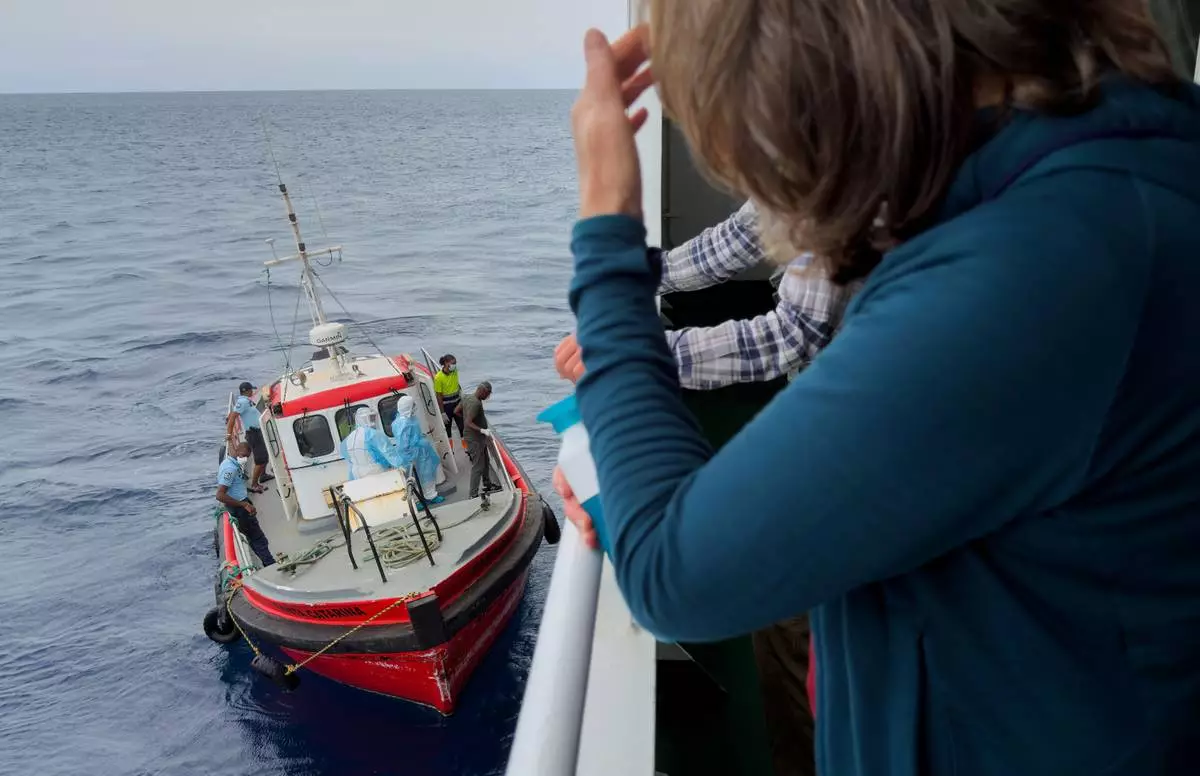
Passengers on the the hantavirus-stricken cruise ship, MV Hondius, watch epidemiologists board the boat in Praia, during their voyage to Spain's port of Tenerife, May 6, 2026. (AP Photo)
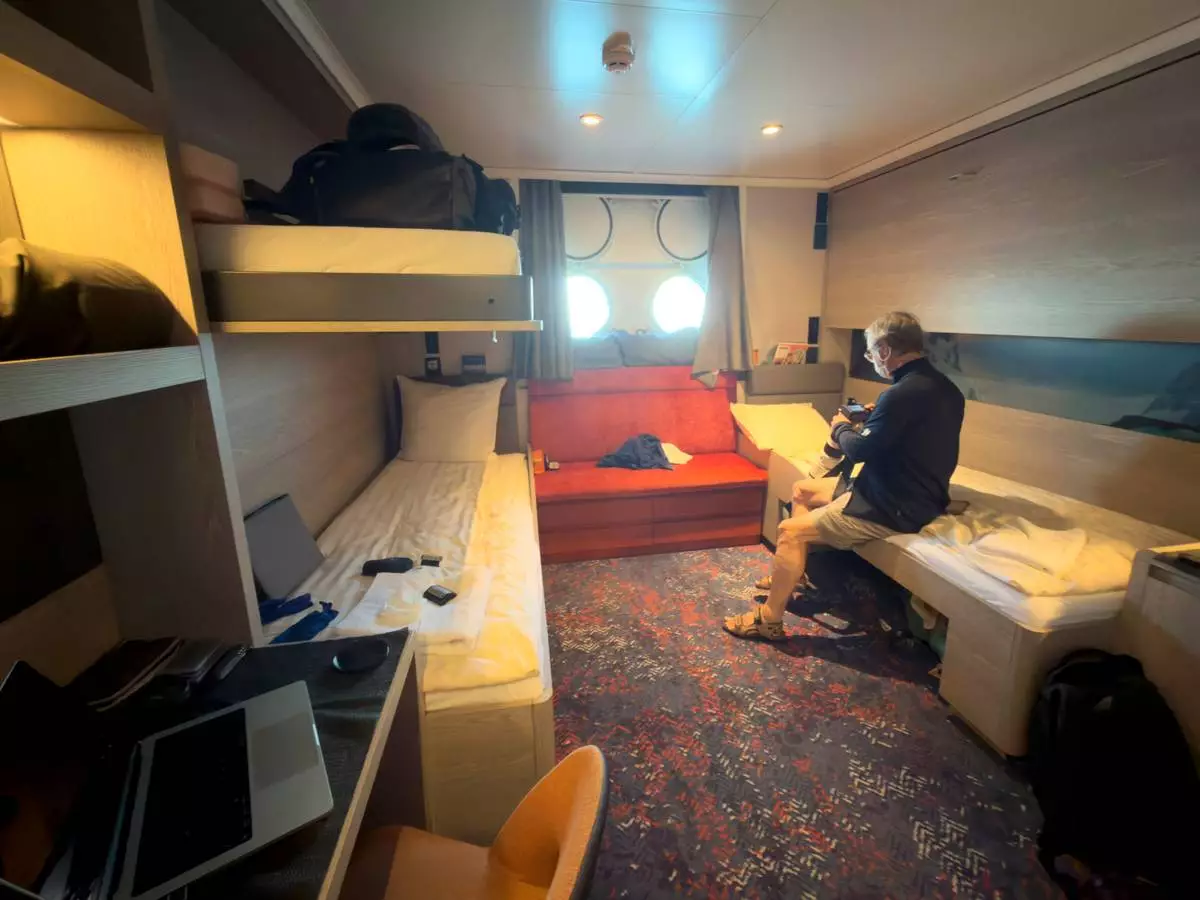
A passenger checks his camera inside his cabin on the hantavirus-stricken cruise ship, MV Hondius, during the voyage to Spain's port of Tenerife, May 6, 2026. (AP Photo)
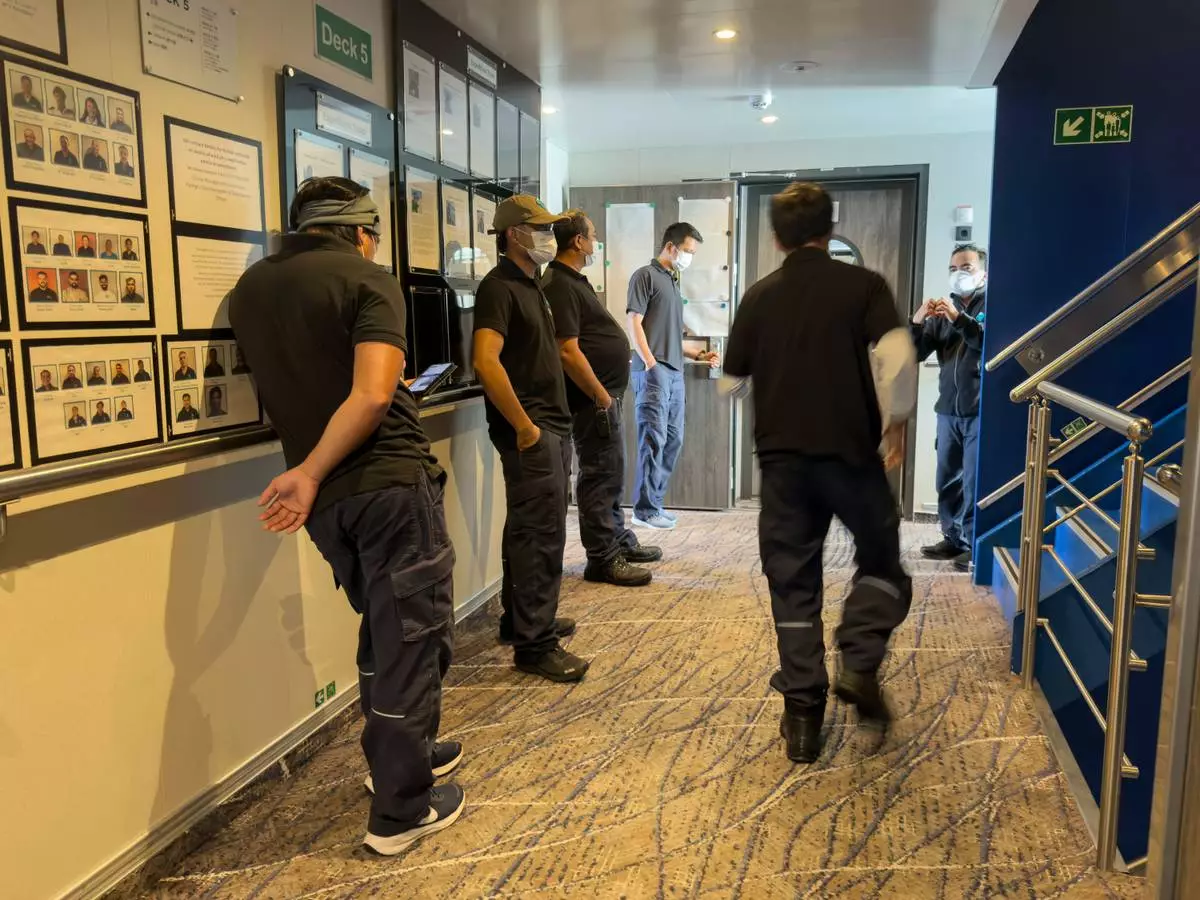
Crew members of the hantavirus-stricken cruise ship, MV Hondius, wait their turns for a first interview with epidemiologists, during the voyage to Spain's port of Tenerife, May 6, 2026. (AP Photo)
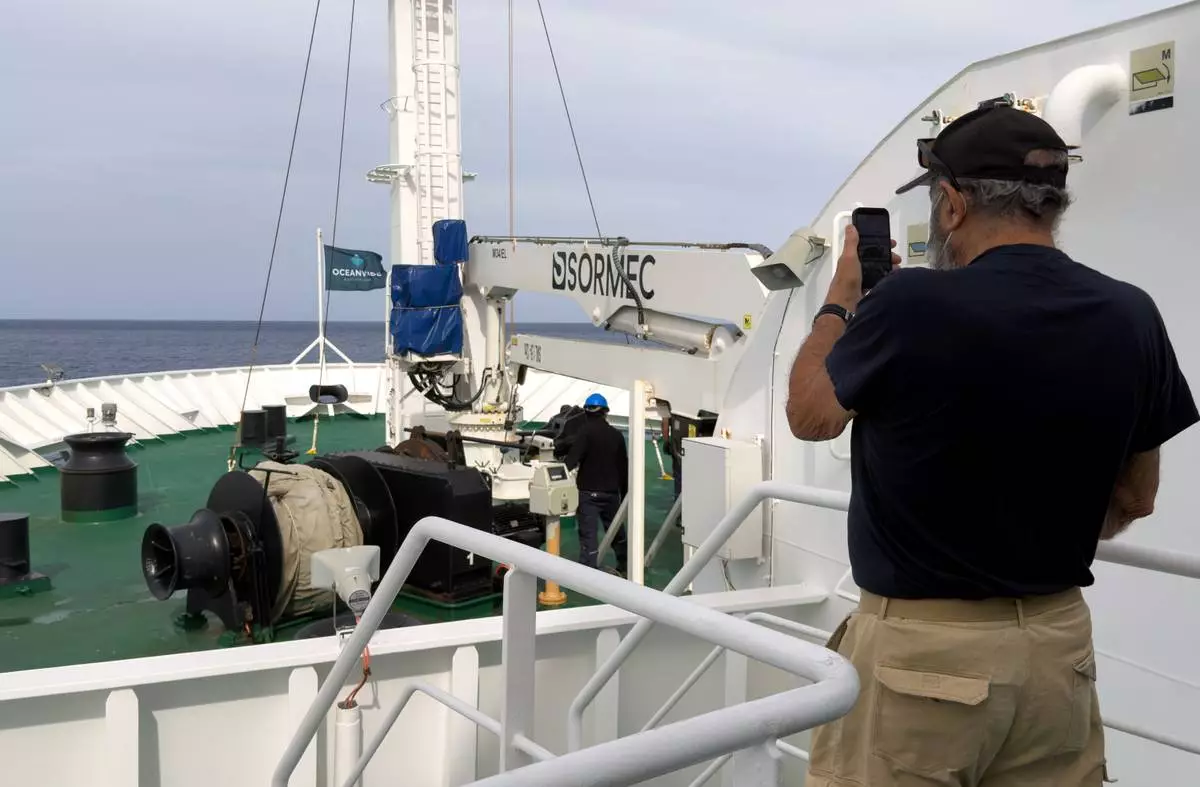
A passenger on the the hantavirus-stricken cruise ship, MV Hondius, takes a photo of the ship's weighing anchor in Praia, during the voyage to Spain's port of Tenerife, May 6, 2026. (AP Photo)