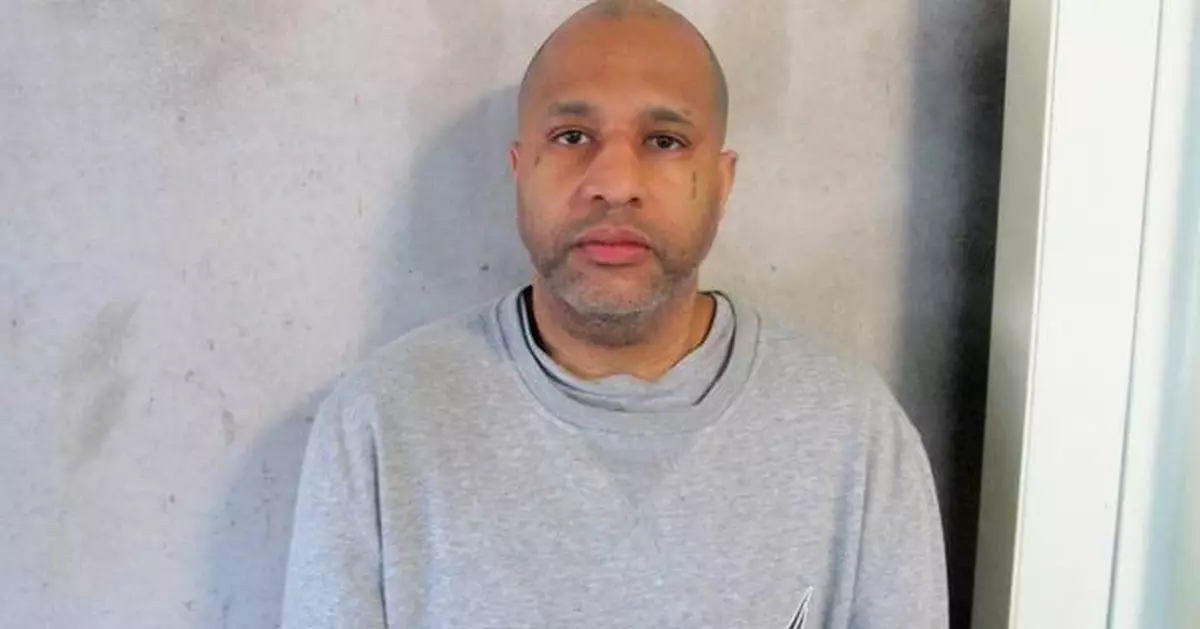
McALESTER, Okla. (AP) — A man who admitted to killing two men in a drive-by shooting in 2006 was put to death Thursday in Oklahoma’s first execution of the year.
Kendrick Simpson, 45, was pronounced dead at 10:19 CST following a three-drug injection at the Oklahoma State Penitentiary in McAlester, prison officials said. He was convicted of killing Anthony Jones, 19, and Glen Palmer, 20, by firing into their car following an altercation at an Oklahoma City nightclub.
“I love y'all,” Simpson said to his family and members of his legal team while he was strapped to a gurney inside the death chamber. “Thank y'all for being here to support me.”
Simpson's spiritual adviser, the Rev. Don Heath, read Scripture in the chamber during the execution, which lasted about 12 minutes. A doctor entered the room and declared Simpson unconscious about five minutes after the first drugs began to flow.
Simpson, who had fled to Oklahoma City from the devastated city of New Orleans after Hurricane Katrina in 2005, admitted to the killings during a clemency hearing last month. He apologized to the victims’ families and to a third man who was in the vehicle when Jones and Palmer were shot.
Palmer's sister, Crystal Allison, witnessed the execution and said she was disturbed to see Simpson smiling at his family members while strapped to the gurney.
“The same smile that had been tormenting me for 20 years, he still smiled that same smile laying on his deathbed,” she said.
Attorney General Gentner Drummond said in a statement Thursday that justice had been served for Palmer and Jones.
“Their young lives were taken tragically and far too soon,” Drummond said. “I hope today brings some measure of peace to their families who have endured unimaginable pain for the past 20 years.”
Simpson had apologized to the victims' families and accepted responsibility for the killings during last month's clemency hearing.
“I don't make any excuses,” Simpson said at the time. “I don't blame others, and they didn't deserve what happened to them.”
Despite his apology, the state’s five-member Pardon and Parole Board narrowly voted to deny Simpson clemency.
On Wednesday afternoon, the U.S. Supreme Court had no comment after rejecting a late appeal to block the execution.
Simpson’s attorneys had argued that he suffered from post-traumatic stress disorder stemming from chronic trauma in his childhood years growing up in a New Orleans housing project.
“Kendrick is a man worthy of your mercy and compassion,” his attorneys wrote in his clemency application. “The death penalty is supposed to be reserved for the worst of the worst offenses and offenders. Kendrick and his case represent neither.”
On the night of the killing in January 2006, prosecutors say, Simpson had placed an assault rifle in the trunk of a vehicle he and his friends drove to a club in northwest Oklahoma City. After an altercation at the club between Simpson and Palmer, prosecutors say, Simpson and his friends followed Palmer and Jones from a nearby gas station, and that Simpson pointed the gun out the window and fired about 20 rounds into their car. Both victims were shot multiple times.
The state uses the sedative midazolam, followed by vecuronium bromide to halt breathing and potassium chloride to stop the heart.
Simpson's scheduled execution was to be the second of the year in the United States. Florida, which conducted a state record of 19 executions in 2025, put Ronald Palmer Heath to death with a three-drug injection on Tuesday for his conviction in the 1989 killing of a traveling salesman he and his brother met at a Gainesville bar.
A total of 47 people were executed in the U.S. in 2025, with Florida leading the way with a flurry of death warrants signed by Republican Gov. Ron DeSantis. Alabama, South Carolina and Texas tied for second place with five executions each that year.
Florida is scheduled to carry out the next execution in the U.S. on Feb. 24, the planned lethal injection of Melvin Trotter for the killing of a grocery store owner during a robbery.
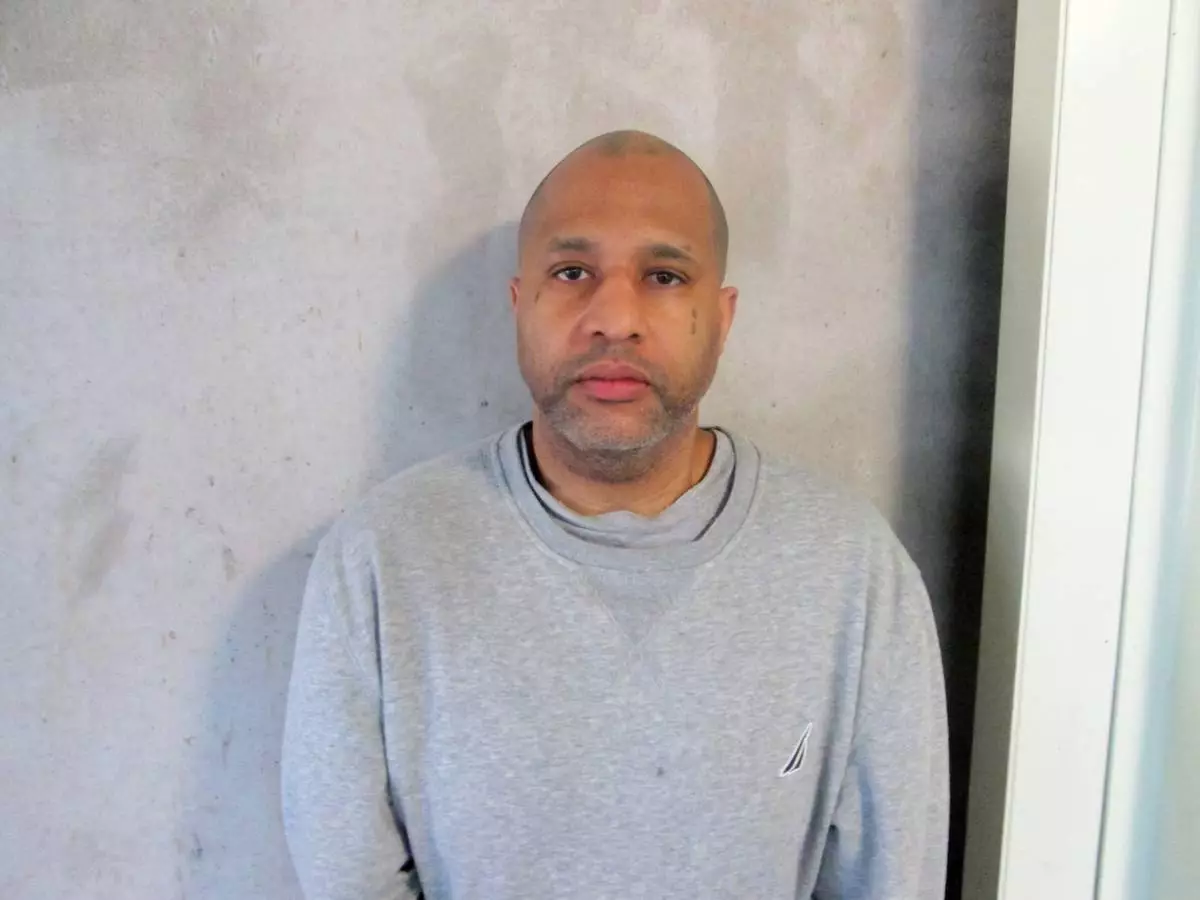
This photo provided by the Oklahoma Department of Corrections shows Kendrick Simpson, 45, on Aug. 11, 2025, who is scheduled to be executed, Thursday, Feb. 12, 2026, in Oklahoma, for the 2006 drive-by shooting deaths of two men. (Oklahoma Department of Corrections via AP)
DUBAI, United Arab Emirates (AP) — The death toll from a crackdown over Iran’s nationwide protests last month has reached at least 7,002 people killed with many more still feared dead, activists said Thursday.
The slow rise in the number of dead from the demonstrations adds to the overall tensions facing Iran both inside the country and abroad as it tries to negotiate with the United States over its nuclear program. A second round of talks remains up in the air as Israeli Prime Minister Benjamin Netanyahu pressed his case directly with U.S. President Donald Trump to intensify his demands on Tehran in the negotiations.
“There was nothing definitive reached other than I insisted that negotiations with Iran continue to see whether or not a Deal can be consummated. If it can, I let the Prime Minister know that will be a preference,” Trump wrote afterward on his Truth Social website.
“Last time Iran decided that they were better off not making a Deal, and they were hit. ... That did not work well for them. Hopefully this time they will be more reasonable and responsible.”
Meanwhile, Prime Minister Benjamin Netanyahu expressed “general skepticism" that negotiations with Iran will lead to significant achievement, though he described his meeting with Trump as “excellent.” “The president believes that Iranians already understand who they are dealing with," Netanyahu said before boarding a plane to return to Israel. “I think the conditions he is setting, combined with their understanding that they made a mistake the last time when they did not reach an agreement, may lead them to agree to conditions that will enable a good agreement to be reached.”
Netanyahu stressed that any agreement must also include concessions about Iran’s ballistic missiles program and support for militant proxies, not only about the Islamic Republic's nuclear program.
Meanwhile, Iran at home faces still-simmering anger over its wide-ranging suppression of all dissent in the Islamic Republic. That rage may intensify in the coming days as families of the dead begin marking the traditional 40-day mourning for the loved ones.
The U.S.-based Human Rights Activists News Agency, which offered the latest figures, has been accurate in counting deaths during previous rounds of unrest in Iran and relies on a network of activists in Iran to verify deaths. The slow rise in the death toll has come as the agency slowly is able to crosscheck information as communication remains difficult with those inside of the Islamic Republic.
Iran’s government offered its only death toll on Jan. 21, saying 3,117 people were killed. Iran’s theocracy in the past has undercounted or not reported fatalities from past unrest.
The Associated Press has been unable to independently assess the death toll, given authorities have disrupted internet access and international calls in Iran.
The rise in the death toll comes as Iran tries to negotiate with the United States over its nuclear program.
Senior Iranian security official Ali Larijani met Wednesday in Qatar with Foreign Minister Sheikh Mohammed bin Abdulrahman Al Thani. Qatar hosts a major U.S. military installation that Iran attacked in June, after the U.S. bombed Iranian nuclear sites during the 12-day Iran-Israel war in June. Larijani also met with officials of the Palestinian Hamas militant group, and in Oman with Tehran-backed Houthi rebels from Yemen on Tuesday.
Larijani told Qatar’s Al Jazeera satellite news network that Iran did not receive any specific proposal from the U.S. in Oman, but acknowledged that there was an “exchange of messages.”
Qatar has been a key negotiator in the past with Iran, with which it shares a massive offshore natural gas field in the Persian Gulf. Its state-run Qatar News Agency reported that ruling emir Sheikh Tamim bin Hamad Al Thani spoke with Trump about “the current situation in the region and international efforts aimed at de-escalation and strengthening regional security and peace,” without elaborating.
The U.S. has moved the aircraft carrier USS Abraham Lincoln, ships and warplanes to the Middle East to pressure Iran into an agreement and have the firepower necessary to strike the Islamic Republic should Trump choose to do so.
Already, U.S. forces have shot down a drone they said got too close to the Lincoln and came to the aid of a U.S.-flagged ship that Iranian forces tried to stop in the Strait of Hormuz, the narrow mouth of the Persian Gulf.
Trump told the news website Axios that he was considering sending a second carrier to the region. “We have an armada that is heading there and another one might be going,” he said.
Meanwhile, the Norwegian Nobel Committee said it was “deeply appalled by credible reports detailing the brutal arrest, physical abuse and ongoing life‑threatening mistreatment” of 2023 Peace Prize laureate Narges Mohammadi.
The committee that awards the prize said it had information Mohammadi had been beaten during her arrest in December and continued to be mistreated. It called for her immediate and unconditional release.
“She continues to be denied adequate, sustained medical follow‑up while being subjected to heavy interrogation and intimidation,” the committee said. “She has fainted several times, suffers from dangerously high blood pressure and has been prevented from accessing necessary follow‑up for suspected breast tumors.”
Iran just sentenced Mohammadi, 53, to over seven more years in prison. Supporters had warned for months before her arrest that she was at risk of being put back into prison after she received a furlough in December 2024 over medical concerns.
Associated Press writer Melanie Lidman in Washington contributed to this report.
In this photo released by the Oman's Foreign Ministry, Steve Witkoff, White House special envoy, center, shakes hands with Oman's Foreign Minister Sayyid Badr Albusaidi as Jared Kushner, left, looks on during their meeting prior to Iran and the U.S. negotiations, in Muscat, Oman, Friday, Feb. 6, 2026. (Oman Foreign Ministry via AP)
In this photo released by Iran's Supreme National Security Council office, Secretary of the Supreme National Security Council Ali Larijani, center, arrives in Muscat, Oman, Tuesday, Feb. 10, 2026. (Erfan Kouchari/Iran's Supreme National Security Council Office via AP)
In this photo released by Iran's Supreme National Security Council office, Secretary of the Supreme National Security Council Ali Larijani, right, listens to Omani Foreign Minister Badr al-Busaidi during their meeting in Muscat, Oman, Tuesday, Feb. 10, 2026. (Erfan Kouchari/Iran's Supreme National Security Council Office via AP)
In this photo released on Monday, Feb. 9, 2026, by the official website of the office of the Iranian supreme leader, Supreme Leader Ayatollah Ali Khamenei addresses the nation in a televised speech. (Office of the Iranian Supreme Leader via AP)