Key senators and the families of the 67 dead in an airliner collision with an Army helicopter near the nation's capital are convinced that advanced aircraft locator systems recommended by experts for nearly two decades would have prevented last year's tragedy. But it remains unclear if Congress will pass a bill requiring every plane and helicopter to use them around every busy airport.
The Senate Commerce Committee held a hearing Thursday to highlight why the National Transportation Safety Board has been recommending since 2008 that all aircraft be equipped with one system that can broadcast their locations and another one to receive data about the location of other aircraft. Only the system that broadcasts location is currently required. The hearing reviewed all 50 of the NTSB's recommendations to prevent another midair collision like that of Jan. 29, 2025.
Everyone aboard the helicopter and the American Airlines jet flying from Wichita, Kansas, including 28 members of the figure skating community, died when the aircraft collided and plummeted into the icy Potomac River.
The Senate already unanimously approved the bill that would require all aircraft flying around busy airports to have both kinds of Automatic Dependent Surveillance-Broadcast systems installed. However, leaders of the key House committees seem to want to craft their own comprehensive bill addressing all the NTSB recommendations instead of immediately passing what's known as the ROTOR act. The ADS-B Out systems continually broadcast an aircraft's location and speed and have been required since 2020. But ADS-B In systems that can receive those signals and create a display showing pilots where all air traffic is located around them are not standard.
Commerce Committee Chairman Sen. Ted Cruz said he's concerned some people are talking about possibly adding loopholes to the bill that would exempt regional airlines and private jets from the mandate. The Texas Republican said that would undermine the effort, and doesn't make sense given the plane involved in this collision was flown by a regional airline.
“Flying can only be safe when everyone follows the same standards,” Cruz said. He said that he hopes the House will vote on the bill in the next two weeks to send it to the president's desk.
But Rep. Sam Graves, who leads the House Transportation Committee, said Thursday he doesn't plan to consider the Senate bill.
“We’re going to do our own bill,” Graves said.
If the American Airlines jet and the helicopter had also been equipped with one of the ADS-B In systems that can receive location data, the NTSB and the victims’ families and key lawmakers say, the pilots may have been able to avoid the collision because they would have received nearly a minute of advanced warning.
The receiving systems would have provided more warning along with an indication of where the other aircraft was. But for that to work the helicopter’s ADS-B Out system that’s supposed to broadcast its location would have to be turned on and working correctly, which wasn’t the case on the night of the crash.
These locator systems are one of the measures that might have been able to overcome all the systemic problems and mistakes the NTSB identified in the disaster. That’s why this requirement was endorsed by NTSB Chairwoman Jennifer Homendy — the only witness called to the hearing — Transportation Secretary Sean Duffy and all of the Senate. This is the 18th time the NTSB has recommended the technology.
“This seems like a no-brainer, right? Especially when this is not a new thing that they’re proposing,” said Amy Hunter, whose cousin Peter Livingston died on the flight with his wife and two young daughters.
Sen. Tammy Duckworth said the FAA also failed to act on warnings from its own controllers after a similar near miss in 2013 about the risks that helicopters pose around DCA (Ronald Reagan Washington National Airport), and an alarming number of near misses chronicled in the agency’s own data.
“FAA’s failure in the face of blaring alarm bells, screaming out that it was a matter of when — not if — one of the near misses at DCA would become a deadly tragedy is, unfortunately, emblematic of a chronic crisis that’s plagued FAA for years,” Duckworth said.
Afterward, the FAA made several changes including prohibiting helicopters from flying along the route where the crash happened whenever a plane is landing on DCA's secondary runway and requiring all aircraft to use their ADS-B Out systems to broadcast their locations.
The crash anniversary and NTSB hearing on the causes of the crash have made recent weeks challenging for victims’ families. And now the Olympics are reminding Hunter and others that their loved ones — like young Everly and Alydia Livingston — will never have a chance to realize their dreams of competing for a gold medal.
The biggest stumbling block is cost. Upgrading some airline jets might cost hundreds of thousands of dollars or more, placing an expensive burden on some — especially regional airlines with tighter profit margins like the one that flew the jet that collided with the Army helicopter. Some also worry whether general aviation pilots could afford the upgrades. These systems haven't even been designed and certified for some airline jets — particularly the CRJ models that were involved in this crash.
But some airlines have already begun to add the technology to their planes, partly because in addition to the safety benefits, the systems can help increase the number of planes that can fly into an airport by spacing them more precisely. American Airlines leads the industry, having added the technology to its Airbus A321s over the past several years, equipping more than 300 of its roughly 1,000 planes to date. Homendy said American officials told her the retrofits cost less than $50,000 per plane.
Any plane more than a decade old likely doesn’t have either of these systems installed. Most newer planes have at least an ADS-B Out system that broadcasts their location.
But roughly three quarters of the pilots of business jets and smaller single-engine Cessnas and Bonanzas use portable devices that only cost $400 dollars that can tap into this location data and display the information about nearby aircraft on an iPad. So it doesn't appear the legislation would create a significant expense for them. Homendy held up one of the small receivers during her testimony to demonstrate how easy it is for pilots to get ADS-B In warnings.
Tim Lilley, a pilot himself, said having both these locator systems would have saved the life of his son Sam, who was copilot of the airliner, and everyone else who died. He said small plane owners have an affordable option, but even the expensive upgrades to large planes would be worth it.
“If those recommendations had been fully realized, this accident wouldn’t have happened,” Lilley said. “I don’t know what value we put on the human life, but 67 lives would still be here today.”
AP writer Stephen Groves contributed to this report from Washington D.C.
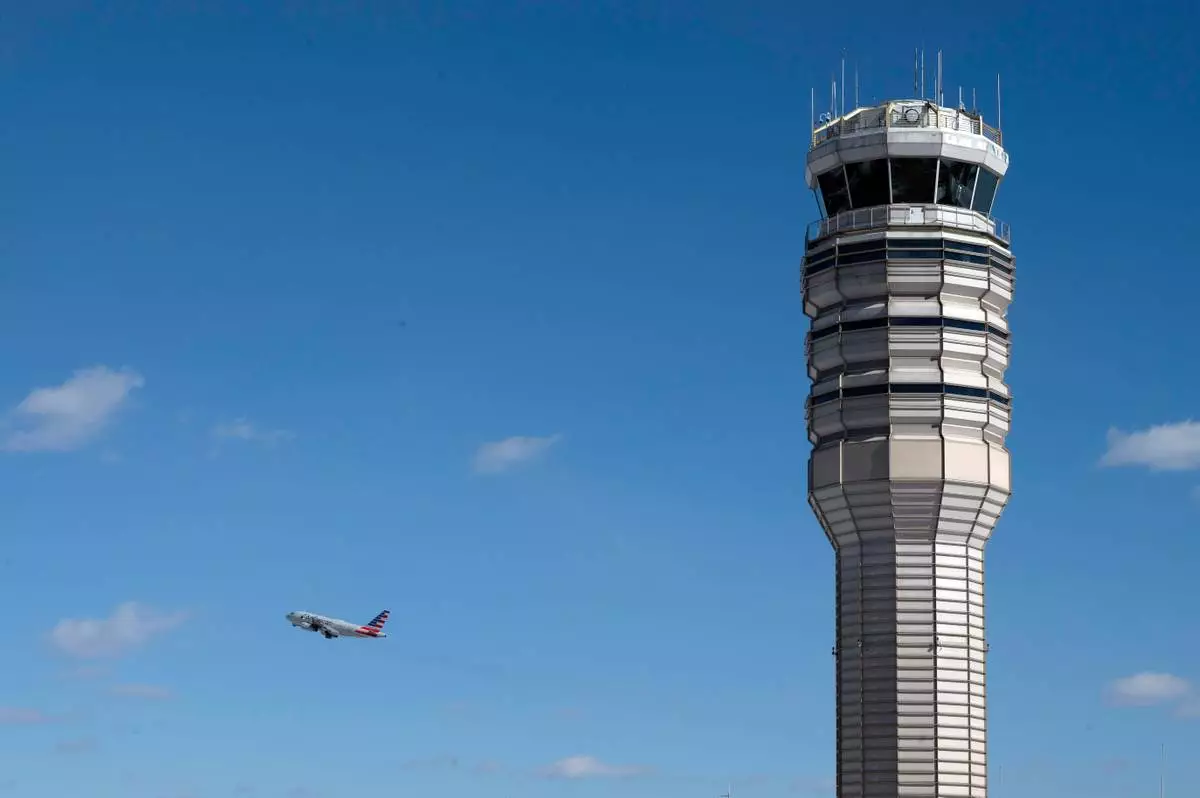
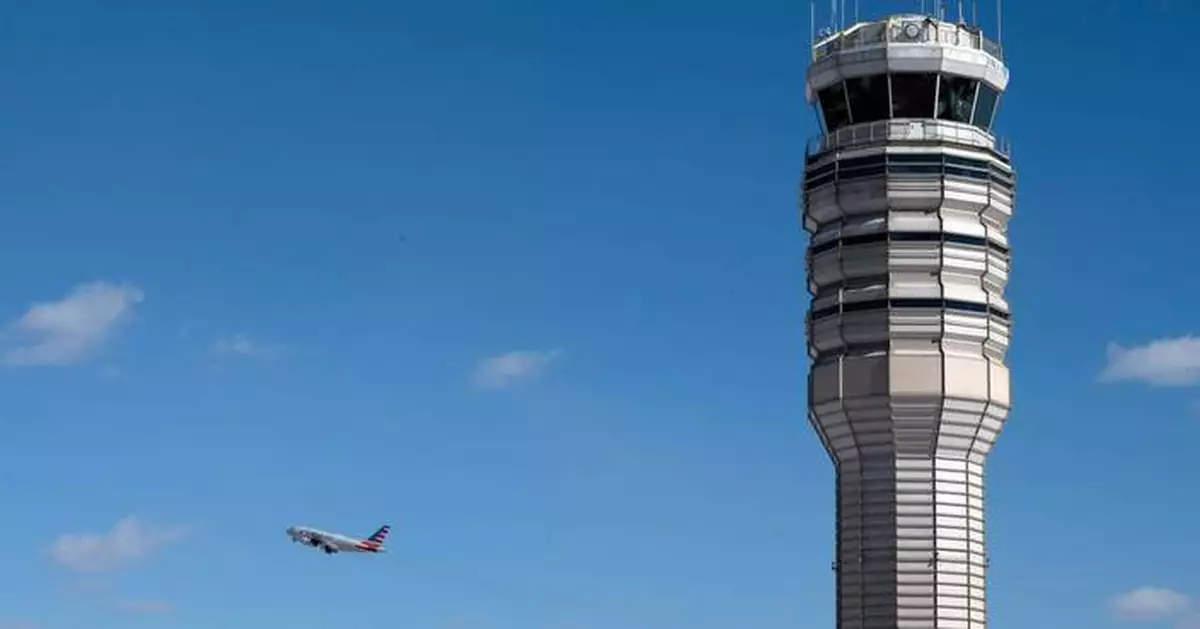
An airplane takes off behind the control tower at Ronald Reagan Washington National Airport, on the anniversary of the Potomac River mid-air collision between an American Airlines passenger plane and an Army Blackhawk helicopter, Thursday, Jan. 29, 2026, in Arlington, Va. (AP Photo/Cliff Owen)