Government updates Hong Kong Roadmap on Popularisation of Electric Vehicles
The Government today (February 12) announced the Updated Version of the Hong Kong Roadmap on Popularisation of Electric Vehicles (the Updated Roadmap). The Updated Roadmap reviews the development of electric vehicle (EV) technology over the past decade, summarises the progress that has been made to promote EV popularisation in Hong Kong since the Government formulated the Hong Kong Roadmap on Popularisation of Electric Vehicles (the Roadmap) in 2021, and updates the strategies and measures adopted by the Government to promote EV popularisation.
A spokesman for the Environment and Ecology Bureau (EEB) said, "The Government formulated the Roadmap in 2021, setting the target of ceasing new registration of fuel-propelled private cars, including hybrid vehicles, in 2035 or earlier, with a view to achieving zero vehicular emissions before 2050 and supporting Hong Kong's carbon neutrality goal before 2050. The Government also announced the Green Transformation Roadmap of Public Buses and Taxis in 2024.
"To ensure that our policies keep pace with the times, after fully considering the latest technological developments, the local progress in EV popularisation, and views from the industry, we have updated the Roadmap. It summarises our policy direction to pragmatically and continuously promote the development of the EV market in Hong Kong to achieve zero vehicular emissions before 2050."
Building on the original Roadmap, the Updated Roadmap outlines five areas with a total of 28 measures, summarised as follows:
(1) Policy promotion
The EEB will co-ordinate relevant policy bureaux and departments to establish an EV charging network underpinned by fast chargers to fully support EV applications in Hong Kong; establish a working group to identify suitable electric commercial vehicles for local use and support their popularisation; and provide funding through the New Energy Transport Fund and the Green Tech Fund for research and development of related green technologies. To date, the two funds have provided nearly $200 million in funding for EV trials and research and development.
To address the inconsistency in EV charging standards between the Chinese Mainland and Hong Kong, and to promote the internationalisation of charging standards, the National Energy Administration and the EEB will collaborate to launch a pilot scheme for the next-generation EV charging technology ChaoJi, with the target to complete the construction of ChaoJi charging demonstration stations in Hong Kong by 2027. This will facilitate the "bringing in and going global" of the country's innovative charging technology.
China's EV industry leads globally in both scale and innovation. The Government will provide policy support and co-ordination to enterprises seeking to promote EVs in Hong Kong, leveraging Hong Kong's status as an international fintech hub and also a bridgehead for global expansion to help China's EV industry and technology go global, and to promote the popularisation of EVs worldwide.
(2) Electric private cars
With vigorous promotion by the Government and concerted efforts of stakeholders, EVs have developed rapidly in Hong Kong, growing more than fourfold in four years to over 140 000 units, with the electric private car growth rate ranking among the highest in the world. It is estimated that the number of electric private cars could surpass 290 000 by 2030 and approach nearly 500 000 by 2035. Electric private car technology has matured, with substantially increased models and prices becoming competitive with conventional fuel-propelled private cars. The popularisation of electric private cars is gradually driven by market forces. Going forward, the Government will support the green transition of private cars by improving supporting facilities and user convenience, primarily through charging network expansion, maintenance training, and battery recycling. While some international regions have slowed vehicle electrification, Hong Kong will maintain the target of ceasing new registrations of fuel-propelled private cars, including hybrid vehicles, in 2035 or earlier, to align with the national commitment to carbon neutrality.
(3) Electric commercial vehicles
At present, the overall electrification of commercial vehicles is still in its early stages of technological and market development, lagging behind those of electric private cars. Certain vehicle types, including franchised buses, taxis, van-type light goods vehicles, have achieved a relatively mature stage of large-scale application. The Government will adopt a pragmatic approach to progressively promote the large-scale application of these vehicle types. For electric commercial vehicles that have not yet reached the stage of large-scale application, a working group will be established to introduce more models suitable for local use and create conditions for their future large-scale applications.
(4) Charging network
Hong Kong began promoting the installation of charging infrastructure in new car park spaces through tightened gross floor area exemption arrangements in 2011. Coupled with the EV-charging at Home Subsidy Scheme launched in 2020, there are now approximately 130 000 parking spaces equipped with charging infrastructure in private buildings and estate car parks in Hong Kong. The number of public chargers has also increased to 2.5 times the approximately 4 700 in 2021, reaching approximately 16 500 at present, sufficient to support about 100 000 EVs. It is expected that by mid-2027, the number of public and private parking spaces equipped with charging infrastructure will go up to about 200 000, capable of supporting over 300 000 EVs.
The Government will leverage market forces in the future through policy guidance to build a public charging network with fast chargers as the backbone. The target is to increase the number of fast chargers to no less than 4 000 by 2030, supporting approximately 200 000 EVs, and it is expected that this number will further increase to around 10 000 fast chargers by 2035, altogether supporting approximately 500 000 EVs. Coupled with a large number of parking spaces equipped with EV charging infrastructure, EV owners will find it more convenient.
(5) Supporting measures
Hong Kong's first large-scale EV battery recycling facility is under construction at the EcoPark and is expected to commence operation in the first half of 2026, converting end-of-life EV batteries into recycled black mass to supply the Chinese Mainland and neighbouring areas. The recycling facility will not only promote the development of the EV battery recycling industry and strengthen Hong Kong's role in the regional green industry chain but also serve as a good model for mutually beneficial co-operation in the environmental industry of the Guangdong-Hong Kong-Macao Greater Bay Area.
To keep pace with the latest developments of EVs, the Government has recently commenced work to update the Technical Guidelines on Charging Facilities for EVs and aims for completion by the end of 2026. Furthermore, the Government is collaborating with tertiary institutions to promote the continuing education and training of EV technicians and maintenance personnel. As at December 2025, approximately 1 100 technicians have completed these training courses.
The spokesperson added, "With climate change becoming increasingly severe, promoting sustainable green transport has become a global consensus. The measures in the Updated Roadmap will lay a foundation tailored to local conditions for future vehicle electrification, pragmatically promote EV popularisation, and lead the industry towards green transformation."
For details of the Updated Roadmap, please visit the EEB website (www.eeb.gov.hk/sites/default/files/pdf/Updated_EV_Roadmap_eng.pdf).
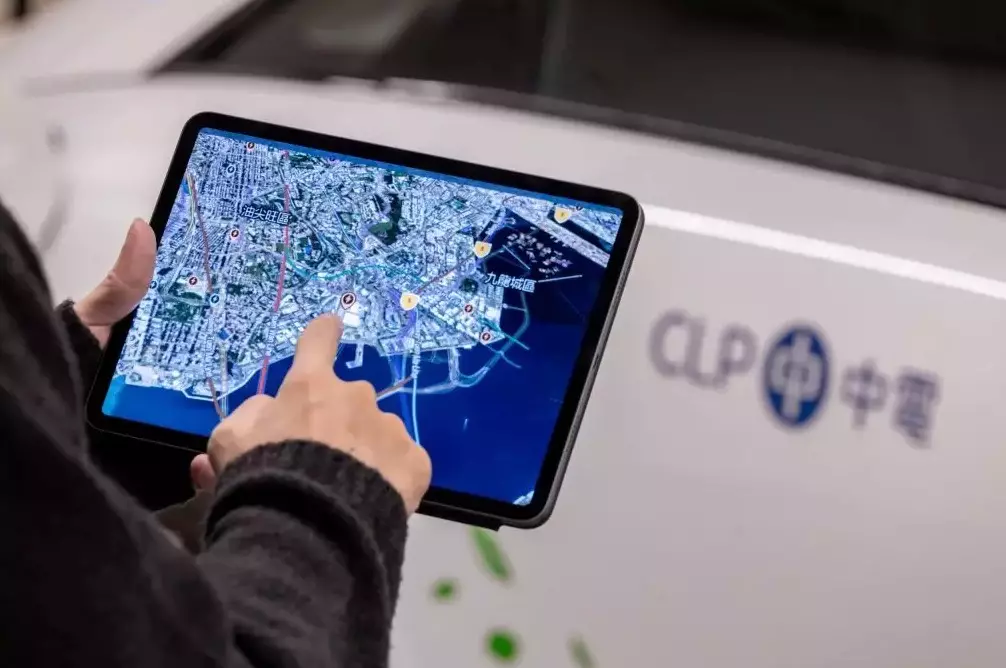
Photo source: reference image