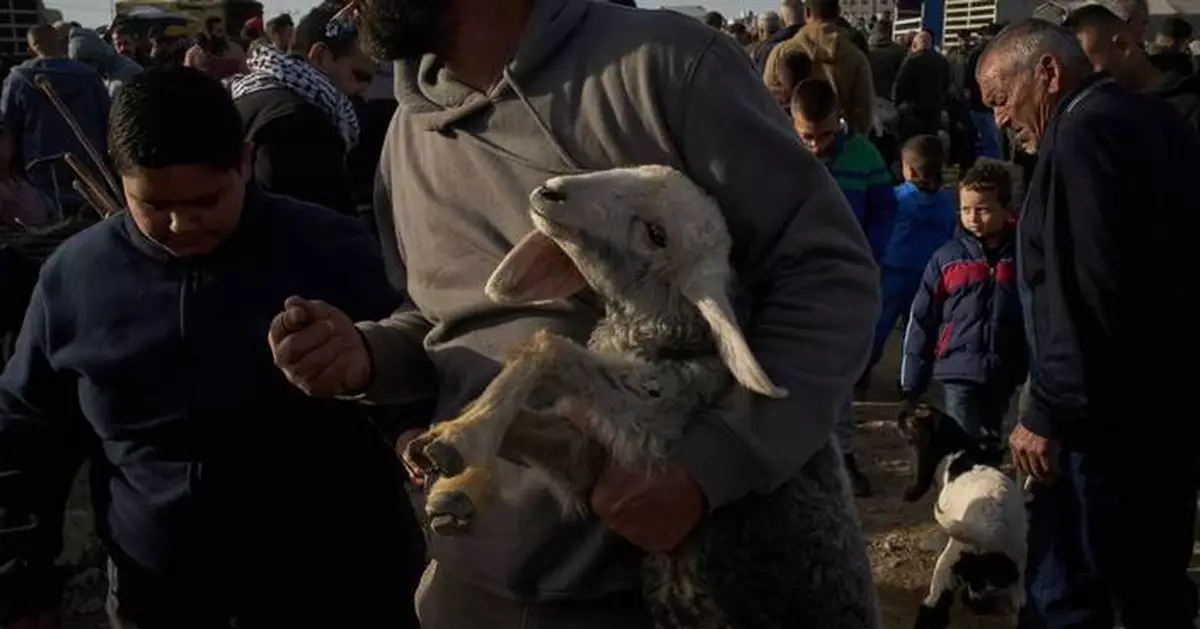
NABLUS, West Bank (AP) — Before dawn on the outskirts of Nablus in the occupied West Bank, Palestinians gather at a livestock market to buy sheep and goats.
While it is still dark, trucks roll in from surrounding villages, driven by traditional shepherds and farmers bringing their animals to an open square.
Click to Gallery
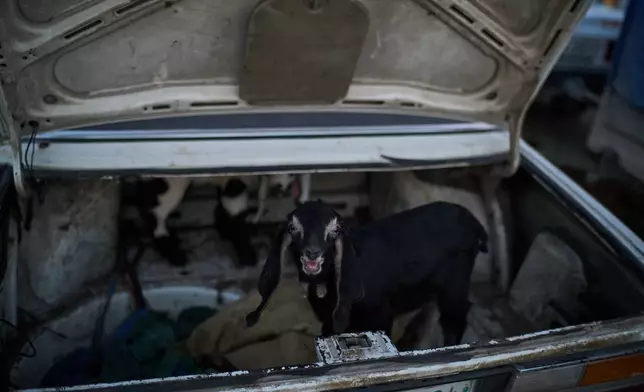
A baby goat is seen in the trunk of a car at a livestock market near Balata refugee camp on the outskirts of the West Bank city of Nablus, Thursday, Feb. 12, 2026. (AP Photo/Leo Correa)
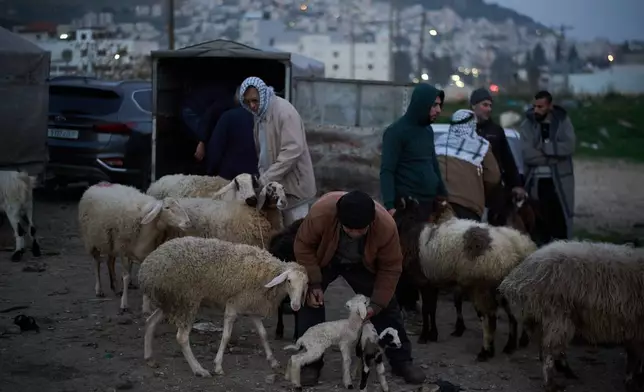
Palestinians gather to purchase sheep and goats at a livestock market near Balata refugee camp on the outskirts of the West Bank city of Nablus, Thursday, Feb. 12, 2026. (AP Photo/Leo Correa)
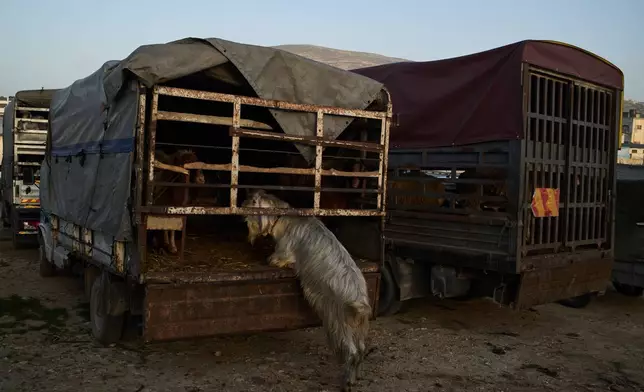
A goat is seen tied on the back of a truck at a livestock market near Balata refugee camp on the outskirts of the West Bank city of Nablus, Thursday, Feb. 12, 2026. (AP Photo/Leo Correa)
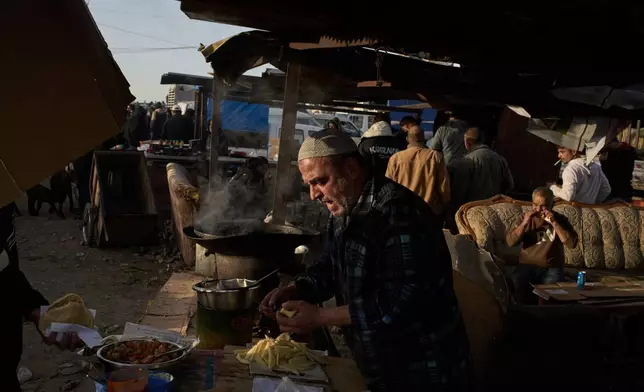
A Palestinian prepares falafel for sale at a livestock market near Balata refugee camp on the outskirts of the West Bank city of Nablus, Thursday, Feb. 12, 2026. (AP Photo/Leo Correa)

Palestinians carry a sheep past a bonfire at a livestock market near Balata refugee camp on the outskirts of the West Bank city of Nablus, Thursday, Feb. 12, 2026. (AP Photo/Leo Correa)
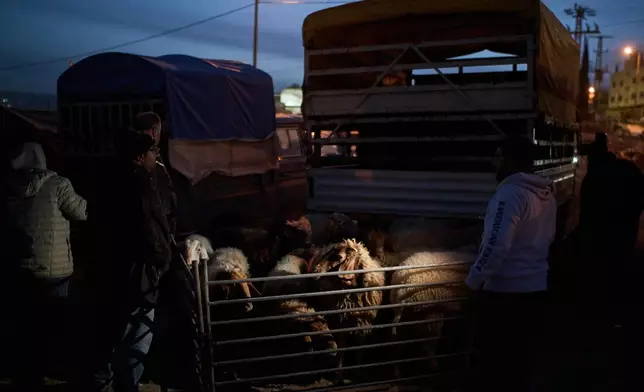
Palestinians gather at dawn to purchase sheep and goats at a livestock market near Balata refugee camp on the outskirts of the West Bank city of Nablus, Thursday, Feb. 12, 2026. (AP Photo/Leo Correa)
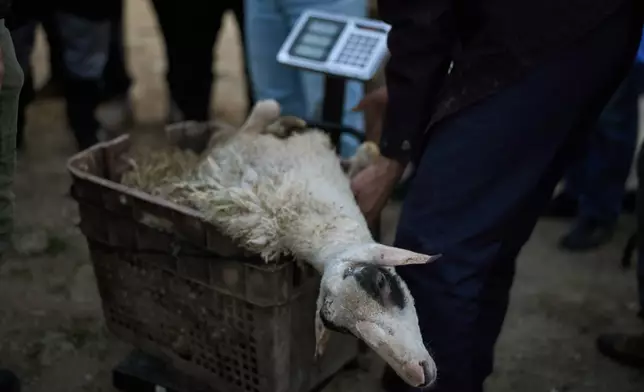
A sheep for sale is weighed at a livestock market near Balata refugee camp on the outskirts of the West Bank city of Nablus, Thursday, Feb. 12, 2026. (AP Photo/Leo Correa)
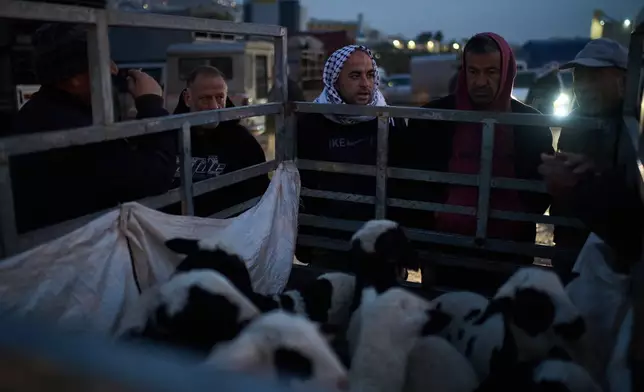
Palestinians gather around a vehicle to purchase sheep and goats at a livestock market near Balata refugee camp on the outskirts of the West Bank city of Nablus, Thursday, Feb. 12, 2026. (AP Photo/Leo Correa)

Palestinians warm themselves next to the bonfire as they gather at a livestock market near Balata refugee camp on the outskirts of the West Bank city of Nablus, Thursday, Feb. 12, 2026. (AP Photo/Leo Correa)

A Palestinian eats grilled chicken and lamb at a livestock market near Balata refugee camp on the outskirts of the West Bank city of Nablus, Thursday, Feb. 12, 2026. (AP Photo/Leo Correa)
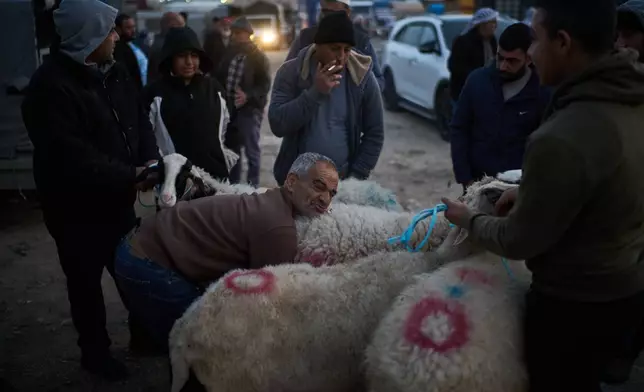
A Palestinian checks a sheep before buying it at a livestock market near Balata refugee camp on the outskirts of the West Bank city of Nablus, Thursday, Feb. 12, 2026. (AP Photo/Leo Correa)
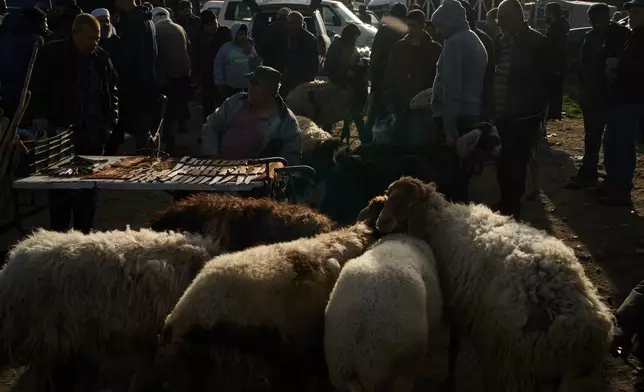
A Palestinian sits next to his stand as he sells knives at a livestock market near Balata refugee camp on the outskirts of the West Bank city of Nablus, Thursday, Feb. 12, 2026. (AP Photo/Leo Correa)
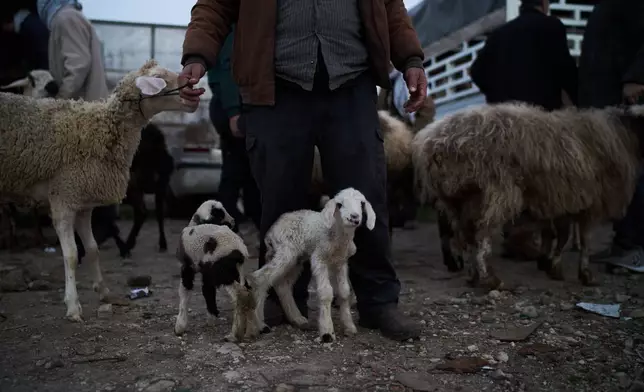
Palestinians gather to purchase sheep and goats at a livestock market near Balata refugee camp on the outskirts of the West Bank city of Nablus, Thursday, Feb. 12, 2026. (AP Photo/Leo Correa)
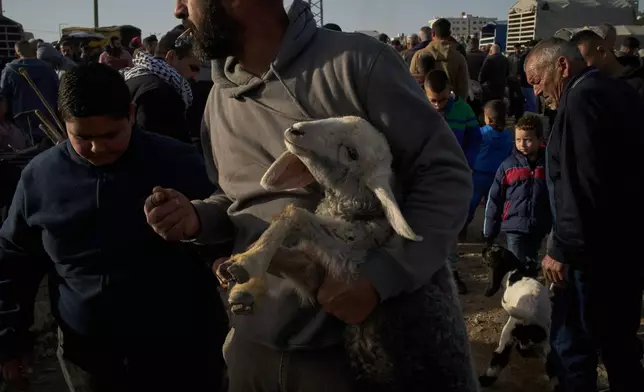
A Palestinian carries a baby sheep at a livestock market near Balata refugee camp on the outskirts of the West Bank city of Nablus, Thursday, Feb. 12, 2026. (AP Photo/Leo Correa)
Every Tuesday and Thursday, from 6 to 9 a.m., customers arrive near Balata Refugee Camp. Some huddle against the morning chill, warming themselves beside a small bonfire improvised from an old sofa.
Prices are negotiated on the spot, depending on each animal’s size, weight, and overall condition. On average, a sheep sells for around 40 shekels (about $13) per kilogram. Residents say livestock prices have risen in recent years, partly due to shrinking grazing land, which they attribute to violent actions by Israeli settlers.
Demand increases ahead of the Muslim holy month of Ramadan, though the market’s busiest and most significant season comes during Eid al-Adha, when the ritual sacrifice of sheep holds deep religious and cultural meaning.
This is a photo gallery curated by AP photo editors.
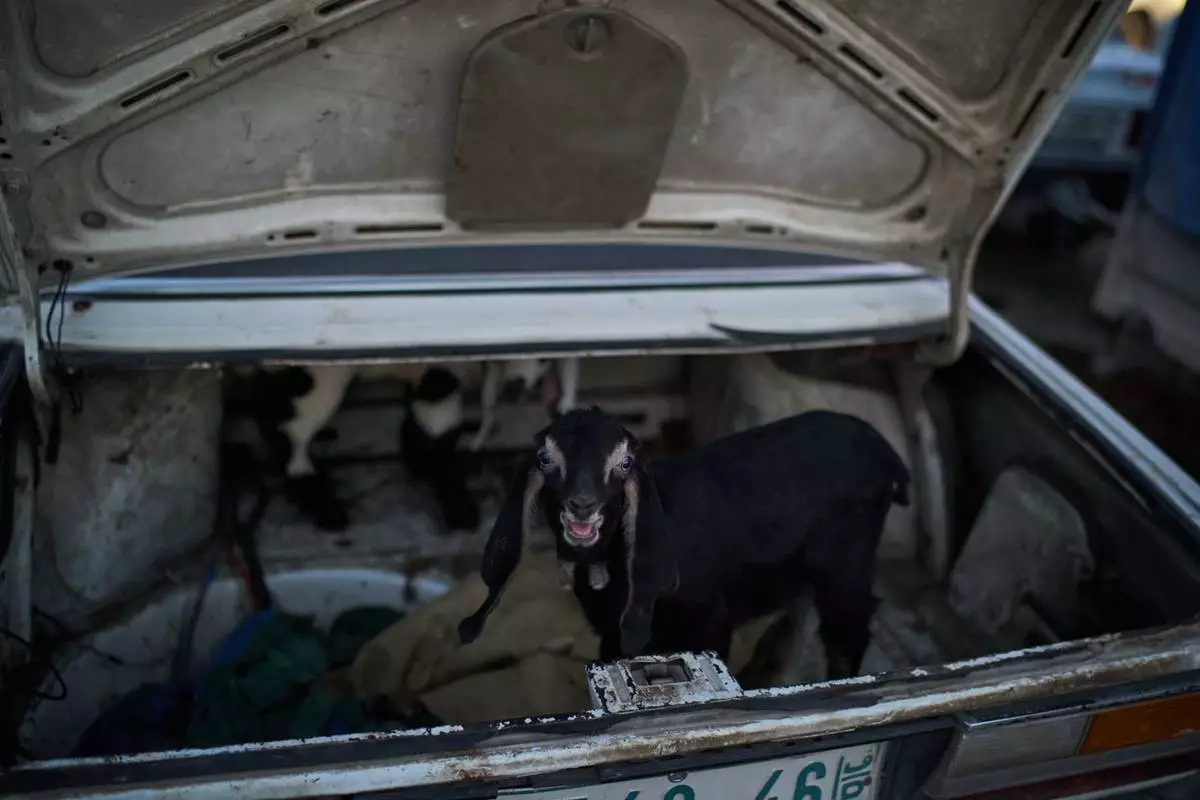
A baby goat is seen in the trunk of a car at a livestock market near Balata refugee camp on the outskirts of the West Bank city of Nablus, Thursday, Feb. 12, 2026. (AP Photo/Leo Correa)
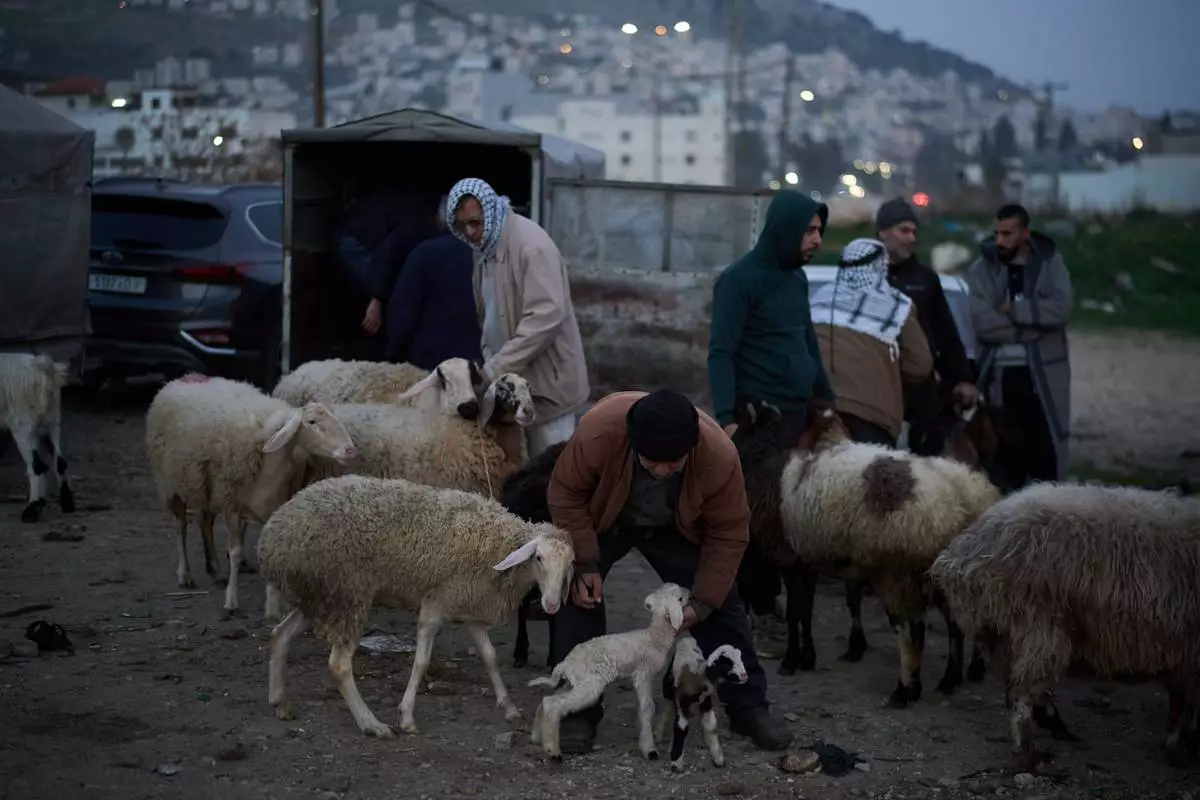
Palestinians gather to purchase sheep and goats at a livestock market near Balata refugee camp on the outskirts of the West Bank city of Nablus, Thursday, Feb. 12, 2026. (AP Photo/Leo Correa)
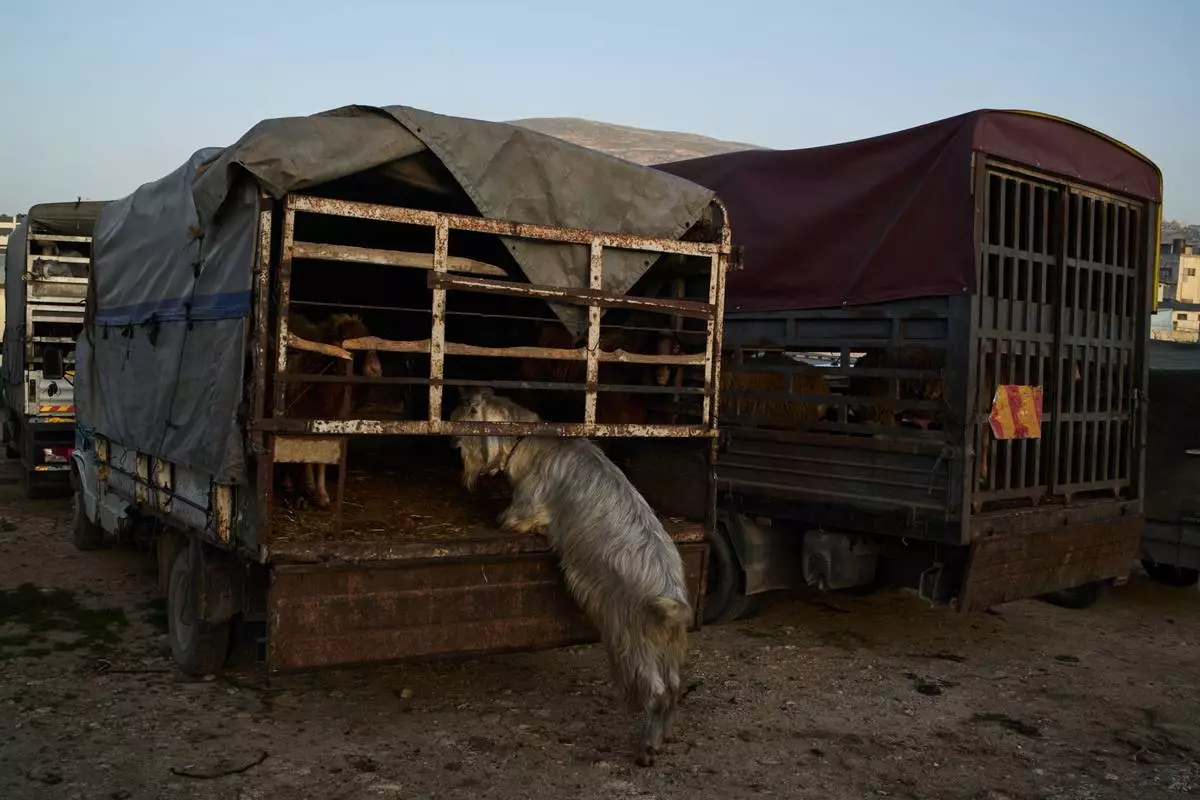
A goat is seen tied on the back of a truck at a livestock market near Balata refugee camp on the outskirts of the West Bank city of Nablus, Thursday, Feb. 12, 2026. (AP Photo/Leo Correa)
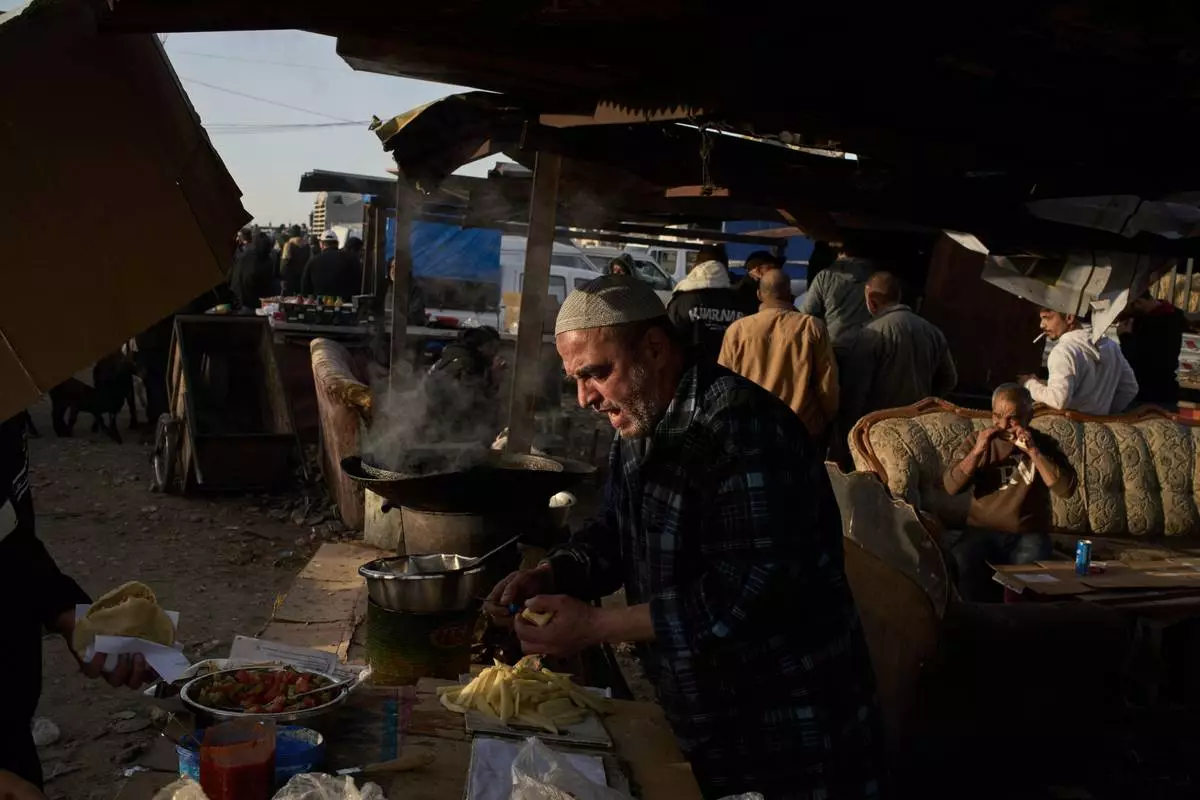
A Palestinian prepares falafel for sale at a livestock market near Balata refugee camp on the outskirts of the West Bank city of Nablus, Thursday, Feb. 12, 2026. (AP Photo/Leo Correa)
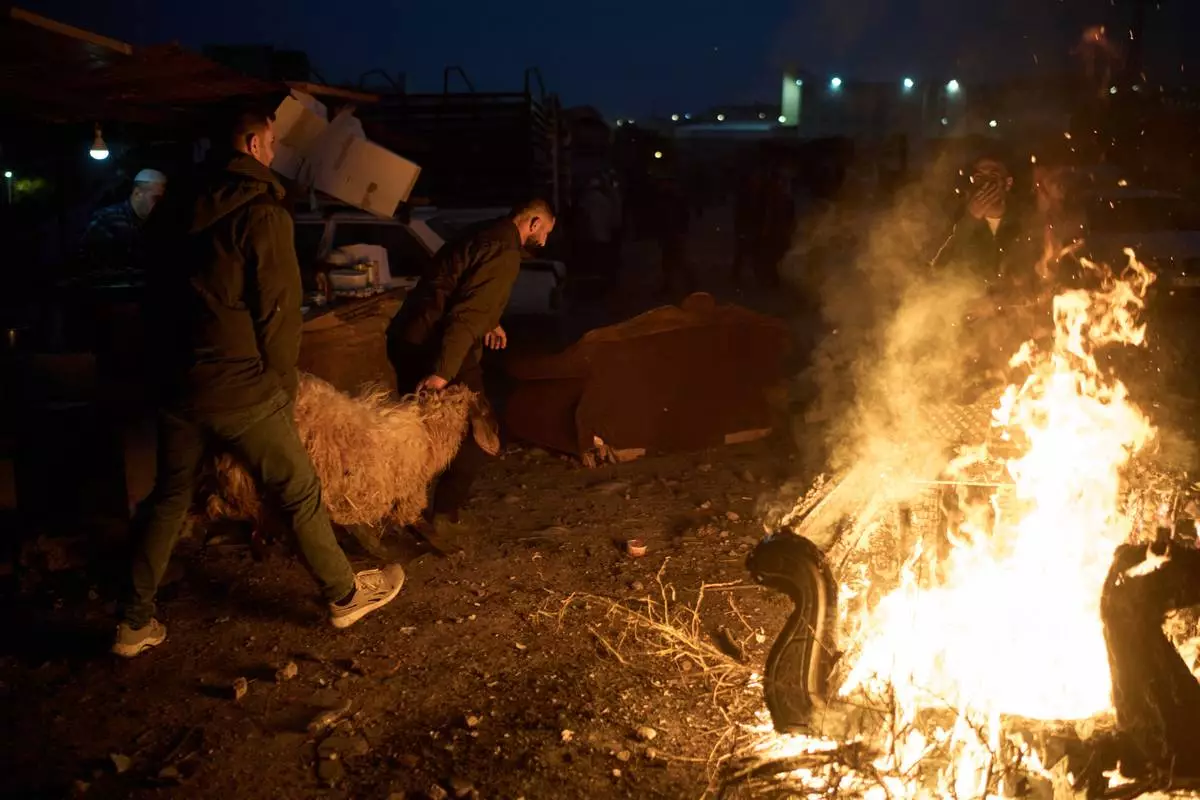
Palestinians carry a sheep past a bonfire at a livestock market near Balata refugee camp on the outskirts of the West Bank city of Nablus, Thursday, Feb. 12, 2026. (AP Photo/Leo Correa)
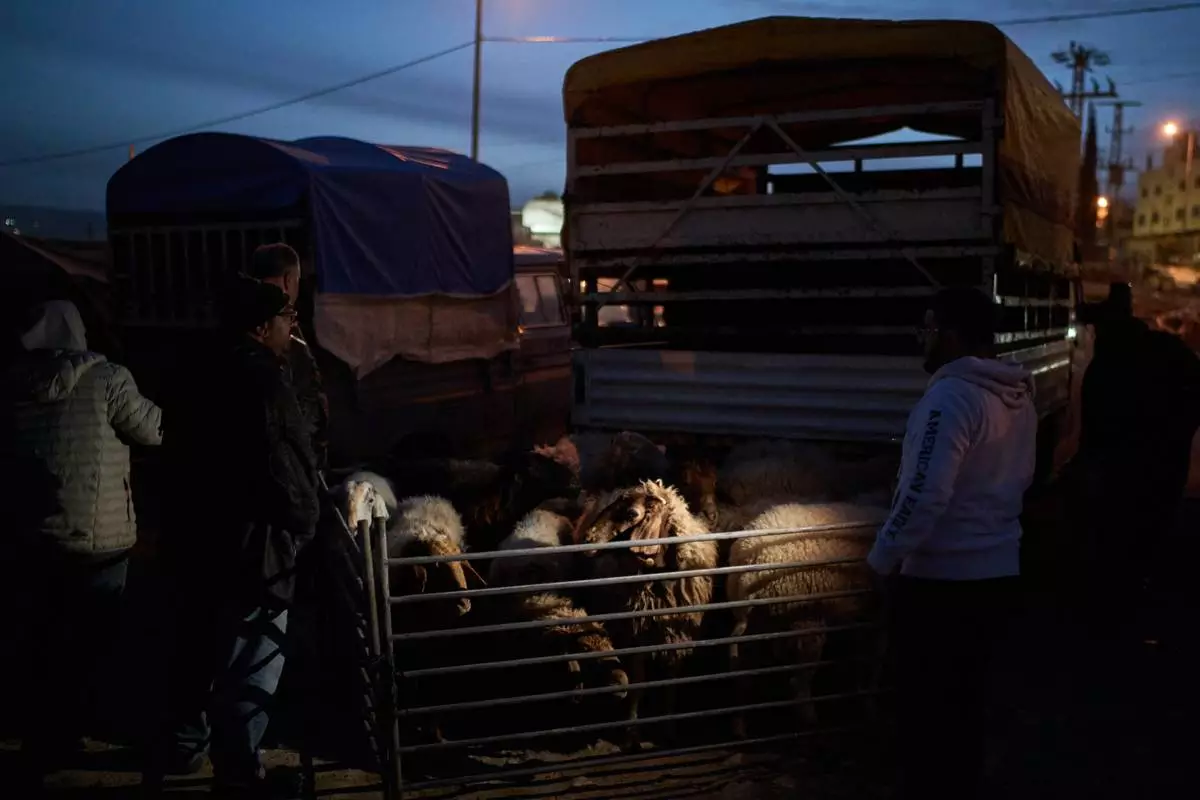
Palestinians gather at dawn to purchase sheep and goats at a livestock market near Balata refugee camp on the outskirts of the West Bank city of Nablus, Thursday, Feb. 12, 2026. (AP Photo/Leo Correa)
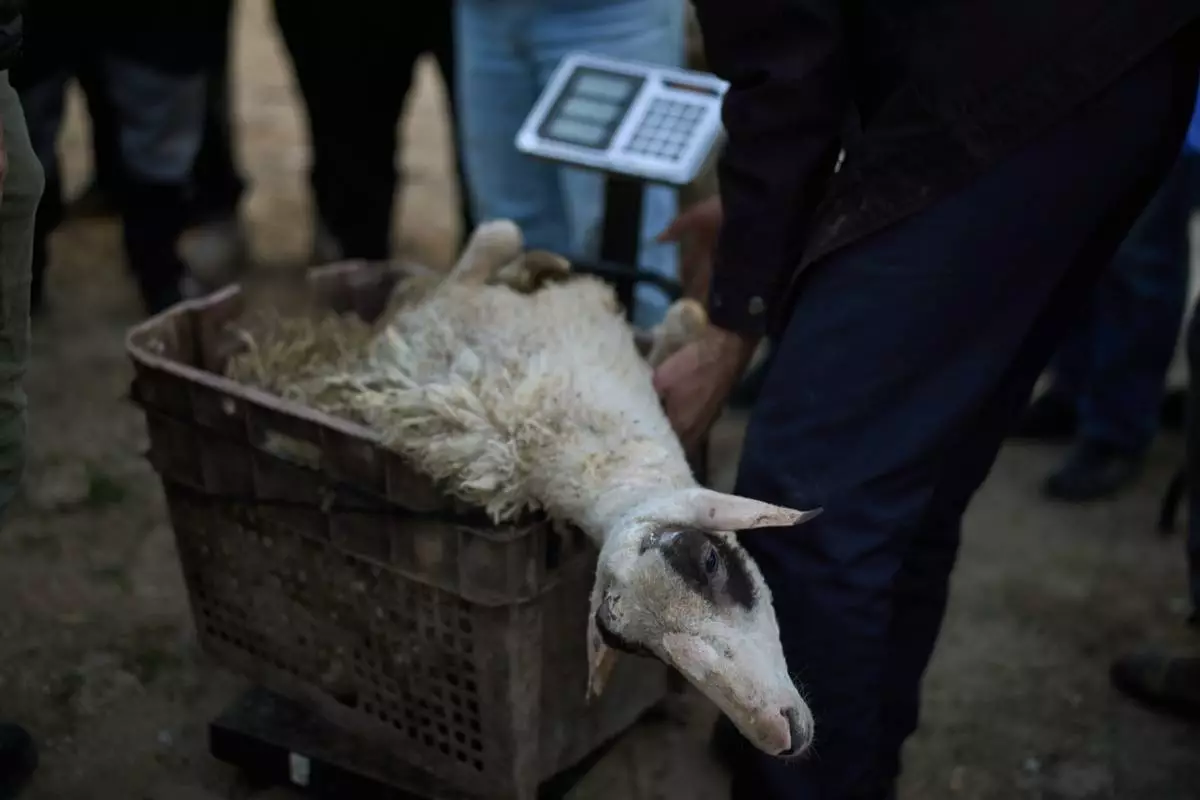
A sheep for sale is weighed at a livestock market near Balata refugee camp on the outskirts of the West Bank city of Nablus, Thursday, Feb. 12, 2026. (AP Photo/Leo Correa)
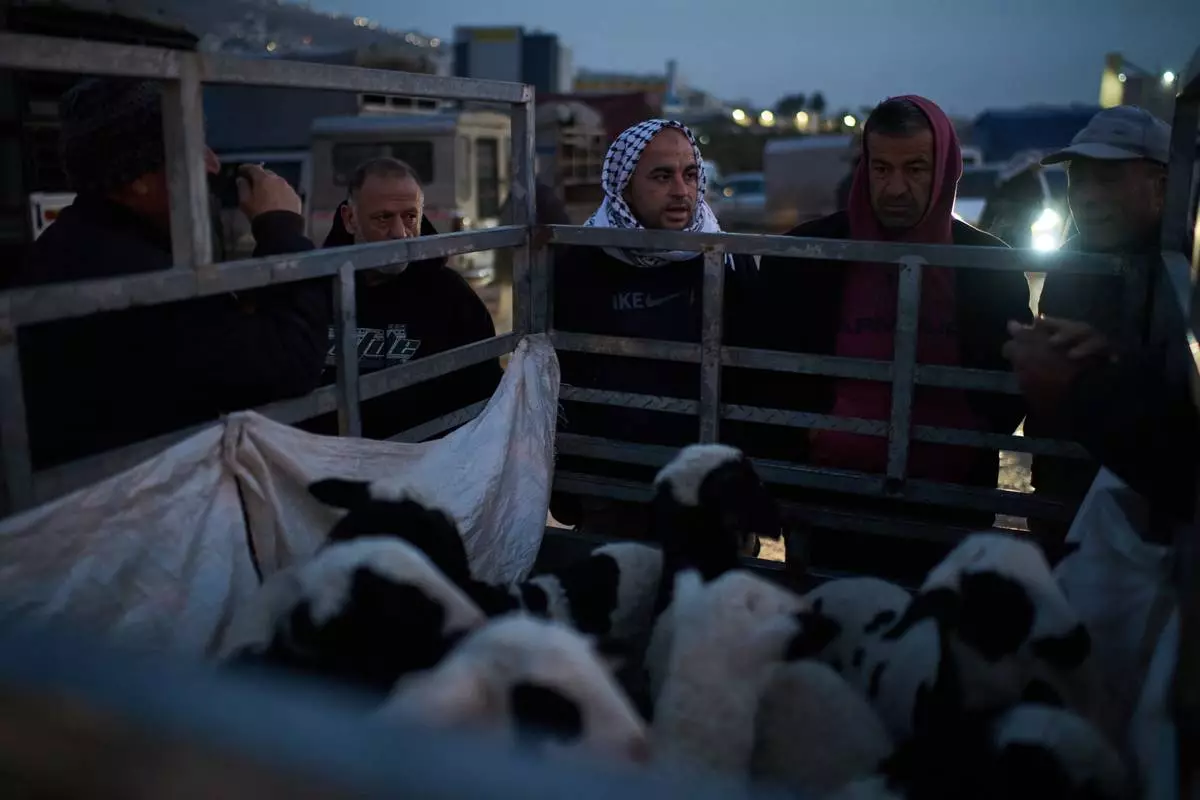
Palestinians gather around a vehicle to purchase sheep and goats at a livestock market near Balata refugee camp on the outskirts of the West Bank city of Nablus, Thursday, Feb. 12, 2026. (AP Photo/Leo Correa)
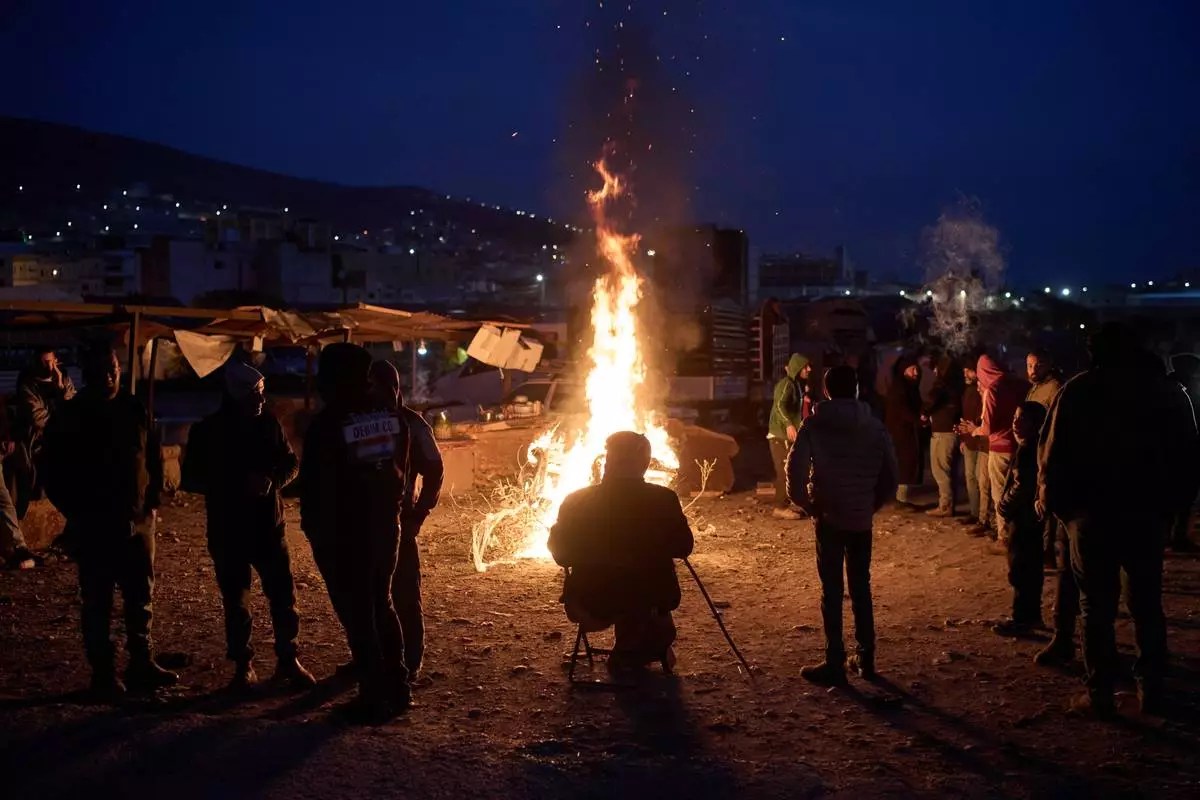
Palestinians warm themselves next to the bonfire as they gather at a livestock market near Balata refugee camp on the outskirts of the West Bank city of Nablus, Thursday, Feb. 12, 2026. (AP Photo/Leo Correa)

A Palestinian eats grilled chicken and lamb at a livestock market near Balata refugee camp on the outskirts of the West Bank city of Nablus, Thursday, Feb. 12, 2026. (AP Photo/Leo Correa)
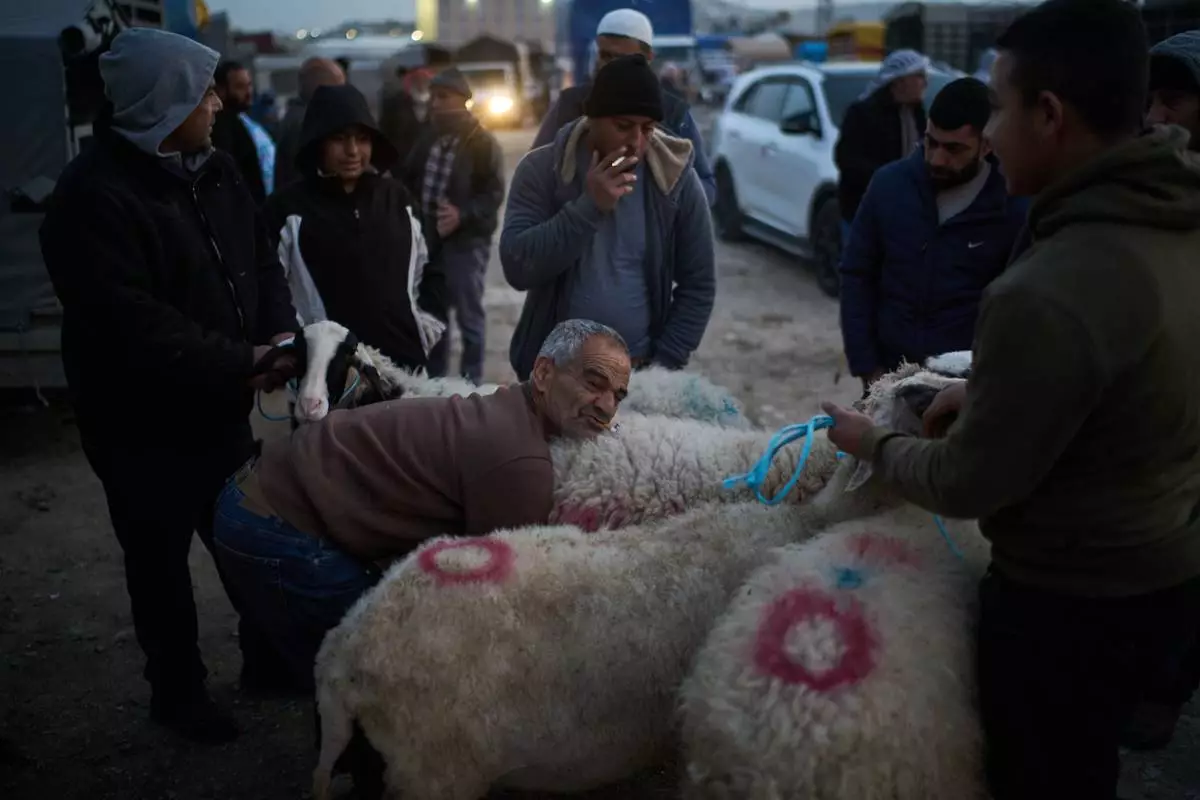
A Palestinian checks a sheep before buying it at a livestock market near Balata refugee camp on the outskirts of the West Bank city of Nablus, Thursday, Feb. 12, 2026. (AP Photo/Leo Correa)
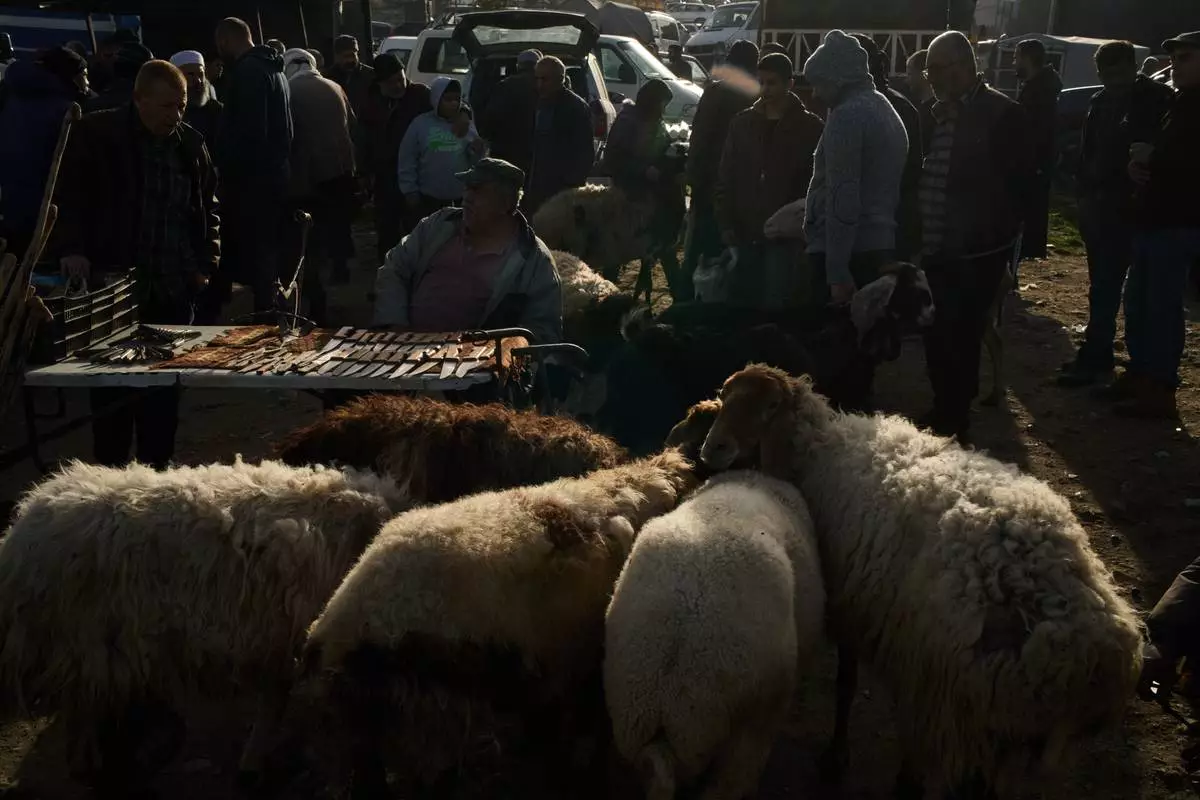
A Palestinian sits next to his stand as he sells knives at a livestock market near Balata refugee camp on the outskirts of the West Bank city of Nablus, Thursday, Feb. 12, 2026. (AP Photo/Leo Correa)
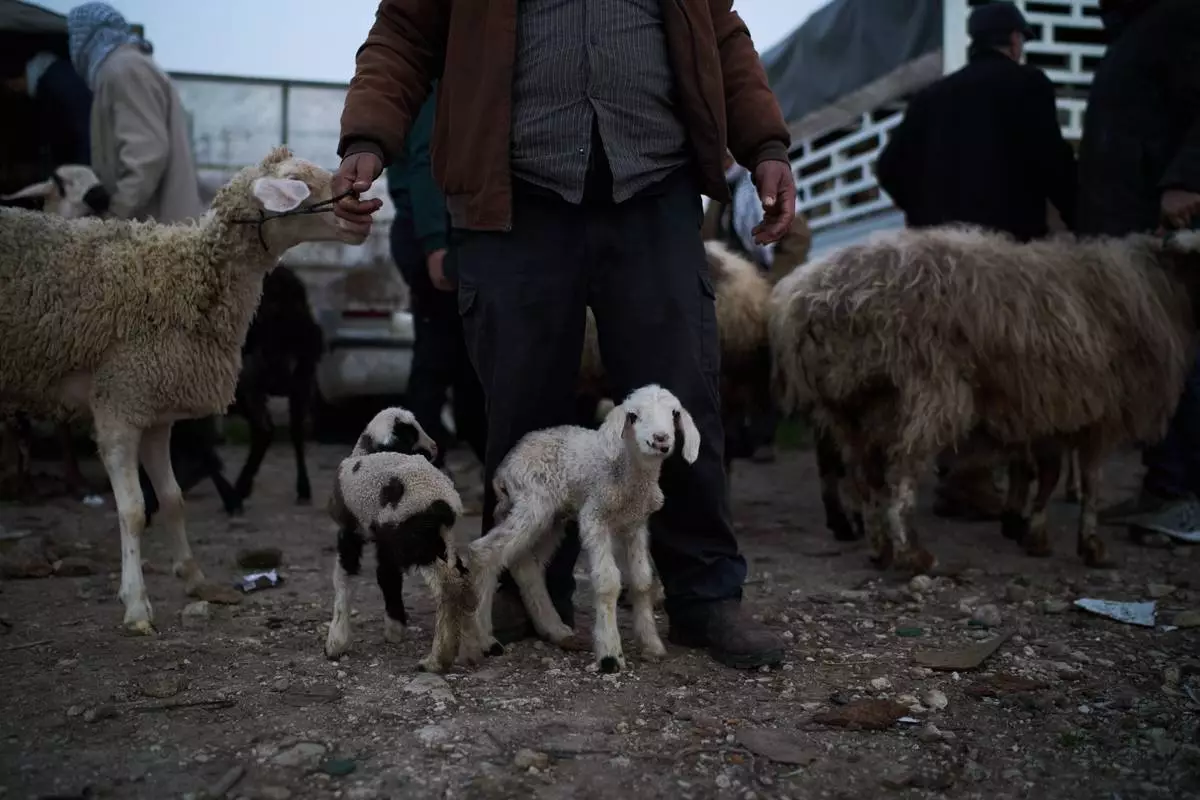
Palestinians gather to purchase sheep and goats at a livestock market near Balata refugee camp on the outskirts of the West Bank city of Nablus, Thursday, Feb. 12, 2026. (AP Photo/Leo Correa)
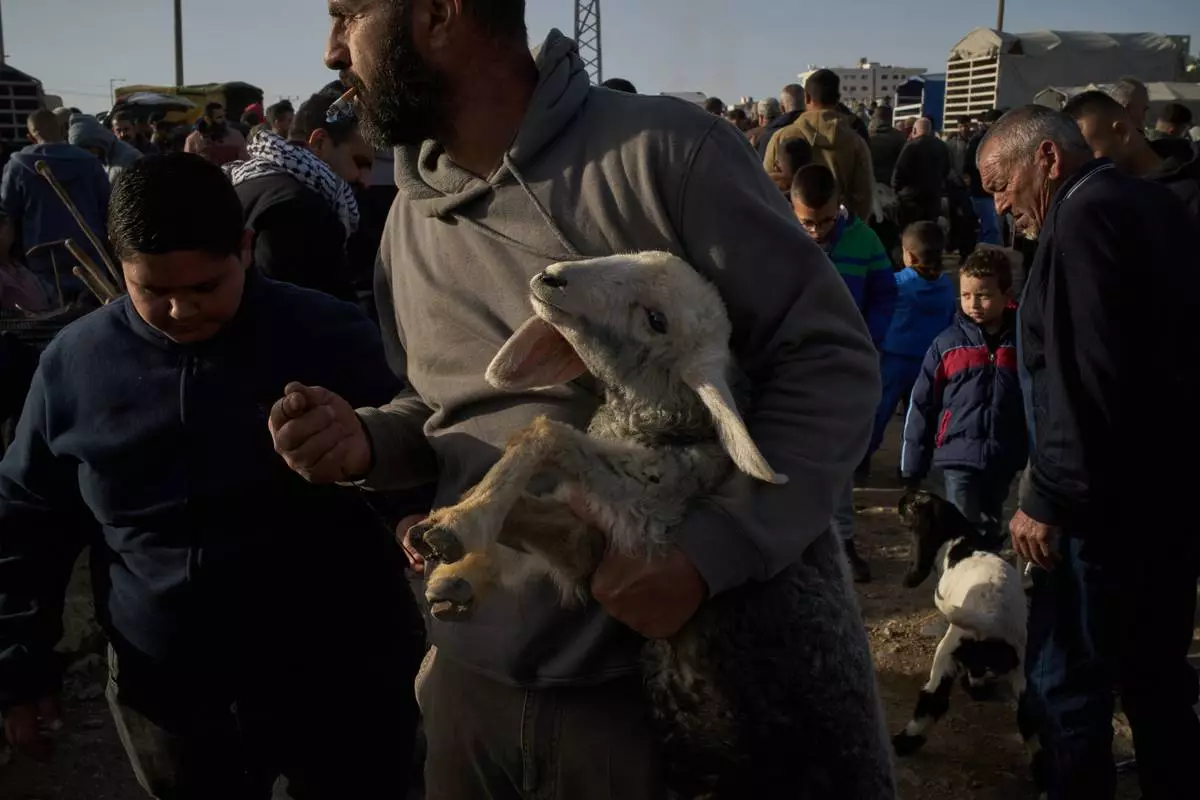
A Palestinian carries a baby sheep at a livestock market near Balata refugee camp on the outskirts of the West Bank city of Nablus, Thursday, Feb. 12, 2026. (AP Photo/Leo Correa)

NEW YORK (AP) — U.S. stocks fell sharply Thursday as the market punished companies seen as potential losers from artificial-intelligence technology.
The S&P 500 sank 1.6% for its second-worst day since Thanksgiving, though it’s still near its all-time high set late last month. The Dow Jones Industrial Average dropped 669 points, or 1.3%, and the Nasdaq composite fell 2%.
AppLovin lost nearly a fifth of its value and tumbled 19.7%, even though it reported a stronger profit for the latest quarter than analysts expected. Like other software companies, it’s come under pressure from worries that AI may undercut its business while fundamentally changing how people use the internet.
AppLovin CEO Adam Foroughi pushed back on the concerns, saying in a conference call with analysts that indicators show his company is doing well. “There’s a real disconnect between market sentiment and the reality of our business,” he said.
Its stock nevertheless widened its loss for the young year so far, which came into the day at 32.2%.
Cisco Systems dropped 12.3% despite likewise topping analysts’ expectations for profit and revenue last quarter. The tech giant indicated that it may make less profit off each $1 of revenue during the current quarter than it did in the past quarter.
Analysts said that could be an indicator of higher prices for computer memory that everyone is having to pay amid the rush driven by AI.
More broadly, questions are rising about whether businesses that are spending heavily on AI will end up seeing high-enough profits and productivity to make the investments worth it.
The AI worries have hit software stocks particularly hard, but they’re spreading to other industries and other markets. For bonds, for example, “AI disruption risk” looks set to knock down prices, even if the threat still looks hazy, according to strategists at UBS.
“The timing of AI disruption remains indeterminate, and the fog of uncertainty is unlikely to dissipate quickly,” the strategists led by Matthew Mish wrote in a report.
They expect the AI risk to lead to an increase in defaults in the junk-bond and other low-rated markets. That could hurt even strong, financially stable companies by making it more expensive for them to borrow, including the Big Tech businesses that have been borrowing heavily to pay for their AI investments. That spending has been a major reason the AI frenzy has gotten as big as it has.
In a less likely but very damaging scenario, such knock-on effects “could be significant, potentially undercutting capital spending, investment plans, and ultimately the AI boom itself,” according to the UBS strategists.
In the meantime, some of the companies serving customers with huge AI budgets are benefiting.
Equinix, for example, jumped 10.4% even though the digital infrastructure company’s results for the latest quarter fell short of analysts’ expectations. It gave financial forecasts for 2026 that topped analysts’ expectations, and CEO Adaire Fox-Martin said that “demand for our solutions has never been higher.”
The company’s data centers are helping to power the world’s move into AI.
Outside of tech, McDonald’s rose 2.7% after reporting a stronger profit for the latest quarter than analysts expected. The restaurant chain credited moves to improve its value and affordability, including cutting prices on some U.S. combo meals in September.
Walmart’s rally of 3.8%, meanwhile, was the strongest single force pushing upward on the S&P 500. It erased losses from earlier in the week after a report said spending at U.S. retailers overall stalled in December.
All told, the S&P 500 fell 108.71 points to 6,832.76. The Dow Jones Industrial Average dropped 669.42 to 49,451.98, and the Nasdaq composite sank 469.32 to 22,597.15.
In the bond market, Treasury yields fell as investors looked for safer places to park their cash. A report also said slightly more U.S. workers filed for unemployment benefits last week than economists expected.
Still, the number was lower than the prior week’s, which is a signal that the pace of layoffs may be improving. It also followed a surprisingly strong report on the job market from Wednesday, which said the nation’s unemployment rate improved last month.
A strengthening job market could push the Federal Reserve to hold interest rates steady and keep its cuts on pause, even if President Donald Trump keeps loudly and aggressively calling for lower rates. While lower rates can give the economy a boost, they can also worsen inflation.
It all raises the stakes for Friday’s upcoming report on inflation at the U.S. consumer level. Economists expect it to show inflation slowed to 2.5% last month from 2.7% in December.
A separate report on Thursday said that sales of previously occupied homes slumped last month by more than economists expected, which also weighed on yields.
The yield on the 10-year Treasury fell to 4.10% from 4.18% late Wednesday.
In stock markets abroad, South Korea’s Kospi rushed 3.1% higher thanks to gains for Samsung Electronics, SK Hynix and other tech stocks.
The moves were more modest in other Asian markets and in Europe. Hong Kong’s Hang Seng fell 0.9%, and France’s CAC 40 rose 0.3%.
AP Business Writers Chan Ho-him and Matt Ott contributed.
James Conti works on the floor at the New York Stock Exchange in New York, Thursday, Feb. 12, 2026. (AP Photo/Seth Wenig)
Trader Edward McCarthy works on the floor of the New York Stock Exchange, Wednesday, Feb. 11, 2026. (AP Photo/Richard Drew)
Trader Robert Charmak, left, and Specialist Genarro Saporito work on the floor of the New York Stock Exchange, Wednesday, Feb. 11, 2026. (AP Photo/Richard Drew)
Trader John Romolo works on the floor of the New York Stock Exchange, Wednesday, Feb. 11, 2026. (AP Photo/Richard Drew)
Currency traders watch monitors near a screen showing the Korea Composite Stock Price Index (KOSPI), right, and the foreign exchange rate between U.S. dollar and South Korean won at the foreign exchange dealing room of the Hana Bank headquarters in Seoul, South Korea, Thursday, Feb. 12, 2026. (AP Photo/Ahn Young-joon)
Currency traders work near a screen showing the Korea Composite Stock Price Index (KOSPI), top center, and the foreign exchange rate between U.S. dollar and South Korean won, top center left, at the foreign exchange dealing room of the Hana Bank headquarters in Seoul, South Korea, Thursday, Feb. 12, 2026. (AP Photo/Ahn Young-joon)
A person walks in front of an electronic stock board showing Japan's Nikkei index at a securities firm Thursday, Feb. 12, 2026, in Tokyo. (AP Photo/Eugene Hoshiko)
People walk in front of an electronic stock board showing Japan's Nikkei index at a securities firm Thursday, Feb. 12, 2026, in Tokyo. (AP Photo/Eugene Hoshiko)
A person walks in front of an electronic stock board showing Japan's Nikkei index at a securities firm Thursday, Feb. 12, 2026, in Tokyo. (AP Photo/Eugene Hoshiko)