SAN JUAN, Puerto Rico (AP) — Puerto Rico’s governor on Thursday signed a bill that amends a law to recognize a fetus as a human being, a move doctors and legal experts warn will have deep ramifications for the U.S. Caribbean territory.
The amendment was approved without public hearings and amid concerns from opponents who warned it would unleash confusion and affect how doctors and pregnant or potentially pregnant women are treated.
The new law will lead to “defensive health care,” warned Dr. Carlos Díaz Vélez, president of Puerto Rico’s College of Medical Surgeons.
“This will bring complex clinical decisions into the realm of criminal law,” he said in a phone interview.
He said that women with complicated pregnancies will likely be turned away by private doctors and will end up giving birth in the U.S. mainland or at Puerto Rico’s largest public hospital, noting that the island’s crumbling health system isn't prepared.
“This will bring disastrous consequences,” he said.
Díaz noted that the amended law also allows a third person to intervene between a doctor and a pregnant woman, so privacy laws will be violated, adding that new protocols and regulations will have to be implemented.
“The system is not prepared for this,” he said.
Gov. Jenniffer González, a Republican and supporter of U.S. President Donald Trump, said in a brief statement that “the legislation aims to maintain consistency between civil and criminal provisions by recognizing the unborn child as a human being.”
The amendment, in Senate Bill 923, was made to an article within Puerto Rico’s Penal Code that defines murder.
The government noted that the amendment complements a law that among other things, classifies as first-degree murder when a pregnant woman is killed intentionally and knowingly, resulting in the death of the conceived child at any stage of gestation. The law was named after Keishla Rodríguez, who was pregnant when she was killed in April 2021. Her lover, former Puerto Rican boxer Félix Verdejo, received two life sentences after he was found guilty in the killing.
Some cheered the amendment signed into law Thursday, while opponents warned that it opens the door to eventually criminalizing abortions in Puerto Rico, which remain legal.
“A zygote was given legal personality,” said Rosa Seguí Cordero, an attorney and spokesperson for the National Campaign for Free, Safe and Accessible Abortion in Puerto Rico. “We women were stripped of our rights.”
Seguí rattled off potential scenarios, including whether a zygote, or fertilized egg, would have the right to health insurance and whether a woman who loses a fetus would become a murder suspect.
Díaz said doctors could even be considered murder suspects and condemned how public hearings were never held and the medical sector never consulted.
“The problem is that no medical recommendations were followed here,” he said. “This is a serious blow … It puts us in a difficult situation.”
Among those condemning the measure was Annette Martínez Orabona, executive director for the American Civil Liberties Union in Puerto Rico.
She noted that no broad discussion of the bill was allowed, which she said is critical because the penal code carries the most severe penalties.
"There is no doubt that the measure did not undergo adequate analysis before its approval and leaves an unacceptable space for ambiguity regarding civil rights," she said.
"The legislative leadership failed to fulfill its responsibility to the people, and so did the governor.”
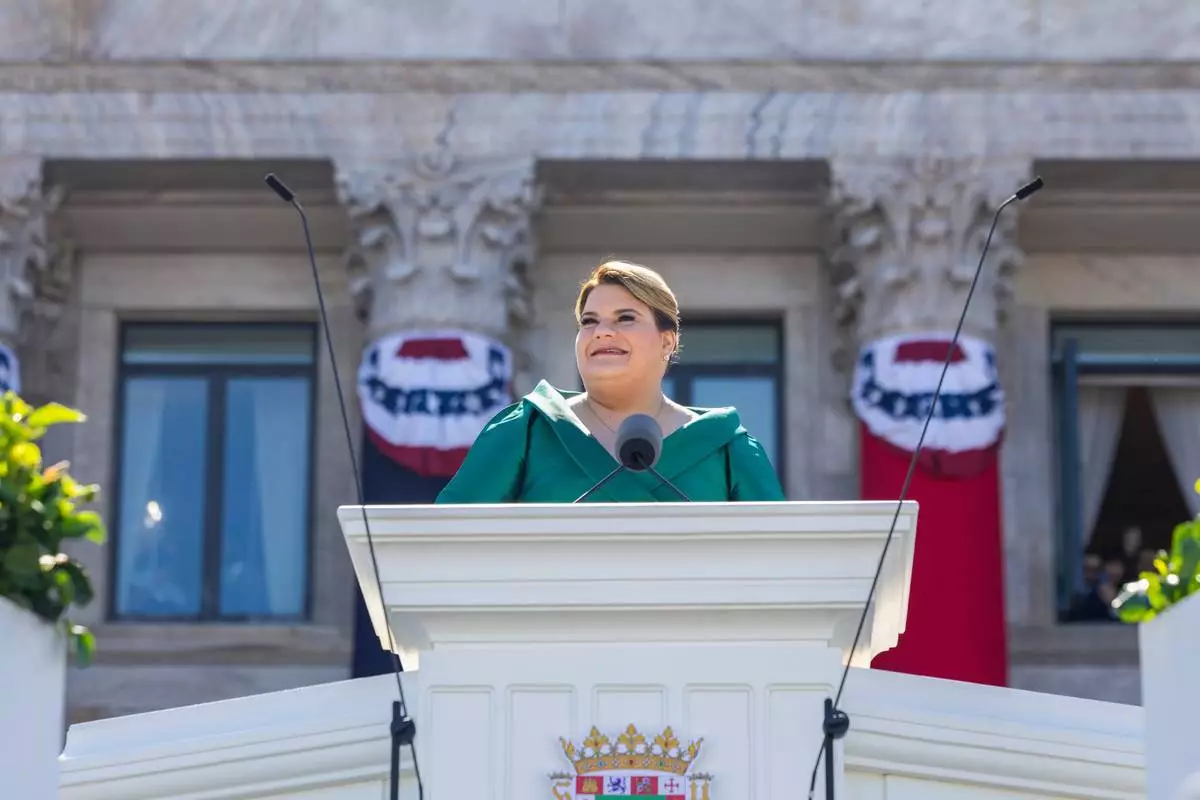
FILE - Jenniffer Gonzalez speaks after she was sworn in as governor outside the Capitol in San Juan, Puerto Rico, Jan. 2, 2025. (AP Photo/Alejandro Granadillo, File)
NEW YORK (AP) — Pene Pati was cautioned as a 20-year-old not to pursue a singing career, an unusual occupation for a Samoan who grew up in New Zealand
“Lots of people want to become a singer because they want the lifestyle,” the tenor recalled. “Whereas for me, I did it out of spite, to be honest. It was somebody who said: `Don’t be angry if you don’t cut it as an opera singer because as a Polynesian, there are not many opera singers.' And that part of me thought: How do I prove him wrong?”
Now 38 and booked by top houses into 2030, Pati laughed as he recalled vocal coach Robert Wiremu’s wariness.
“He didn’t say I wasn’t a good singer,” Pati explained. “He just said: `Don’t be afraid if you don’t make it.'”
Pati is among the emerging tenors in a group with Xabier Anduaga, SeokJong Baek, Freddie De Tommaso, Ismael Jordi and Jonathan Tetelman.
He impressed last month in his first staged performances of Massenet’s “Werther” at Paris’ Opéra Comique, a 1,200-capacity jewel box that turned down the composer’s 1887 offer to stage the premiere.
“I wanted people who had never sung it before,” conductor Raphaël Pichon said.
Pati's biggest break was at the Comique on Dec. 13, 2021, when he replaced Jean-François Borras for the opening of Gounod's “Roméo et Juliette” with just a few hours notice. He had sung Alfredo in Verdi's “La Traviata” the previous day in Amsterdam and quickly took a train.
“It was the springboard for Europe and for America,” Pati said.
His Paris castmates timed his held high C at 19 seconds, according to mezzo-soprano Adèle Charvet.
“The moment he set a foot on stage, it became electric,” said Charvet, who sang her first staged Charlotte with Pati last month. “When he’s around, it’s like the sun is here suddenly.”
Ted Huffman, the director, took advantage of the intimate house and placed Pati near the lip of the stage, where viewers could focus on his facial expressions.
“He’s such a warm person in real life and that openness, it translates to something very honest with the audience,” Huffman said. “Without planning this we went down a quite extreme path with the character in the way he went towards these inward explosions rather than the outward ones.”
Born in Samoa to parents who are both registered nurses, Pati moved to New Zealand with his family when he was between 1 and 2.
“That also gave me the motivation to leave New Zealand because I thought if they could do it, then now I have to do it,” he said.
Pati sang in an Auckland choir and planned on a computer science career. He was encouraged to pursue piano and singing by Terence Maskell, his choir and high school music director.
Pati continued studies at The University of Auckland, won a music competition in Australia and at the behest of tenor Dennis O’ Neill moved to Cardiff in 2011 to study at the Wales International Academy of Voice. Around the same time, Pati formed the trio Sol3 Mio with his brother, tenor Amitai Pati, and cousin, baritone Moses Mackay.
Pati entered the San Francisco Opera’s Merola Program in 2013. During auditions for the program in New Zealand, he met soprano Amina Edris, his future wife and occasional recital partner. His first words to her were: “You’re the only one that’s better than me.”
He placed second among men in the 2015 Operalia competition and after at first turning down the opportunity, advanced to the San Francisco Opera’s Adler Fellows program in 2016 along Edris. The following year he made his San Francisco Opera debut as the Duke in Verdi’s “Rigoletto.”
He sang his first European opera performance at Bordeaux, France, in 2018, and his profile rose when he replaced Brian Hymel for San Francisco's opening-night performance of “Roméo” in September 2019. He’s since debuted at the Paris Opera (2021), the Vienna State Opera (2022), London’s Royal Opera (2024) and New York’s Metropolitan Opera and Munich’s Bavarian State Opera (both 2025).
Pati, who now lives in Paris, returns to the Met for Puccini’s “La Bohème” next season.
“He’s a tenor with enormous potential,” Met general manager Peter Gelb said.
Pati sings Edgardo in Donizetti’s “Lucia di Lammermoor” at Toulouse, France, starting Feb. 20, a role he repeats for his debut at Milan’s Teatro alla Scala this summer. He performs the title role in Mozart’s “La Clemenza di Tito” for his Zurich Opera debut in late April and returns home to New Zealand in August for Chevalier des Grieux in Massenet’s “Manon.”
“I don't want to jump the gun,” he said. “Once you go to all the heavier stuff it's hard to come back.”
After the final “Werther” performance, Pati invited the children’s chorus to his dressing room and gave them cake. Between performances at the New York's Park Avenue Armory last September, he held a workshop, singing and answering questions for 14-to-18-year-old vocal students from Talent Unlimited High School.
“The most important thing about Pene for me is just humanity,” Pichon said. “It’s a man who wants to share, wants to communicate his passion, his music. It’s properly unique, how solar, how luminous is this man.”
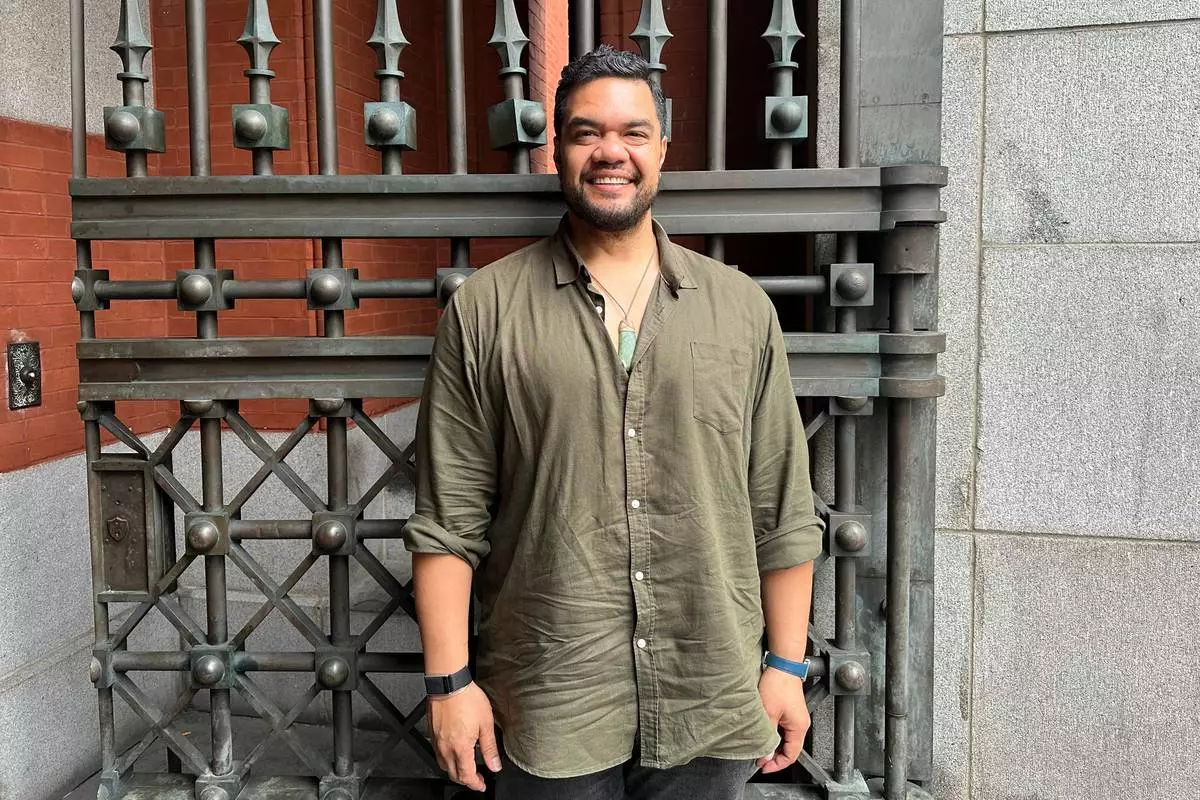
Samoan tenor Pene Pati poses outside of the Park Avenue Armory in New York on Sept. 25, 2025. (AP Photo/Ron Blum)
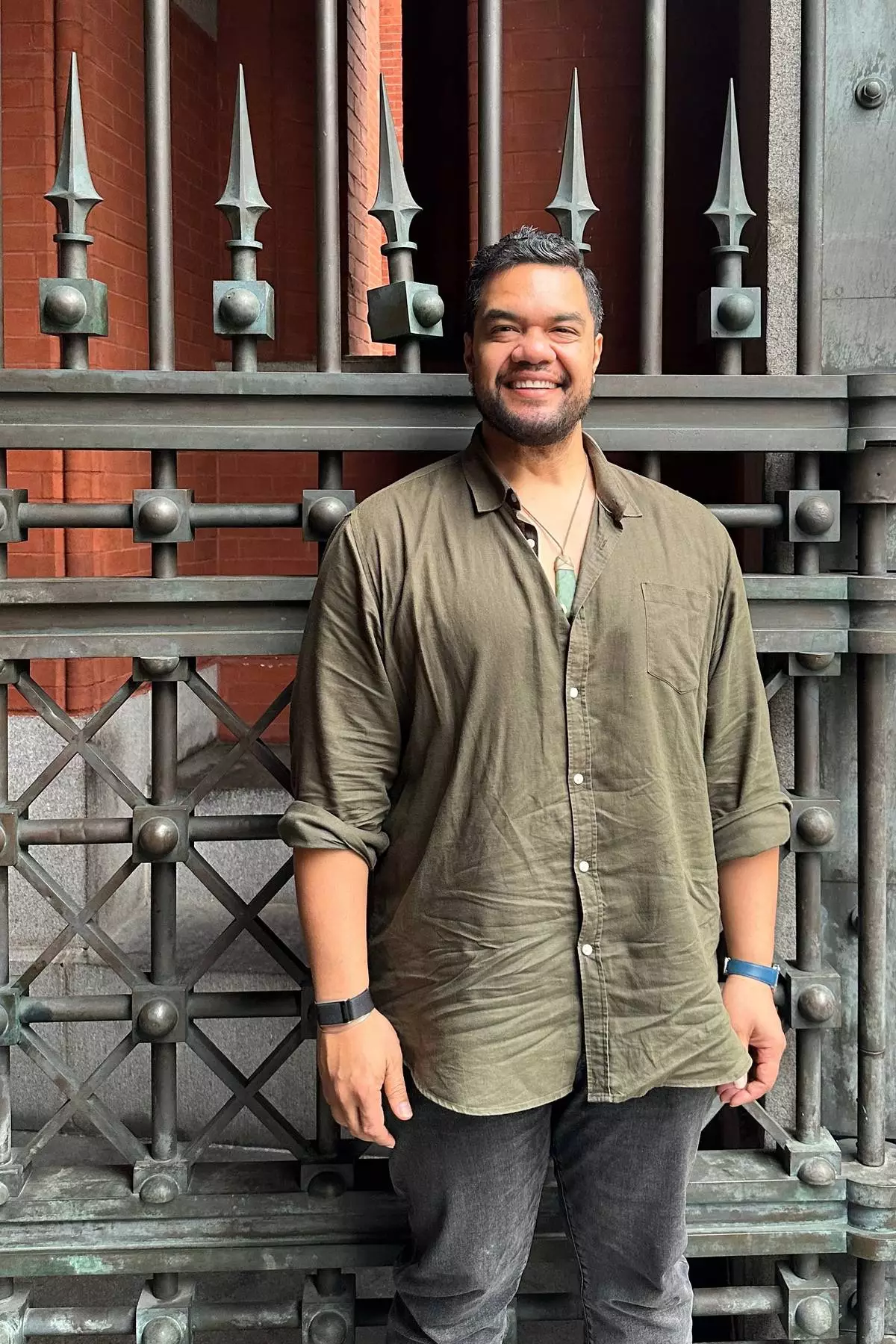
Samoan tenor Pene Pati poses outside of the Park Avenue Armory in New York on Sept. 25, 2025. (AP Photo/Ron Blum)
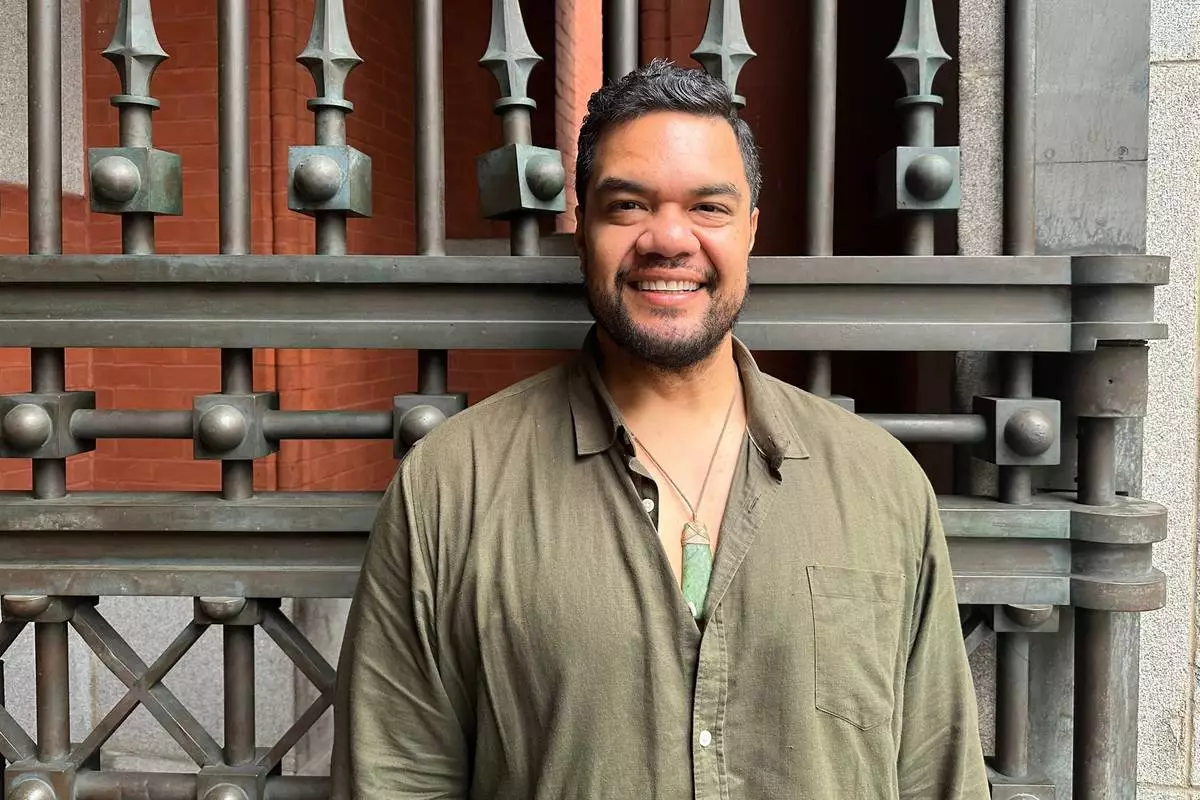
Samoan tenor Pene Pati poses outside of the Park Avenue Armory in New York on Sept. 25, 2025. (AP Photo/Ron Blum)