A dispute between the United States and Europe over the Danish autonomous territory of Greenland has evolved into a broader test of national sovereignty, NATO cohesion, and transatlantic trust, even as Washington has stepped back from tariff threats against European allies.
U.S. President Donald Trump threatened 10-percent tariffs on imports from countries opposing his proposal to acquire Greenland, which triggered an unprecedented rift within the NATO alliance.
European leaders responded with unusual unity, standing firm on Danish sovereignty.
The threat has abated following talks between Trump and NATO Secretary General Mark Rutte on the sidelines of the World Economic Forum's annual meeting in Davos, Switzerland last month, which produced "the framework of a future deal with respect to Greenland".
Yet Danish analysts caution that the episode has left a lasting imprint on alliance cohesion. They said once an ally is perceived as unpredictable, governments will begin preparing for worst-case scenarios.
"This whole crisis has led European leaders to begin to consider whether we have relied too much on the U.S., and whether that is viable going forward. I don't think anyone is interested in blowing up the alliance with the U.S. I mean a NATO without the U.S. right now really wouldn't be the same. What happens is we can't trust the Americans anymore. Then, there needs to be a European pillar of NATO to fall back on," said Mikkel Runge Olesen, senior researcher at the Danish Institute for International Studies.
Greenland already hosts a longstanding U.S. military presence. Its constitutional status grants it extensive self-governance.
"Greenland is part of the Kingdom of Denmark, and it has home rules. It could become independent, if it wanted so. But that would be a decision that could be taken by the Greenlanders alone," said Otto Brons Pedersen, director for analysis at the Center for Political Studies, an independent think tank based in Copenhagen, the capital of Denmark.
Even with the U.S. tariff threat withdrawn, goodwill has been damaged and the Trump administration's underlying goal of increasing U.S. control over Greenland remains.
"Even if the Americans back off, the damage has been done. The Europeans don't trust the Americans anymore," said Rasmus Mariager, a professor of history at the University of Copenhagen and a political analyst.
For now, the immediate crisis has subsided. But in European capitals, the questions it raised are still being debated. What future is there for a defense alliance when allies are at odds and trust is severely damaged.
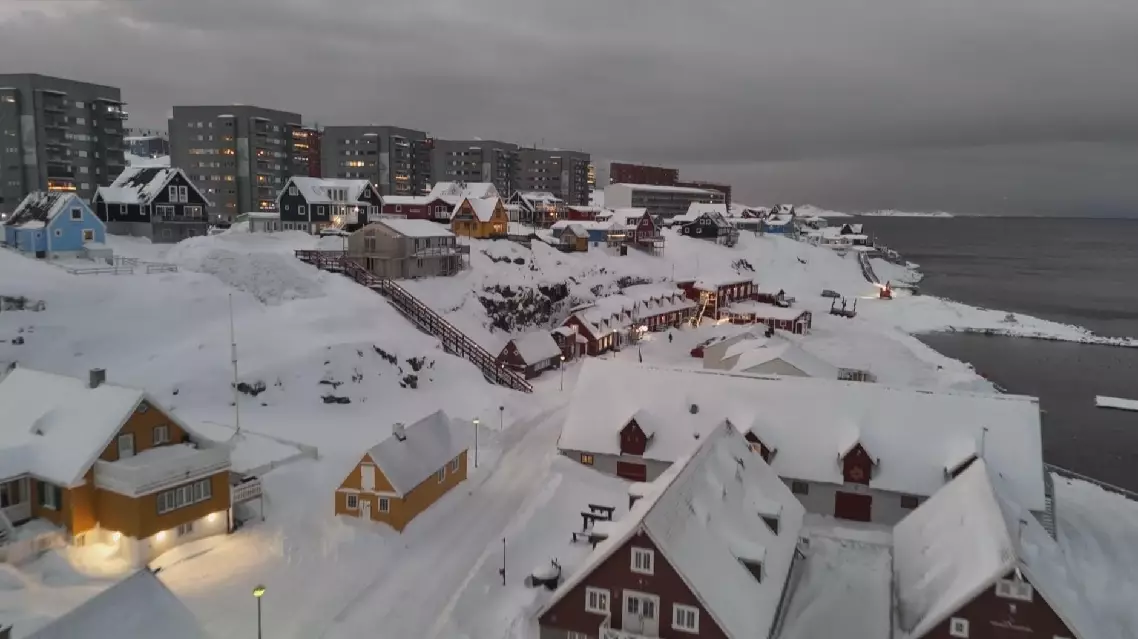
Greenland dispute strains transatlantic ties, NATO unity: experts
As Cuba's fuel shortage deepens following a U.S. oil embargo imposed last month, Russia, Mexico and Chile have stepped in with humanitarian assistance while also calling for dialogue to ease tensions and address the sanctions.
On January 29, U.S. President Donald Trump signed an executive order threatening to impose tariffs on countries that sell or provide oil to the Caribbean nation. The embargo has sharply worsened the island nation's energy shortages, disrupting critical social services including healthcare and transportation.
"It is really serious. It hasn't been so tough for Cubans for many, many years. It isn't just the fact that some airlines can't come in -- some ones aren't coming in -- because they can't get fuel to get out. It means that the tourist industry, what little was left, has collapsed. And also cargo flights aren't getting in. Remember that without fuel, there's no electricity. There are constant blackouts. Hospitals are in trouble. The government's had to ration fuel. How do you get to work if public transport isn't working? So times really are very tough," introduced CGTN correspondent in Cuba Michael Voss.
"The Cubans are resilient. How can they manage to keep 1950s American cars on the road without any spare parts? Now people, for example, are stockpiling carbon so that they can cook on it. It's times [which] are very tough and it's very difficult to know where it's going to go from here," he added.
On Thursday, Kremlin spokesman Dmitry Peskov said Russia hopes to pursue constructive dialogue with the U.S. regarding the embargo and does not seek escalation over its assistance to Cuba. Russian media Izvestia, citing the country's embassy in Havana, reported that Moscow will soon deliver crude oil and fuel to Cuba as humanitarian aid.
The same day, two Mexican Navy logistics vessels carrying approximately 814 tonnes of humanitarian supplies docked at the Havana Port. The shipment, including milk powder, meat products, beans, biscuits and hygiene items, marked the first Mexican government aid to arrive following Washington's tariff warning. Mexican President Claudia Sheinbaum described the assistance as a gesture of "solidarity" and said Mexico is willing to facilitate dialogue between the U.S. and Cuba if both sides agree.
Chilean President Gabriel Boric also announced humanitarian support for Cuba, criticizing the recent tightening of U.S. measures as criminal actions and infringement to human rights of the whole Cuban nation, and calling for an end to the decades-long blockade. He said that while disagreements may exist, civilians, particularly children, should not bear the consequences.
The president also urged the international community to heed repeated United Nations General Assembly calls to lift the sanctions.
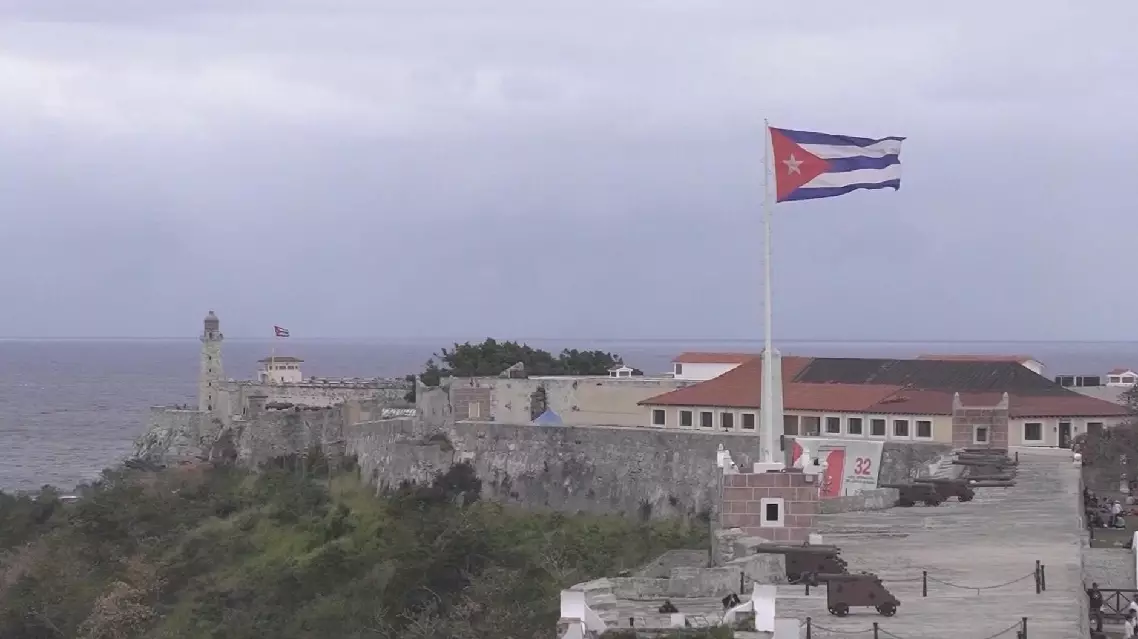
Cuba fuel crisis intensifies under U.S. embargo, international community extends humanitarian aids