EVERETT, Wash.--(BUSINESS WIRE)--Feb 13, 2026--
Helion, a Washington-based fusion energy company, announced that its Polaris prototype has set new fusion industry benchmarks, becoming the first privately developed fusion energy machine to demonstrate measurable deuterium-tritium (D-T) fusion and achieve plasma temperatures of 150 million degrees Celsius (MºC). Both milestones mark significant breakthroughs in Helion’s vision to make commercially viable fusion energy a reality and are firsts for the private fusion industry.
This press release features multimedia. View the full release here: https://www.businesswire.com/news/home/20260213457749/en/
“We believe the surest path to commercializing fusion is building, learning and iterating as quickly as possible,” said David Kirtley, co-founder and CEO of Helion. “We’ve built and operated seven prototypes, setting and exceeding more ambitious technical and engineering goals each time. The historic results from our deuterium-tritium testing campaign on Polaris validate our approach to developing high power fusion and the excellence of our engineering.”
Helion began operating its 7th-generation Polaris prototype at the end of 2024. This January, it became the first and currently only private fusion energy machine to use deuterium-tritium fuel, demonstrating the company’s ability to operate and show scaling across multiple fuels. Helion was also the first company to receive regulatory approval to possess and use tritium for the purpose of demonstrating fusion energy production. Achieving thermonuclear fusion using deuterium-tritium fuel is one step in Polaris’ testing program. The company will continue testing to reach optimal temperatures for deuterium-helium-3 fusion, a fuel Helion will use for commercial operations.
“I am impressed with our nation’s ingenuity and the pace at which we are de-risking our path to fusion commercialization,” said Jean Paul Allain, Associate Director for Fusion Energy Sciences in the Department of Energy’s Office of Science. “Seeing the data from the Polaris test campaign, including record-setting temperatures and gains from the fuel mix in their system, indicates strong progress. Our ability to get fusion on the grid requires approaches that enable rapid turnaround in design and testing, and these results reflect the growing capability of the U.S. fusion ecosystem.”
“I had the opportunity to review diagnostic data from Helion,” said Ryan McBride, an expert in inertial confinement fusion, pulsed power, and plasma physics, with experience as a Department Manager at Sandia National Laboratories and as a professor of nuclear engineering, electrical engineering, and applied physics at the University of Michigan. “It is exciting to see evidence of D-T fusion and temperatures exceeding 13 keV or 150 million degrees Celsius, and I look forward to seeing more progress.”
In achieving plasma temperatures of 150MºC in Polaris, Helion broke its own commercial fusion industry record for plasma temperatures of 100MºC set by its 6th-generation Trenta prototype. Within the fusion industry, 100MºC is considered the threshold plasma temperature for a commercially relevant fusion machine. Helion will continue to increase plasma temperatures in Polaris to demonstrate that it can reliably operate with deuterium-helium-3, which will be relevant for future Helion commercial operations.
“After reviewing the latest results from the Polaris prototype operating on D-T, I am proud of how far the field has come since the earliest FRC work at UW and Los Alamos,” said Dr. Alan Hoffman, a leading expert on FRC plasmas with over 40 years’ experience developing fusion devices. FRC research in the U.S. first began at Los Alamos, was continued at a private company, Math Sciences North West, and, due to encouraging results, proceeded to the construction of the Large S device at the University of Washington under funding from the U.S. Department of Energy, led by Dr. Hoffman. “I continue to see the technology scaling and Helion’s plasma energy recovery enabling this technology for commercial scale.”
With its latest technical accomplishments, Helion continues to set the pace for the fusion industry, creating a path to produce low-cost, carbon-free power from fusion for commercial use. In July 2025, Helion began building on the site of Orion, its first commercial machine, in Malaga, Wash., which will deliver electricity from fusion to the grid for Microsoft.
About Helion
Helion is a fusion energy company focused on generating zero-carbon electricity from fusion. Its mission is to build the world’s first fusion power plant, enabling a future with unlimited clean electricity. To keep up with the latest progress, follow Helion on LinkedIn, Instagram, Facebook, and X.
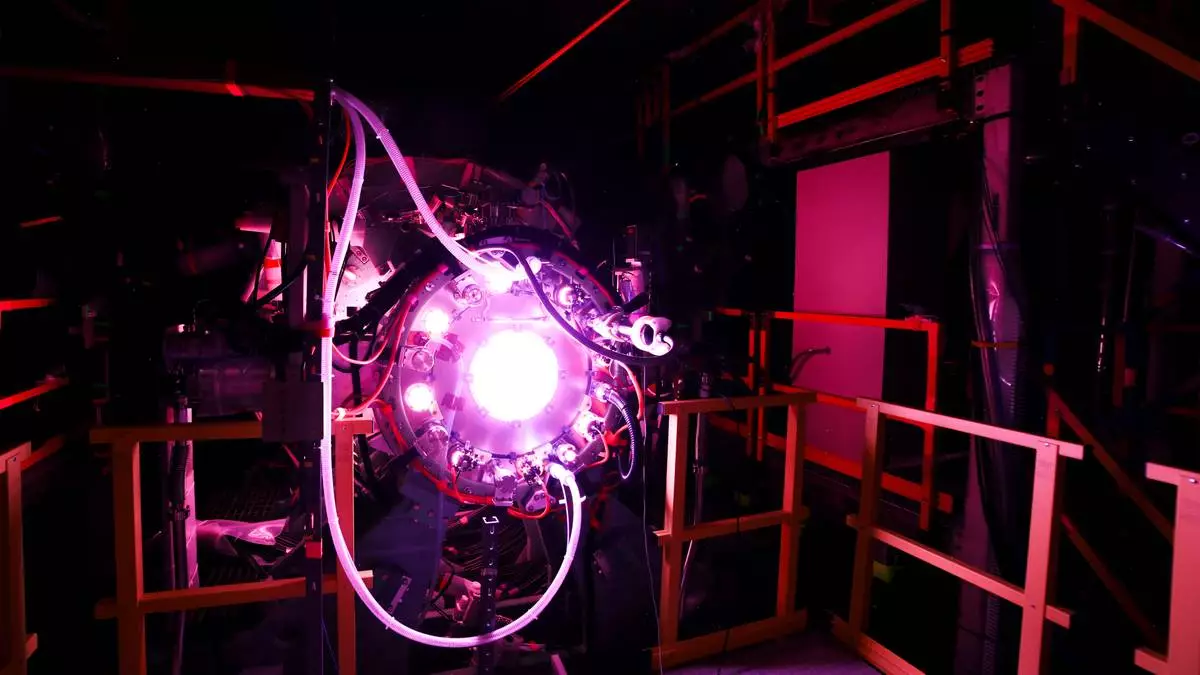
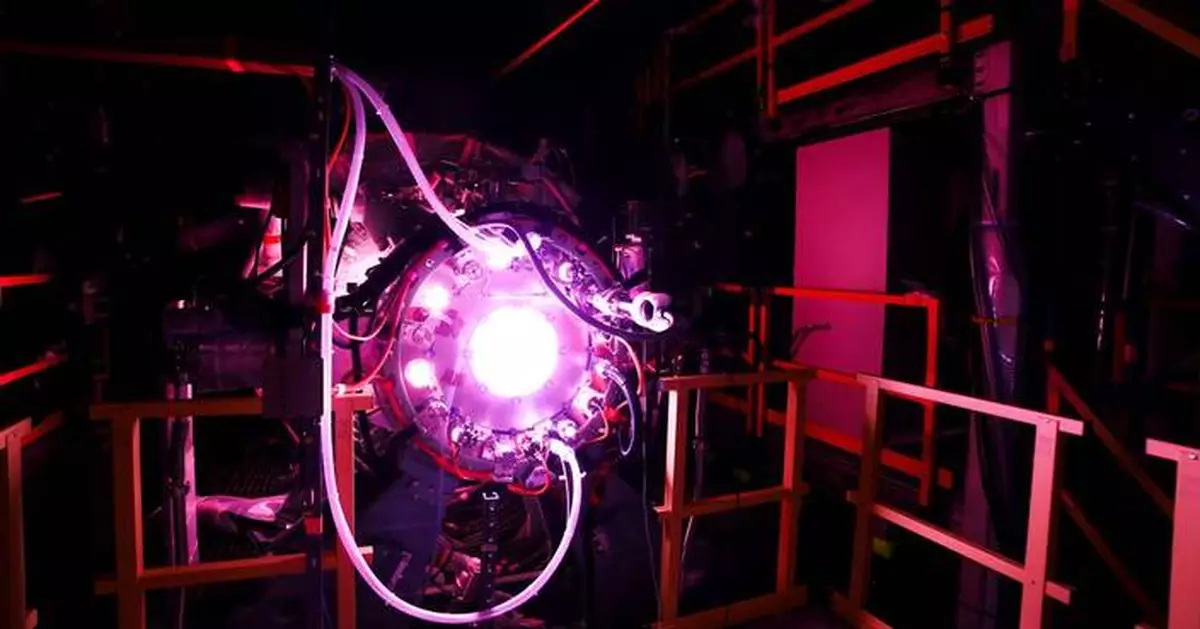
Polaris during first deuterium-tritium pulse
PARIS (AP) — When Pope Leo XIV was elected last year and it emerged that he was a tennis player, his love of the sport was quickly celebrated during an audience with top-ranked Jannik Sinner.
In the ensuing months, Leo has tried to set aside time in his busy schedule to play the sport every week as part of his Augustinian devotion to physical activity and spirituality.
The Rule of St. Augustine, an ancient guide for religious life, highlights the value of good habits.
“He’s trying to keep some regularity to his routine that comes from the Rule,” said the Rev. Rob Hagan, Prior of the Augustinian Province of St. Thomas of Villanova and team chaplain for the men’s basketball and football teams at Villanova University — the pope’s alma mater in Pennsylvania.
Leo’s devotion to St. Augustine was evident when he made a pilgrimage during his Africa trip in April to the archaeological ruins in Algeria where the influential 5th century theologian and philosopher lived and died and wrote some of the most important works in Western thought.
The pope "highlights a very underappreciated Augustinian value — especially in this noisy world — and that is to develop your interior life,” Hagan added in an interview with The Associated Press.
Leo likes to spend Mondays and Tuesdays at the papal retreat in Castel Gandolfo in the hills outside Rome — where he plays tennis with his secretary, Monsignor Edgard Iván Rimaycuna Inga, and goes swimming and horseback riding, too.
Before becoming pope, then-Cardinal Robert Prevost talked about his tennis skills in an interview with the Augustinian Order.
“I consider myself quite the amateur tennis player,” he said in the 2023 interview after taking over the Vatican’s powerful Dicastery for Bishops following years as a missionary in Peru.
“Since leaving Peru I have had few occasions to practice so I am looking forward to getting back on the court,” he added.
And on Tuesday, Leo released a video message to promote the values of sports as an instrument of peace and dialogue between cultures and nations — and also for “personal improvement,” according to the Vatican.
“In life, as in the game, no one is saved alone,” Leo said. “We need others to grow, to learn respect, to overcome our limits, and to celebrate together the victories we achieve. We ask that sport may always be a school of fraternity, not of empty rivalry, a space of encounter, not exclusion.”
Marin Cilic, a Croatian player who won the 2014 U.S. Open, said it was “amazing to hear that Pope Leo loves tennis."
“It’s a beautiful game. You enjoy it especially when you are playing without pressure of time, without pressure of tournaments,” Cilic, who comes from the Bosnian pilgrimage town of Medjugorje, said in an interview ahead of the French Open.
Even without the pressure of a tournament, tennis is a very mental game. Staying focused and avoiding unforced errors is one of the keys to being successful.
“If your opponent is going to beat you, that’s fine. But don’t beat yourself — you know, the double-faults, the smash into the net. The play that really had nothing to do with your opponent but had to do with you,” Hagan said. “That does take a certain mental discipline, an ability to create good habits."
Tennis also is a full-body sport that requires a high level of hand-eye coordination, cardiovascular exertion and stamina. And there's a social aspect.
It’s the perfect preparation to enable the 70-year-old Leo to carry out his day job of presiding over prayer services to thousands of faithful, constant greetings in public and private audiences, and draining papal trips around the globe.
In April, Leo traveled more than 17,700 kilometers (about 11,000 miles) on 18 flights for an 11-day tour of Africa.
“Just look at his schedule. Look at the pace that he is keeping,” Hagan said. “He can sing the mass parts because he has a lung capacity. Hear him because he has a certain strength in his voice. It’s something that they don’t teach you in the seminary: To be a priest, to be a spiritual or really any leader for that matter, it is a physically demanding job."
Before becoming pope, he would also work out at the Vatican-area Omega gym two to three times a week, with hourlong sessions focusing especially on posture and cardiovascular health, according to his personal trainer at the time. Prevost’s workouts, described as suitable for a man in his 50s, would last up to an hour and focus especially on the treadmill and exercise bike, trainer Valerio Masella told the AP last year.
Hagan noted that because of Leo, “people are discovering who St. Augustine is. People are discovering who the Augustinians are.
“And people are discovering and hopefully applying these Augustinian values. We don’t have a monopoly on these values, but certainly Augustine and now Leo are putting them up on a platform that people can see,” added Hagan, who has preached Augustinian values to Villanova teams for more than two decades — including two national championship basketball teams.
“It doesn’t mean you’re going to win every game," he said. "It doesn’t mean you’re going to win every tennis match. But what we’re trying to be is the best version of ourselves — mind, body, soul and spirit. St. Augustine says, ‘Do not be content with what you are if you want to become what you are not yet. For where you’ve grown pleased with yourself, there you shall remain.’”
Associated Press writer Nicole Winfield in Vatican City contributed to this report.
AP tennis: https://apnews.com/hub/tennis
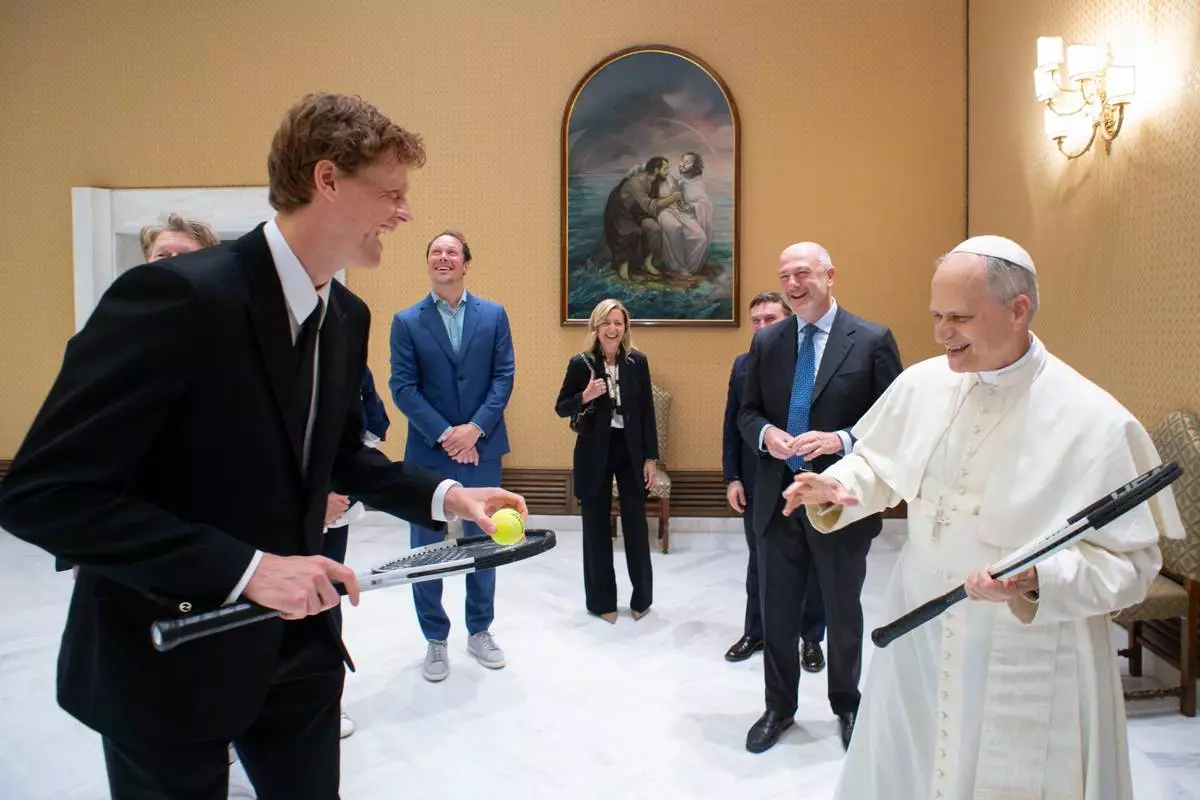
FILE - Italy's Jannik Sinner, left, shares a light moment with Pope Leo XIV on the occasion of their meeting at the Vatican, May 14, 2025. (Vatican Media via AP, File)
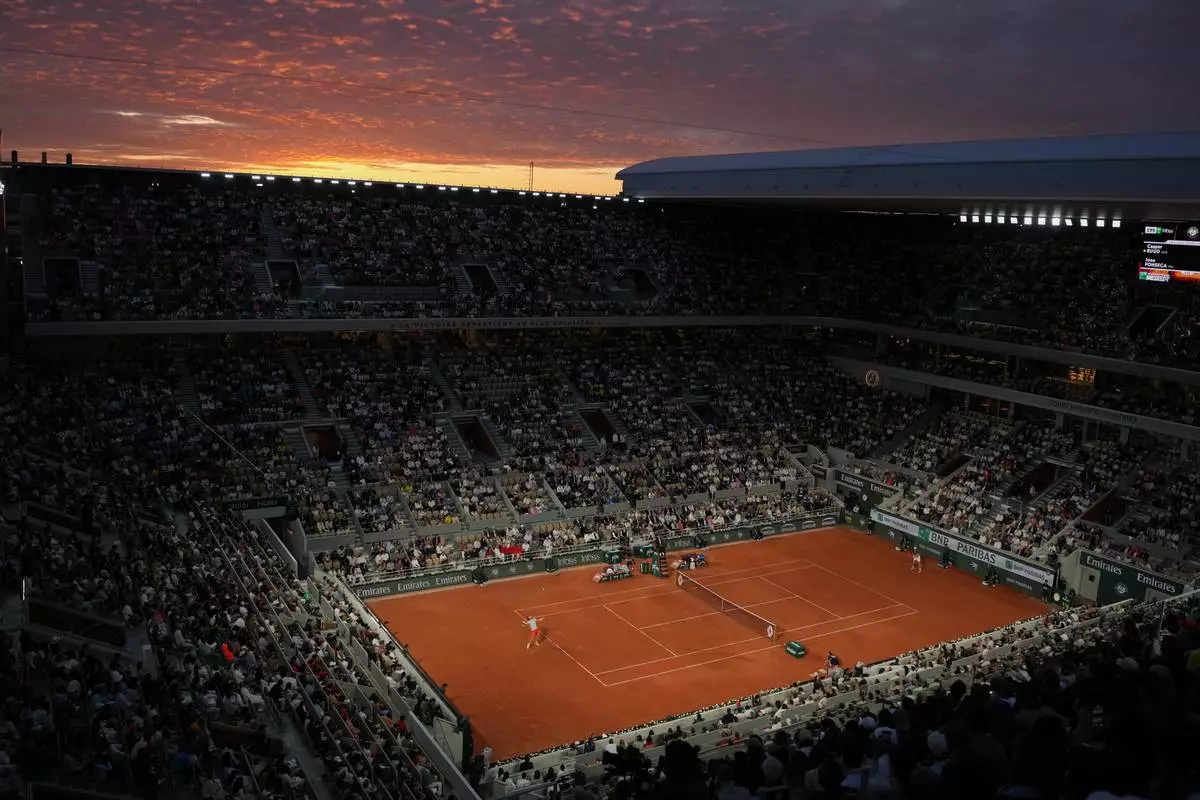
Fans watch the fourth-round tennis match between pcasp and Brazil's Joao Fonseca at the French Open in Paris, Sunday, May 31, 2026. (AP Photo/Thibault Camus)
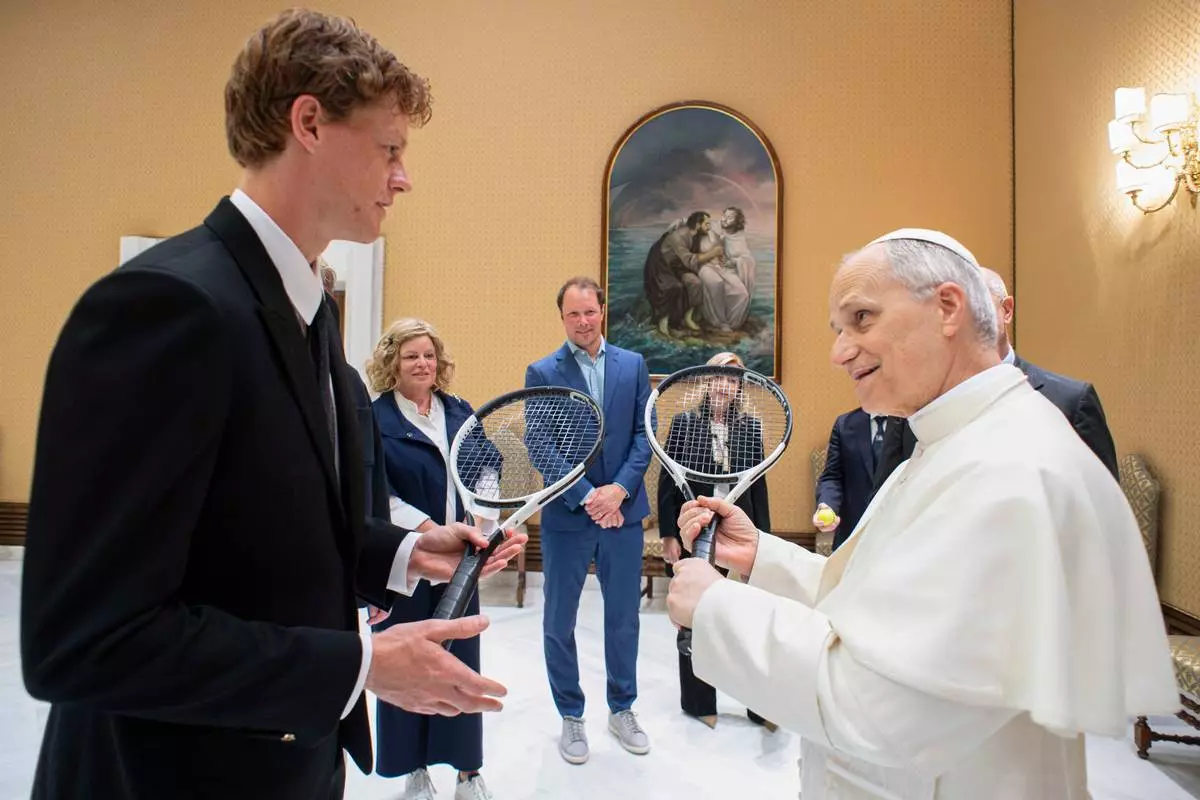
FILE - Italy's Jannik Sinner, left, shares a light moment with Pope Leo XIV on the occasion of their meeting at the Vatican, May 14, 2025. (Vatican Media via AP, File)