Skip to Content Facebook Feature Image

Iran's military degraded by 12-day war with Israel, but still has significant capabilities

News

Iran's military degraded by 12-day war with Israel, but still has significant capabilities
News

News

Iran's military degraded by 12-day war with Israel, but still has significant capabilities

2026-02-13 20:53 Last Updated At:21:00

BANGKOK (AP) — With one American carrier strike group already in the Middle East and another apparently on its way as U.S. President Donald Trump ramps up pressure on Iran to give up its nuclear program, fears are rising of the outbreak of another war that could spread into a regional conflict.

The 12-day Israel-Iran war last year appeared to cripple key elements of Iran’s military, yet left its capabilities far from neutralized — a distinction that looms large as tensions rise again.

More Images
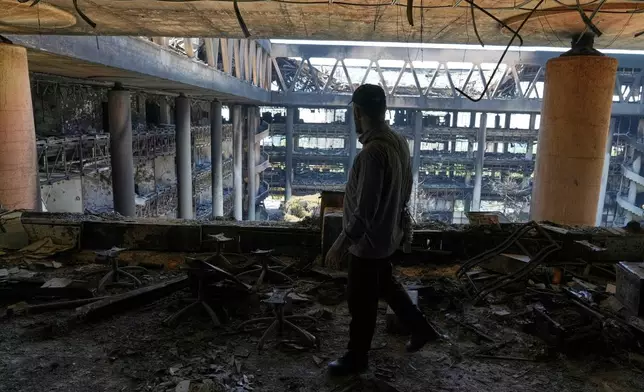
FILE - A man walks in the damaged headquarters of Islamic Republic of Iran Broadcasting, Iranian state television, in Tehran, Iran, Thursday, June 19, 2025. (AP Photo/Vahid Salemi, File)
FILE - A man walks in the damaged headquarters of Islamic Republic of Iran Broadcasting, Iranian state television, in Tehran, Iran, Thursday, June 19, 2025. (AP Photo/Vahid Salemi, File)

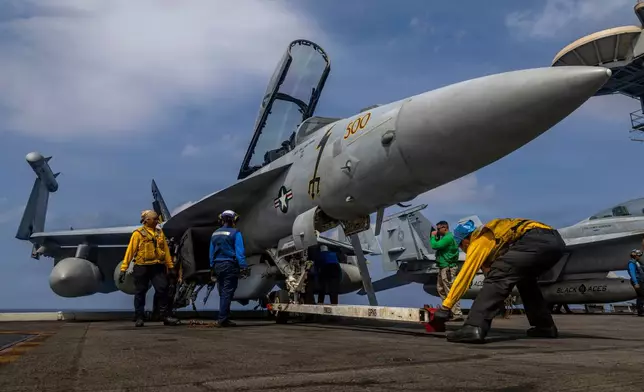
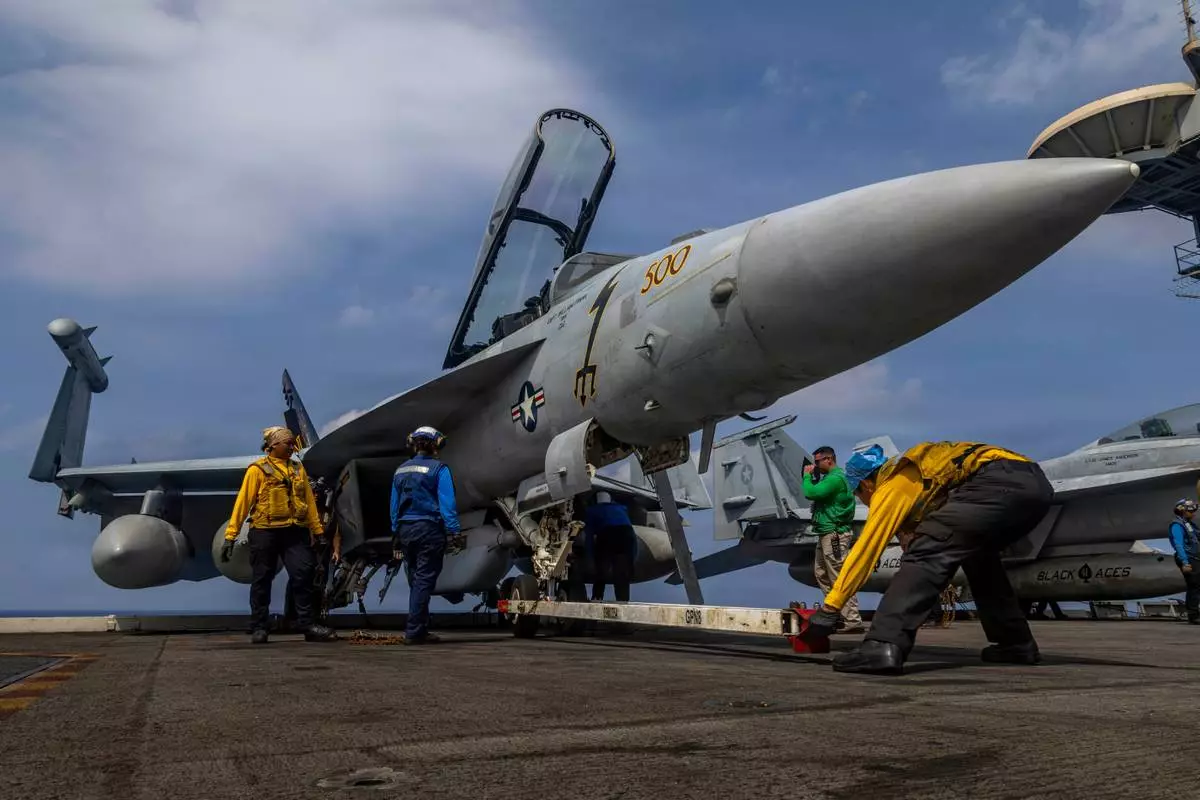
FILE - This photo provided by the U.S. Navy shows sailors preparing a Boeing EA-18G Growler on the flight deck of the Nimitz-class aircraft carrier USS Abraham Lincoln in the Indian Ocean on Jan. 21, 2026. (Mass Communication Specialist Seaman Daniel Kimmelman/U.S. Navy via AP, File)
FILE - This photo provided by the U.S. Navy shows sailors preparing a Boeing EA-18G Growler on the flight deck of the Nimitz-class aircraft carrier USS Abraham Lincoln in the Indian Ocean on Jan. 21, 2026. (Mass Communication Specialist Seaman Daniel Kimmelman/U.S. Navy via AP, File)

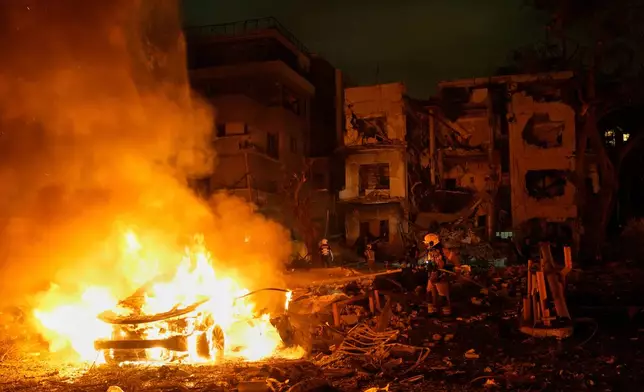
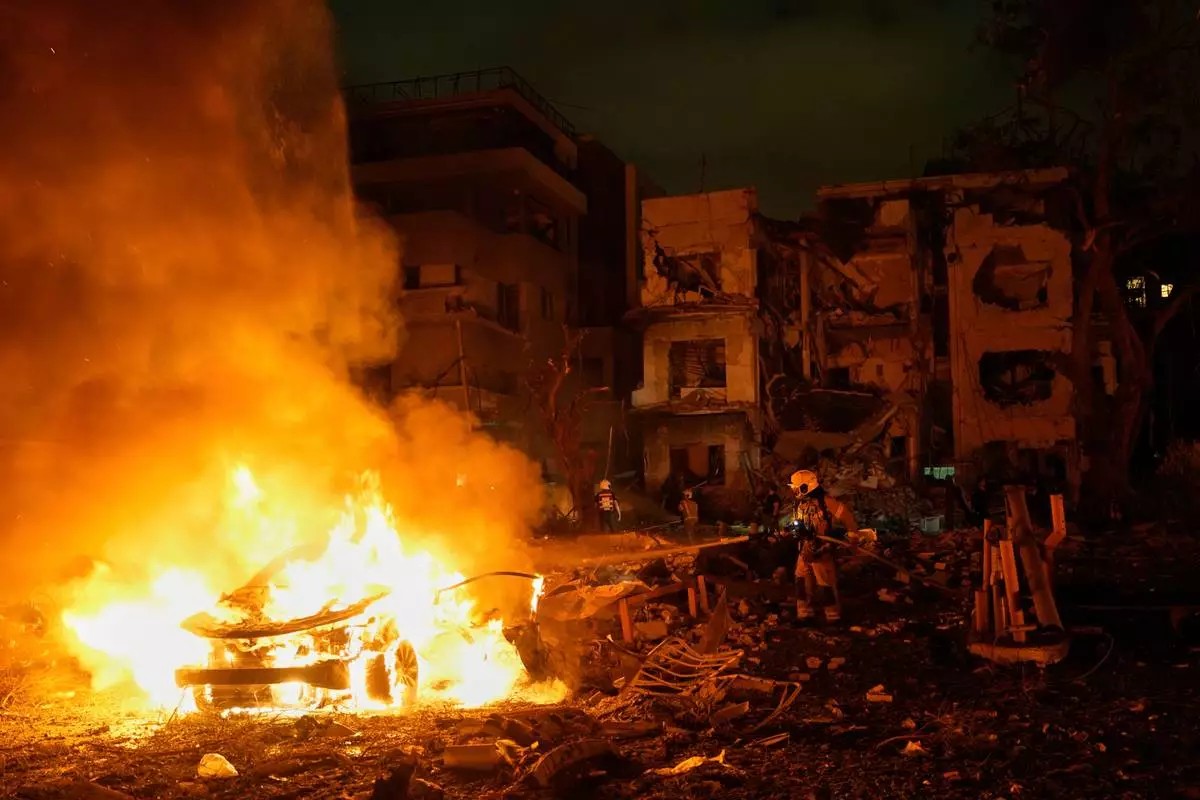
FILE - Firefighters work to extinguish a blaze after a missile launched from Iran struck Tel Aviv, Israel, Monday, June 16, 2025. (AP Photo/Baz Ratner, File)
FILE - Firefighters work to extinguish a blaze after a missile launched from Iran struck Tel Aviv, Israel, Monday, June 16, 2025. (AP Photo/Baz Ratner, File)

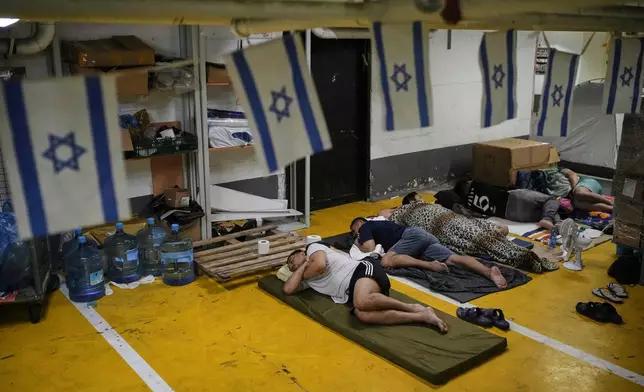
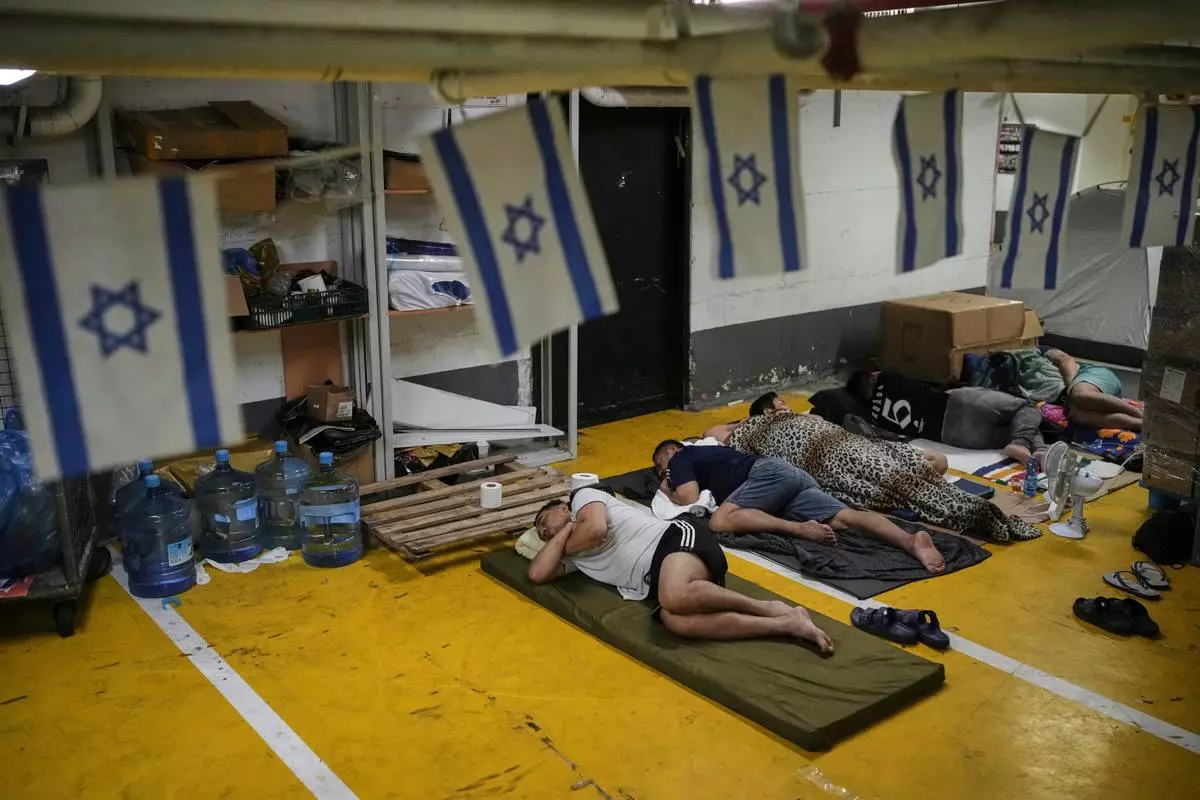
FILE - People rest and as they take shelter in an underground parking garage as a precaution against possible Iranian missile attacks, in Tel Aviv, Israel, Tuesday, June 24, 2025. (AP Photo/Ohad Zwigenberg, File)

FILE - People rest and as they take shelter in an underground parking garage as a precaution against possible Iranian missile attacks, in Tel Aviv, Israel, Tuesday, June 24, 2025. (AP Photo/Ohad Zwigenberg, File)

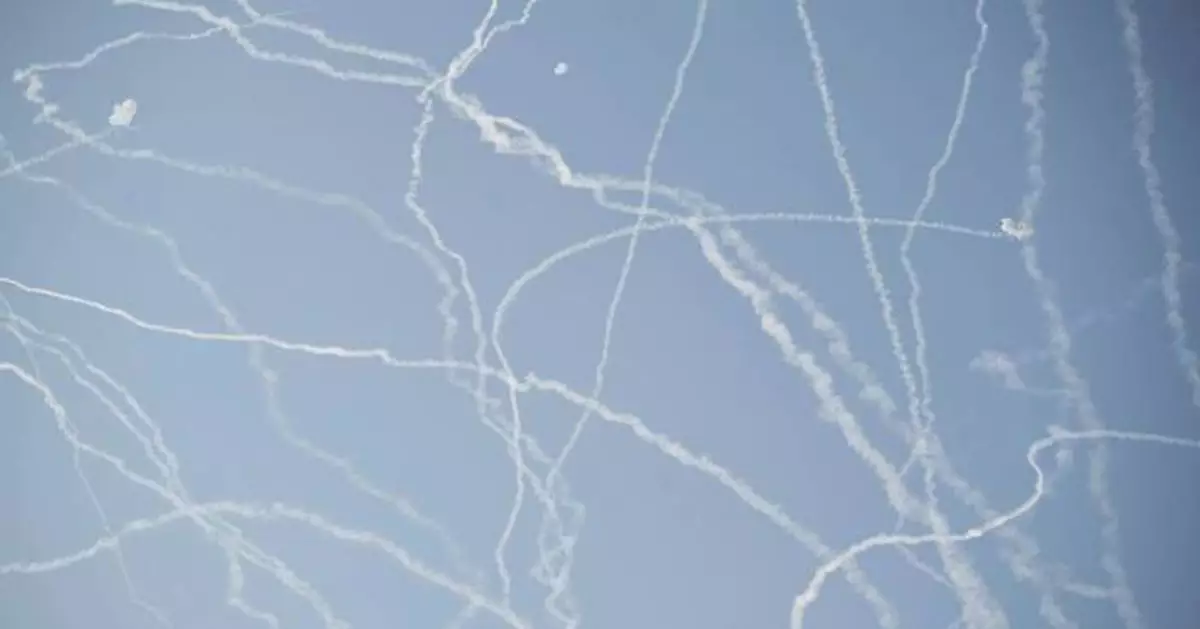
FILE - Israeli air defense system fires to intercept missiles during an Iranian attack over Tel Aviv, Israel, Thursday, June 19, 2025. (AP Photo/Leo Correa, File)

FILE - Israeli air defense system fires to intercept missiles during an Iranian attack over Tel Aviv, Israel, Thursday, June 19, 2025. (AP Photo/Leo Correa, File)

If hostilities erupt again, the risk of a broader protracted conflict returns, especially if Iran's leadership sees the fight as one for its existence.

The June 13-24 war started when Israel launched strikes targeting Iran’s nuclear program and top military officials. The United States joined the conflict, hitting three nuclear sites with massive “bunker-buster” bombs dropped from B-2 stealth bombers that flew their mission from their home base in Missouri.

It was a risky move for Trump, who has criticized his predecessors for involving the U.S. in “stupid wars,” but Iran responded weakly, with a limited missile attack on an American military base in Qatar that it warned Washington of in advance, and which caused no casualties. Tehran and Israel then both agreed to a ceasefire.

Israel was able to significantly degrade Iran's air defenses with airstrikes and covert attacks from teams on the ground. Iran, presumably aware that its older F-14 and MiG-29 fighters were no match for the fifth-generation American F-35 stealth fighters and other aircraft flown by Israel, also never sent its air force into action.

That left the skies clear for Israel to carry out waves of attacks, and for the U.S. to hit Iran's nuclear facilities and get out of Iranian airspace without the B-2 bombers ever being fired upon.

If hostilities resume, that scenario is likely to repeat, said Sascha Bruchmann, a defense analyst with the International Institute for Strategic Studies in Bahrain.

“In practical terms, in reductionist terms, the sky is open for American and Israeli planes,” he said. “The problem is how to defend the region from the retaliation.”

Bruchmann said in the case of an expanded war, Iran would most likely hit back by targeting U.S. bases in the region, but could also attack oil infrastructure and mine the Strait of Hormuz, which links the Persian Gulf to the Gulf of Oman, through which about a fifth of the world's oil is transported.

They could also attempt to hit the American aircraft carriers, though they're well defended by the destroyers in their strike groups, Bruchmann said.

“If the regime itself believes its survival is at stake, which it did not believe in June last year, I think the game is different,” he said. “If you have a ... regime that thinks it's about to go down, when why would you hold back with retaliation?”

Iran fired hundreds of missiles during the 12-day war and used more than 1,000 attack drones, killing nearly three dozen Israeli civilians and wounding thousands.

Danny Citrinowicz, a researcher at Israel’s Institute for National Security Studies and a former Iran specialist in Israel’s military and intelligence services, said that it remains unclear how much missile capacity Iran has rebuilt.

“You can see through satellite imagery, attempts to restart manufacturing,” he said, adding that government leaks in Israeli media suggest that Israel assumes Iran still retains a substantial number of short-range ballistic missiles.

Israeli strikes last year focused on what officials saw as the most immediate threats — Iran’s medium- and long-range missiles — leaving Tehran with a reduced but far from eliminated ability to threaten Israel. Its ability to hit nearby U.S. bases with short range missiles, seems barely diminished.

“The short-range ballistic missiles did not suffer any significant hit whatsoever in the 12-day war,” Citrinowicz said.

Iran's exact capabilities aren't known, but it’s thought to still have more than 1,000 long range missiles that could hit Israel, and several thousand of the shorter-range missiles that could be used to hit American bases or other targets nearby, Bruchmann said.

Missile stockpiles matter only if a country retains the systems to launch them. Israel also took out many of Iran's launchers, but wasn't able to destroy them completely, and it seems likely that Iran will have been working hard to rebuild that capacity.

Iran's military vastly outnumbers that of Israel, with about 600,000 regular troops and 200,000 in the paramilitary Revolutionary Guard, including the elite Quds Force.

In the past they have also relied on proxy forces. Those include Hamas, Hezbollah and the Houthi rebels in Yemen. But each has been so degraded by recent fighting that it's an open question whether they would be able — or willing — to come to Iran's assistance from Gaza, Lebanon or Yemen.

A bigger threat might come from Iran-linked militias in Iraq, which could threaten U.S. forces on the ground there.

Israel has around 170,000 members of active duty forces and another 400,000 reserves. But even though their military is smaller, many have been battle hardened by regional conflicts and they also have the latest U.S. and European equipment as well as a robust domestic defense industry.

It also has the support of the U.S., both with its naval assets and multiple bases in the Middle East, including Al Udeid Air Base in Qatar, which hosts thousands of American troops and is the forward headquarters for U.S. Central Command.

But beyond comparing numbers and capabilities, Bruchmann said that when thinking about a possible all-out conflict, one has to look at what the sides are willing to risk.

“My assumption is that Americans are trying to plan for zero casualties,” he said. “We're talking regime survival versus a zero casualty intervention — so just phenomenally different stakes.”

Metz reported from Ramallah, West Bank.
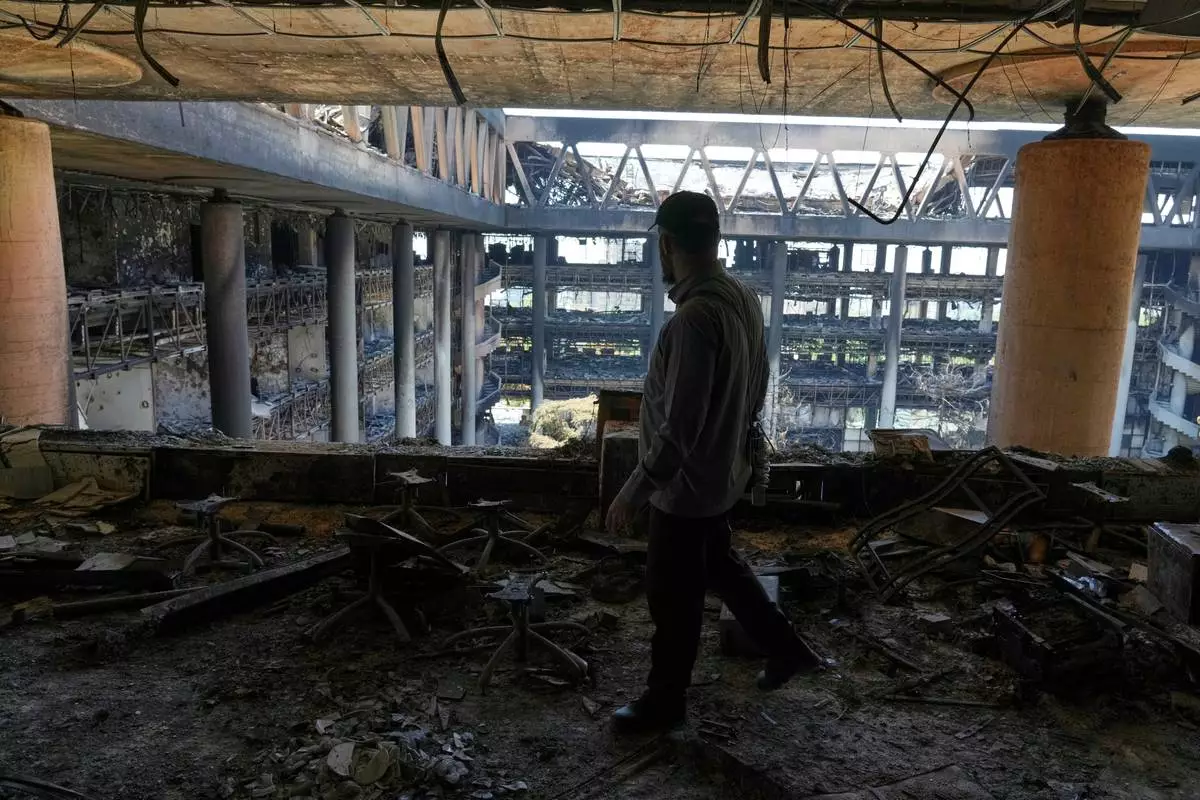
FILE - A man walks in the damaged headquarters of Islamic Republic of Iran Broadcasting, Iranian state television, in Tehran, Iran, Thursday, June 19, 2025. (AP Photo/Vahid Salemi, File)
FILE - A man walks in the damaged headquarters of Islamic Republic of Iran Broadcasting, Iranian state television, in Tehran, Iran, Thursday, June 19, 2025. (AP Photo/Vahid Salemi, File)

FILE - This photo provided by the U.S. Navy shows sailors preparing a Boeing EA-18G Growler on the flight deck of the Nimitz-class aircraft carrier USS Abraham Lincoln in the Indian Ocean on Jan. 21, 2026. (Mass Communication Specialist Seaman Daniel Kimmelman/U.S. Navy via AP, File)
FILE - This photo provided by the U.S. Navy shows sailors preparing a Boeing EA-18G Growler on the flight deck of the Nimitz-class aircraft carrier USS Abraham Lincoln in the Indian Ocean on Jan. 21, 2026. (Mass Communication Specialist Seaman Daniel Kimmelman/U.S. Navy via AP, File)

FILE - Firefighters work to extinguish a blaze after a missile launched from Iran struck Tel Aviv, Israel, Monday, June 16, 2025. (AP Photo/Baz Ratner, File)
FILE - Firefighters work to extinguish a blaze after a missile launched from Iran struck Tel Aviv, Israel, Monday, June 16, 2025. (AP Photo/Baz Ratner, File)

FILE - People rest and as they take shelter in an underground parking garage as a precaution against possible Iranian missile attacks, in Tel Aviv, Israel, Tuesday, June 24, 2025. (AP Photo/Ohad Zwigenberg, File)

FILE - People rest and as they take shelter in an underground parking garage as a precaution against possible Iranian missile attacks, in Tel Aviv, Israel, Tuesday, June 24, 2025. (AP Photo/Ohad Zwigenberg, File)

FILE - Israeli air defense system fires to intercept missiles during an Iranian attack over Tel Aviv, Israel, Thursday, June 19, 2025. (AP Photo/Leo Correa, File)


FILE - Israeli air defense system fires to intercept missiles during an Iranian attack over Tel Aviv, Israel, Thursday, June 19, 2025. (AP Photo/Leo Correa, File)

CORTINA D'AMPEZZO, Italy (AP) — Ukrainian skeleton athlete Vladyslav Heraskevych said Friday that he knows there's no pathway for him to race in the Milan Cortina Games, even if his disqualification is overturned on appeal by sport's highest court.

“Looks like this train has left,” Heraskevych said.

But the appeal — heard by the Court of Arbitration for Sport on Friday, a proceeding that went on for about 2 1/2 hours in Milan — is still worth winning, Heraskevych said. He was blocked from racing by the International Olympic Committee and his sport's federation because he insisted on competing in a helmet showing the images of more than 20 Ukrainian athletes and coaches who have been killed since Russia invaded their country four years ago.

Heraskevych trained in the helmet but never got to the official starting line.

“From Day 1, I told you that I think I’m right,” Heraskevych said in Milan, draped in a Ukrainian flag and smiling as he predicted he would win the appeal. “I don’t have any regrets.”

CAS could issue its ruling later Friday, but even if Heraskevych wins, the chance to race is still lost. He has left Cortina d'Ampezzo's Olympic Village already and said he has no plans to return to the mountains during these games.

The skeleton competition started Thursday morning, about 45 minutes after Heraskevych was disqualified, and ends Friday night. Even if CAS said Heraskevych should race, the logistical hurdles — the distance between Milan and Cortina and the fact the competition was half over when his appeal was heard are the two primary ones — would be massive.

Meanwhile, his disqualification was justified because he insisted on bringing his messaging — a tribute helmet — onto the field of play, IOC President Kirsty Coventry reiterated Friday. The IOC made its decision, one that moved Coventry to tears, based in part on the guidelines for athlete expression at the Olympics.

That says, in part, “the focus on the field of play during competitions and official ceremonies must be on celebrating athletes’ performances.” Heraskevych never made it to the field of play — not in competition, anyway — but was found to not be compliant with that guideline.

“I think that he in some ways understood that but was very committed to his beliefs, which I can respect,” Coventry said Friday. “But sadly, it doesn’t change the rules.”

The IOC contends that the rule is in place for multiple reasons, including protecting the athletes from pressure from their own countries or others about using Olympic platforms to make statements.

“I never expected it to be such a big scandal,” Heraskevych said, adding that he believes the IOC turned the story into a massive one by banning what he calls “the memory helmet.”

But the Ukrainian slider also said he found his accreditation for the games being taken away, then returned in short order on Thursday in what seemed like a goodwill gesture, was puzzling.

“A mockery,” he said.

Heraskevych has already missed the first two runs of his competition, with the final two runs set to take place on Friday evening — so there never was a possibility for him to get into the race after missing his first run.

IOC spokesman Mark Adams said he believes the CAS ruling will come quickly, but neither he nor Coventry would speculate what happens if Heraskevych wins his appeal.

CAS director general Matthieu Reeb said the tribunal will try to render its decision quickly.

Heraskevych said he felt his disqualification was unfair and fed into Russian propaganda, noting that he and other Ukrainian athletes have seen Russian flags at events at these games — even though they are not allowed by Olympic rule. He has previously spoken out against the IOC's decision to allow some Russians and Belarusians to compete at Milan Cortina as “neutral” athletes, and said the IOC empowered Russia by awarding it the 2014 Sochi Games.

He has also wondered why other tributes from these Olympics, such as U.S. figure skater Maxim Naumov displaying a photo of his late parents — killed in a plane crash last year — have been permitted without penalty.

Italian snowboard competitor Roland Fischnaller had a small Russian flag image on the back of his helmet during these games and Israeli skeleton athlete Jared Firestone wore a kippah with the names of the 11 athletes and coaches who were killed representing that country during the 1972 Munich Games.

The IOC said each of those cases were not in violation of any rules or the Olympic Charter. Naumov showed his photo in the kiss-and-cry area and not while he was actually on the ice, Fischnaller's helmet was a tribute to all the past Olympic sites he competed at with Sochi included, and Firestone's kippah “was covered by a beanie,” Adams said.

The IOC offered Heraskevych the chance to compete with a different helmet and bring the tribute on through the interview area, called a mixed zone, after he got off the ice for his runs or make other tributes such as wearing a black armband. It just didn't want him making a statement by competing in the helmet or wearing it on the field of play.

“I think it's the wrong side of history for the IOC,” Heraskevych said.

AP journalists Annie Risemberg and Stefanie Dazio in Milan contributed to this story.

AP Olympics: https://apnews.com/hub/milan-cortina-2026-winter-olympics

Ukrainian skeleton athlete Vladyslav Heraskevych holds his crash helmet as he stands outside the sliding center at the 2026 Winter Olympics, in Cortina d'Ampezzo, Italy, Thursday, Feb. 12, 2026. (AP Photo/Alessandra Tarantino)

Ukrainian skeleton athlete Vladyslav Heraskevych holds his crash helmet as he stands outside the sliding center at the 2026 Winter Olympics, in Cortina d'Ampezzo, Italy, Thursday, Feb. 12, 2026. (AP Photo/Alessandra Tarantino)

Ukrainian skeleton athlete Vladyslav Heraskevych holds his crash helmet as he stands in the mixed zone of the sliding center at the 2026 Winter Olympics, in Cortina d'Ampezzo, Italy, Thursday, Feb. 12, 2026. (AP Photo/Alessandra Tarantino)

Ukrainian skeleton athlete Vladyslav Heraskevych holds his crash helmet as he stands in the mixed zone of the sliding center at the 2026 Winter Olympics, in Cortina d'Ampezzo, Italy, Thursday, Feb. 12, 2026. (AP Photo/Alessandra Tarantino)

Ukrainian skeleton athlete Vladyslav Heraskevych speaks to the media as he arrives for a CAS appeal hearing in Milan, Italy, Friday, Feb. 13, 2026. (AP Photo/Antonio Calanni)

Ukrainian skeleton athlete Vladyslav Heraskevych speaks to the media as he arrives for a CAS appeal hearing in Milan, Italy, Friday, Feb. 13, 2026. (AP Photo/Antonio Calanni)

Recommended Articles