Foreign visitors and local residents have been hitting the shops and snapping up a range of sci-tech goods in China's Guangdong-Hong Kong-Macao Greater Bay Area as many look to offer gifts to their family and friends during the upcoming Spring Festival.
The festive spirit is growing ahead of the Spring Festival, China's most important annual holiday which marks the start of the Chinese New Year and will this year fall on Feb 17, ushering in the Year of the Horse.
In the Greater Bay Area, a dynamic city cluster in south China encompassing the Hong Kong and Macao special administrative regions and nine major cities across Guangdong Province, many shoppers are keen to get their hands on the latest gadgets on offer.
Foreign tourists are excitedly choosing various types of smart products, from smart musical instruments to advanced robots that are able to do Tai Chi.
"This (smart piano) is what I wanted, especially for my friends who play the piano or other instruments," said a visitor from the Philippines.
"It's very advanced and very complicated, and it's nice to see it," said a tourist from Pakistan who bought one of the Tai Chi robots.
Shopping malls in the Guangdong-Hong Kong-Macao Greater Bay Area are also providing customized products centered around the Spring Festival including 3D-printed red packets, which are traditionally filled with money and gifted to relatives to bring good fortune, and Spring Festival couplets, scrolls emblazoned with messages of luck to welcome the new year.
Among the many other festive items for sale is a type of AI-powered lion-dance robot, which is able to recommend travel routes for those feeling like embarking on an adventure during the Spring Festival period.

Customized sci-tech goods entice shoppers in Greater Bay Area ahead of Spring Festival
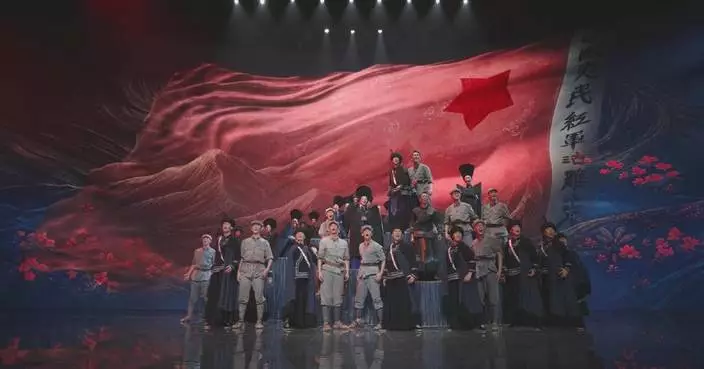
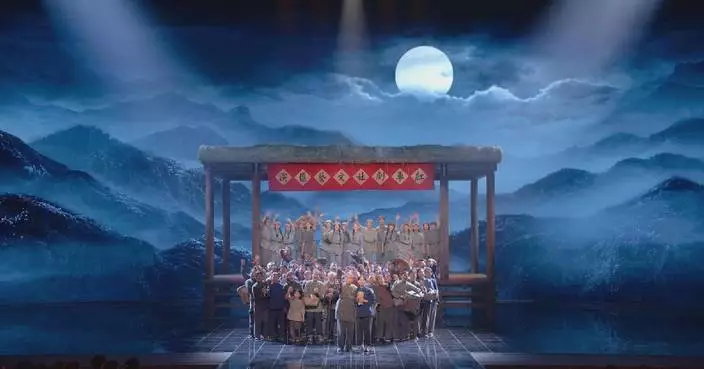
An evocative situational song and dance performance has vividly connected the Red Army's perilous crossing of a snow-capped mountain with a modern tunnel engineering marvel during a televised gala commemorating the 90th anniversary of the victory of the Red Army's Long March on Thursday.
The Long March (1934-1936) was a defining military maneuver undertaken by the Chinese Workers' and Peasants' Red Army, symbolizing endurance and perseverance which ultimately paved the way for the founding of the People's Republic of China in 1949.
Titled "Ode to the Long March," the five-part gala broadcast by the China Media Group (CMG) centers on key historical junctures of the arduous 12,500-kilometer journey.
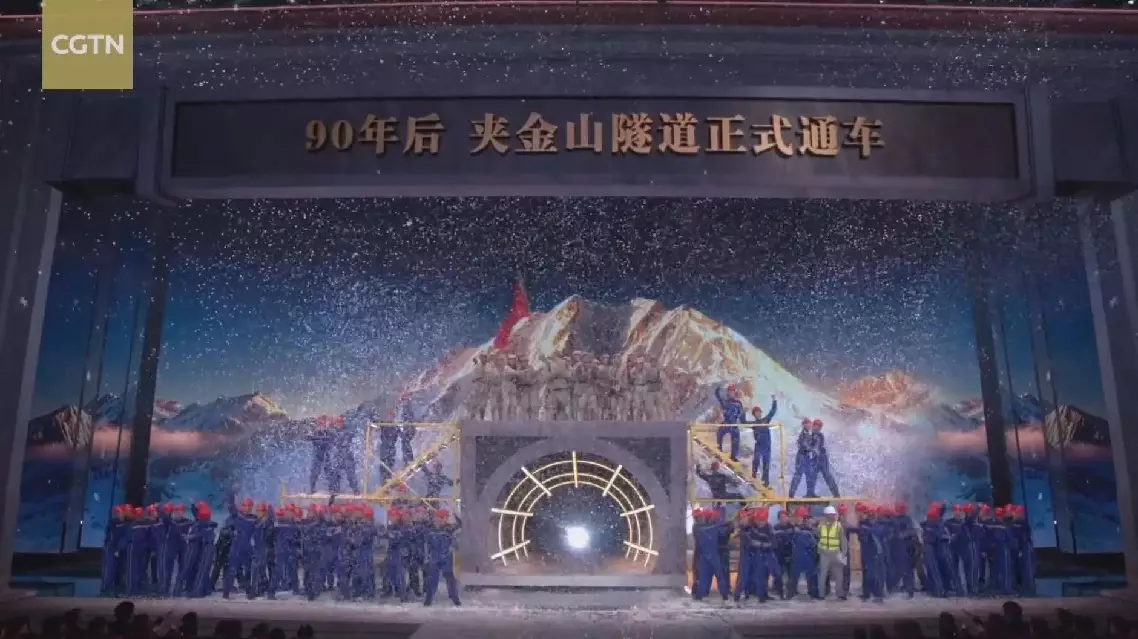
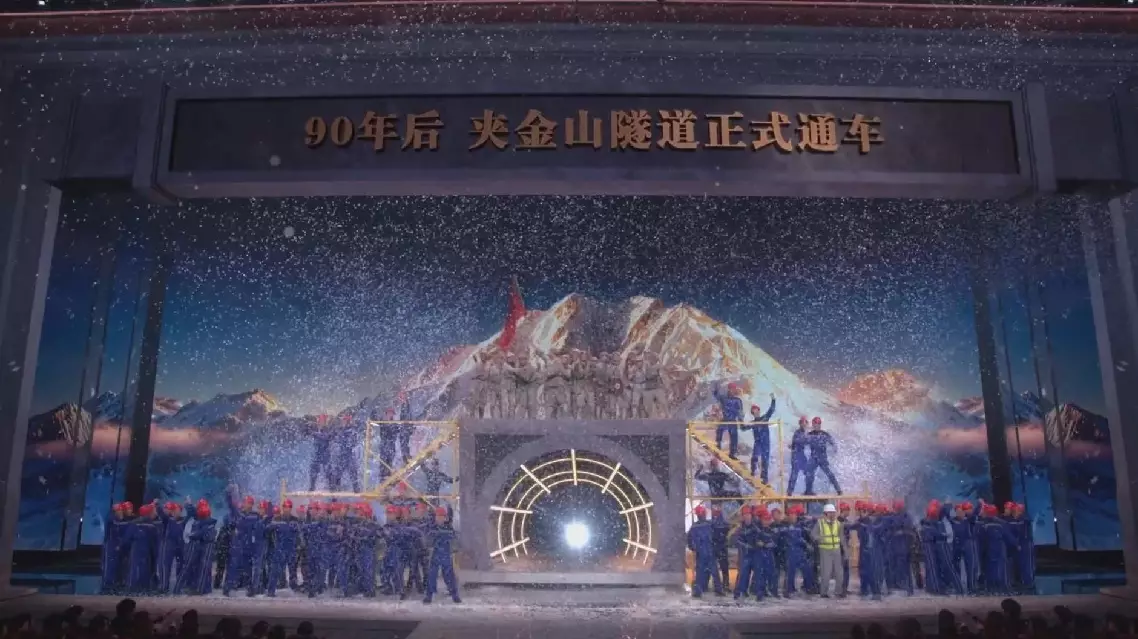
One of these performance segments sought to bring to life the Red Army's strenuous crossing of a snow-topped peak during the epic military trek. It weaves together two eras -- the soldiers' desperate climb through the blizzards and the modern-day construction of a tunnel through the same mountain -- to show how the spirit of perseverance endures across generations.
Through poignant dialogue and an enchanting song, the piece shows soldiers supporting one another through a fierce snowstorm, culminating in a young soldier's dream of drilling a hole through the mountain once the revolution is won. This vision comes to life as the stage setting shifts to the present day, featuring a powerful exchange between a Red Army commander and a modern engineer, symbolizing their shared determination to conquer nature's barriers.
The segment depicts the Central Red Army's June 1935 crossing of the Jiajin Mountain in southwest China's Sichuan Province, the first major snow mountain they encountered on the Long March.
Decades later, over 600 workers labored for 45 months to build the Jiajin Mountain Tunnel of the G351 highway, an engineering marvel that has permanently ended the winter isolation of over 110,000 local residents.
Integrating music, dance, drama, and folk art, the performances at the Gala vividly recall the immense hardships the Red Army endured and showcase the firm beliefs held by the Communist Party of China (CPC), even in the face of sacrifice and suffering.
The broadcast followed a commemorative meeting held earlier on Thursday at the Great Hall of the People in Beijing, where Chinese President Xi Jinping delivered an important speech.
The Long March began in October 1934, when 86,000 poorly armed soldiers began a grueling 12,500-kilometer journey across some of the country's harshest terrain to establish a new revolutionary base. The march concluded in October 1936 when three main Red Army forces converged in northwestern China.
Gala performance bridges past, present with nod to Long March history, modern engineering
Gala performance bridges past, present with nod to Long March history, modern engineering
Gala performance bridges past, present with nod to Long March history, modern engineering