LIVIGNO, Italy (AP) — Chloe Kim never said a word about it. The new halfpipe silver medalist sounded genuinely happy for the woman who beat her.
But even in snowboarding — billed as the most chill of the judged sports that populate the Winter Olympic program — everything is a matter of opinion.
The small debate bubbling up after Gaon Choi's razor-thin victory over Kim in the halfpipe Thursday night was whether the judges got it right.
At the heart of that debate was that Kim landed the hardest trick in the sport — a double-cork 1080 — and Choi did not.
“The fact that you are flipping twice upside down while spinning a 1080, the consequences of getting that wrong are a lot higher than doing a switch-backside 900,” said Todd Richards, a 1998 Olympic snowboarder who does commentary for NBC, comparing the hardest tricks by both riders.
Richards broke down the contest on an Instagram post that received more than 100 responses, many of them thoughtful and from insiders, including 1998 Olympic bronze medalist Shannon Dunn-Downing, who commented “I felt like their runs were sort of a toss-up."
The Choi-Kim result is something less than a "controversy," the likes of which are hitting figure skating and an ice dancing contest in which the French judge scored the French winners a significant amount higher than anyone else on the panel.
Choi's winning run was, indeed, a beauty filled with difficult spins approached from tough angles that were different at every turn. And while Kim also went upside down on her last hit, making her the only rider to do that twice, her run didn't have Choi's switch-backside 9 — riding backward and starting the spin facing up the halfpipe — that is largely considered the toughest direction in the sport.
In scoring a halfpipe run, judges don't give specific credit or take deductions for individual tricks.
They take the entire package into account, including how high the riders jump (Choi's biggest air was about eight inches higher than Kim's), the difficulty and variety of the tricks, how good they look and an element called “progression,” which credits athletes who try new tricks or link them together in different ways.
They assign numbers, from 1-100, to each run. But the number that comes out is not an added-together mix of elements but, rather, an attempt to rank the runs against the others. For instance, no rider would score a perfect 100 in her first run because then there would be nowhere to place something better that might come later.
Kim got a score of 88 on her first run. She fell on the next two, including after Choi's winning run of 90.25.
“So, Chloe's 88, in my personal opinion, if she had dropped that on her second or third go, she would've been in the lead,” Richards said, pointing to the idea that riders as good as Kim are often judged against themselves.
The international skiing federation, which runs the contest, declined to put media in touch with judges.
There has always been healthy debate in snowboarding over what should get the most love — jumping and flipping, or spins, backward riding and showy grabs.
A window into the judges' thinking also came in examining the difference between third and fourth. Japan's Sara Shimizu was the only rider other than Kim to land a double cork as part of a complete run. She finished one point behind teammate Mitsuki Ono for bronze.
This debate seemed destined to flow into Friday night's men's contest, where, for years, Scotty James has been doing the sport's most technical riding, then letting judges decide between that and the sport's new obsession with triple corks.
In the women's contest, the judging panel did not simply hand the title to the rider with the most flips. When it was over, Kim was happy, and if she was crying “foul,” nobody heard it.
“Sometimes I think maybe people wish that would show up in our sport a little bit,” Richards said. “But ultimately it's snowboarding. It's not really a cutthroat sport like that.”
AP Winter Olympics: https://apnews.com/hub/milan-cortina-2026-winter-olympics
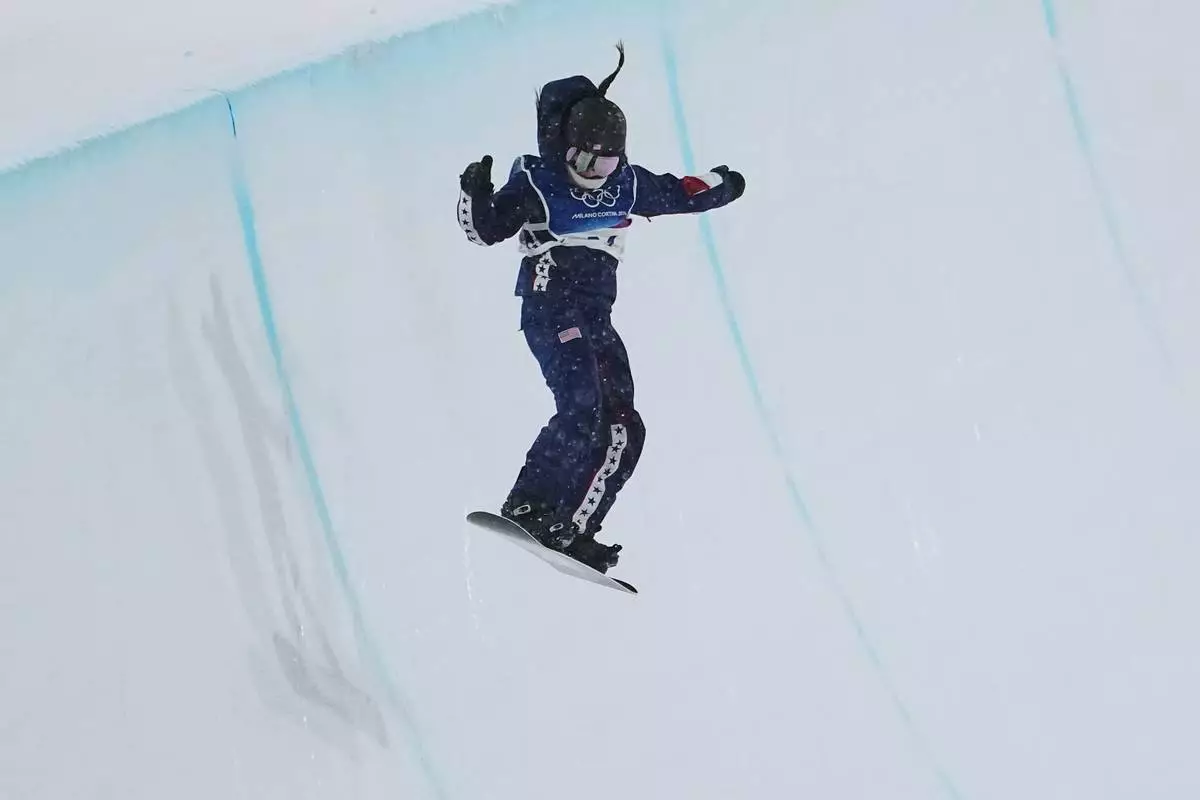
United States' Chloe Kim crashes during the women's snowboarding halfpipe finals at the 2026 Winter Olympics, in Livigno, Italy, Thursday, Feb. 12, 2026. (AP Photo/Lindsey Wasson)

Silver medalist United States' Chloe Kim holds her medal after the women's snowboarding halfpipe finals at the 2026 Winter Olympics, in Livigno, Italy, Thursday, Feb. 12, 2026. (AP Photo/Lindsey Wasson)
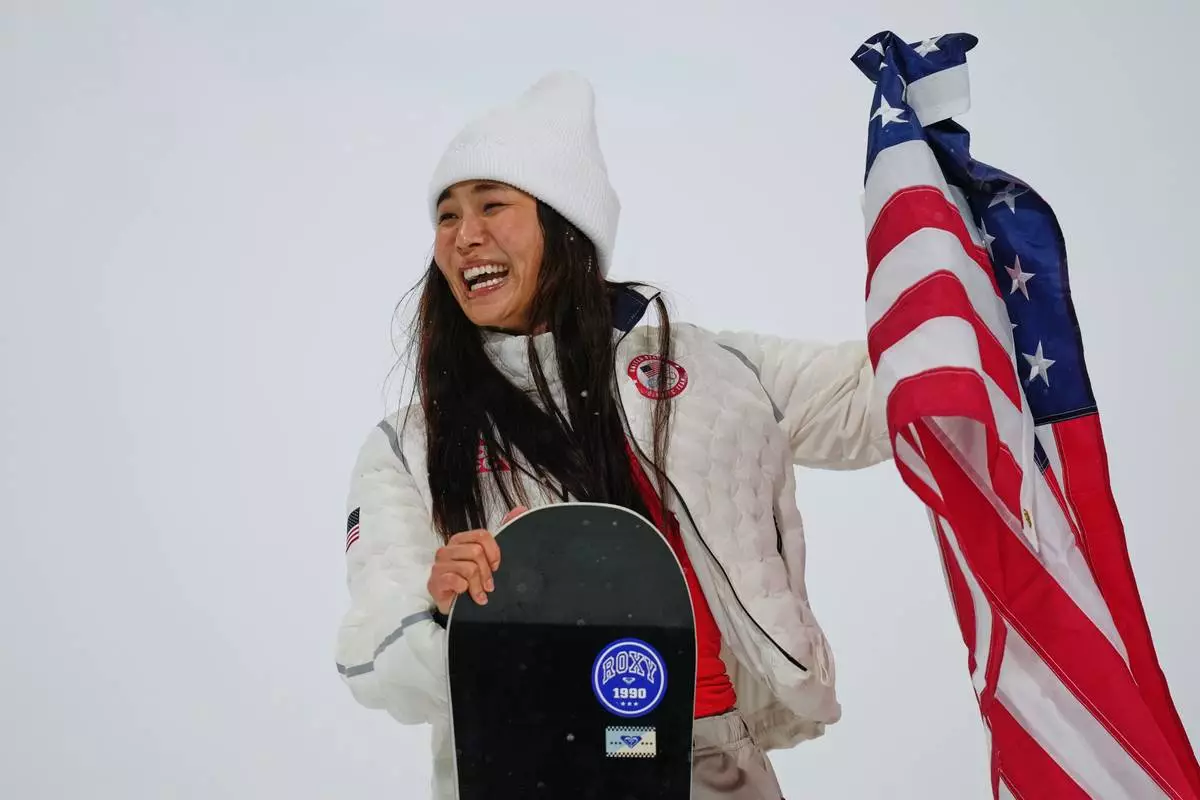
Silver medalist United States' Chloe Kim laughs while trying to display the American flag competes after the women's snowboarding halfpipe finals at the 2026 Winter Olympics, in Livigno, Italy, Thursday, Feb. 12, 2026. (AP Photo/Abbie Parr)