RICHMOND, Texas, Feb. 13, 2026 /PRNewswire/ -- Beatbot, a global leader in smart pool robotics, today announced the market availability of the Beatbot Sora 70, its new award-winning robotic pool cleaner that delivers full, automated pool cleaning, covering the water surface, walls, waterline, floor, and shallow platforms, in a single device. After earning five media awards at CES 2026, the Beatbot Sora 70 is now available for pool owners to purchase in two color options, Lavender Purple and Deep Blue.
"Beatbot Sora 70 was built around a simple idea: one streamlined product that actually cleans the entire pool," said Jimmy Hu, VP at Beatbot. "From surface skimming to walls, floors, and the waterline, the Beatbot Sora 70 handles everything automatically. It's the only robot in the segment that truly does it all without requiring extra tools or manual steps."
Complete Pool Coverage in One System
The Sora 70 features Beatbot's JetPulse™ twin-jet surface skimming technology, designed to actively guide floating debris toward the suction inlet rather than pushing it aside during movement. This is paired with true four-zone cleaning, enabling the robot to clean:
- The water surface
- Pool walls
- The waterline
- The pool floor
In addition, Sora 70 cleans shallow platforms and tanning ledges in water as shallow as 8 inches (20 cm), treating these areas as standard cleaning zones rather than special cases.
Navigation and coverage are supported by SonicSense™ Obstacle Avoidance, which uses ultrasonic sensing to detect obstacles, platform heights, slopes, and transitions, allowing the robot to adapt to different pool designs and layouts.
Designed for Hands-Off Operation
Beatbot Sora 70 is built for minimal user intervention. It delivers up to 5 hours of floor cleaning on a single charge, features a 6-liter debris capacity to reduce mid-cycle emptying, and automatically parks itself at the pool edge when a cleaning cycle is complete or battery levels are low, enabling easy retrieval.
Pricing and Availability
The Beatbot Sora 70 is available for purchase beginning February 13 on the official Beatbot website, with an MSRP of $1,499.
Tech Specs[1]
- Cleaning Coverage: Surface, walls, waterline, floor, platforms
- Surface Cleaning: JetPulse™ twin-jet surface skimming
- Obstacle Avoidance: SonicSense™ ultrasonic obstacle detection
- Suction Power: 6,800 GPH
- Debris Capacity: 6L
- Battery Capacity: 10,000 mAh
- Runtime:
- Up to 5 hours (floor cleaning, ECO mode)
- Up to 7 hours (surface cleaning)
- Minimum Water Depth: 8 inches
- Pool Size Coverage: Up to 3,230 sq ft
- Dimensions: 17.09 × 16.93 × 11.22 inches
- Weight: 22.9 lbs
- Ingress Protection: IP68 waterproof
- Up to 5 hours (floor cleaning, ECO mode)
- Up to 7 hours (surface cleaning)
About Beatbot
Beatbot is the fastest-growing premium robotic pool cleaning brand worldwide. Driven by continuous innovation, it empowers people to perfect pool living and enrich their everyday life.
Founded on a mission to reimagine pool care through intelligence and design, Beatbot holds around 500 patents (granted and pending) and is powered by a team where 60% are R&D experts. The company pioneers advanced automation technologies that are effortless, intelligent, and beautifully designed. By inspiring a new standard of living, Beatbot ensures that its technology disappears into the background, giving users back their time, confidence, and pride.
| [1] *All data above are based on internal testing conducted by Beatbot. Actual performance may vary depending on environment and conditions of use. |
[1] *All data above are based on internal testing conducted by Beatbot. Actual performance may vary depending on environment and conditions of use.
** The press release content is from PR Newswire. Bastille Post is not involved in its creation. **

Award-Winning Beatbot Sora 70 Robotic Pool Cleaner Now Available for Purchase
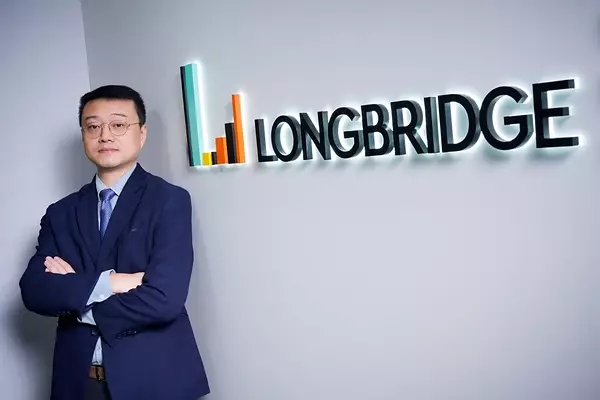
HONG KONG and SINGAPORE, Nov. 28, 2026 /PRNewswire/ -- Nowa Zhu, Group CEO and Co-Founder of Longbridge, Nowa Zhu, shares his perspective on a turbulent week for AI-related stocks, and why the biggest uncertainty surrounding artificial intelligence may not be its current valuations, but how quickly and widely the next wave of AI adoption will unfold.
What a week it has been for global financial markets.
After a turbulent period that saw AI-related stocks suffer sharp declines, Wall Street ended the Thanksgiving-shortened trading week on a surprisingly strong note. The Nasdaq Composite gained approximately 6.7% over the week, as investors navigated dramatic swings in some of the world's most closely watched technology companies.
The week began with a remarkable rebound in Nvidia following the return of co-founder Jensen Huang as chief executive. But the optimism was soon tested by renewed concerns over AI valuations, the sustainability of infrastructure spending, stronger-than-expected inflation data and the prospect of fresh US tariffs. Anthropic, the company behind the Claude AI models, also experienced considerable volatility following its highly anticipated IPO, before recovering above its initial offering price during Friday's shortened trading session.
The contrasting market movements illustrate how quickly investor sentiment can shift. Within days, the narrative surrounding AI swung between fears of a bubble, renewed confidence in the sector's potential and concerns about whether future commercial returns can justify today's valuations.
| Yet beyond these sharp market movements lies a more fundamental question: How can markets accurately value a technology whose capabilities are advancing at extraordinary speed, but whose future demand, adoption and commercial potential remain so difficult to predict? |
Yet beyond these sharp market movements lies a more fundamental question: How can markets accurately value a technology whose capabilities are advancing at extraordinary speed, but whose future demand, adoption and commercial potential remain so difficult to predict?
Beyond macroeconomic and geopolitical factors, I believe this uncertainty is at the heart of the market's differing views on AI. And to understand why, we must first recognise something fundamental about the technology itself: AI progress is neither slow nor necessarily linear.
AI is advancing faster than expectations can keep up
Consider how dramatically the conversation around artificial intelligence has changed in just a few years.
Not long ago, public attention centred largely on generative AI's ability to produce text, images and answers to questions. Today, AI-powered coding assistants are reshaping software development, while AI agents capable of performing multi-step tasks have become a major focus of the technology industry.
The concept of an AI agent was once unfamiliar to most people outside specialist technology circles. Today, agentic AI is increasingly prominent in discussions about how businesses might automate workflows, conduct research and interact with software.
| This evolution illustrates something fundamental: AI development does not necessarily follow a smooth, linear trajectory. |
This evolution illustrates something fundamental: AI development does not necessarily follow a smooth, linear trajectory.
Instead, progress can occur in waves of rapid breakthroughs, followed by periods of consolidation as businesses experiment, infrastructure catches up and practical applications mature. Another technological advance may then unlock an entirely new wave of capabilities and demand.
What appears to be a plateau may simply be a period between major leaps, although the timing and magnitude of future advances remain uncertain. This makes AI difficult to assess using conventional assumptions about predictable, steady growth.
Where will the next wave of AI demand emerge?
Software development and general-purpose AI agents offer increasingly visible examples of AI's practical applications. But beyond these areas, the next major wave of demand remains difficult to predict.
Will it emerge from healthcare, scientific research, manufacturing, financial services or education? Could entirely new applications develop that we have yet to imagine?
Identifying potential industries is only part of the challenge. Equally important is understanding the speed and depth of adoption. How quickly will businesses integrate AI into everyday operations? How extensively will it become embedded in consumer products and services? And when will experimentation translate into widespread commercial deployment?
AI coding tools, for example, have evolved from experimental applications into increasingly capable assistants used in software development. Similar advances elsewhere could create new sources of demand, but their commercial viability, adoption timelines and eventual scale remain uncertain.
The challenge is not simply understanding what AI can do today, but anticipating what it may become capable of tomorrow, and how quickly those capabilities could translate into real economic demand.
Why AI's non-linear growth complicates valuations
This uncertainty extends across the entire AI value chain.
Demand for AI applications influences spending on models and computing services, which in turn affects cloud infrastructure, data centres, semiconductors and energy requirements.
Companies such as Nvidia, Anthropic, CoreWeave and Oracle occupy different positions within this ecosystem. Their business models differ, but their prospects are influenced, to varying degrees, by expectations surrounding AI adoption.
These relationships, however, are neither immediate nor necessarily proportional. A technological breakthrough may stimulate experimentation without generating substantial near-term revenue. Conversely, an application that achieves widespread adoption could eventually create additional demand across multiple layers of the AI supply chain.
There is also uncertainty about where economic value will ultimately be captured. Greater AI adoption does not guarantee that every company supporting the technology will benefit equally.
This helps explain why AI-related valuations can be particularly sensitive to changing expectations. Investors are attempting to assess not only future earnings, but also the scale, timing and distribution of demand that has yet to fully materialise.
| Markets are not simply debating whether AI has a future. They are debating how large that future could become, how quickly it might arrive and how much of its potential is already reflected in today's prices. |
Markets are not simply debating whether AI has a future. They are debating how large that future could become, how quickly it might arrive and how much of its potential is already reflected in today's prices.
The AI paradox: Using AI to understand an uncertain future
There is an interesting paradox in this debate. Even as investors struggle to quantify AI's long-term economic potential, the technology itself is becoming increasingly capable of helping people research and understand complex financial markets.
Understanding AI's development requires examining interconnected factors, including technological breakthroughs, enterprise adoption, infrastructure spending, financial performance and macroeconomic conditions.
Traditionally, investigating these relationships involves navigating financial statements, market data, company announcements and research reports across multiple platforms. While information is increasingly accessible, connecting these developments and understanding their implications remains challenging.
This is where AI-native financial technology can make a meaningful difference.
At Longbridge Group, this philosophy underpins our development of Longbridge AI and our vision of an AI-native, agentic brokerage. Rather than treating AI as an additional feature, we are embedding it into our technology infrastructure to make financial information and market research more accessible through natural-language interactions.
With Longbridge AI's Scheduled Tasks, users can establish recurring research and information-monitoring workflows, helping them follow market developments over time rather than relying solely on isolated snapshots.
Our approach extends beyond AI-powered research. We introduced Singapore's first broker-integrated Dividend Hub, bringing historical dividend tracking, projected income, payout schedules and income goal monitoring into a dedicated experience. Although separate from Longbridge AI, it reflects the same philosophy of making complex financial information easier to navigate and understand.
These capabilities serve different purposes but share a common objective: making sophisticated financial information more accessible while keeping investors firmly in control of their decisions.
Understanding uncertainty, not predicting the future
Better intelligence, however, does not mean greater certainty.
AI can process vast amounts of information, identify patterns and explain complex relationships, but it cannot reliably predict market movements, determine when the next technological breakthrough will occur or identify which industries will experience the strongest adoption. Its outputs can also be incomplete or inaccurate, making human judgement essential.
The recent volatility surrounding Nvidia, Anthropic and the broader AI sector illustrates how quickly expectations can change, even as technological development follows its own trajectory.
The next transformative application may emerge sooner than expected or take far longer to achieve widespread adoption. Periods of rapid innovation may be followed by consolidation before another breakthrough changes the industry's direction.
For investors, the challenge is not simply predicting the next breakthrough, but understanding how emerging capabilities, changing demand and commercial realities interact.
| The real promise of AI in investing is not that it will predict the future. It is that it can help more people make sense of an increasingly complex present. |
The real promise of AI in investing is not that it will predict the future. It is that it can help more people make sense of an increasingly complex present.
In an industry where the next wave of transformation remains difficult to anticipate, the ability to continuously question, investigate and understand change may become increasingly valuable.
Disclaimer: The views expressed are those of the author and are intended for general informational and educational purposes only. This article does not constitute financial or investment advice, a personal recommendation, or an offer or solicitation to buy, sell or hold any securities or financial products. Investing involves risks, including the possible loss of capital. AI-generated information may contain inaccuracies or omissions and should be independently verified.
Dividend Hub first-mover claim: Based on Longbridge's review of 20 in-scope MAS-licensed retail-facing brokerages, using hands-on app testing and official sources as of 25 September 2026. The claim refers to a native, centralised in-app feature combining historical dividend tracking, forward income projections and income goal-setting with progress tracking.
** This press release is distributed by PR Newswire through automated distribution system, for which the client assumes full responsibility. **
Beyond the Market Volatility: Why Longbridge Group CEO and Co-Founder Nowa Zhu Believes the Next Wave of AI Demand Is So Difficult to Predict