Skip to Content Facebook Feature Image

Judge dismisses charges against 3 Connecticut officers accused of mistreating paralyzed prisoner

News

Judge dismisses charges against 3 Connecticut officers accused of mistreating paralyzed prisoner
News

News

Judge dismisses charges against 3 Connecticut officers accused of mistreating paralyzed prisoner

2026-02-14 07:39 Last Updated At:07:41

A Connecticut judge on Friday dismissed criminal charges against three current and former New Haven police officers who were accused of mistreating prisoner Richard “Randy” Cox after he was paralyzed in the back of a police van in 2022.

Judge David Zagaja dropped the cases against Oscar Diaz, Jocelyn Lavandier and Luis Rivera after granting them a probation program that allows charges to be erased from defendants' records, saying their conduct was not malicious. Two other officers, Betsy Segui and Ronald Pressley, pleaded guilty last year to misdemeanor reckless endangerment and received no jail time.

Cox, 40, was left paralyzed from the chest down on June 19, 2022, when the police van, which had no seat belts, braked hard to avoid an accident, sending him head-first into a metal partition while his hands were cuffed behind his back. He had been arrested on charges of threatening a woman with a gun, which were later dismissed.

“I can’t move. I’m going to die like this. Please, please, please help me,” Cox said in the van minutes after being injured, according to police video. He later was found to have broken his neck.

Diaz, who was driving the van, brought Cox to the police department, where officers mocked Cox and accused him of being drunk and faking his injuries, according to surveillance and body-worn camera footage. Officers dragged Cox out of the van and around the police station before placing him in a holding cell before paramedics brought him to a hospital.

Before pulling him out of the van, Lavandier told Cox to move his leg and sit up, according to an internal affairs investigation report. Cox says “I can’t move” and Lavandier says “You’re not even trying.”

New Haven State's Attorney John P. Doyle Jr.'s office said prosecutors and Cox did not object to the charges being dismissed.

Defense lawyers said that while the officers were sympathetic to what happened to Cox, they did not cause his injuries or make them worse. The three officers whose cases were dismissed were scheduled to go on trial next month.

“We don’t think that there was sufficient evidence to prove her guilt or any wrongdoing,” said Lavandier's attorney, Dan Ford. "This is a negotiated settlement that avoids the risk of having go through the emotional toll of a trial.”

Rivera's lawyer, Raymond Hassett, called the decision to charge the officers “unjust and misplaced.”

“The actions of the Police Chief and City Mayor in targeting the officers were a misguided effort to deflect attention from the police department shortcomings in managing the department and ensuring proper protocols were in place and followed,” Hassett said in a statement.

Attorneys for Cox and Diaz did not immediately return phone and email messages Friday. Cox's lawyer, Louis Rubano, has said Cox and his family hoped the criminal cases would end quickly with plea bargains.

New Haven Mayor Justin Elicker said city officials disagreed with the judge's decision to dismiss the charges.

“What happened to Randy was tragic and awful,” he said in a statement.

The case drew outrage from civil rights advocates including the NAACP, along with comparisons to the Freddie Gray case in Baltimore. Cox is Black, while all five officers who were arrested are Black or Hispanic. Gray, who also was Black, died in 2015 after he suffered a spinal injury while handcuffed and shackled in a Baltimore police van.

The case also led to reforms at the New Haven police department as well as a statewide seat belt requirement for prisoners.

In 2023, the city of New Haven agreed to settle a lawsuit by Cox for $45 million.

New Haven police fired Segui, Diaz, Lavandier and Rivera for violating police conduct policies, while Pressley retired and avoided an internal investigation. Diaz appealed his firing and got his job back. Segui lost the appeal of her firing, while appeals by Lavandier and Rivera remain pending.
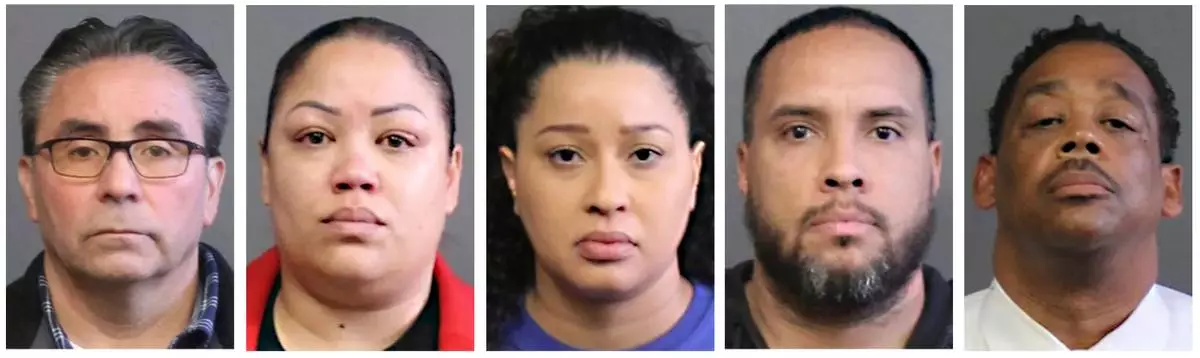
FILE - This combo of photos provided by the Connecticut State Police, shows, from left, New Haven, Conn., police officers Oscar Diaz, Betsy Segui, Jocelyn Lavandier, Luis Rivera and Ronald Pressley. (Connecticut State Police via AP, File)
FILE - This combo of photos provided by the Connecticut State Police, shows, from left, New Haven, Conn., police officers Oscar Diaz, Betsy Segui, Jocelyn Lavandier, Luis Rivera and Ronald Pressley. (Connecticut State Police via AP, File)

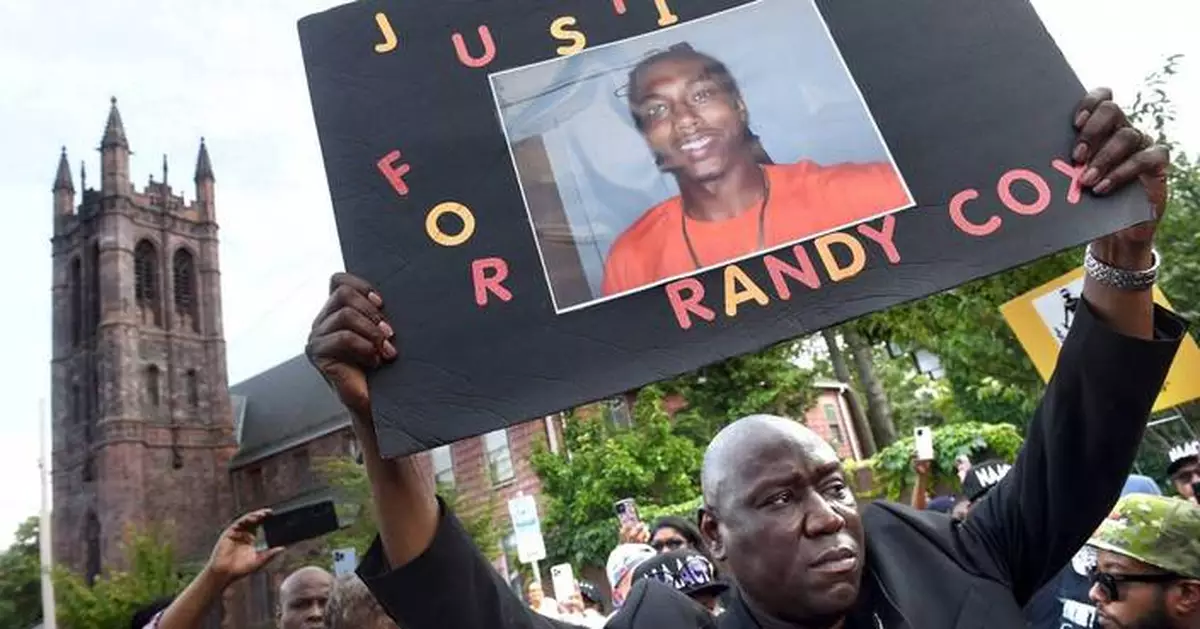
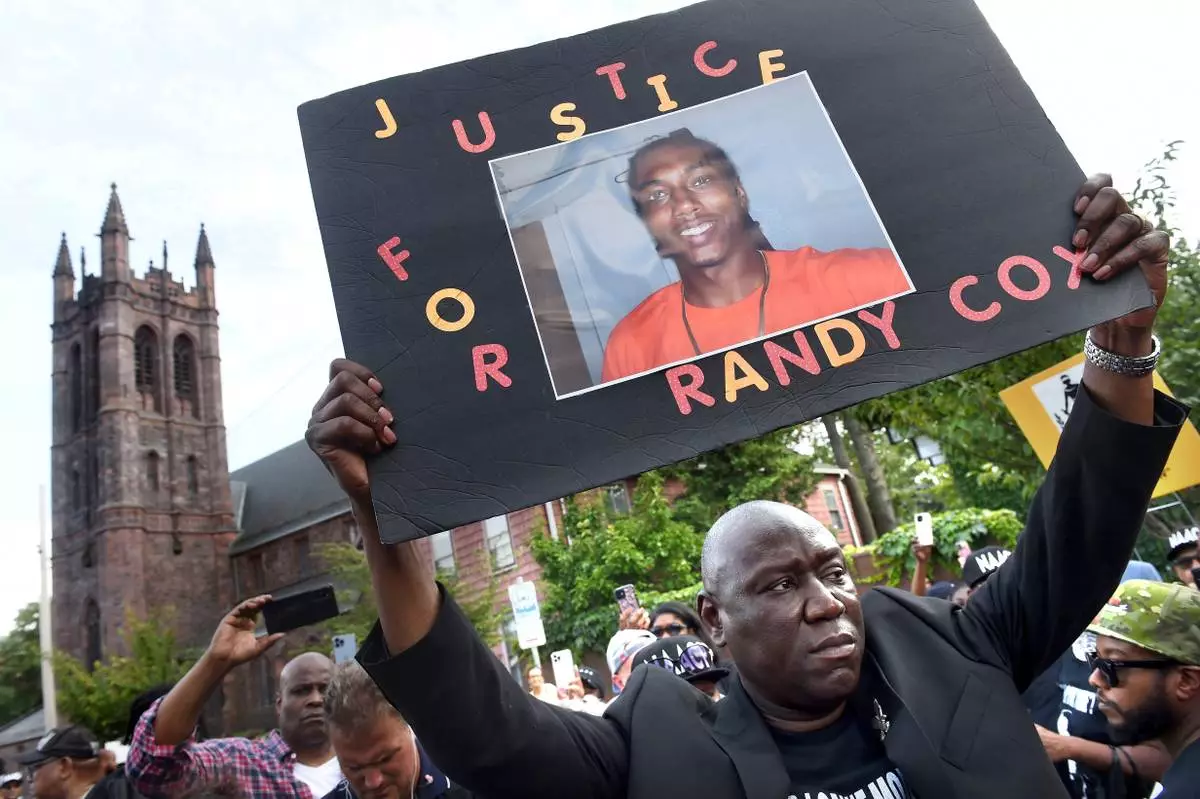
FILE - Civil rights attorney Benjamin Crump takes part in a march for justice for Richard "Randy" Cox to the New Haven Police Department on July 8, 2022, in New Haven, Conn. (Arnold Gold/New Haven Register via AP, File)

FILE - Civil rights attorney Benjamin Crump takes part in a march for justice for Richard "Randy" Cox to the New Haven Police Department on July 8, 2022, in New Haven, Conn. (Arnold Gold/New Haven Register via AP, File)

SAN FRANCISCO (AP) — A judge declared a mistrial Friday in the case of five current and former Stanford University students charged after pro-Palestinian protests in 2024, when they barricaded themselves inside the university president and provost executive offices.

The trial in Santa Clara County was a rare instance of demonstrators facing felony charges from protests over the Israel-Hamas war that roiled campuses across the country. The two sides argued over free speech, lawful dissent and crime during the three-week proceedings.

The jury voted 9 to 3 to convict on a felony charge of vandalism and 8 to 4 to convict on a felony charge of conspiracy to trespass. After deliberating for five days, jurors said they could not reach a verdict.

Judge Hanley Chew asked each one if more time deliberating would help break the impasse, and all answered, “No.”

“It appears that this jury is hopelessly deadlocked, and I’m now declaring a mistrial in counts one and two,” Chen said. He then dismissed the jurors.

Demonstrators barricaded themselves inside the offices for several hours on June 5, 2024, the last day of spring classes at the university.

Prosecutors said the defendants spray-painted the building, broke windows and furniture, disabled security cameras and splattered a red liquid described as fake blood on items throughout the offices.

Defense attorneys said the protest was protected speech and there was insufficient evidence of an intent to damage the property. They also said the students wore protective gear and barricaded the offices out of fear of being injured by police and campus security.

If convicted, the defendants would have faced up to three years in prison and been obligated to pay restitution of over $300,000.

Santa Clara County District Attorney Jeff Rosen said he would pursue a new trial.

“This case is about a group of people who destroyed someone else’s property and caused hundreds of thousands of dollars in damage,” Rosen said in a statement. “That is against the law and that is why we will retry the case.”

As the mistrial was announced, the students, some wearing kaffiyehs, sat on a bench in the courtroom and did not show a visible reaction.

“The District Attorney's Office had Stanford University supporting them and other multibillion-dollar institutions behind them, and even then the district attorney was unable to convict us,” Germán González, who was a sophomore at Stanford when he was arrested, told The Associated Press by phone later. “No matter what happens, we will continue to fight tooth and nail for as long as possible, because at the end of the day, this is for Palestine.”

Authorities initially arrested and charged 12 people in the case, but one pleaded no contest under an agreement that allows some young people to have their cases dismissed and records sealed if they successfully complete probation.

He testified for the prosecution, leading to a grand jury indictment of the others in October of the others. Six of those accepted pretrial plea deals or diversion programs, and the remaining five pleaded not guilty and sought a jury trial.

Protests sprung up on campuses across the country over the Israel-Hamas conflict, with students setting up camps and demanding their universities stop doing business with Israel or companies that support its war efforts against Hamas.

About 3,200 people were arrested in 2024 nationwide. While some colleges ended demonstrations by striking deals with students or simply waited them out, others called in police. Most criminal charges were ultimately dismissed.

This story has been updated to correct the jury counts on the two charges.

FILE - A campus maintenance worker carries a broken window from the office of the president at Stanford University in Palo Alto, Calif., June 5, 2024. (AP Photo/Nic Coury, File)

FILE - A campus maintenance worker carries a broken window from the office of the president at Stanford University in Palo Alto, Calif., June 5, 2024. (AP Photo/Nic Coury, File)

FILE - Students walk by graffiti near university president Richard Saller's office at Stanford University in Palo Alto, Calif., June 5, 2024. (AP Photo/Nic Coury, File)

FILE - Students walk by graffiti near university president Richard Saller's office at Stanford University in Palo Alto, Calif., June 5, 2024. (AP Photo/Nic Coury, File)

Recommended Articles