China's Spring Festival travel rush, the world's largest annual human migration, is more than a journey home for millions of people for family reunions, but also serves as a vivid window into China's profound social transformation and modernization.
The Spring Festival, also known as the Chinese New Year, falls on Feb. 17 this year and represents the most important holiday for Chinese people.
This year, the Spring Festival travel rush, also known as "chunyun" in Chinese, is set to shatter all previous records. Official estimates predict a staggering 9.5 billion inter-regional passenger trips over the 40-day period, which runs from Feb. 2 through March 13.
As with every year, the 2026 chunyun stands as a spectacle of logistics. Officials project that self-driving will remain the dominant mode of transport, accounting for roughly 80 percent of all trips. Meanwhile, rail and civil aviation are expected to reach historic peaks, with passenger trips hitting 540 million and 95 million, respectively.
Behind these numbers lies a sophisticated, multi-tiered infrastructure. To support the surge in electric vehicles, the Ministry of Transport has expanded the expressway charging network to 71,500 charging points. Travelers can use a special mini-program on their smartphone to monitor real-time charger availability, while mobile emergency charging units have been deployed during peak hours.
Complementing the expressways, China's railway system -- now bolstered by a high-speed network exceeding 50,000 kilometers -- utilizes advanced ticketing and extensive infrastructure to ensure a seamless, high-capacity journey.
Safety remains the ultimate priority. High-tech tools, including drones and helicopters, stand ready for rapid response. Officials say chunyun coordination is a massive operation involving more than 20 government departments.
In a deeper commitment to passenger comfort, this year's travel rush features more "heartwarming services" catering to the diverse needs of millions, transforming a massive migration into a personalized experience.
A key highlight is the expansion of "quiet carriages." Now available on over 8,000 high-speed trains, these carriages offer a haven for passengers seeking a peaceful journey. Broadcast volumes are capped at 40 percent, and crew members provide "silent" service, replacing loud announcements with gentle assistance. Staff also offer free disposable earplugs and fun packs, including picture books, to keep young children entertained and calm.
At major airports and rail stations, efforts are underway to close the digital divide. Central to this are "Silver Hair" services, allowing seniors to travel with dignity and ease. At the Shijiazhuang Zhengding International Airport in north China's Hebei Province, for instance, travelers aged 80 and above enjoy priority check-in and boarding.
Travel is also becoming more inclusive for families, including their beloved pets. In central China's Henan Province, "Pet Rail" services have expanded from one station to four, allowing travelers to book specialized transport crates via the 12306 app.
The vast movement of people during chunyun is a collective journey home, culminating in the Spring Festival. Rooted in Chinese culture with celebrations of various forms, the festival marks the first day of the lunar calendar and symbolizes renewal and family unity. It carries a universal resonance of hope and aspirations for a better life.
Core Spring Festival customs, such as vibrant red decorations symbolizing prosperity, the exchange of auspicious greetings, festive family reunions centered around elaborate feasts, and the crafting of traditional lanterns, captivate cultural enthusiasts worldwide with their distinctive and time-honored approach to welcoming the Chinese New Year.
Each year, China Media Group's Spring Festival Gala, an annual TV program broadcast live on the Chinese New Year's Eve and watched by billions worldwide, epitomizes China's cultural appeal. With four rehearsals completed, the 2026 gala will continue to take shape in a festive and uplifting atmosphere, vividly reflecting China's dynamism in a new era.
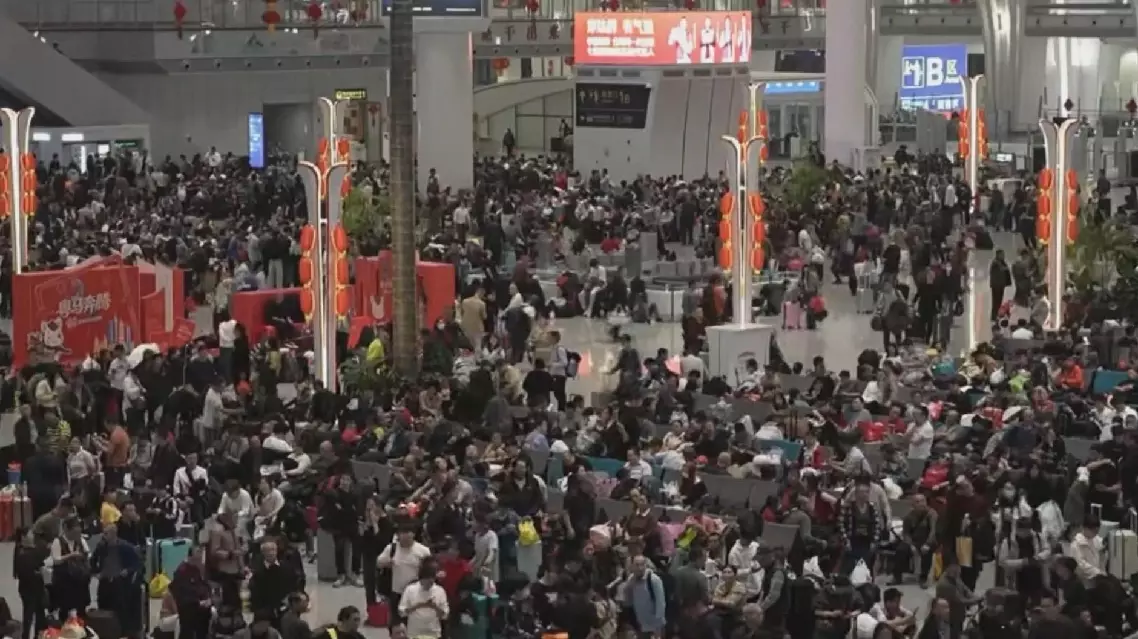
Spring Festival travel rush mirrors China's profound social transformation, modernization